
About this worksheet
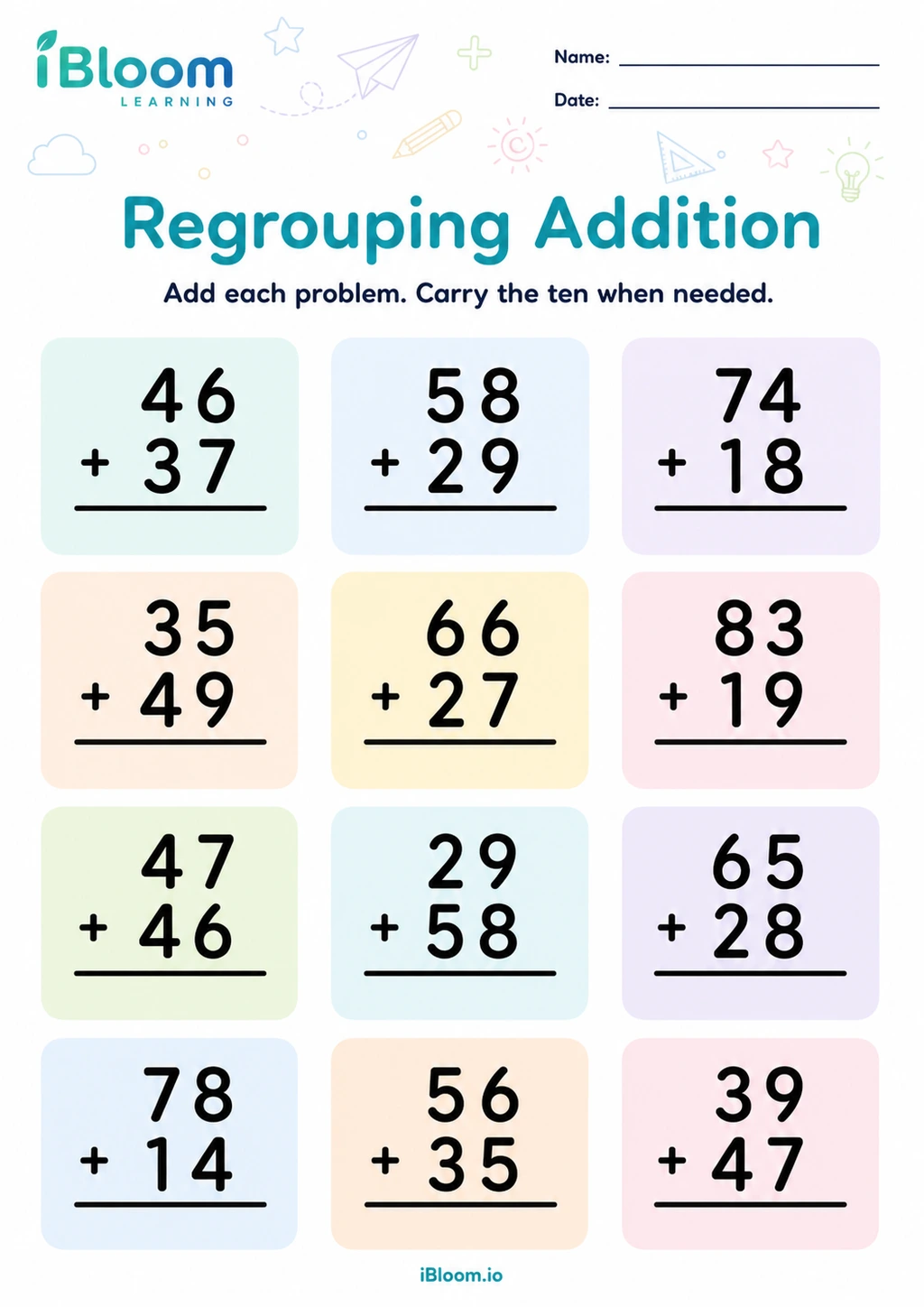
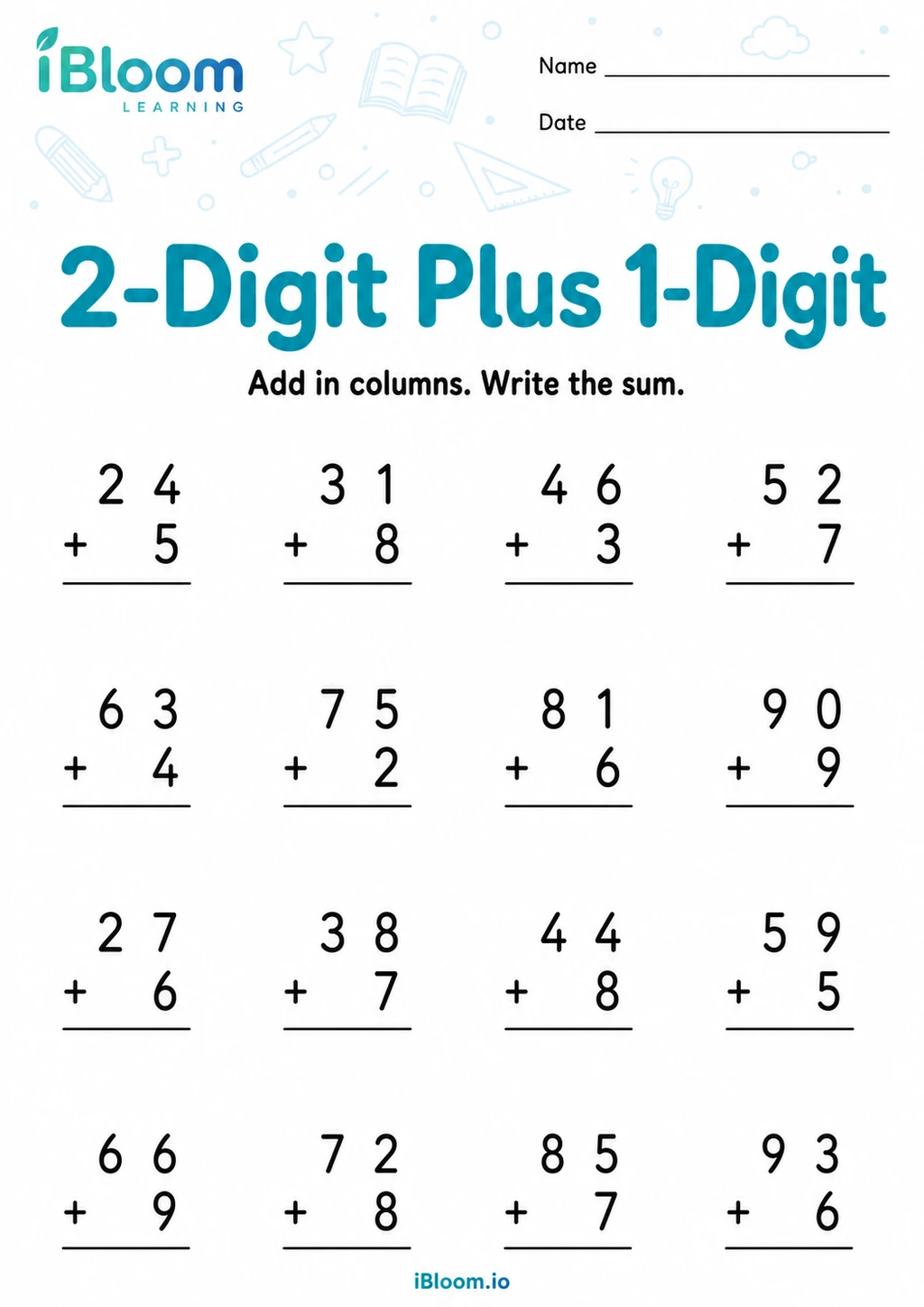
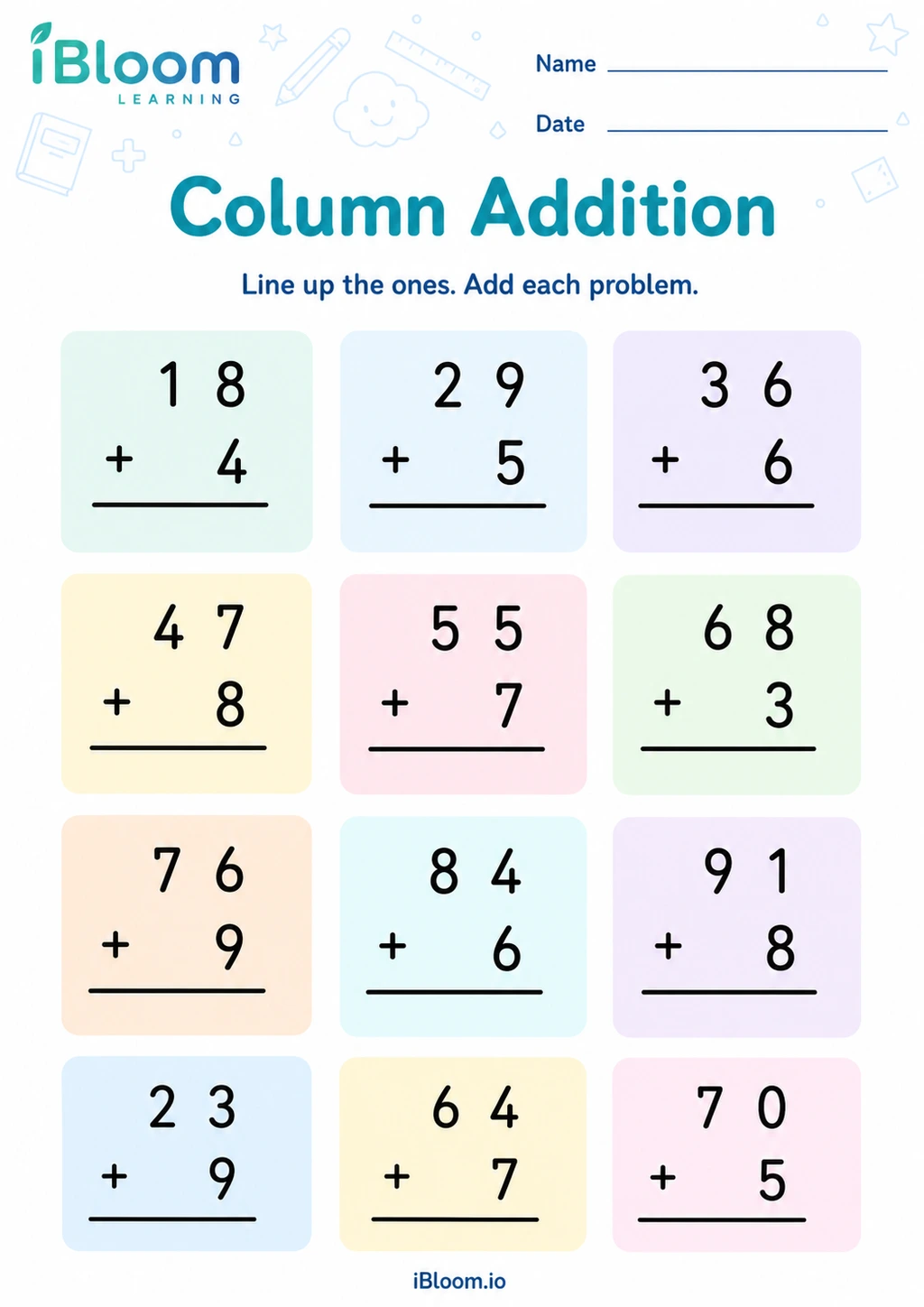
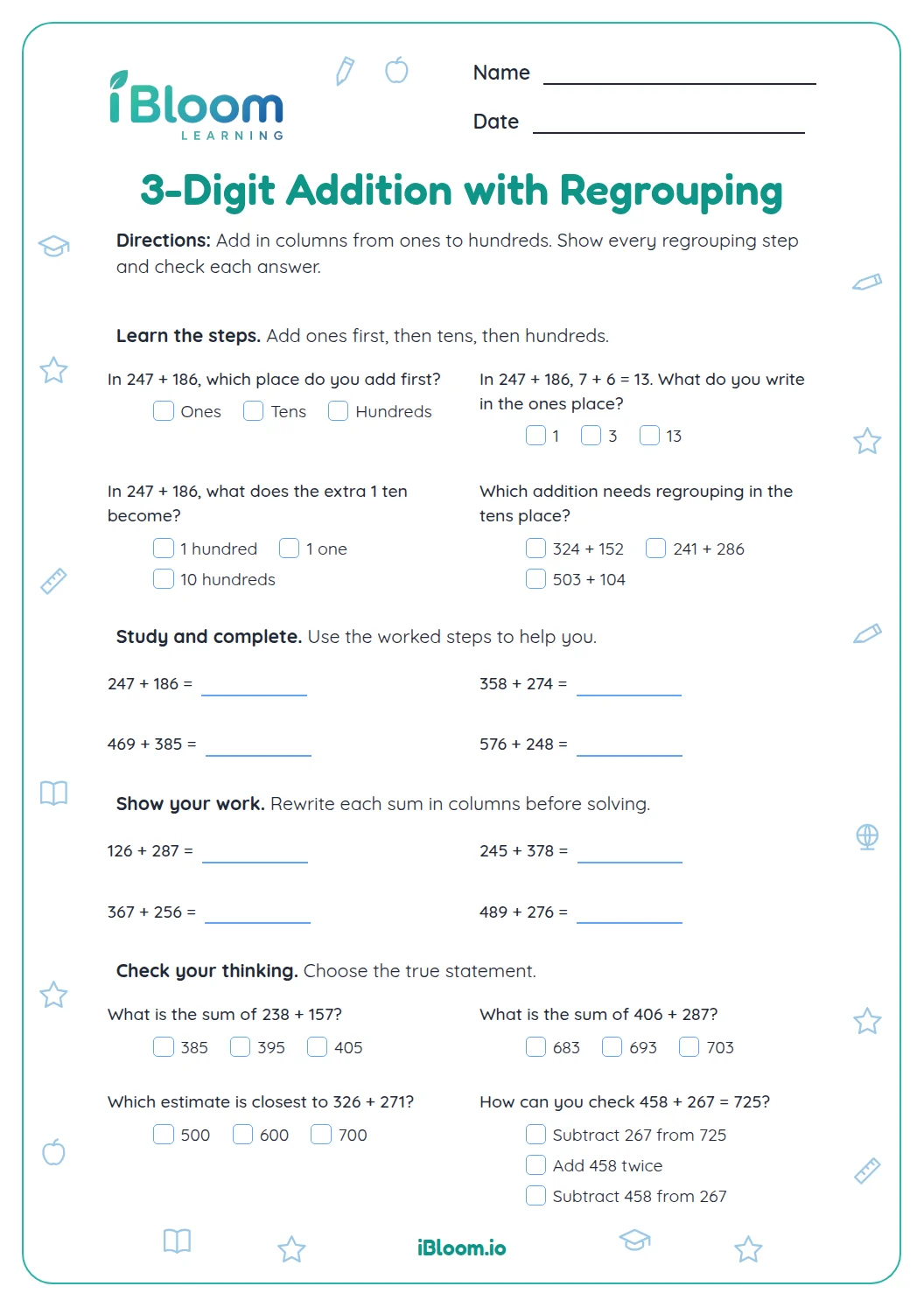
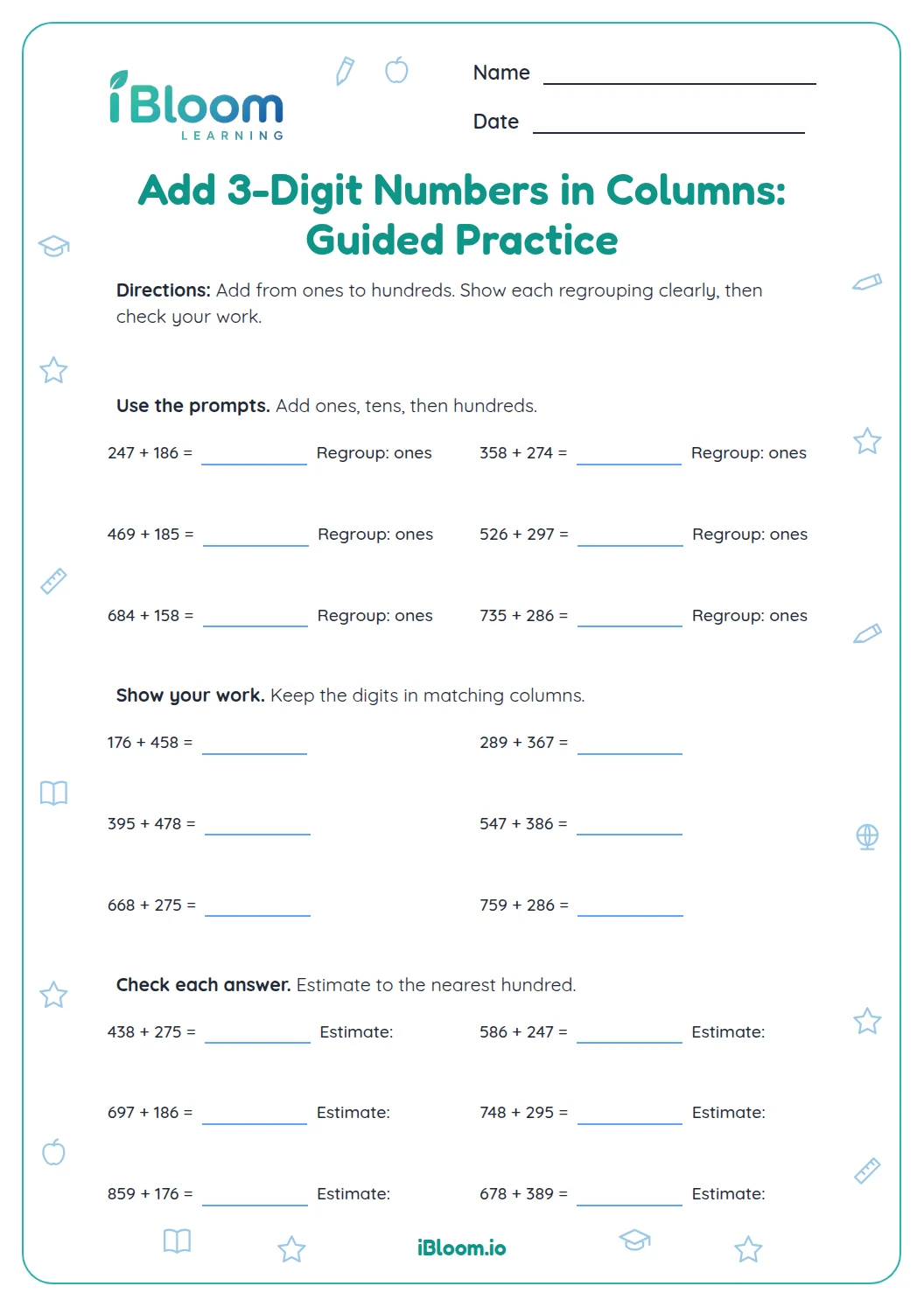
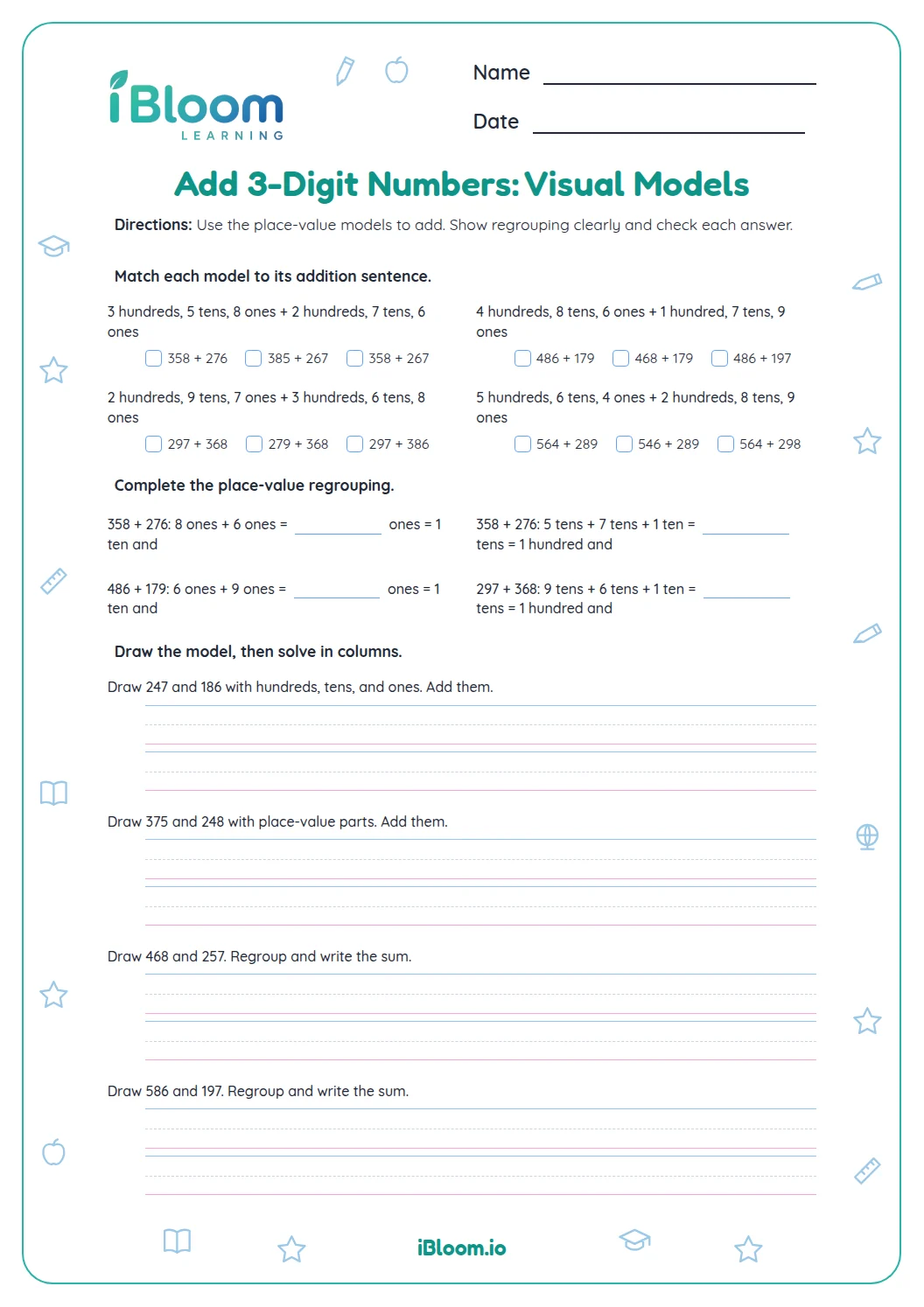
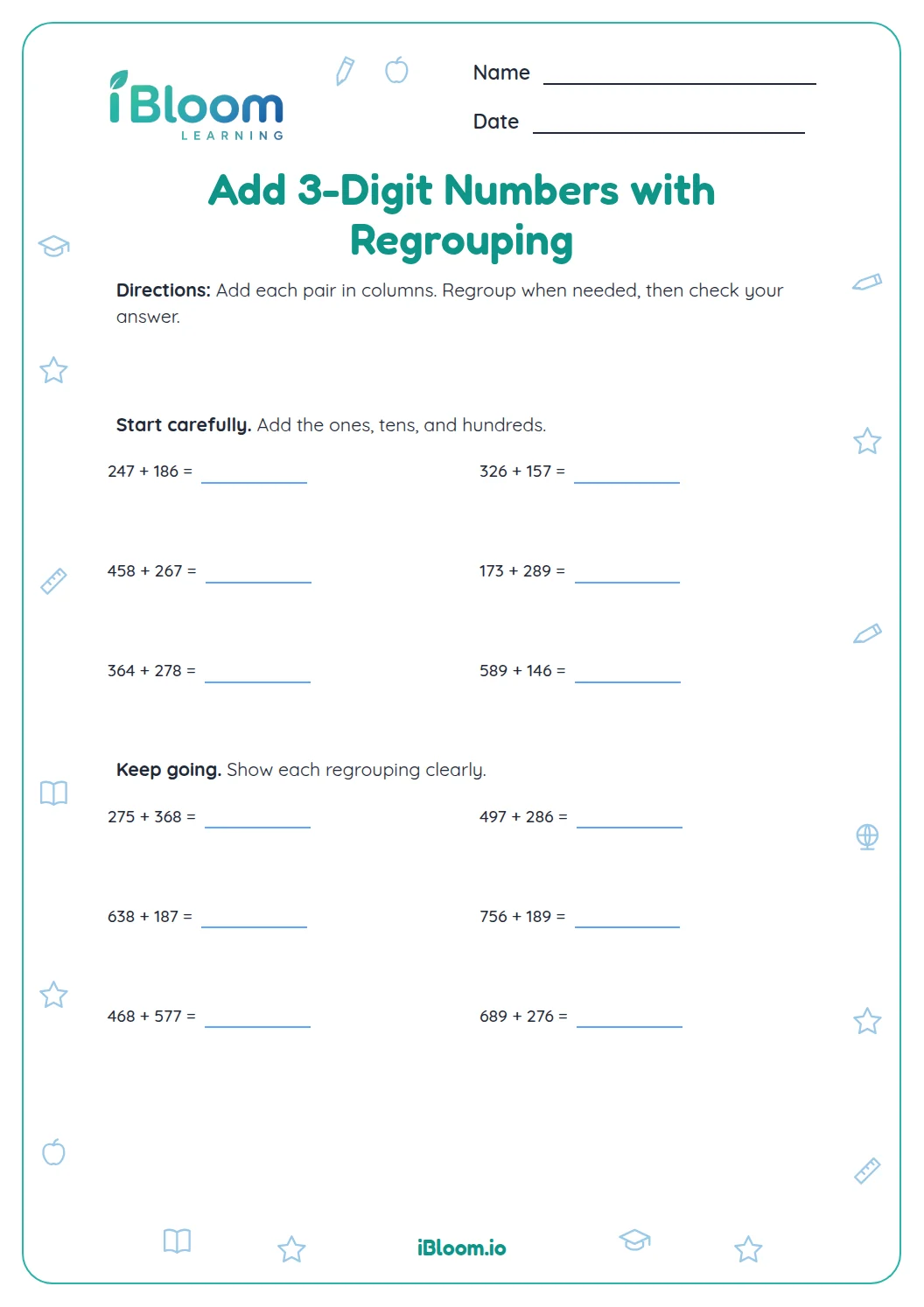
This Grade 2 addition worksheet gives children practice adding two-digit numbers when the ones make a new ten. The first section has paired sums to solve with space for working. Next, children find missing addends in equations, then apply addition to short story problems. All answers stay within 100. The page aligns with Common Core 2.NBT.B.5, which calls for adding within 100 using place-value strategies and properties of operations. A separate answer key supports checking after children finish.
Aligned to 2.NBT.B.5
When do children regroup?
Regroup when the ones add to ten or more. For instance, 7 ones and 8 ones make 15 ones: keep 5 ones and compose 1 ten before finishing the tens column.
How does the practice progress?
The first ten items are addition equations. Four missing-addend items ask children to reason from a total, and four final stories put the same addition skill into everyday contexts.
What is one worked example?
Question 1 is 27 + 18. Add 7 + 8 to make 15, write 5 ones, and regroup 1 ten. Then add 2 tens + 1 ten + the regrouped ten to get 45.
How to use this worksheet at home or in class
- 1Line up tens and ones before solving.
- 2Add the ones digits and regroup one ten when their sum is at least 10.
- 3Add the tens, including any regrouped ten.
- 4For a missing addend, subtract the known addend from the total or use a related addition fact.
- 5For a story, write the two amounts as an addition equation and check the sum.
Common mistakes and quick fixes
The mistake
Adding the ones but forgetting to add the regrouped ten.
The fix
Circle or mark the new ten before adding the tens column.
The mistake
Writing the ones total as two digits in the ones place.
The fix
Trade ten ones for one ten and leave only the leftover ones.
The mistake
Subtracting a missing addend in the wrong order.
The fix
Start with the total, then subtract the addend already shown.
Common Core alignment
The worksheet builds place-value addition within 100.
Add within 100 by using place value and addition strategies.
On this sheet: The sums and missing addends stay within 100 and require place-value addition, including composing a ten.
Show the official wordingHide the official wording
Fluently add and subtract within 100 using strategies based on place value, properties of operations, and/or the relationship between addition and subtraction.
What to practice next
Make more practice
Further reading
Questions parents and teachers ask
What does regrouping mean in addition?
Regrouping means composing ten ones as one ten when the ones add to 10 or more. In 27 + 18, the ones make 15, so 10 ones become a ten and 5 ones remain. Then add that new ten with the other tens to get 45.
How many problems are on the worksheet?
There are 18 questions: ten addition equations, four missing-addend equations, and four story problems. The sequence starts with direct sums, shifts to finding an unknown part, and ends with short contexts where children can write an equation and solve each one.
Should my child write the sums in columns?
Column work is a useful way to keep tens and ones lined up. The equation section leaves working space, so a child can draw a quick tens-and-ones sketch or use a written column method, then check that the regrouped ten was included.
What is the answer to the first problem?
For 27 + 18, the sum is 45. The ones make 15, so regroup 10 ones as 1 ten and leave 5 ones. Add 2 tens, 1 ten, and the regrouped ten to get 4 tens. Then combine the tens and leftover ones for the total.
Does the answer key include the story problems?
Yes. The key gives the total for every fixed-answer question, including the story problems. For each story, a child can check that the two amounts were added and that the answer describes the total number of apples, blocks, books, or points.