

About this worksheet
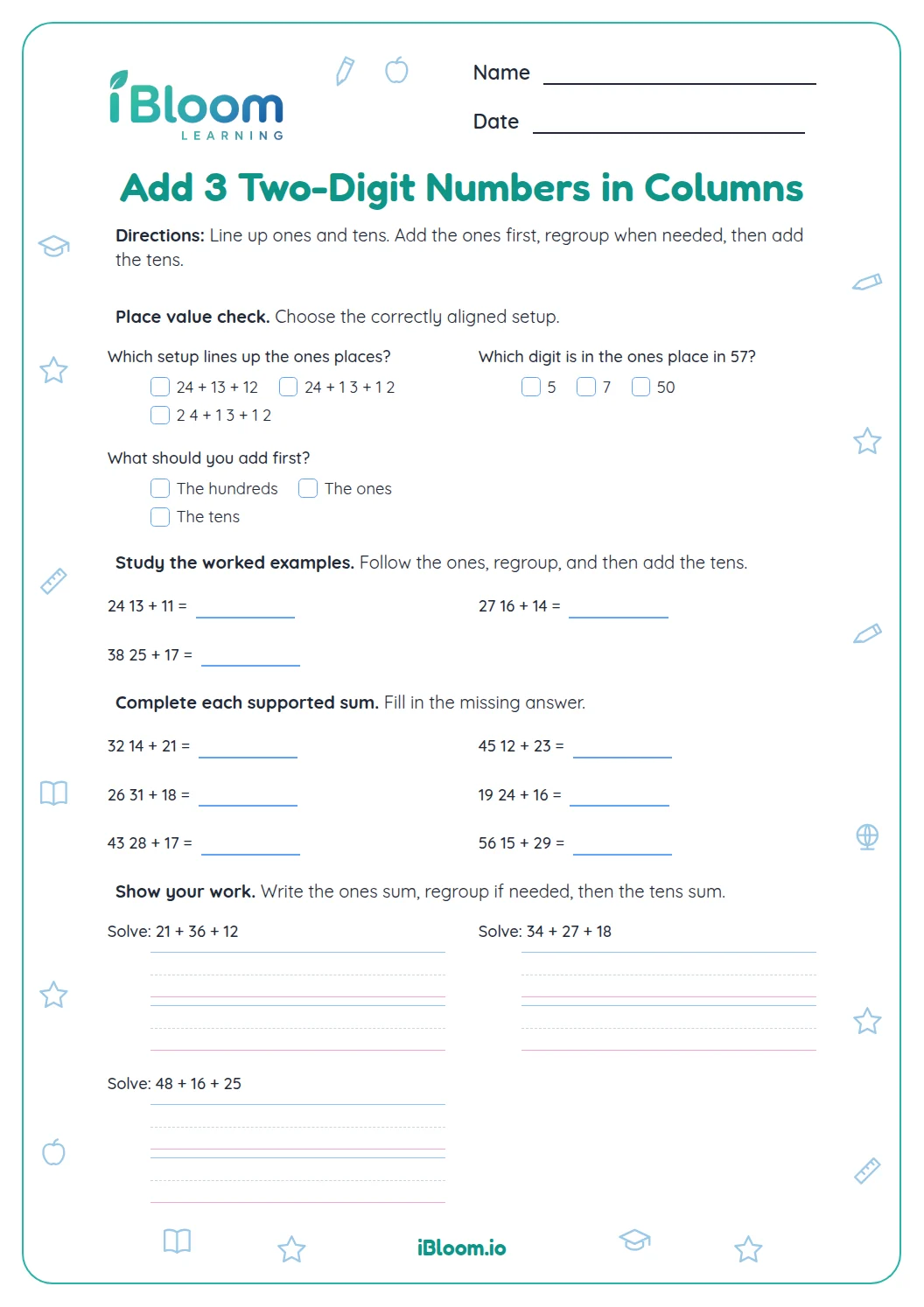
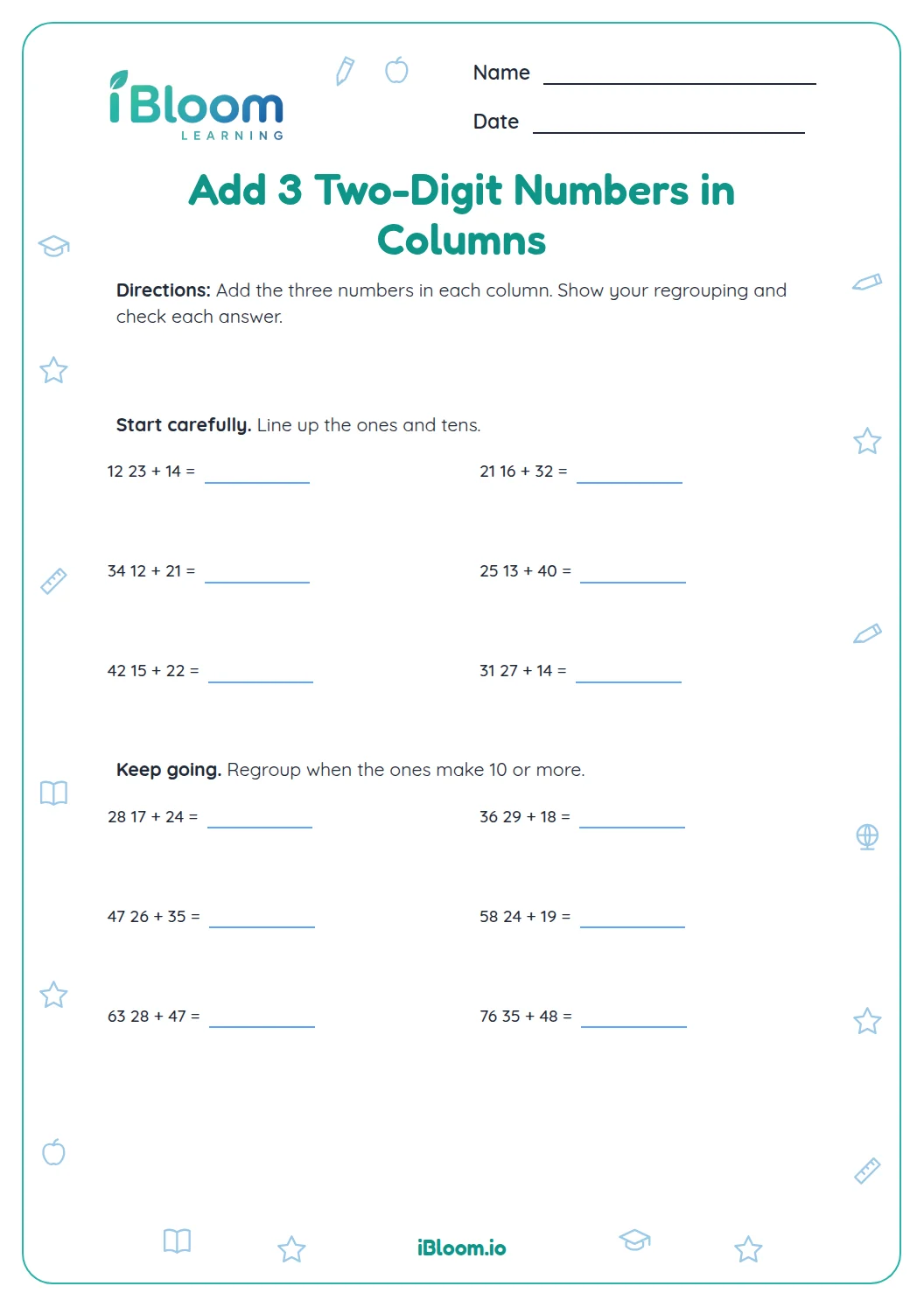
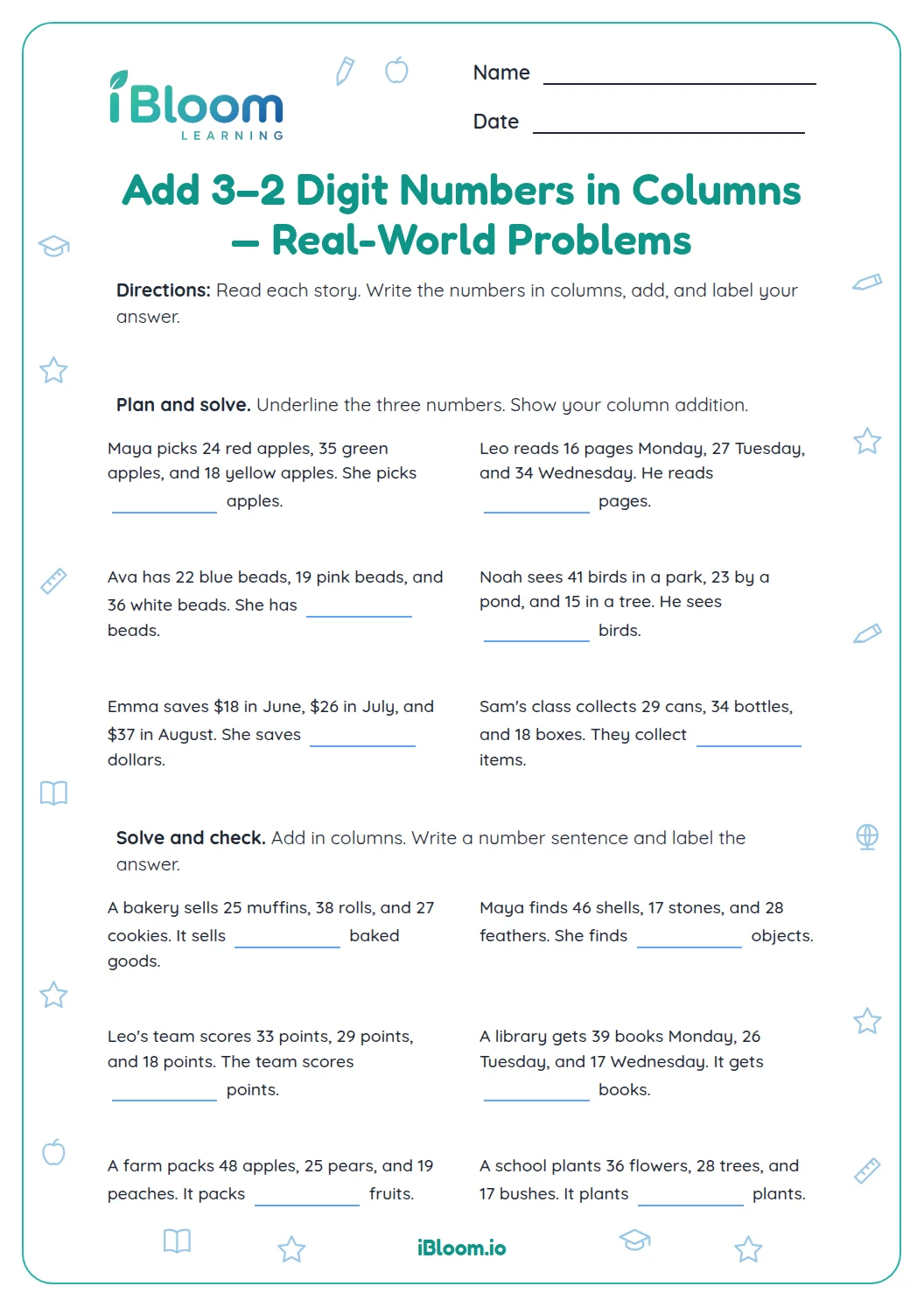
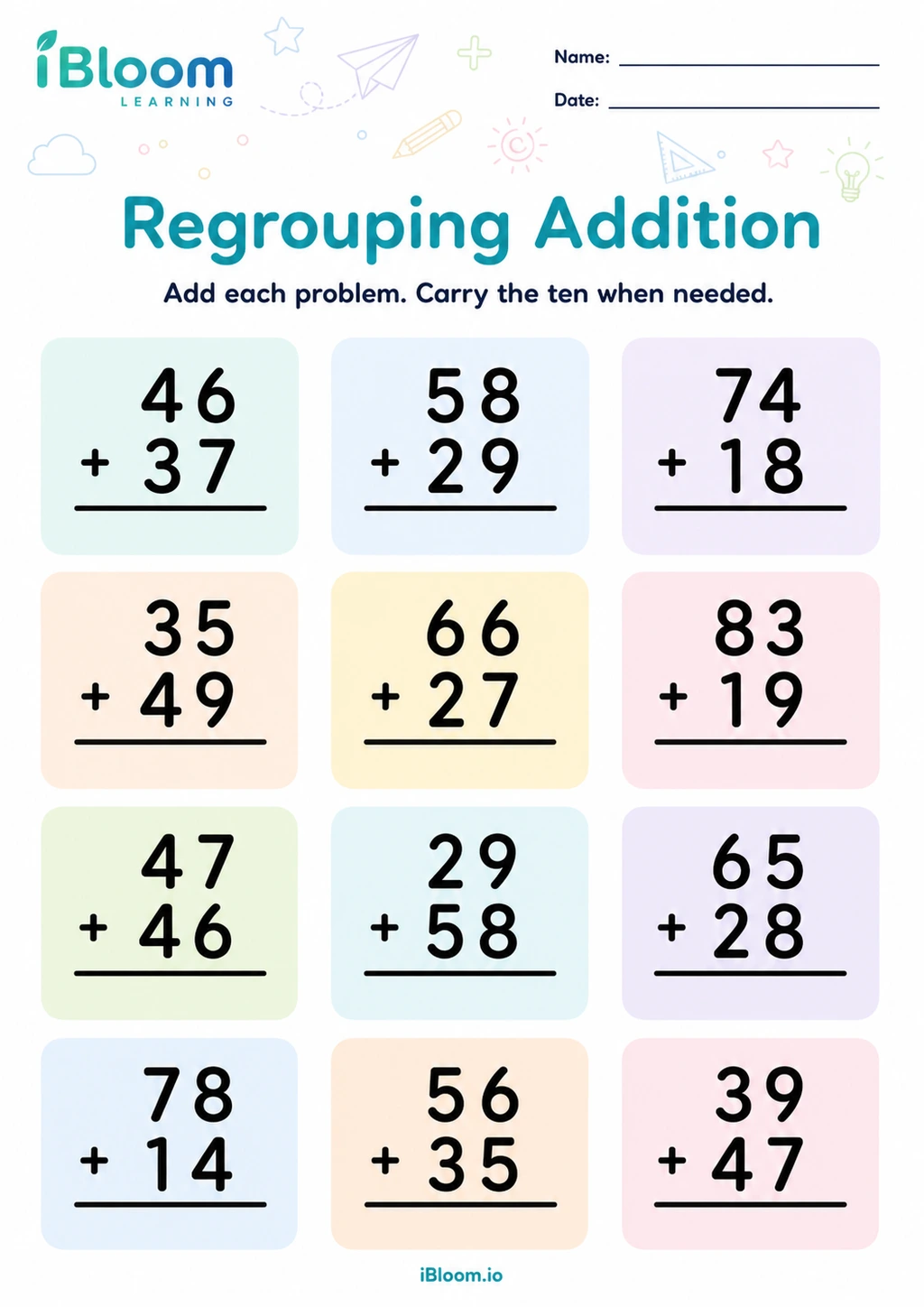
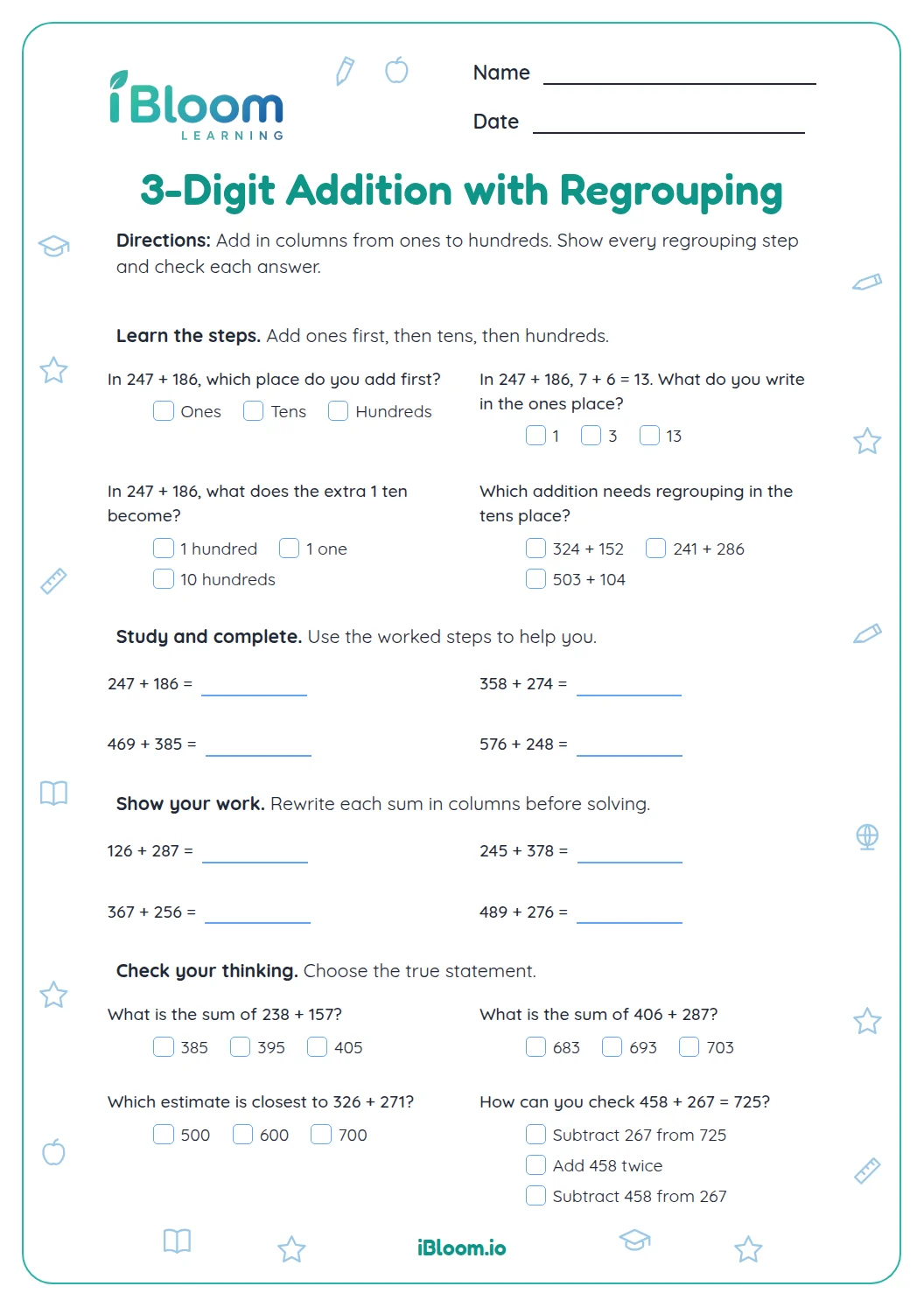
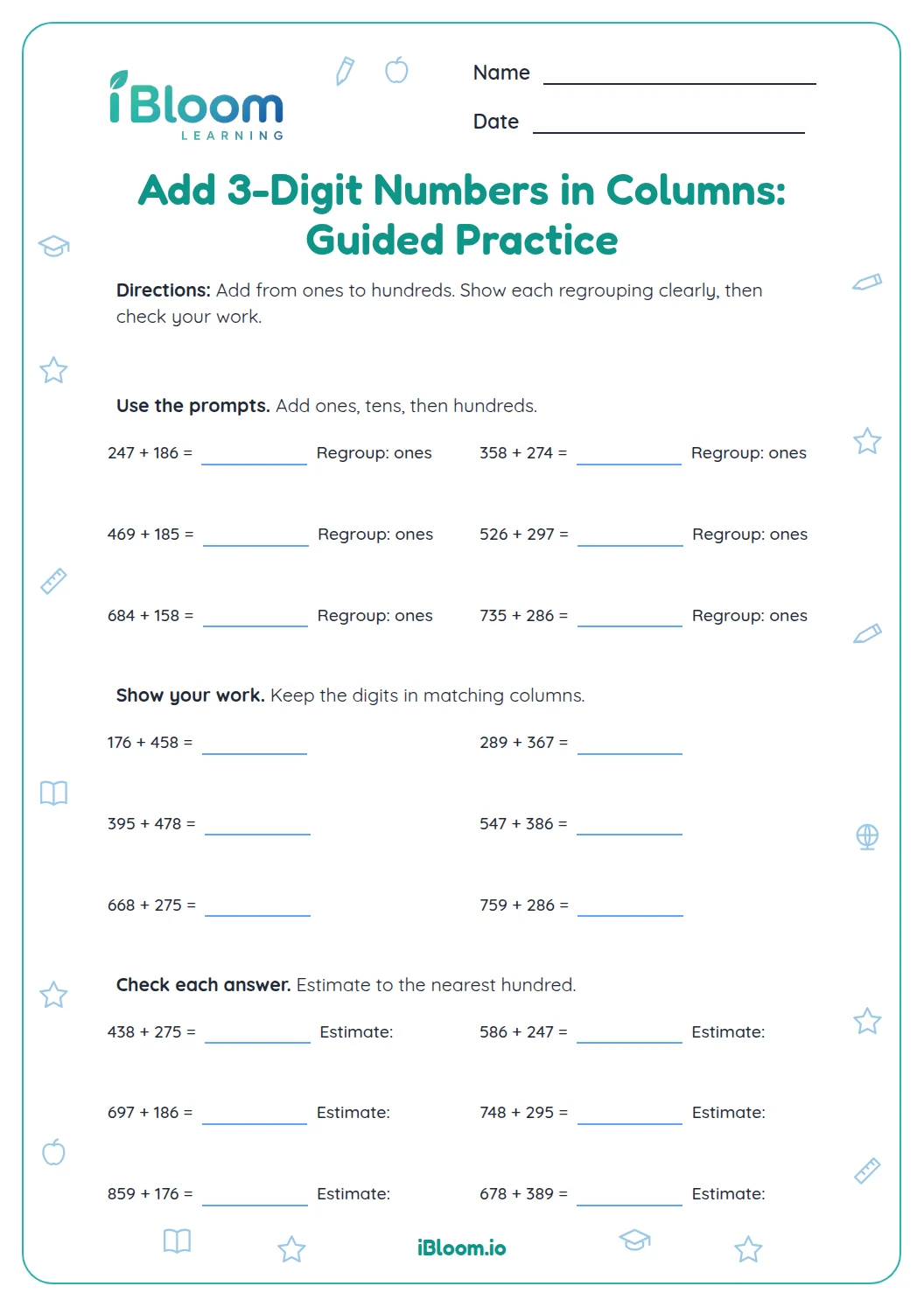
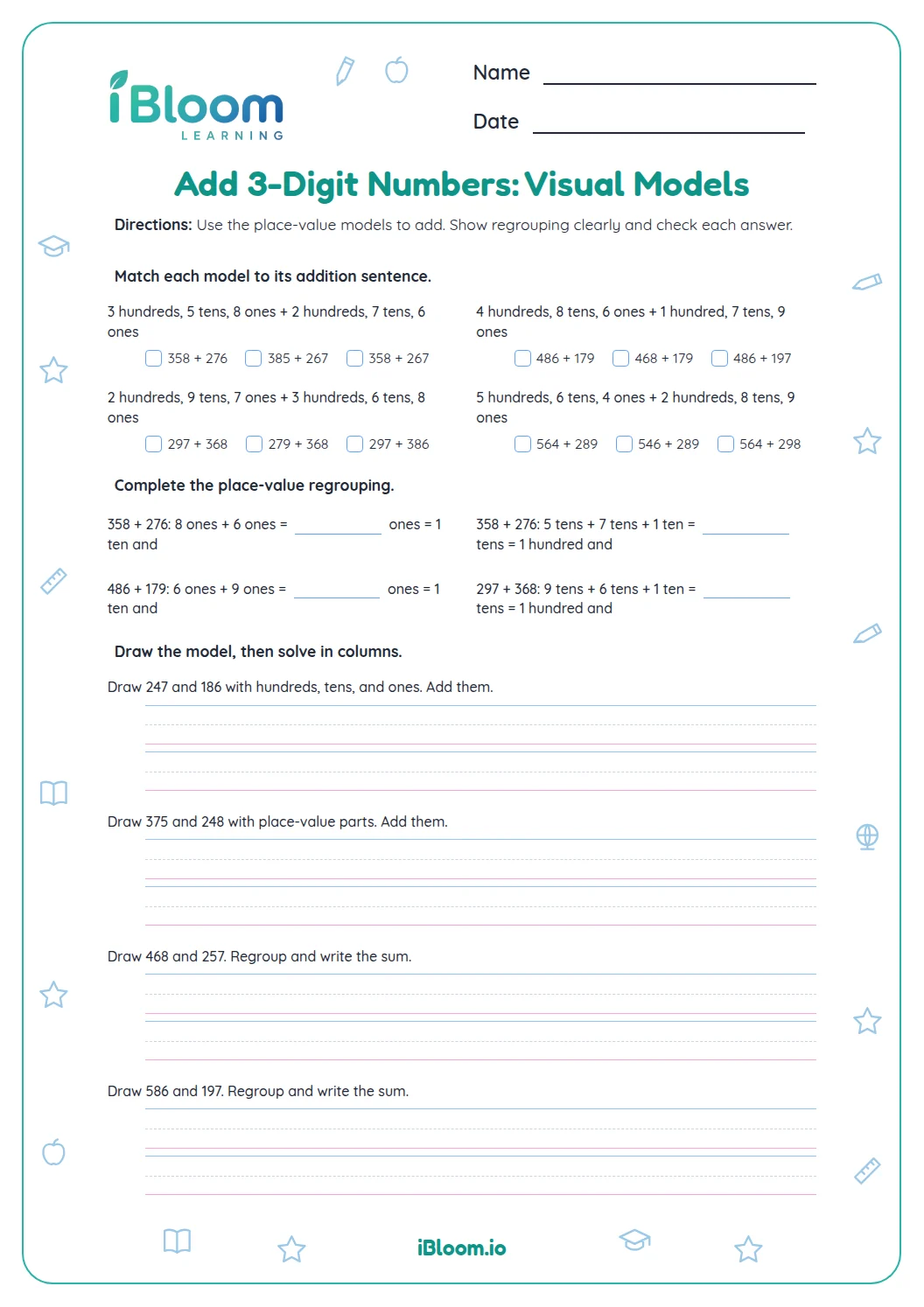
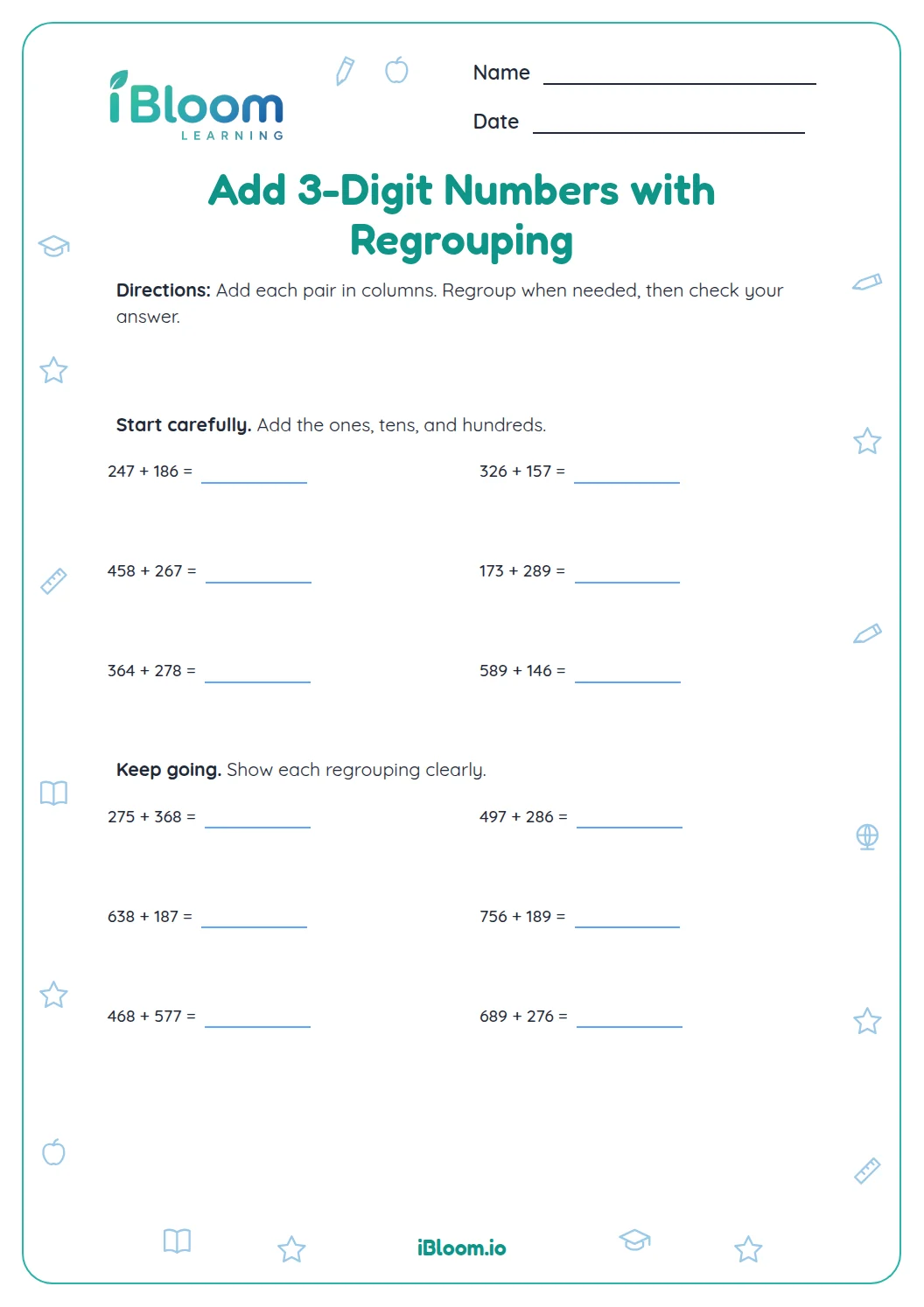
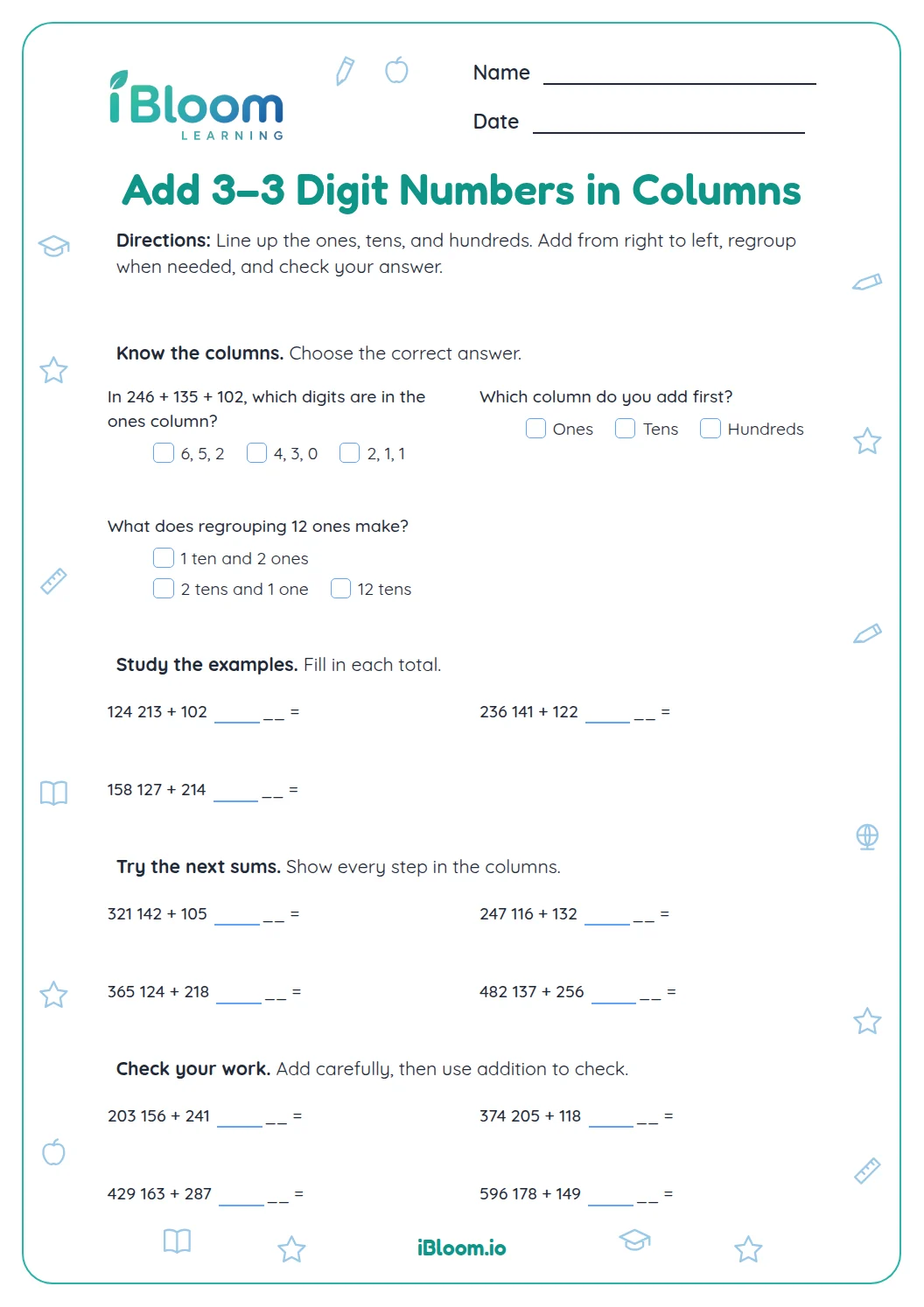
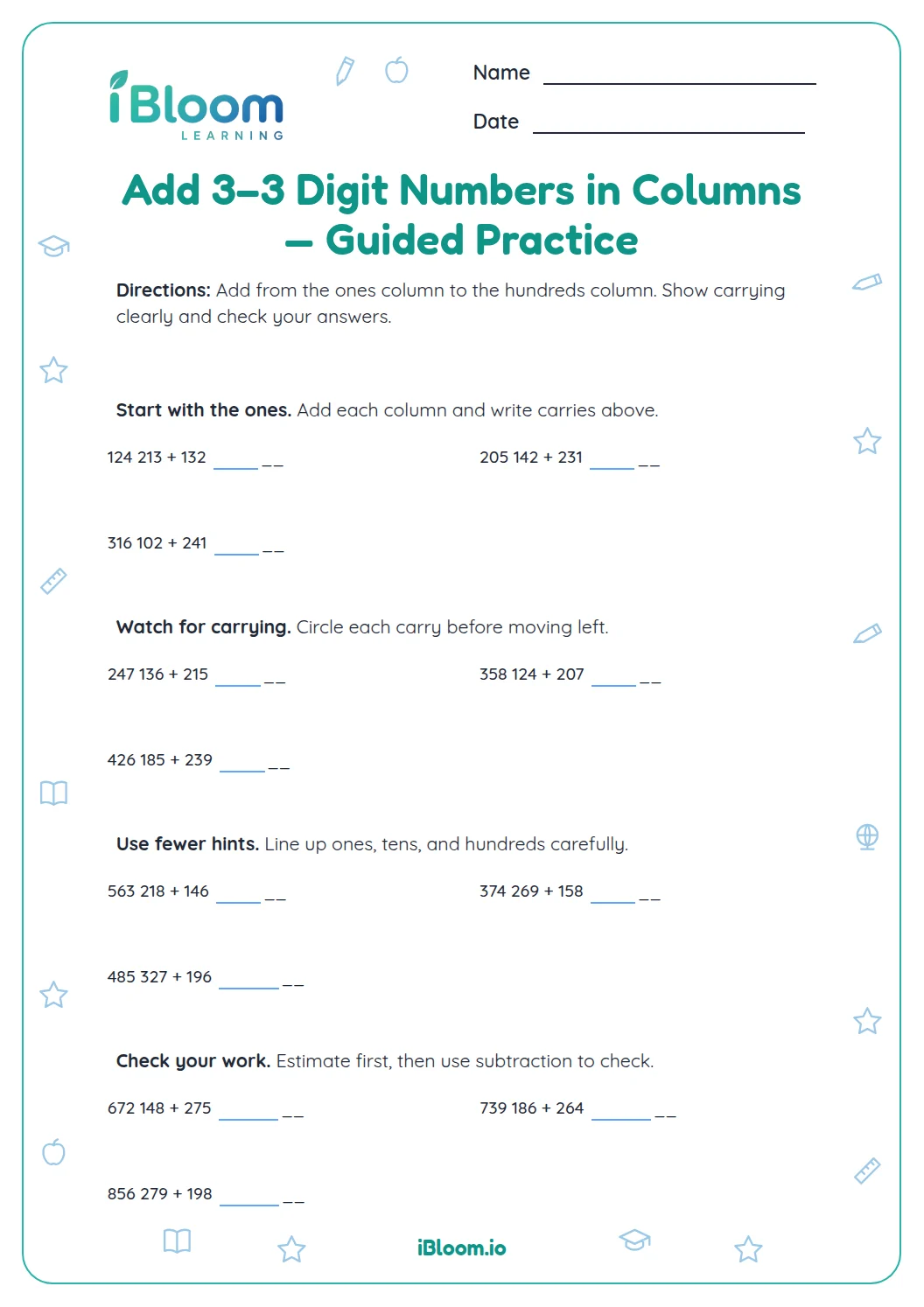
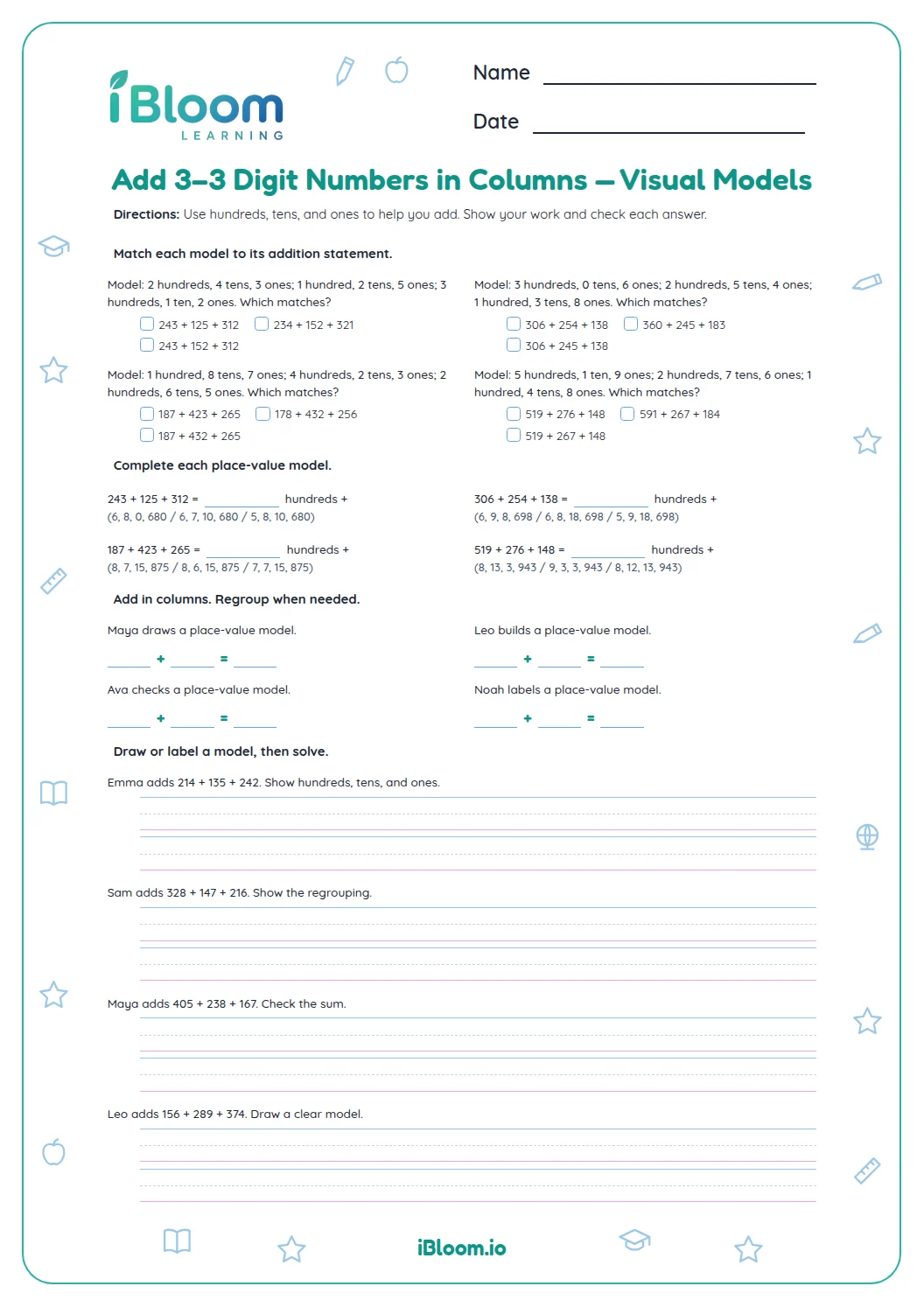
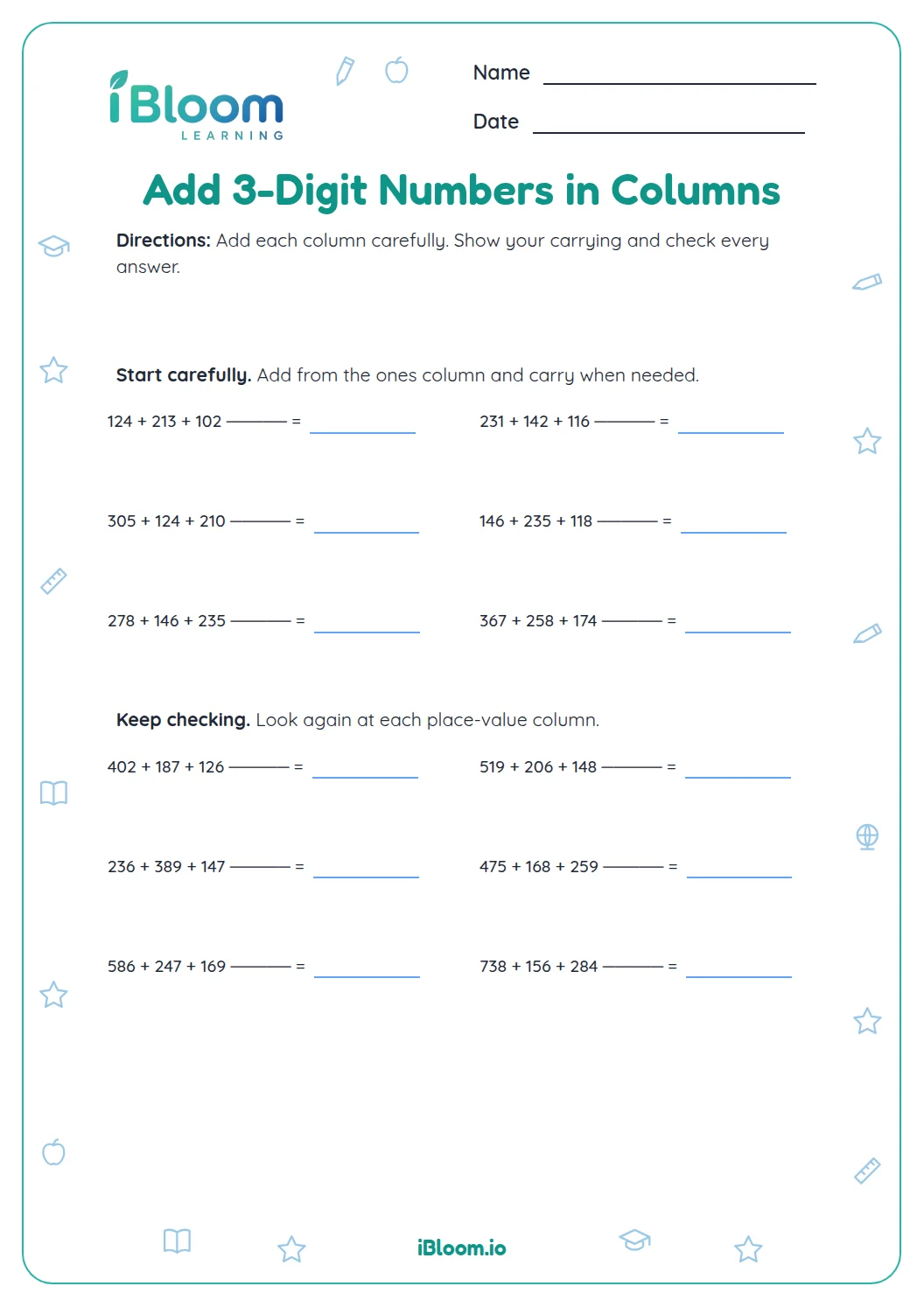
This Grade 2 printable worksheet gives guided practice adding a three-digit number and a two-digit number in columns. Learners line up place values, add ones, tens, and hundreds, and regroup when a column reaches ten. The first eight questions build fluency; the next eight bring in more regrouping. The sums stay within 1,000 and support Common Core 2.NBT.B.7. A separate answer key is included.
Aligned to 2.NBT.B.7
How should numbers line up?
Write the larger number above the smaller number, with the last digits in the same ones column. This places tens under tens and hundreds under hundreds.
When do you regroup?
Regroup when a column totals ten or more. Write the ones digit in that place and carry the tens digit to the next column.
- 1256 + 79
- 2Ones: 6 + 9 = 15. Write 5 ones and regroup 1 ten.
- 3Tens: 5 + 7 + 1 = 13. Write 3 tens and regroup 1 hundred.
- 4Hundreds: 2 + 1 = 3. Answer: 335
What is included in the guided practice?
All 16 questions ask for column addition with one three-digit and one two-digit addend. The first group builds the routine; the second group includes sums that require regrouping across place values. Every answer is under 1,000.
How to use this worksheet
- 1Write the three-digit number on top.
- 2Align ones below ones and tens below tens.
- 3Add the ones digits and regroup if the sum is 10 or more.
- 4Add the tens digits, including any carried ten.
- 5Add the hundreds and check the total with the key.
Common mistakes and quick fixes
The mistake
Adding before lining up the columns.
The fix
Align the rightmost digits first so each place value stays together.
The mistake
Forgetting to add the carried ten.
The fix
Circle or mark the regrouped digit, then include it in the next column.
The mistake
Writing both digits of a column total in one place.
The fix
Write only the ones digit in that column and regroup the tens.
Common Core alignment
This practice connects the worksheet activities to the following standard.
Add within 1,000 by place value and connect the work to written columns.
On this sheet: The 16 column sums combine a three-digit and a two-digit addend, with and without regrouping.
Show the official wordingHide the official wording
Add and subtract within 1000, using concrete models or drawings and strategies based on place value, properties of operations, and/or the relationship between addition and subtraction; relate the strategy to a written method. Understand that in adding or subtracting three-digit numbers, one adds or subtracts hundreds and hundreds, tens and tens, ones and ones; and sometimes it is necessary to compose or decompose tens or hundreds.
What to practice next
Make more practice
Further reading
Questions parents and teachers ask
How do you add a three-digit and a two-digit number in columns?
Write the numbers so the ones digits, tens digits, and hundreds digits line up. Add the ones first, regroup a ten if the ones sum is 10 or more, then add tens and hundreds. This worksheet gives space to set up and solve each sum.
Does every problem need regrouping?
No. The first group includes sums where the place-value columns can be added without a regroup in at least one step. The second group asks learners to handle regrouping. Read each column carefully; whether regrouping is needed depends on the digits in that problem.
What does regrouping mean?
Regrouping means composing ten ones as one ten, or composing ten tens as one hundred. For example, if the ones add to 13, write 3 in the ones place and carry 1 ten into the tens column before adding that column.
Why should the numbers be lined up?
Correct alignment keeps each place value together. Ones belong under ones, tens under tens, and hundreds under hundreds. Misalignment can produce a plausible-looking answer that adds unlike place values, so check the columns before calculating the total. Correct columns make the written method easier to check.
Are the sums within the Grade 2 range?
Yes. Each problem adds one three-digit number and one two-digit number, and every sum stays below 1,000. The problems are designed for written place-value addition, including regrouping when a column total reaches ten or more. Check the largest total, 804, in the final practice group.
Is there an answer key?
Yes. The separate key lists the sum for all 16 items. Learners should first show their column work, then compare the final total with the key and revisit any place where the regrouped digit was not included in the next column.