

About this worksheet
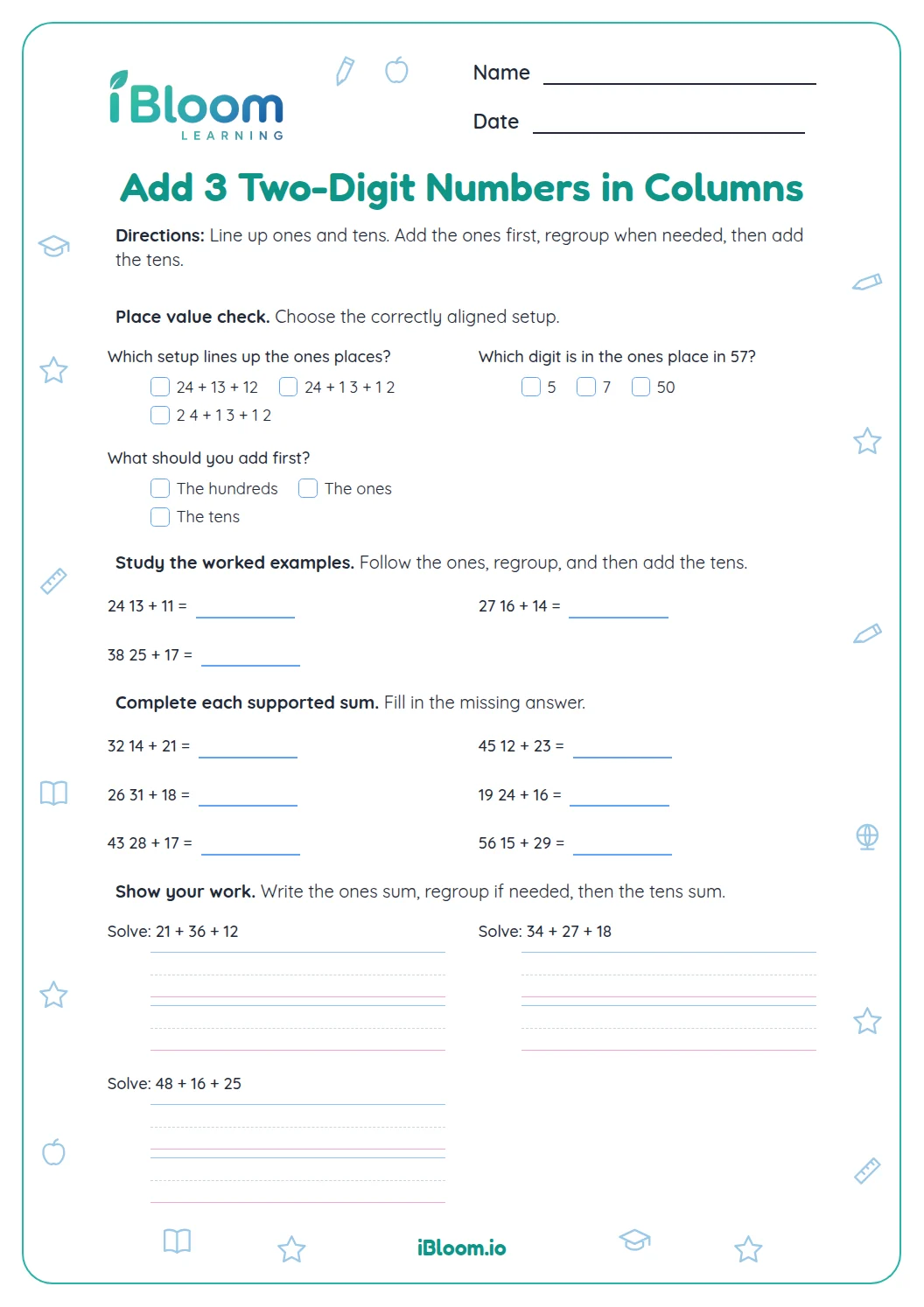
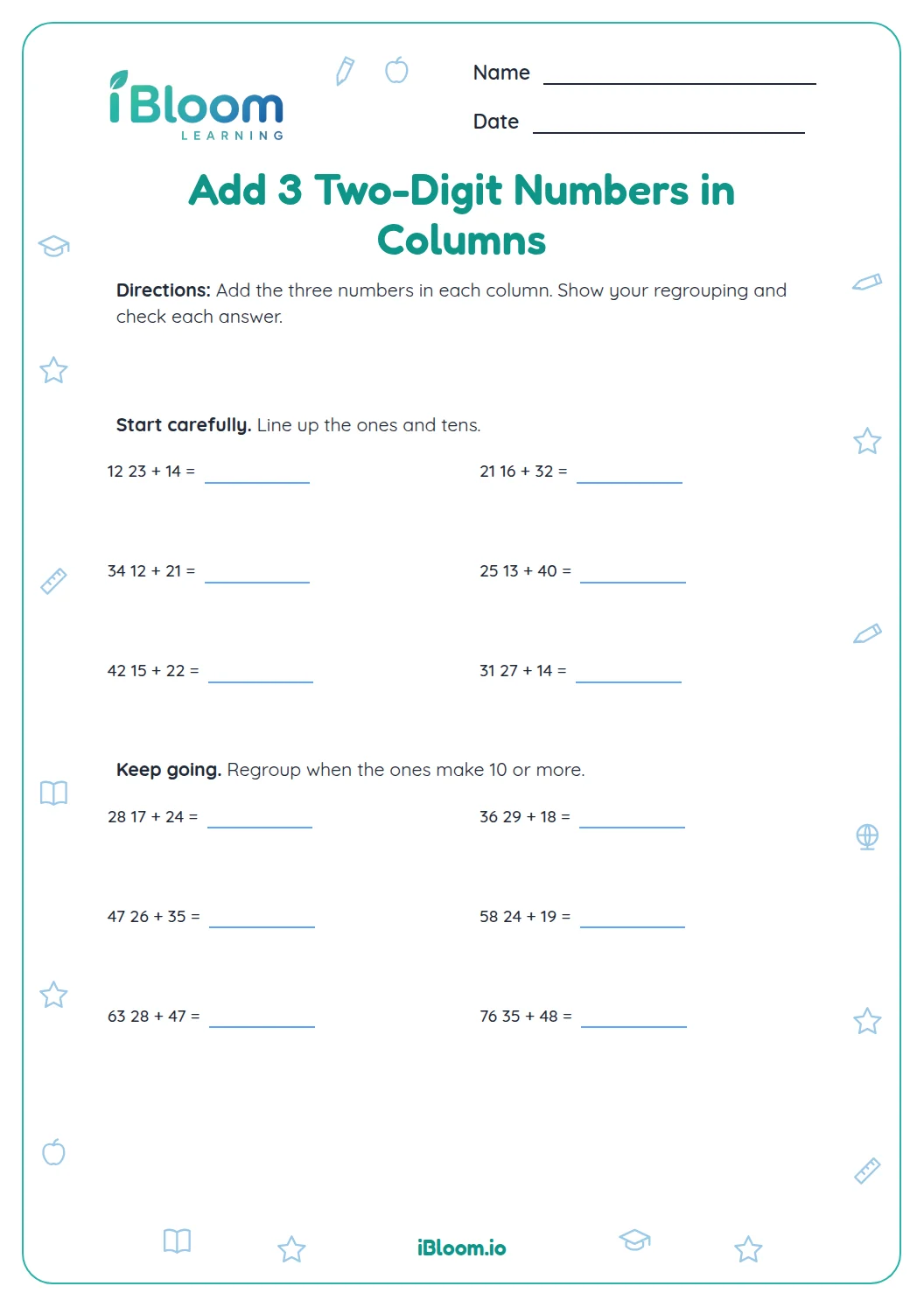
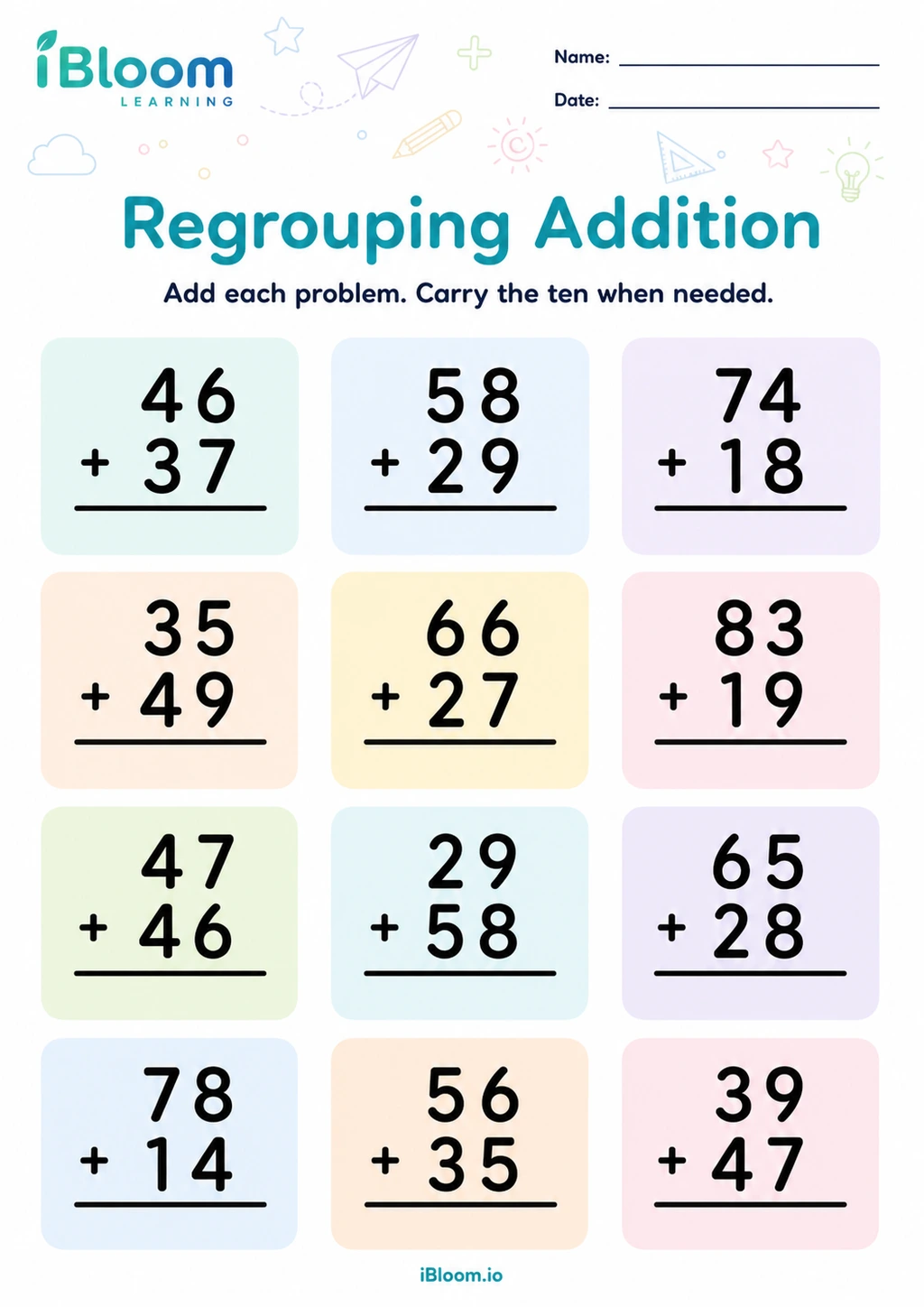
This Grade 2 worksheet builds three two-digit addends into a column sum. Tens-and-ones models support selected problems, while regrouping practice and short stories ask students to add all three numbers and record the total.
Aligned to 2.NBT.B.6
See tens and ones
A two-digit number is made of tens and ones. In 24, there are 2 tens and 4 ones. Add the ones across all three addends first. Ten ones can be traded for one ten.
Regroup, then finish the tens
After combining the ones, write any new ten with the tens. Then add the tens columns. For 24 + 35 + 18, the ones make 17: keep 7 ones and add 1 ten to the tens total.
What students practice
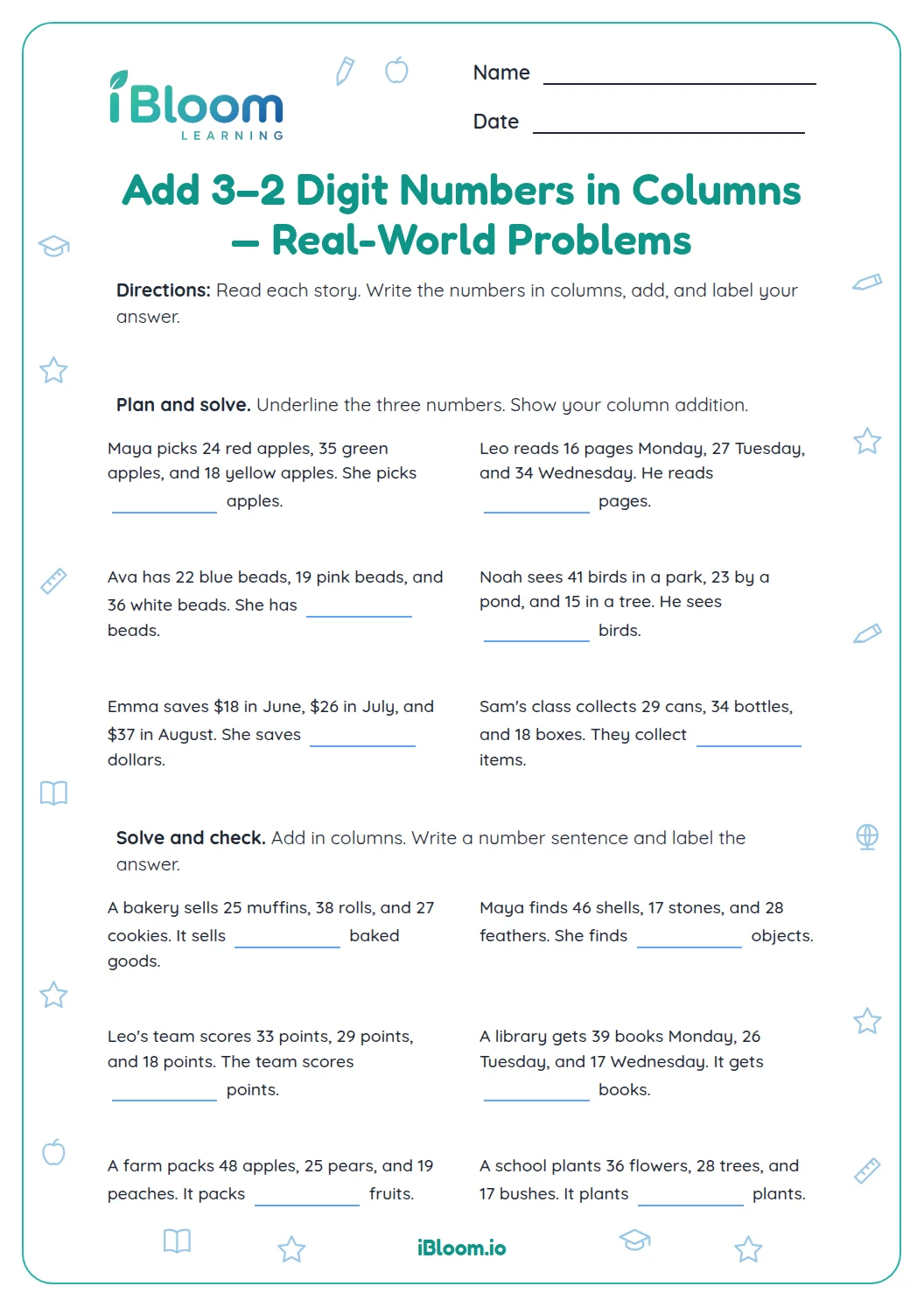
Questions 1–6 introduce the model and build regrouping fluency. Questions 7–12 add more three-number sums. Questions 13 and 14 use addition in short contexts.
Try the blocks and columns together
- 1Look at the first addend’s blocks and name its tens and ones.
- 2Add the three ones digits. Trade ten ones for one ten if needed.
- 3Add that new ten to the tens column.
- 4Write the sum and check that the total is close to the combined tens and ones.
Common addition slips
The mistake
Adding the tens but forgetting a ten regrouped from the ones.
The fix
Record the carried ten above the tens column before adding.
The mistake
Combining only two addends and stopping.
The fix
Track all three rows in the ones column, then all three in the tens column.
Common Core alignment
This page practices the grade-level skill named below.
Add up to four two-digit numbers using place value strategies.
On this sheet: Each exercise adds three two-digit numbers using place value and regrouping.
Show the official wordingHide the official wording
Add up to four two-digit numbers using strategies based on place value and properties of operations.
What to practice next
Make more practice
Further reading
Questions parents and teachers ask
Why add the ones before the tens?
Add all three ones digits first. If they make ten or more, trade each group of ten ones for one ten and write the remaining ones. Add the tens digits and any new ten together to find the sum.
Can a three-number sum be more than 100?
Yes. For example, 46 + 27 + 38 equals 111. There are 11 tens and 1 one, which can be regrouped as 1 hundred, 1 ten, and 1 one. The blocks and place-value columns help show why the total passes 100.
What do the blocks represent?
The long blocks stand for tens, while small cubes stand for ones. For example, 24 is shown with 2 tens and 4 ones. Students then combine that amount with the other two addends, trading ten ones for one ten when needed.
Is there a key?
Yes. The separate answer key gives a result for each of the sixteen questions. For the story problems, it also includes the quantity label. Written addition can be checked by adding the first two numbers and then combining the third.
What should students do with 10 or more ones?
Trade each group of 10 ones for 1 ten. For example, 8 + 7 + 6 makes 21 ones, or 2 tens and 1 one. Add those 2 tens to the tens from all three addends, then record the total.