
About this worksheet
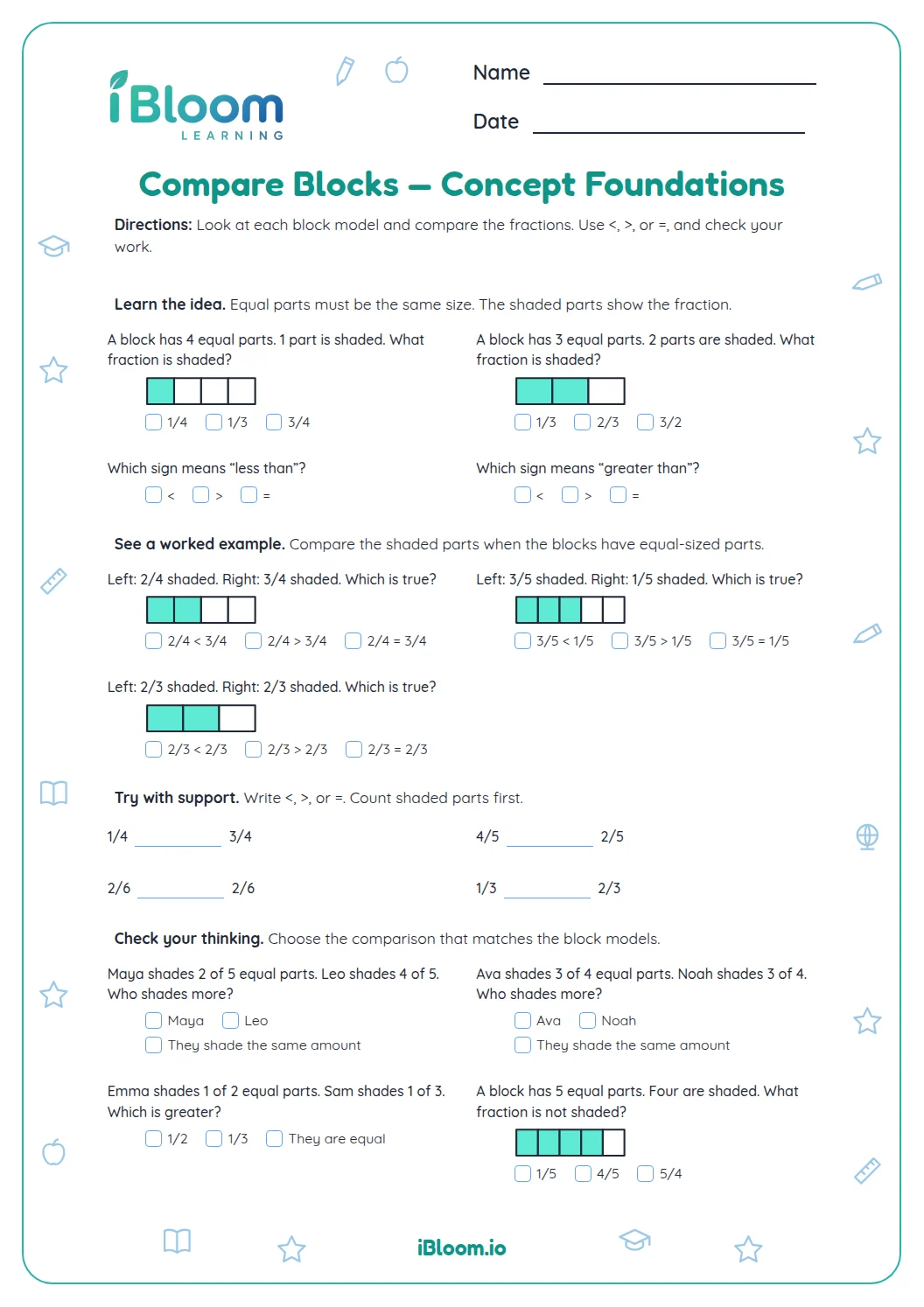
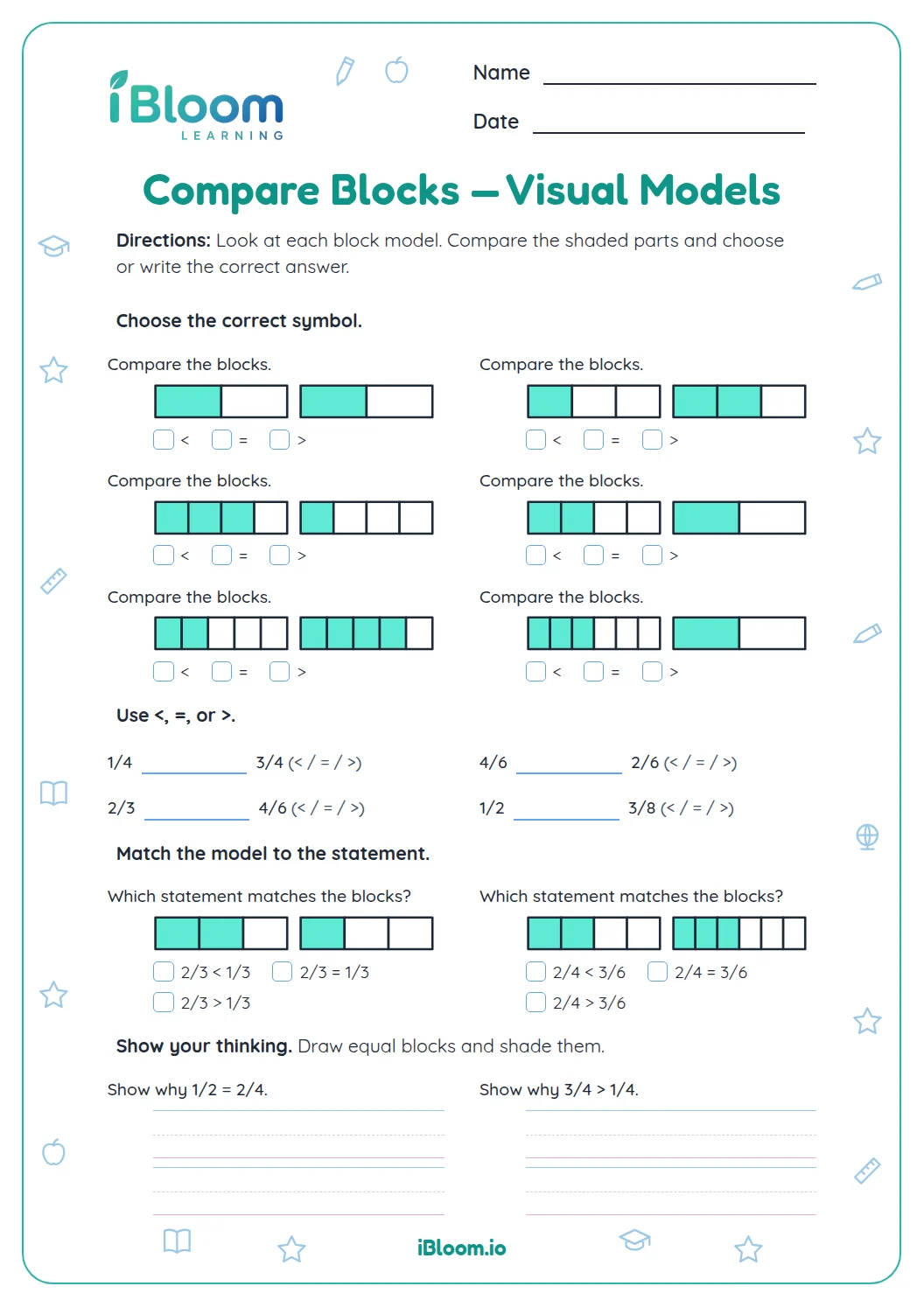
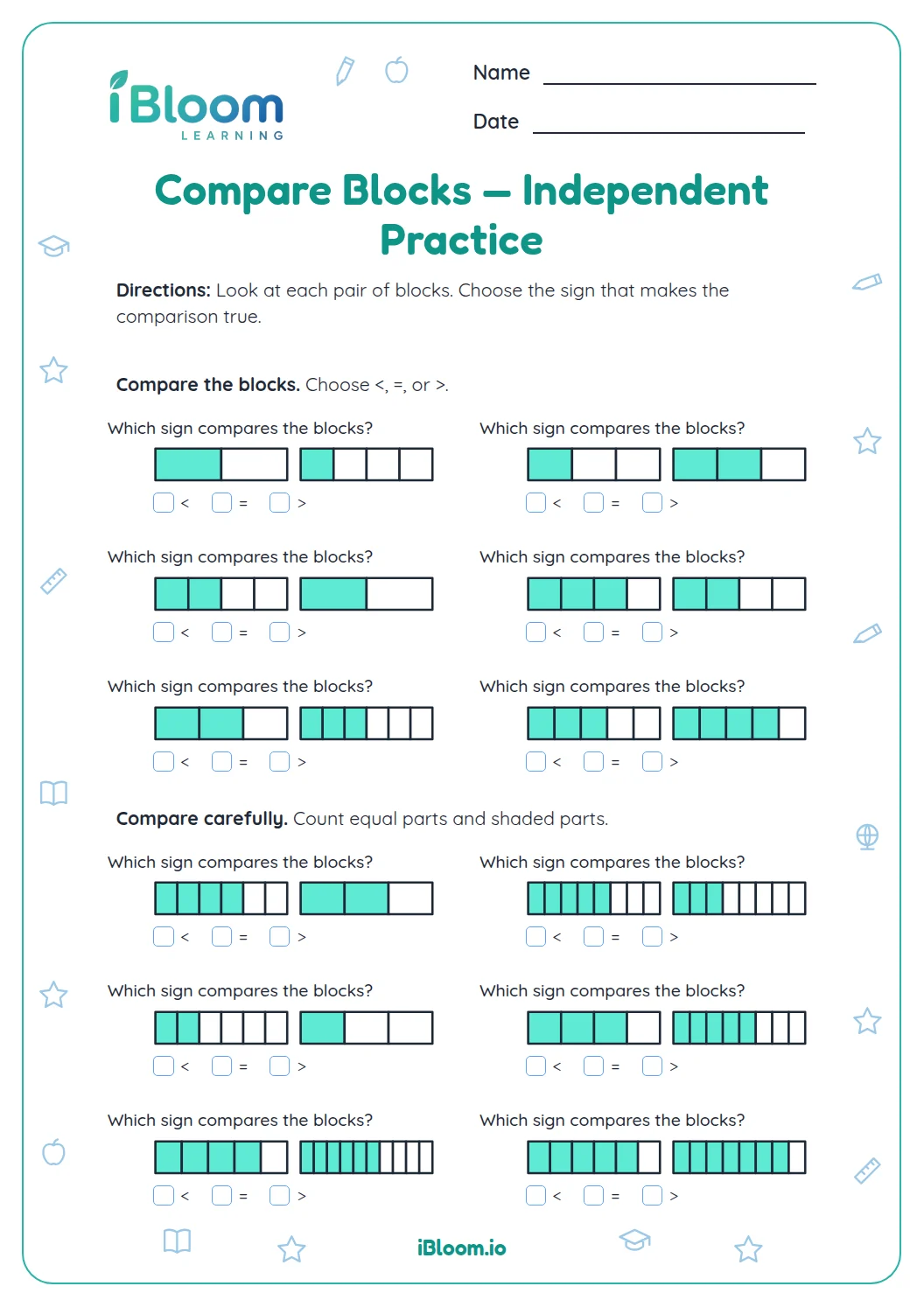
The fraction bars show equal parts. Compare how much is shaded with the second fraction, then record the correct comparison symbol.
Aligned to 2.G.A.3
What makes a fair fraction comparison?
A fraction model is divided into equal parts. The denominator tells how many equal pieces make one whole; the numerator tells how many pieces are shaded.
When pieces have the same size, compare how many are shaded. When denominators differ, think about the size of each piece or use 1/2 and 1 whole as helpful benchmarks.
What does this worksheet include?
Part A compares fractions with the same denominator. Part B compares different partitions and equivalent fractions. Part C uses benchmarks and equivalents. Every question includes a shaded bar for the first fraction.
Compare one step at a time
- 1Count the equal parts in the bar and note how many are shaded.
- 2Compare the shown fraction with the fraction beside it.
- 3Write <, >, or = in the blank.
- 4For different denominators, compare the size of each part or use an equivalent fraction.
- 5Check the symbol with the answer key.
Check your thinking
The mistake
Thinking a fraction with a larger denominator is always larger.
The fix
Remember that more equal parts make smaller pieces; compare the shaded amount and piece size.
Common Core alignment
The activity supports early fraction understanding through equal-part models.
Partition circles and rectangles into equal shares.
On this sheet: Students interpret shaded equal parts in bars as unit fractions and compare their amounts.
Show the official wordingHide the official wording
Recognize that equal shares of identical wholes need not have the same shape.
What to practice next
Questions parents and teachers ask
How many questions are on this worksheet?
There are 14 comparison problems. Each one shows a shaded fraction bar and asks learners to compare the displayed fraction with another fraction by writing <, >, or = in the blank. Learners can point to the shaded amount before choosing its comparison symbol.
How can learners check their answers?
Check that the bar is split into equal pieces, then compare the shaded amount with the other fraction. For different denominators, think about piece size, an equivalent fraction, or a familiar benchmark to decide. For unlike denominators, equal-size pieces make the two shaded amounts easier to compare.
Can I use this worksheet at home?
Yes. A learner can point to the shaded bar and explain which amount is greater before writing a comparison sign. Use the separate answer key to check all 14 symbols afterward and discuss any errors. Ask the learner to point to the model before choosing its comparison symbol.
What skill does this page practice?
The questions use halves, thirds, fourths, sixths, and eighths. Same-denominator comparisons come first, followed by unlike denominators, equivalent fractions, and familiar benchmarks using the fraction bars. Equivalent fractions show why some differently written amounts are exactly equal. These models keep the parts equal.