


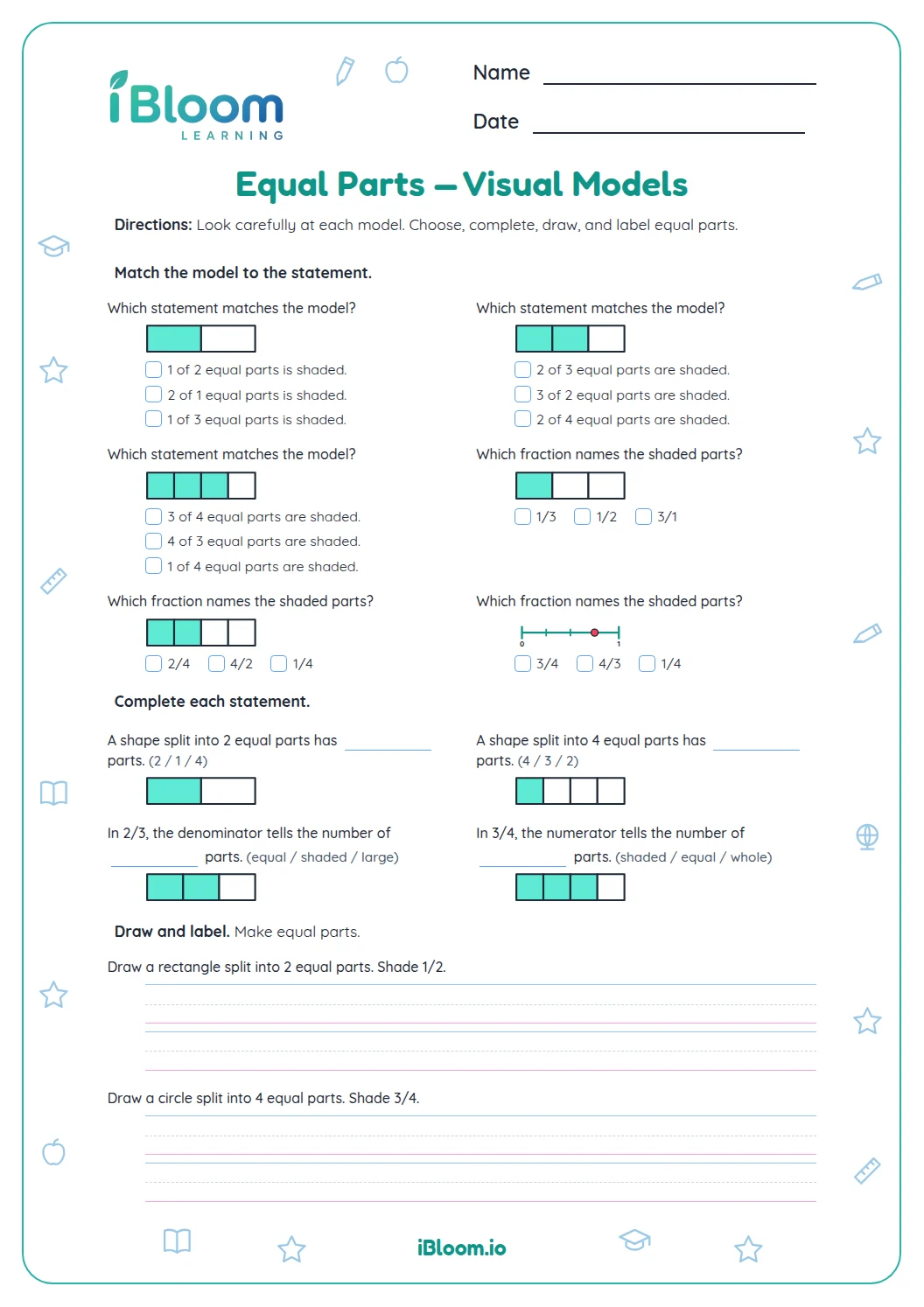
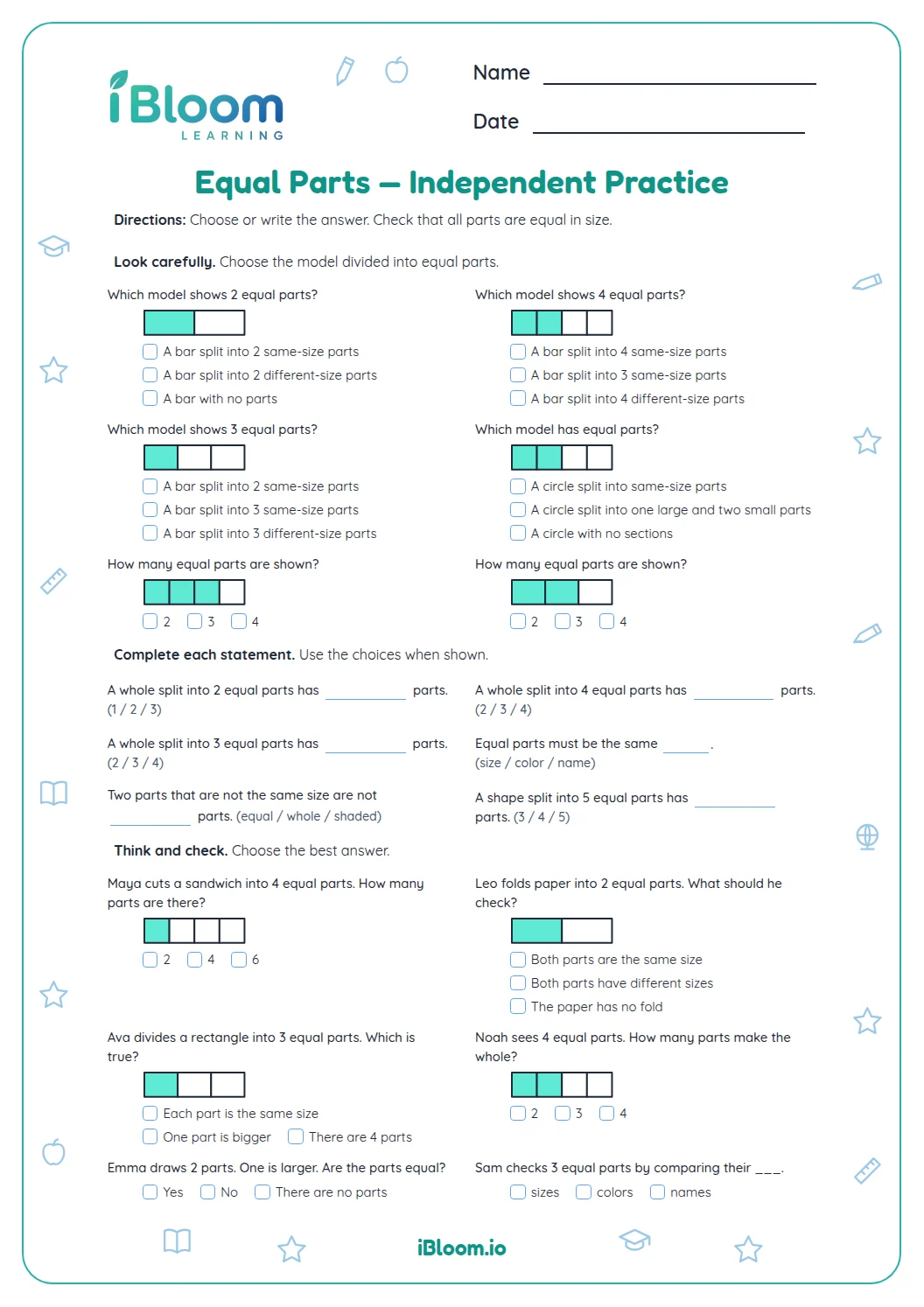
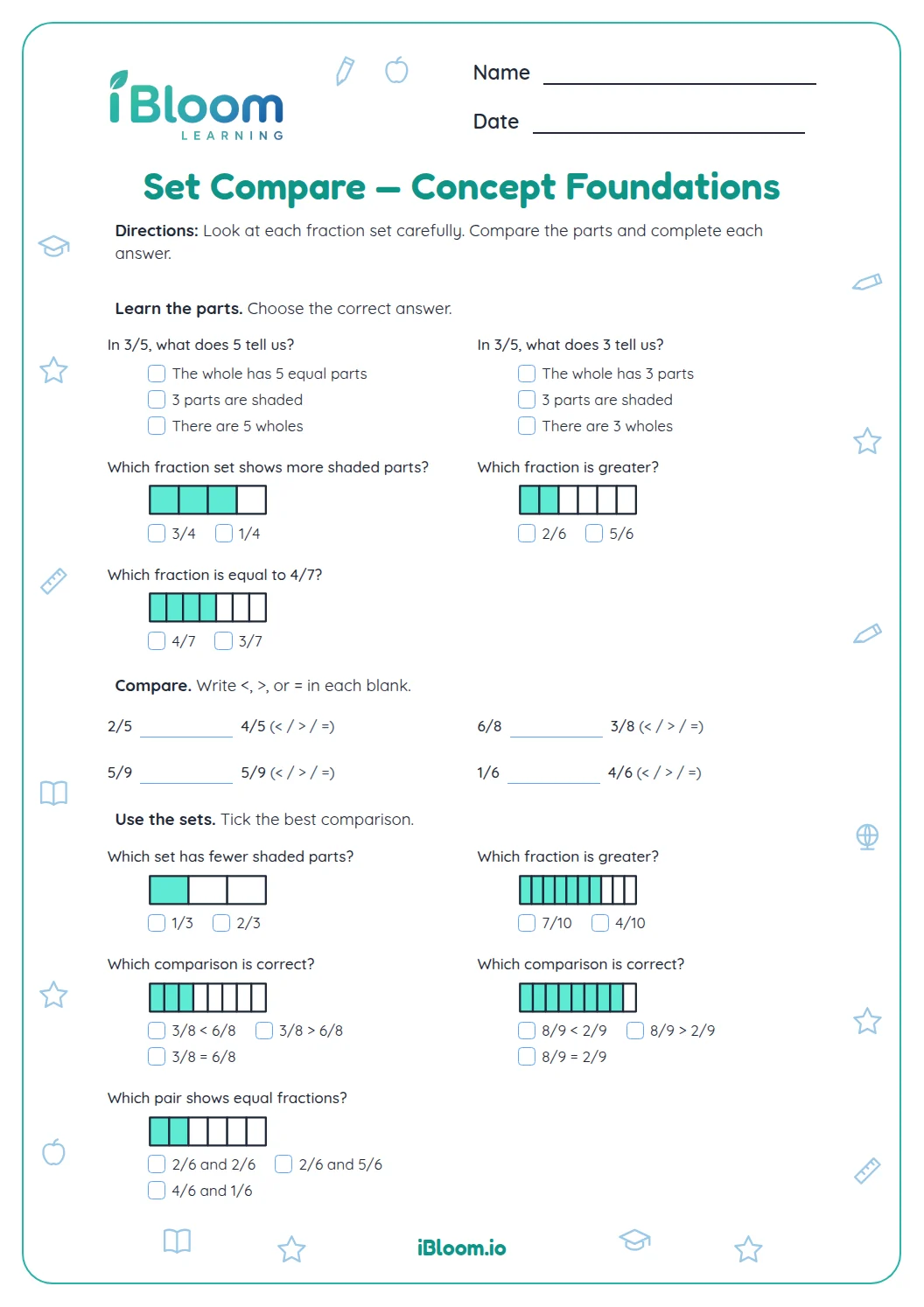
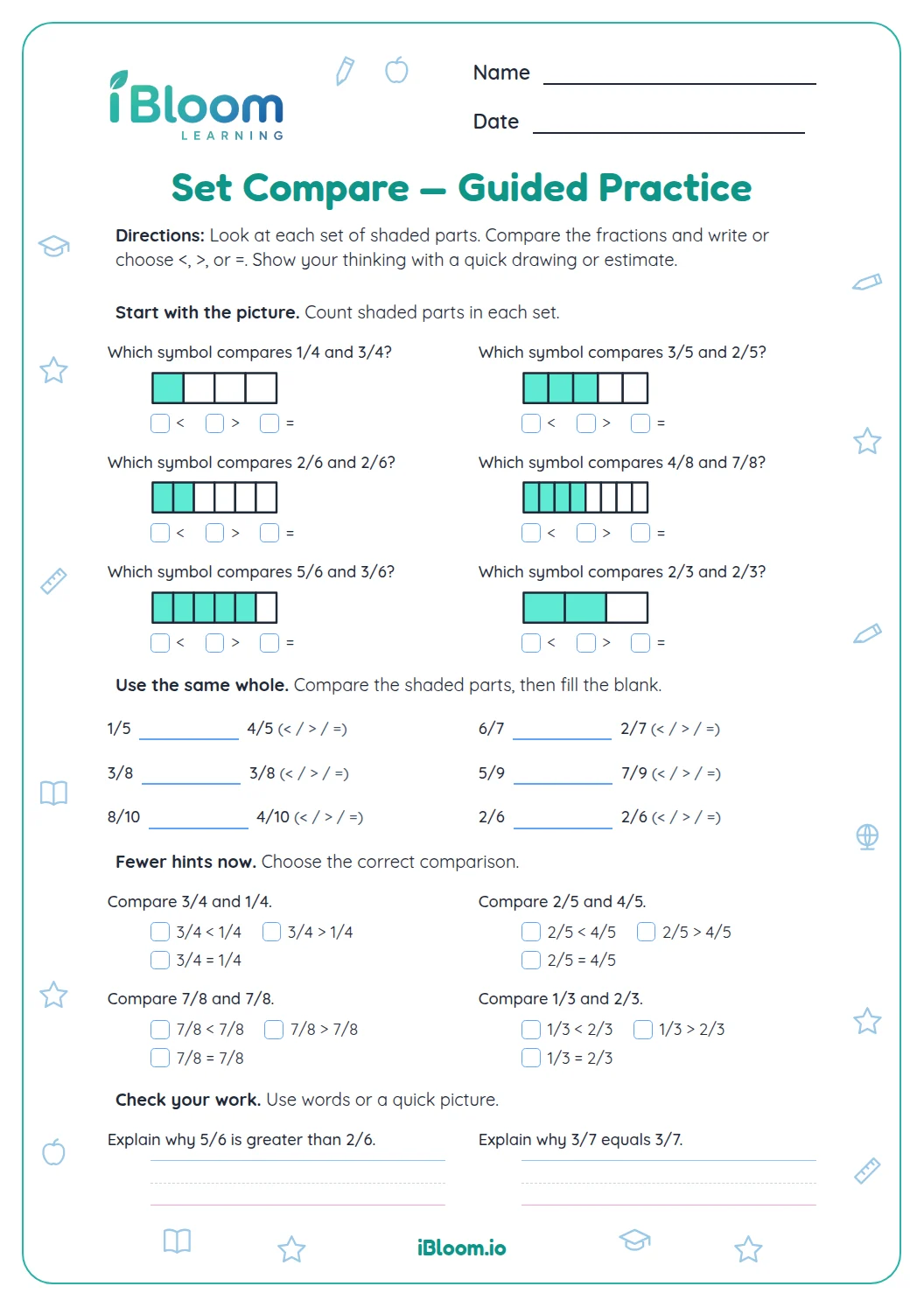
About this worksheet
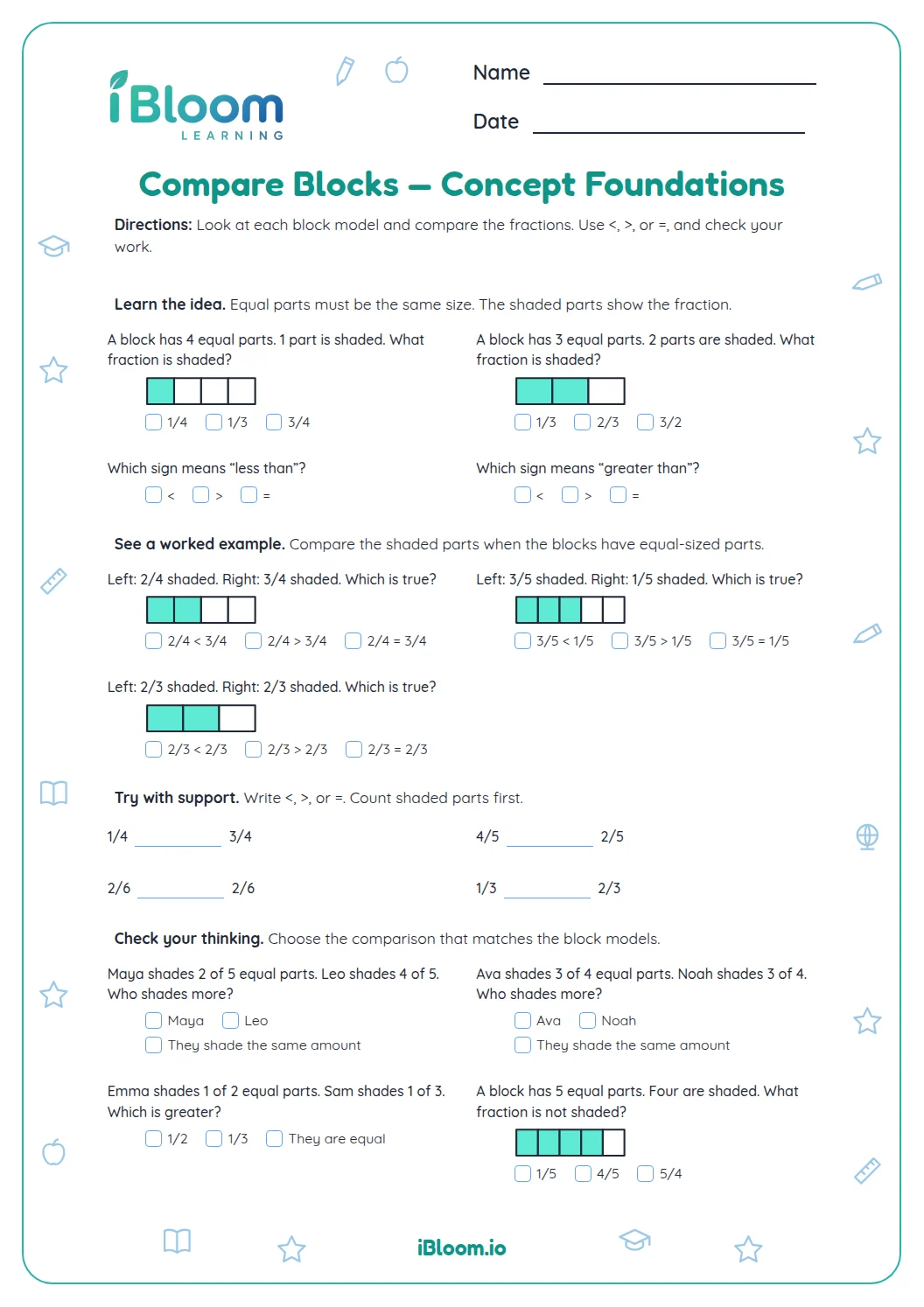
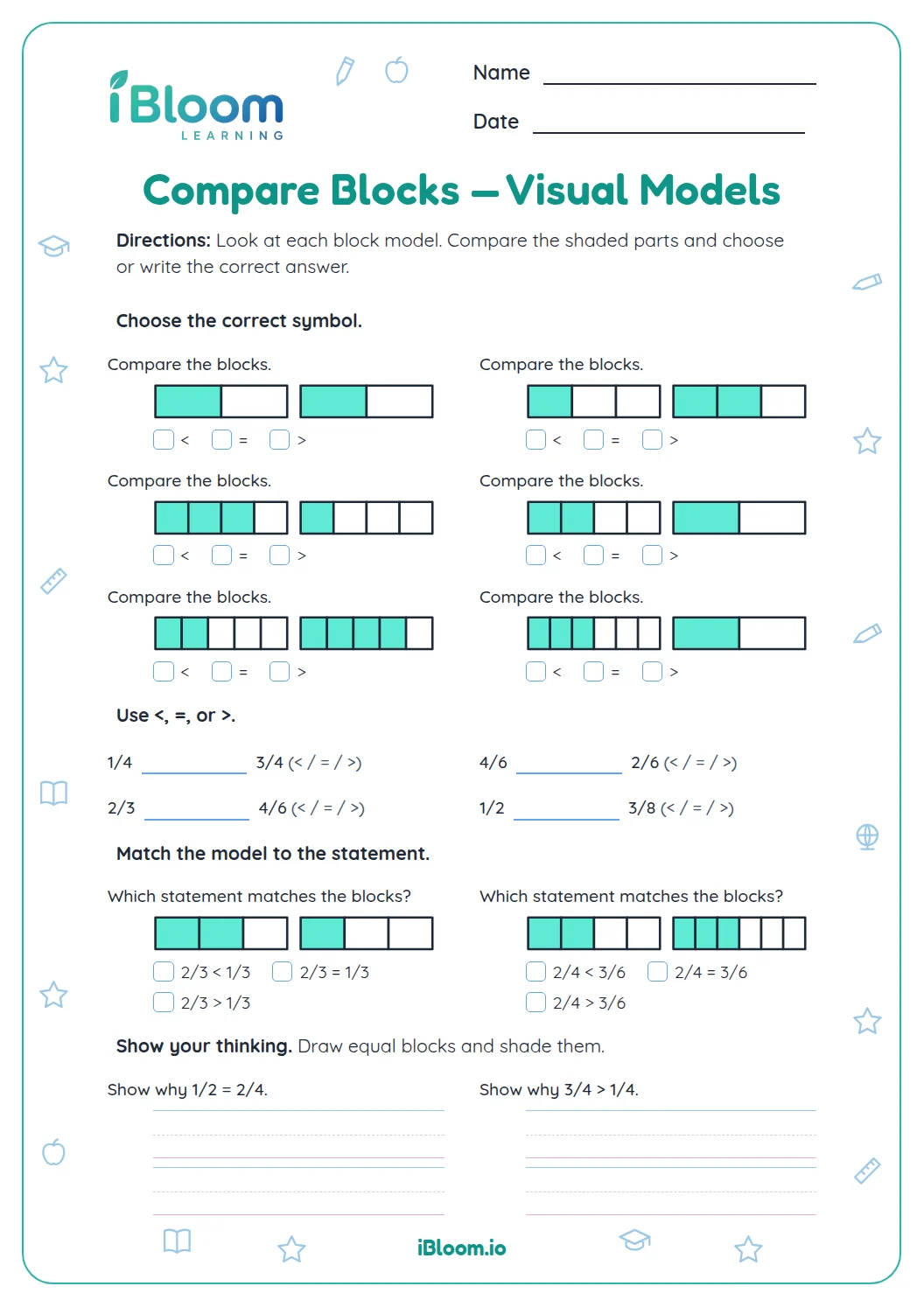
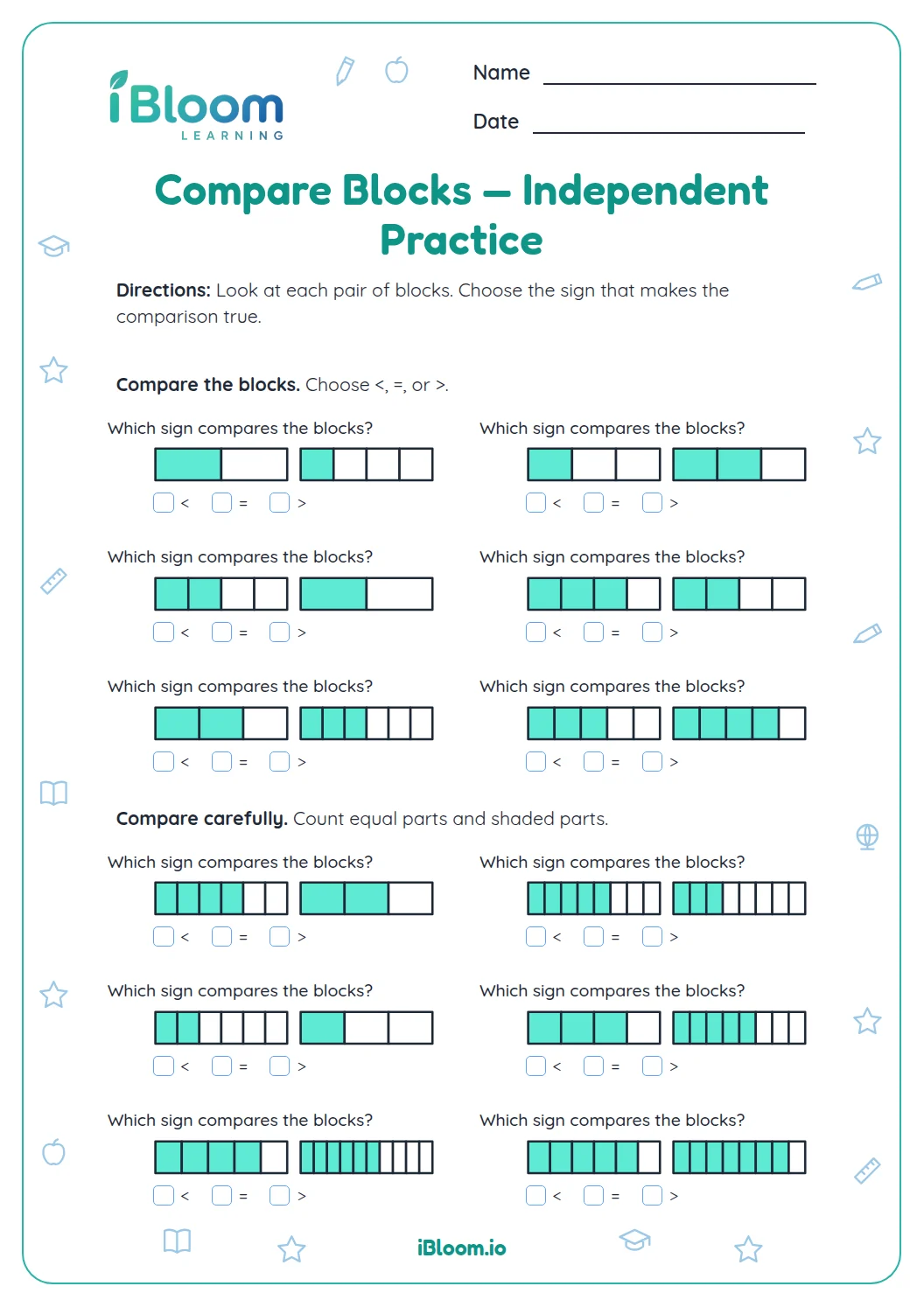
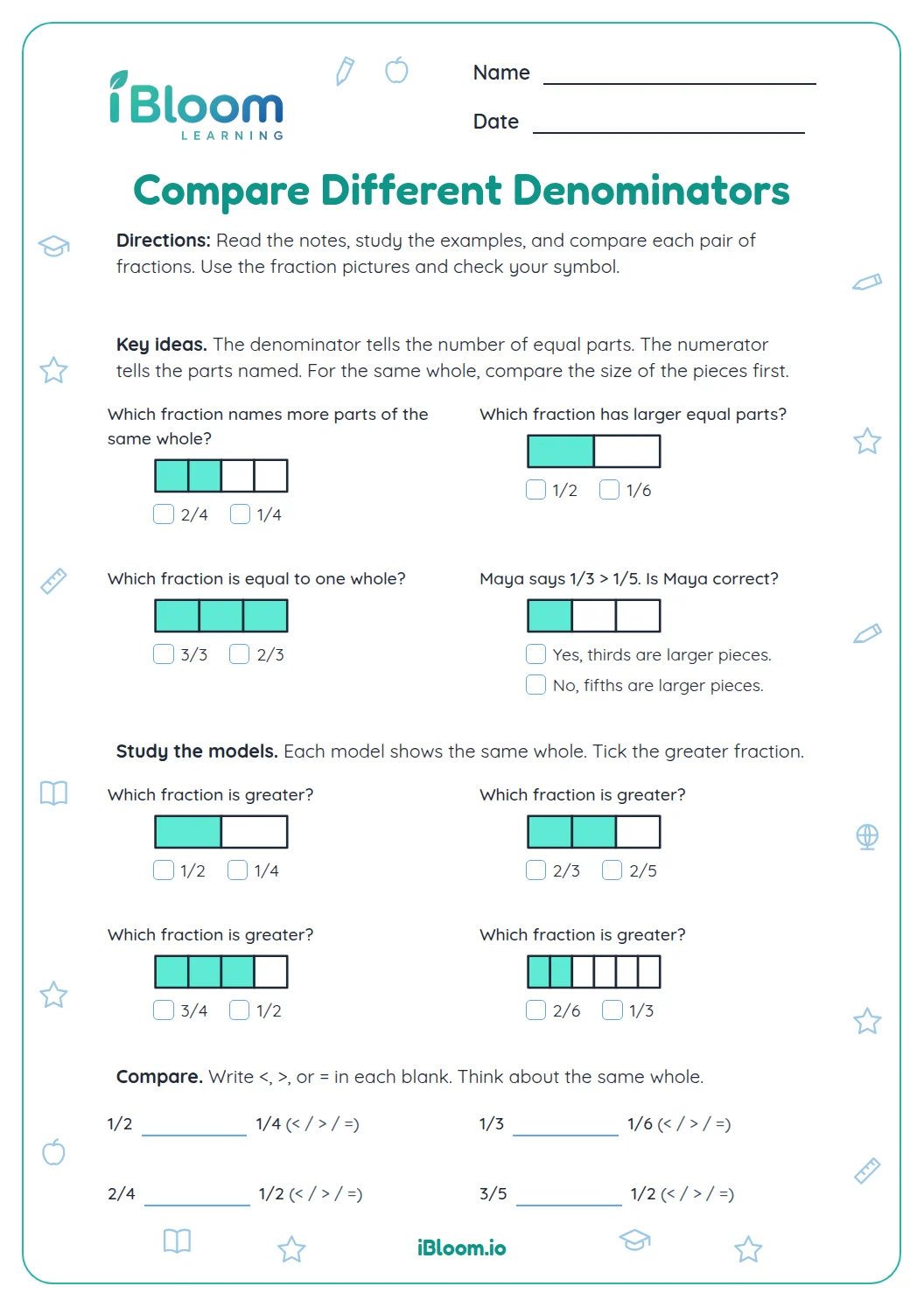
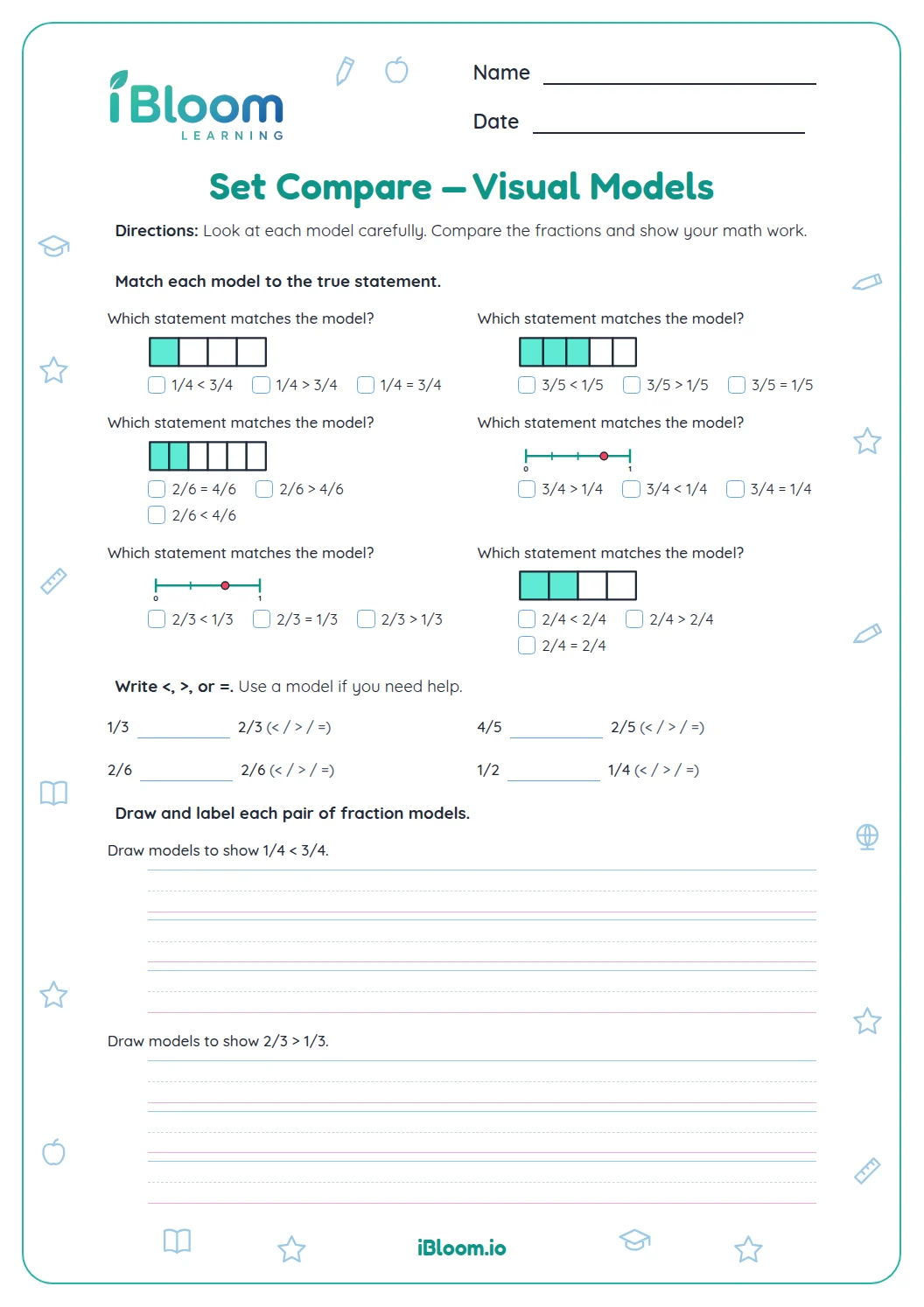
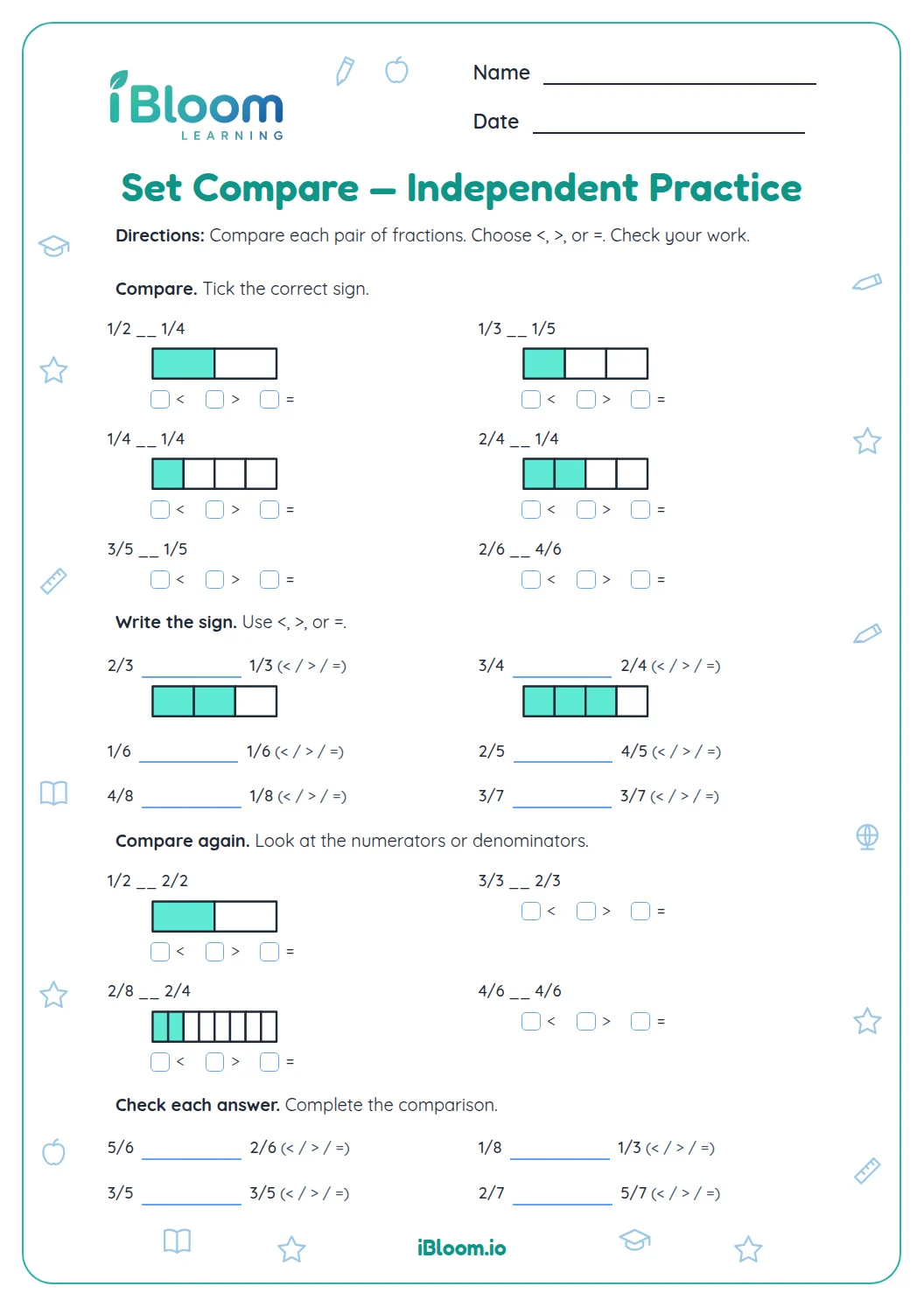
This free printable gives Grade 2 learners 14 chances to compare fractions using shaded models, symbols, and short real-world situations. The sheet moves from reading equal parts to comparing fractions with like denominators, recognizing equivalent fractions, and ordering fourths. The answer key is separate. Keep the wholes the same size when comparing so that each fraction refers to an equal-sized whole.
How do the fraction blocks show size?
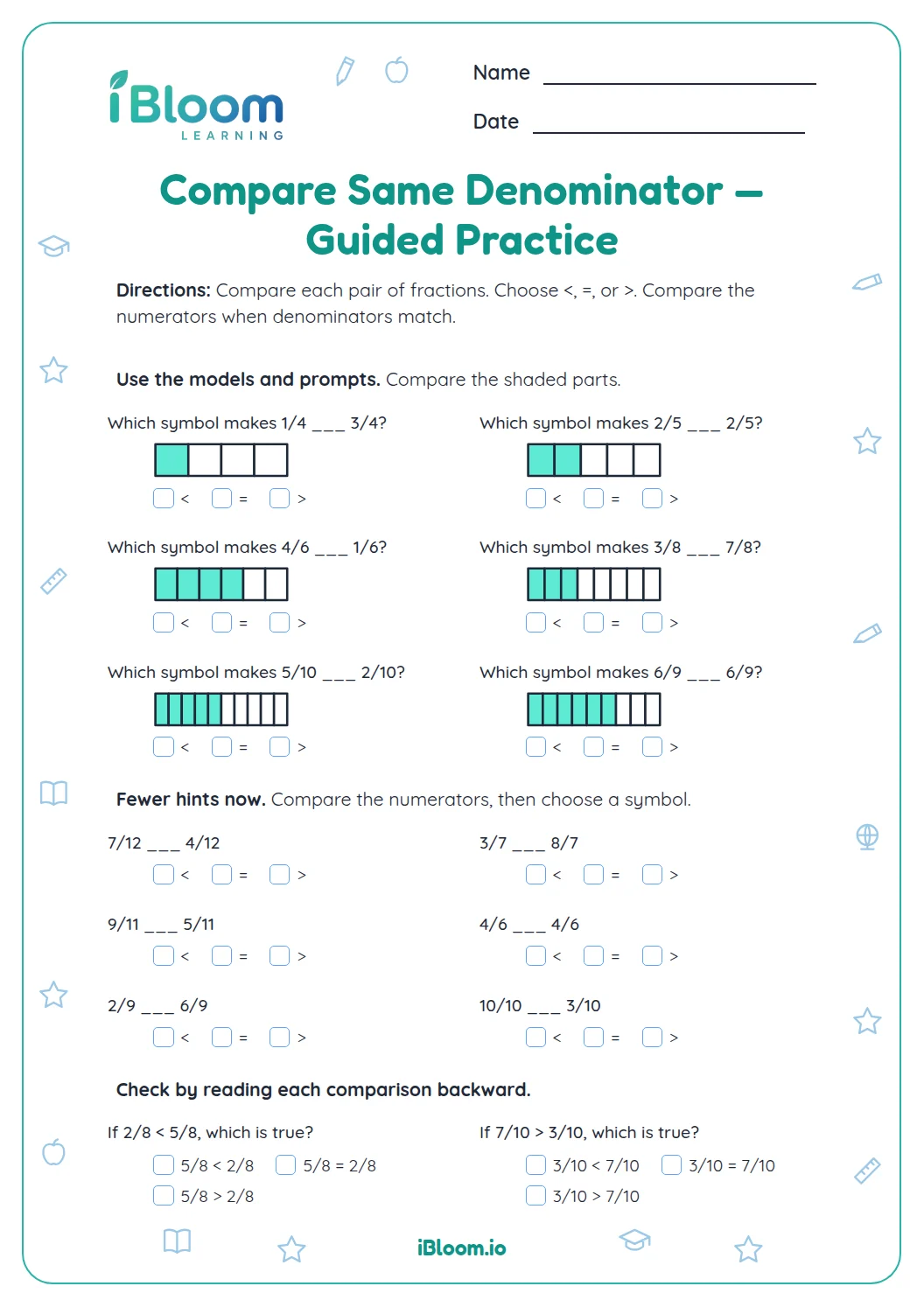
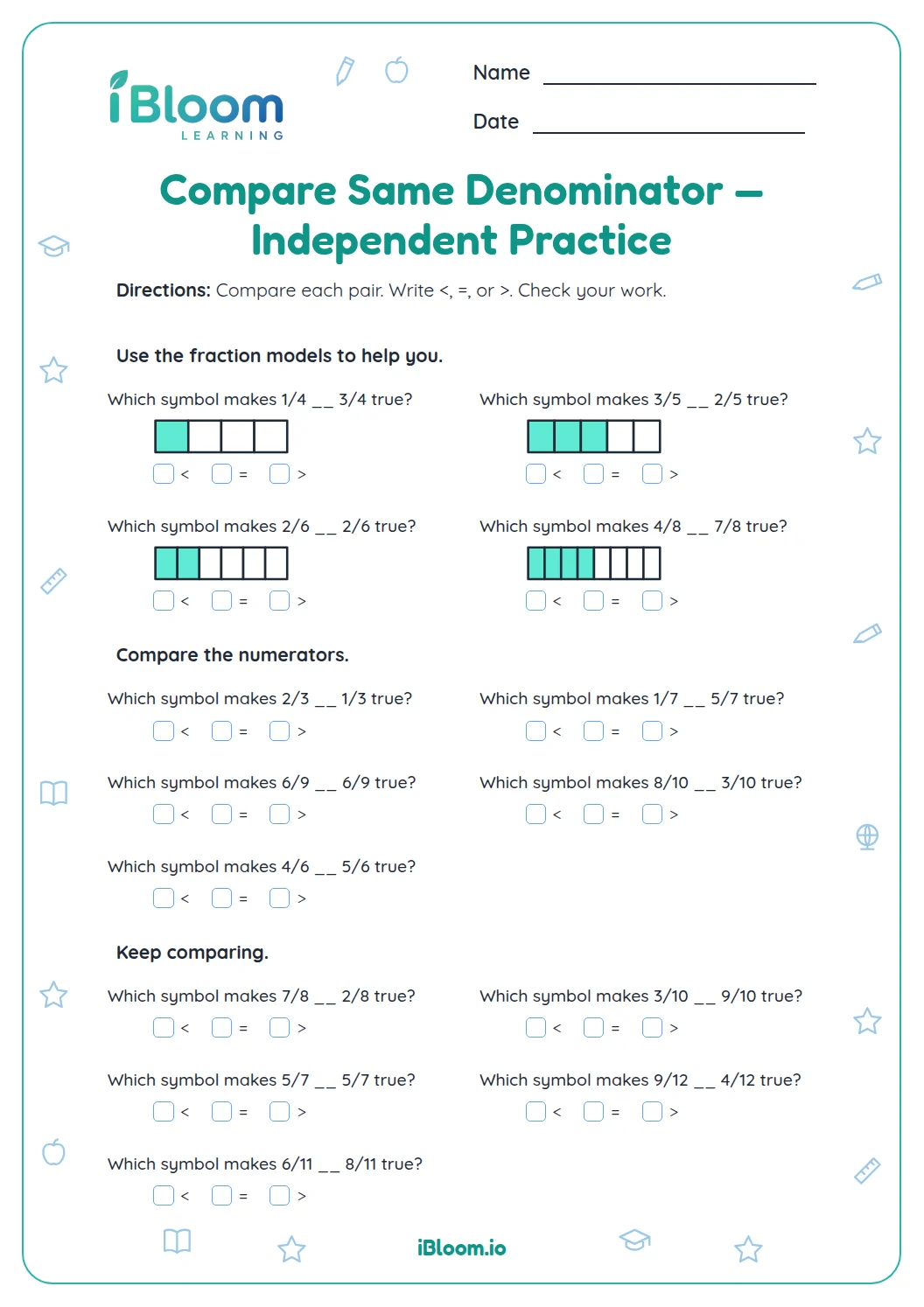
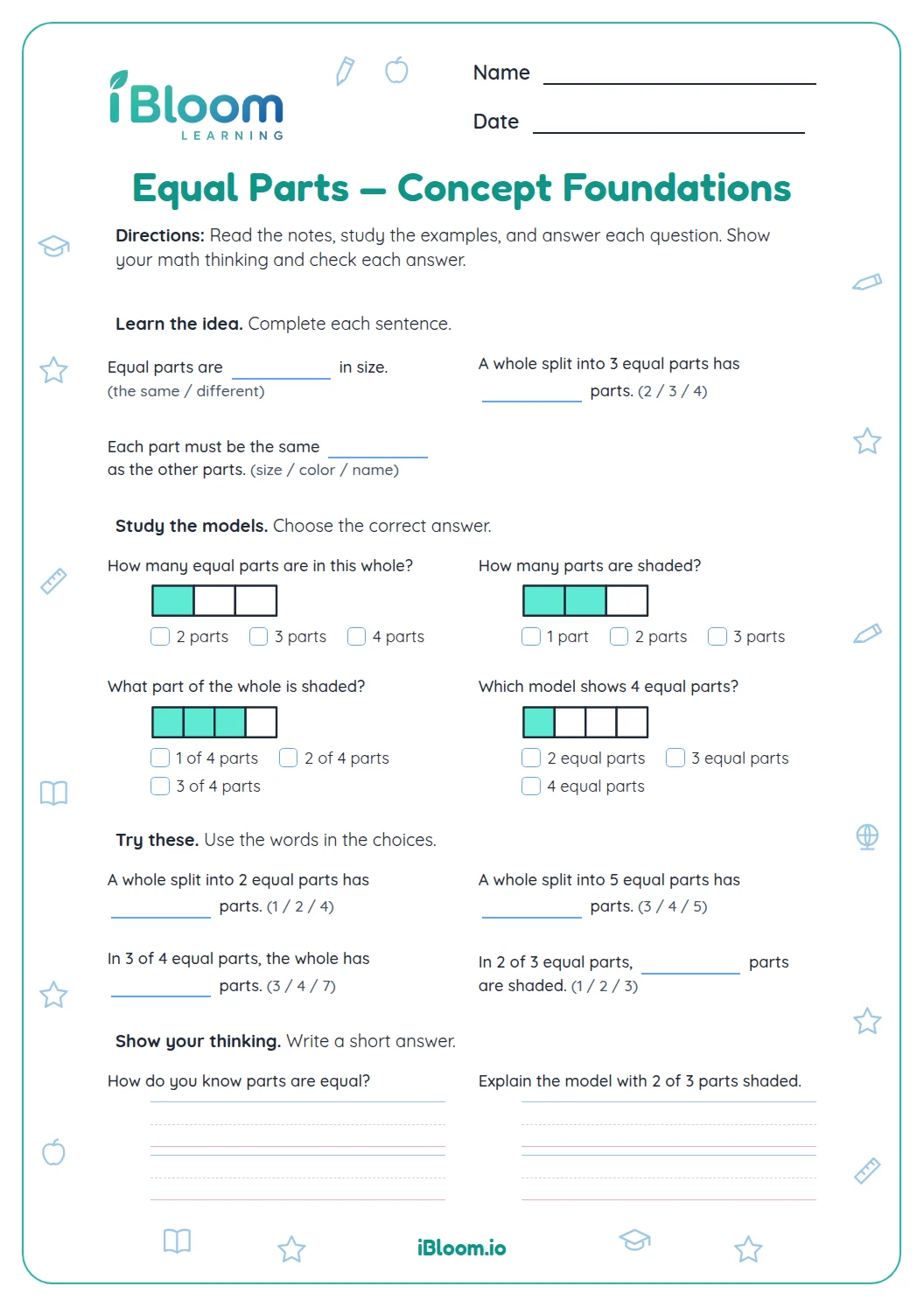
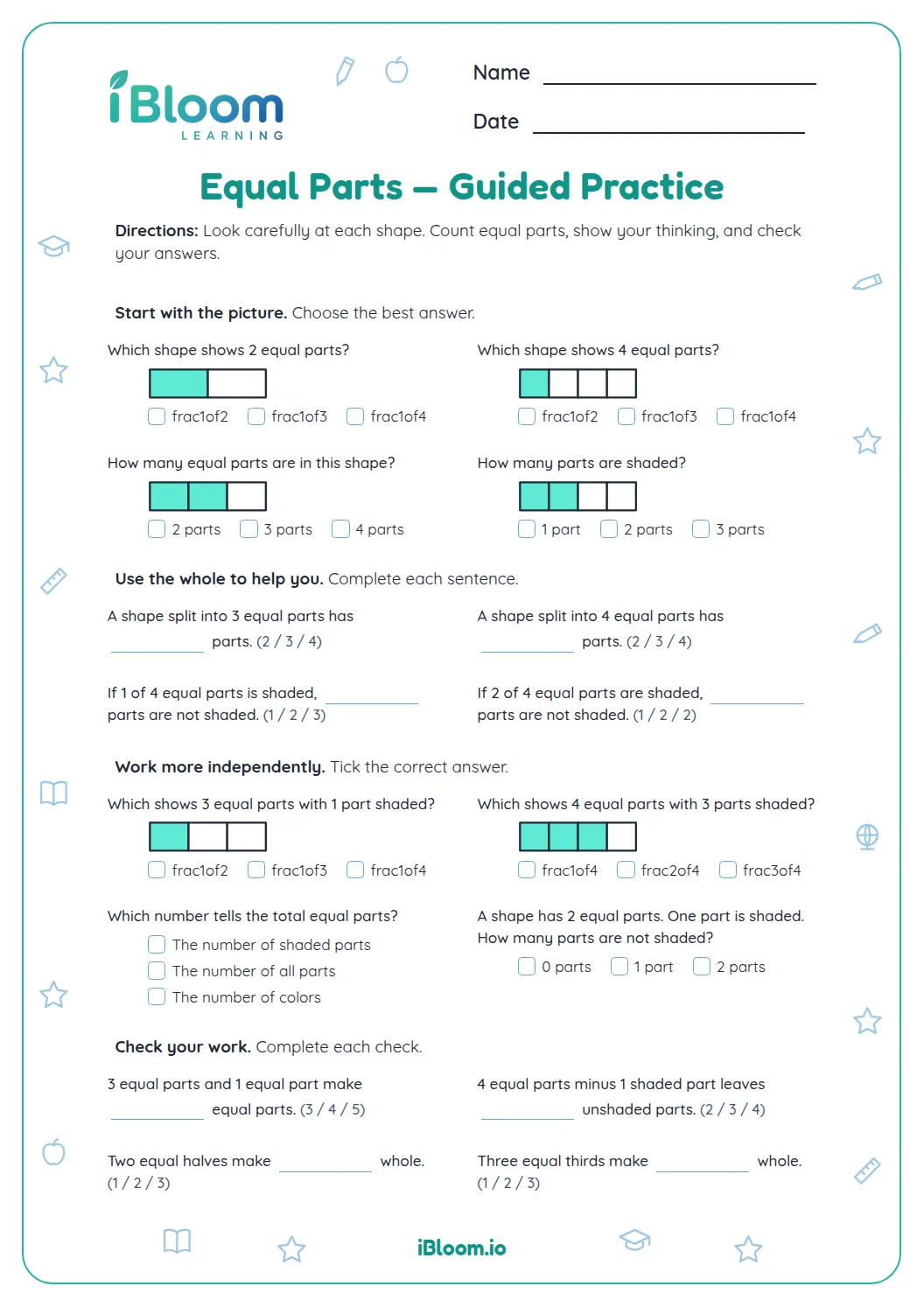
Each model is split into equal parts. When the denominator is the same, compare how many parts are shaded: more shaded parts make the greater fraction. For a fair comparison, the wholes must be the same size.
How can learners compare two fractions?
Check the whole, then compare the shaded parts or the written fractions. A matching denominator means the pieces are the same size, so compare the numerators. Use >, <, or = to record the relationship.
- 13/8 ___ 5/8
- 2Both fractions name eighths.
- 3Compare 3 shaded parts with 5.
- 43/8 < 5/8
What do the story problems ask?
Ava and Ben color same-size strips, and Lee and Sam share same-size sandwiches. Other questions compare fractions of blocks, a cake, or a page. The equal-sized wholes make the comparisons meaningful.
How to use this worksheet
- 1Check that both fractions refer to the same-size whole.
- 2Notice how many equal parts make the whole.
- 3For like denominators, compare the number of parts.
- 4Write >, <, or = between the fractions.
- 5In a story, answer with the person or fraction the question asks for.
Common mix-ups and quick fixes
The mistake
Comparing fractions from different-size wholes.
The fix
Check that the two wholes are the same size before comparing their parts.
The mistake
Thinking a larger denominator always means a larger fraction.
The fix
When the numerator matches, more equal pieces make each piece smaller.
The mistake
Turning the comparison sign the wrong way.
The fix
Read the symbol from left to right: “is less than” or “is greater than.”
What to practice next
Make more practice
Further reading
Questions parents and teachers ask
Why must the wholes be the same size?
A fraction describes part of a whole, so two fractions can be compared fairly only when their wholes match. Three fourths of a small bar may be less than one half of a much larger bar. The story questions name same-size wholes for their comparisons.
What does the answer key show?
The separate answer key gives each fraction, comparison sign, or story response. It includes equivalent fractions such as 2/6 and 1/3, the order of fractions from least to greatest, and which person has more. Ask the learner to explain a choice with the shaded parts.
What should my child check before comparing?
Start by checking that each whole is divided into equal parts and that the two wholes are the same size. Then look at the shaded blocks or the fraction names. For fractions with the same denominator, compare how many parts are shaded.
Can a child use the sheet independently?
The first questions include shaded fraction models to help anchor the comparison. An adult can model one item, then let the learner try the symbol and story questions independently. The answer key makes it easy to check and revisit a missed comparison.
How long will this fraction worksheet take?
Plan for about 20 minutes for the 14 questions. Learners compare shaded models, write symbols, identify an equivalent fraction, order fourths, and answer short stories. A quick explanation of why the wholes are equal can make the real-world items clearer.