


About this worksheet
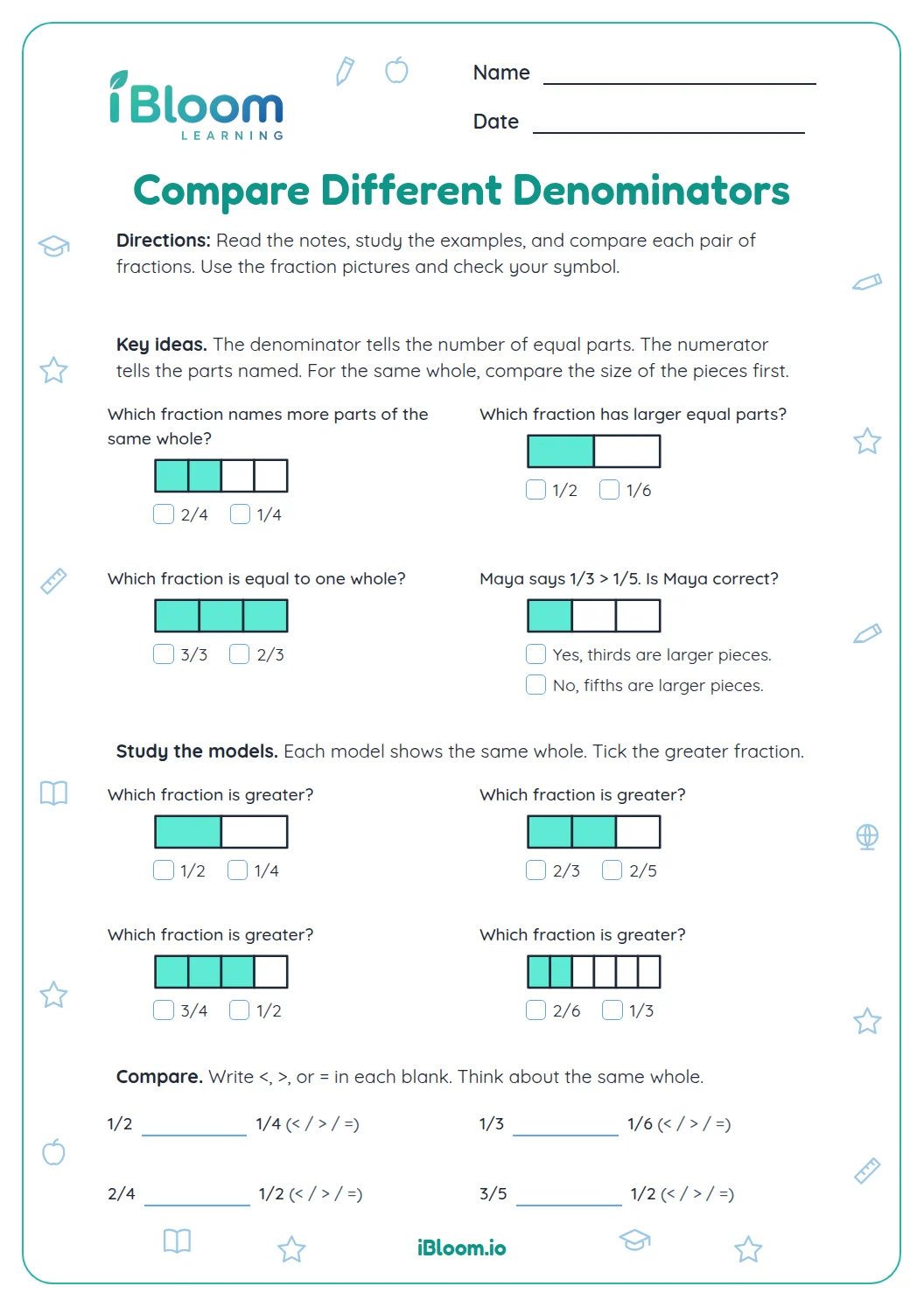
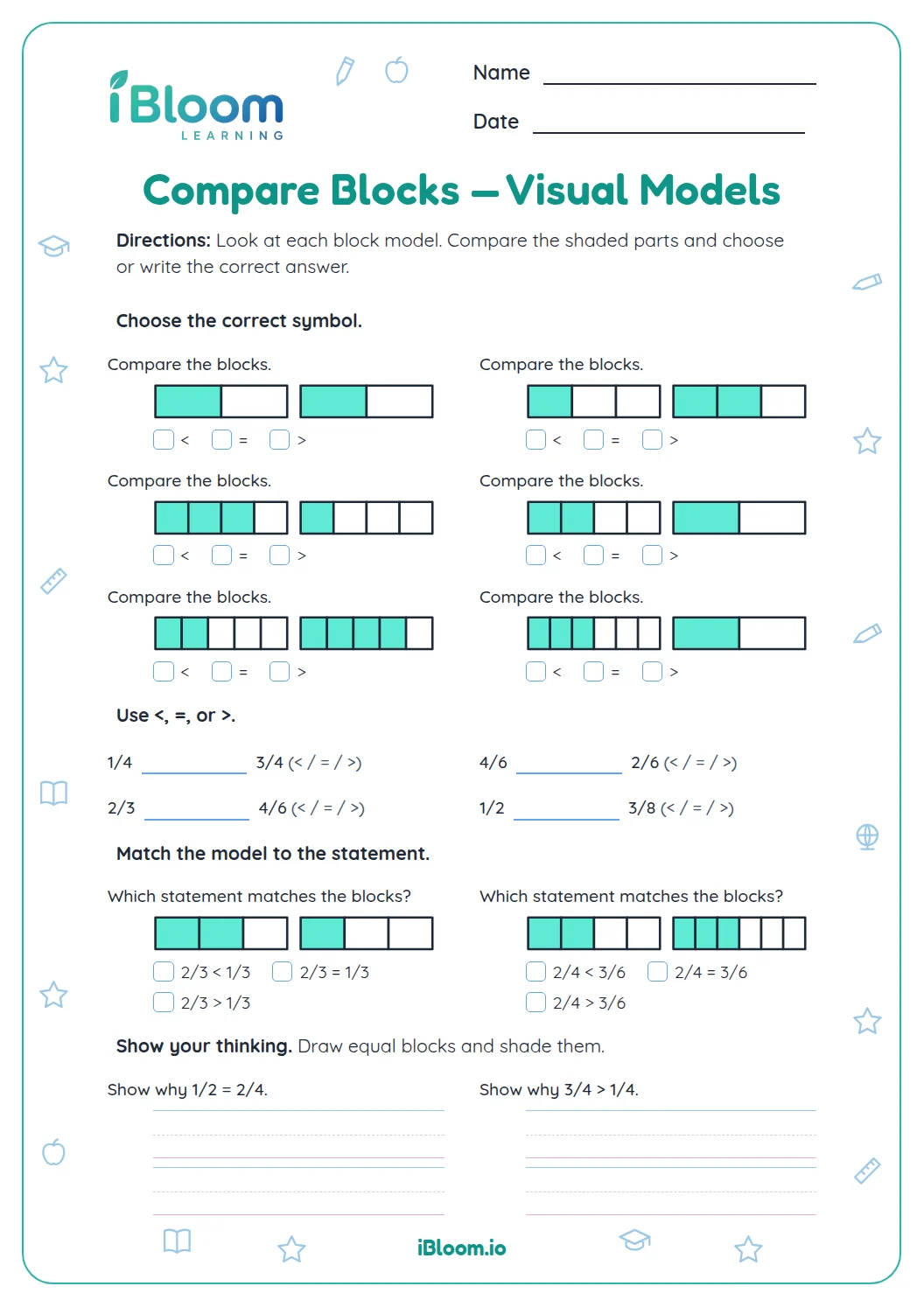
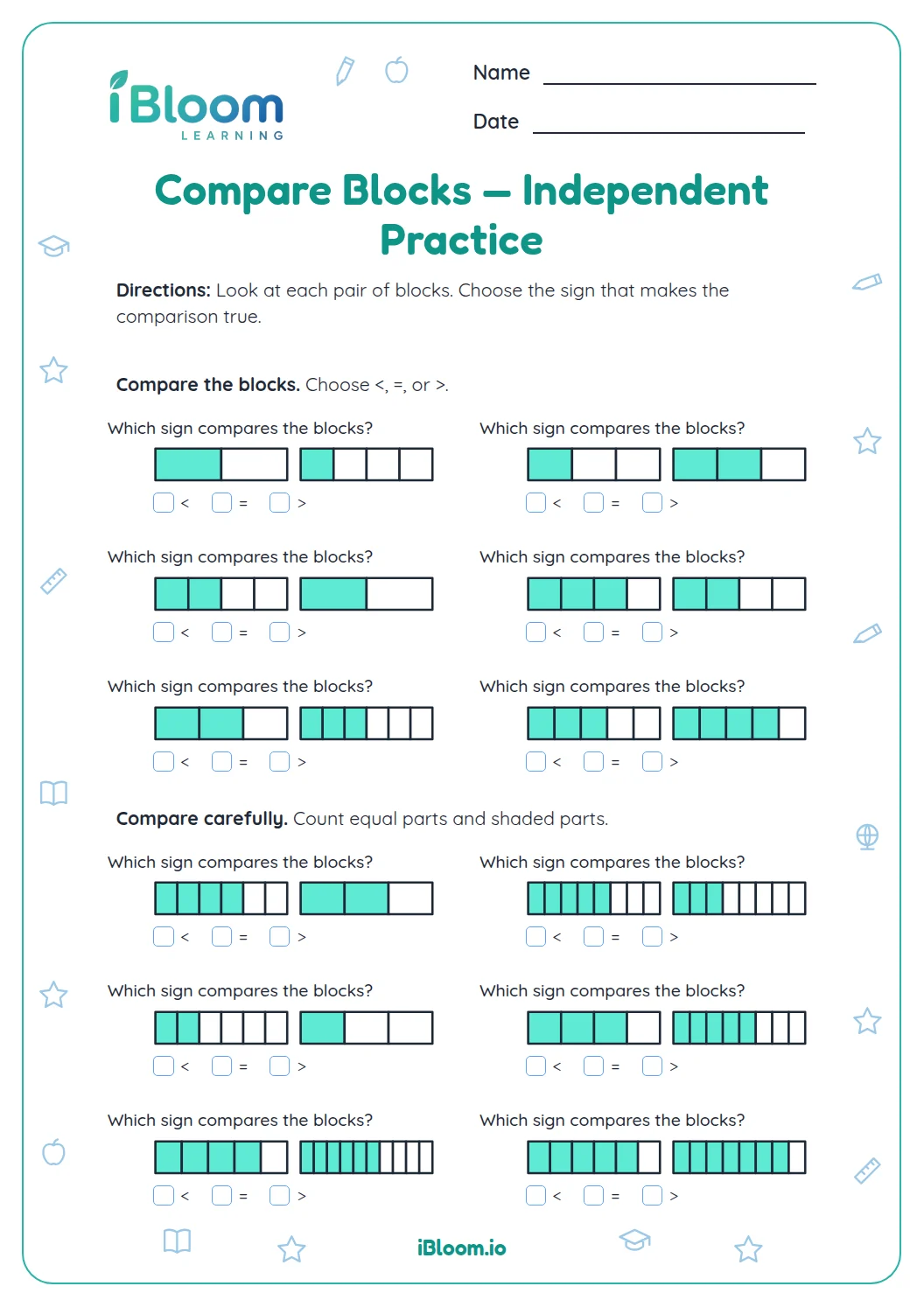
This printable worksheet practices comparing fractions with different denominators. Learners compare each pair using <, >, or =, with fraction bars supporting the first problems and a separate answer key for checking. The sheet aligns with Common Core 4.NF.A.2, which addresses comparing fractions that refer to the same whole.
Aligned to 4.NF.A.2
How can fraction bars help compare amounts?
A fraction names equal parts of one whole. Fraction bars help compare how much is shaded, as long as both fractions refer to equal-size wholes. For 1/2 and 1/4, one half is greater than one fourth.
- 11/2 is one of two equal parts.
- 21/4 is one of four equal parts.
- 3So 1/2 > 1/4.
How can one-half help?
Use one-half as a benchmark when one fraction is below it and the other is above it. Compare the amounts represented, rather than comparing denominator numbers alone.
How do you record a comparison?
Choose the symbol that matches the fraction sizes. Read the completed sentence aloud: the left fraction is less than, greater than, or equal to the right fraction.
Compare fraction amounts
- 1Check that both fractions refer to equal-size wholes.
- 2Use a bar model or think about the size of each equal part.
- 3Use 1/2 as a benchmark when it helps.
- 4Choose <, >, or = based on the amounts.
- 5Read the comparison from left to right.
Fraction comparison checks
The mistake
Assuming the larger denominator names the larger fraction.
The fix
A larger denominator means the whole is split into more, smaller equal parts.
The mistake
Comparing fractions of different-size wholes.
The fix
Make sure the fractions refer to the same whole.
The mistake
Turning the comparison sign the wrong way.
The fix
Read the sign aloud from left to right before checking.
Common Core alignment
This worksheet practices comparing fractions with different denominators.
Compare fractions with different numerators and denominators using models or benchmarks.
On this sheet: Compare unlike-denominator fractions with fraction models and benchmark reasoning.
Show the official wordingHide the official wording
Compare two fractions with different numerators and different denominators, e.g., by creating common denominators or numerators, or by comparing to a benchmark fraction such as 1/2. Recognize that comparisons are valid only when the two fractions refer to the same whole. Record the results of comparisons with symbols >, =, or <, and justify the conclusions, e.g., by using a visual fraction model.
What to practice next
Make more practice
Further reading
Questions parents and teachers ask
What does it mean to compare fractions with different denominators?
The fractions divide a whole into different numbers of equal parts. Compare the amounts represented by the fractions, making sure they refer to the same-size whole. Fraction bars and a familiar benchmark such as one-half can help. Students can point to equal partitions as they explain why the symbol fits.
Does the larger denominator mean the larger fraction?
No. A larger denominator divides the whole into more equal parts, so each part is smaller. Compare the fraction amounts, not the denominator by itself. For example, one-half is greater than one-third. A quick sketch of each same-size whole makes that idea easier to check.
Why are fraction bars shown on some questions?
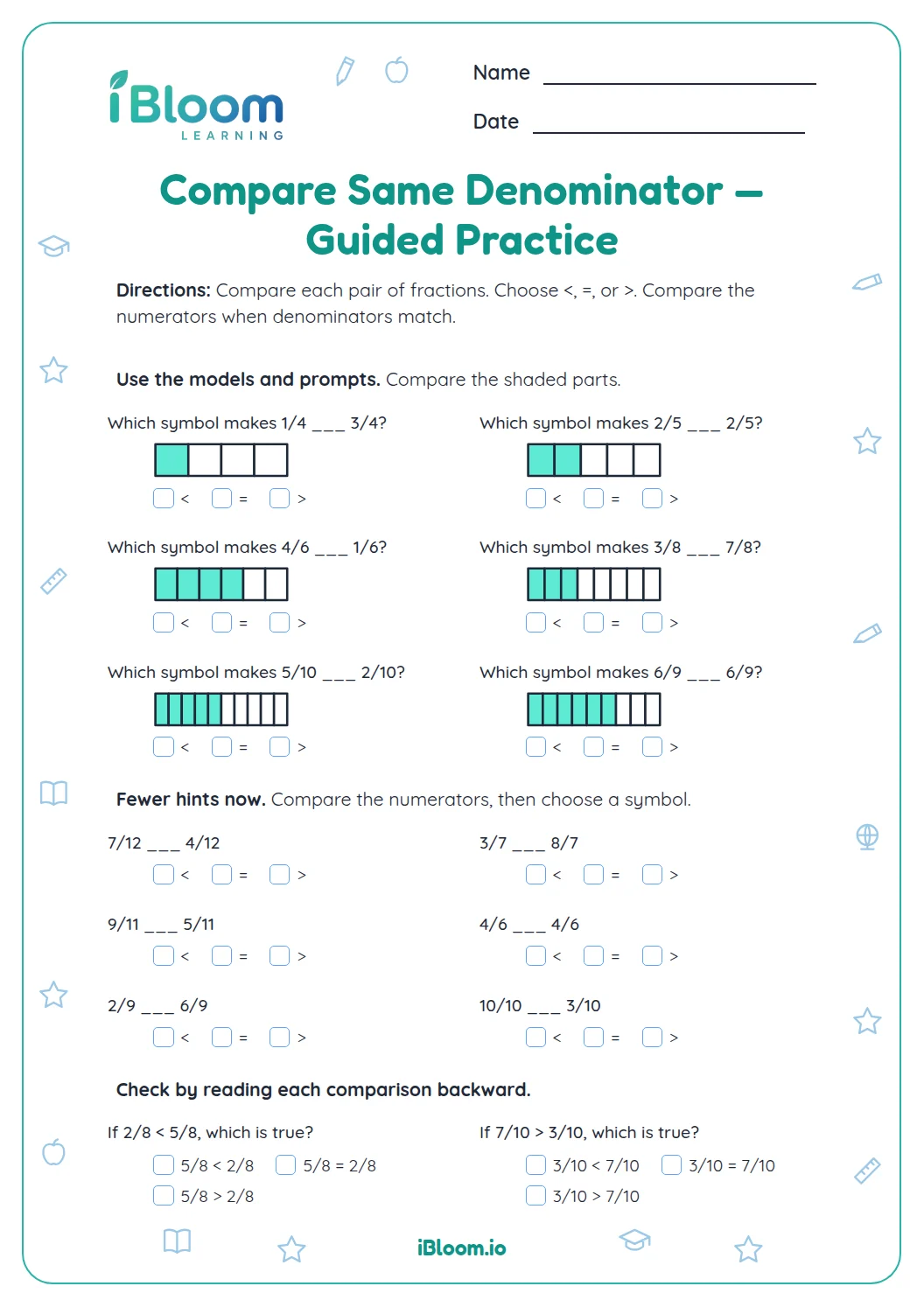
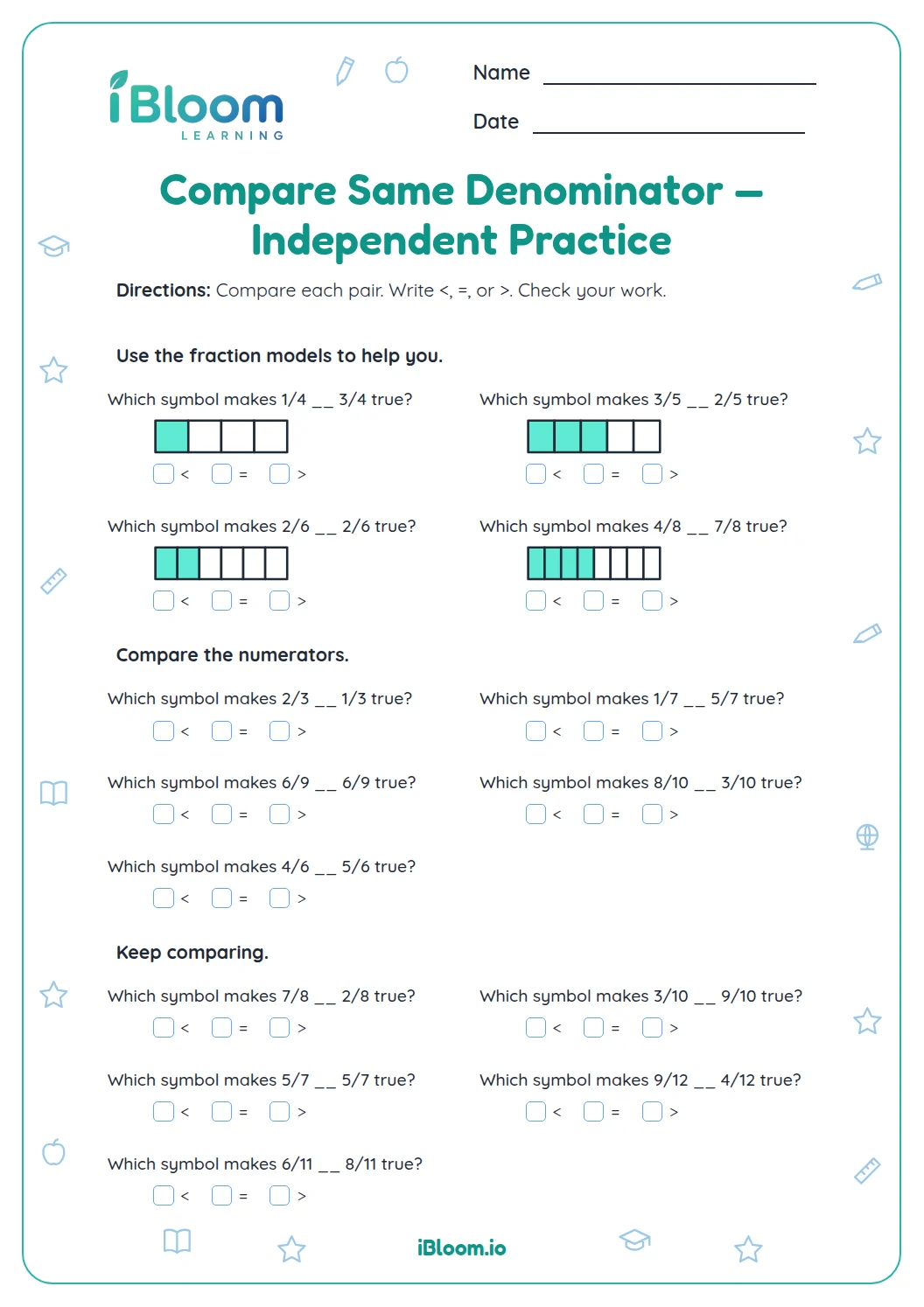
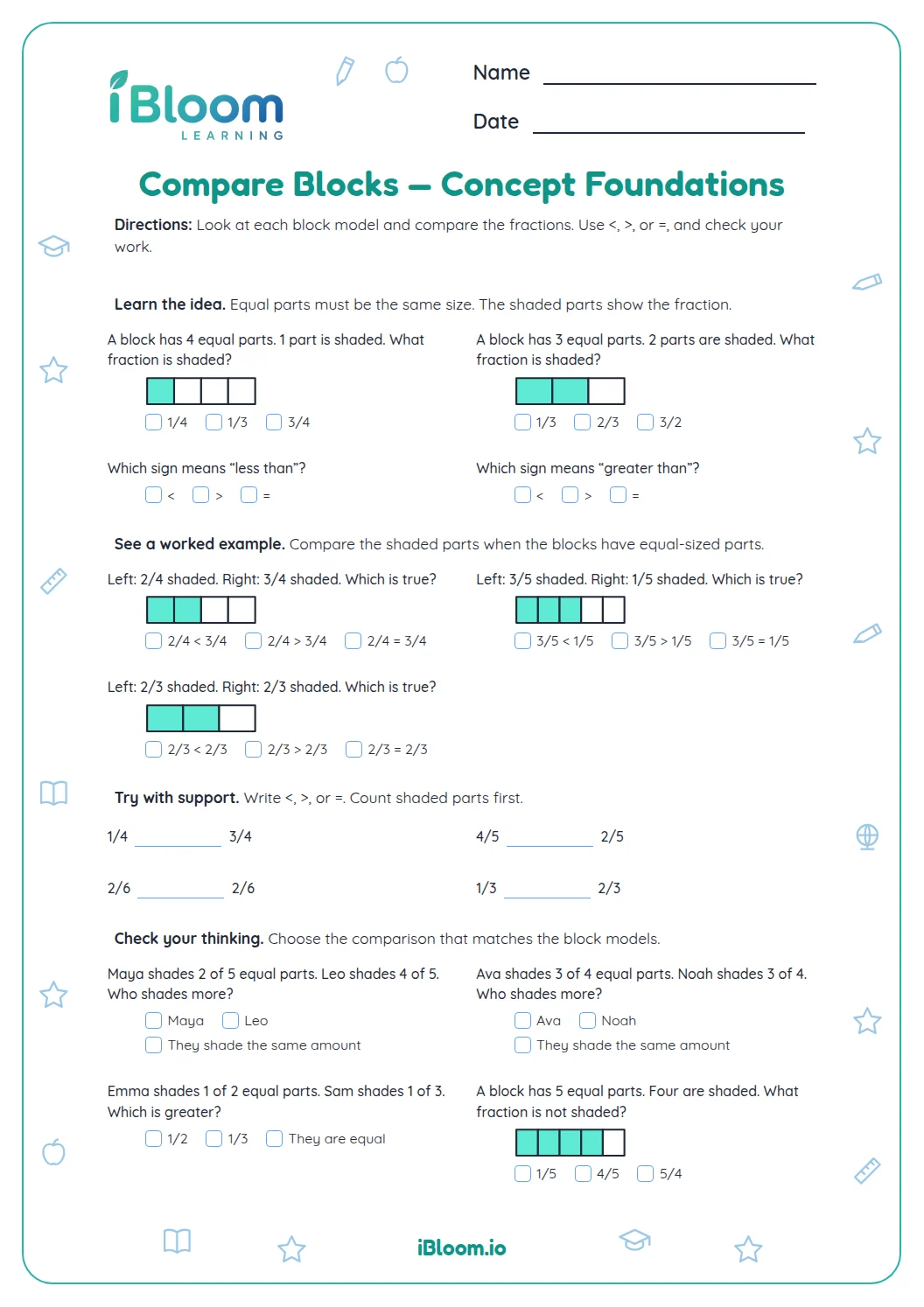
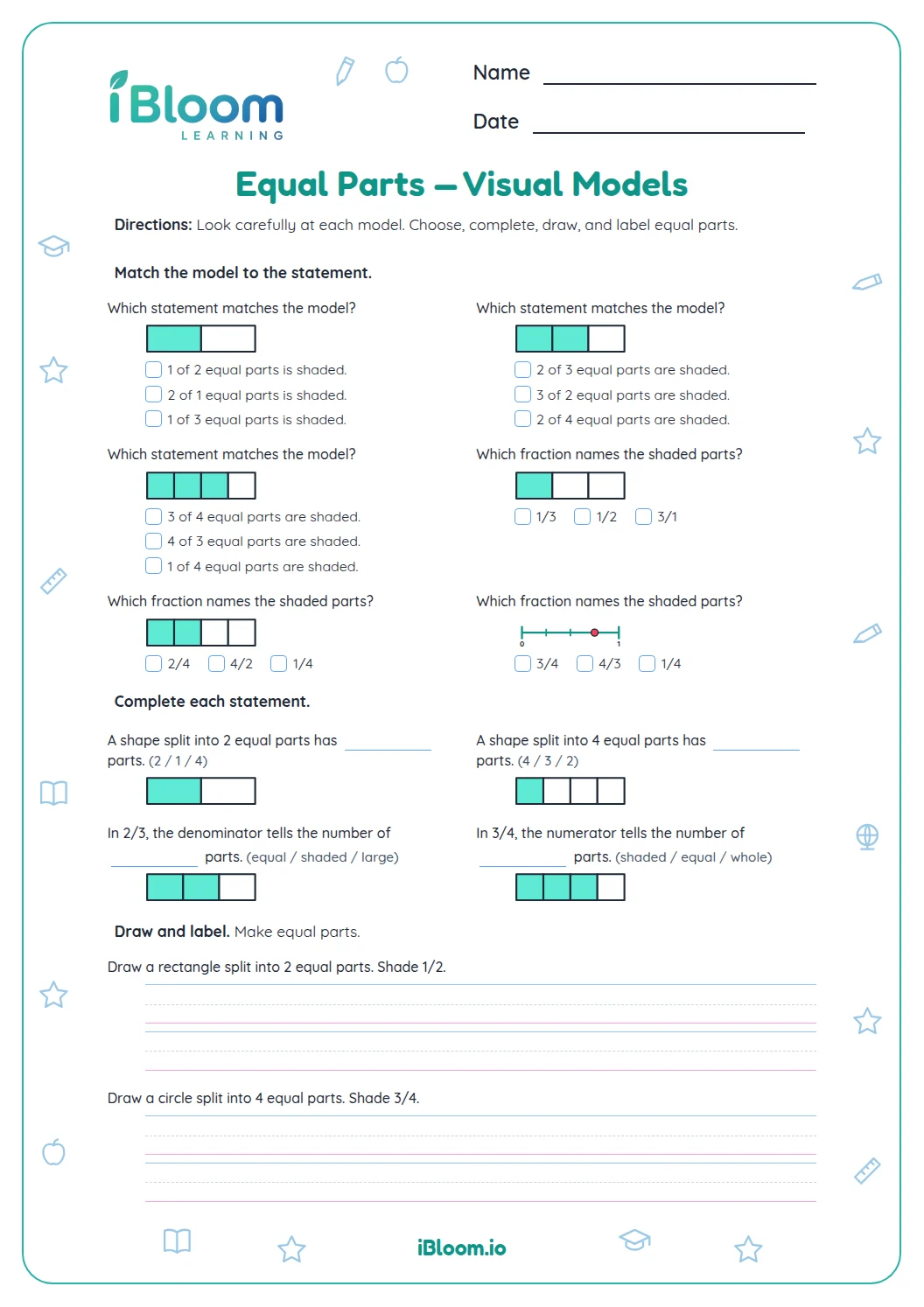
Fraction bars connect the written fraction to a visual amount. They are printed with the first six comparisons as support, and the remaining questions ask students to choose a symbol from the fraction values. The bars help connect equal parts to amounts before choosing a comparison sign.
Which comparison symbols are used?
The worksheet uses less than (<), greater than (>), and equal to (=). Read the expression from left to right to check which fraction is larger. Read the choices from left to right to check that the sign faces correctly.
Does this worksheet include an answer key?
Yes. A separate key lists the correct comparison symbol for each of the 14 questions. Students can compare their choices and revisit any item where the symbol direction or fraction size was unclear. The key follows the worksheet order, so each comparison is easy to check.