


About this worksheet
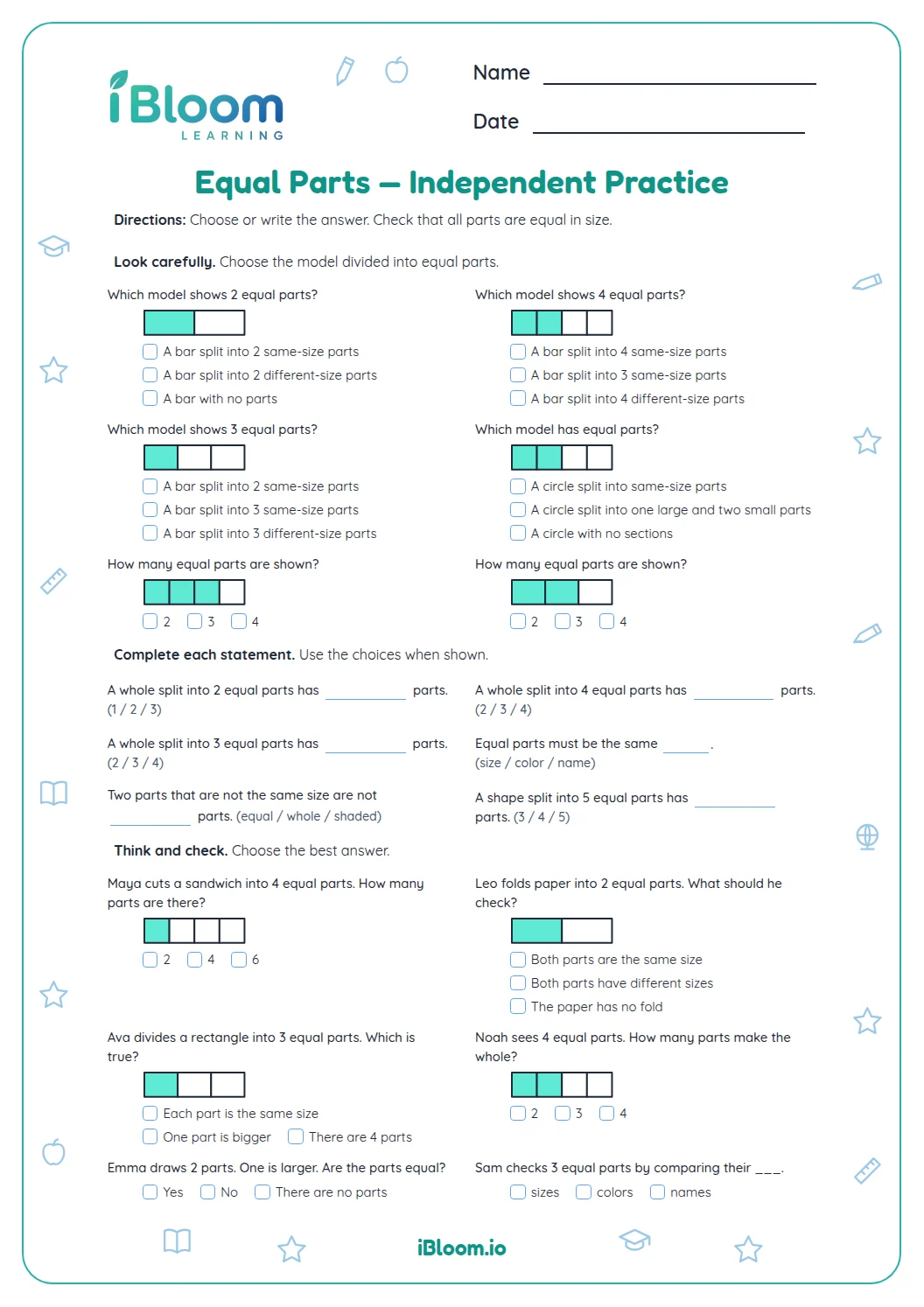
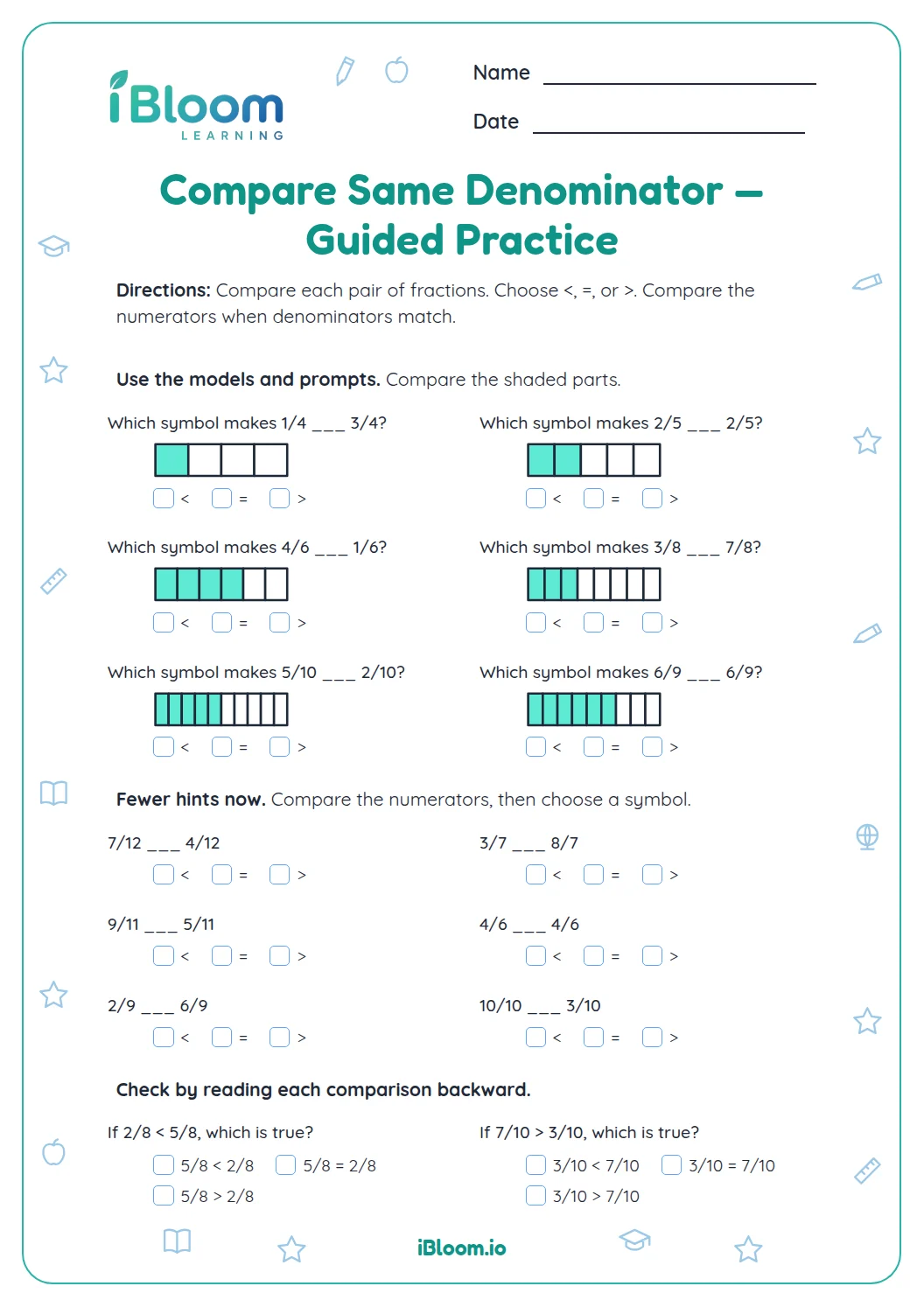
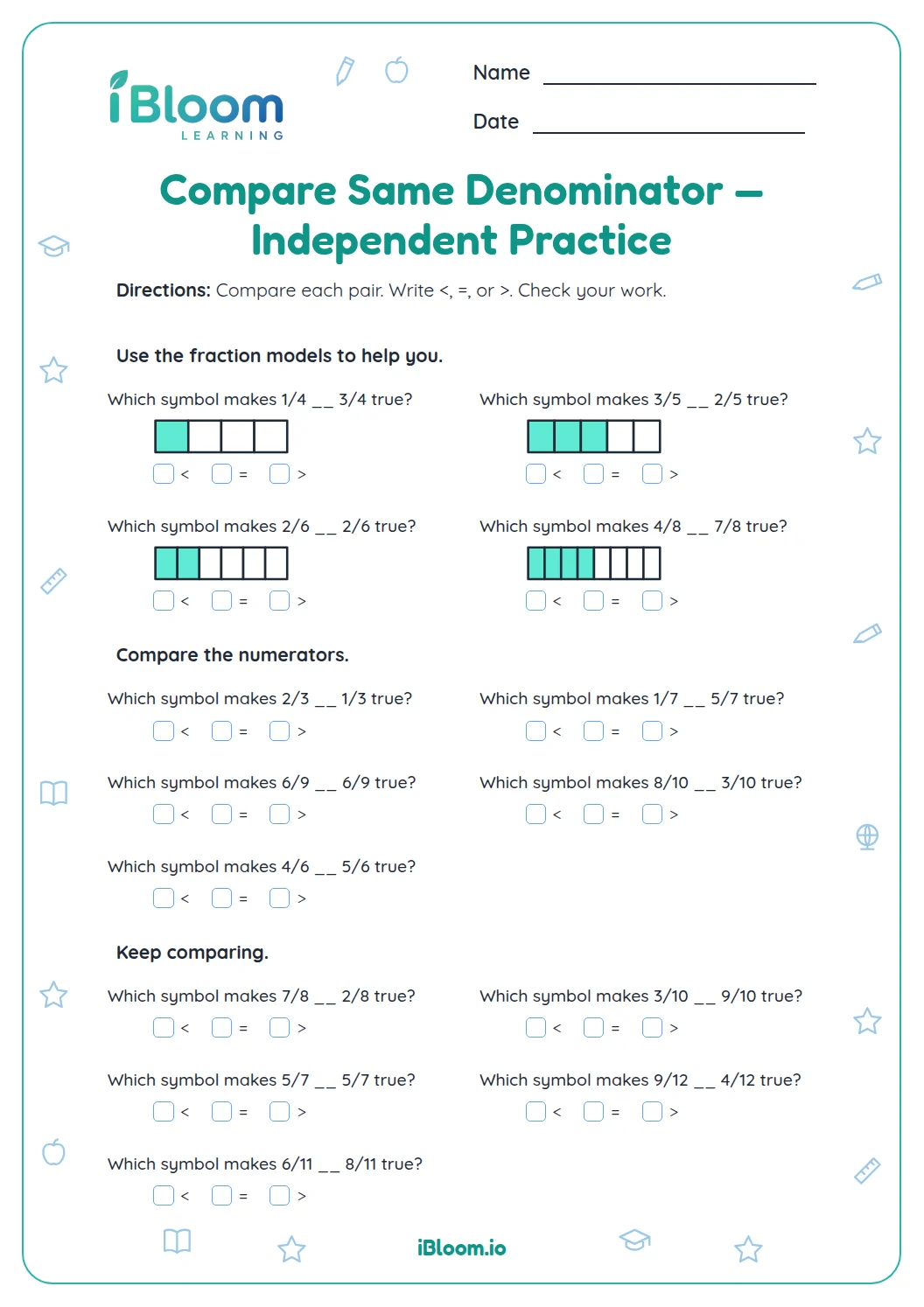
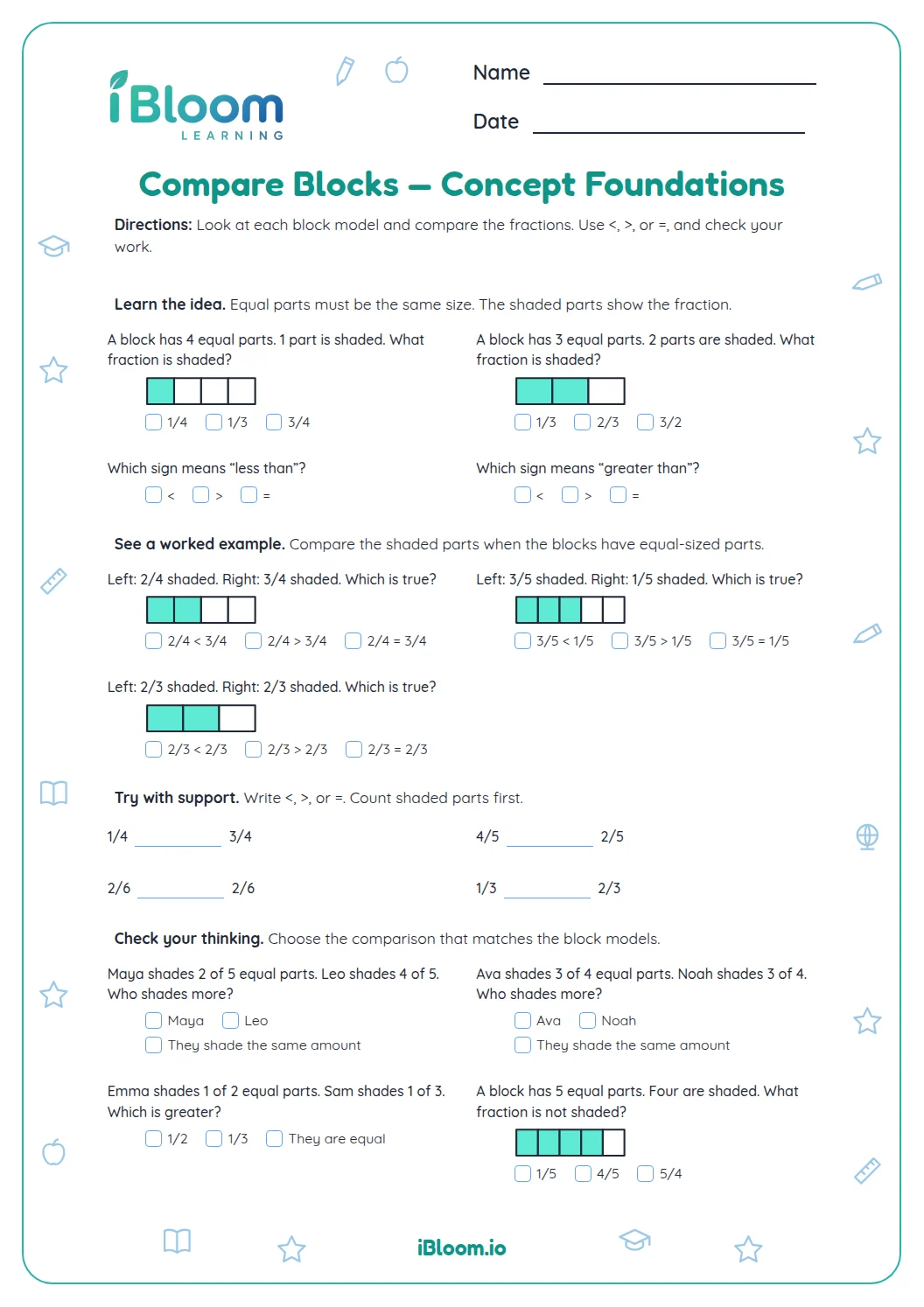
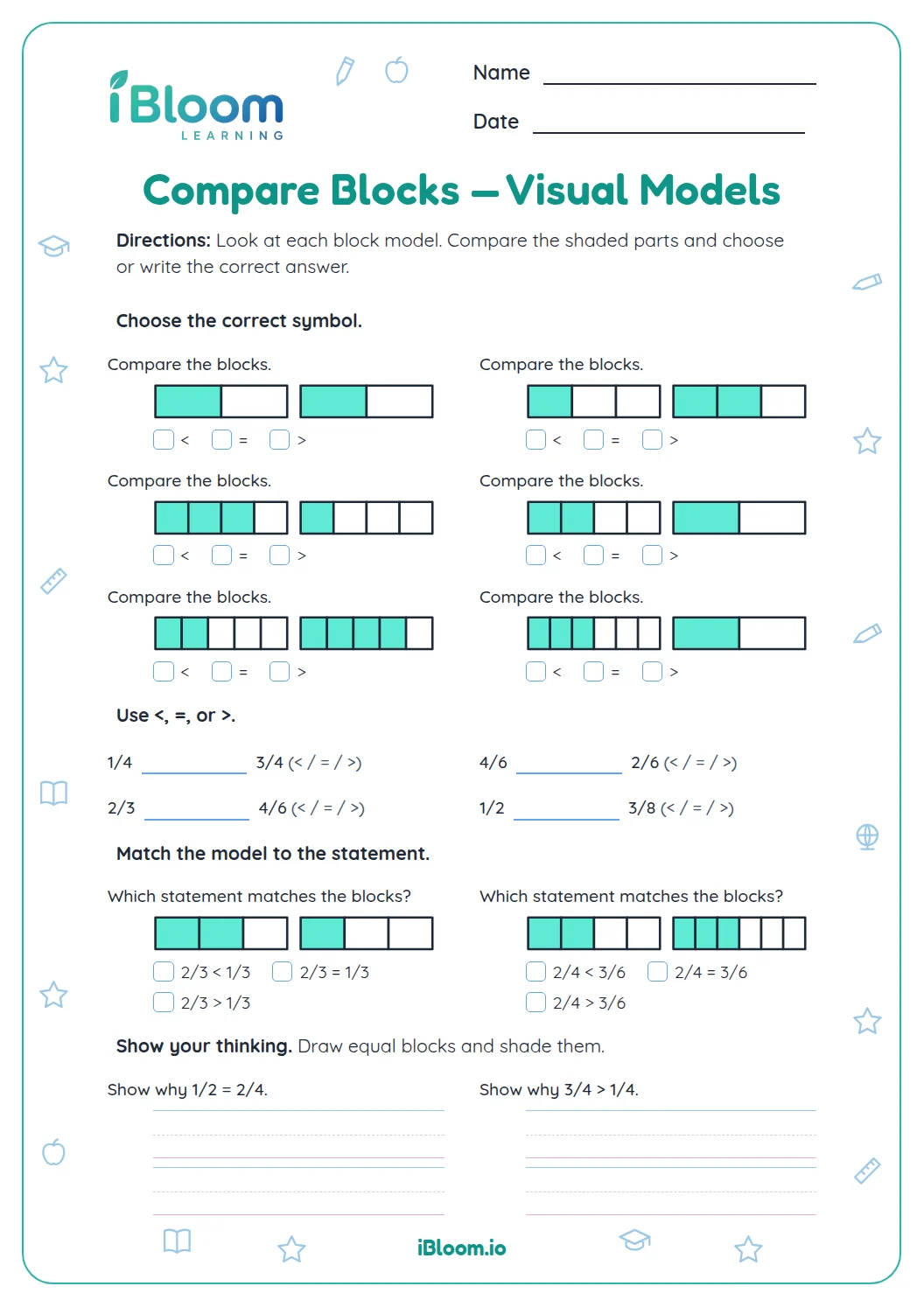
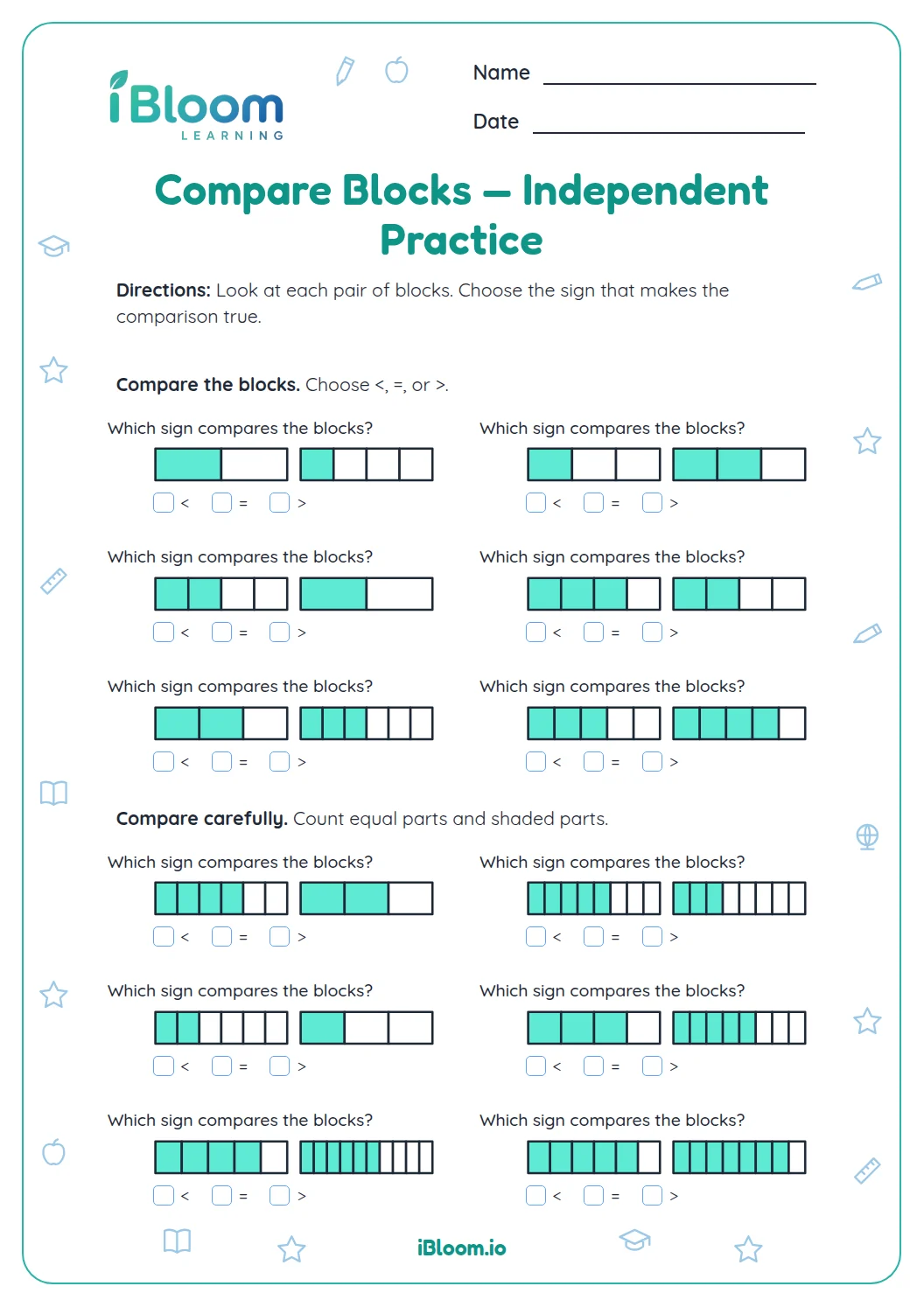
This free printable Grade 2 worksheet compares fractions of sandwiches, ribbons, cakes, and other everyday wholes. Four shaded-bar questions begin with halves, thirds, and fourths. Eight comparisons then include fractions with different numerators, including two equal shares written differently. Children finish by explaining an equality and why the size of the whole matters. The 14 tasks practice Common Core 4.NF.A.2 through comparisons, symbols, and reasoning about equal parts. Two worksheet pages and a separate two-page key provide space for answers and sample explanations.
Aligned to 4.NF.A.2
Why must the wholes be the same size?
A fraction describes part of a particular whole. Half of one small cookie and a fourth of a much larger cookie cannot be compared by the fraction names alone. Parts A and B specify same-size wholes so children can compare those shares fairly.
The final question changes that condition. It asks children to explain why the cookie sizes matter, rather than guess which piece is larger.
How can equal parts help compare the shares?
In Part A, each child has one piece. For same-size sandwiches, a half is larger than a third or fourth. In Part B, the number of pieces changes too, so compare the whole amounts rather than just the denominators.
Use equal-length paper strips to check the comparisons. For question 7, fold one strip into fourths and another into thirds. Subdivide both into twelfths: three fourths cover nine pieces, while two thirds cover eight.
- 1Cake eaten: 3/6 ___ 2/4.
- 2Three of six equal pieces cover half the cake. Two of four do too.
- 33/6 = 2/4: equal shares of same-size cakes.
What changes from Part A to Part C?
Part A has four sandwich stories with shaded bars and two choices. All sandwiches are the same size, and each bar represents the first child’s share. Part B has eight comparisons using >, <, or =. Part C asks children to explain why 3/6 and 2/4 are equal and why cookie sizes matter.
Use the key to check signs and names, then listen for the ideas of equal pieces and same-size wholes in the written answers.
How to use this worksheet
- 1Fold two equal paper strips into halves and fourths; compare one piece of each.
- 2Read question 1 and identify the whole before discussing the shaded share.
- 3Ask your child to underline “more” or “less” in each Part A story.
- 4In Part B, read each finished comparison from left to right.
- 5Check Part C for an explanation of equal shares and an explanation about whole size.
Mistakes to notice and repair
The mistake
Choosing 3/6 as larger than 2/4 because 3 is larger than 2.
The fix
Fold equal strips into sixths and fourths. Shade three sixths and two fourths; both cover one half.
The mistake
Answering “more” when the story asks who has less.
The fix
Underline the comparison word before choosing a name.
The mistake
Treating fractions of different-size cookies as directly comparable.
The fix
Name each whole and check its size before comparing the amounts.
Common Core alignment
Compare fractions of same-size wholes using equal parts, benchmarks, and comparison signs.
On this sheet: Children compare everyday shares with unlike numerators and denominators, record signs, and explain equality.
Show the official wordingHide the official wording
Compare two fractions with different numerators and different denominators, e.g., by creating common denominators or numerators, or by comparing to a benchmark fraction such as 1/2. Recognize that comparisons are valid only when the two fractions refer to the same whole. Record the results of comparisons with symbols >, =, or <, and justify the conclusions, e.g., by using a visual fraction model.
What to practice next
Make more practice
Further reading
Questions parents and teachers ask
Which fractions are used on this sheet?
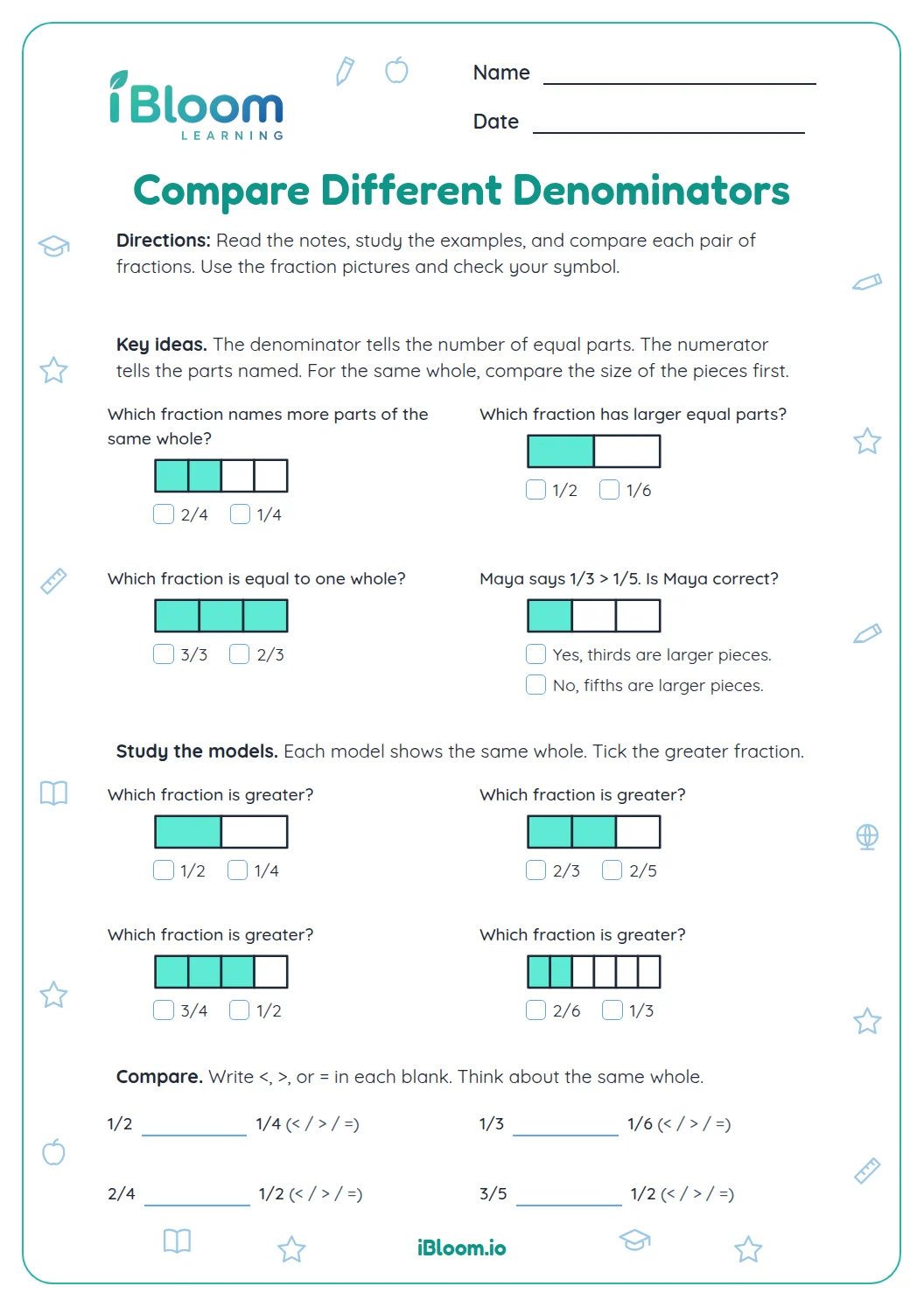
The first four questions compare one half, one third, and one fourth. Part B adds shares such as two fifths, three fourths, three sixths, three eighths, and four fifths. Children compare unequal amounts and an equal pair, including 7/10 with 2/3 and 5/8 with 3/5, then explain why fraction names must refer to known whole sizes.
How can we check the harder comparisons?
Use equal-length paper strips or compare each share with one half. For question 6, two fifths is less than half. For question 7, subdivide fourths and thirds into twelfths: three fourths is nine twelfths and two thirds is eight twelfths, so three fourths is larger.
Why do some questions ask who has less?
Those questions make children read the requested comparison carefully. In question 4, Jo eats half a sandwich and Eli eats a third of a same-size sandwich, so Eli eats less. Ask your child to point to “less” before choosing, then explain the size of each share.
How should I check the written explanations?
Look for reasoning about equal shares and the size of the whole. Question 13 should explain that three sixths and two fourths both equal one half. Question 14 should recognize that different-size cookies need more information. The sample answers show these ideas; children may use different words.
Can I read the word problems aloud?
Yes, reading the stories aloud can keep attention on the fractions. Pause after naming each whole, then ask your child to repeat the shares and the comparison word. Leave the final choice or sign to the child, and use the shaded bars to discuss any disagreement.