



About this worksheet
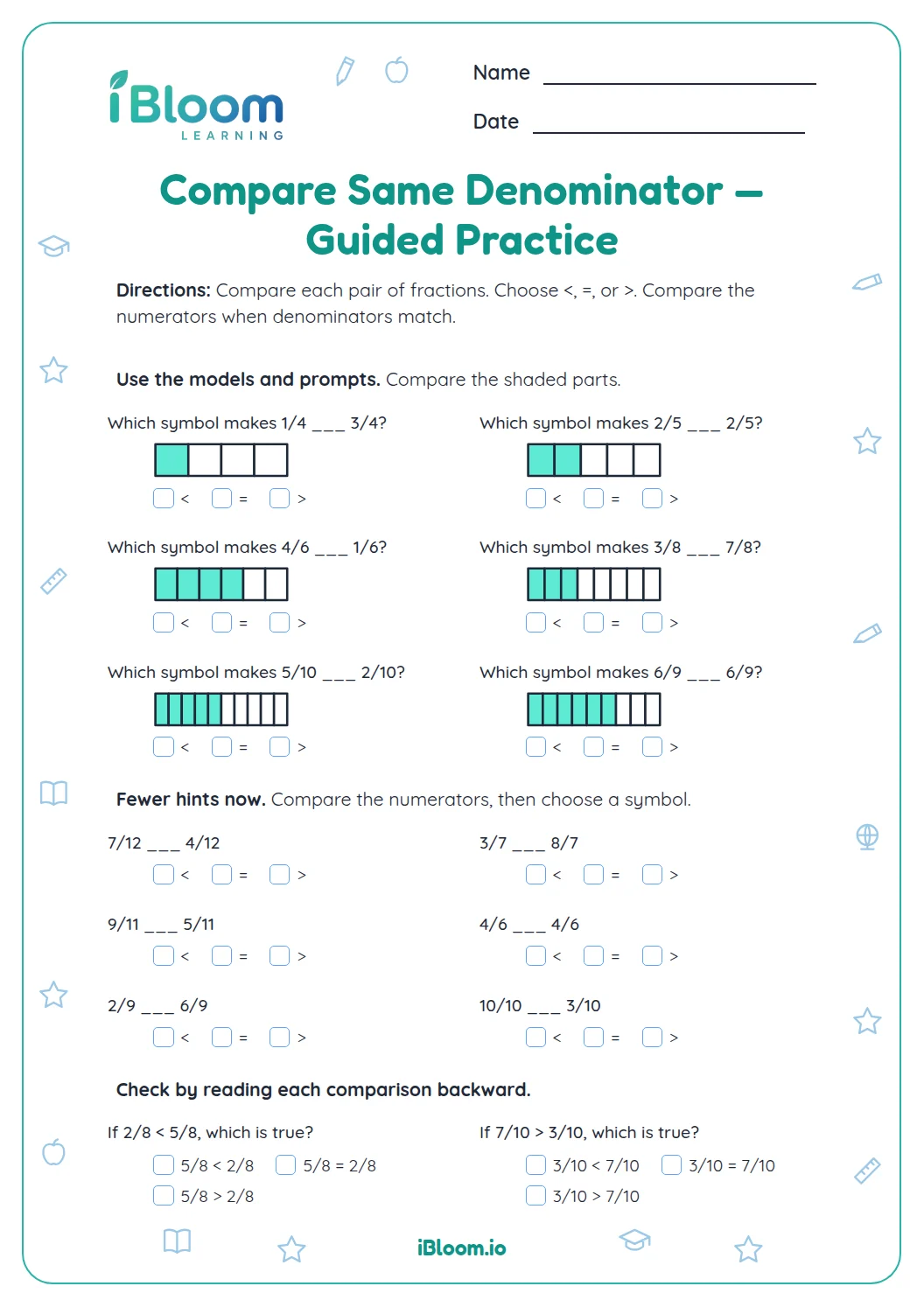
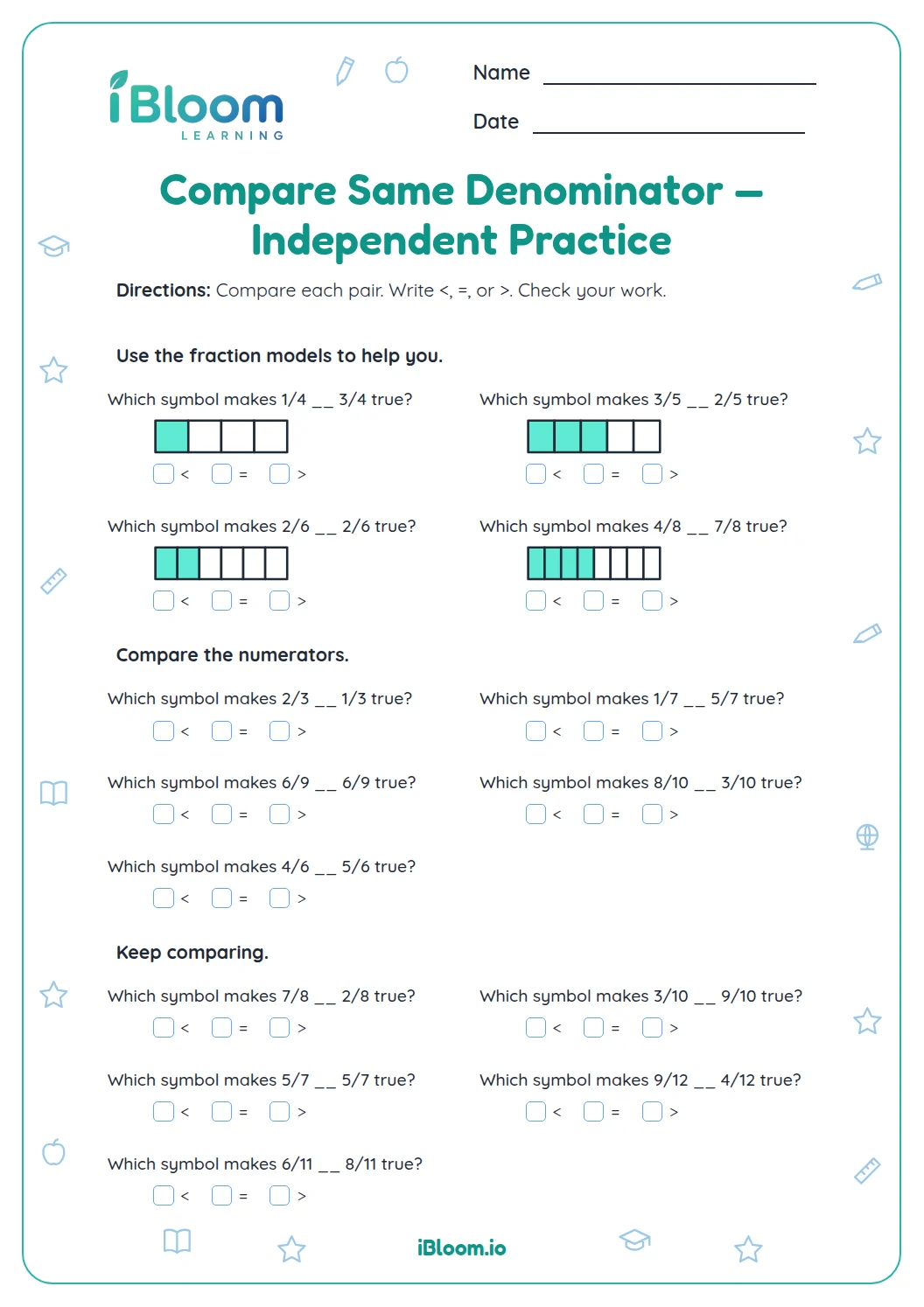
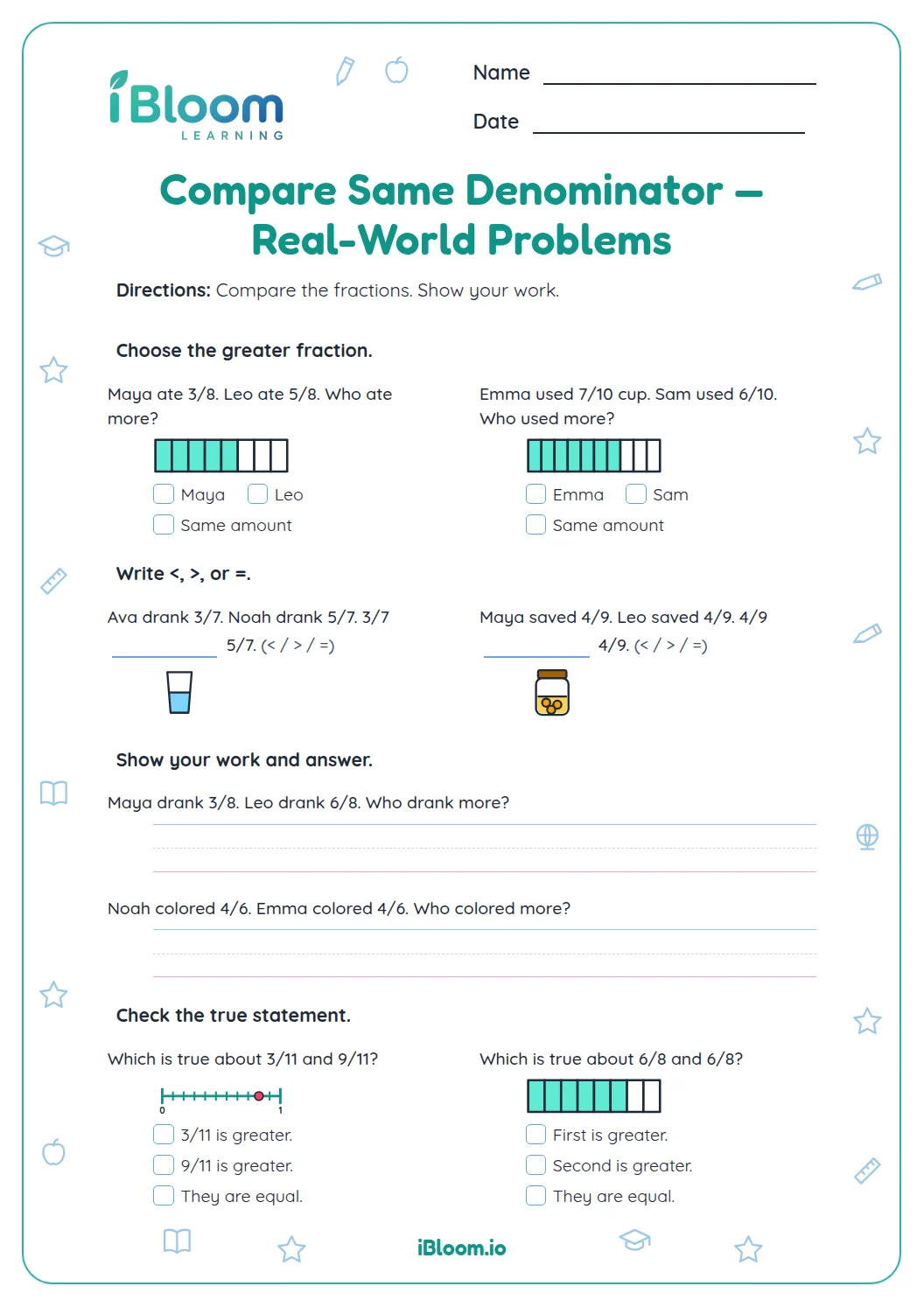
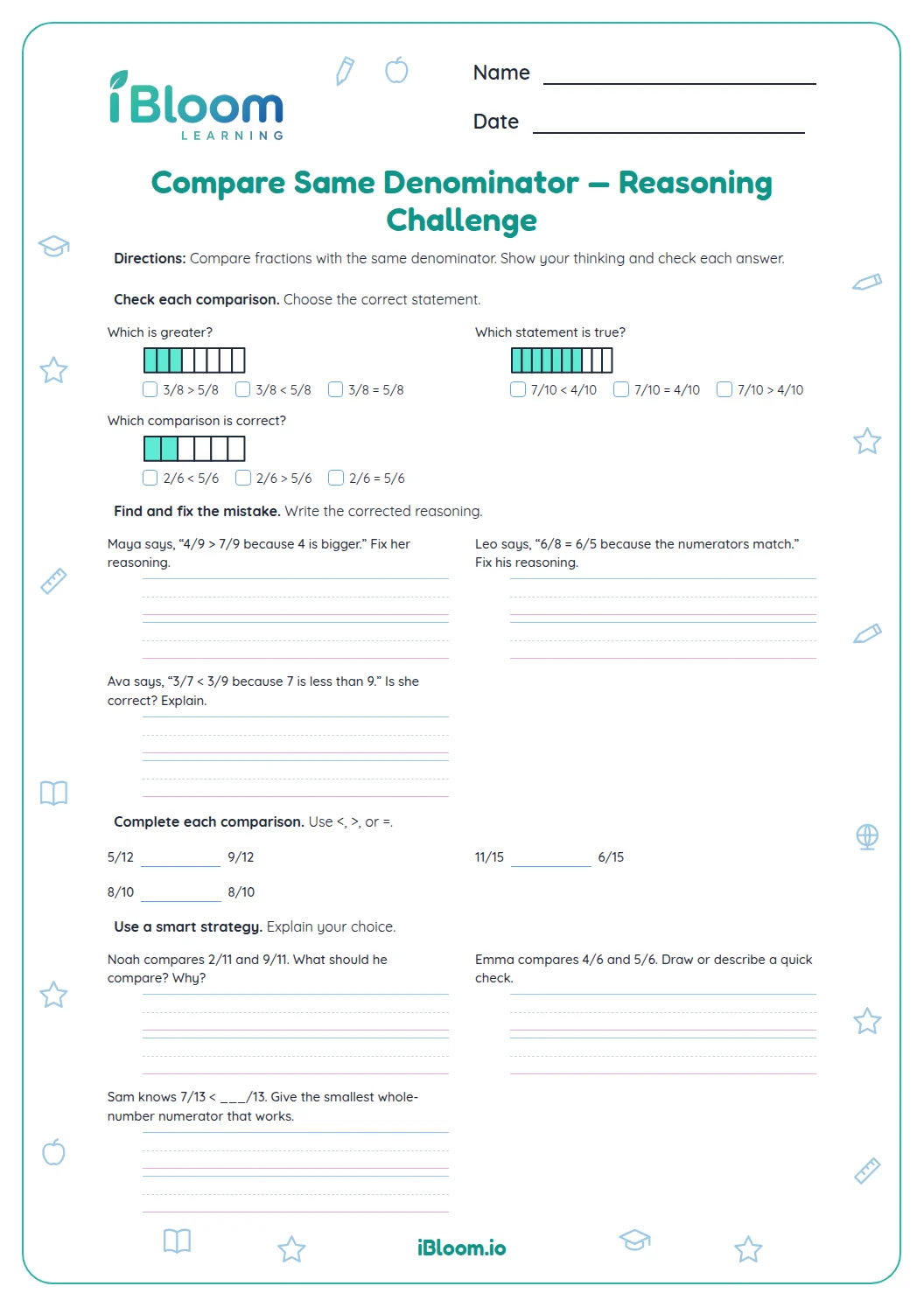
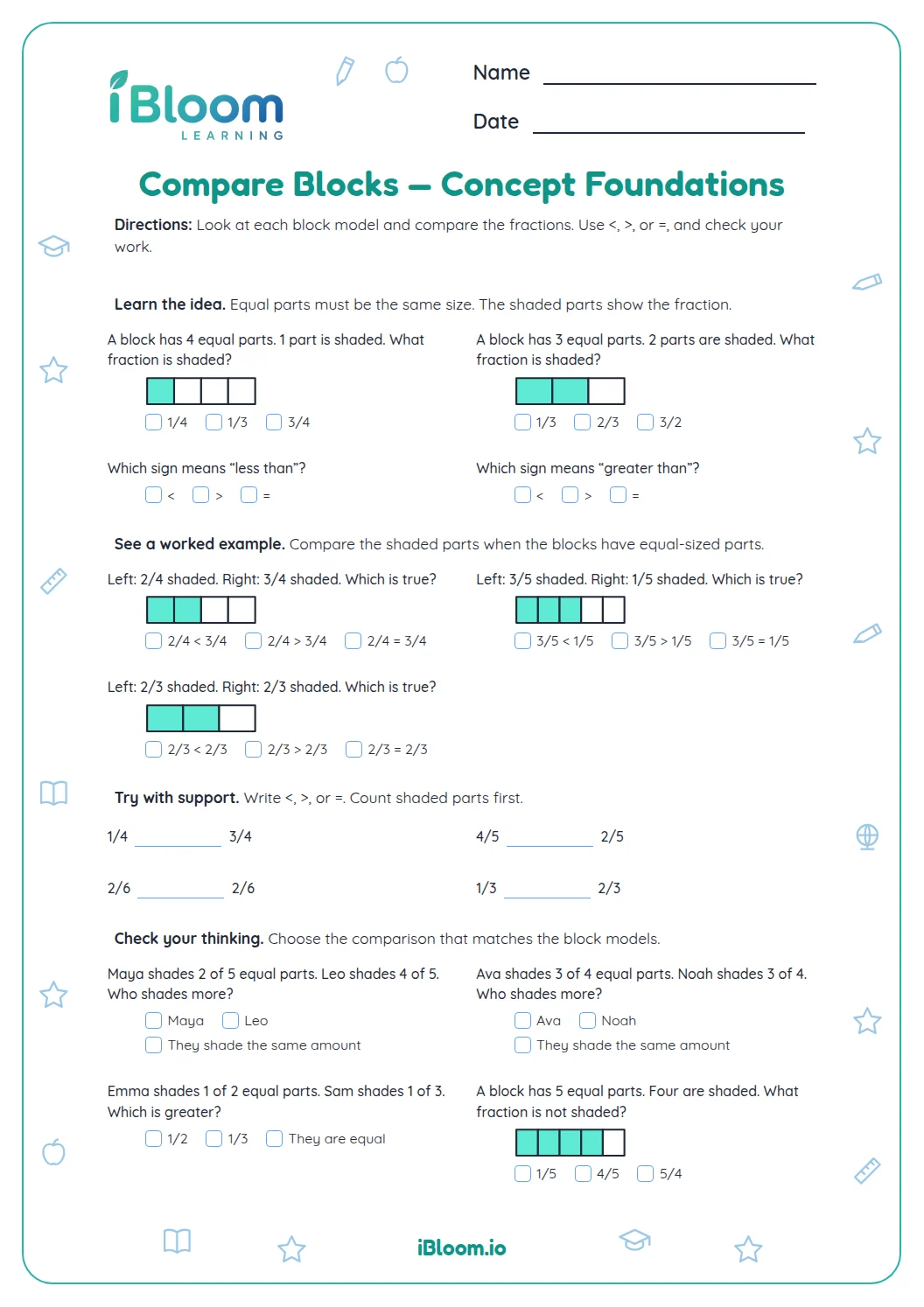
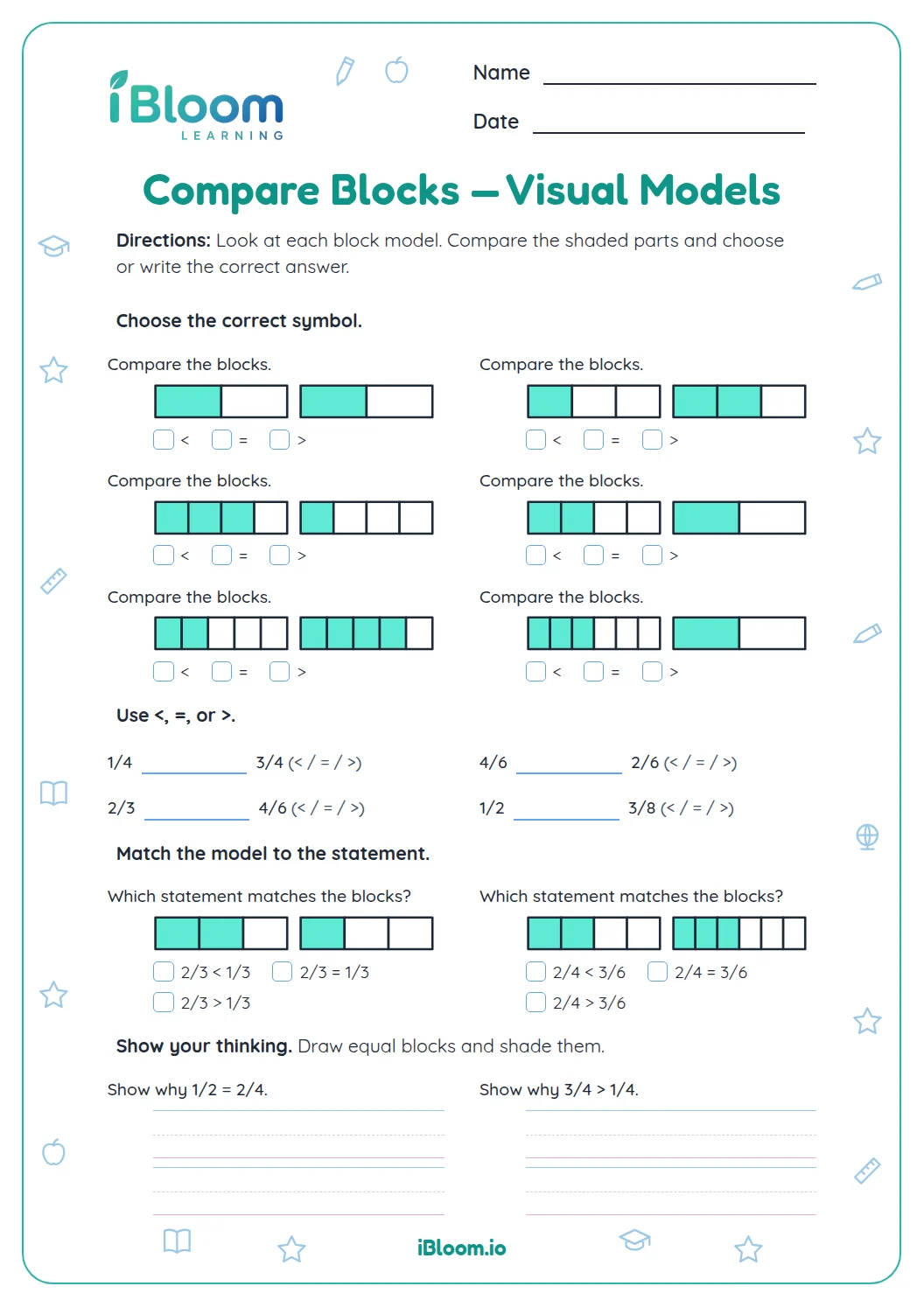
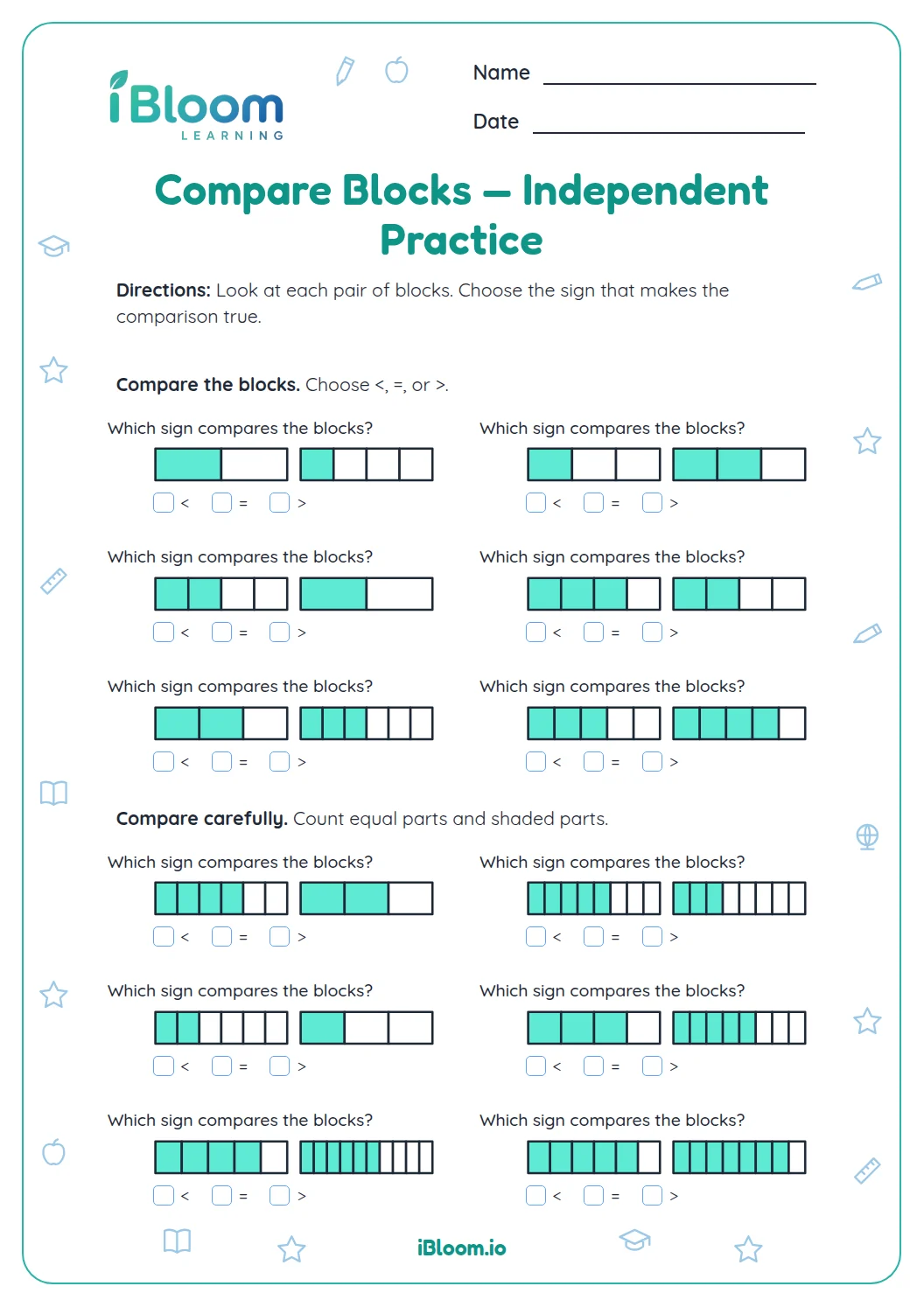
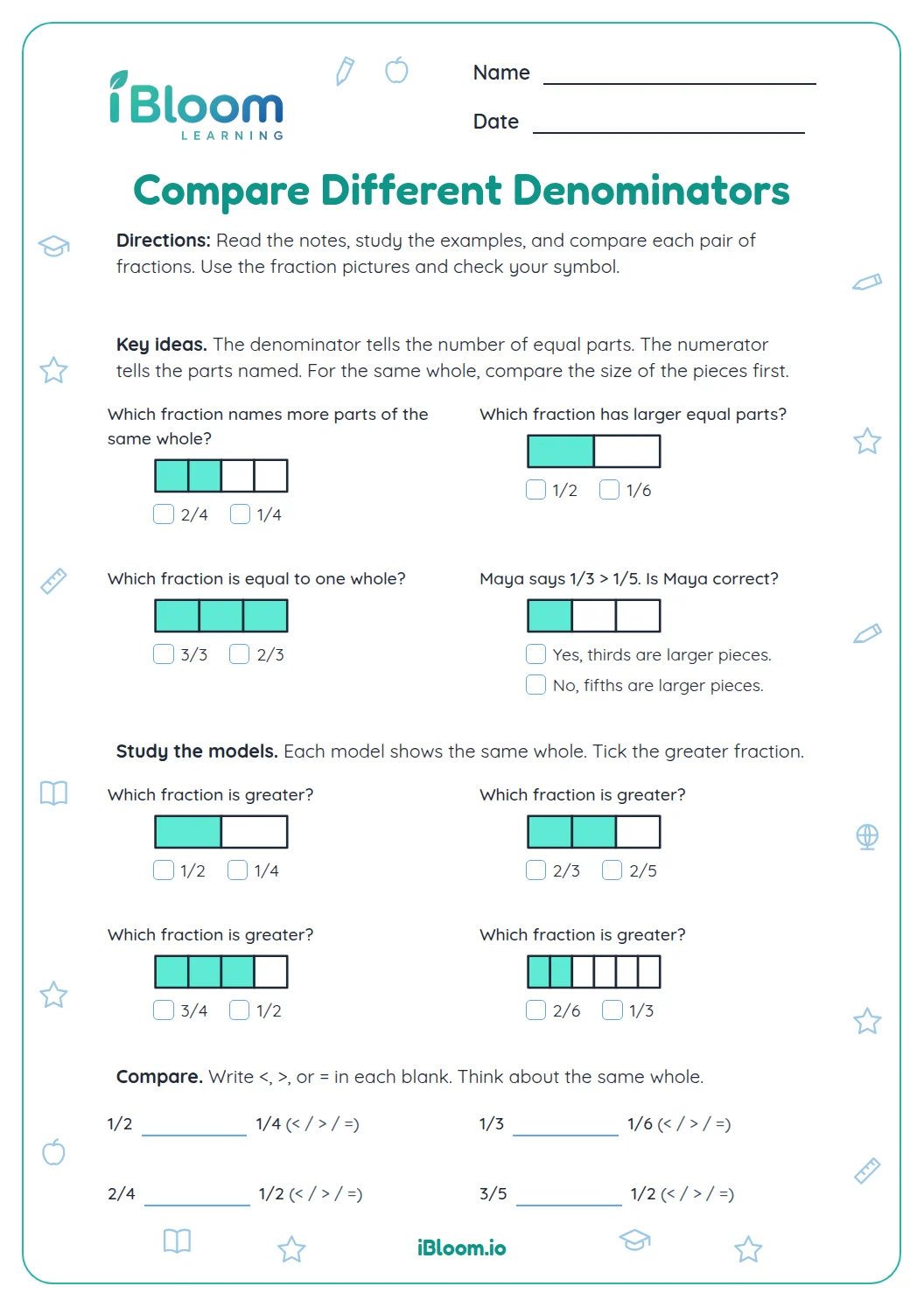
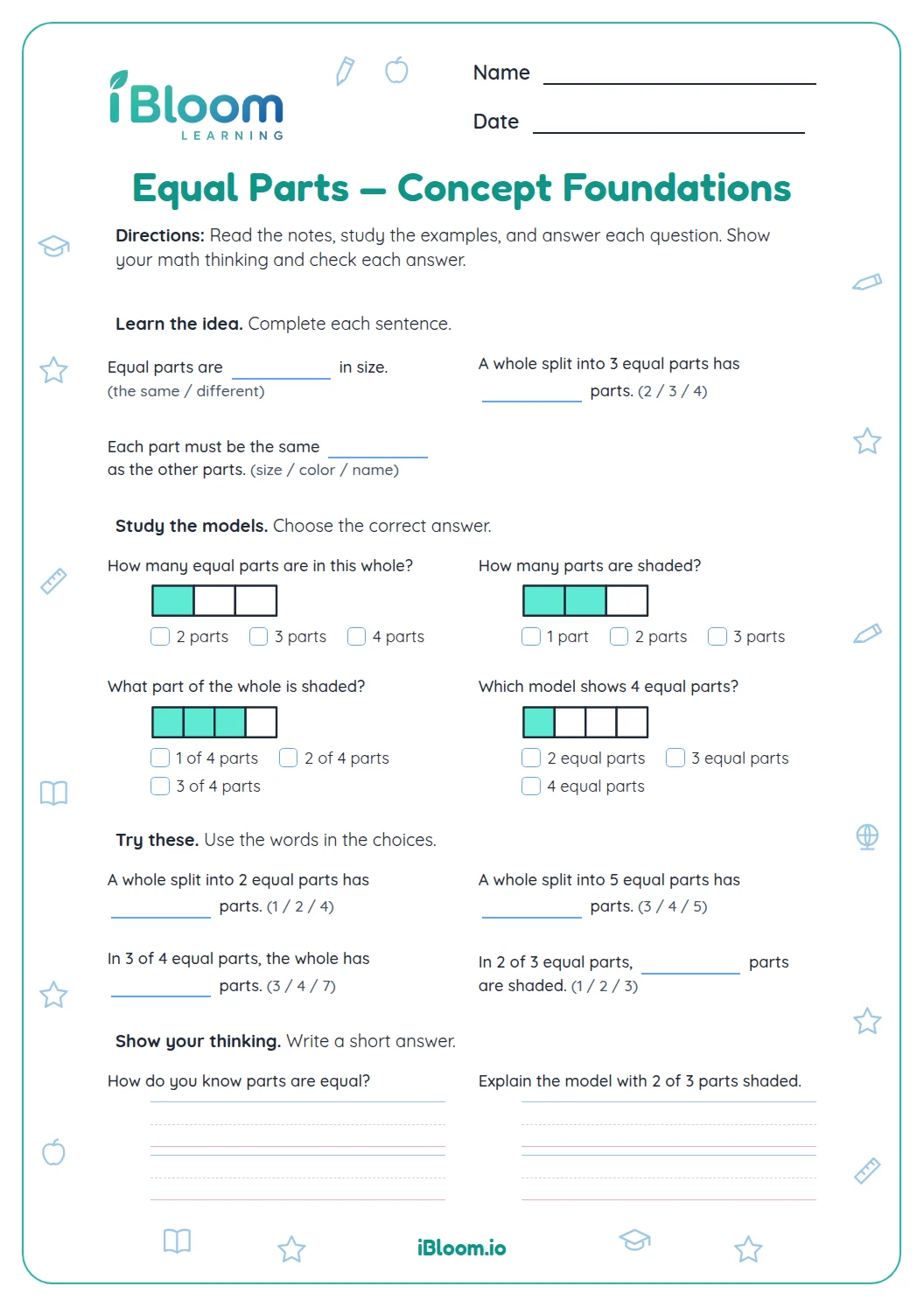
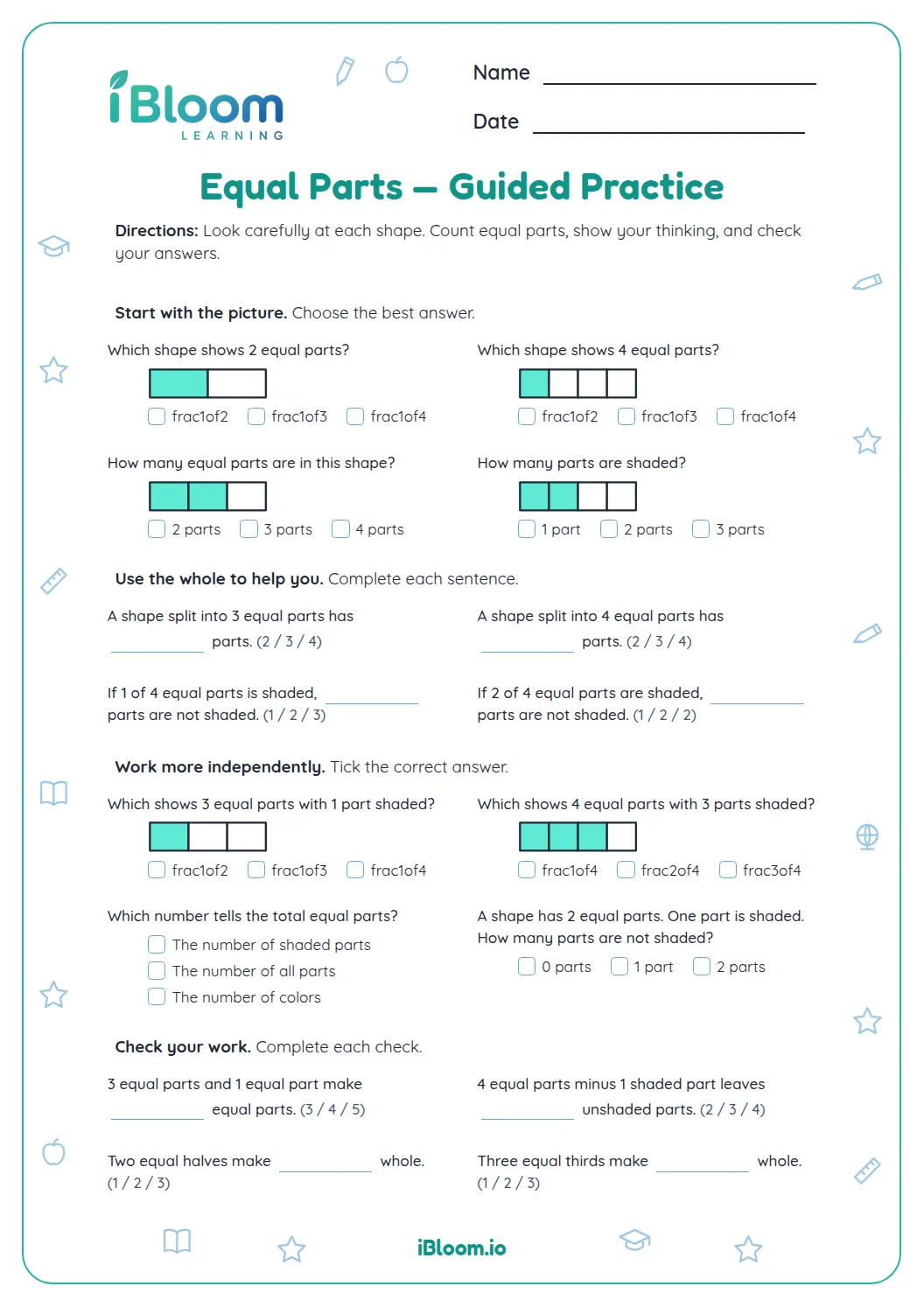
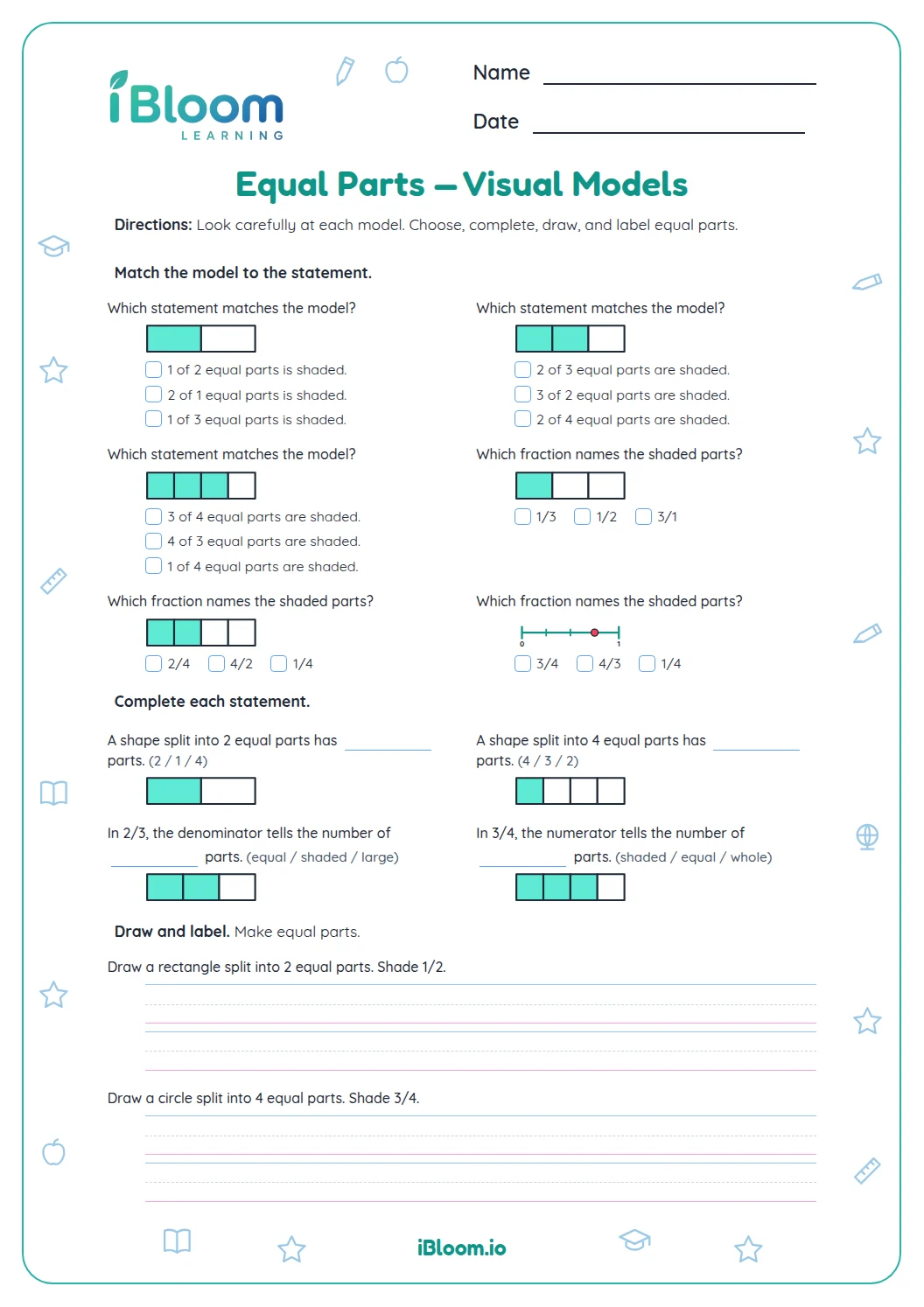
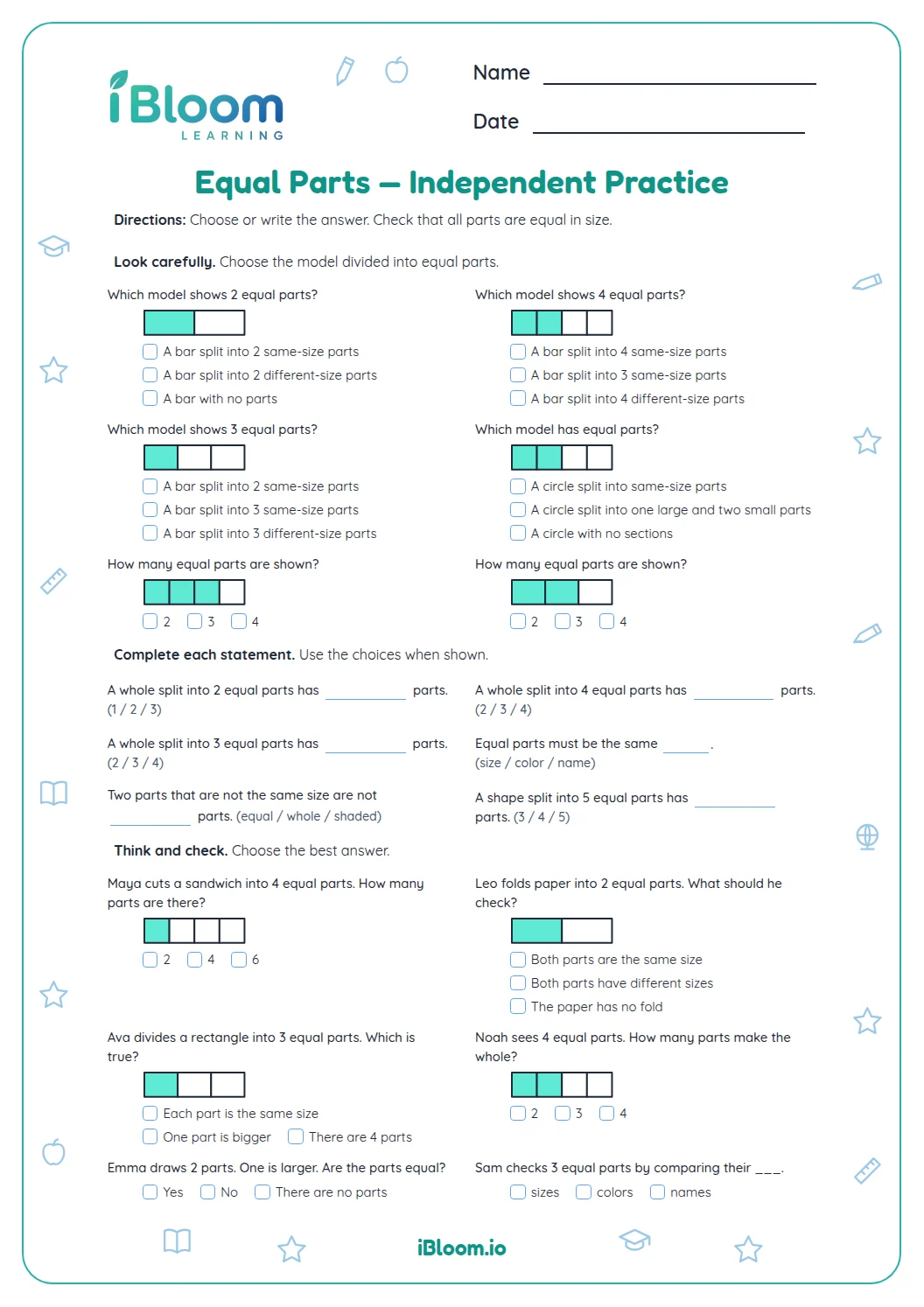
This Grade 2 practice page uses equal-part models to make same-denominator comparisons visible. Children identify shaded fractions, then compare fractions that refer to equal-size wholes and record <, >, or =.
Aligned to CCSS.MATH.CONTENT.3.NF.A.3.D
How this worksheet builds the skill
This page builds visual fraction reasoning: the parts in each whole are equal in size, so children can compare how many parts are shaded. It uses familiar denominators from thirds to tenths.
When the wholes are the same size and denominators match, each part is the same size. The fraction with more parts is greater.
- 1When the wholes are the same size and denominators match, each part is the same size. The fraction with more parts is greater.
What children practice
Compare fractions with the same denominator using shaded models, symbols, and a short real-life question.
- 15 questions in three parts
- A separate answer key
- Practice that moves from recognition to independent use
A simple way to use the page
- 1Read the direction for each part before beginning.
- 2Ask the learner to explain one answer aloud.
- 3Use the answer key to check the work and revisit one missed item.
Common slips to watch for
The mistake
A larger denominator may seem to mean a larger fraction.
The fix
With equal-size wholes, matching denominators mean equal-size parts.
The mistake
The numerator may be read as the number of parts in the whole.
The fix
Use the denominator for all equal parts and numerator for shaded parts.
The mistake
A comparison may ignore whole size.
The fix
Check that both fractions refer to wholes of the same size.
Curriculum alignment
This worksheet practices the following Common Core skill.
Compare two fractions with the same numerator or the same denominator by reasoning about their size.
On this sheet: Learners read shaded fraction models and compare fractions with the same denominator, recording the comparison symbol.
Show the official wordingHide the official wording
Compare two fractions with the same numerator or the same denominator by reasoning about their size. Recognize that comparisons are valid only when the two fractions refer to the same whole. Record the results of comparisons with the symbols >, =, or <, and justify the conclusions, e.g., by using a visual fraction model.
What to practice next
Make more practice
Further reading
Questions parents and teachers ask
How do children compare fractions with the same denominator?
First check that both fractions refer to wholes of the same size. Matching denominators mean the parts are equal in size, so children compare the numerators. More equal parts means a greater fraction; the same numerator means the fractions are equal.
Why are shaded models useful?
A model makes the equal parts visible. Children can see that 4/5 is greater than 2/5 because four fifth-size pieces cover more of an equal whole than two fifth-size pieces. The picture supports reasoning before the child writes a symbol.
What do the numerator and denominator mean?
The denominator tells how many equal parts make one whole. The numerator tells how many of those parts are being considered. When denominators match, each part has the same size, which makes comparing the number of parts meaningful. The worksheet provides space to try the skill before checking the key.
Why does the worksheet cite a Grade 3 standard?
The title places this page in a Grade 2 collection, so its practice stays simple and visual. Comparing same-denominator fractions is stated directly in the Grade 3 Common Core standard; this page gives an early introduction to that skill. The worksheet provides space to try the skill before checking the key.