


About this worksheet
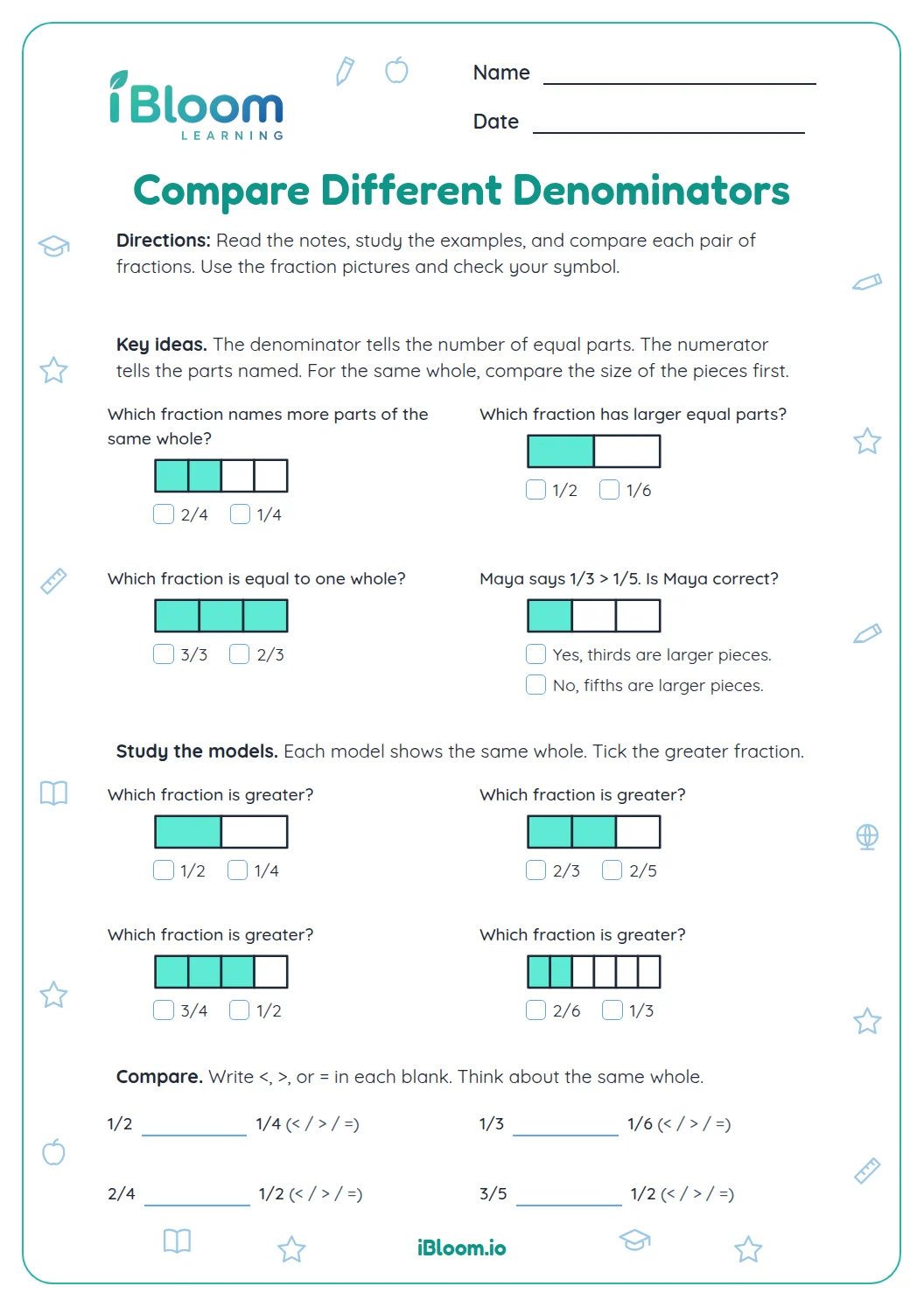
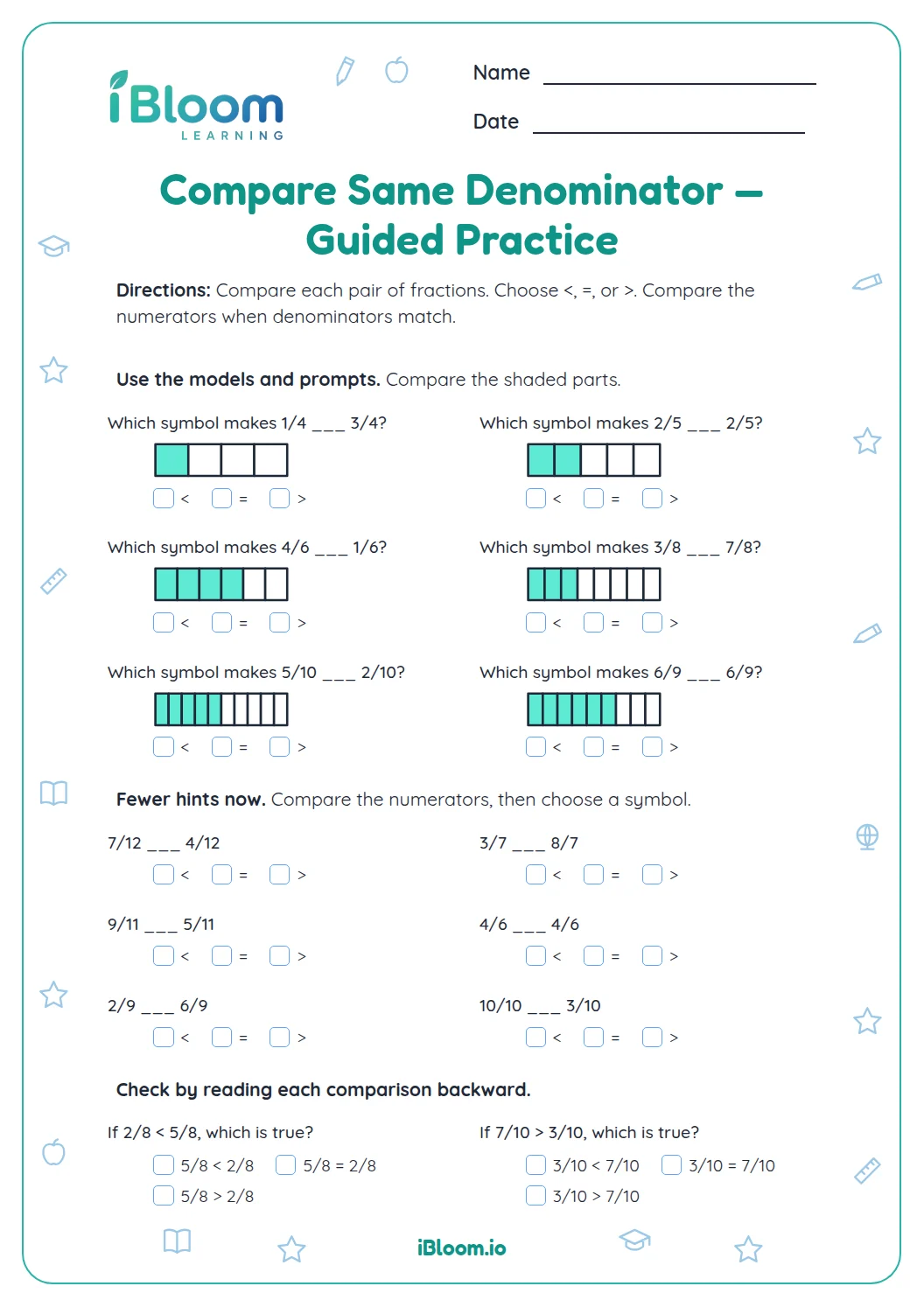
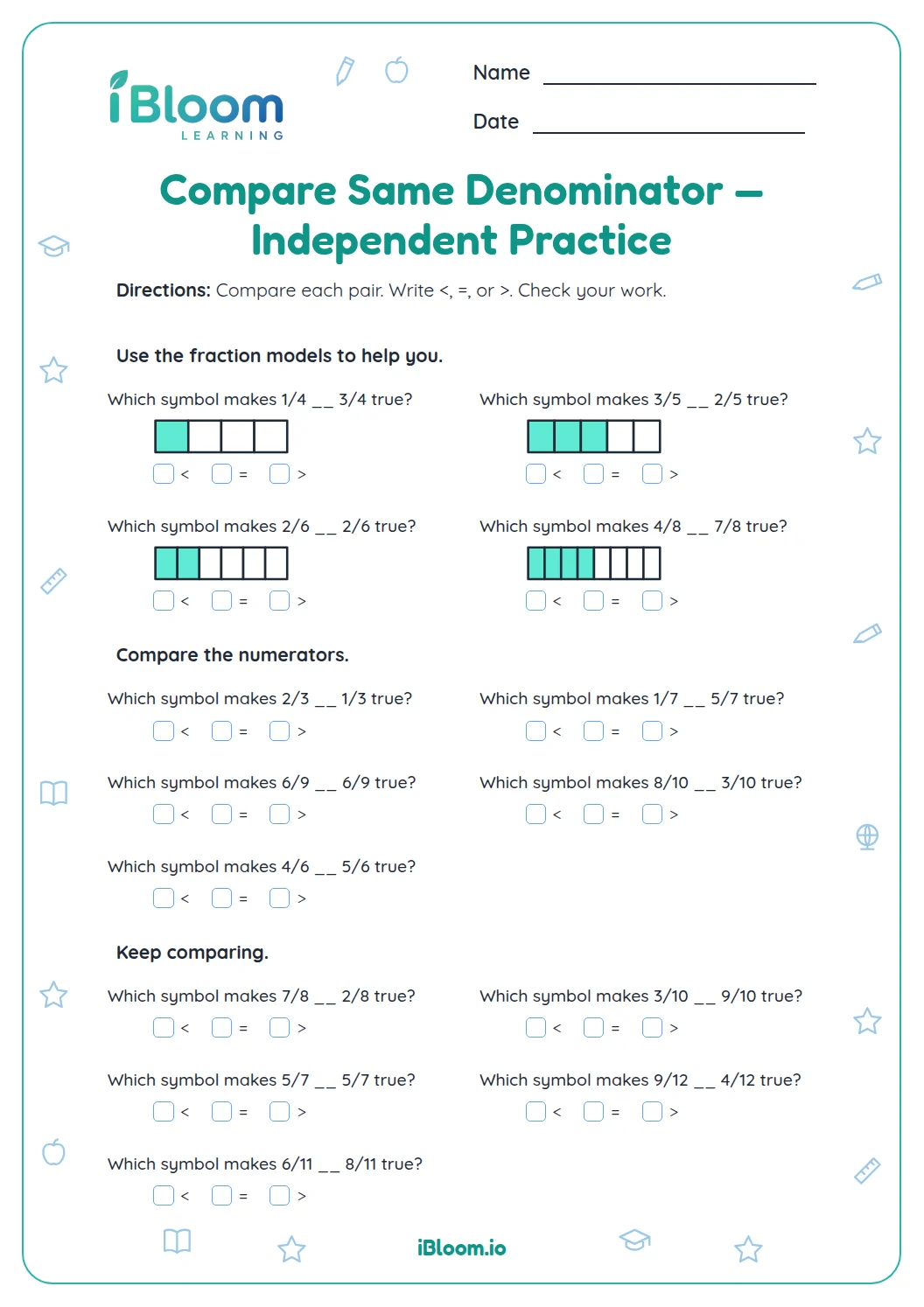
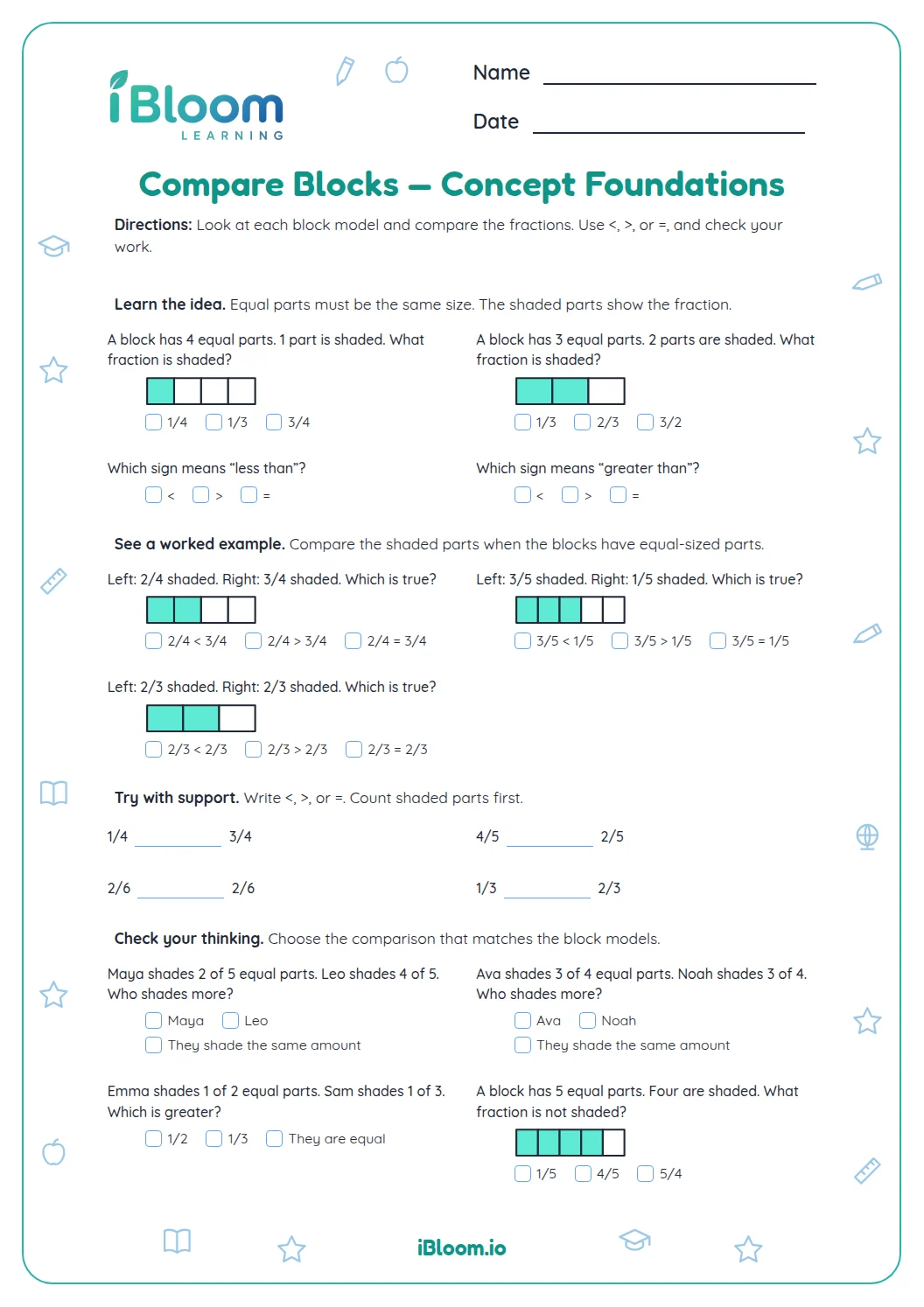
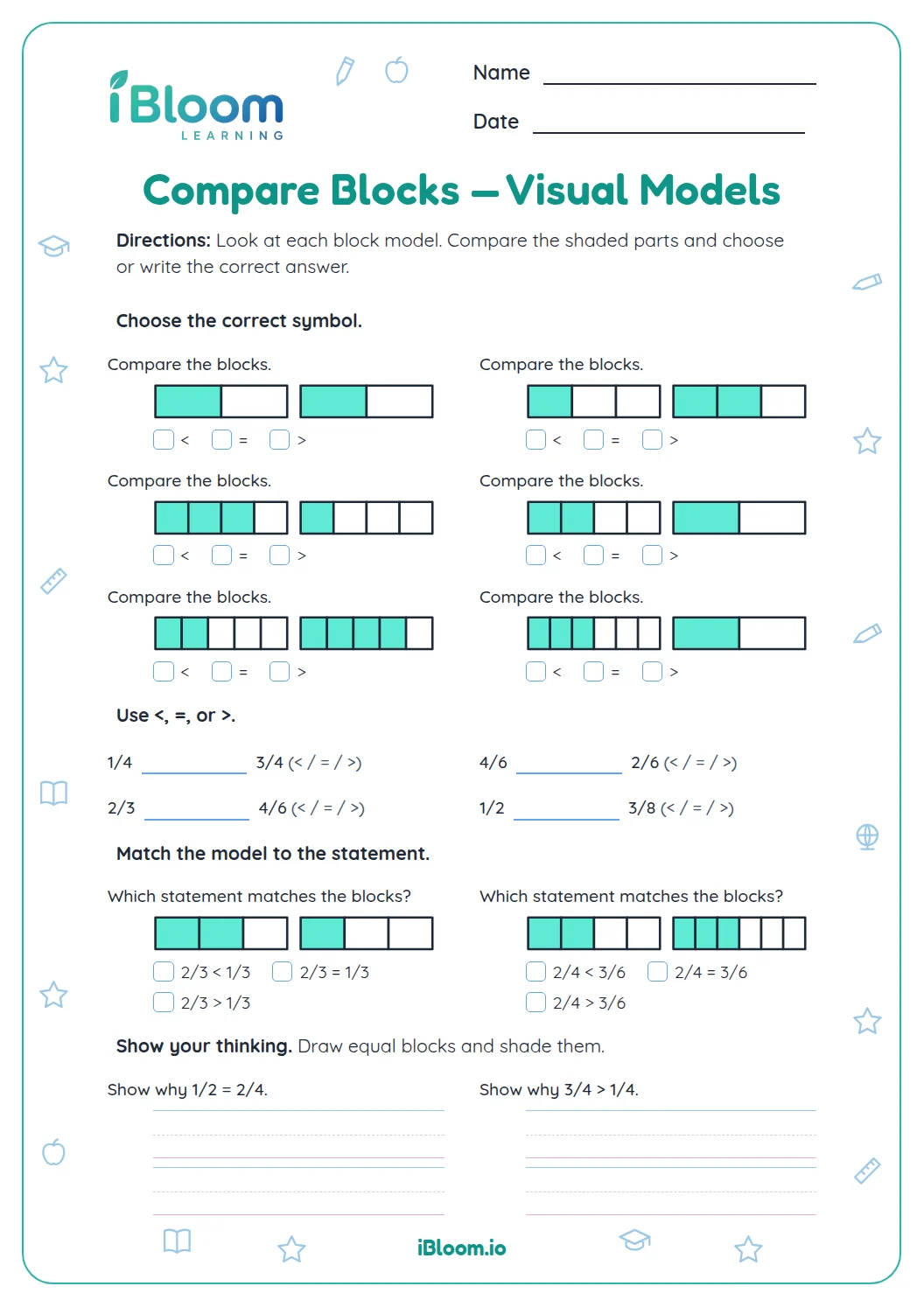
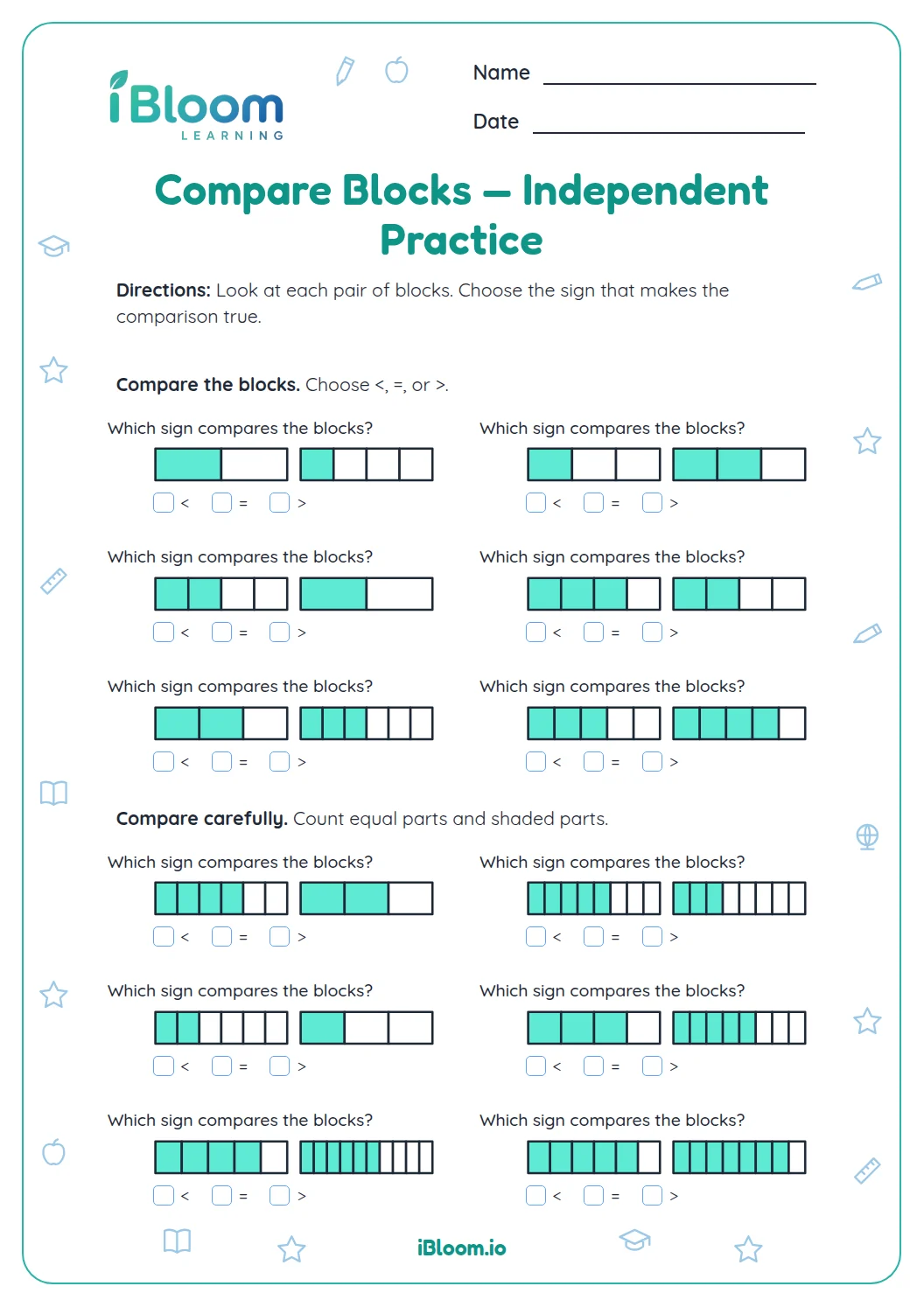
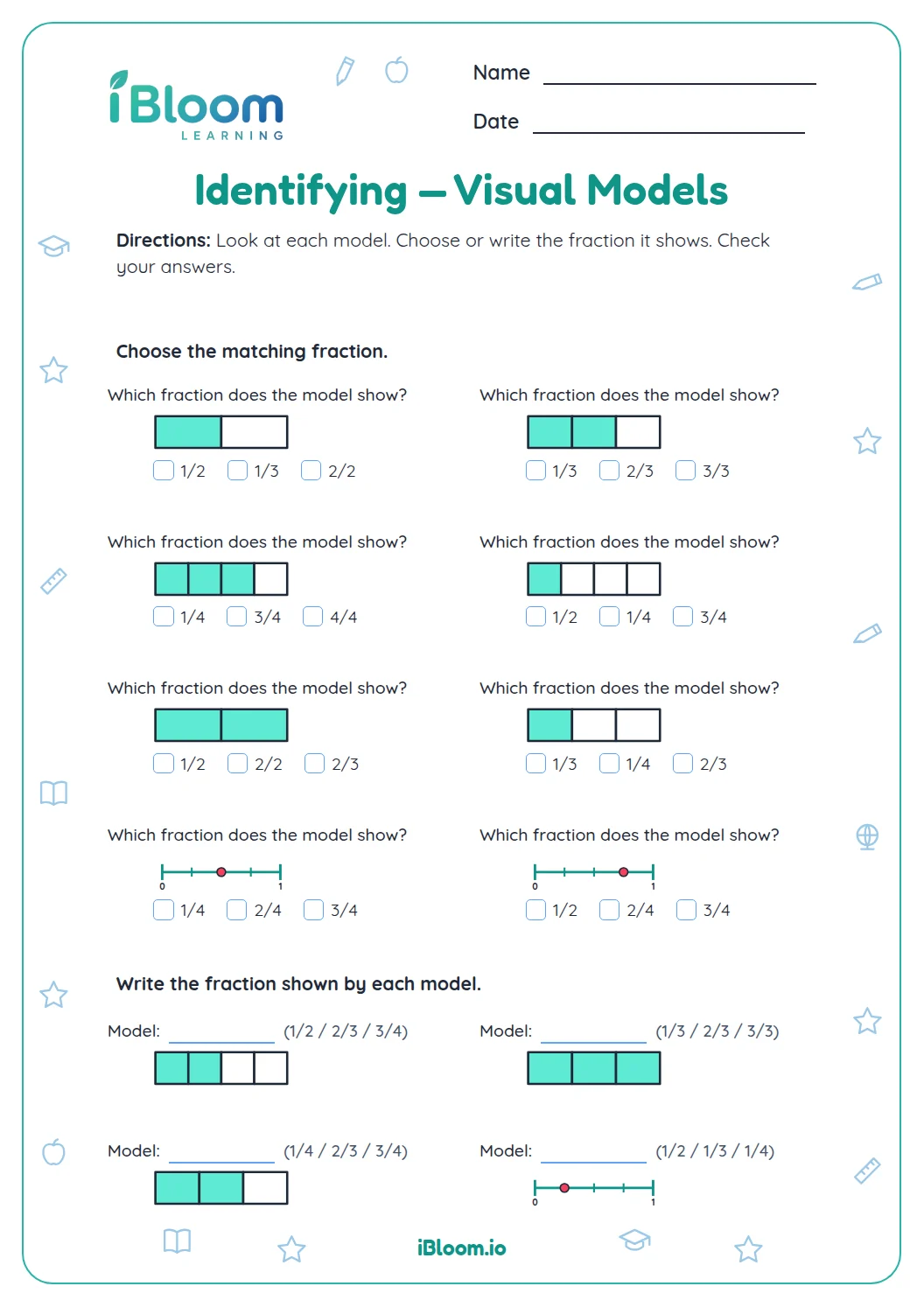
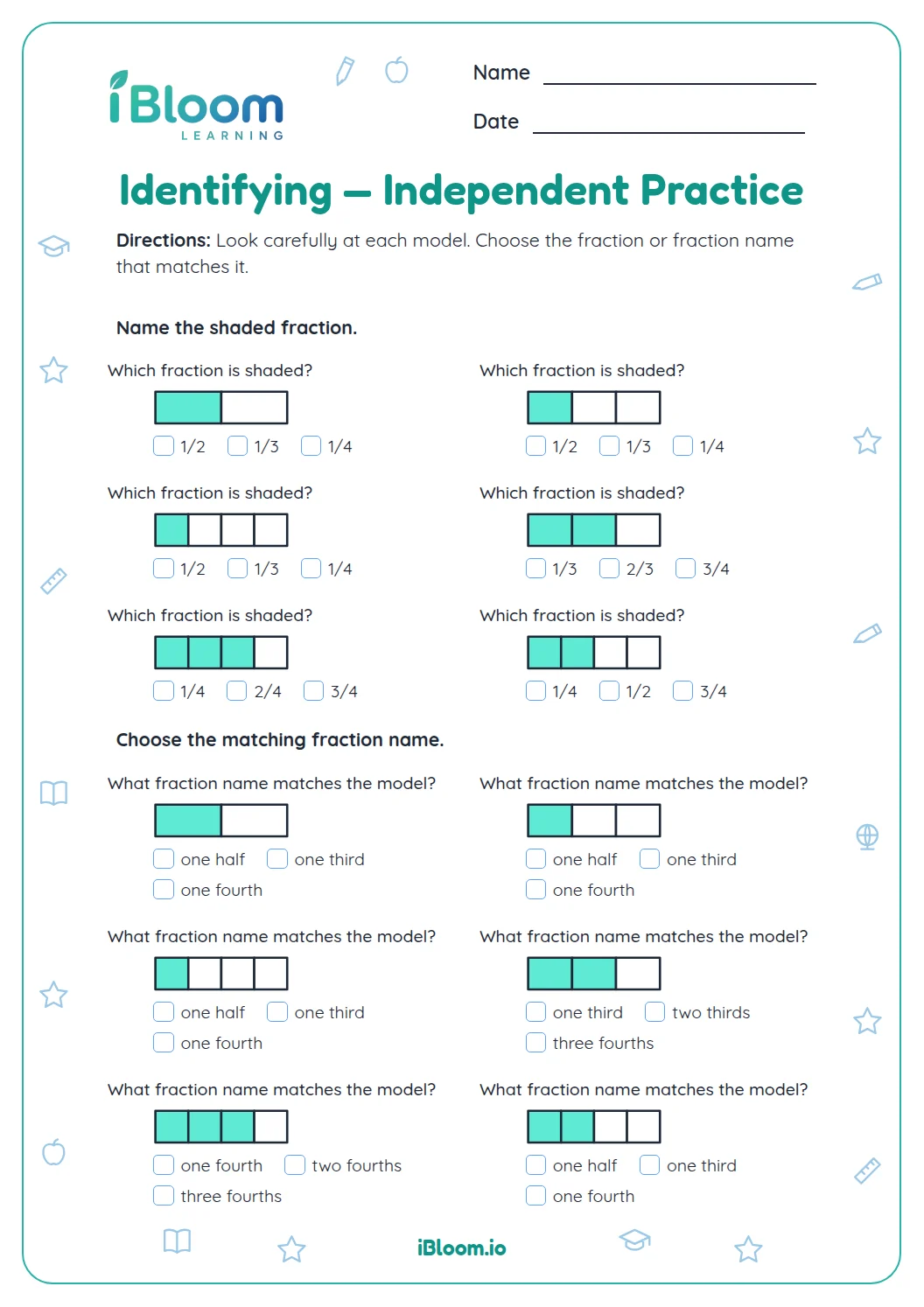
This Grade 2 printable gives 14 comparisons of fractions with different denominators. Learners use fraction bars, benchmark reasoning, and the symbols <, =, and > to compare parts of the same whole. A separate answer key is included.
Aligned to 3.NF.A.3.d
How do the equal parts help compare fractions?
Each pair names parts of the same-size whole. For example, in q5, both fractions have 2 as the numerator: 2/3 is greater than 2/6 because thirds are larger pieces than sixths.
The bars give a visual reminder of equal wholes; use the numerators and denominators to decide which fraction is larger.
How can a benchmark help?
Use 1/2 as a reference when the numerators differ. In q13, 3/4 and 5/8 are both greater than 1/2, so compare how far each is from one whole: 3/4 is greater.
How can a learner verify a comparison?
Check the same-whole condition, then compare the sizes of the pieces. In q13, 3/4 is greater than 5/8 because both are above 1/2, but 3/4 is closer to one whole.
How can a learner work through the page?
- 1Check that the fractions refer to the same-size whole.
- 2Compare the size of the parts, not just the denominator numbers.
- 3Use 1/2 as a benchmark when the numerators differ.
- 4Write the comparison symbol that makes the statement true.
- 5Check the result with the fraction bars and answer key.
What should a learner double-check?
The mistake
Thinking a larger denominator means a larger fraction.
The fix
For fractions with the same numerator, more equal pieces make each piece smaller.
The mistake
Comparing fractions that refer to differently sized wholes.
The fix
Assume both fractions name parts of equal-size wholes before comparing.
The mistake
Treating equivalent fractions as unequal.
The fix
Check whether each fraction covers the same amount, then write =.
Curriculum alignment
The questions below give learners practice with these skills.
Compare fractions that name parts of the same-size whole.
On this sheet: Learners practice this standard by completing the worksheet questions.
Show the official wordingHide the official wording
Compare two fractions with the same numerator or the same denominator by reasoning about their size. Recognize that comparisons are valid only when the two fractions refer to the same whole. Record the results of comparisons with the symbols >, =, or <, and justify the conclusions, e.g., by using a visual fraction model.
What to practice next
Make more practice
Further reading
Questions parents and teachers ask
How should a learner compare fractions with different denominators?
First make sure both fractions refer to the same-size whole. Compare the size of the pieces and the amount shaded; a fraction bar or the benchmark 1/2 can help. Then write <, =, or > between the fractions and check the answer key.
Why does a larger denominator sometimes mean a smaller fraction?
The denominator tells how many equal pieces make one whole. When the same number of pieces is being counted, dividing the whole into more pieces makes each piece smaller. For example, one third is larger than one sixth when both wholes are the same size.
What do the symbols <, =, and > mean?
The symbol < means “is less than,” > means “is greater than,” and = means the amounts are equal. Read each comparison from left to right. The open side of < or > faces the larger amount. For these questions, the whole is the same size.
How can a learner use the fraction bars?
Each bar is divided into equal parts, with some parts shaded. Use the bars as a visual check that the fractions name parts of the same-size whole. The printed comparison still asks the learner to decide which fraction is greater or whether they are equal.
What is included in the printable?
The worksheet has 14 fraction comparisons arranged in three parts, with fraction bars on the questions and a separate answer key. Learners write a comparison symbol for each pair and can use the key to review their work.