

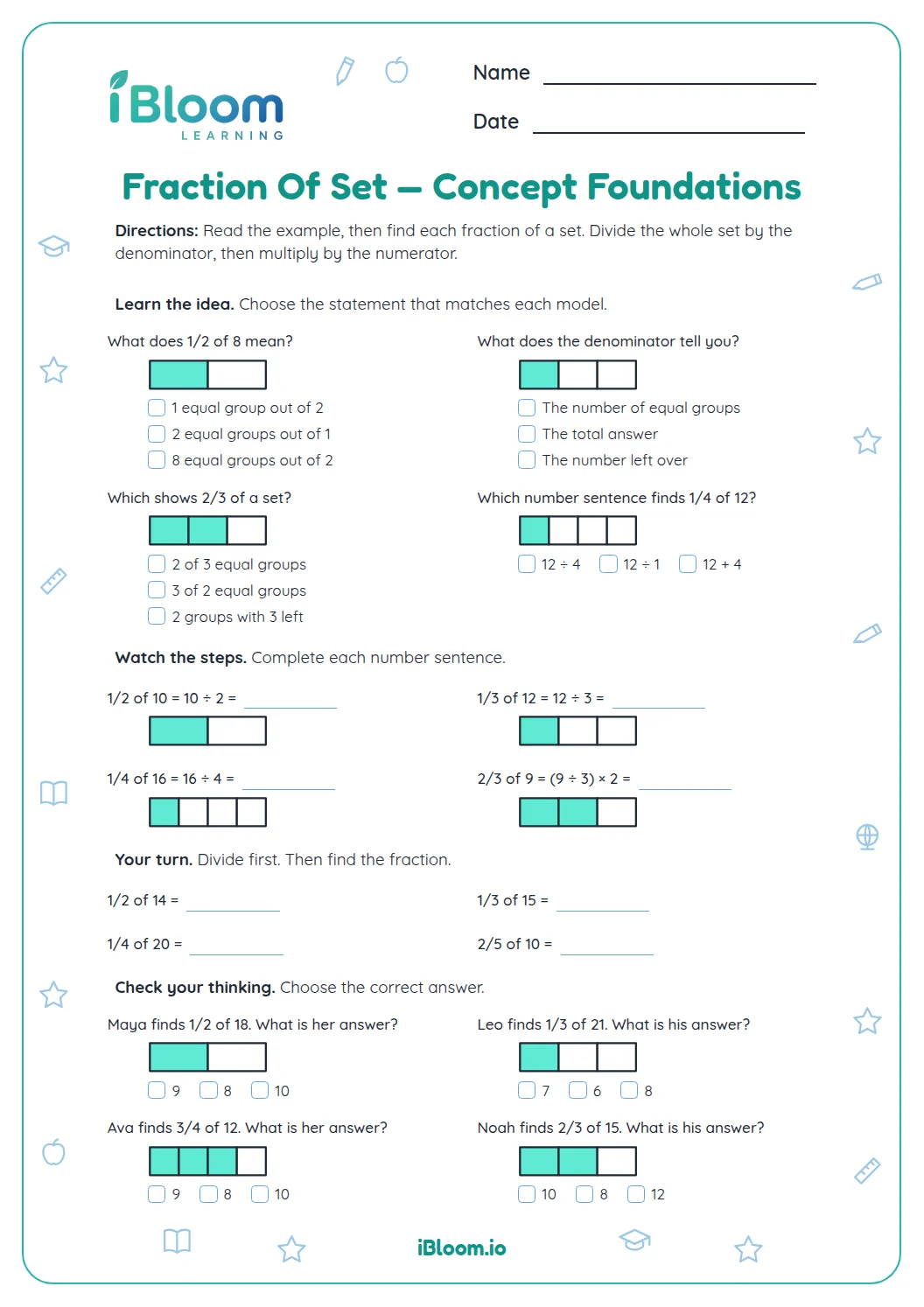
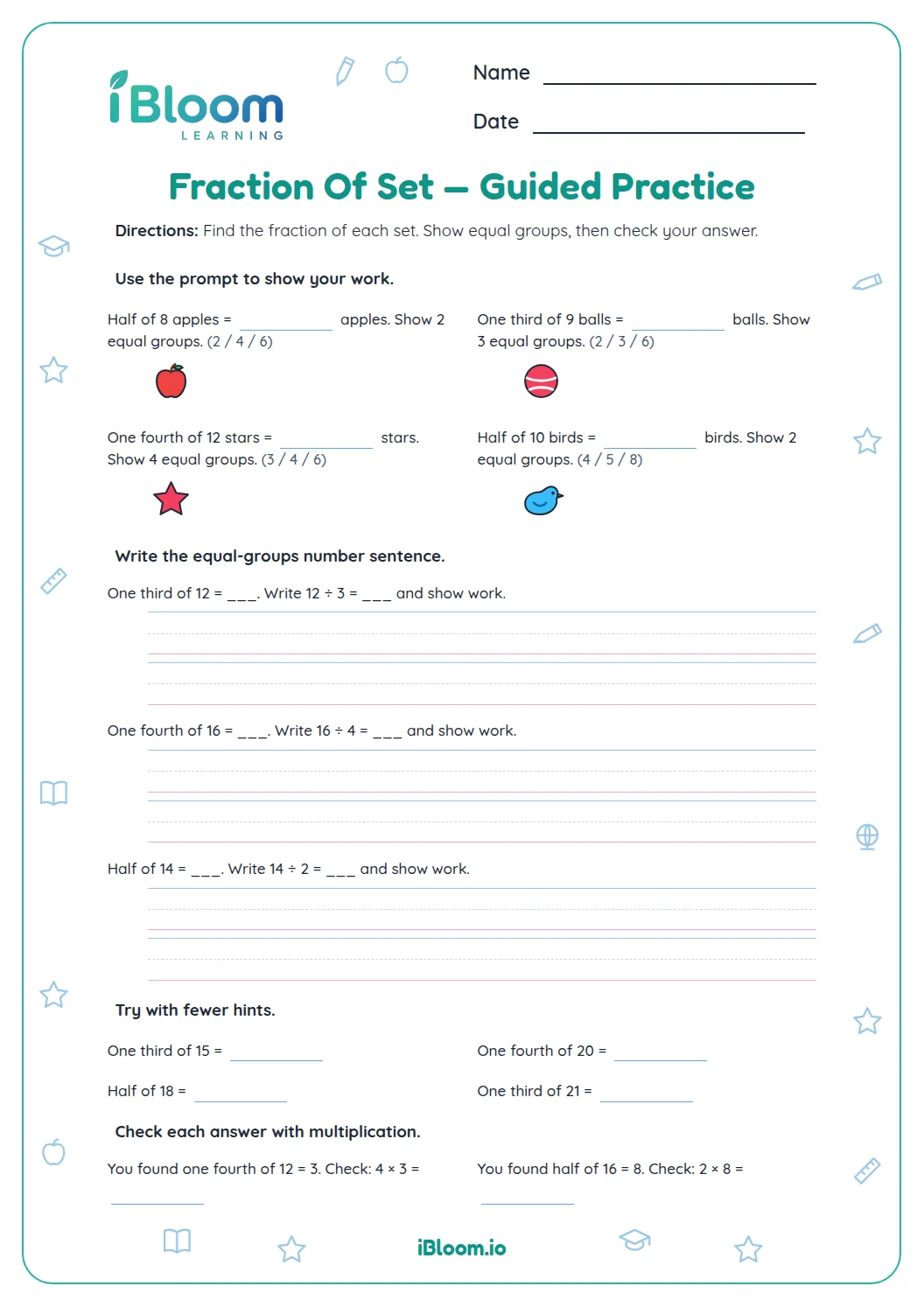
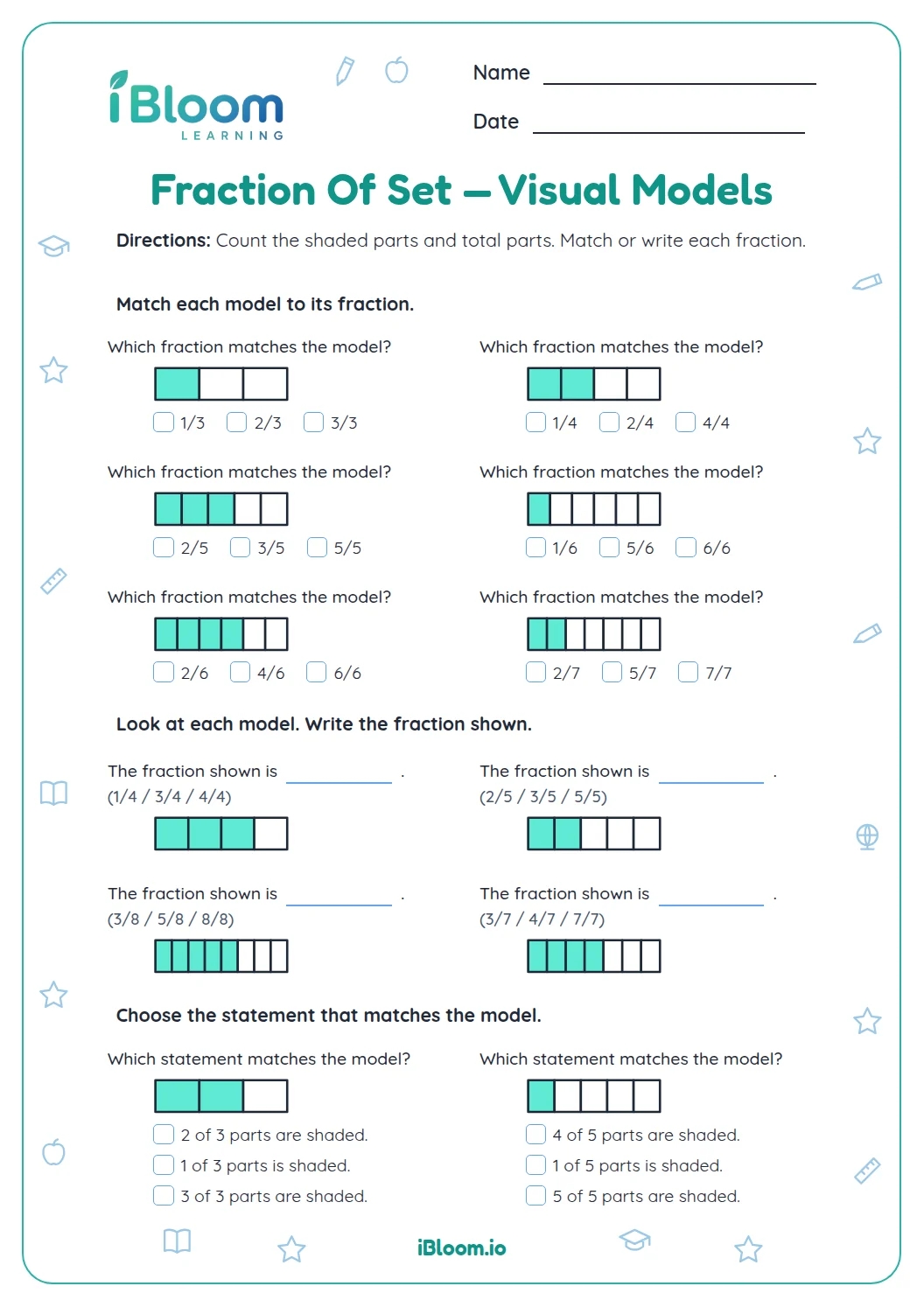
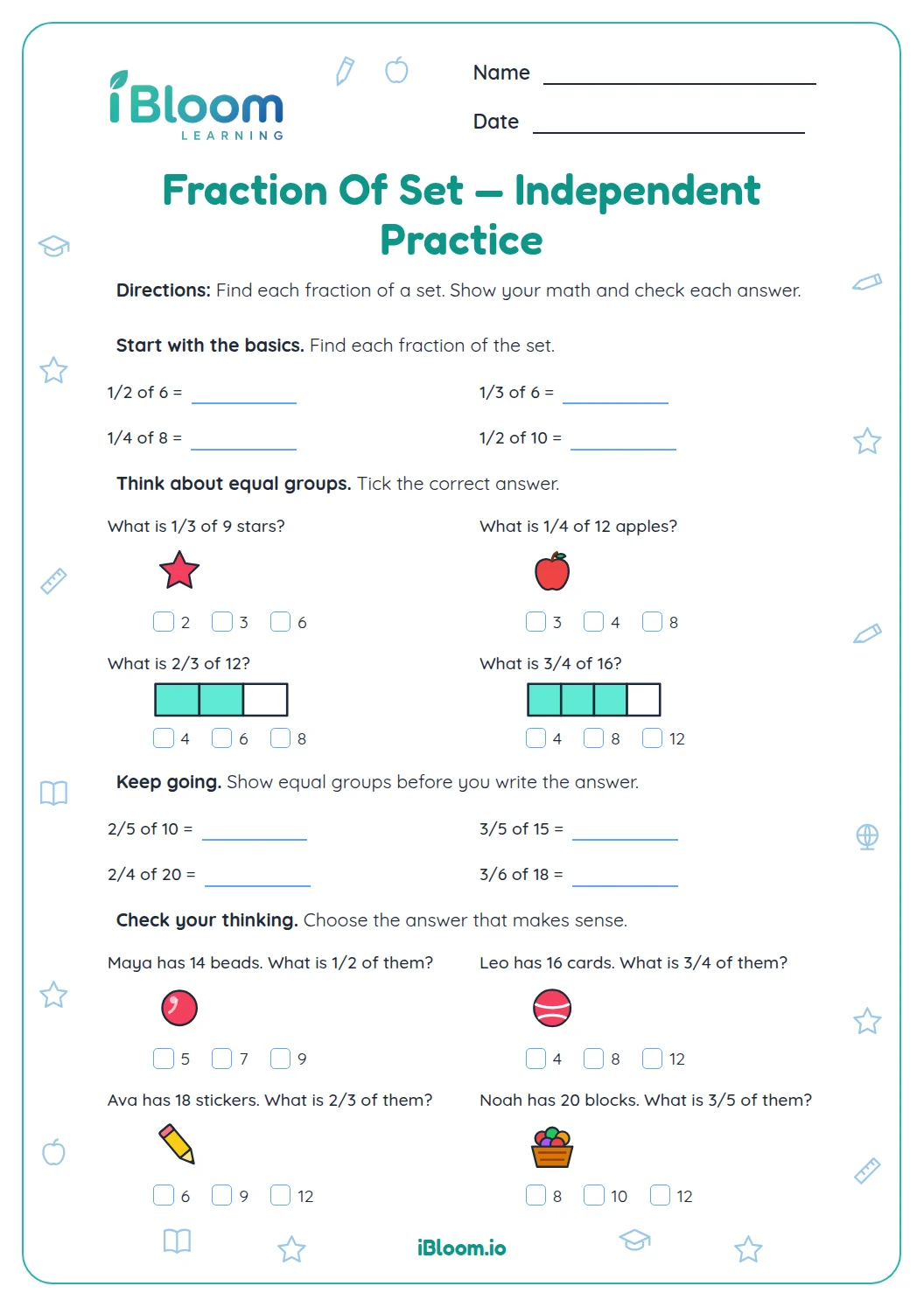
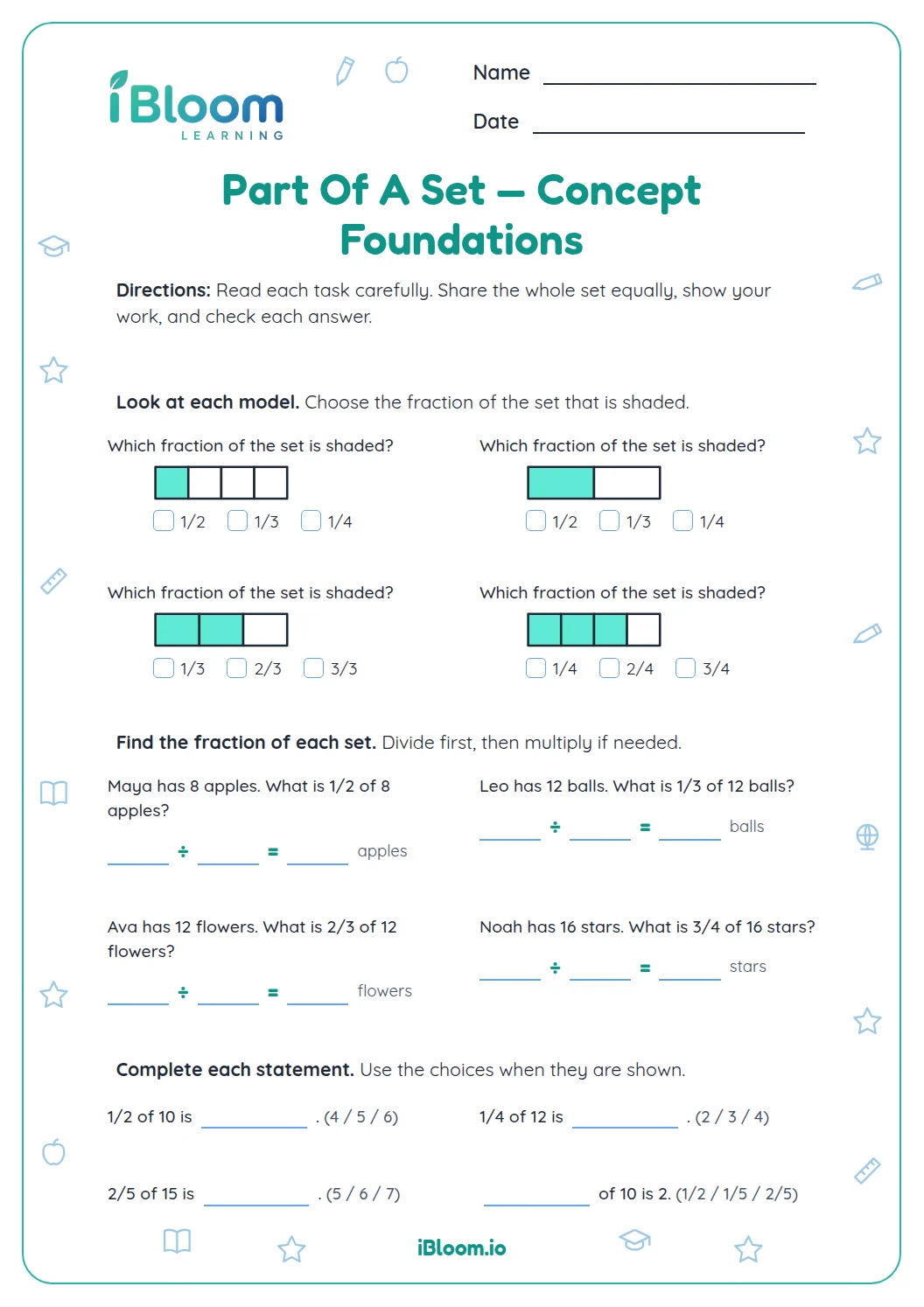
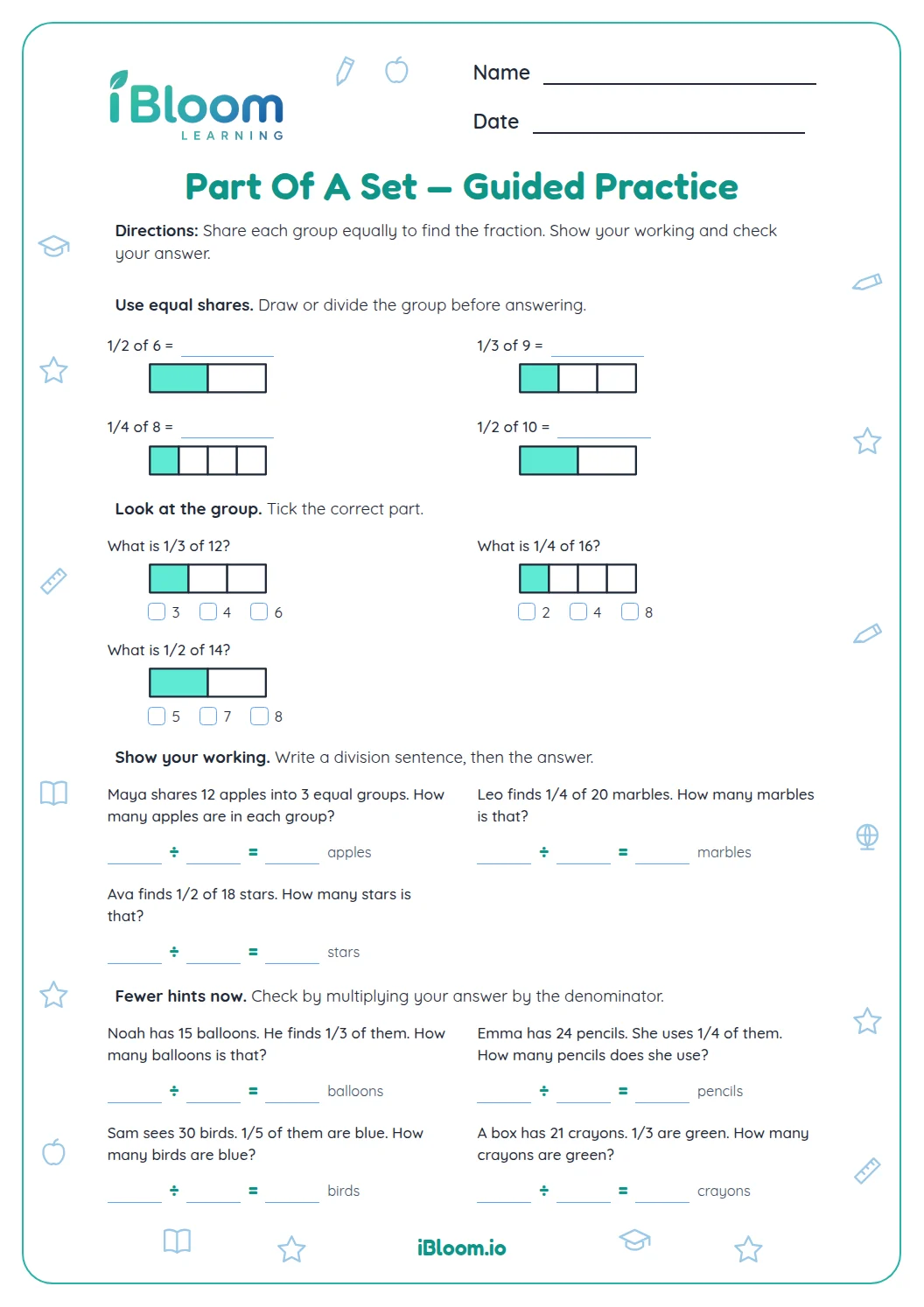

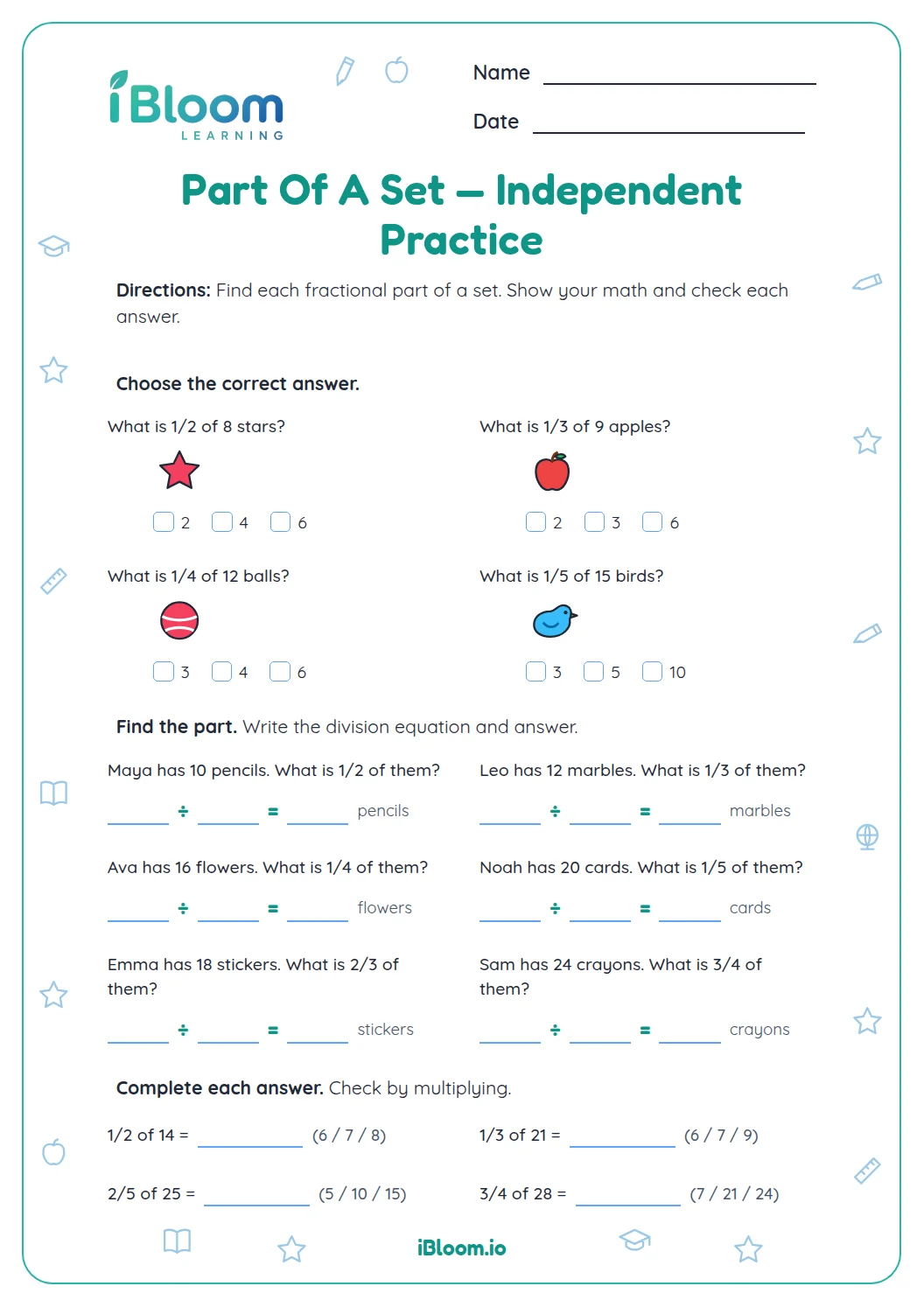

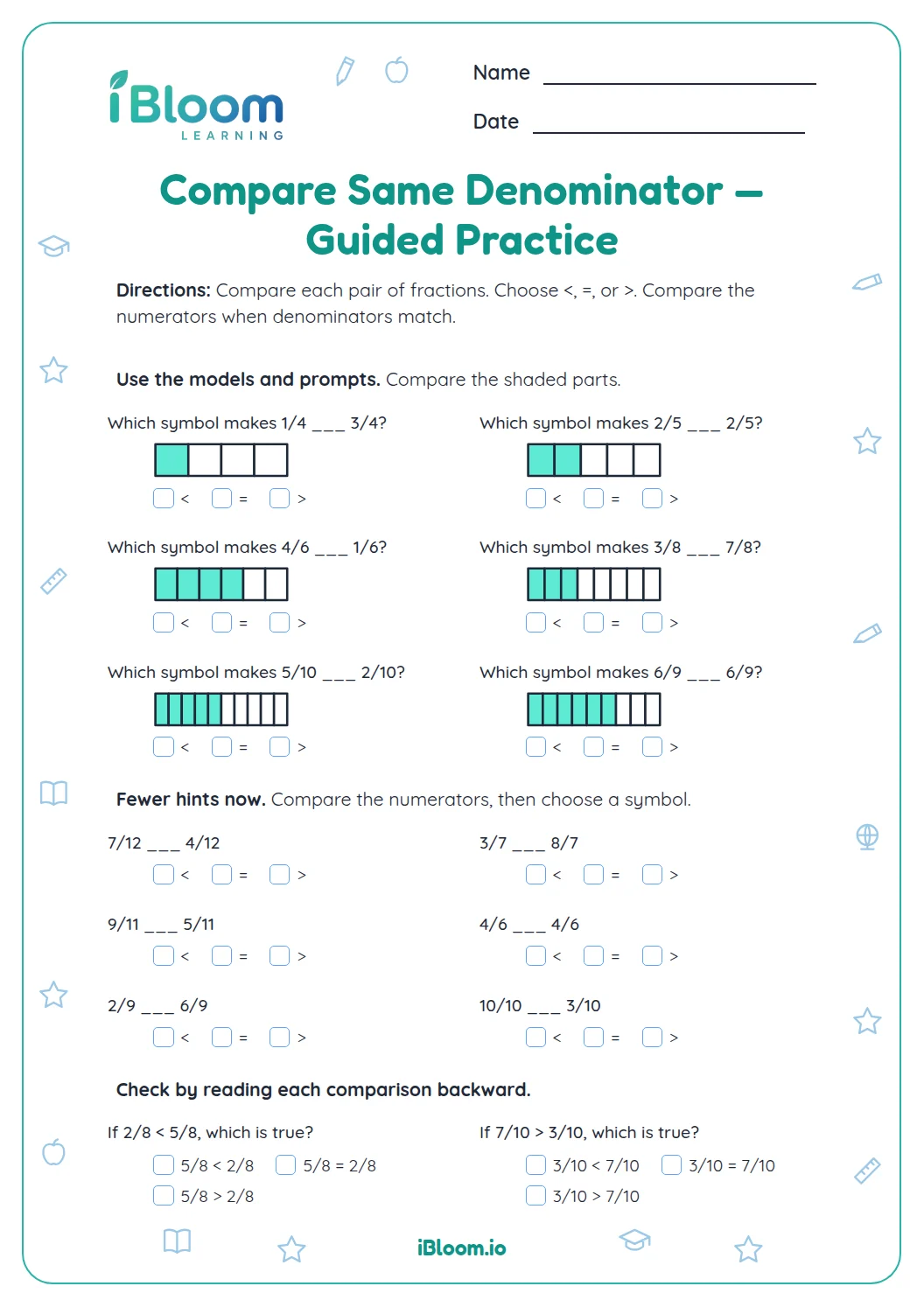
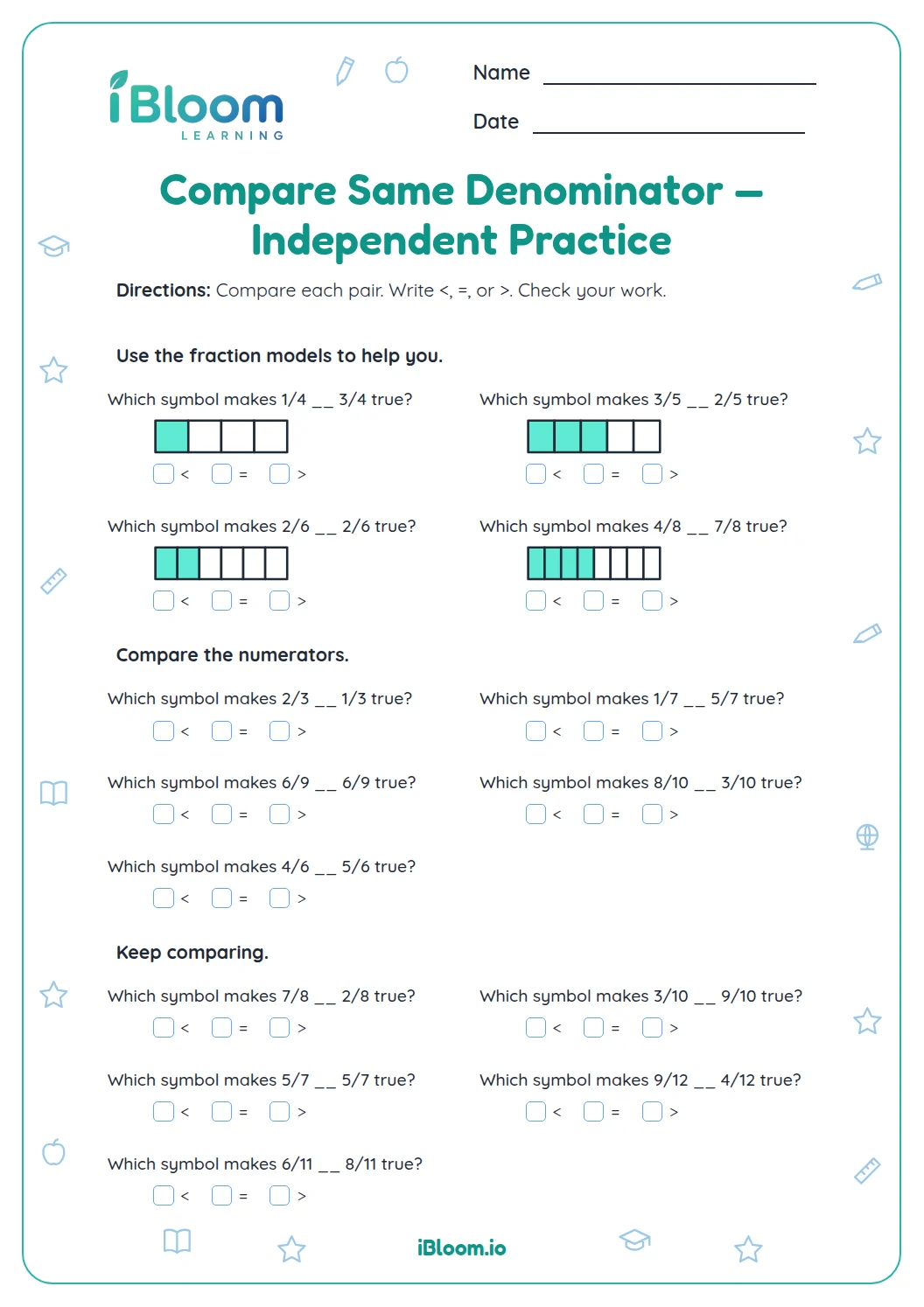
About this worksheet
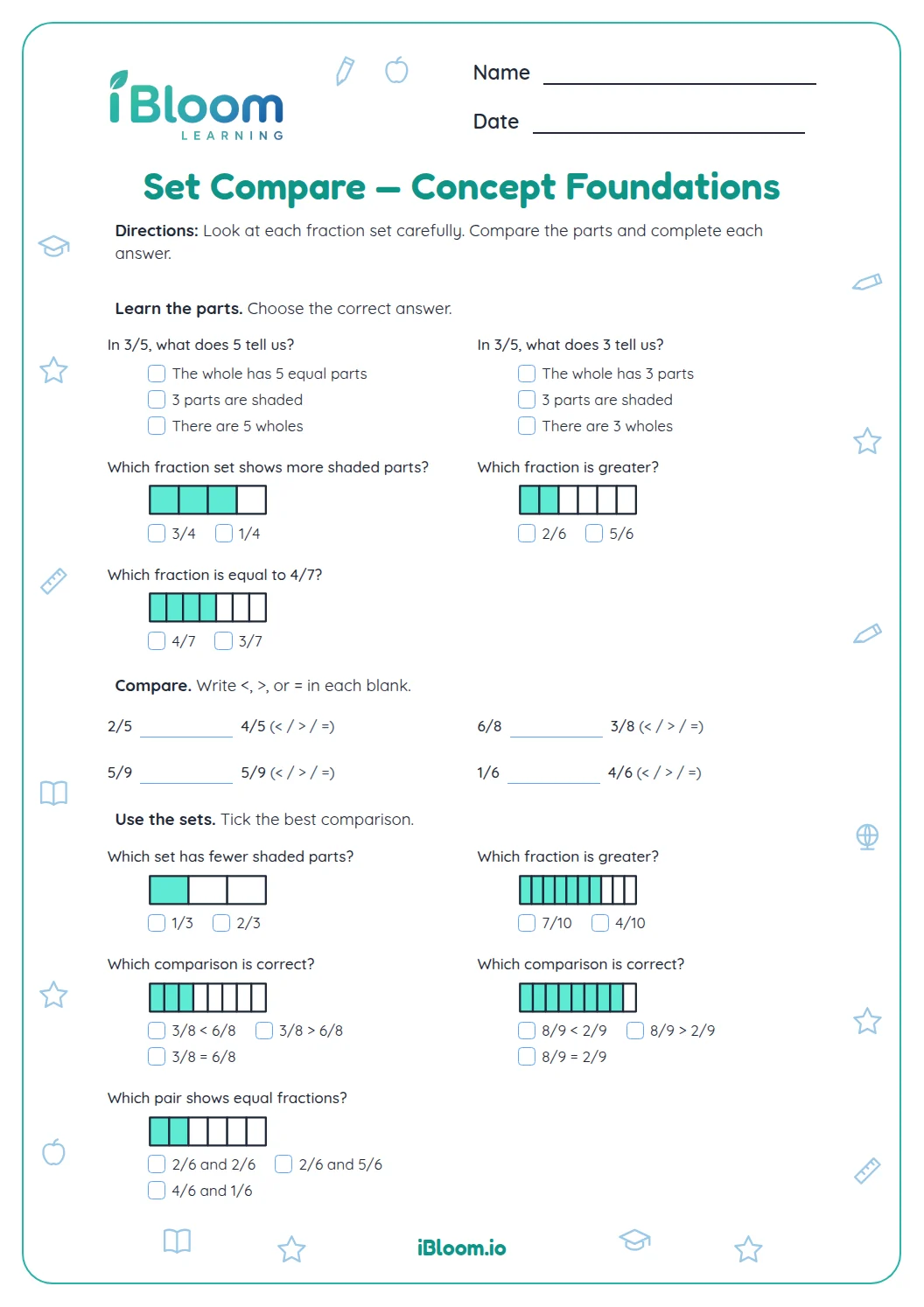
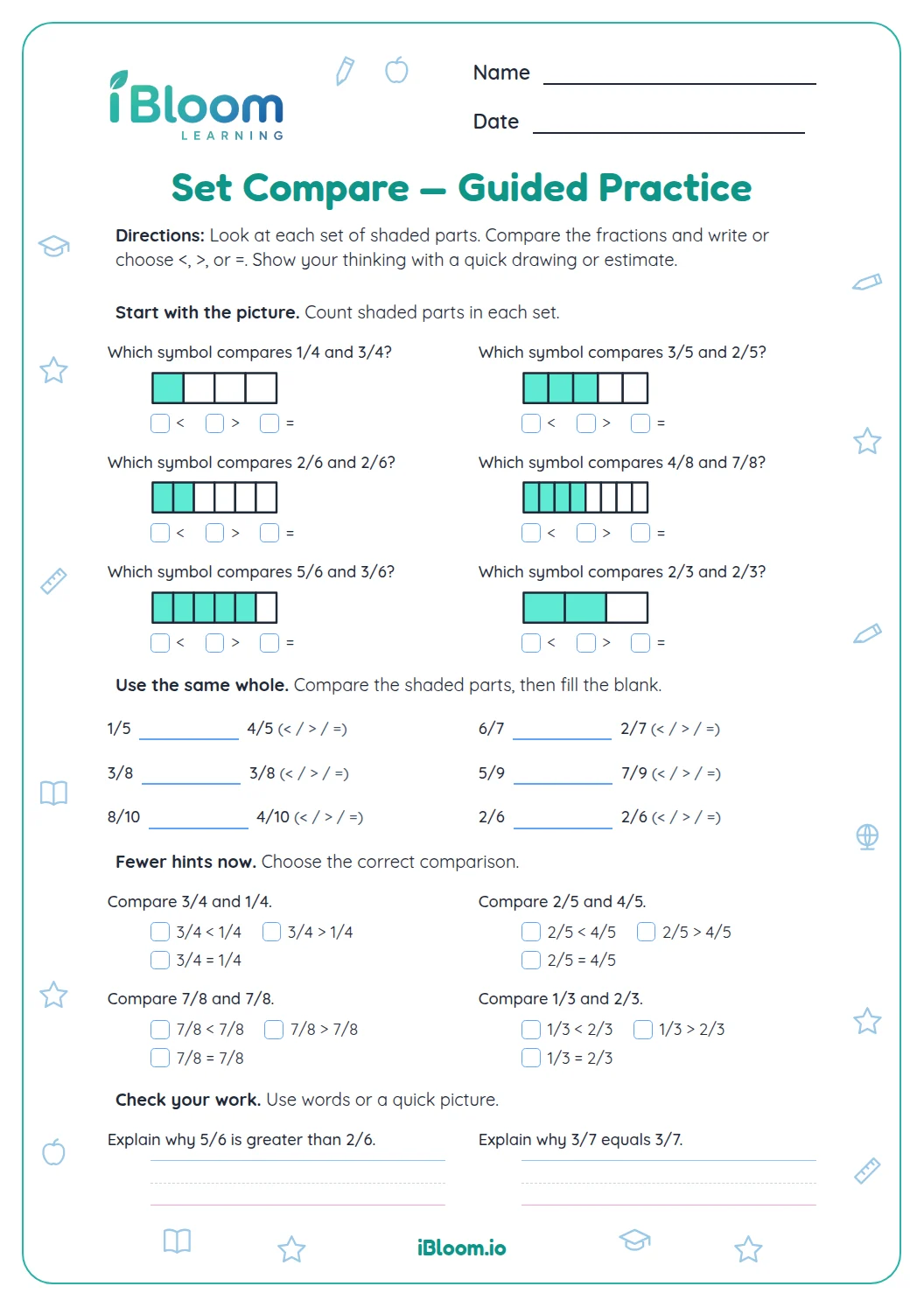
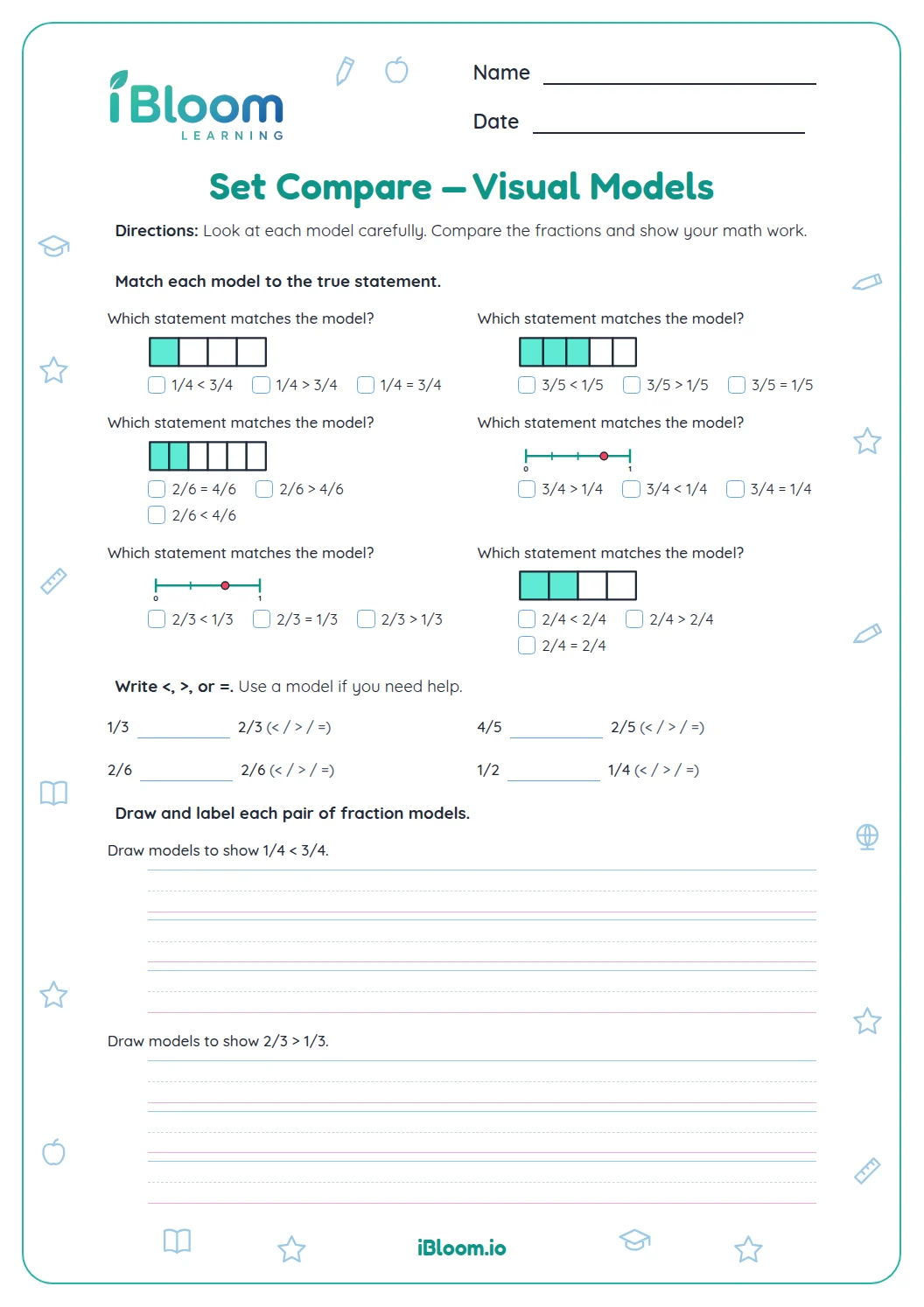
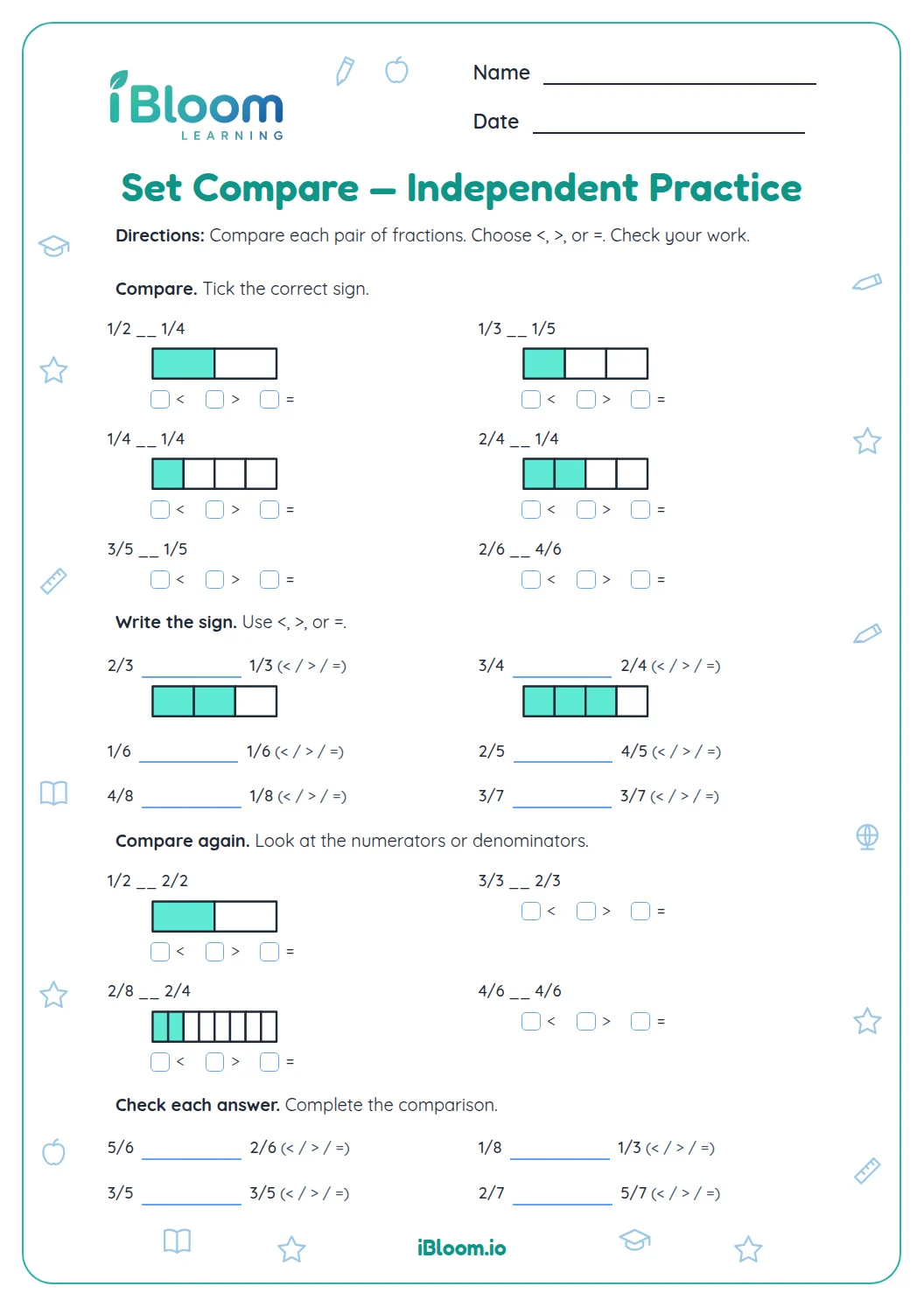
This Grade 2 printable uses familiar sets of apples, stars, pears, oranges, cars, muffins, birds, blocks, and grapes. Learners name the fraction for a selected part, then compare fractions when the wholes are equal in size. The 14 multiple-choice questions and separate answer key help families review each set comparison.
Aligned to 3.NF.A.3.d
How do you name a fraction of a set?
Count the selected objects and the total. Choose the fraction that puts the selected count over the total count.
When is a set comparison fair?
Compare fractions when their wholes are equal in size. With the same denominator, the greater numerator names the greater part.
How to use this worksheet
- 1Count every object in the whole set.
- 2Count only the objects in the group named.
- 3Write selected count over total count.
- 4Compare fractions only when their wholes are equal in size.
- 5Use the numerators to compare when the denominators match.
Common mistakes and quick fixes
The mistake
Using the part count as the denominator.
The fix
Say “part over whole” and count the full set again.
The mistake
Comparing groups with different total sizes as if they were equal.
The fix
Check that both sets have the same number of objects before comparing fractions.
The mistake
Thinking the larger denominator always means a larger fraction.
The fix
When denominators match, compare the numerators; count the actual selected objects.
Common Core alignment
This page practices fraction comparison in same-sized sets.
Compare fractions and explain comparisons when wholes match.
On this sheet: Learners compare parts of equal-sized sets and justify which fraction is greater.
Show the official wordingHide the official wording
Compare two fractions with the same numerator or the same denominator by reasoning about their size. Recognize that comparisons are valid only when the two fractions refer to the same whole. Record the results of comparisons with the symbols >, =, or <, and justify the conclusions, e.g., by using a visual fraction model.
What to practice next
Make more practice
Further reading
Questions parents and teachers ask
How do you find a fraction of a set?
Count the objects in the named group and write that count over the total number of objects. For example, 3 red apples in a set of 8 is 3/8. Question 1 gives those counts directly, and other questions ask learners to find a fraction in a short story.
What does the denominator tell a child?
The denominator names the number of objects in the whole set. In question 1 there are eight apples, so the denominator is 8 even though only three apples are red. Count the whole group before writing the fraction.
Can children compare any two set fractions?
Check that the fractions refer to equal-sized wholes before comparing them. On this worksheet, questions that compare sets state that the sets are equal in size or use the same denominator. With matching wholes and denominators, compare the selected counts.
Which is greater, 3/8 or 5/8?
Five eighths is greater than three eighths when both fractions refer to equal-sized wholes. Each eighth represents the same size part, and five selected parts are more than three. Question 4 asks learners to make this comparison. Equal wholes make the comparison fair.
Is an answer key included?
Yes. The key gives the fraction for each set question and the greater, smaller, or matching group for comparison questions. It also includes a sample response for the reasoning prompt. Equivalent fraction wording is acceptable when it represents the stated part and whole.