


About this worksheet
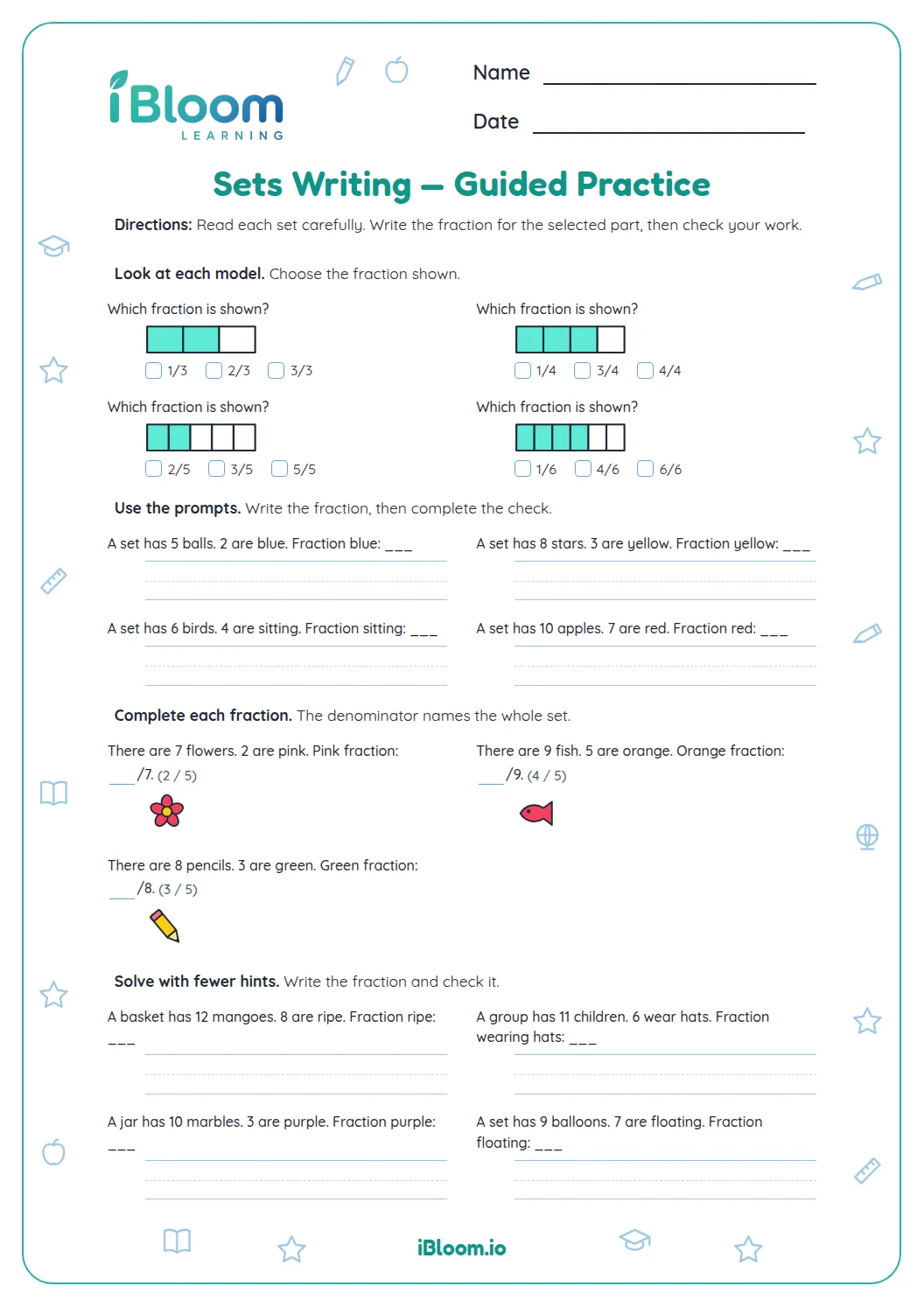
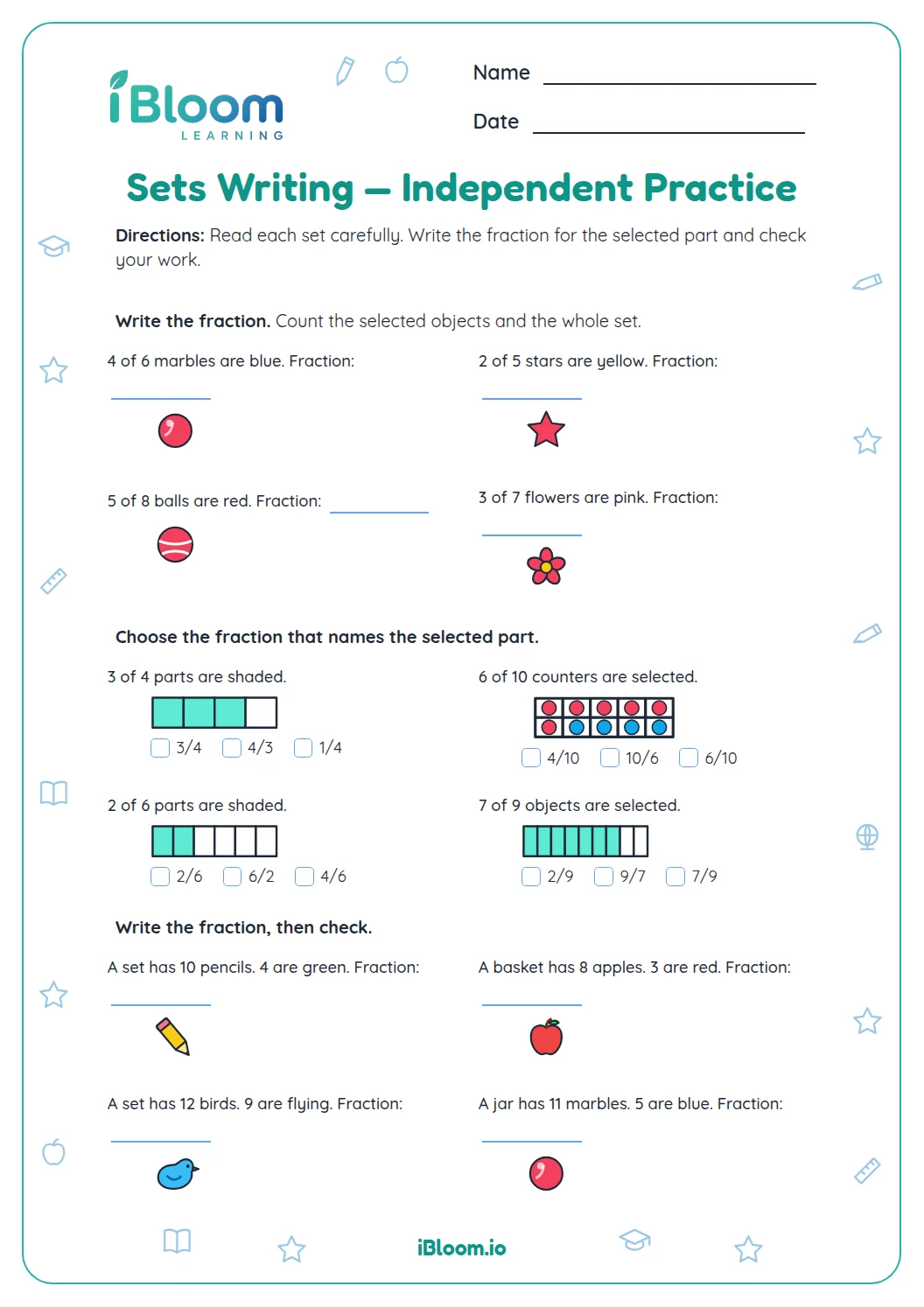
This free Grade 2 worksheet helps children connect equal parts with fraction words and numerals. It begins with four shaded bars, circles, and squares, then moves to everyday situations and prompts to write forms such as “two thirds” or 2/3. A separate answer key shows the model answers, including when different equivalent descriptions are accepted.
How do the shaded models show a fraction?
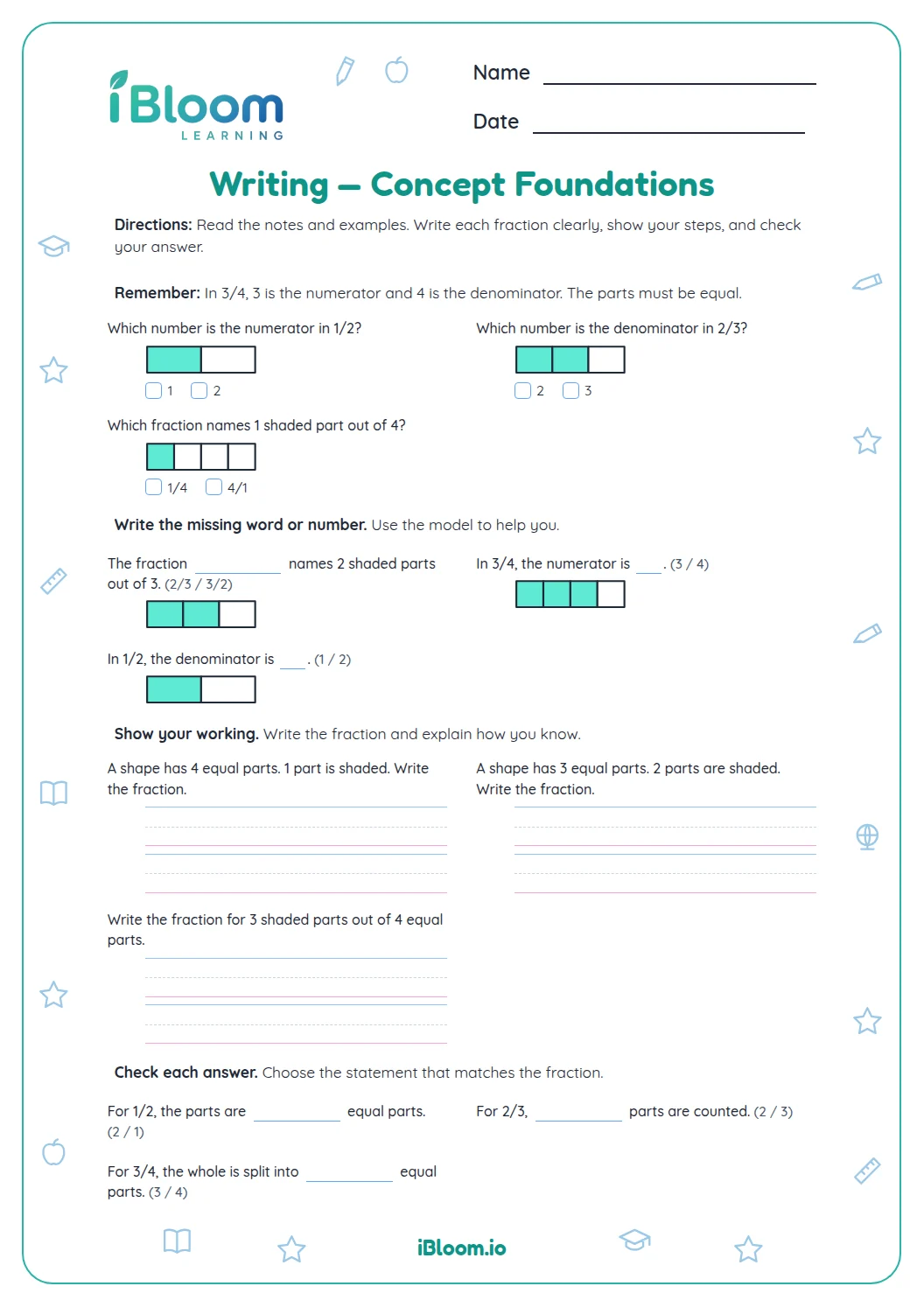
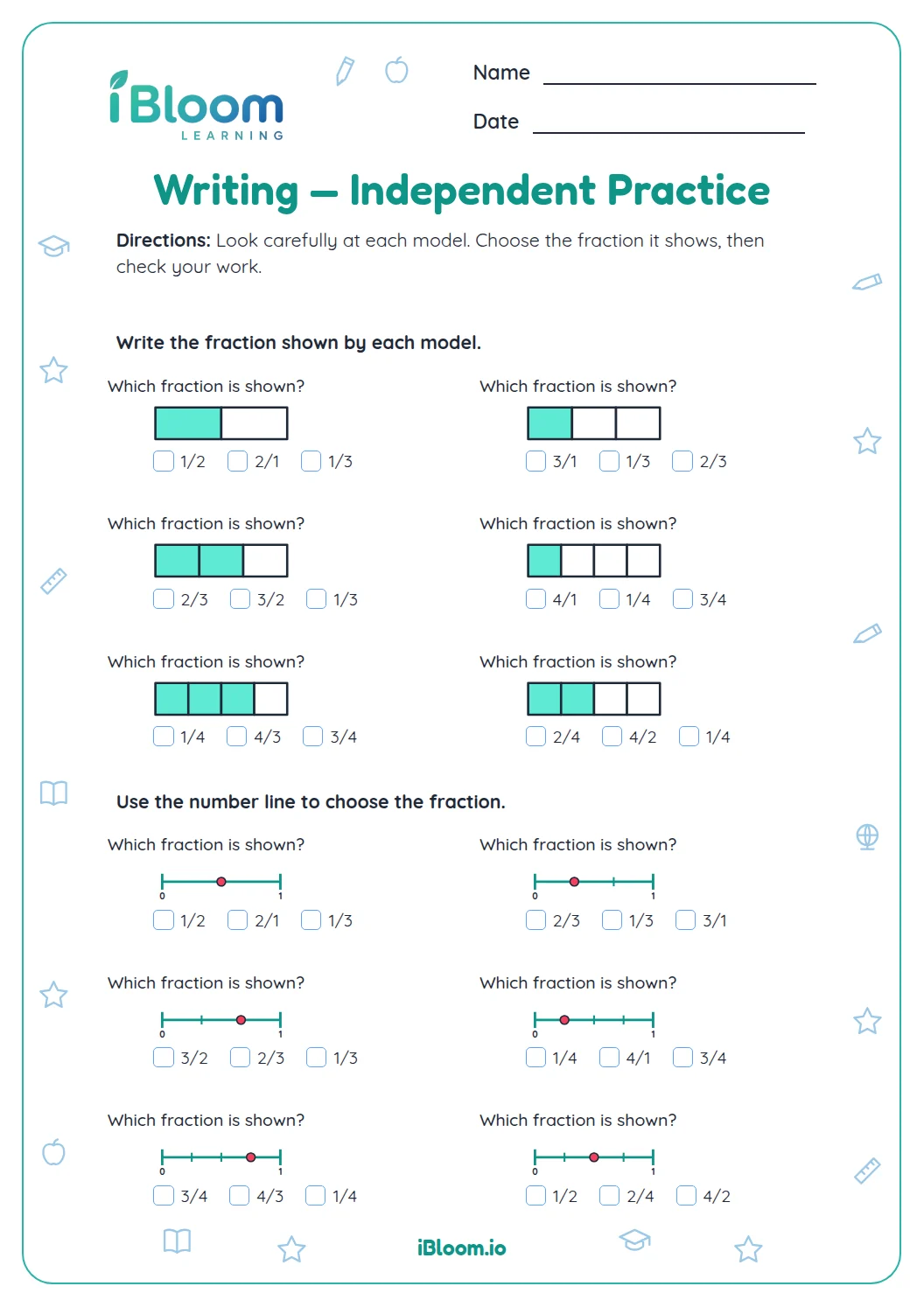
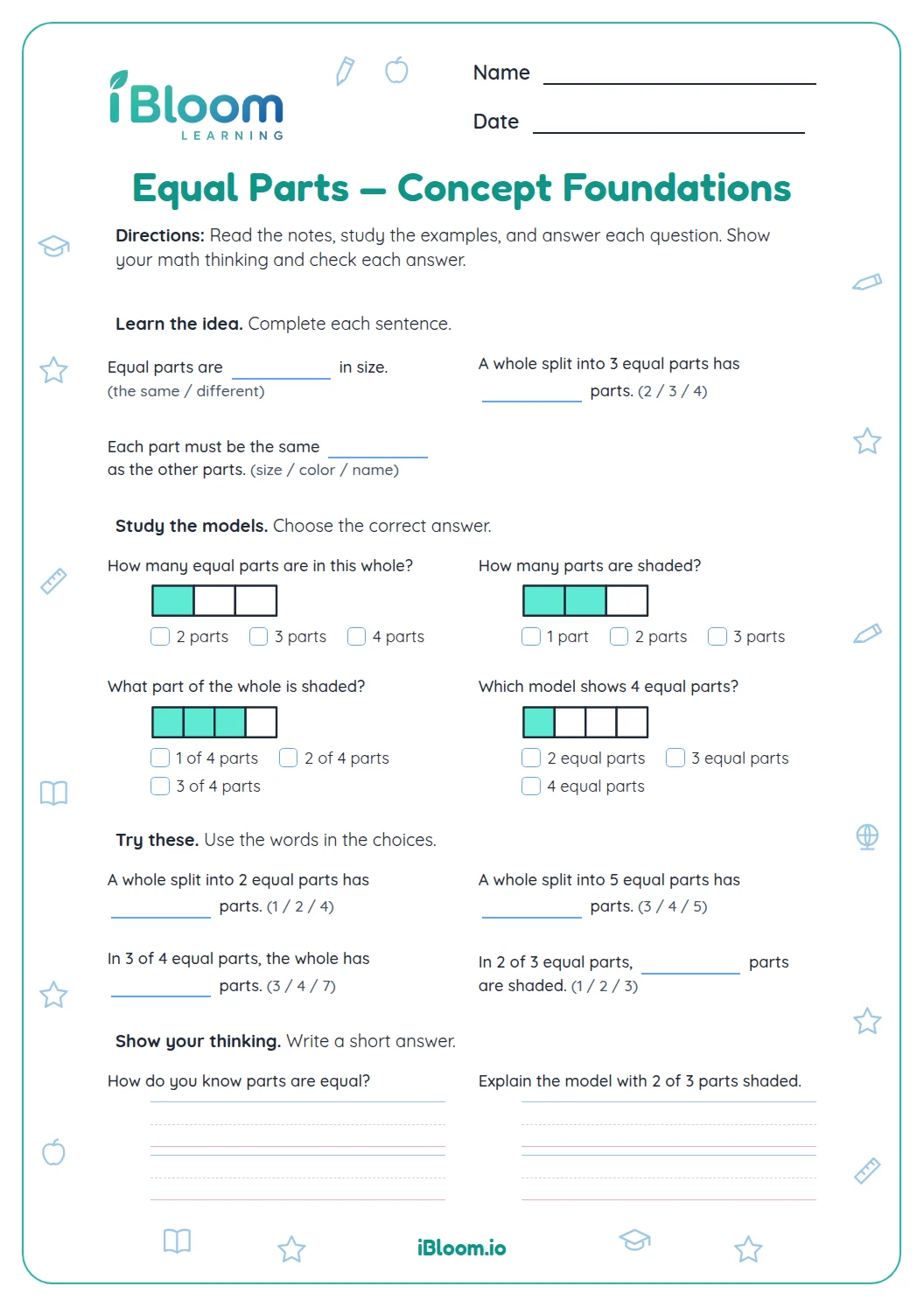
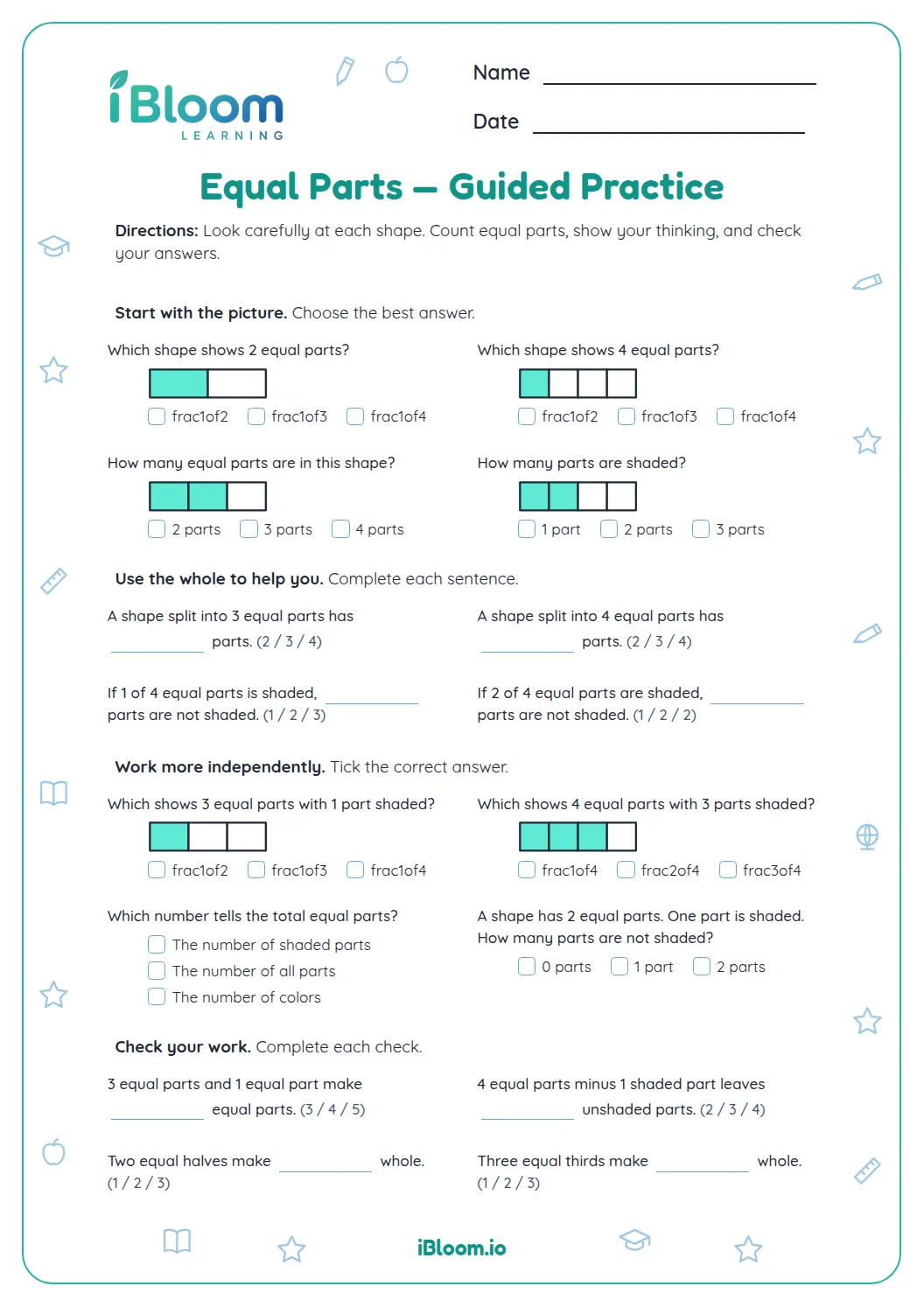
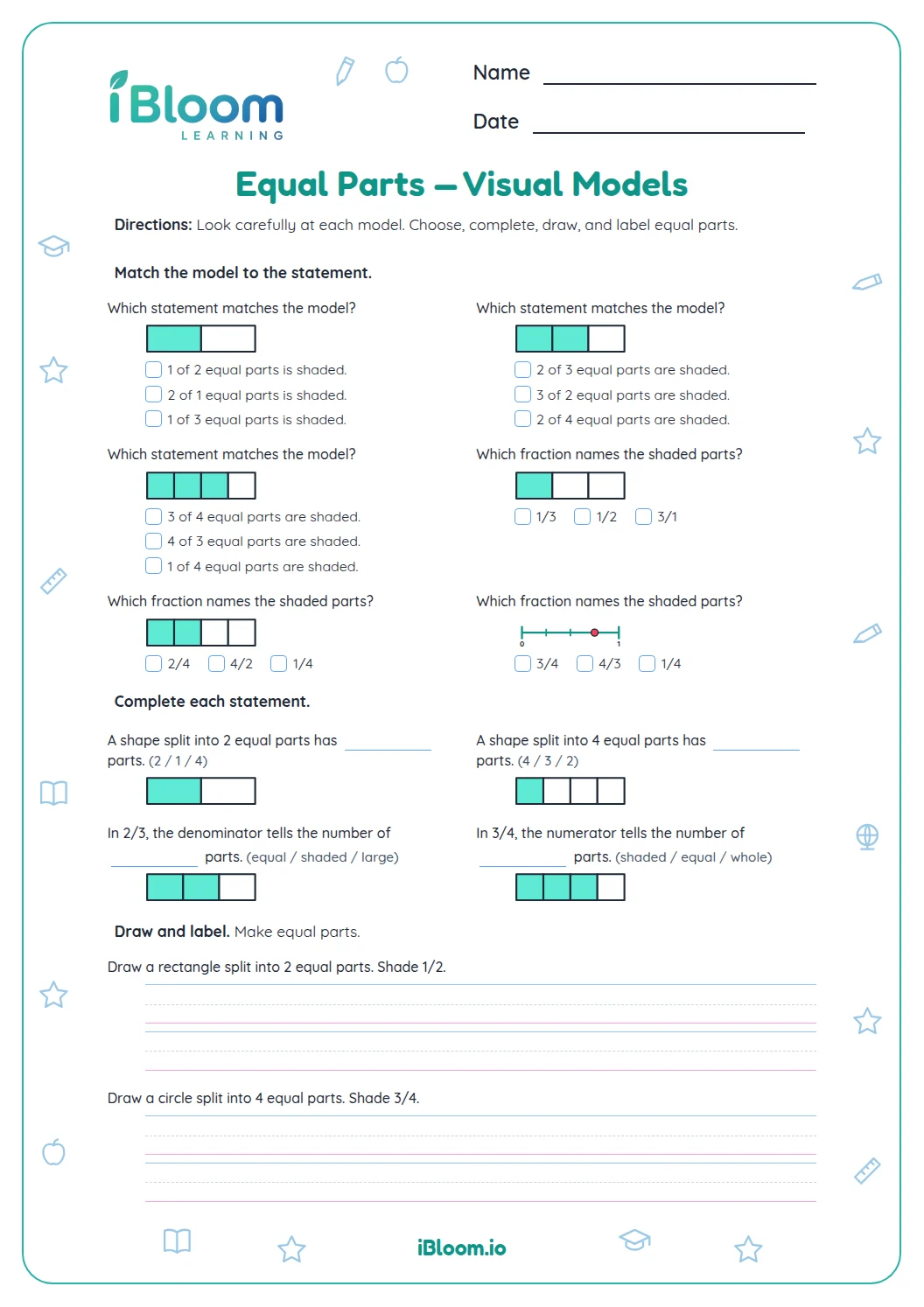
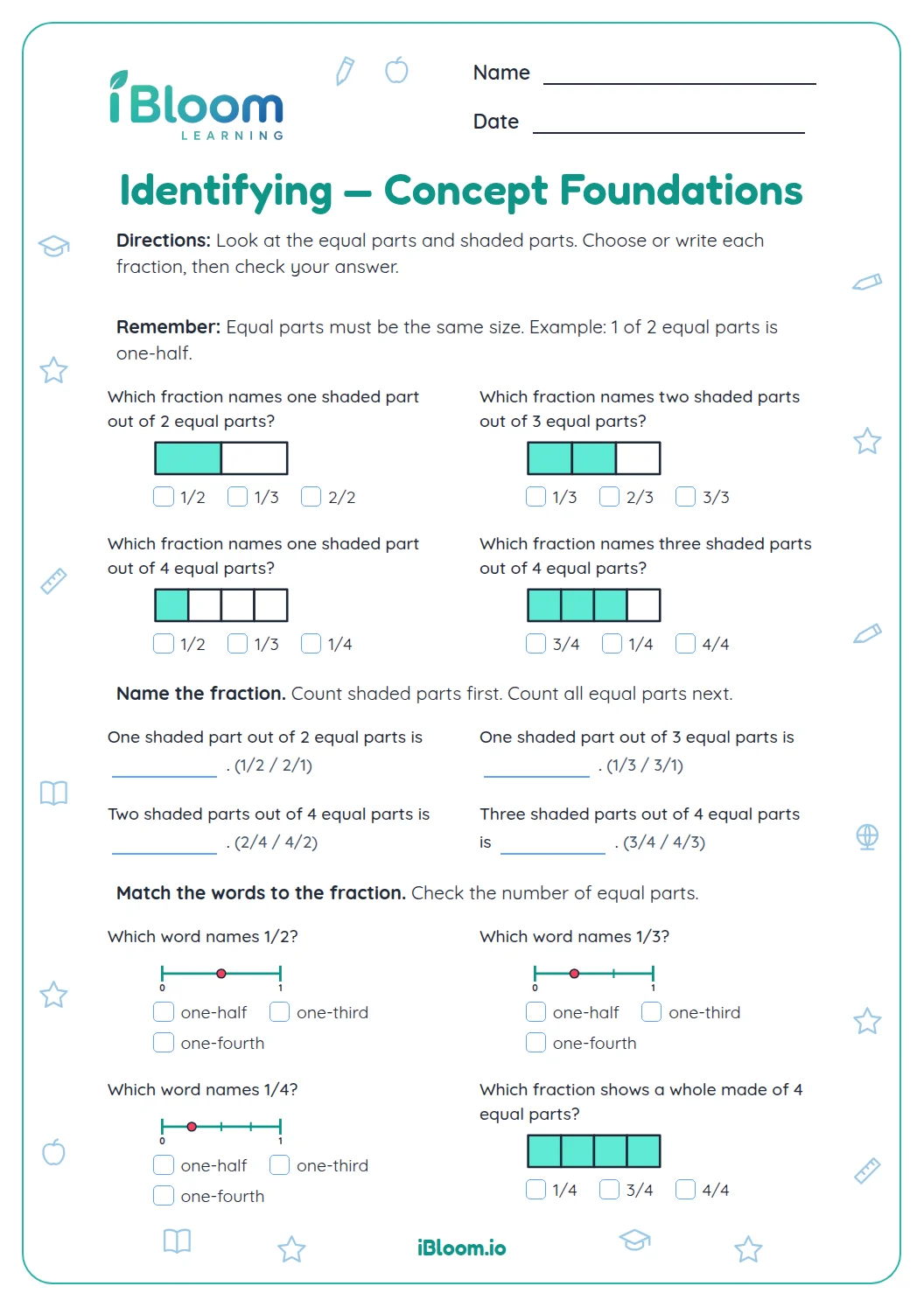
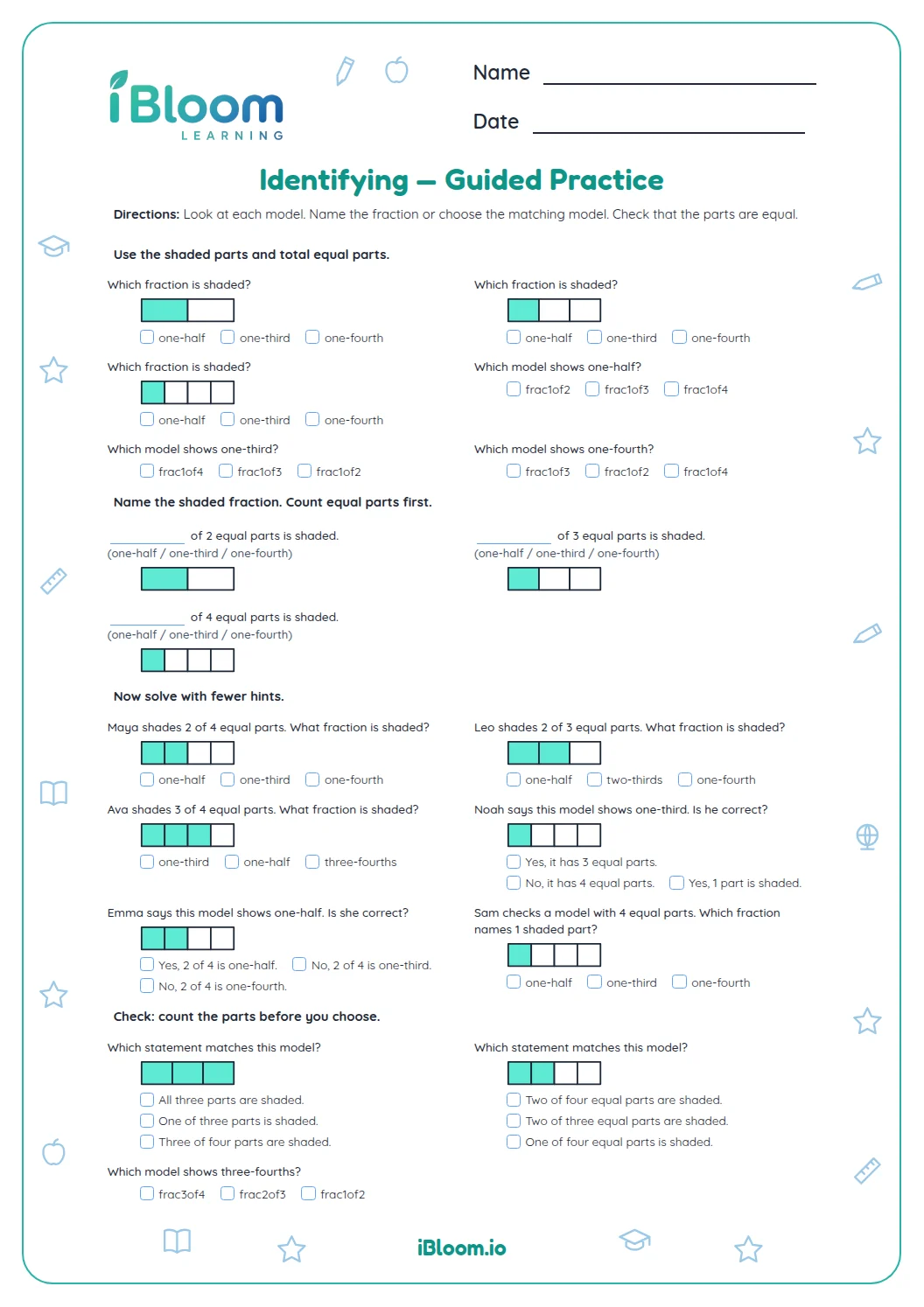
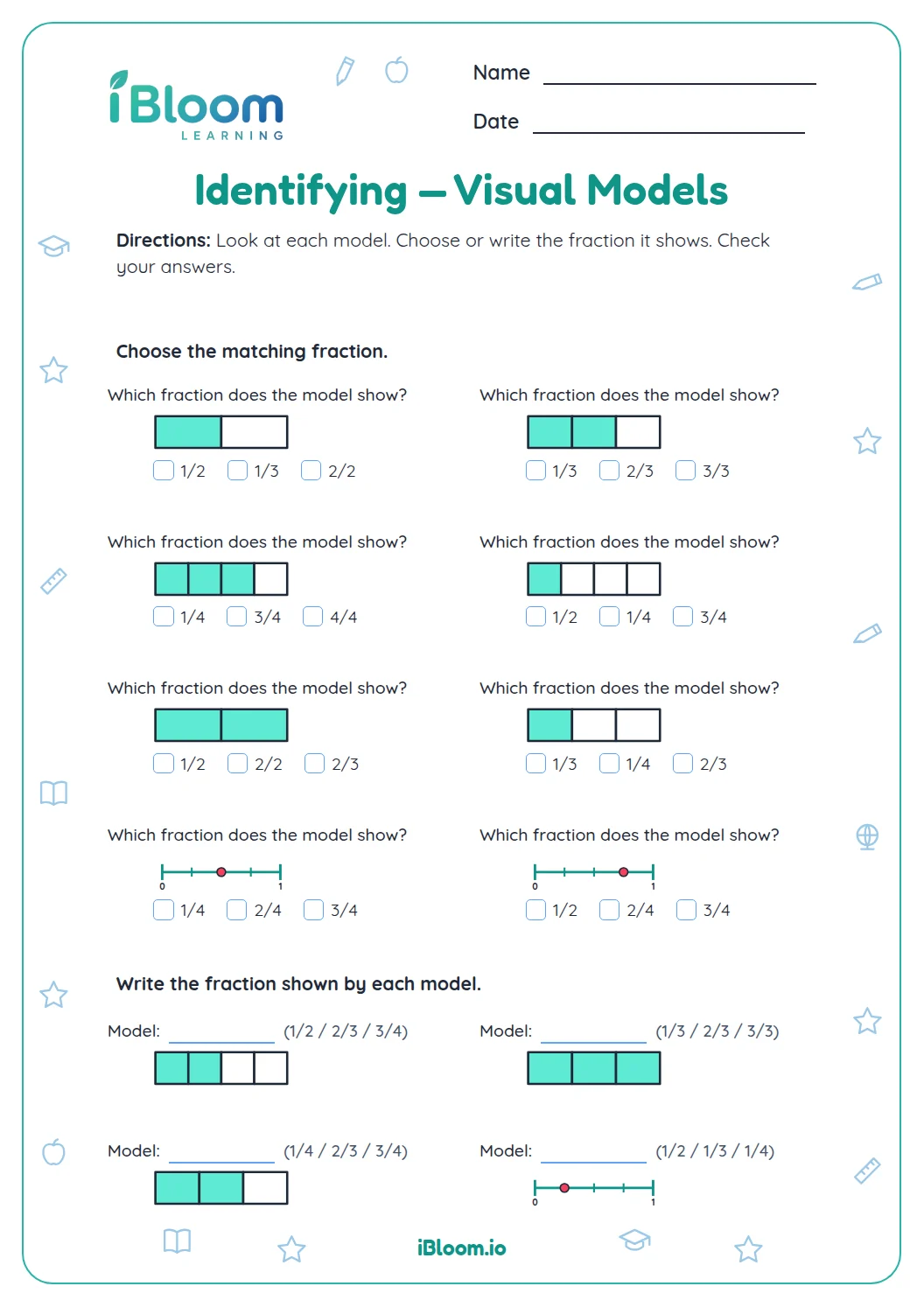
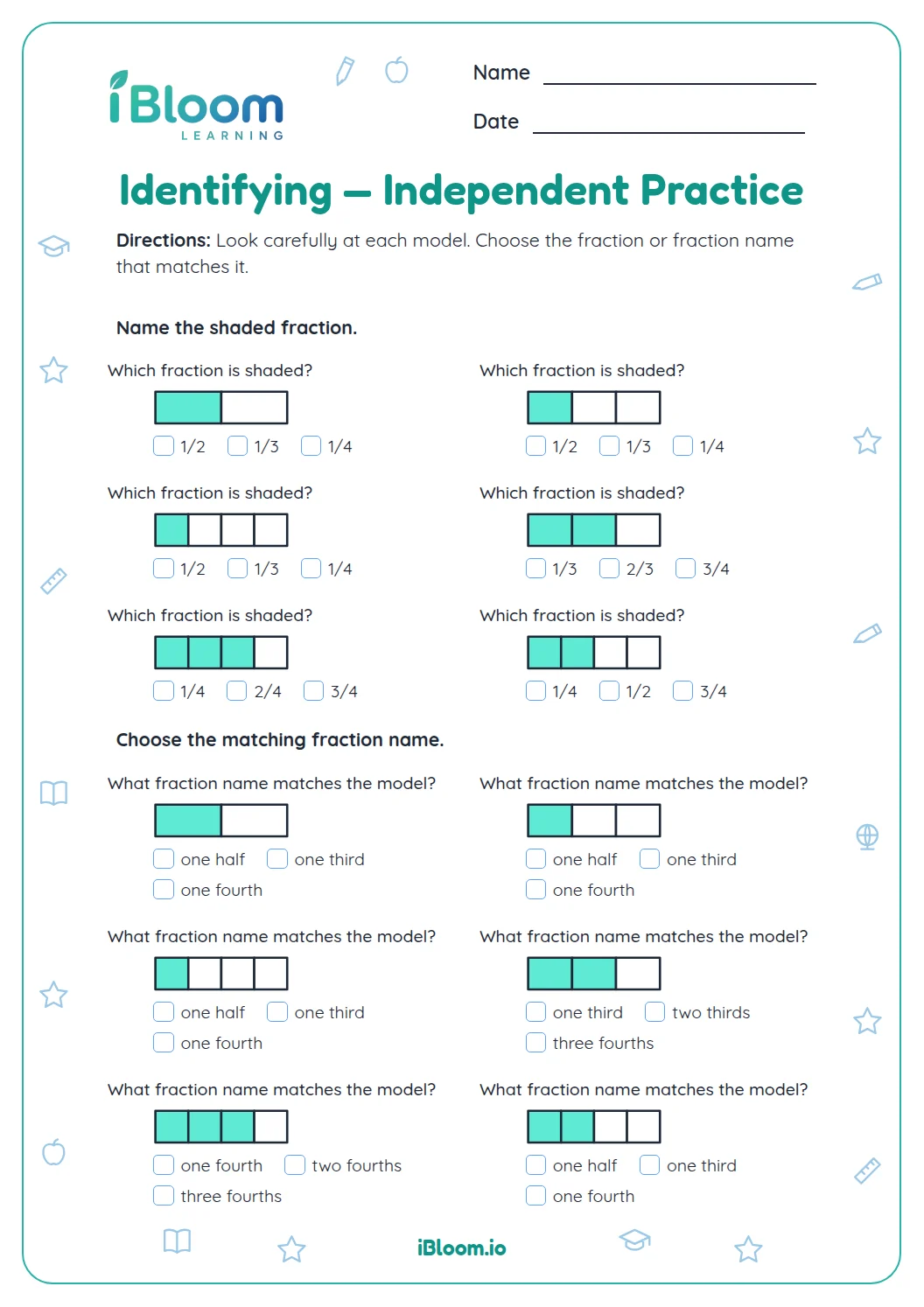
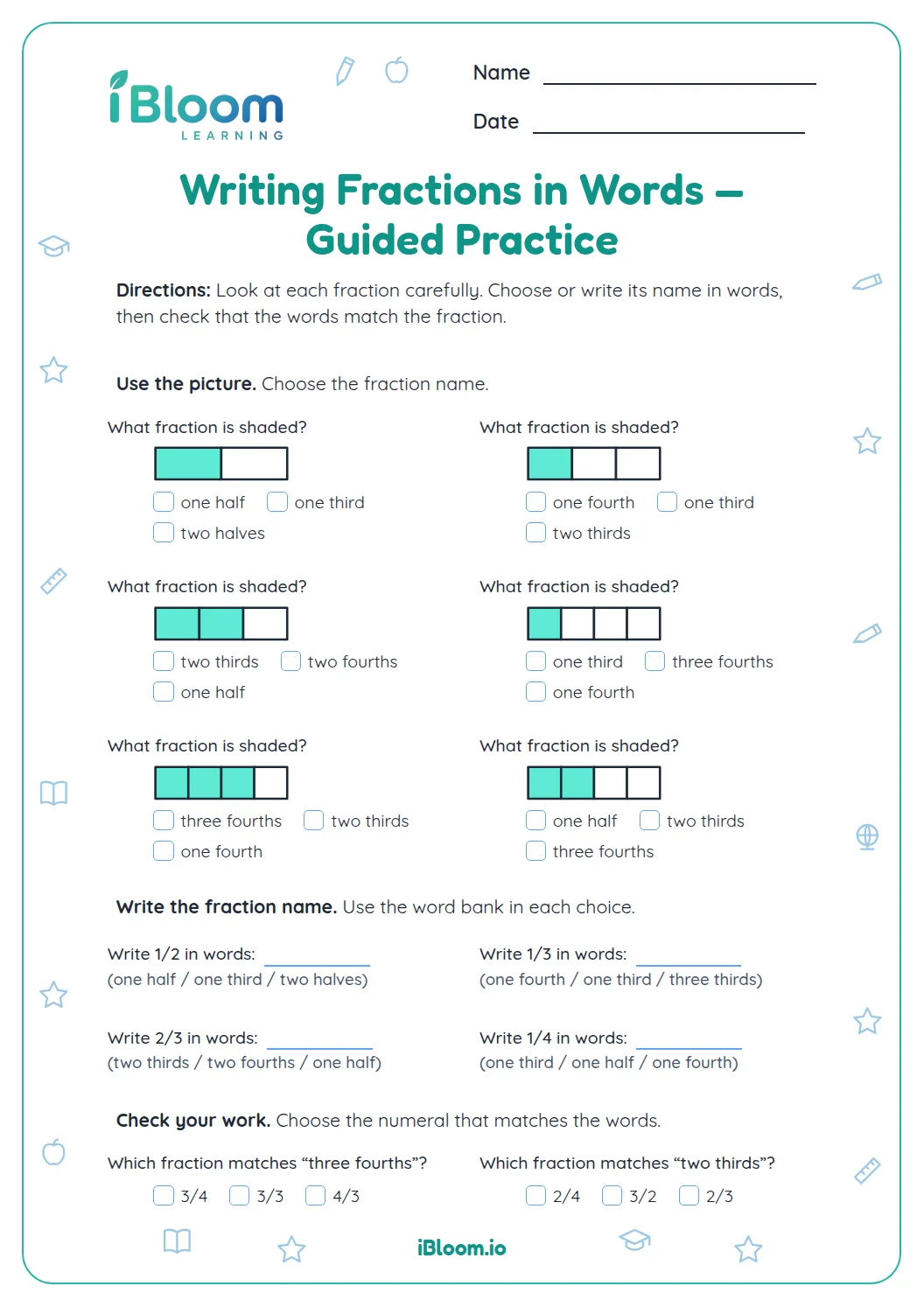
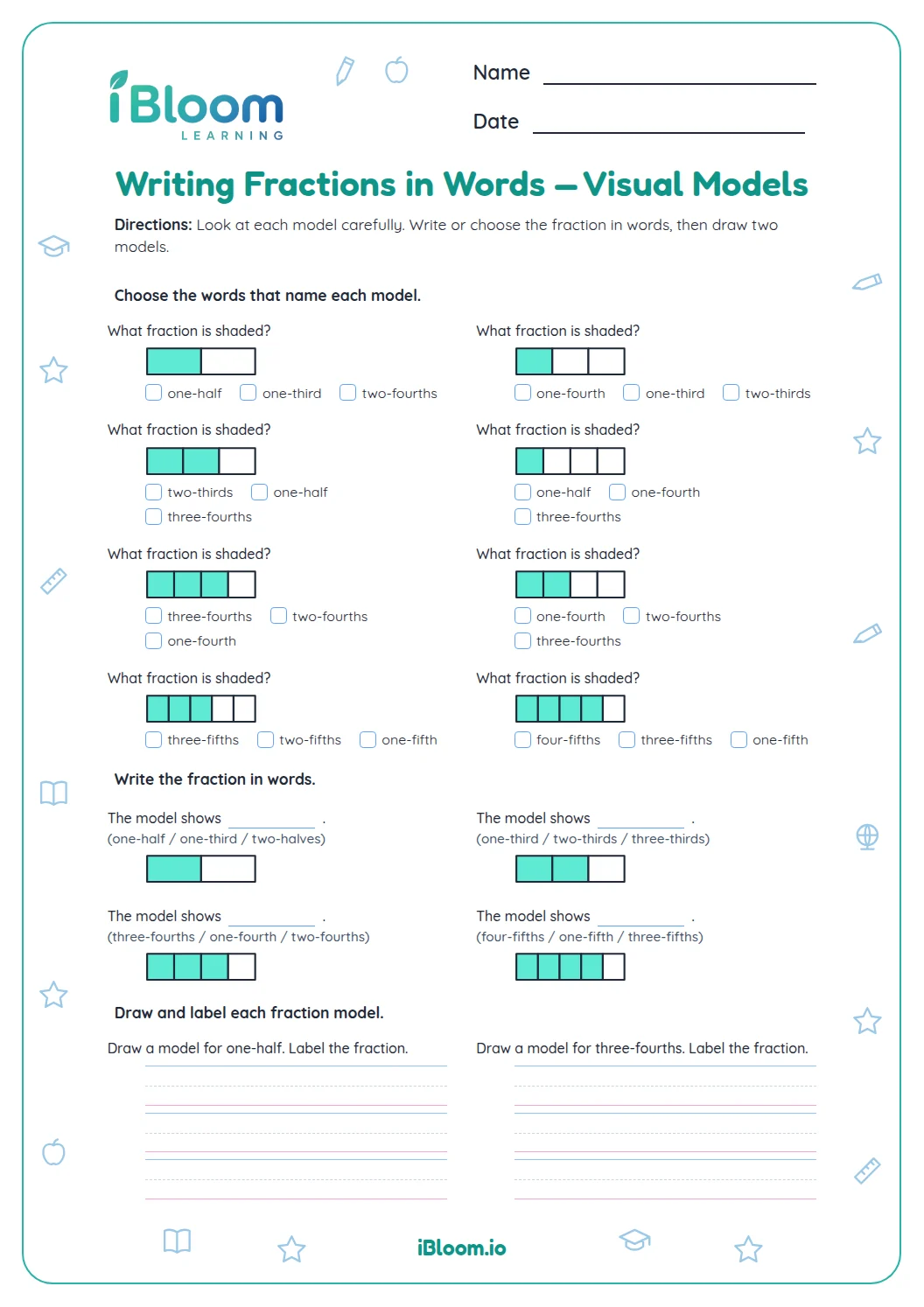
Look at how many equal parts make the whole, then count how many are shaded. In Part A, a bar with two equal parts and one shaded part represents one half.
- 12 equal parts make the whole.
- 21 part is shaded.
- 3Name it: one half.
How do fraction words match numerals?
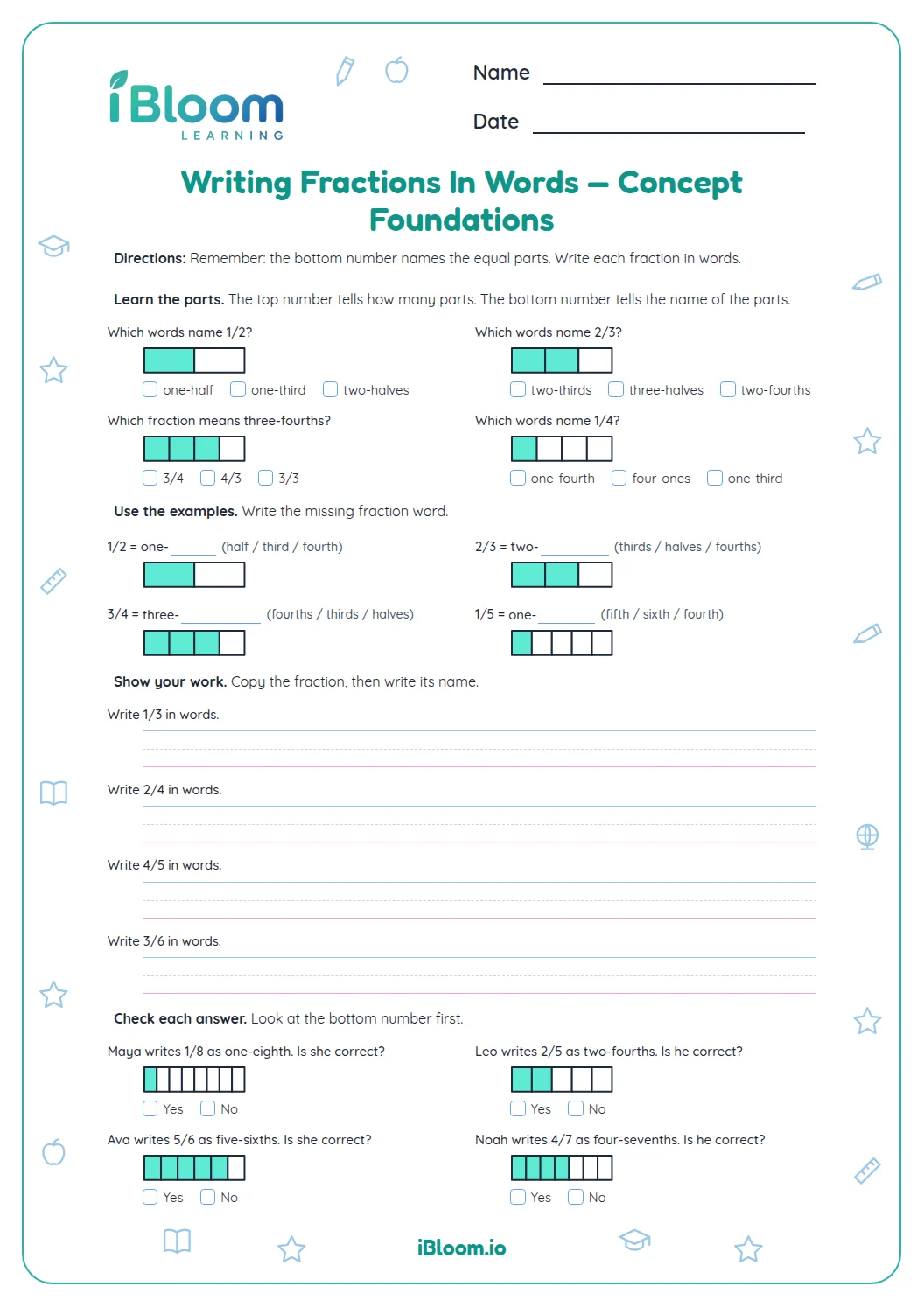
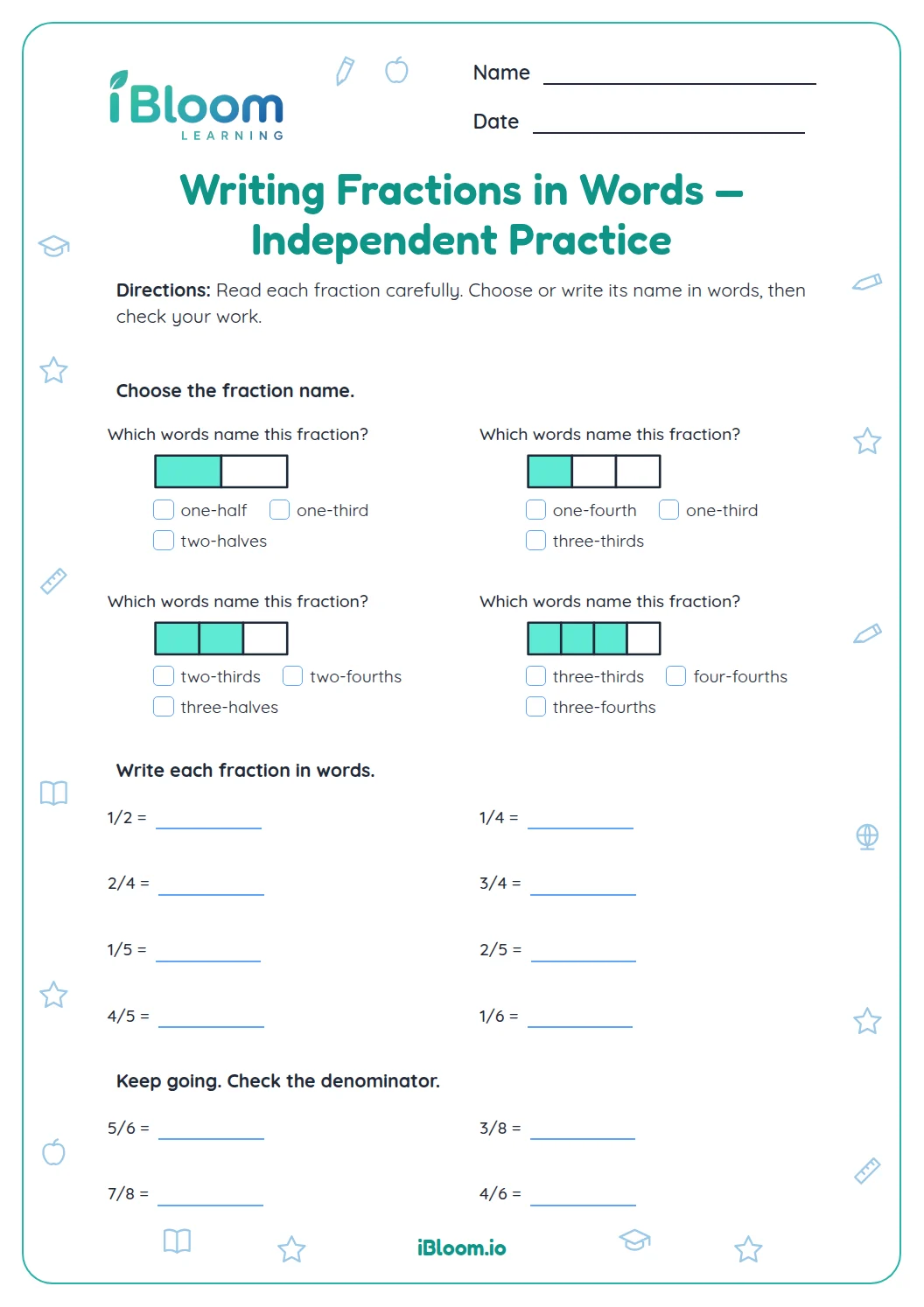
The denominator tells how many equal parts make the whole, and the numerator tells how many parts are named. Children practice saying and writing familiar forms such as two thirds and 2/3.
How can a story describe equal shares?
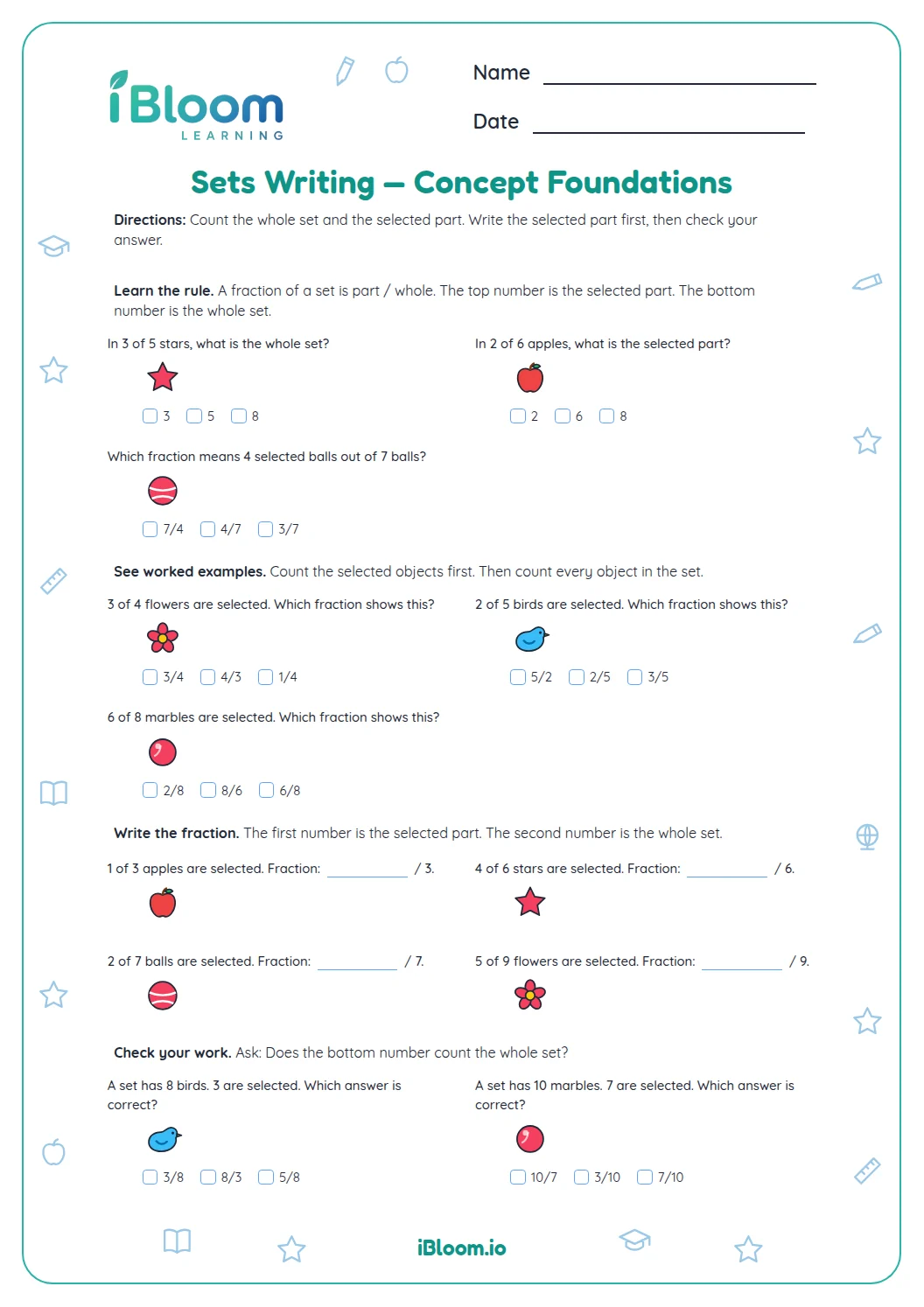
The final prompts use sandwiches, ribbons, books, and pizza to connect fraction language to a whole divided into equal parts. Ask the child to identify the whole before naming the fraction.
How can I use this worksheet?
- 1For each model, count all equal parts before counting shaded parts.
- 2Say the fraction name aloud before selecting it.
- 3When asked for numerals, write the number of named parts over the total parts.
- 4In story questions, identify the whole and confirm that the parts are equal.
- 5Check each response with the separate answer key.
Common mistakes and quick fixes
The mistake
Counting shaded parts but ignoring the total equal parts.
The fix
Name the whole number of equal shares first, then the shaded count.
The mistake
Calling one of four parts “one third.”
The fix
Count the four equal sections; the correct name is one fourth.
The mistake
Writing a numeral when the prompt asks for words.
The fix
Follow the requested form and spell the fraction name clearly.
What to practice next
Make more practice
Further reading
Questions parents and teachers ask
What fraction skills are on this sheet?
Children name shaded equal parts, match familiar fraction names with numerals, and interpret short situations involving halves, thirds, and fourths. The first four items include visual models; later prompts provide practice writing or reading fraction names. A separate answer key gives the expected responses.
Does the worksheet use fraction numerals?
Yes. Several prompts ask children to write numerals such as 2/3, 1/4, or 4/4. Other items ask for fraction words, so children practice both forms and read each direction carefully before answering. The answer key shows the requested form.
Why does the page emphasize equal parts?
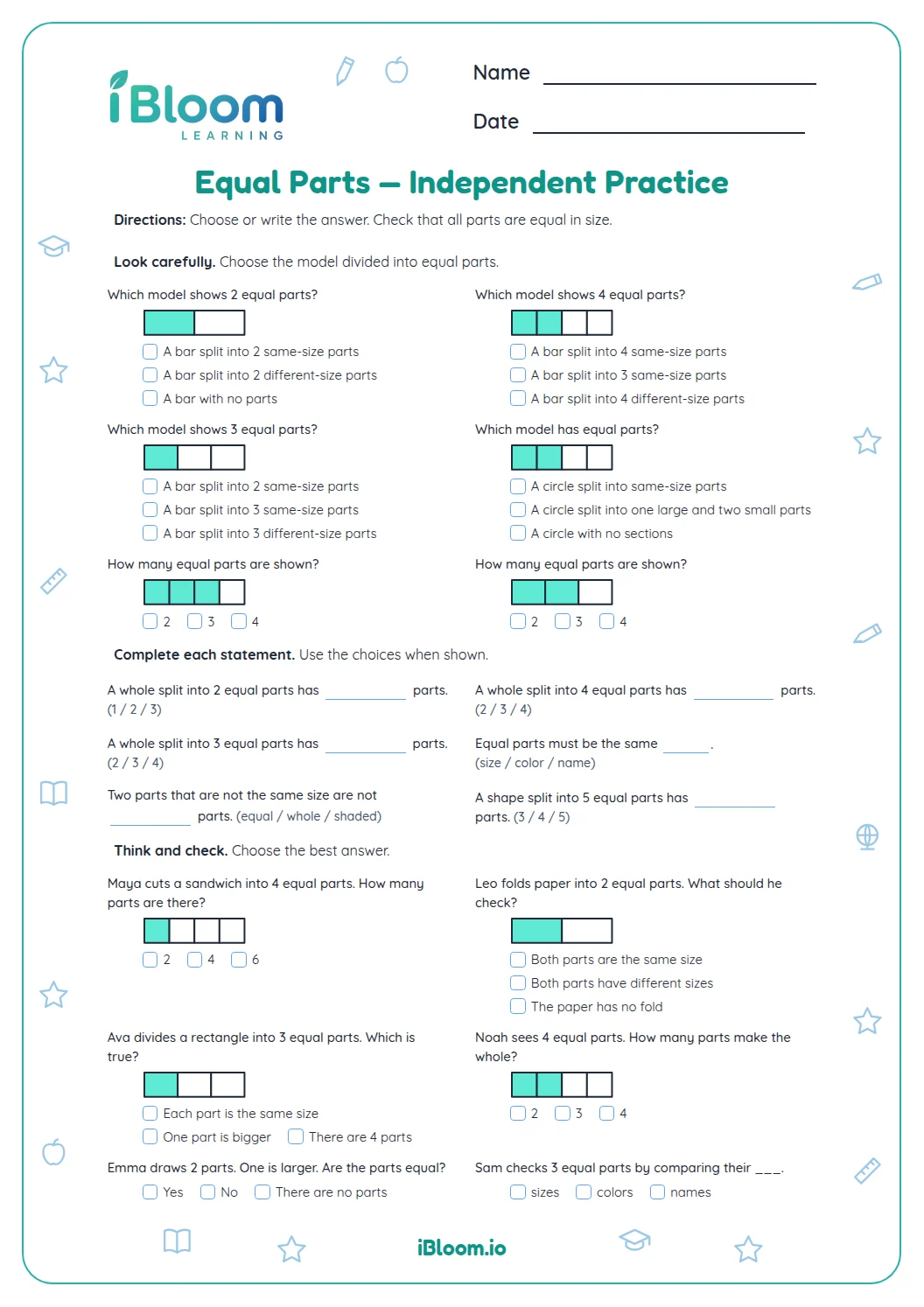
A fraction describes equal shares of a whole. If a shape is divided unevenly, the pieces do not represent equal fractional shares. The models and stories ask children to recognize the equal-part structure before naming the fraction, helping them connect a number name to a share.
What does one half mean?
One half means one of two equal shares of a whole. On the worksheet’s first model, two equal sections make the bar and one is shaded, so the shaded share is one half. The remaining models use other familiar partitions.
Can a fraction name a whole?
Yes. Four fourths make one whole because all four equal fourth-size pieces are included. The worksheet includes examples of a full set of equal parts so children can connect the pieces to the complete shape or whole. The key includes these responses.
Is an answer key included?
Yes. A separate separate key lists the expected fraction words and numerals and gives model responses for the written questions. Use it to check the math while allowing equivalent wording where it clearly names the same equal shares.