

About this worksheet
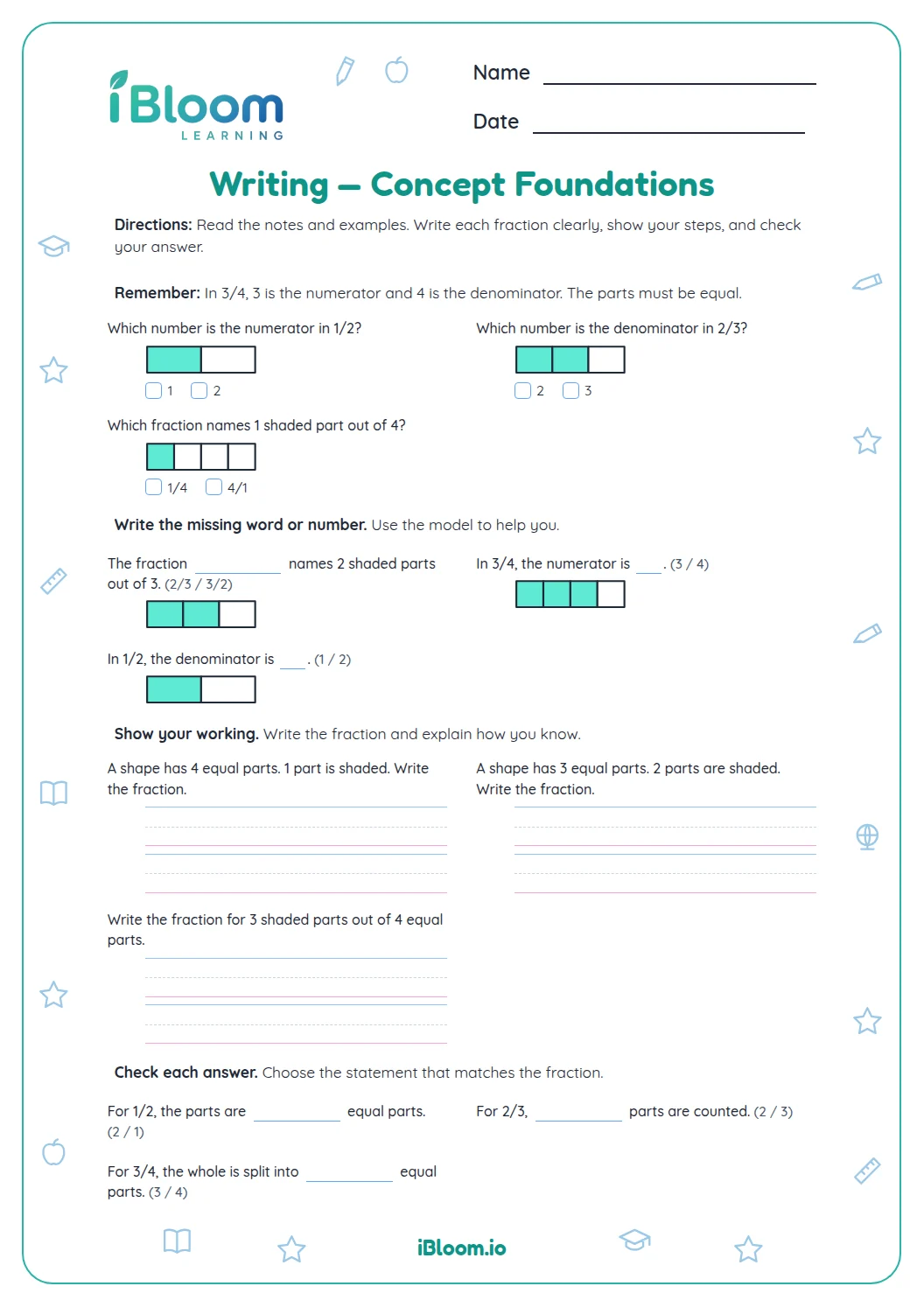
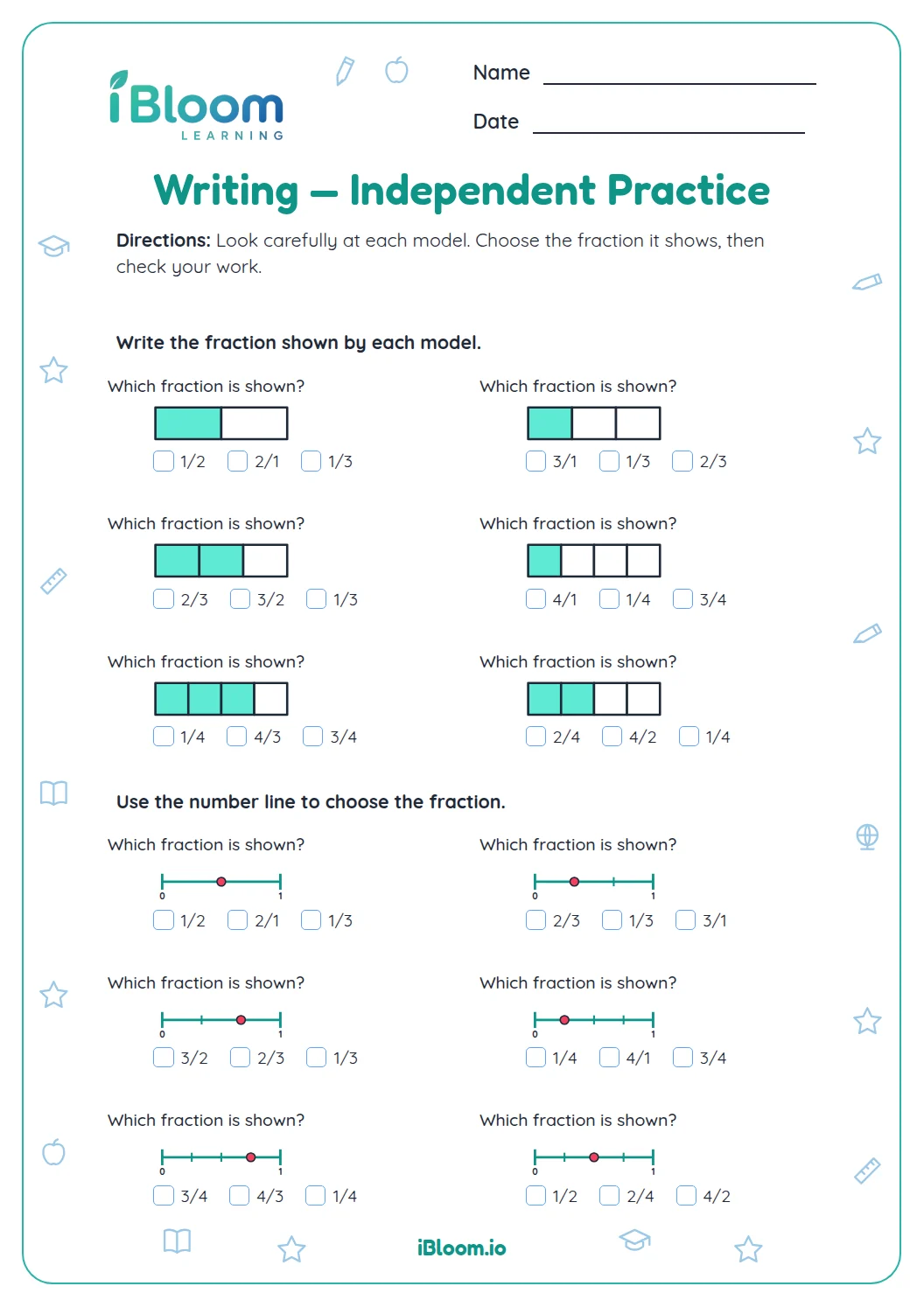
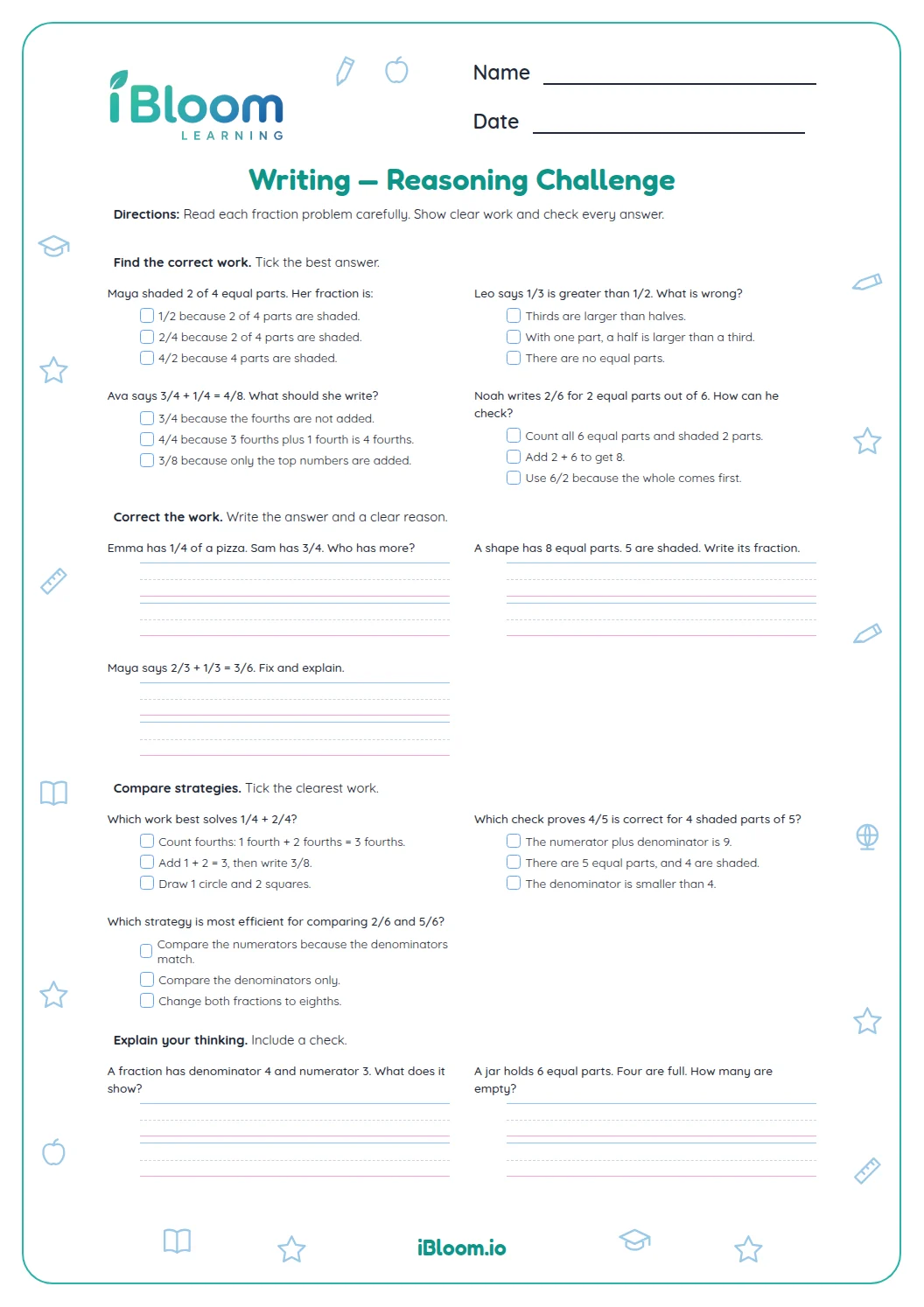
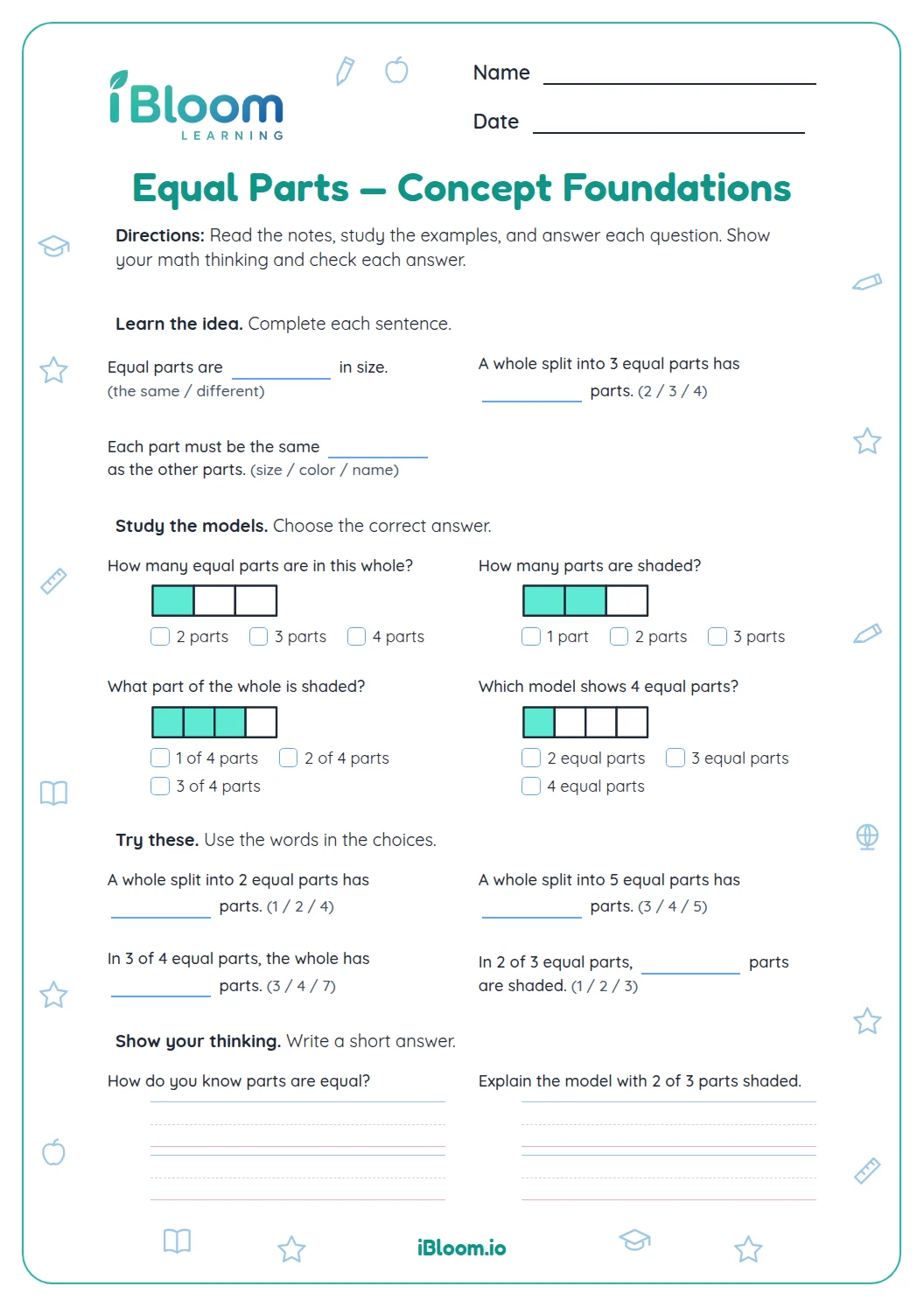
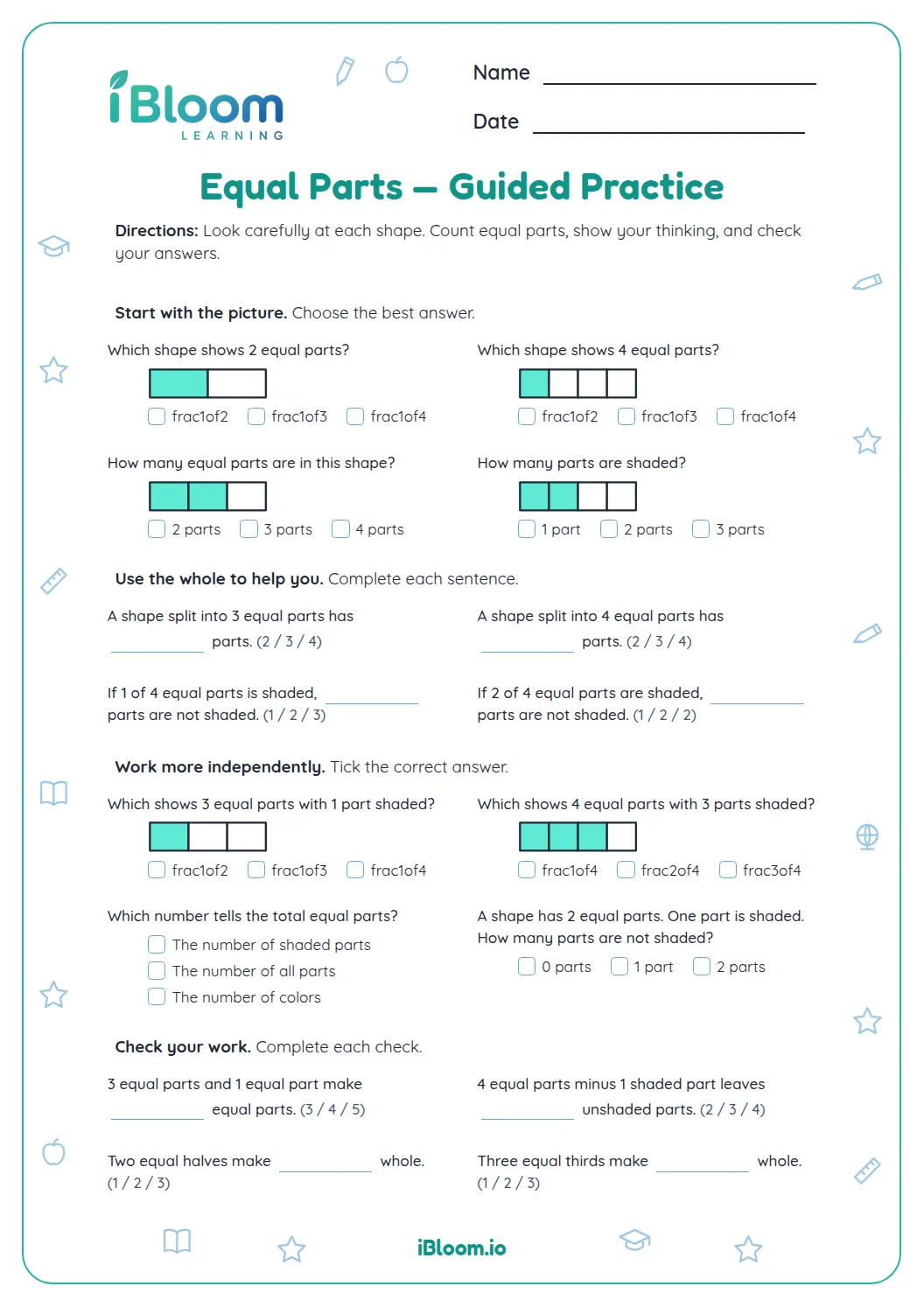
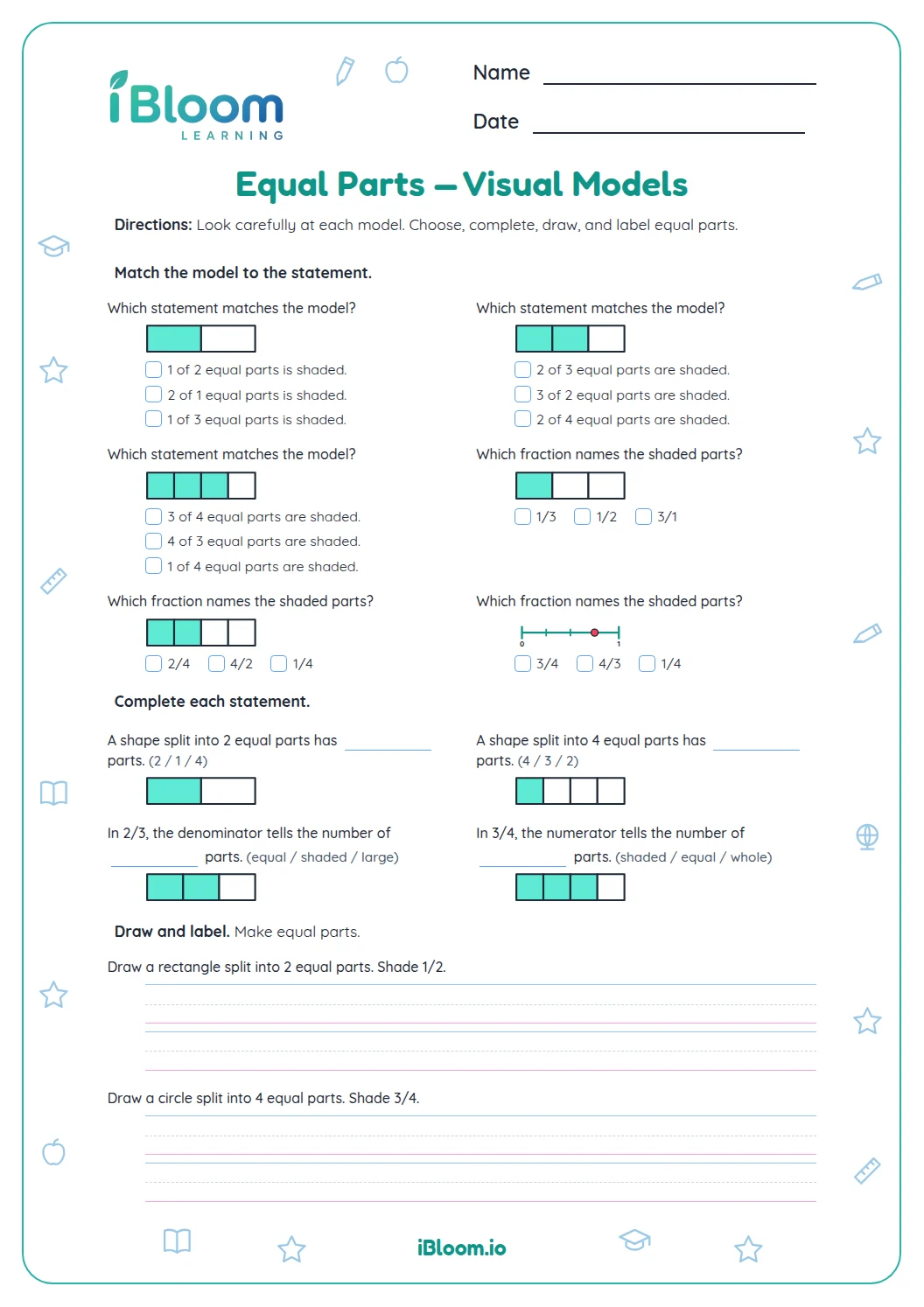
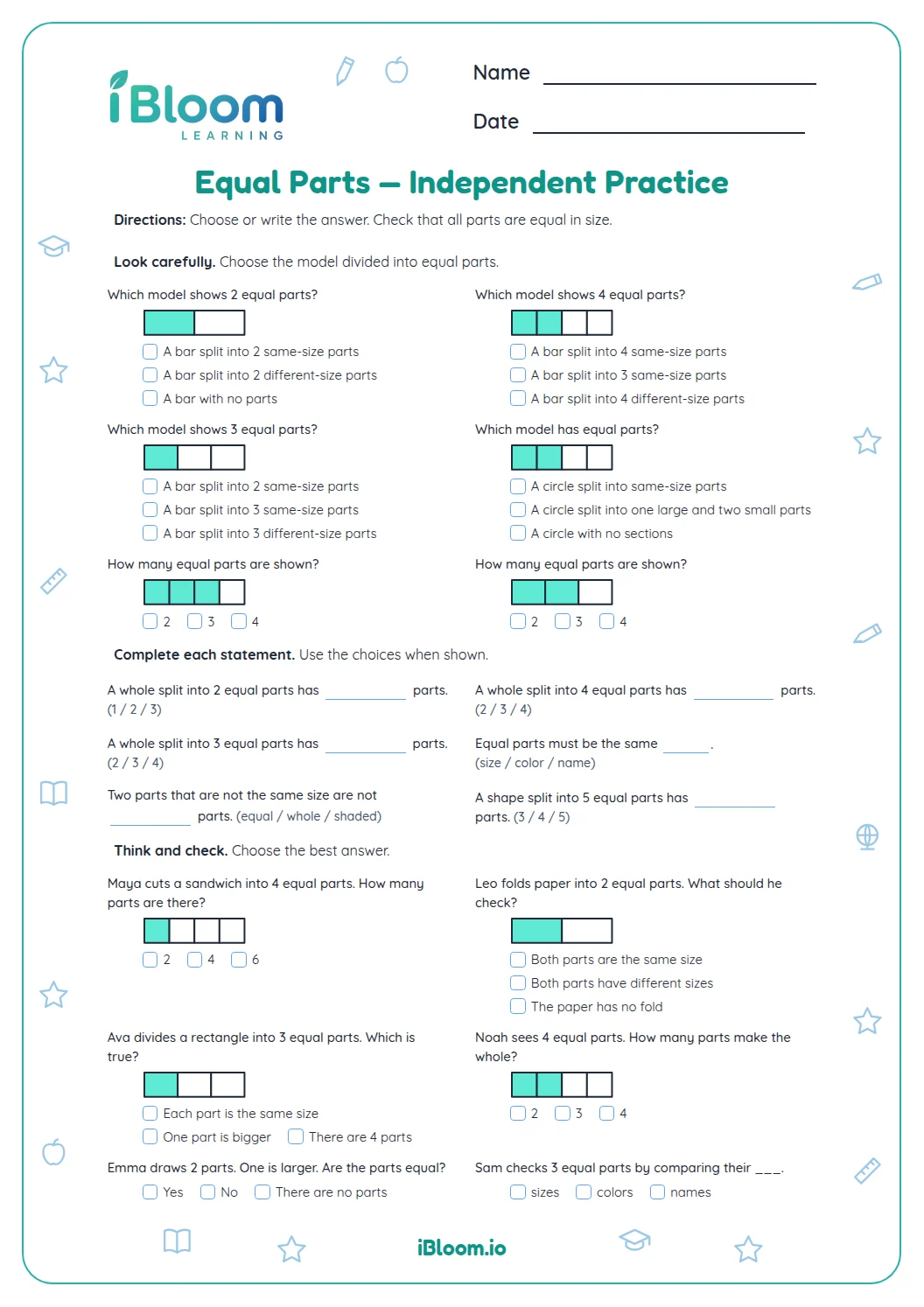
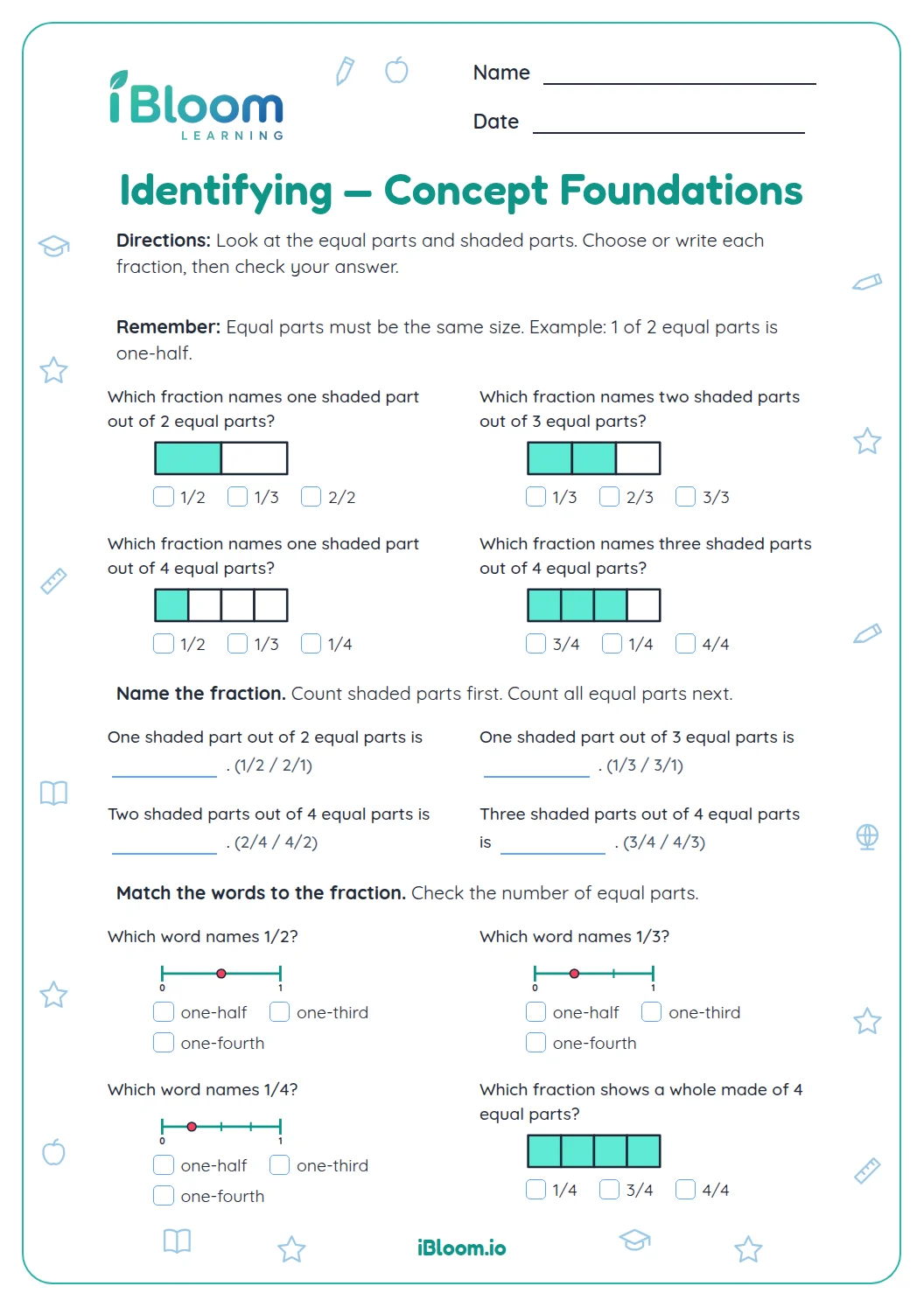
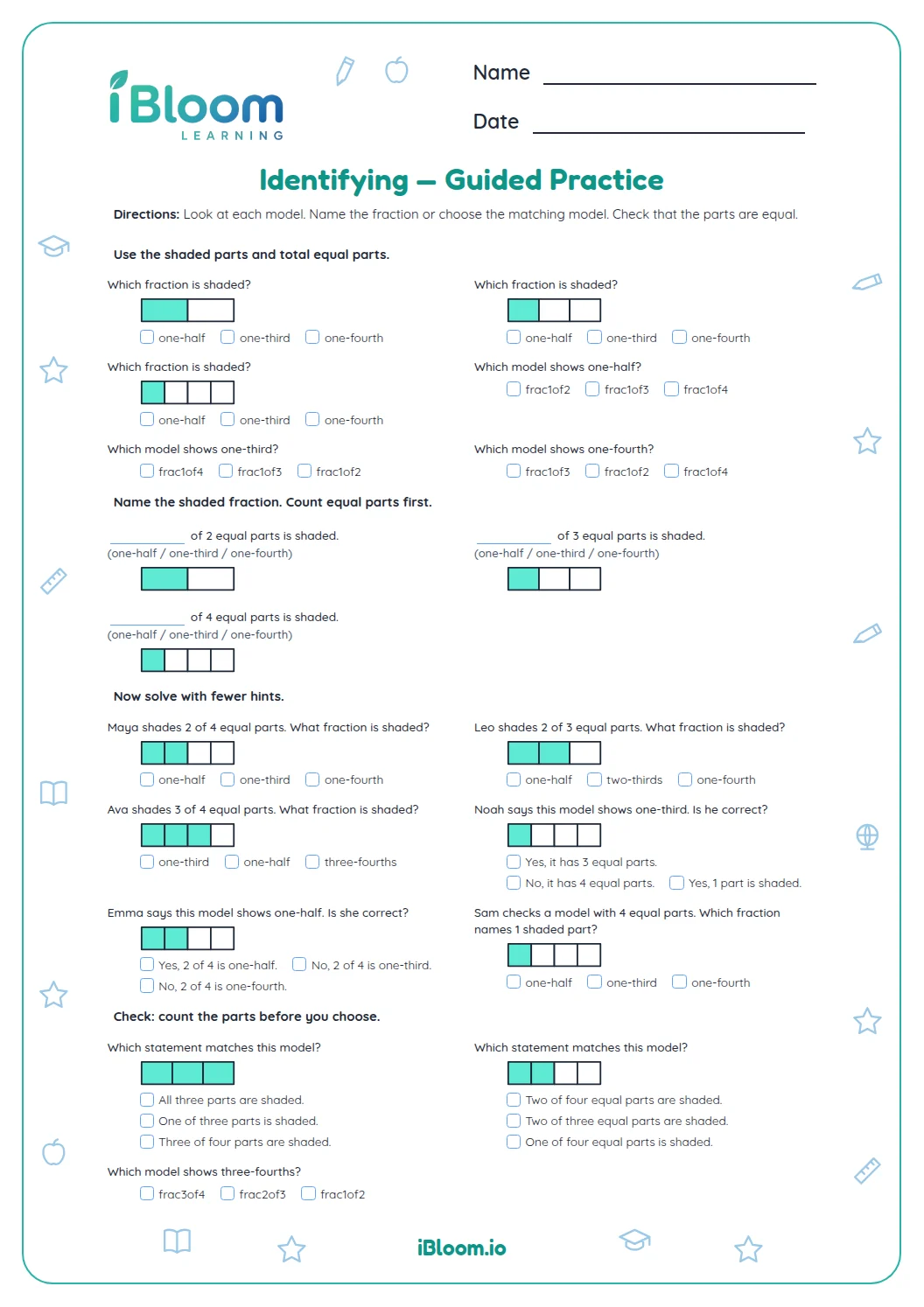
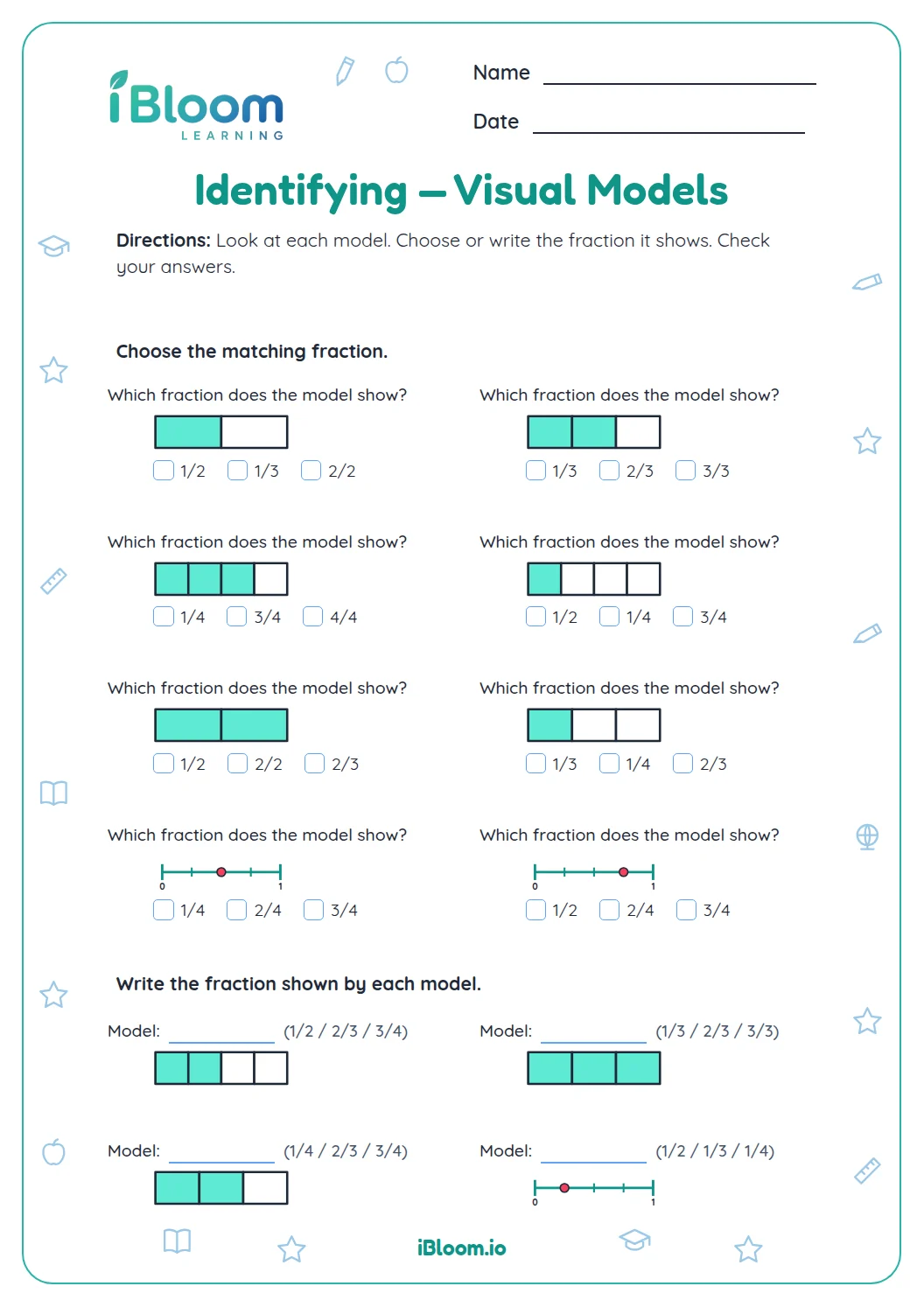
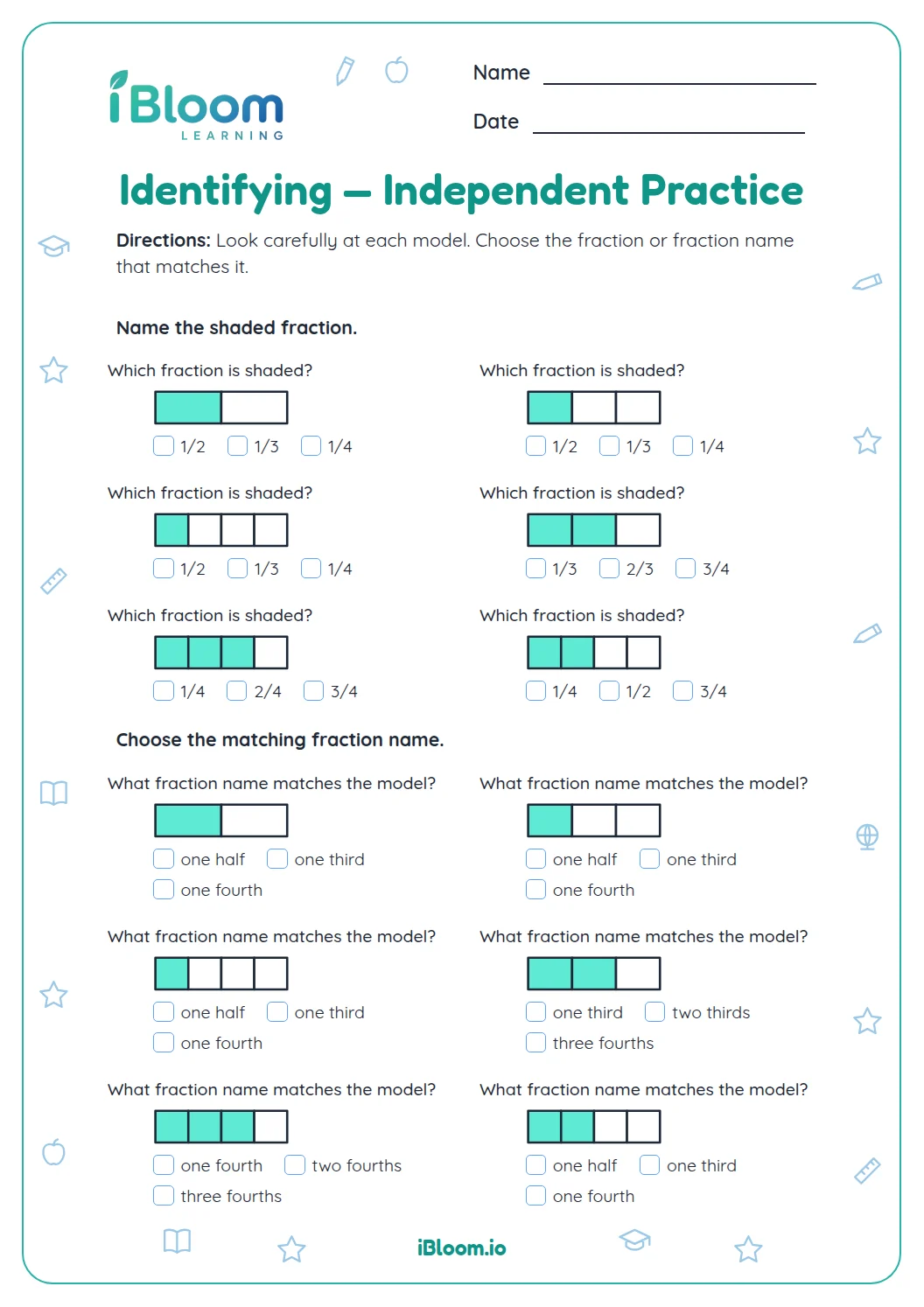
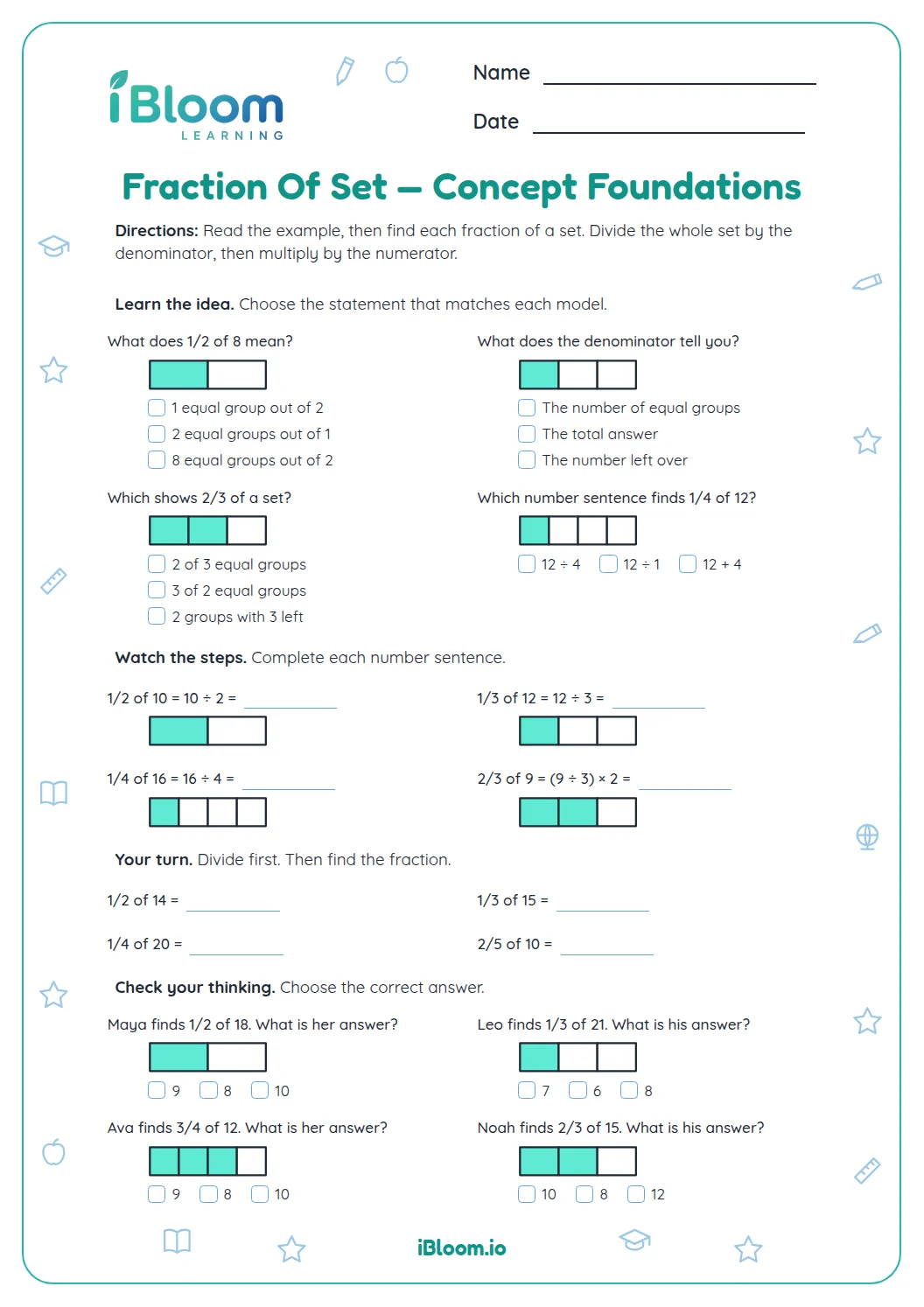
This free printable Grade 2 worksheet uses 14 real-world stories to connect equal sharing with halves, thirds and fourths. Children identify parts of a whole, reason about sharing and explain what the denominator tells them. A separate answer key includes answers and sample explanations.
What makes a fair share?
A fair share gives each person the same amount. If one pan is split into four equal shares, each share is one fourth.
- 1One whole pan is split into 4 equal shares
- 2Each table gets 1 share
- 3Each share is one fourth
How do you find what remains?
Question 7 leaves three of four slices, or 3/4.
What does each part ask?
The final two items ask children to name a fraction and explain the equal parts.
How to use this worksheet
- 1Find the whole being shared.
- 2Count how many equal parts make that whole.
- 3Count the parts named in the question.
- 4Use the story to decide whether parts are eaten, left, or shared.
- 5Check that your answer names the whole and equal parts.
Common mistakes and fixes
The mistake
Calling unequal pieces fourths.
The fix
A fraction names equal-sized parts of one whole.
The mistake
Naming eaten parts when asked what remains.
The fix
Reread whether the question asks for what was used or left.
The mistake
Forgetting what the denominator counts.
The fix
Use it to name the total equal parts in the whole.
What to practice next
Make more practice
Further reading
Questions parents and teachers ask
What does equal sharing mean?
Equal sharing gives each person the same amount. If one whole is split into four equal shares, each share is one fourth. The worksheet stories use halves, thirds and fourths to connect the number of shares to the fraction name and show what one share represents.
How can a child find what remains?
Count the equal parts that make the whole, then count the parts still present after some are eaten or used. The total parts name the denominator because they show how the whole was split. The question wording helps distinguish the amount used from the amount remaining.
Is an answer key included?
Yes. The separate answer key lists all 14 answers and gives sample wording for the two explanation questions. Other clear explanations are acceptable when they correctly describe the equal shares and identify the whole being divided. This helps a learner see that the parts together still make one complete whole.
Why do the problems use equal parts?
A fraction describes equal shares of a whole. If pieces have different sizes, counting pieces alone does not describe how much of the whole each piece represents. These stories name equal parts so children can connect the count of shares to the fraction.
How long should this take?
About 20 minutes is a useful estimate for reading and answering the 14 short stories. Drawing or discussing a quick model can help a learner connect fraction words with equal shares. Children can explain a choice aloud before writing the final answer.