
About this worksheet
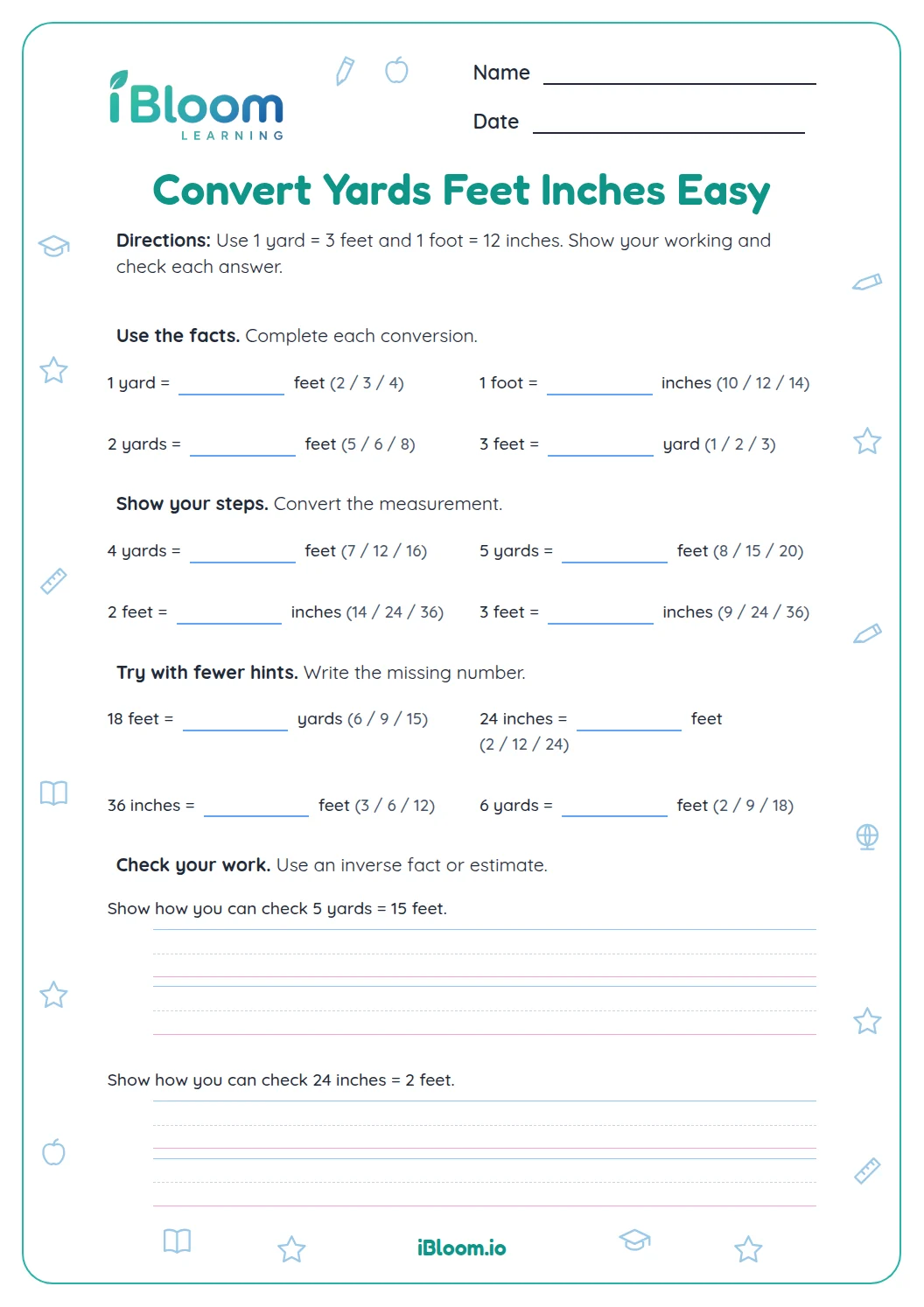
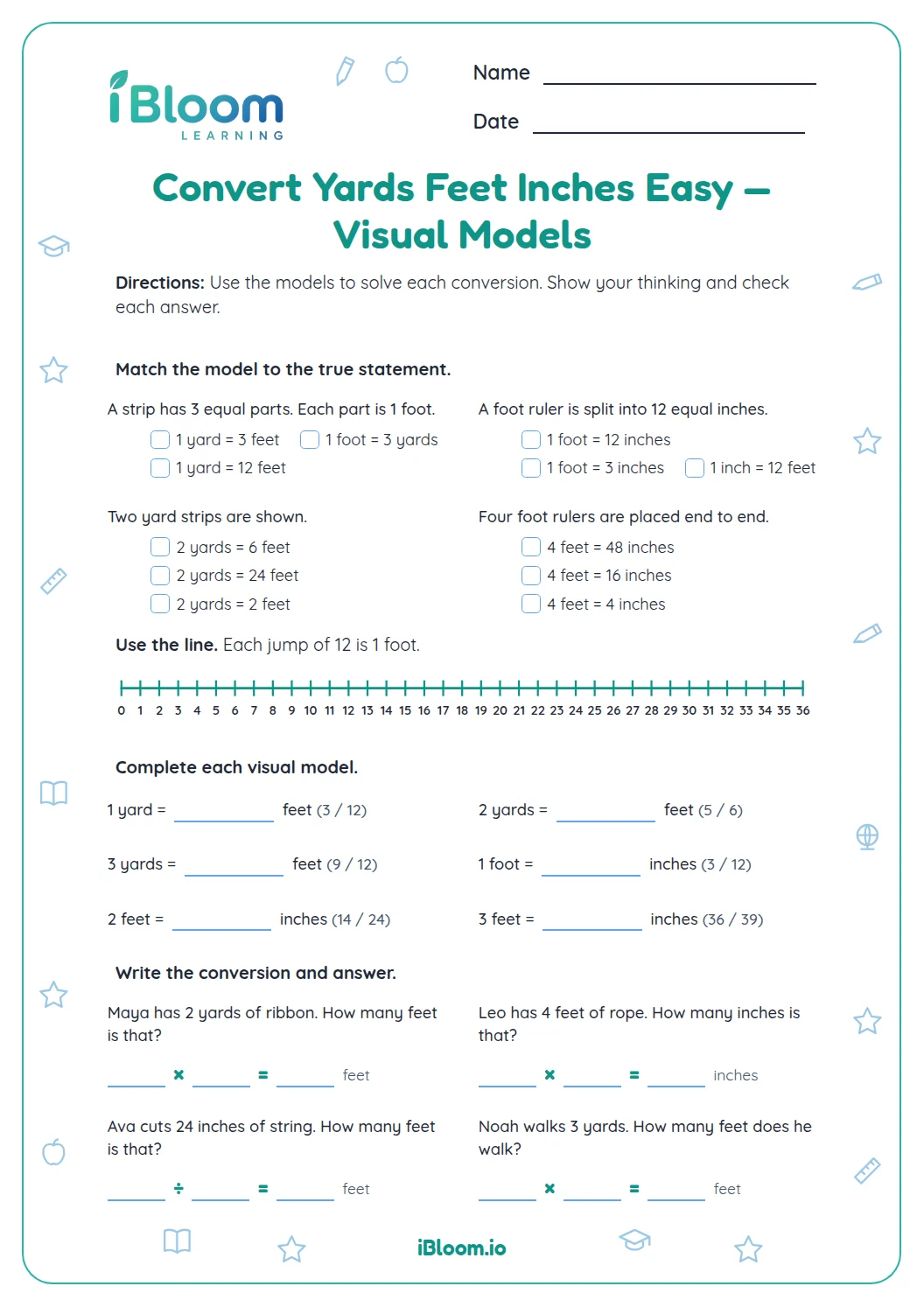
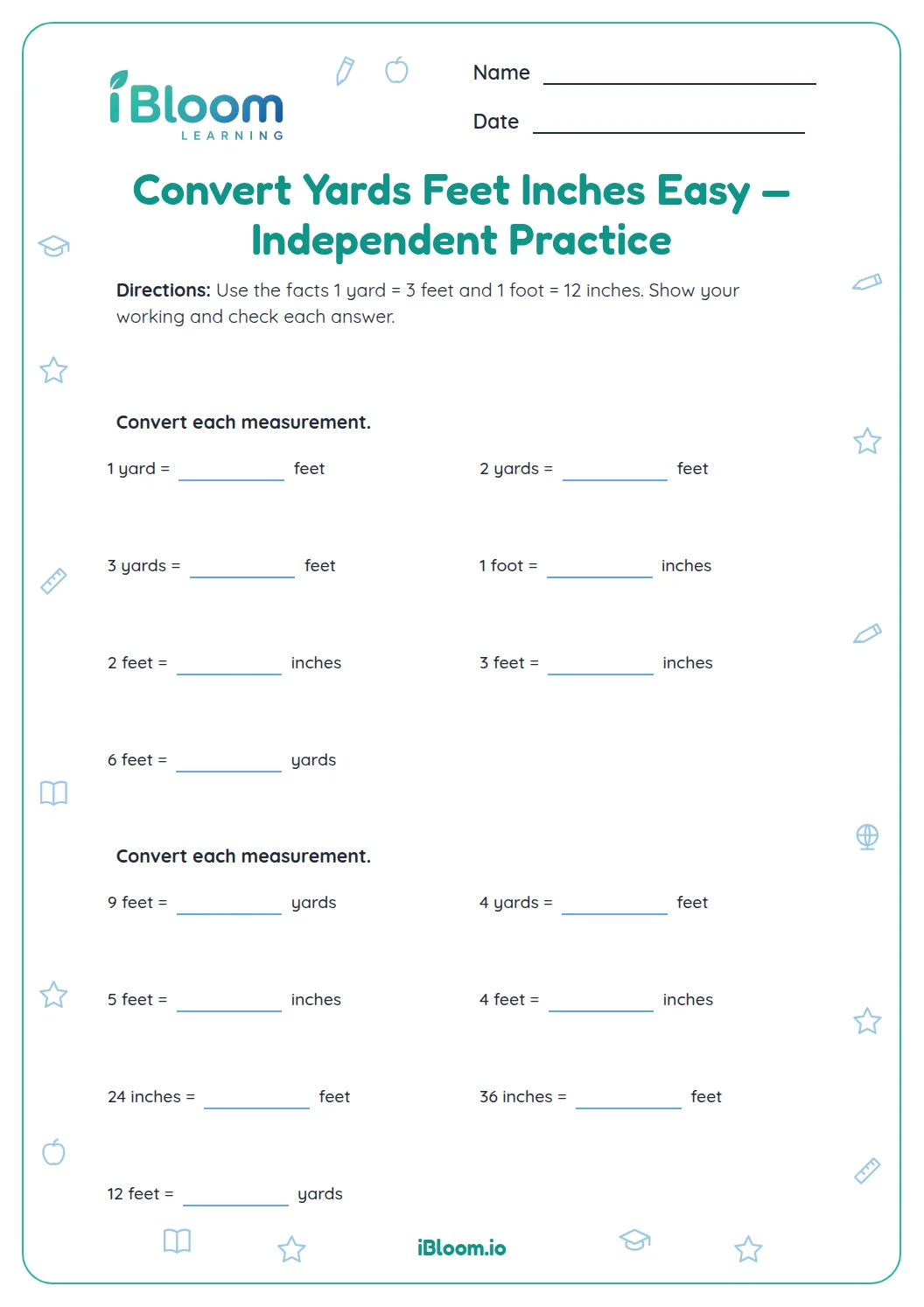
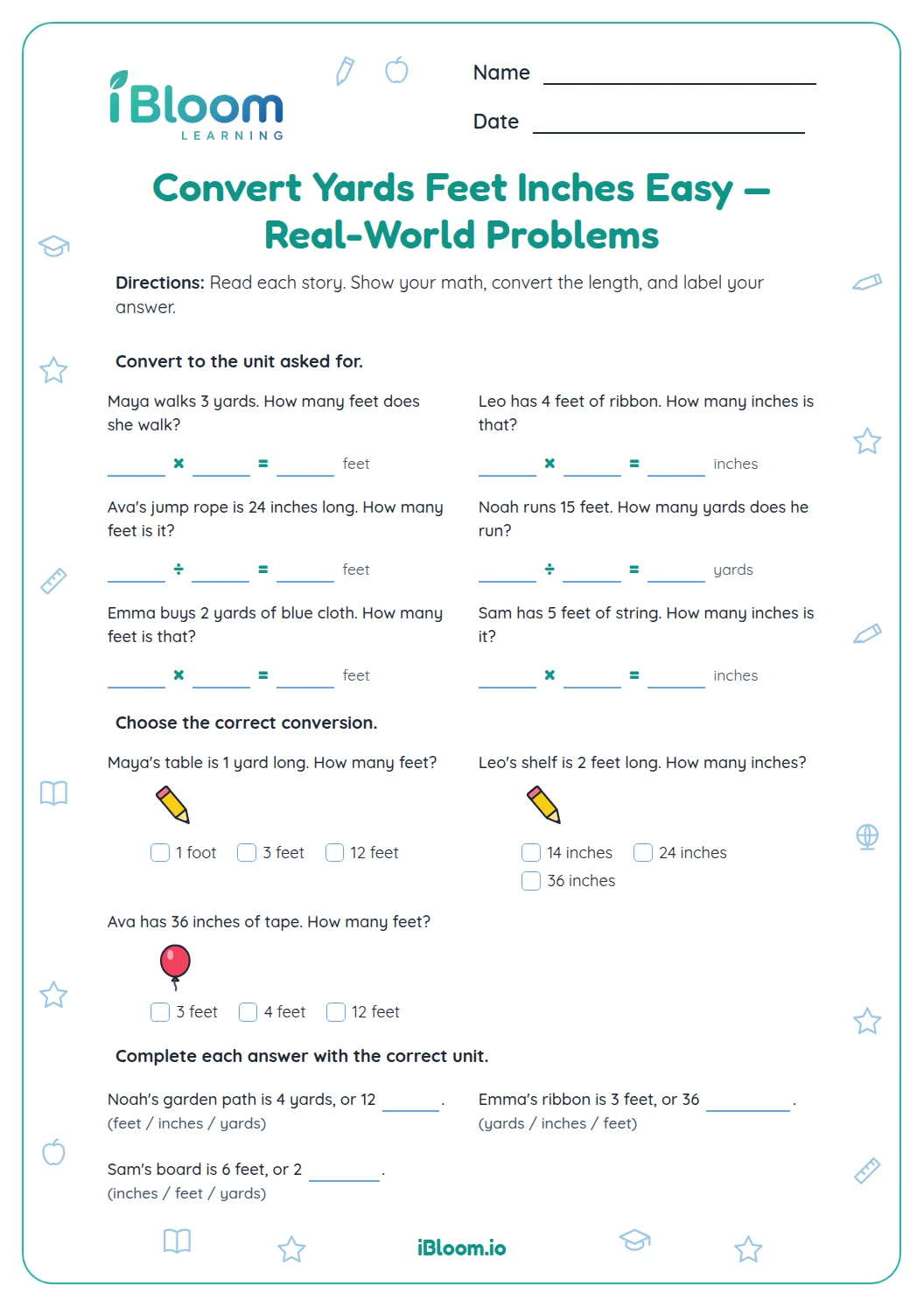
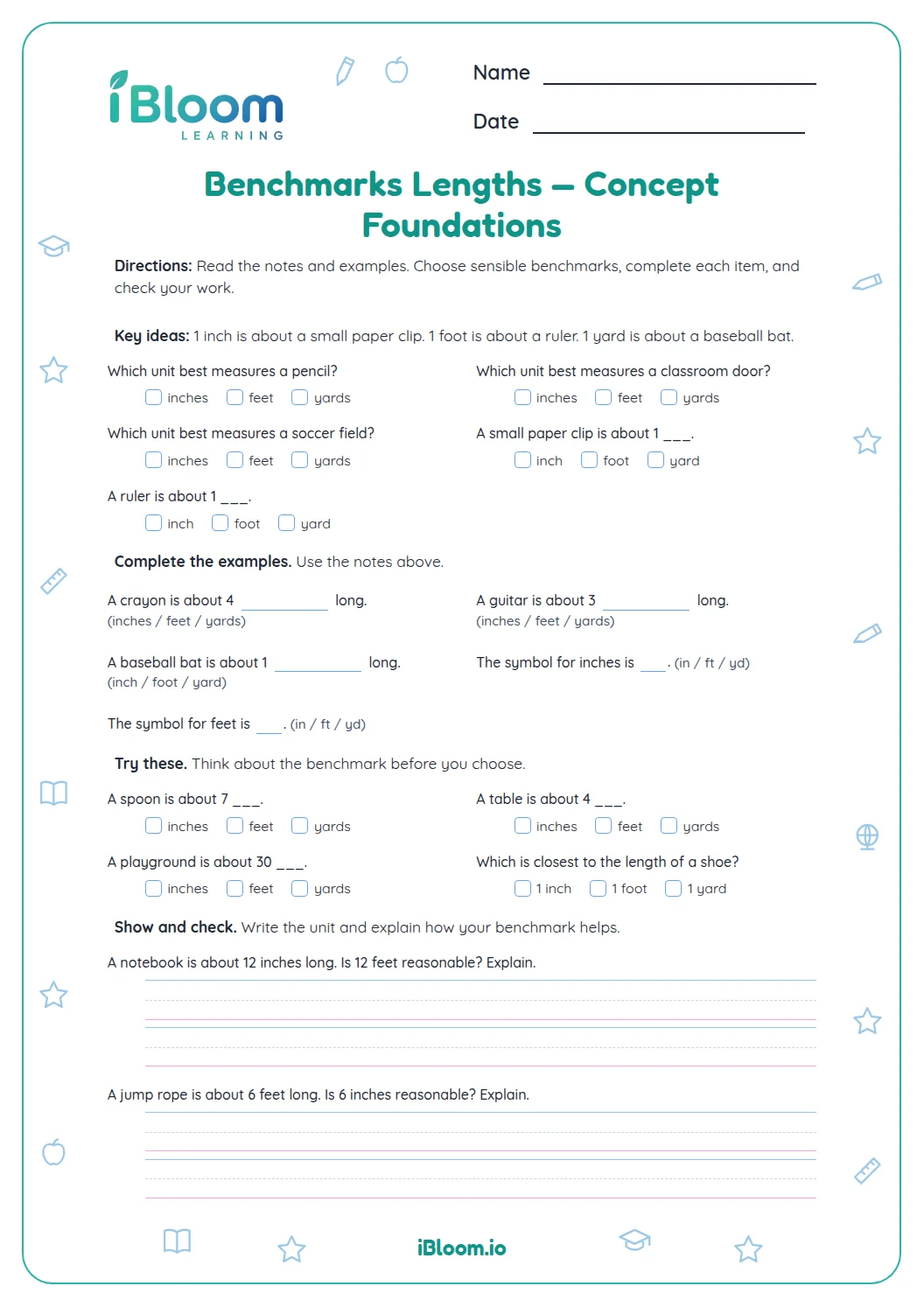
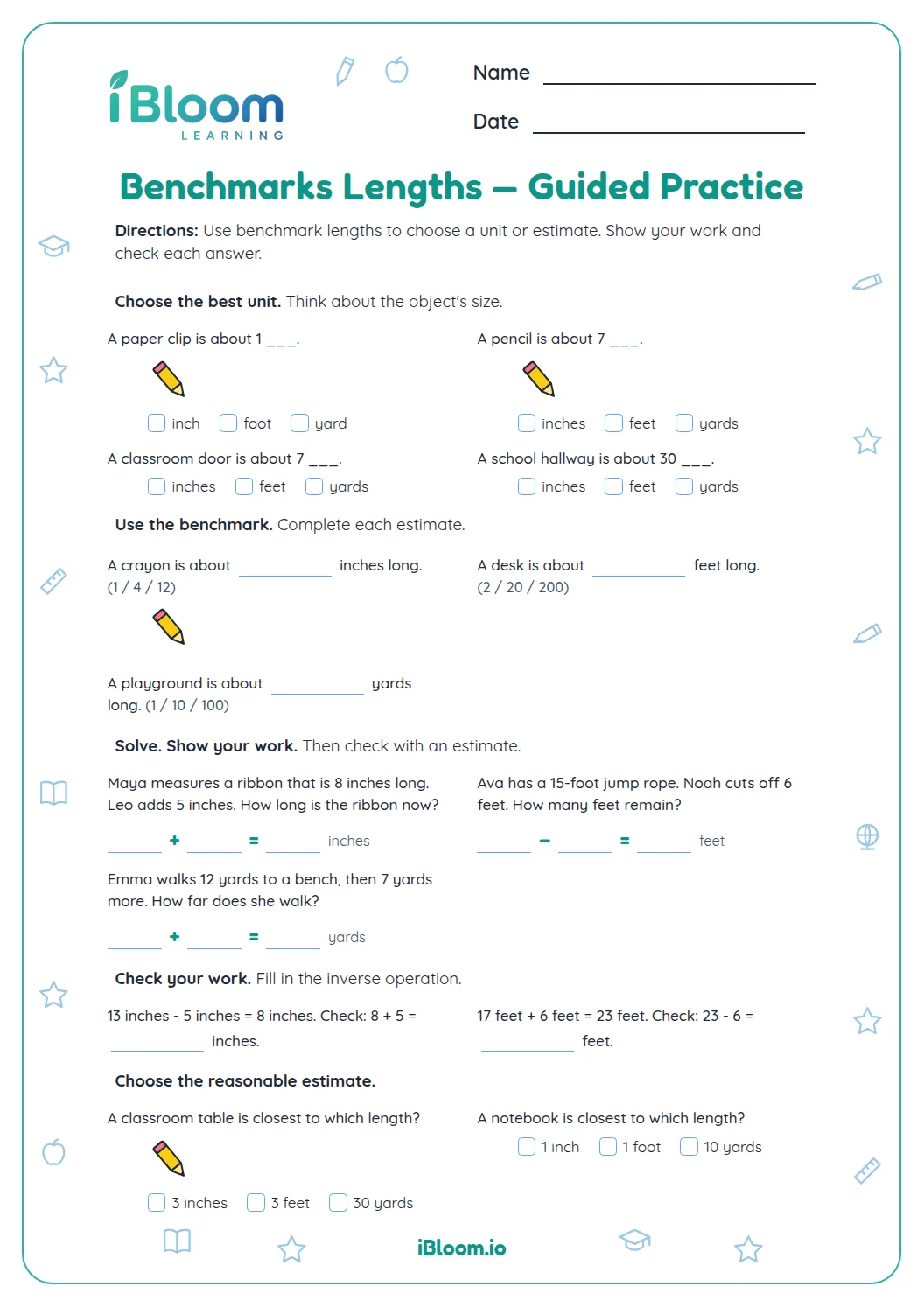
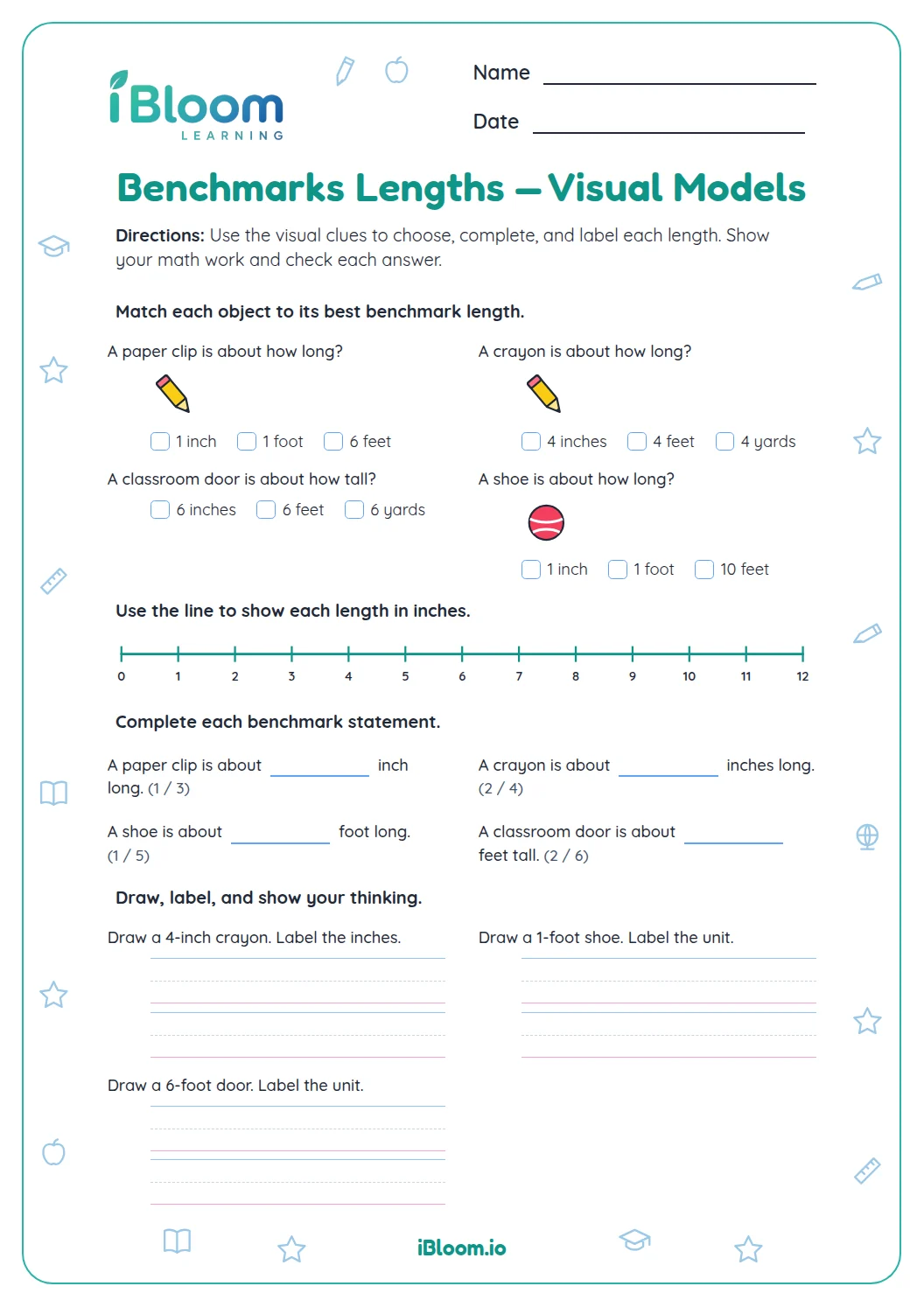
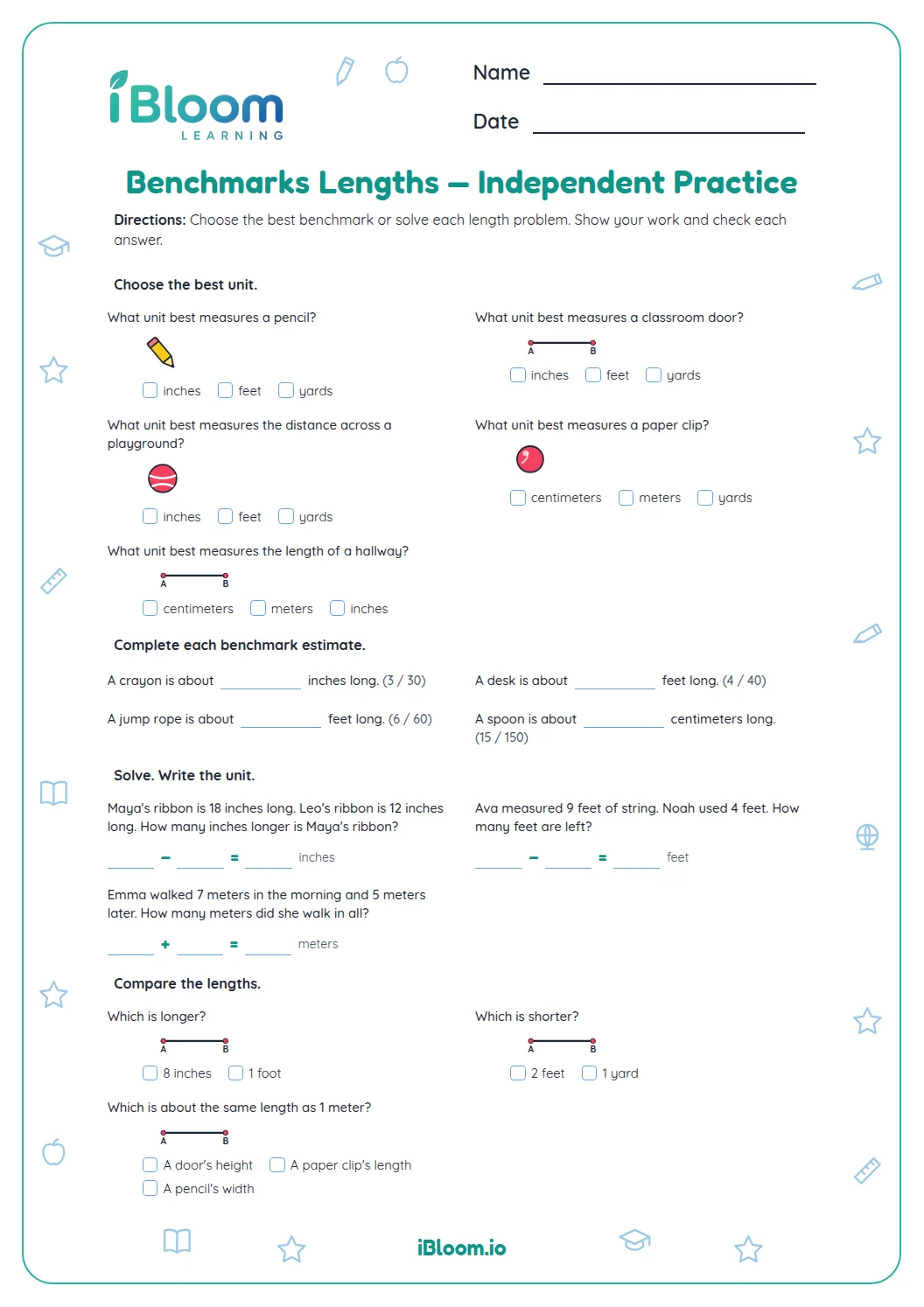
This worksheet gives Grade 2 learners focused practice with the customary length relationships named in its title: 3 feet make 1 yard, and 12 inches make 1 foot. Across 19 short questions, learners convert, compare lengths, and solve simple situations. The answer key keeps each answer in the requested unit. The conversions themselves align with CCSS 4.MD.A.1, which addresses expressing measurements in smaller units.
Aligned to 4.MD.A.1
How do you convert yards to inches?
Use the two relationships in order: yards to feet, then feet to inches. For question 5, one yard is three feet, and each foot is twelve inches.
- 11 yard = 3 feet.
- 23 × 12 = 36 inches.
- 3So 1 yard = 36 inches.
How do you compare different units?
Convert both lengths to one unit before comparing. If one measurement is in yards and the other is in feet, convert the yards to feet, then compare or find the difference.
What should you check?
Read the requested unit before writing the answer. A correct number with the wrong unit does not answer the question.
How to use this worksheet
- 1Recall that 1 yard equals 3 feet and 1 foot equals 12 inches.
- 2Use the matching relationship for each conversion.
- 3Convert both quantities to the same unit before comparing.
- 4Read the final unit requested in each story.
- 5Check by converting the answer back to the starting unit.
Mistakes to watch for
The mistake
Using 12 inches for a yard.
The fix
Convert yards to feet first, then feet to inches.
The mistake
Comparing lengths written in different units.
The fix
Rename both measurements in the same unit before comparing.
The mistake
Answering in feet when inches are requested.
The fix
Circle the requested unit before solving.
Common Core alignment
Express a measurement in a larger unit using a smaller unit in the same system.
On this sheet: The questions directly practice this skill.
Show the official wordingHide the official wording
Know relative sizes of measurement units within one system of units including km, m, cm; kg, g; lb, oz; l, ml; hr, min, sec. Within a single system of measurement, express measurements in a larger unit in terms of a smaller unit. Record measurement equivalents in a two-column table.
What to practice next
Make more practice
Further reading
Questions parents and teachers ask
Which conversions are on the worksheet?
The 14 questions use yards, feet, and inches. Learners apply 1 yard = 3 feet and 1 foot = 12 inches, then use those relationships in comparisons and short length situations. The separate answer key lists the final values. The answer key also helps check the unit choices.
Does the key show units?
Yes. Answers include the unit requested in each question, such as feet or inches. For a comparison, the key gives the difference in the unit named by the prompt. This makes it easier to check both the arithmetic and unit choice.
What facts should a learner know first?
The key relationships are 3 feet = 1 yard and 12 inches = 1 foot. A learner can use either relationship directly or chain them: one yard is 36 inches because 3 groups of 12 inches make 36 inches. The answer key also helps check the unit choices.
How can learners compare two lengths?
Convert both lengths to the same unit, then compare the numbers. For example, change yards to feet before comparing with another length in feet. Subtract only after the units match, and state the difference in the requested unit. The answer key also helps check the unit choices.
How long does this worksheet take?
About 20 minutes is a reasonable estimate for 14 short conversion and reasoning questions. Learners who are still learning the unit relationships may benefit from using a ruler or writing the conversion facts nearby. The answer key also helps check the unit choices. Give extra time to show the conversion steps if they are new.