



About this worksheet
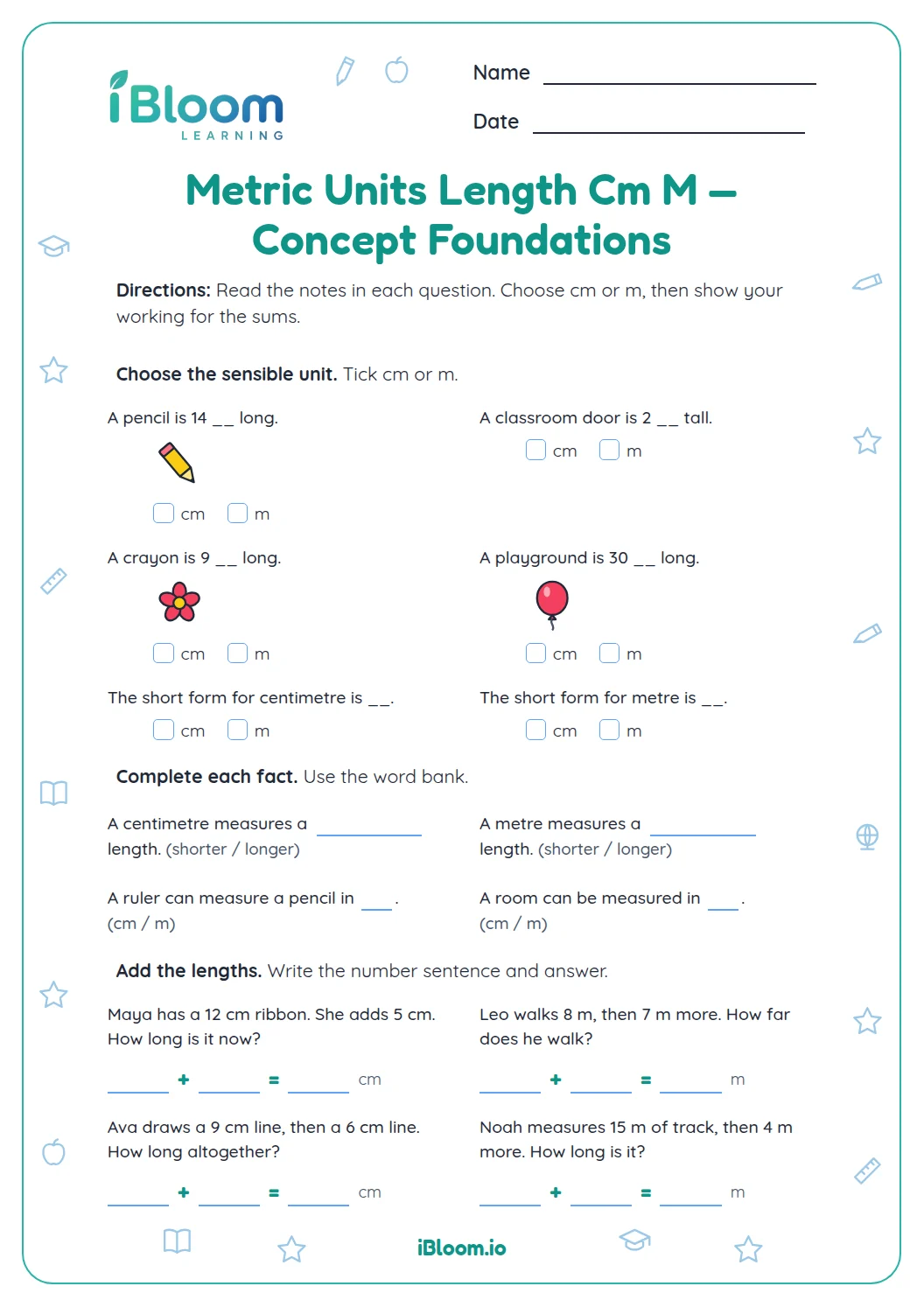
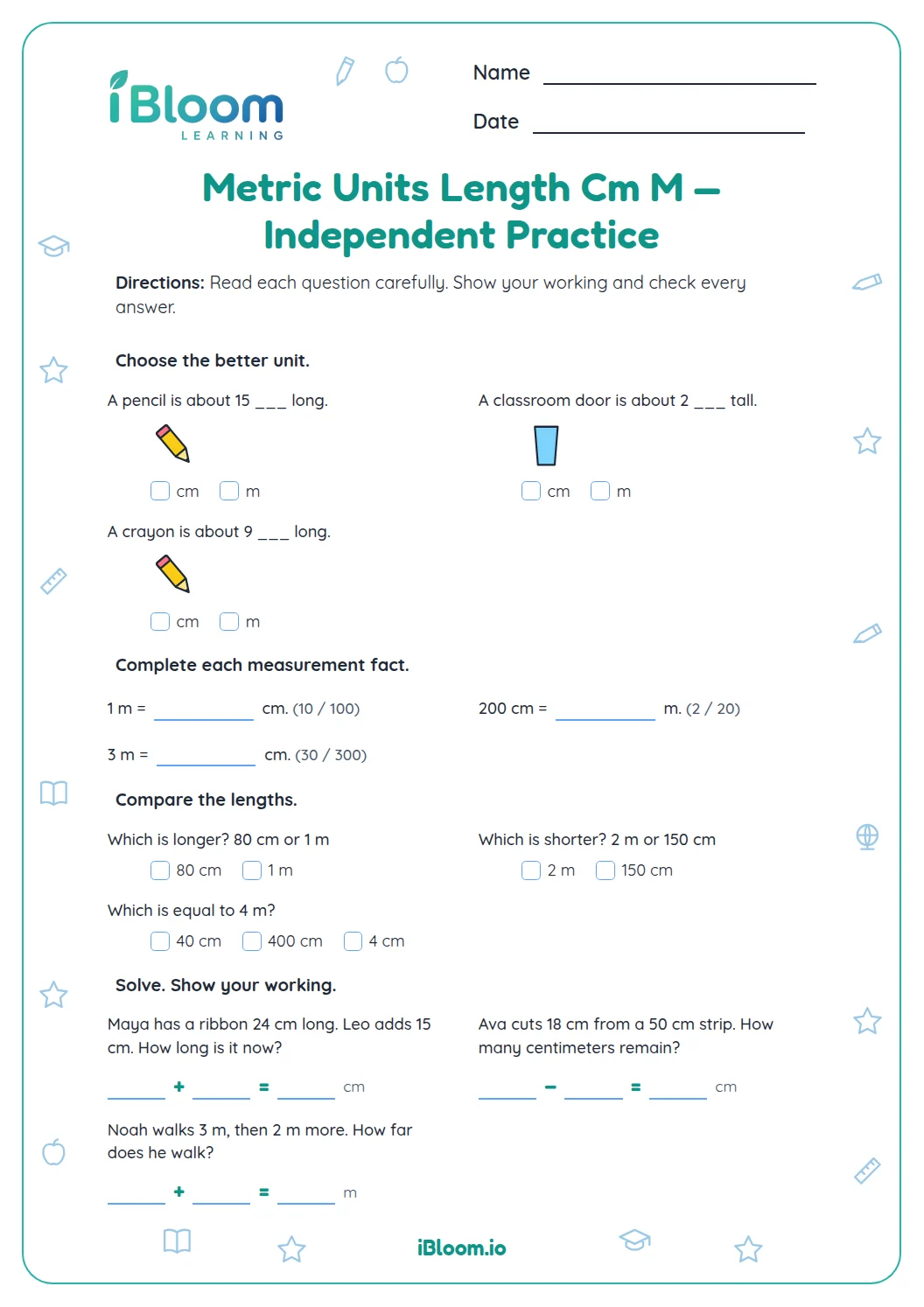
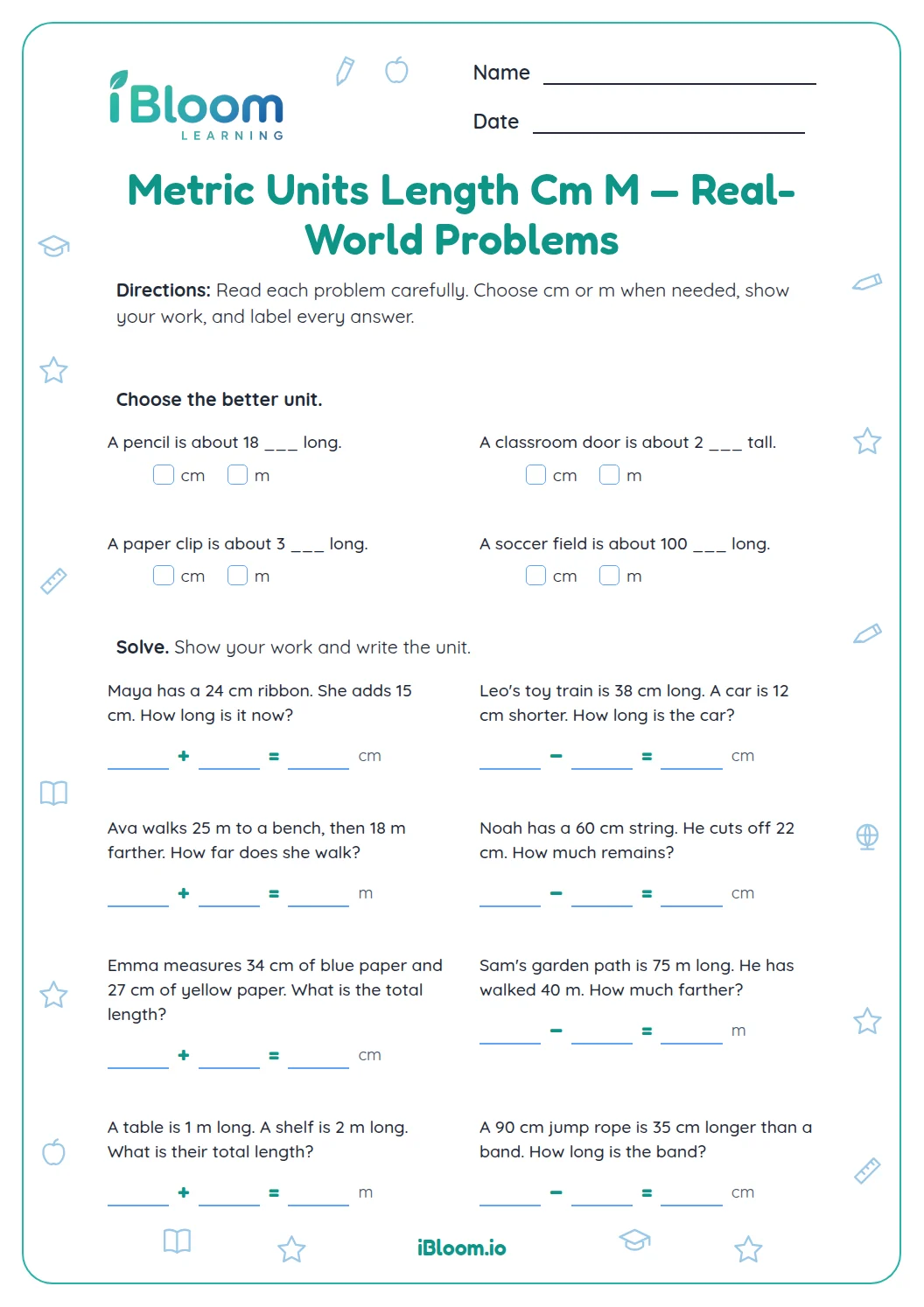
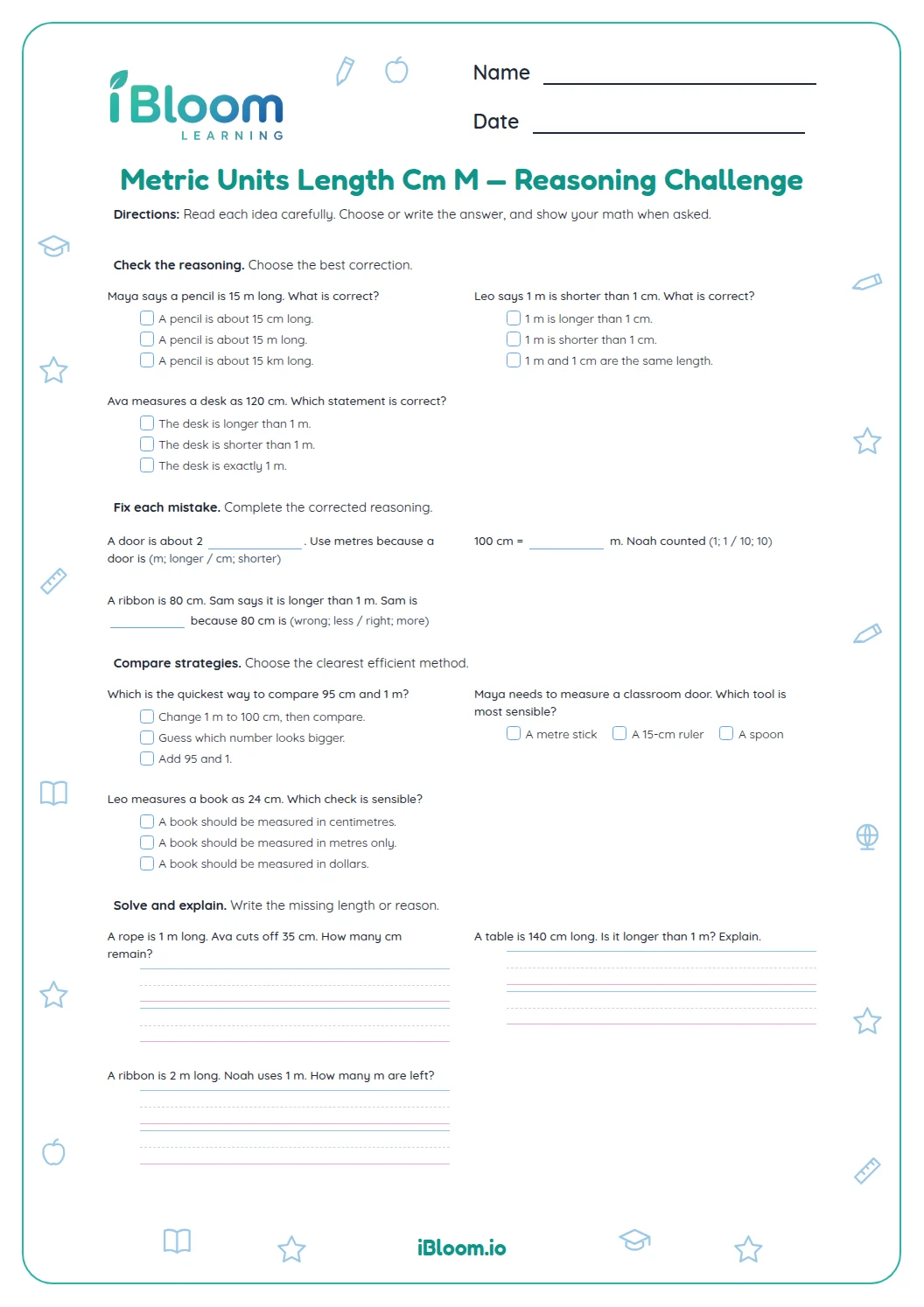
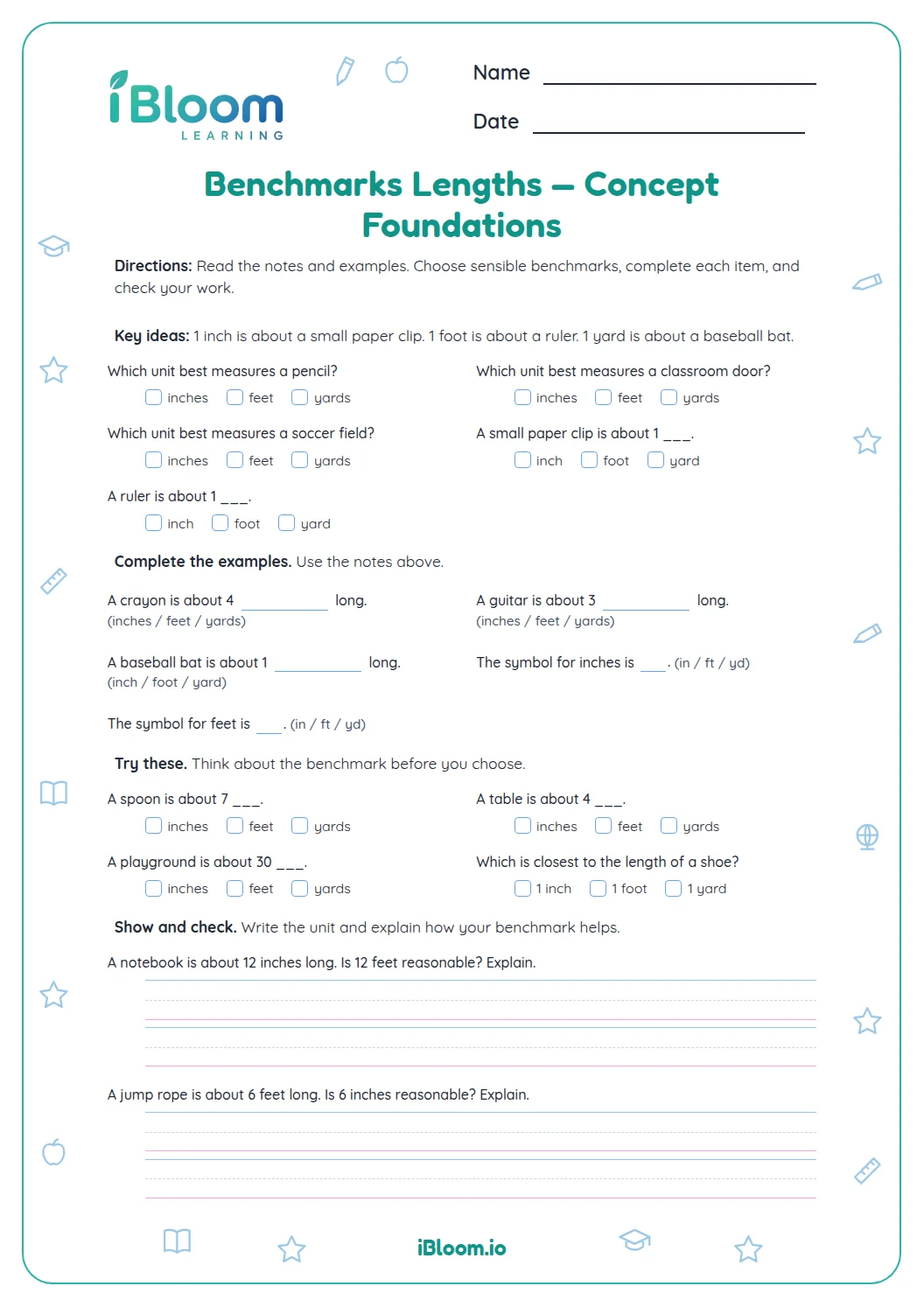
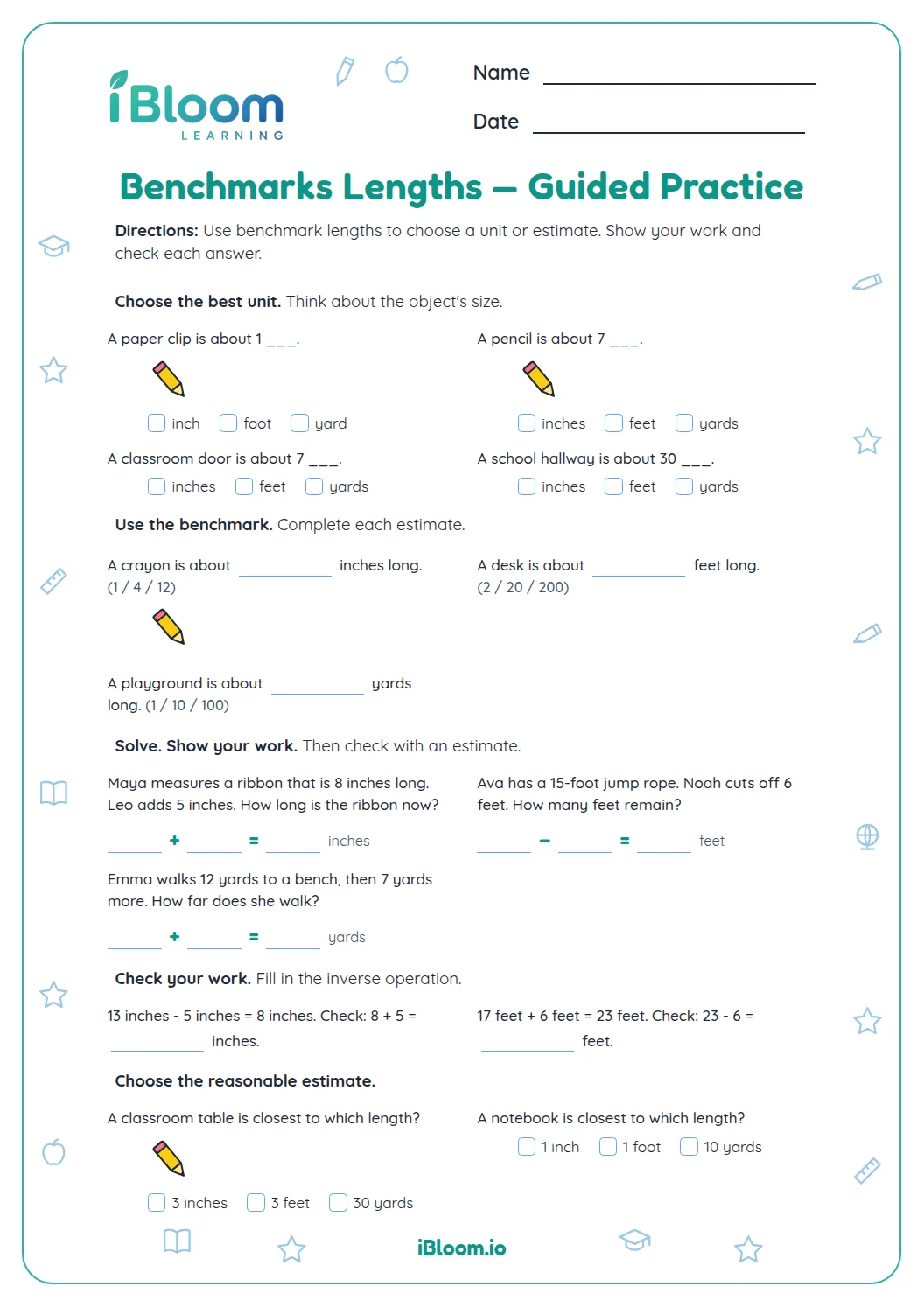
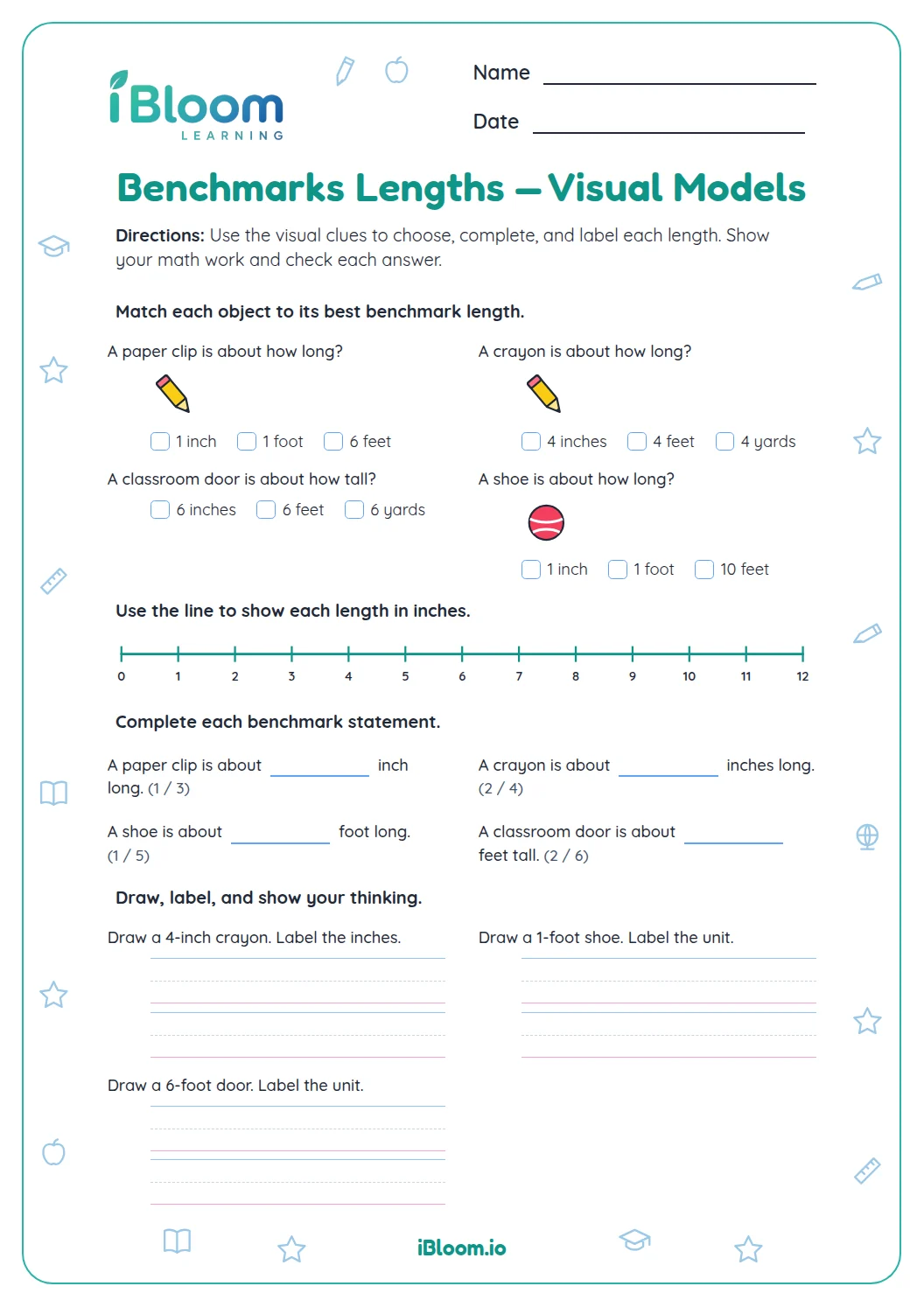
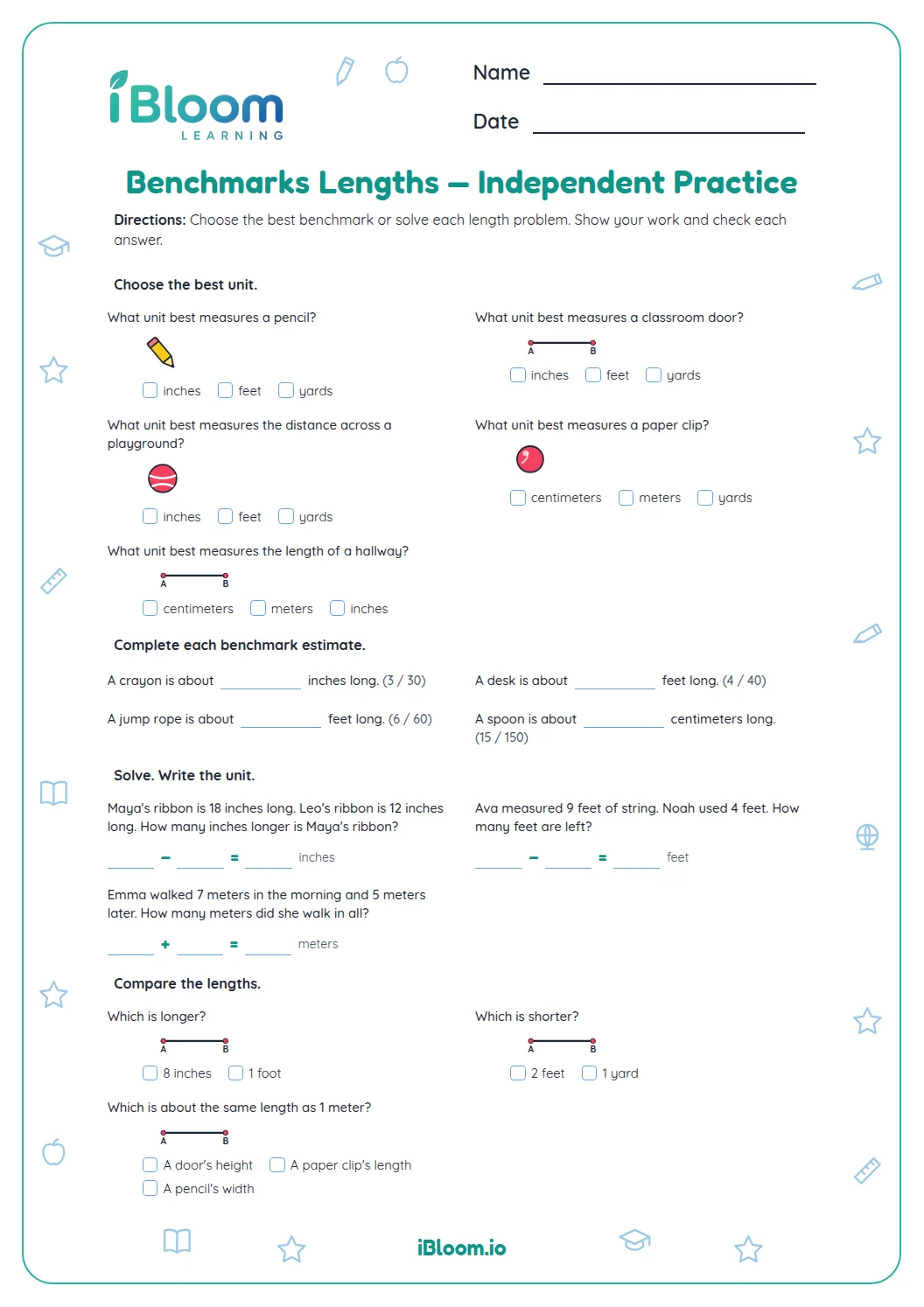
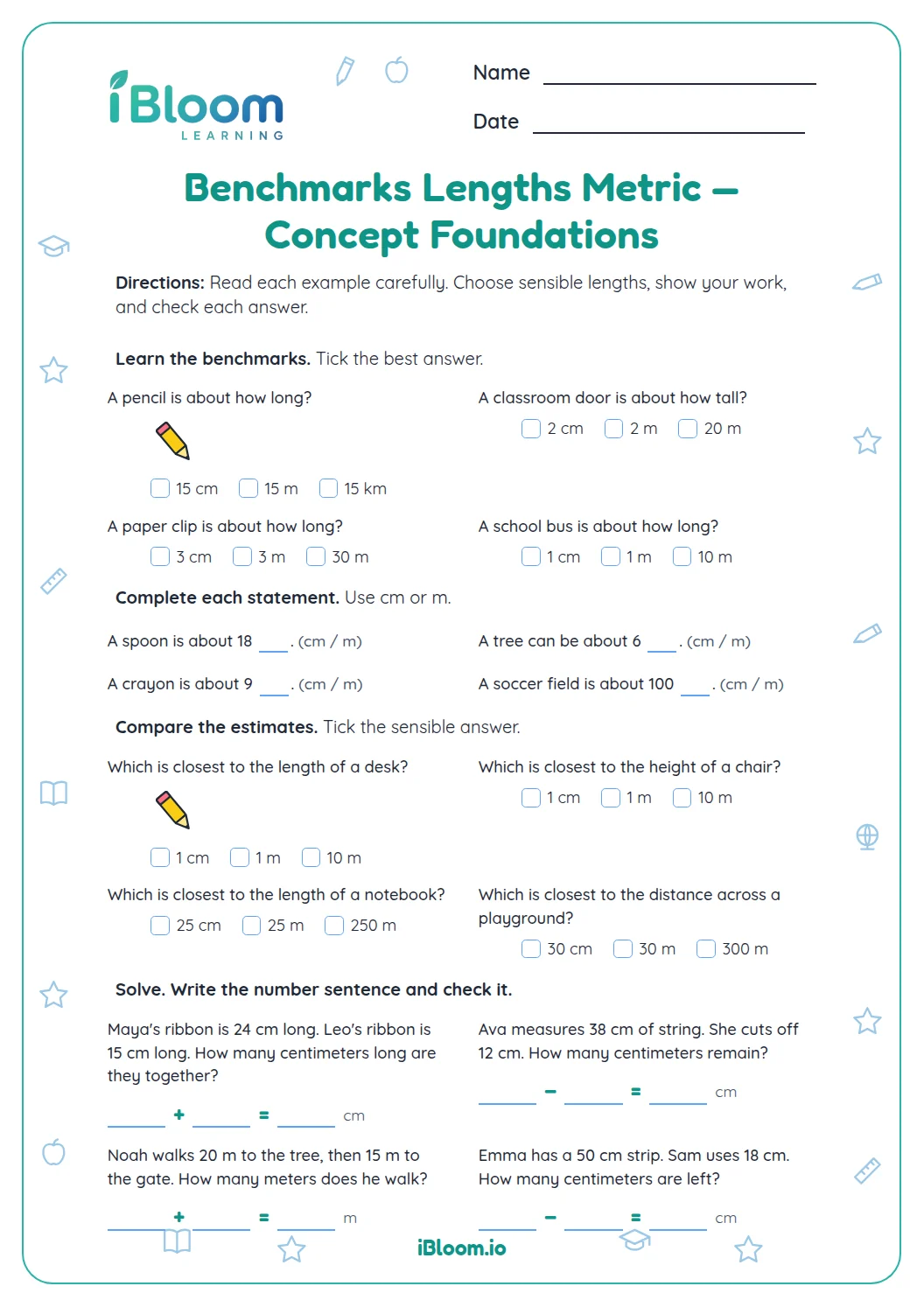
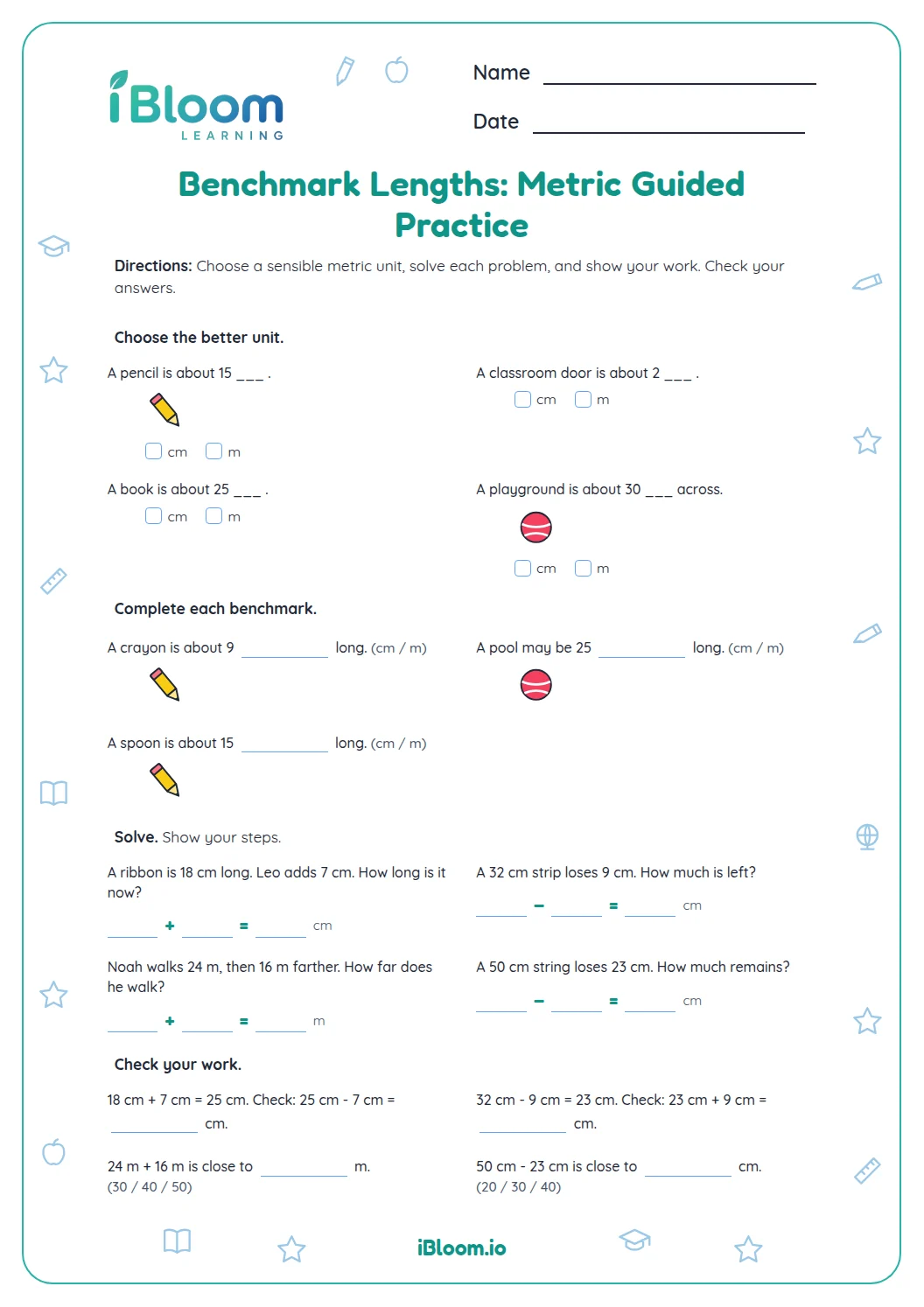
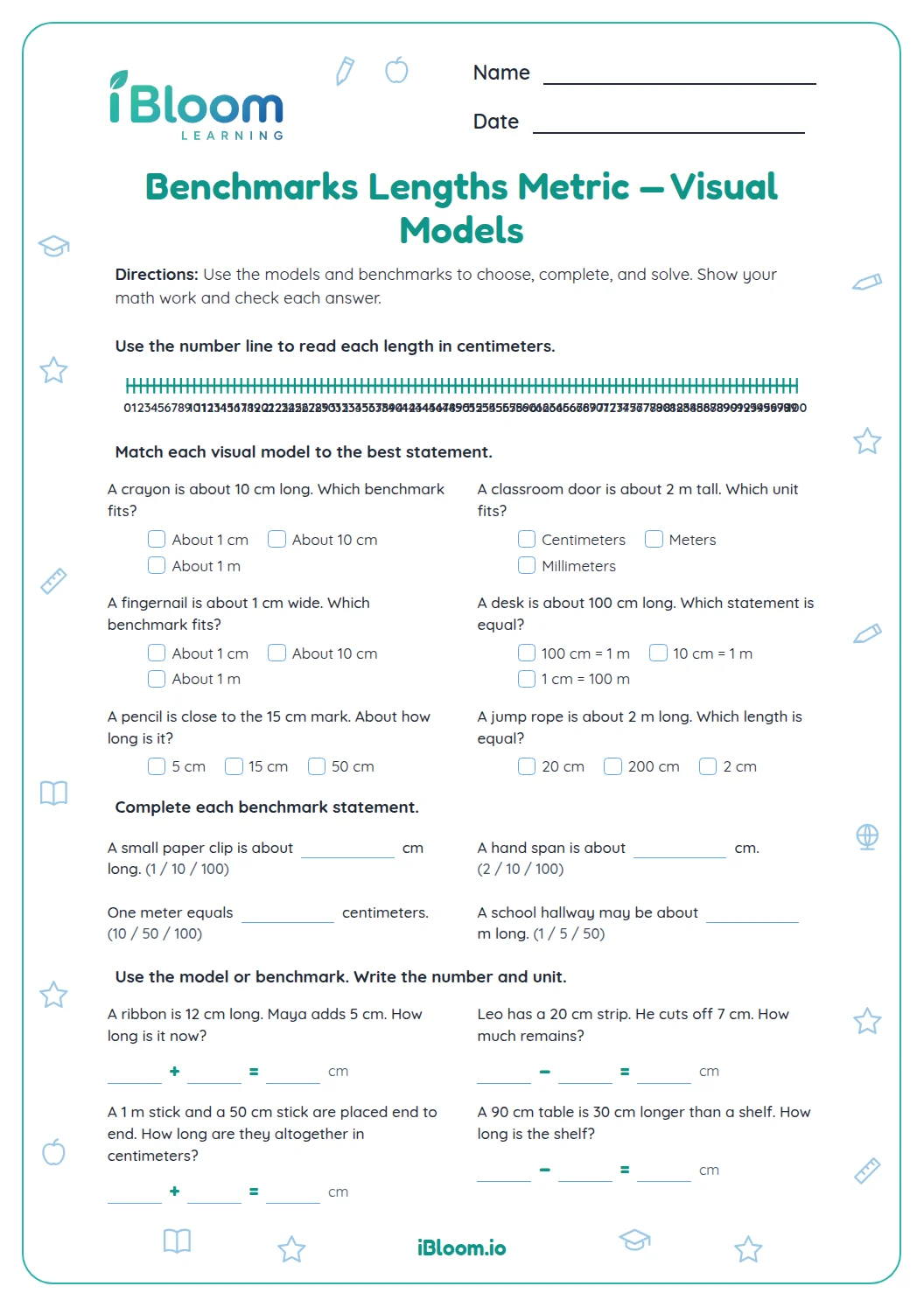
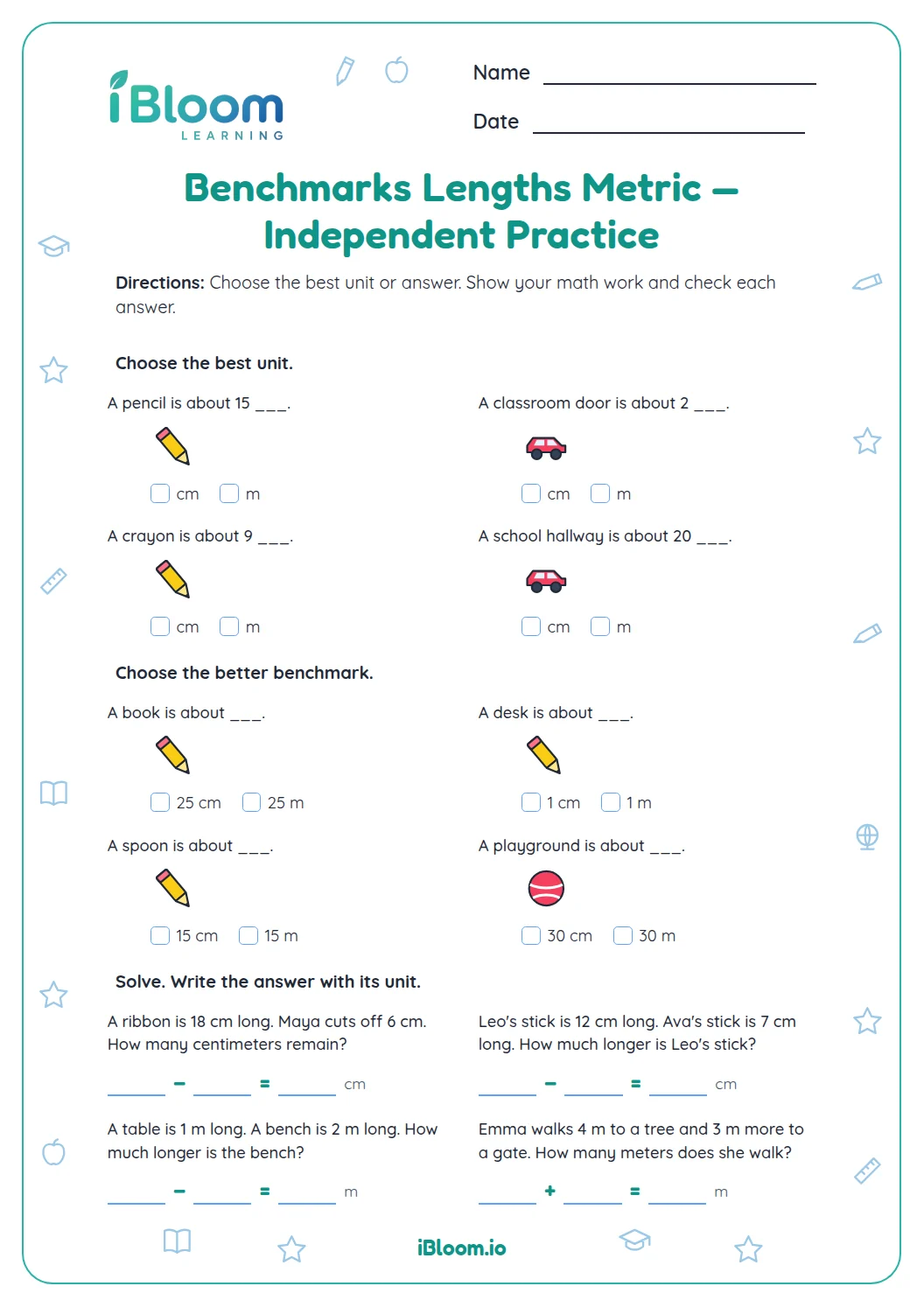
This free printable Grade 2 worksheet practices metric length in centimeters and meters. Learners choose sensible units, read two centimeter rulers, compare lengths, and use the relationship 100 centimeters = 1 meter in simple number sentences. The 16 questions include a separate answer key.
Aligned to 2.MD.A.1
When do we measure in centimeters or meters?
Centimeters fit short lengths, such as a pencil. Meters fit longer lengths, such as a classroom door.
The ruler pictures start at zero. Find the mark at the object’s endpoint, then include cm in the answer.
- 1The pencil reaches 6 cm on its ruler.
- 2Write the endpoint and the unit.
- 3Answer: 6 cm
How does the practice build?
Questions 1–2 and 5 choose a sensible unit. Questions 3–4 read rulers, questions 6–9 compare lengths, and questions 10–16 use the meter relationship.
How can I use the answer key?
Use the key to check the unit and the number for each length. For mixed lengths, check that the centimeters are less than 100.
How to work through the page
- 1Read the direction at the start of each part.
- 2Try the first question carefully and check what it asks.
- 3Complete the rest of the part independently.
- 4Review answers with the key and correct any slips.
Common slips and quick checks
The mistake
Choosing meters for a short object such as a paper clip.
The fix
Ask whether the length is close to a few centimeters or several meters.
The mistake
Reading a ruler from its edge instead of zero.
The fix
Start at 0 and find the mark at the object’s endpoint.
The mistake
Forgetting that 1 m equals 100 cm.
The fix
Use 100 cm for each meter when completing the number sentences.
Curriculum alignment
Measure lengths with appropriate tools and units.
On this sheet: Children choose metric units, read centimeter rulers, and compare lengths.
Show the official wordingHide the official wording
Measure the length of an object by selecting and using appropriate tools such as rulers, yardsticks, meter sticks, and measuring tapes.
What to practice next
Make more practice
Further reading
Questions parents and teachers ask
When should a learner choose centimeters instead of meters?
Centimeters fit shorter objects such as the paper clip in question 1 or the pencil on a ruler. Meters fit longer lengths such as the classroom door or hallway. Ask whether a length is a few centimeters or closer to several meters.
What is the relationship between centimeters and meters?
One meter is the same length as 100 centimeters. The number sentences use that relationship to find whole meters from centimeters or centimeters from meters. For example, 200 cm is 2 m, and 2 m is 200 cm. The relationship helps learners check both directions.
How should children read the ruler drawings?
Start at zero and find the mark at the pictured object’s endpoint. The pencil ends at 6 cm and the flower ends at 9 cm. Write the number and the unit so the measured length is clear. Check that the object begins at zero before reading its endpoint.
How can you compare 80 centimeters with 1 meter?
Rewrite 1 meter as 100 centimeters. Since 80 is less than 100, 80 cm is less than 1 m. The same comparison shows that 35 cm is shorter than 1 m. Think of the meter as one group of 100 centimeters when comparing lengths.
What should go in the table length answer?
The table is 150 cm long. One meter uses 100 cm, leaving 50 cm, so the length is 1 m 50 cm. Check that the leftover centimeters are less than 100. This keeps the answer in meters and centimeters, as the question asks.