

About this worksheet
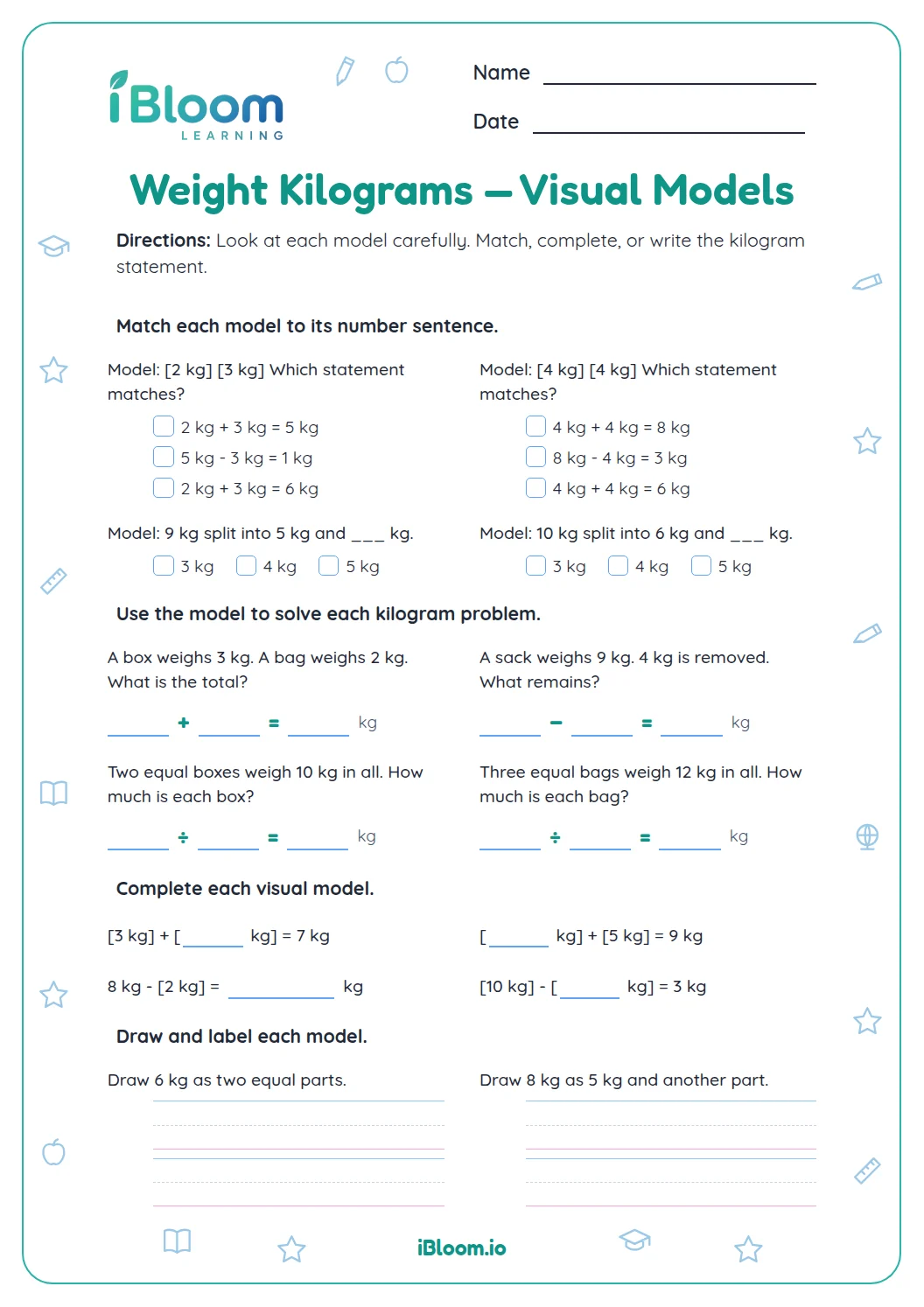
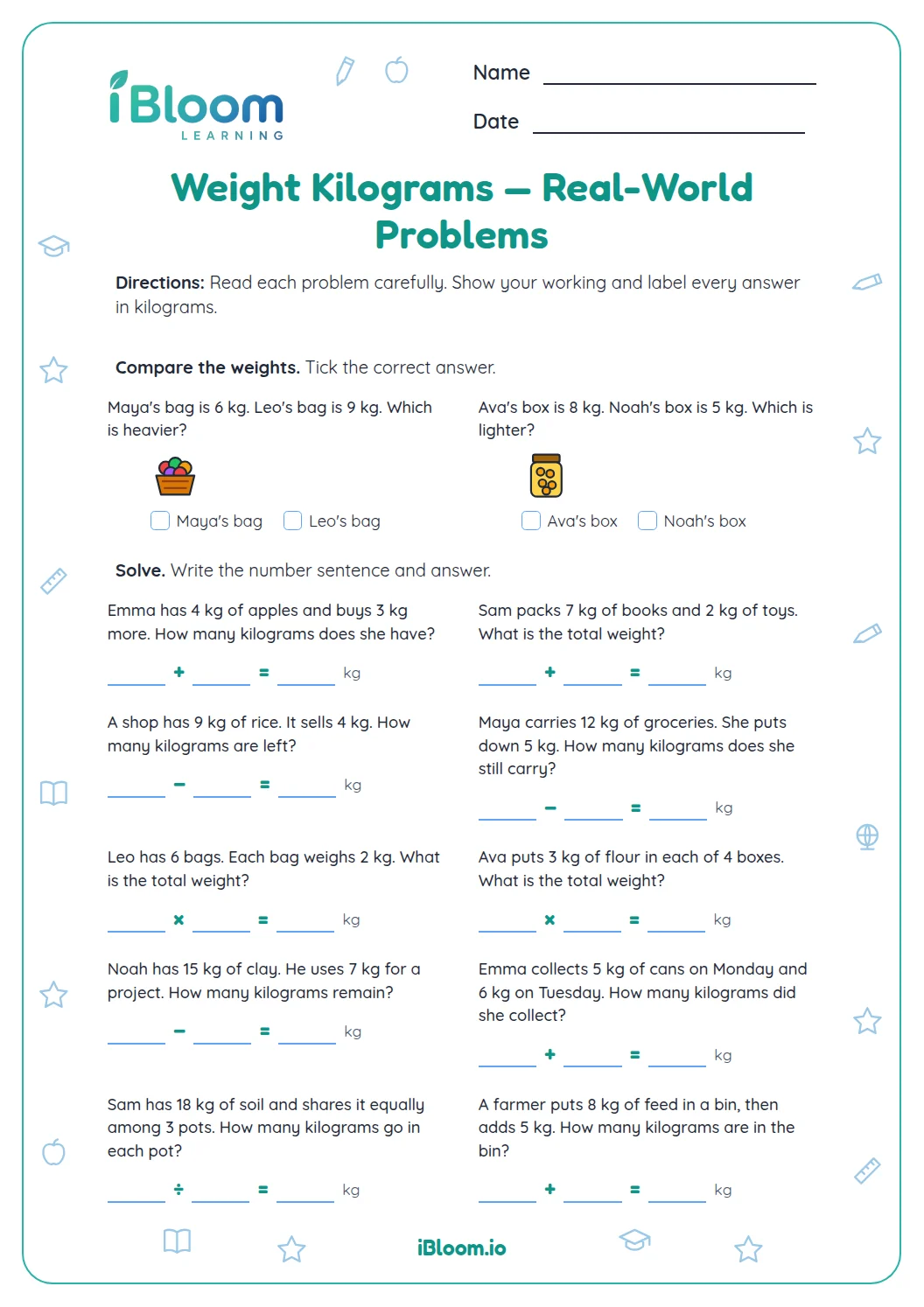
Introduce kilograms as a unit for describing the mass of heavier everyday objects. Learners choose sensible estimates, compare kilogram amounts, and reason about objects that would be far too light or heavy for a given estimate.
When is a kilogram a sensible unit?
A kilogram (kg) is a unit used for the mass of heavier objects. A watermelon or backpack can be described in kilograms; a paper clip is much lighter. Compare the size of the object with the proposed mass before choosing.
The problems use familiar objects, kilogram comparisons, and simple totals to make the unit meaningful.
What is on the worksheet?
Fifteen questions practice sensible kilogram estimates, comparing mass, and adding kilogram amounts. The final items invite a plausible example and a short explanation.
- Part A: choose sensible estimates
- Part B: compare mass amounts
- Part C: solve short kilogram situations
How to use this worksheet
- 1Read the direction for each part before beginning.
- 2Ask the learner to explain one answer aloud and check it with the key.
Common mistakes and quick fixes
The mistake
Rushing and overlooking what the question asks.
The fix
Read the whole prompt, solve, then check that the answer fits.
The mistake
Stopping after finding a number without checking it.
The fix
Put the answer back into the original question.
What to practice next
Questions parents and teachers ask
What does kg mean?
“Kg” is the abbreviation for kilogram, a metric unit of mass. This worksheet uses kilograms to describe objects such as a backpack, bicycle, or watermelon. Learners consider whether a proposed mass is sensible, compare kilogram amounts, and solve simple addition situations.
Is a kilogram heavier than a gram?
Yes. One kilogram equals 1,000 grams. The worksheet builds familiarity with kilogram-sized objects and mass comparisons; it does not ask children to convert between the units. A paper clip is a sensible example of something far lighter than a kilogram.
How can a child estimate an object’s mass?
Think of familiar objects with known approximate masses, then compare the target object with them. A full backpack may be several kilograms, while a small orange is much lighter. These are estimates, so actual mass varies by object.
How should we use the answer key?
Check the selected estimate or comparison first, then talk through why the object and mass are a sensible match. For addition questions, check that the total uses kilograms. For open responses, accept another plausible object close to one kilogram.