





About this worksheet
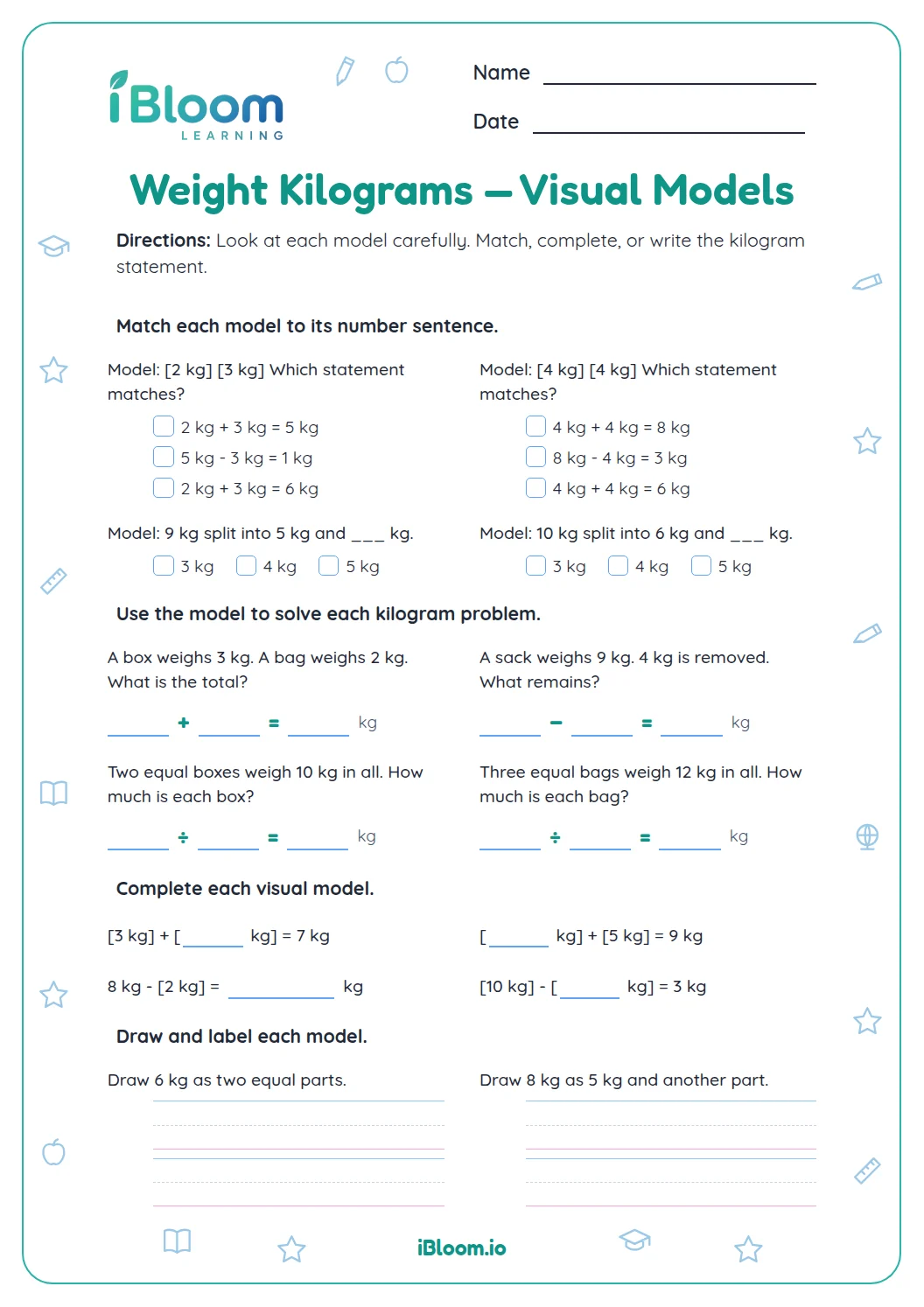
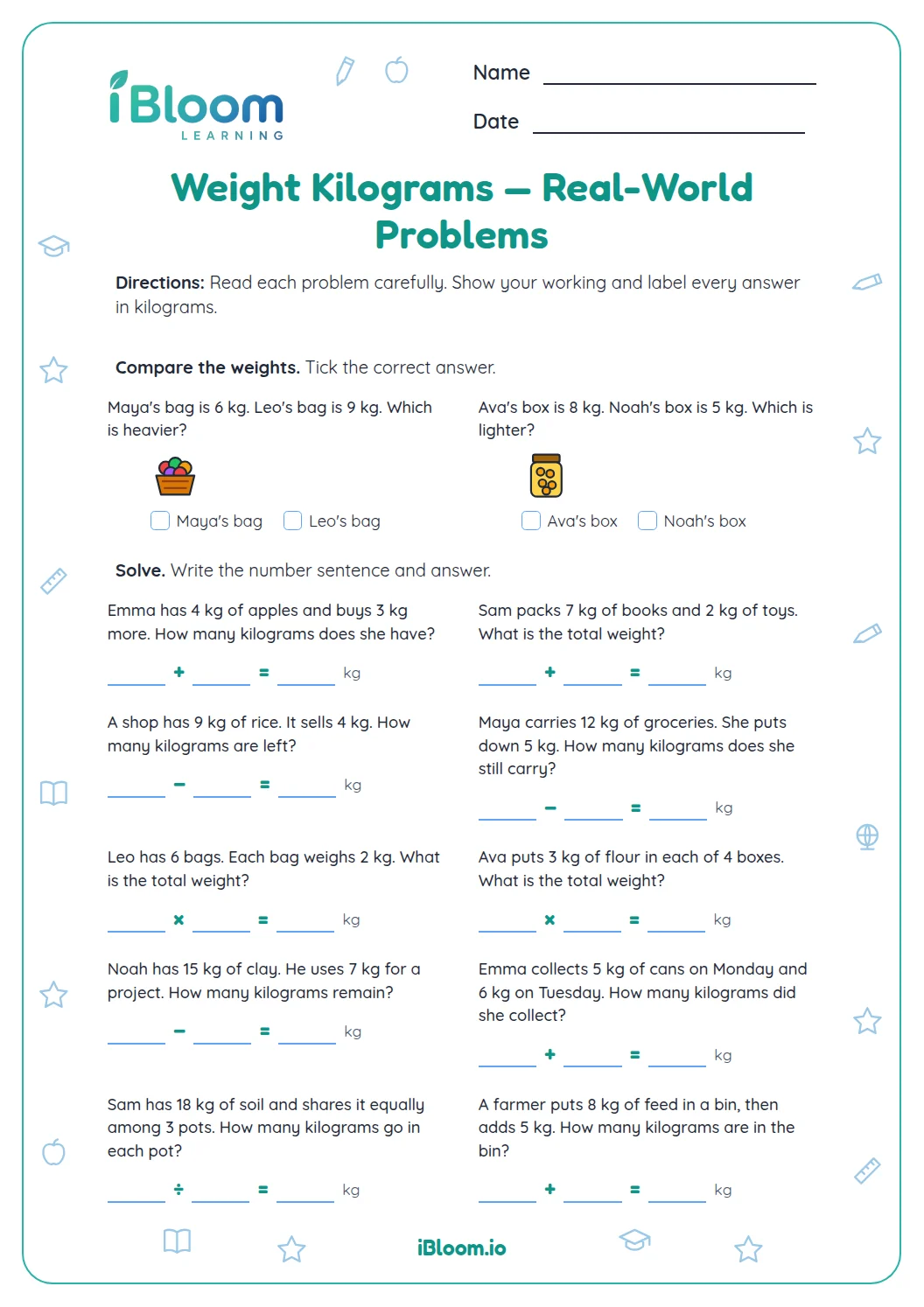
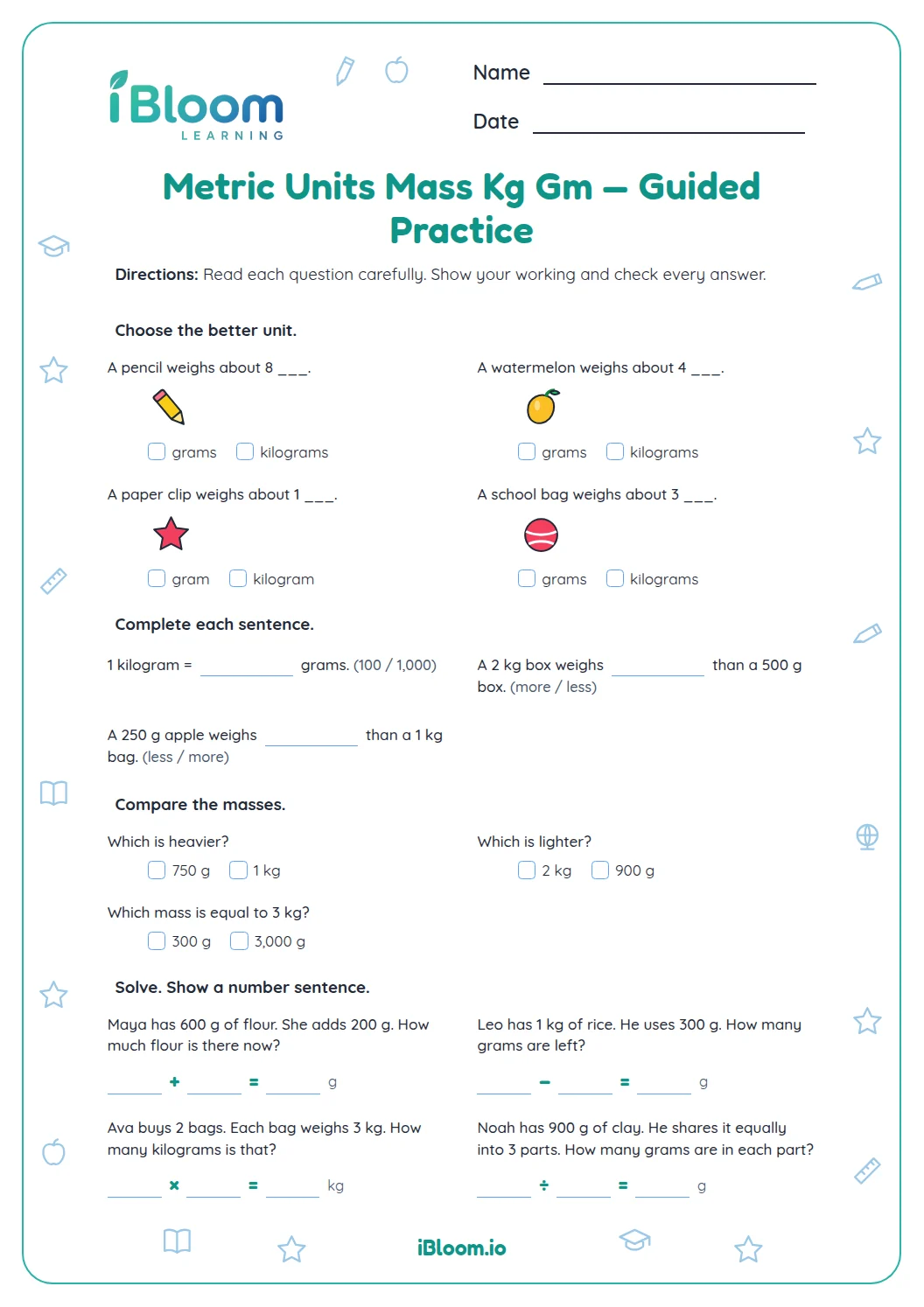
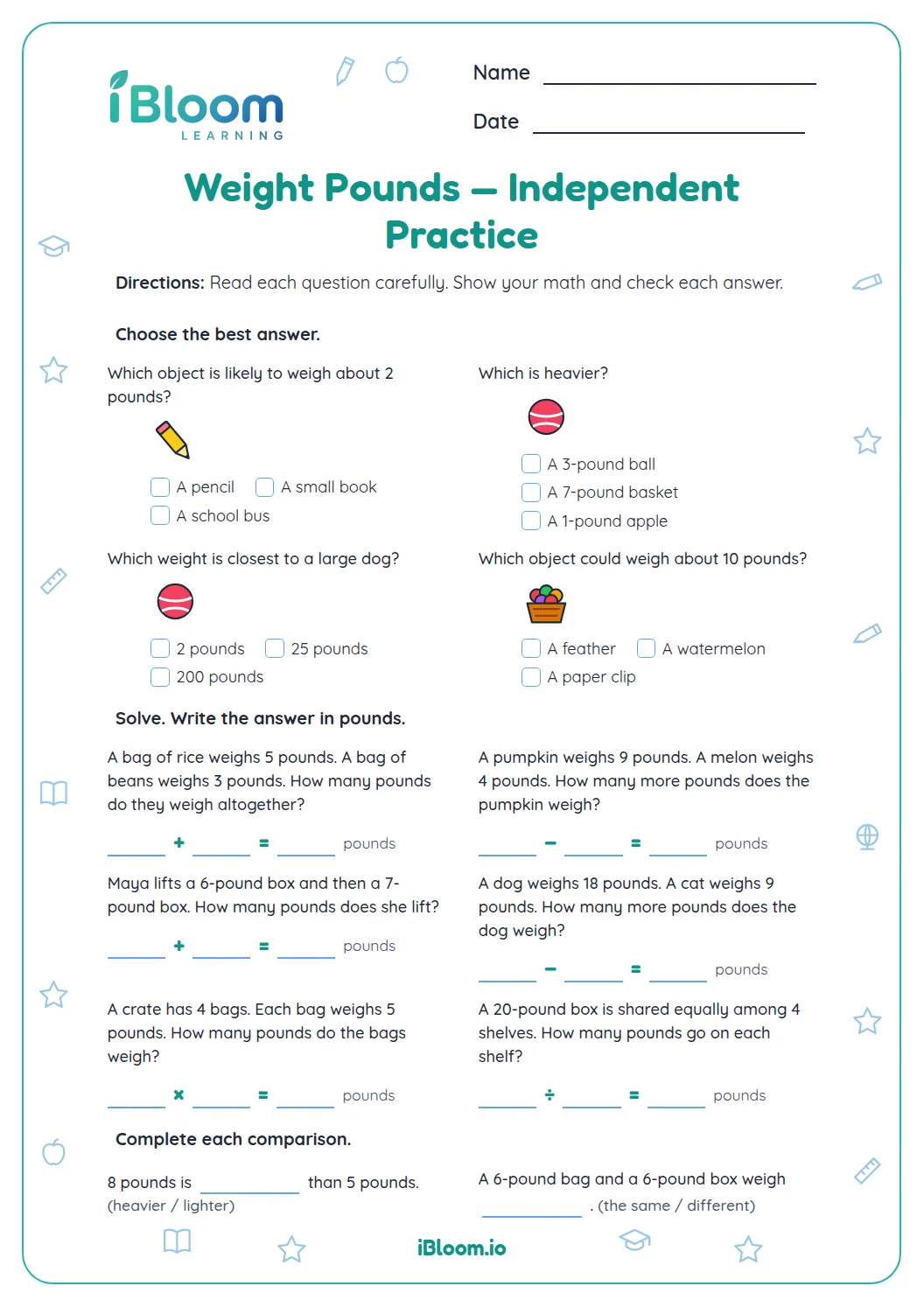
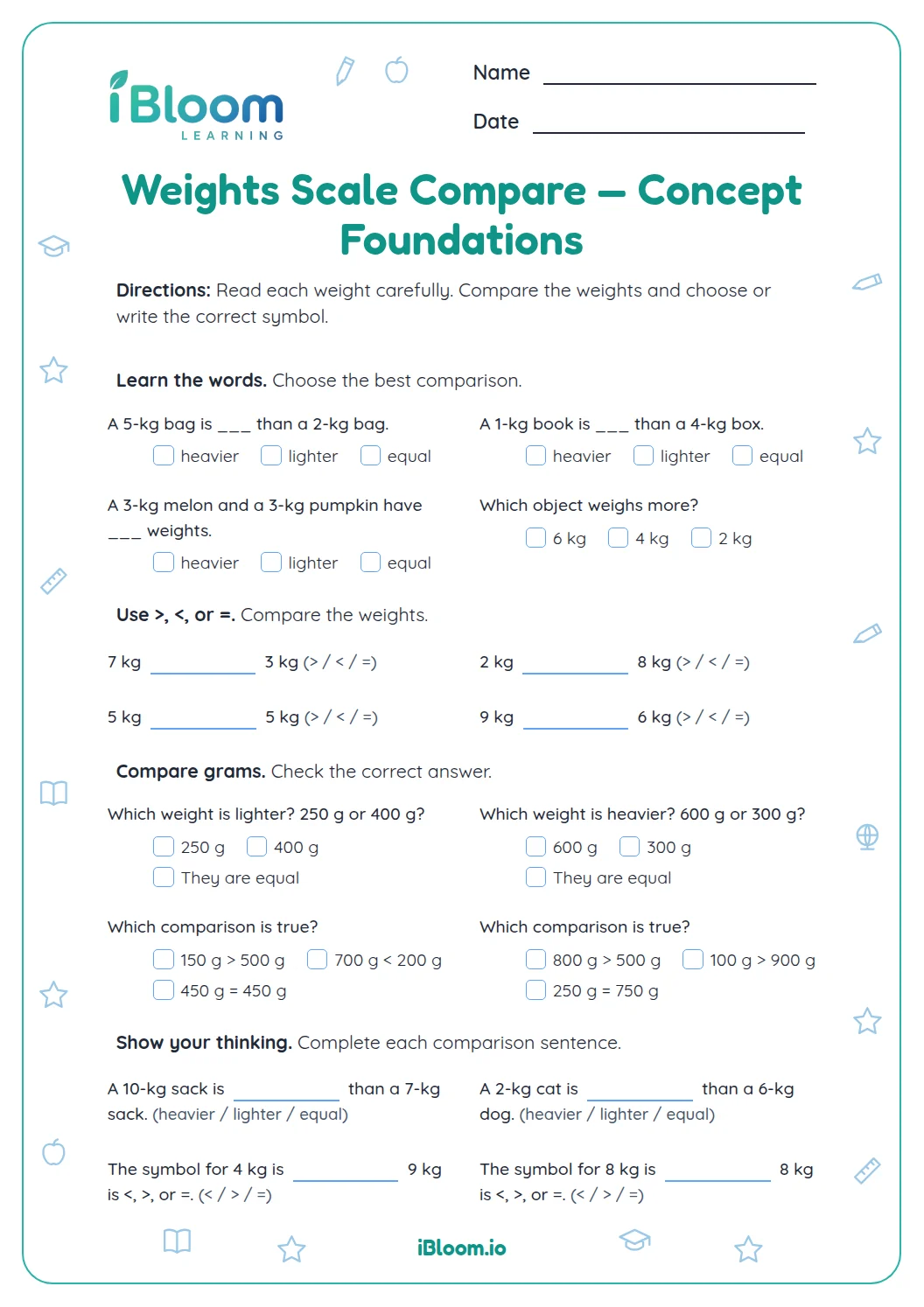
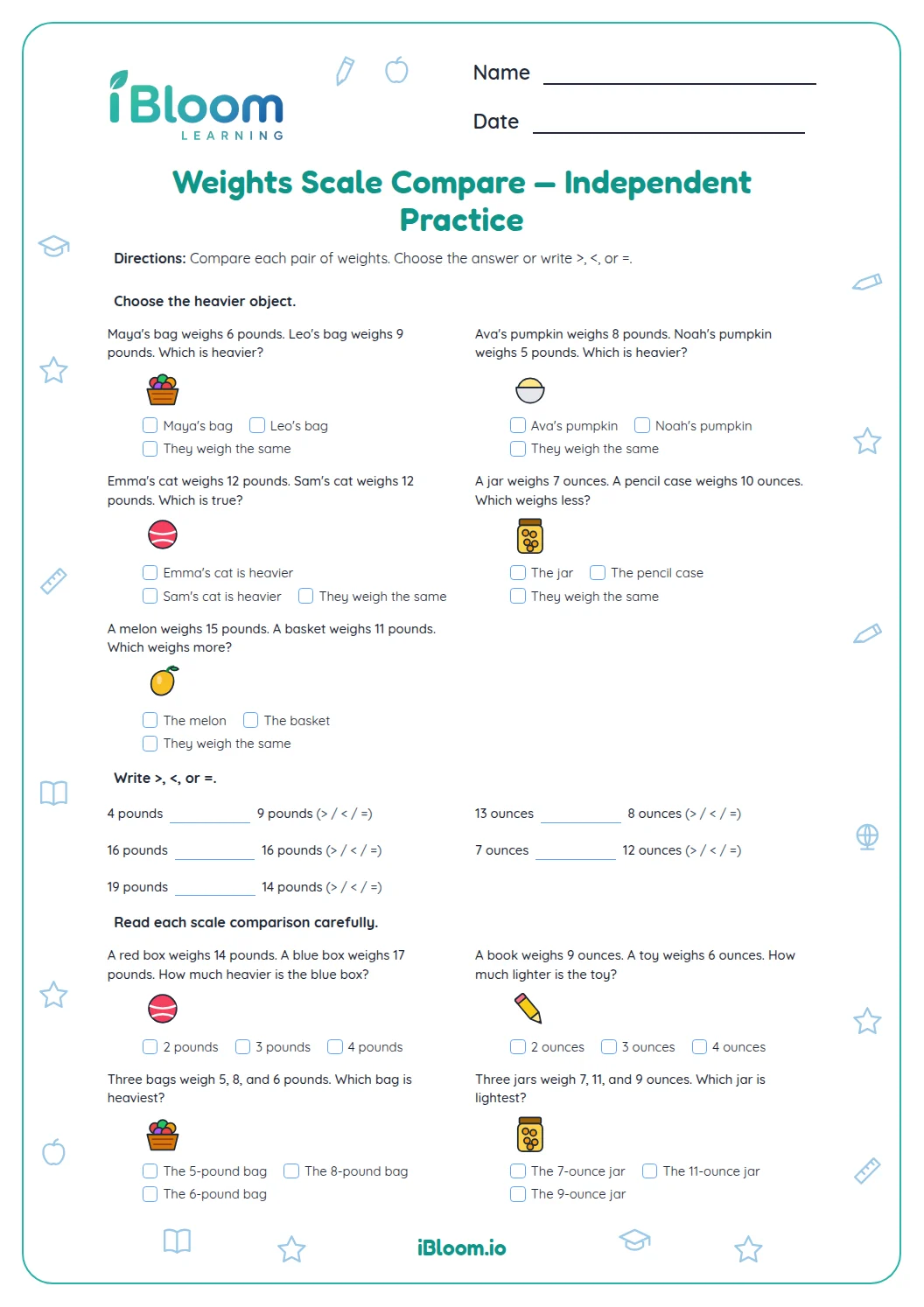
This free Grade 2 worksheet helps children reason about mass in kilograms. They choose familiar objects that are near, below, or far above a kilogram, compare and combine whole-kilogram amounts, complete missing-mass equations, and solve short stories. The answer key shows each benchmark choice and calculation so families can review the reasoning together.
How can a kilogram benchmark help?
A familiar reference helps children judge whether a mass is reasonable. Part A asks them to identify an object near 1 kg, one much lighter, and one much heavier. Water has a mass close to 1 kg per liter, while a paper clip is far lighter and a school bus is far heavier.
Part B compares and combines stated masses. If a pumpkin is 4 kg and a melon is 2 kg, the pumpkin has the greater mass.
- 1Pumpkin: 4 kg; melon: 2 kg
- 24 > 2, so the pumpkin is heavier.
How do you find a missing mass?
Use the same addition or subtraction relationship you would use with whole numbers, while keeping the unit attached. For 4 kg + ___ kg = 7 kg, subtract 4 from 7 to find 3 kg.
What do the kilogram stories ask students to figure out?
The final part includes totals, differences, equal shares, and a comparison. Underline the quantities, decide whether to add, subtract, or divide, and include kg in the answer.
How to use this worksheet
- 1Read the kilogram amount and unit in each choice.
- 2Compare the numbers to decide which mass is greater or lighter.
- 3For a missing addend, subtract the known mass from the total.
- 4For a missing part after subtraction, find the difference.
- 5Write an equation for each story and label the answer kg.
Common mistakes and quick fixes
The mistake
Choosing an object that is far too light to weigh about 1 kg.
The fix
Think of a kilogram as about the mass of a full large bag of rice.
The mistake
Adding when the story asks how much heavier.
The fix
A comparison asks for a difference, so subtract the smaller mass from the larger.
The mistake
Dropping kg from a final answer.
The fix
Write the unit after the number so the mass is clear.
What to practice next
Make more practice
Questions parents and teachers ask
What does kg stand for?
Kg is the abbreviation for kilogram, a metric unit used to describe mass. The worksheet uses whole kilograms and familiar objects so children can compare, add, and subtract masses without needing to convert between units. Children also see kg written after a number to show that the amount describes mass, as in 5 kg.
What is a reasonable object to weigh about 1 kilogram?
A liter of water has a mass close to 1 kg. The worksheet uses that as a familiar reference; a paper clip is much lighter, and a school bus is much heavier. Comparing those examples helps children judge whether a kilogram estimate makes sense.
How many questions are on the page?
There are 16 questions: three benchmark items, three comparisons or sums, six kilogram equations, and four short mass stories. Every response stays in kilograms. The answer key lists benchmark estimates and completed calculations so students can check both the unit and the operation.
How should a child solve 4 kg + ___ kg = 7 kg?
Subtract the known 4 kg from the 7 kg total. The blank is 3 kg because 4 kg + 3 kg makes 7 kg. Keeping the unit with each amount helps the answer remain meaningful and reminds students that the quantities describe mass.
What comes after kilogram practice?
Children can compare kilograms with grams, estimate metric lengths, or practice mass in pounds. The linked worksheets continue measurement reasoning with another unit or visual model. A conversion table can help organize the relationships before students solve more mixed-unit problems.