





About this worksheet
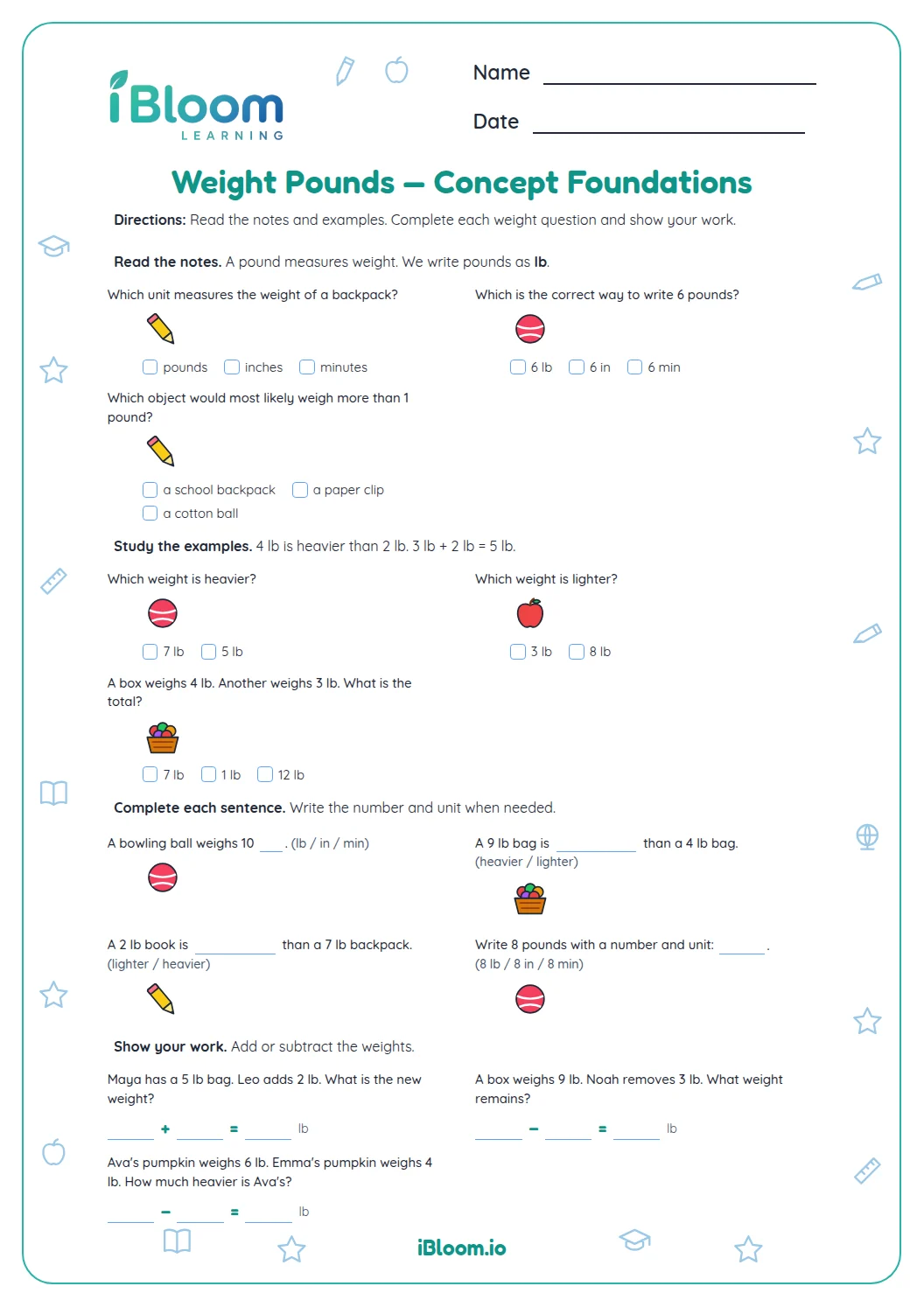
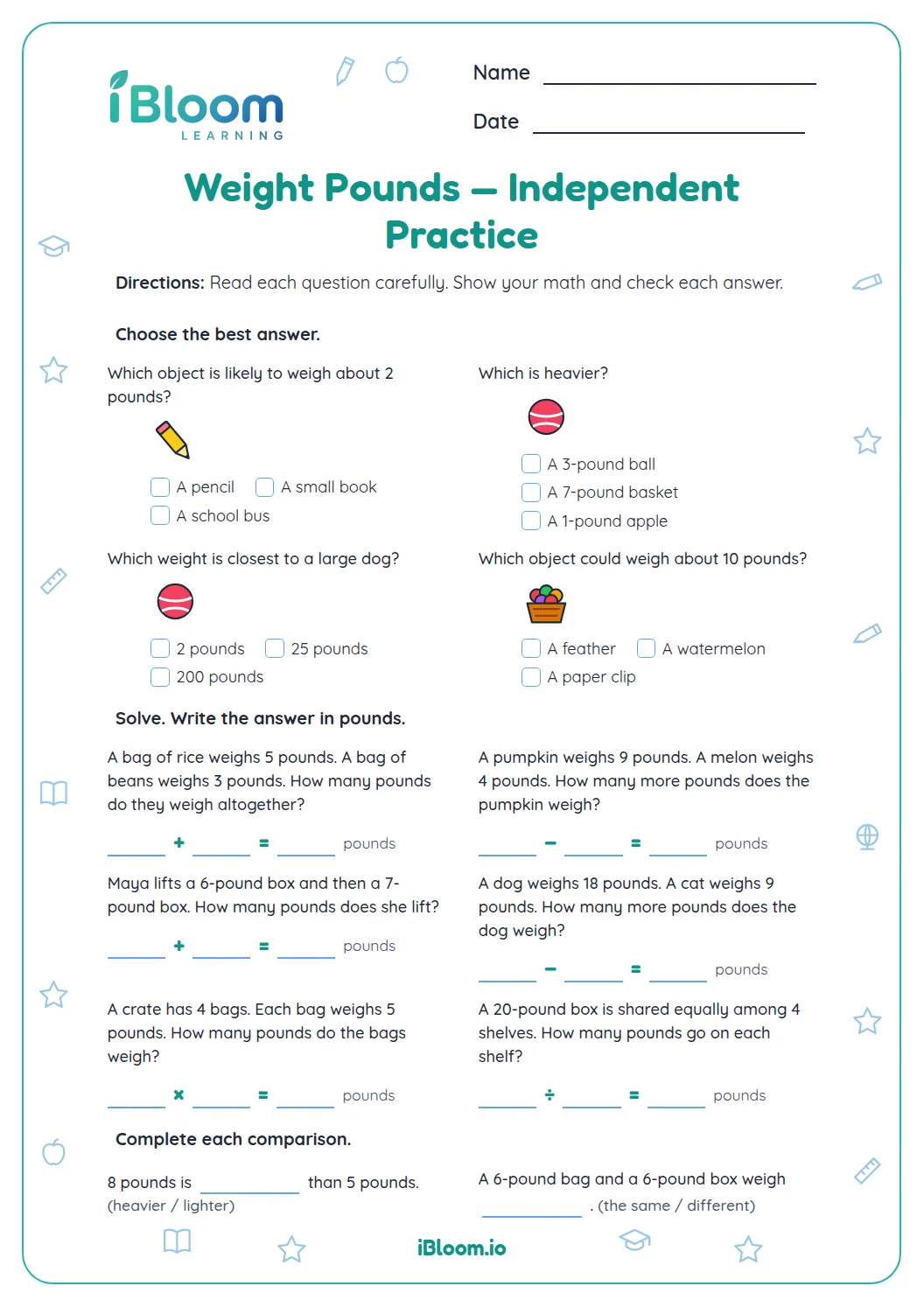
This Grade 2 measurement worksheet uses pound amounts in visual tallies and short word problems. Children count each tally as one pound, add and subtract weights, and compare which object is heavier. The practice keeps the unit visible in each context and builds on Grade 2 computation within 100 in CCSS 2.NBT.B.5. There are 16 questions across tally reading, calculation, and comparison, followed by a separate answer key.
Aligned to 2.NBT.B.5
How does a tally model show pounds?
Each tally stands for one pound. A group of five tallies means five pounds, so count the groups and any extra marks.
How can a weight total be found?
Add the two pound amounts and keep the unit. For example, 6 pounds + 2 pounds = 8 pounds.
How can two weights be compared?
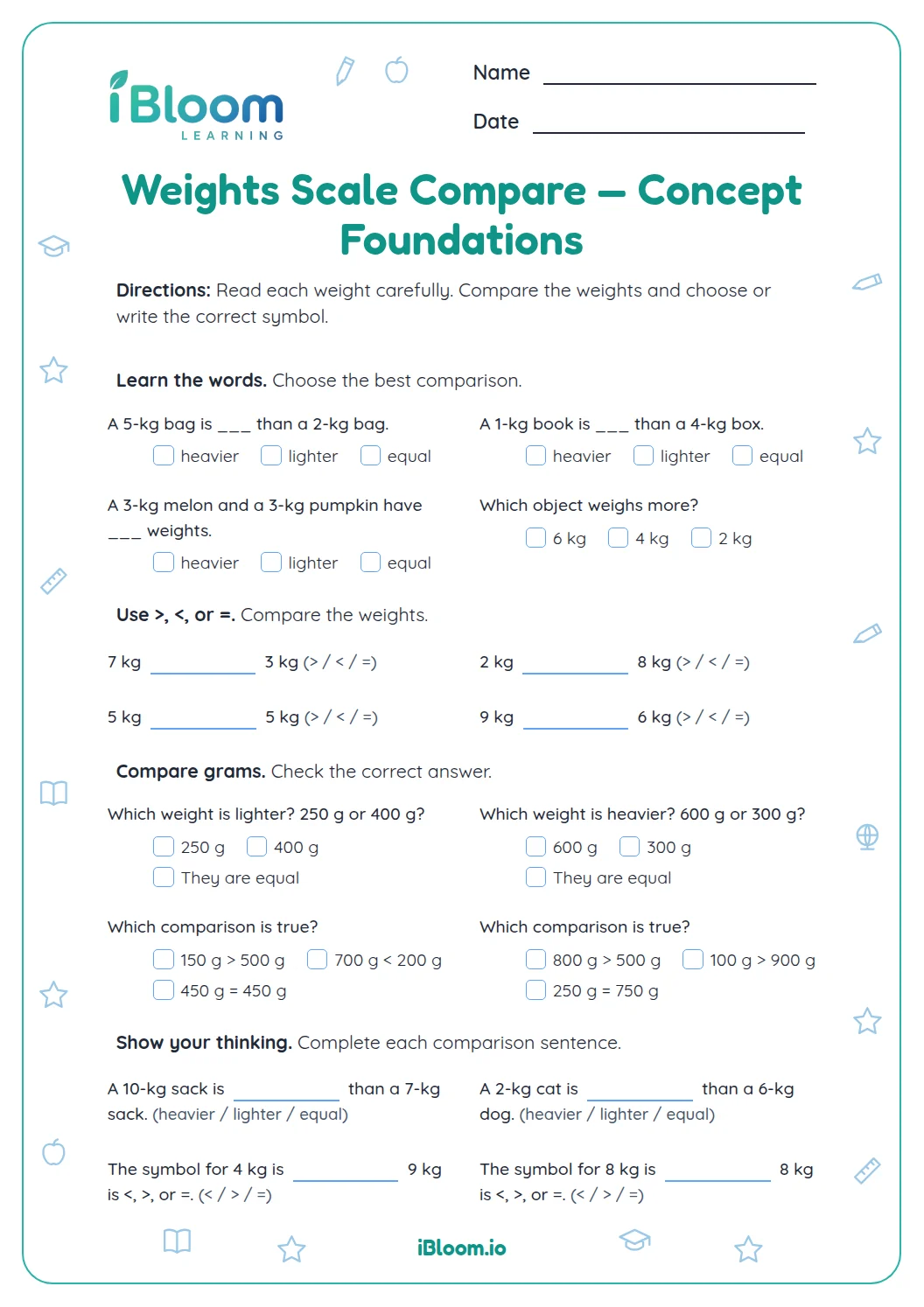
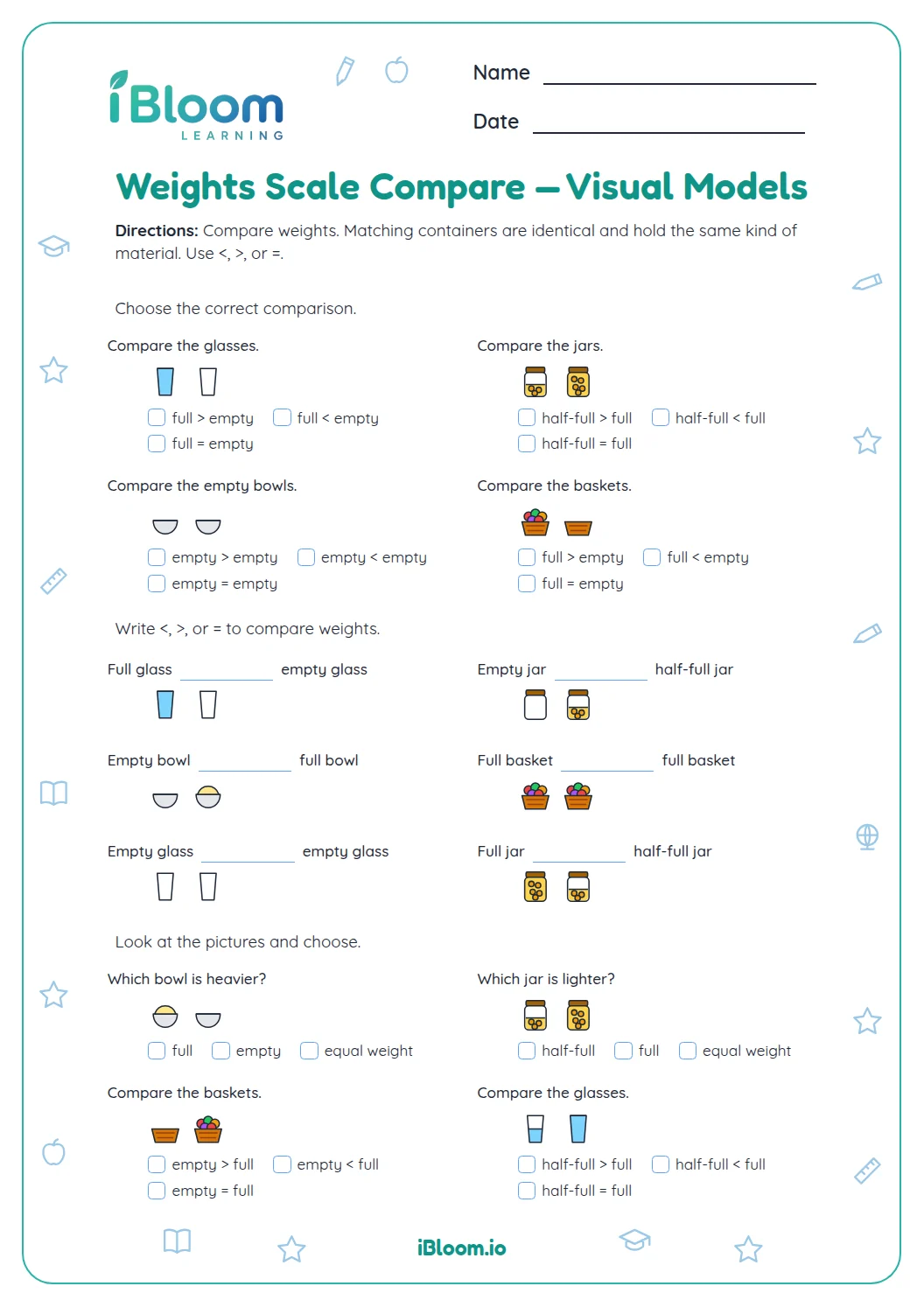
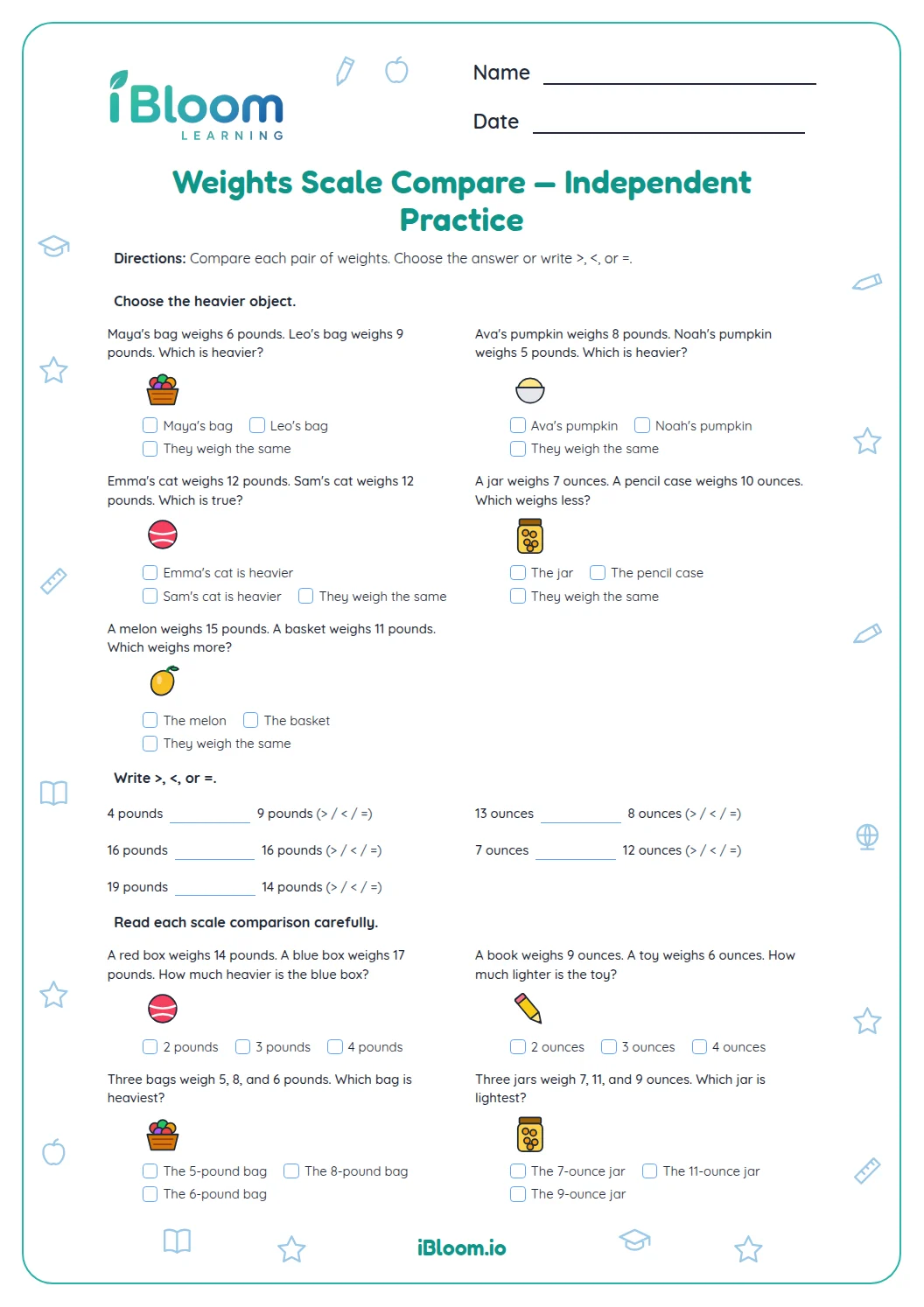
Compare the numbers of pounds. A 9-pound bag is heavier than a 6-pound bag because 9 is greater than 6.
How to use this worksheet
- 1Count each tally mark as one pound.
- 2Write the amount with its unit in Part A.
- 3For addition, combine the pound amounts.
- 4For subtraction, find how many pounds remain or the difference.
- 5Compare the amounts in Part C.
- 6Check that each answer still names pounds.
Common mistakes and quick fixes
The mistake
Counting a crossed tally bundle as four marks.
The fix
A complete bundle has five tally marks.
The mistake
Adding when a question asks how much less.
The fix
Look for less or difference; subtract the smaller amount.
The mistake
Dropping the unit from the answer.
The fix
Write pounds after every weight amount.
Common Core alignment
The worksheet pairs measurement contexts with Grade 2 addition and subtraction strategies.
Fluently add and subtract within 100 using place-value strategies.
On this sheet: Students add and subtract pound amounts within 100 in equations and word problems.
Show the official wordingHide the official wording
Fluently add and subtract within 100 using strategies based on place value, properties of operations, and/or the relationship between addition and subtraction.
What to practice next
Make more practice
Questions parents and teachers ask
What does each tally mark mean?
Each tally mark stands for one pound on this worksheet. Count every mark, including marks grouped in fives, to find the weight. Then write the number with pounds so the amount and unit stay connected. The tally picture makes the count visible.
What math is practiced with pounds?
The questions use pound amounts for counting, addition, subtraction, and comparison. Students find totals and differences, then choose which weight is greater. The number sentences keep the calculations within Grade 2 addition and subtraction practice. Keep the measurement unit beside the number.
How can I solve a weight comparison?
Compare the numbers of pounds. A bag weighing 9 pounds is heavier than one weighing 6 pounds because 9 is greater than 6. For a difference question, subtract the smaller amount from the larger amount. This same comparison works with each pair.
Is there an answer key?
Yes. A separate key lists the pound amounts and the correct calculation and comparison answers. Ask the child to include the word pounds when reading a numerical answer so the measurement unit remains clear. The key can guide a quick review of missed items.
Why are tally marks used for weight?
Each tally represents one pound in these practice models, so counting the marks gives a weight amount to use in the next problems. The worksheet then applies addition, subtraction, and comparison to pound values. Read the unit with the number when explaining an answer.