




About this worksheet
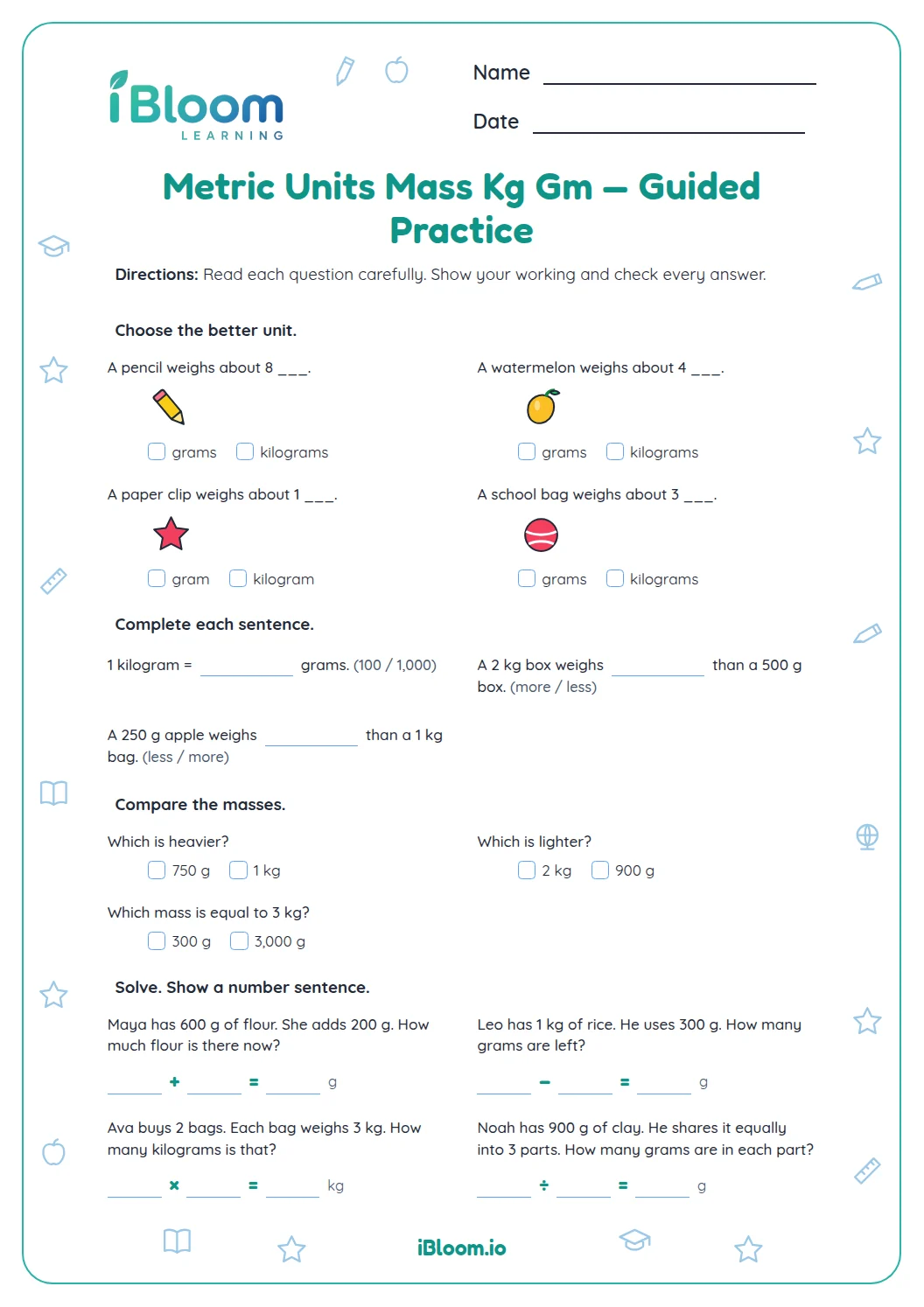
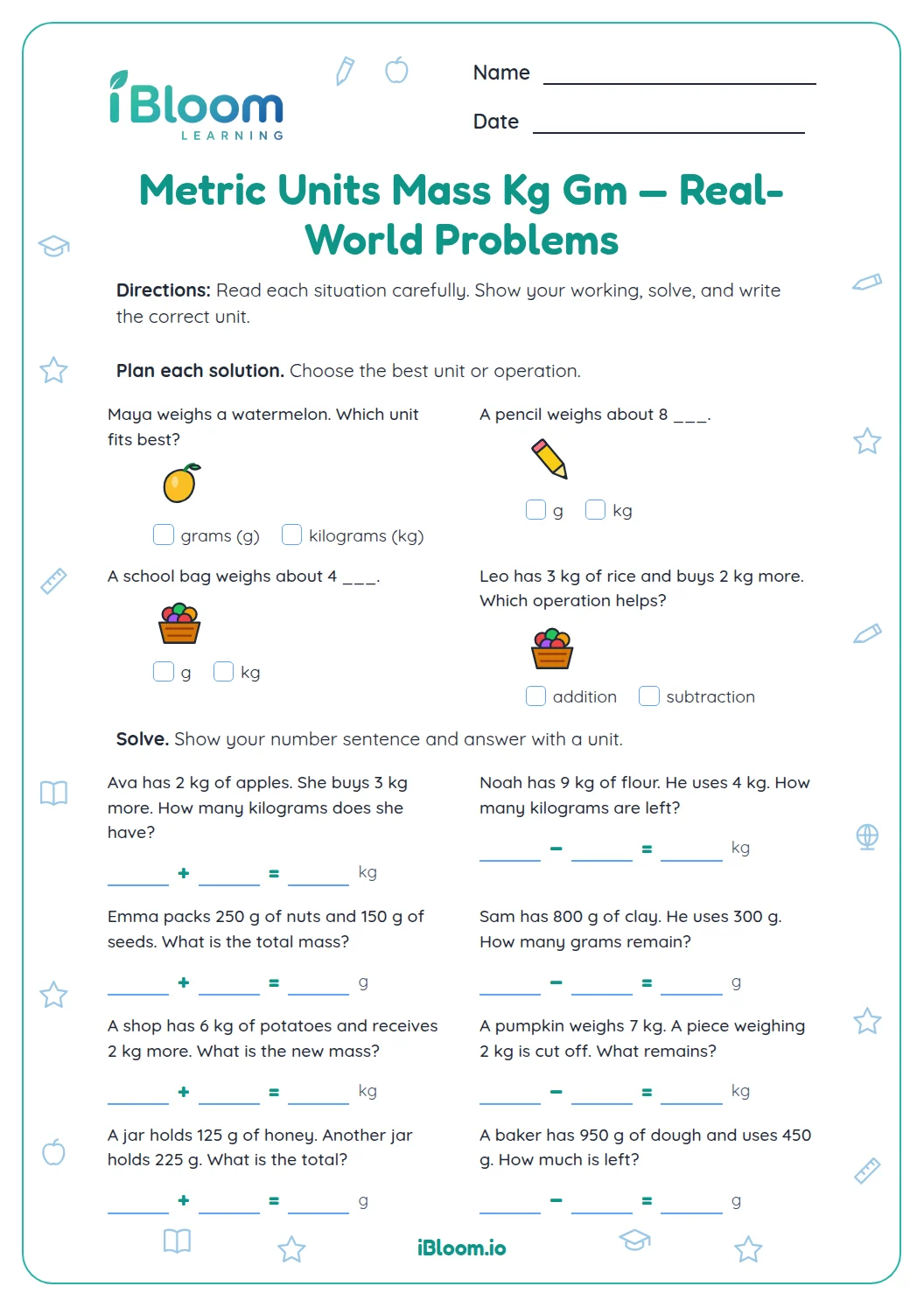
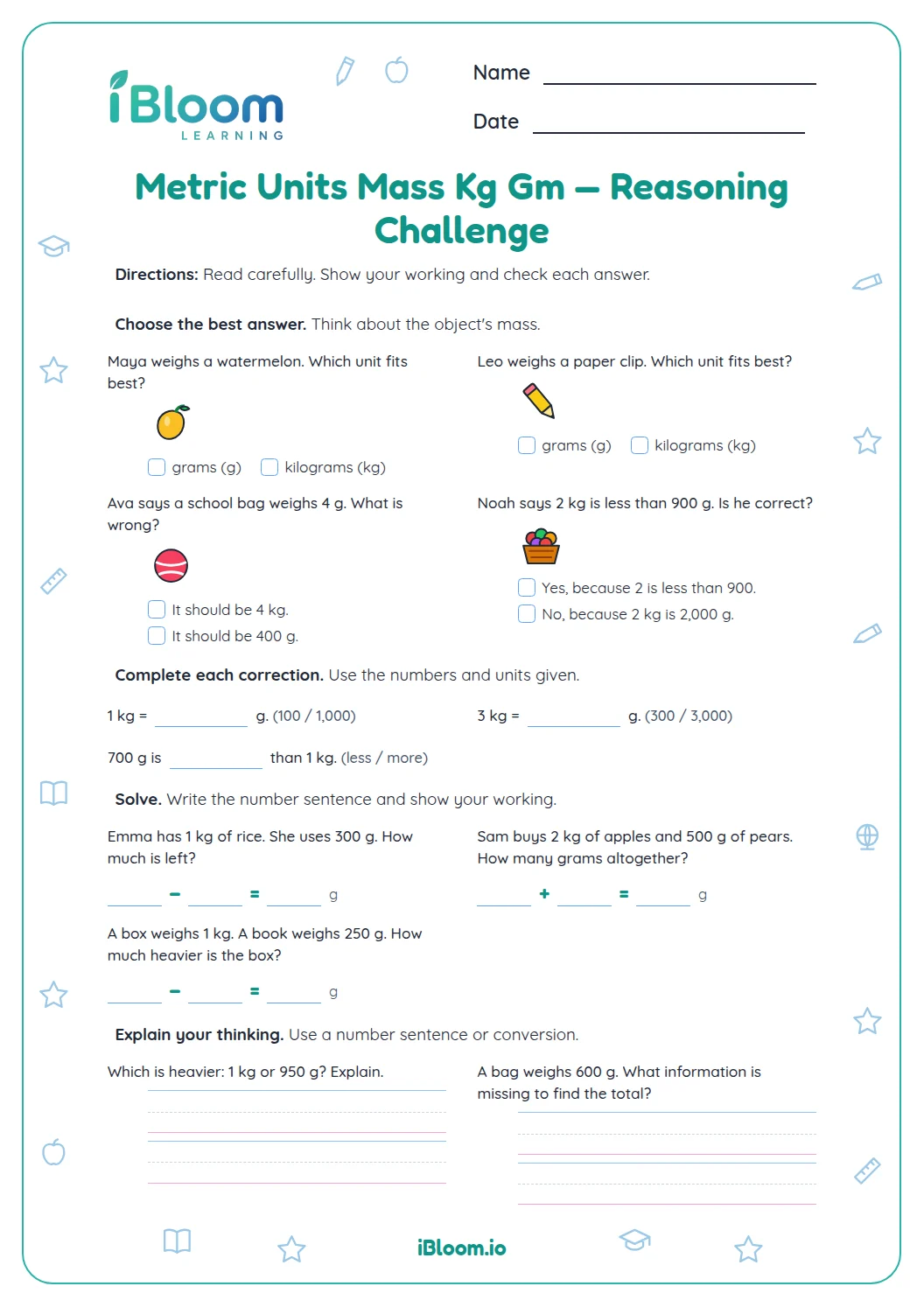
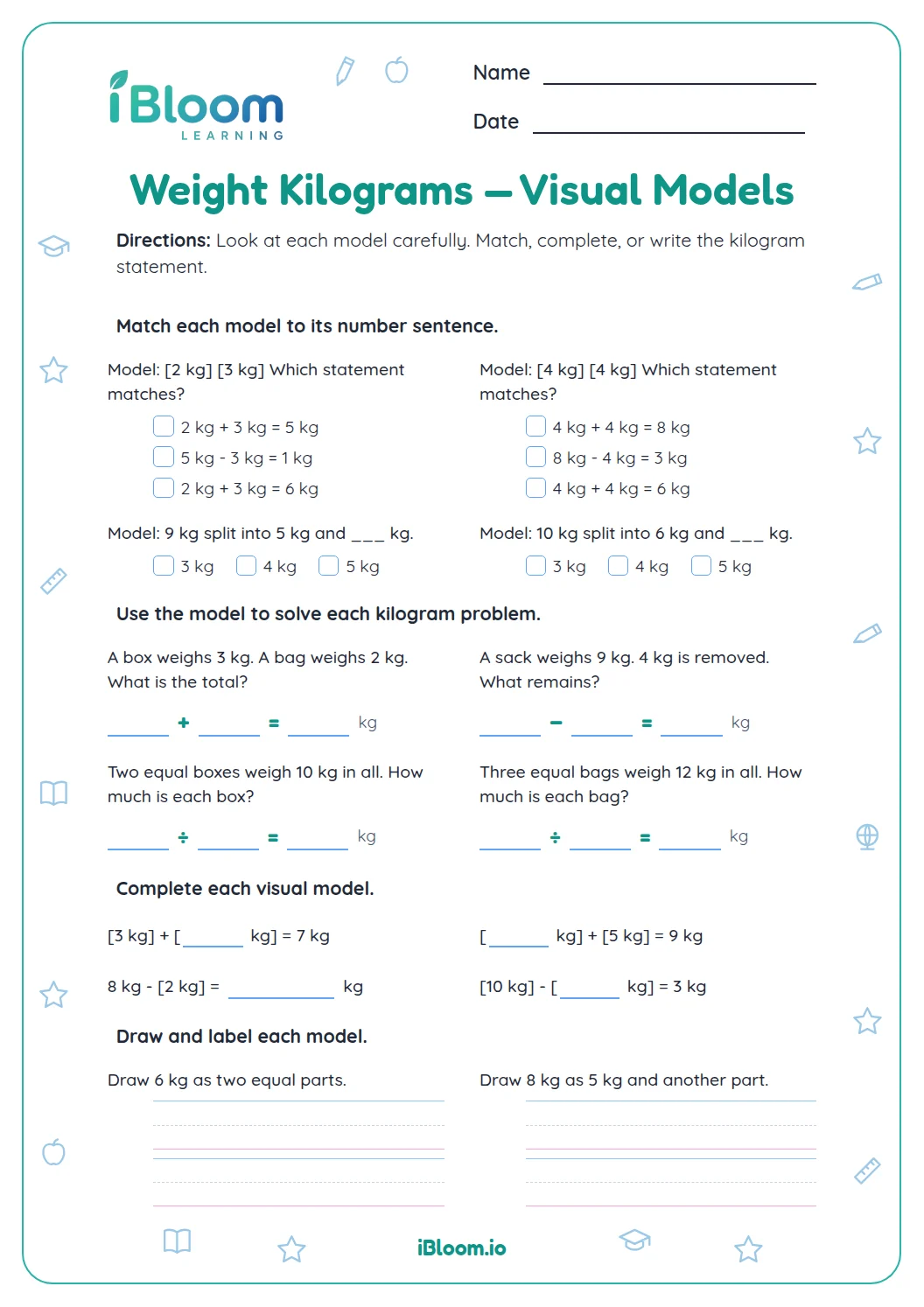
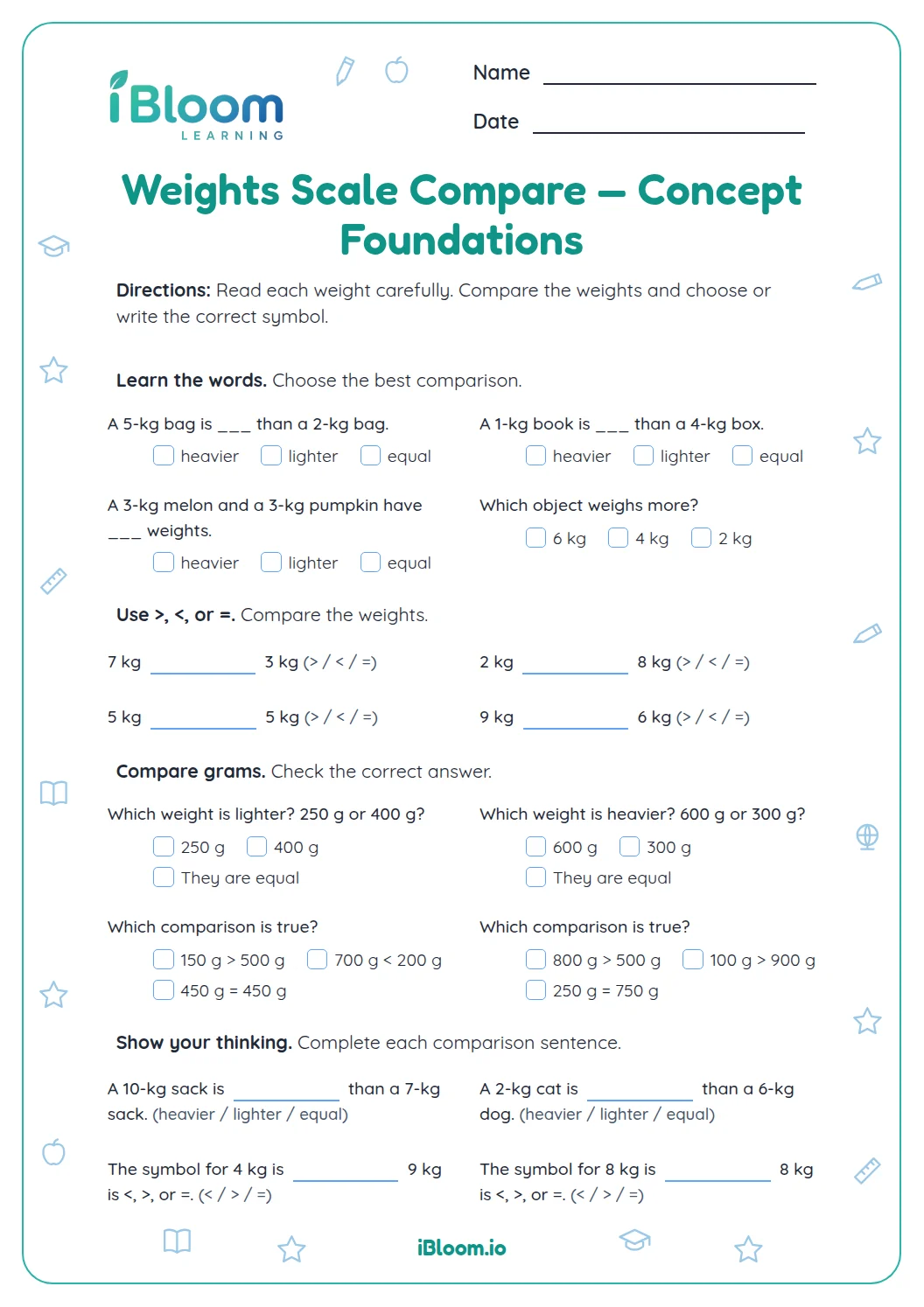
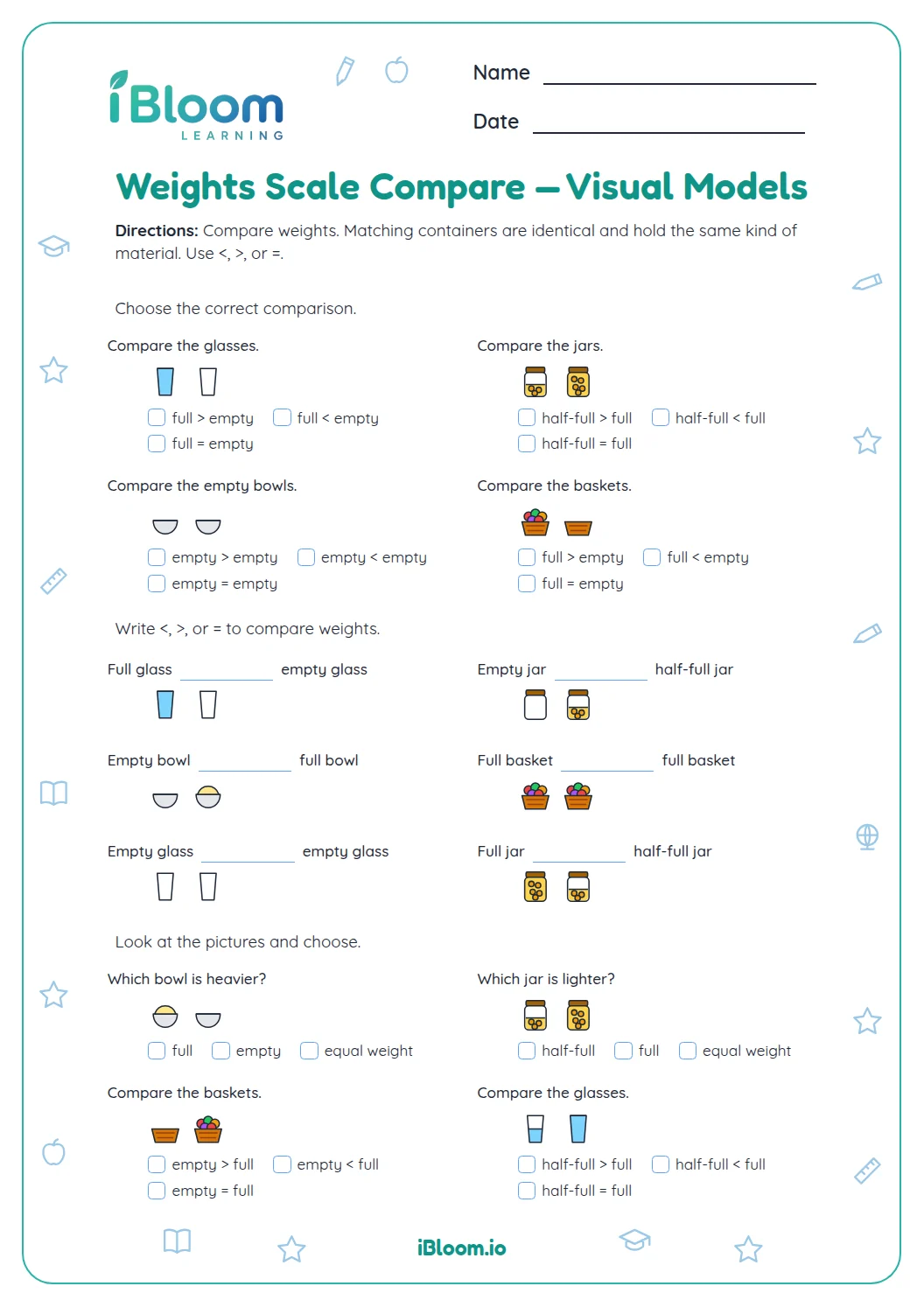
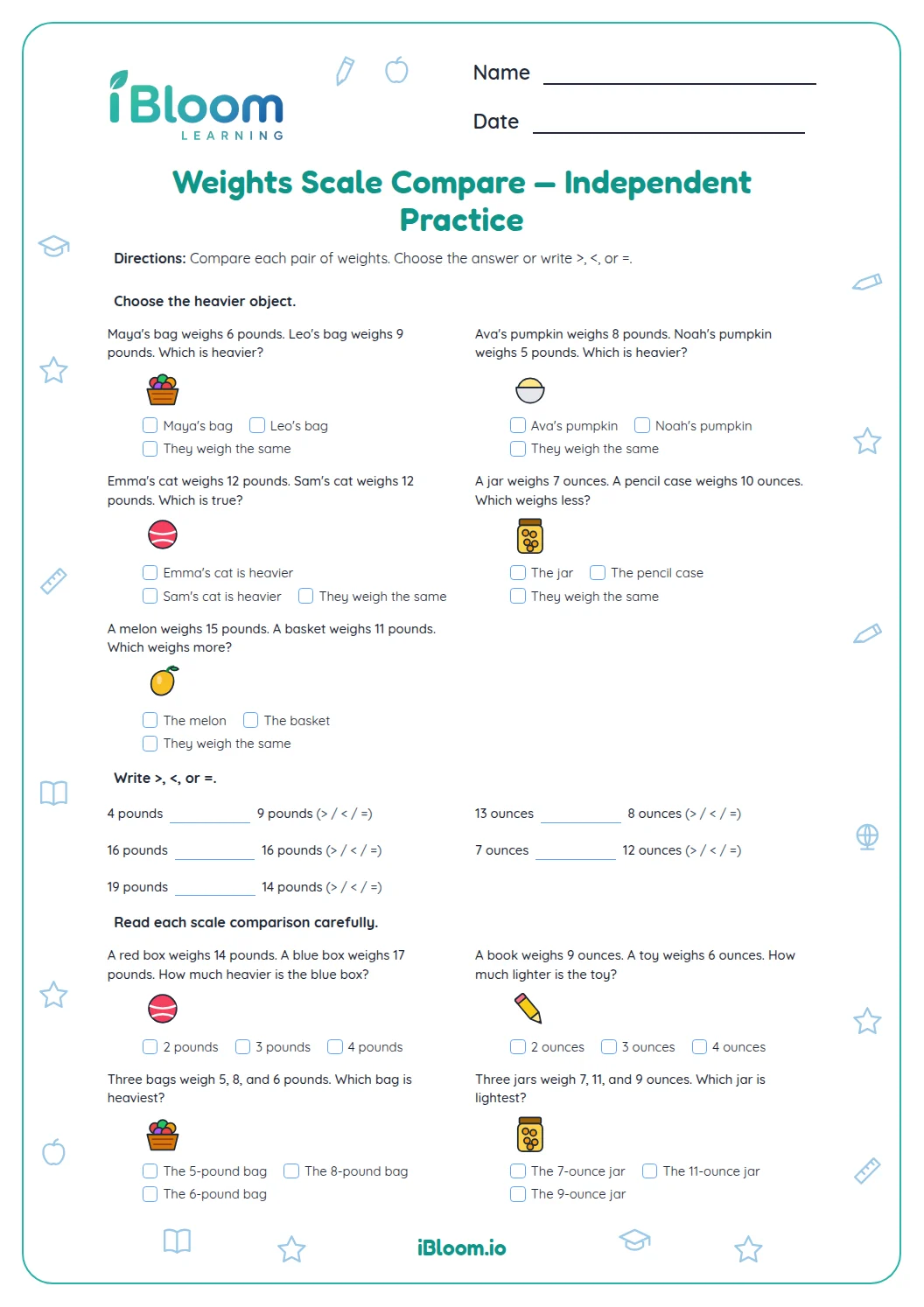
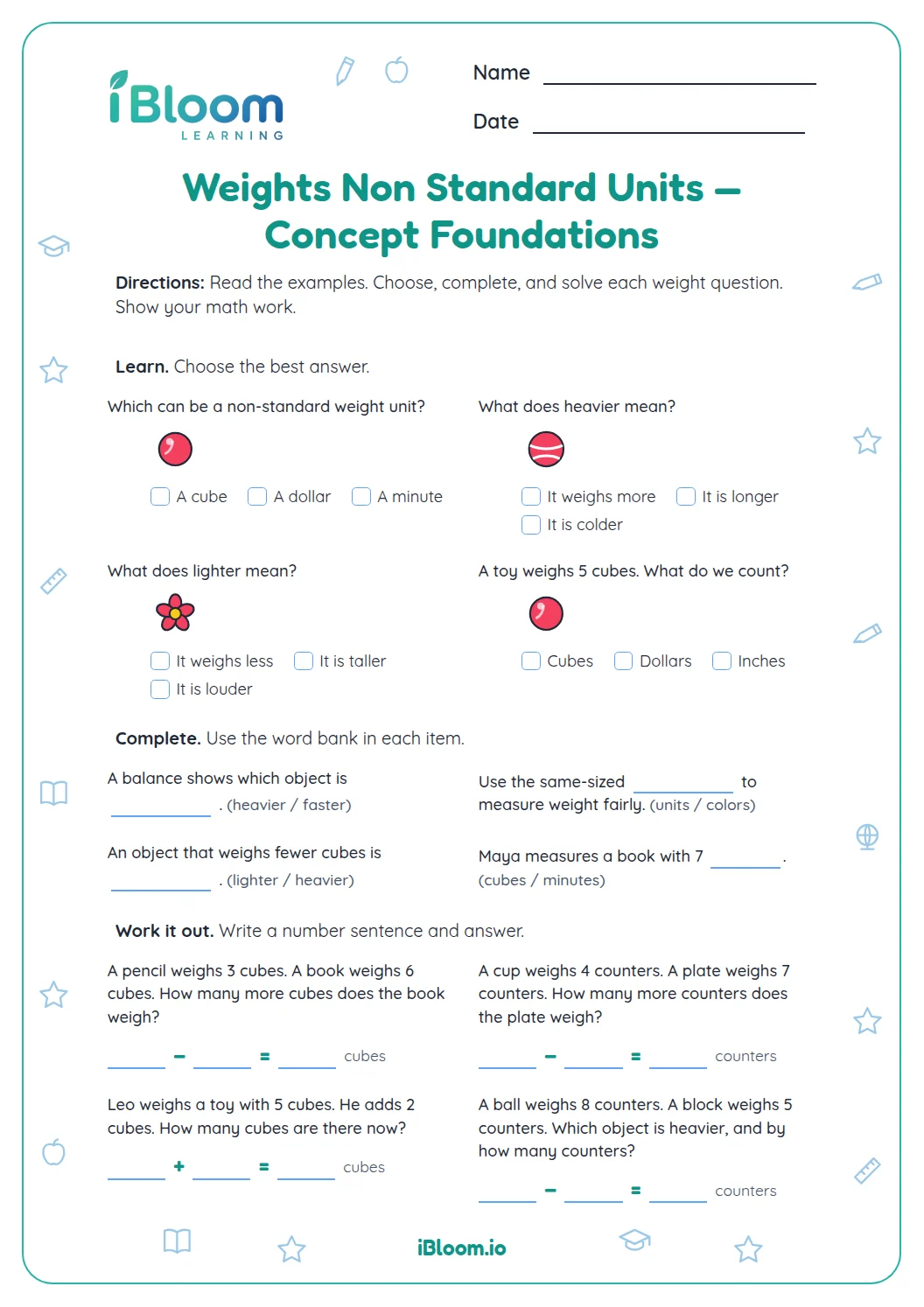
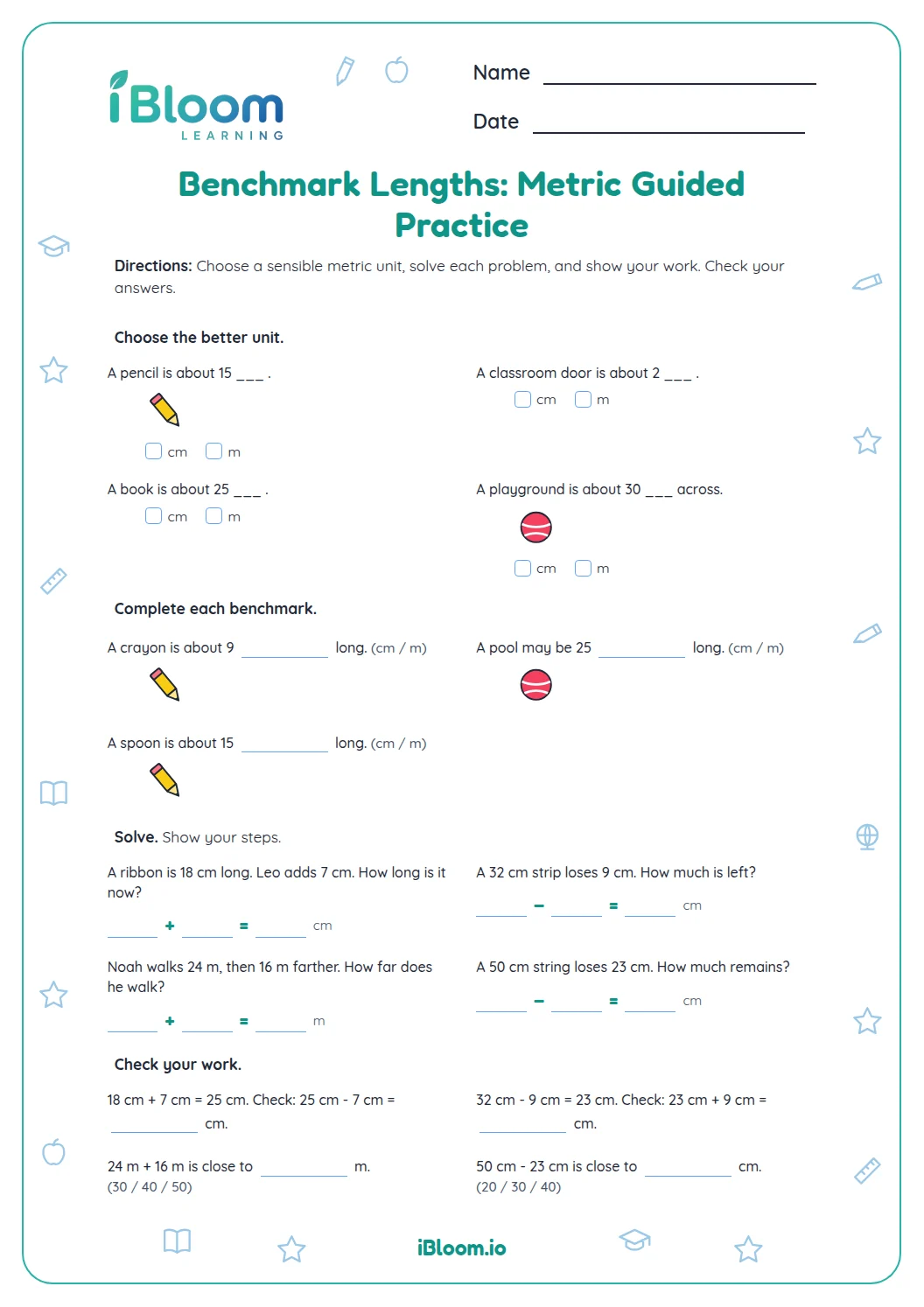
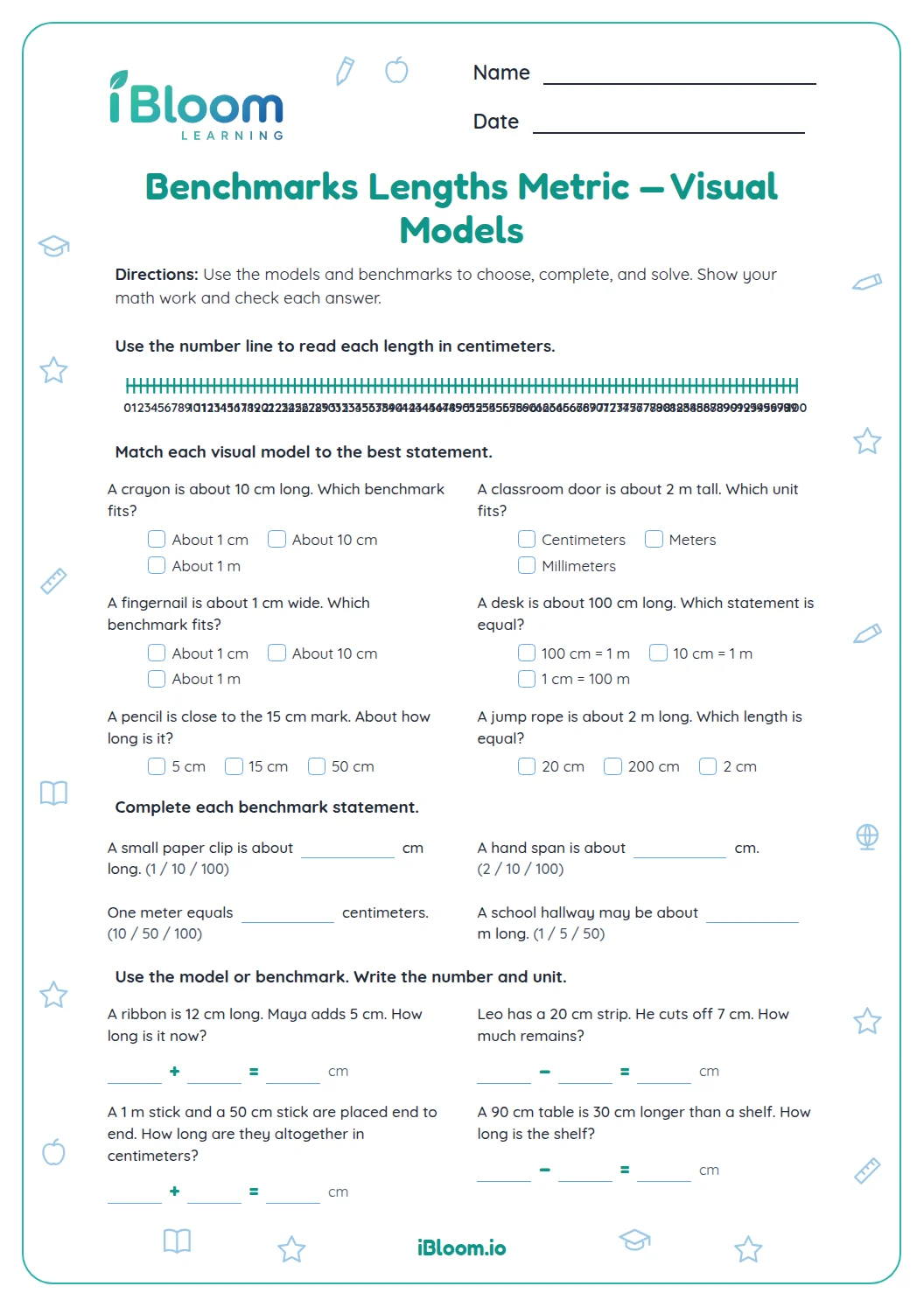
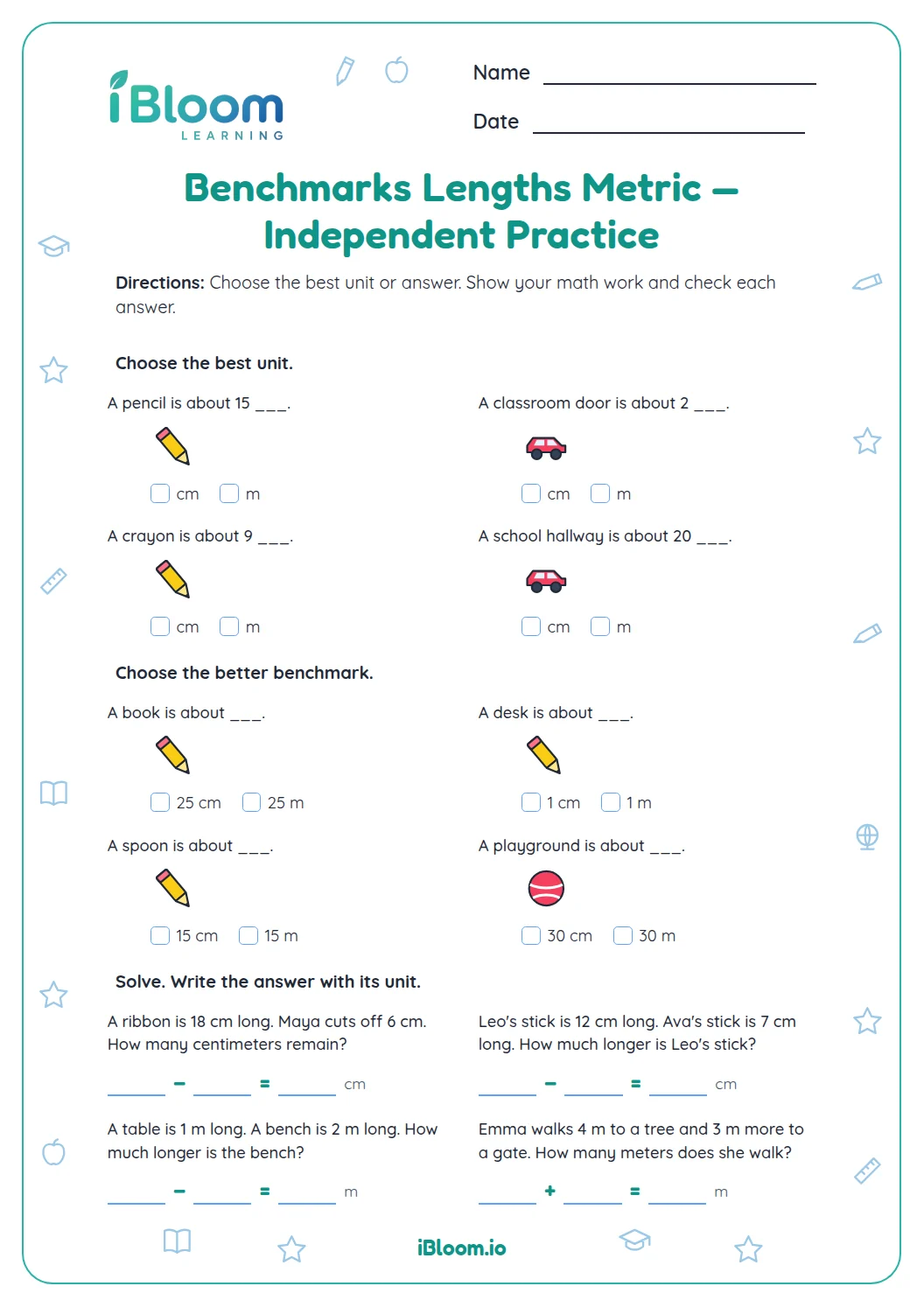
This free Grade 2 printable introduces metric mass through familiar objects. Part A asks learners to choose grams or kilograms for everyday objects. Part B compares two masses already expressed in the same unit. Part C asks students to explain sensible unit choices and compare object masses. A separate answer key is included.
Which unit makes sense for an object?
Part A uses familiar objects to build a practical sense of scale. Children choose grams for very small masses and kilograms for heavier objects.
- Small items such as a berry or paper clip use grams
- Heavier objects such as a backpack or dog use kilograms
How can you compare like units?
Part B keeps both amounts in the same unit, so students can compare the numbers directly. Part C asks for a short reason or an everyday application.
- Check that both values use the same unit
- For an explanation, connect the size of the object to the unit
How to use this worksheet
- 1Read the object before choosing a unit.
- 2Ask whether the object is very small or noticeably heavy.
- 3In comparisons, check the unit labels before comparing the numbers.
- 4Use a complete sentence for the explanation questions.
- 5Check the answer key and discuss any unit choices that felt surprising.
Common mistakes and quick fixes
The mistake
Choosing kilograms for a tiny berry because kilograms sound more familiar.
The fix
Think about the object’s small size; a small mass is more sensibly described in grams.
The mistake
Comparing just the numerals while overlooking the units.
The fix
Read both unit labels first. The comparison questions use matching units.
The mistake
Writing a unit choice without a reason on an explain item.
The fix
Name the object’s relative size and connect it to grams or kilograms.
What to practice next
Make more practice
Questions parents and teachers ask
What does mass mean on this page?
Mass describes how much matter an object has. These questions use familiar objects to connect grams and kilograms with different-sized masses, then ask learners to compare amounts that use the same unit. The examples build intuition about when each unit makes sense.
Which objects use grams in Part A?
The small objects include a strawberry, paper clip, grape, and pencil. Grams are a sensible unit for these light objects. Learners choose between grams, kilograms, and another unit in each multiple-choice item, then check their choices with the answer key.
Why do some objects use kilograms?
A full backpack, grown dog, bag of potatoes, and small kitten are heavier than a paper clip or grape. Kilograms are a sensible way to describe those larger masses in the worksheet’s everyday examples. The choices ask learners to use each object as a benchmark.
Do the comparison questions mix grams and kilograms?
No. Each comparison gives two masses in the same unit, so the learner can compare the numbers directly. Reading the unit labels first helps prevent comparing unlike quantities. For example, compare 450 g with 540 g by looking at the two gram amounts.
How should a child answer the explanation items?
A brief complete sentence is enough. For example, a child can explain that grams suit a blueberry because it has a small mass, or that kilograms suit a backpack because it is heavier than a tiny object. The key includes sample responses.
What can we practice after this page?
The related kilogram and scale-comparison worksheets extend the same mass topic with more benchmarks and visual comparisons. At home, invite the learner to name one small object suited to grams and one heavier object suited to kilograms, then explain each choice aloud.