




About this worksheet
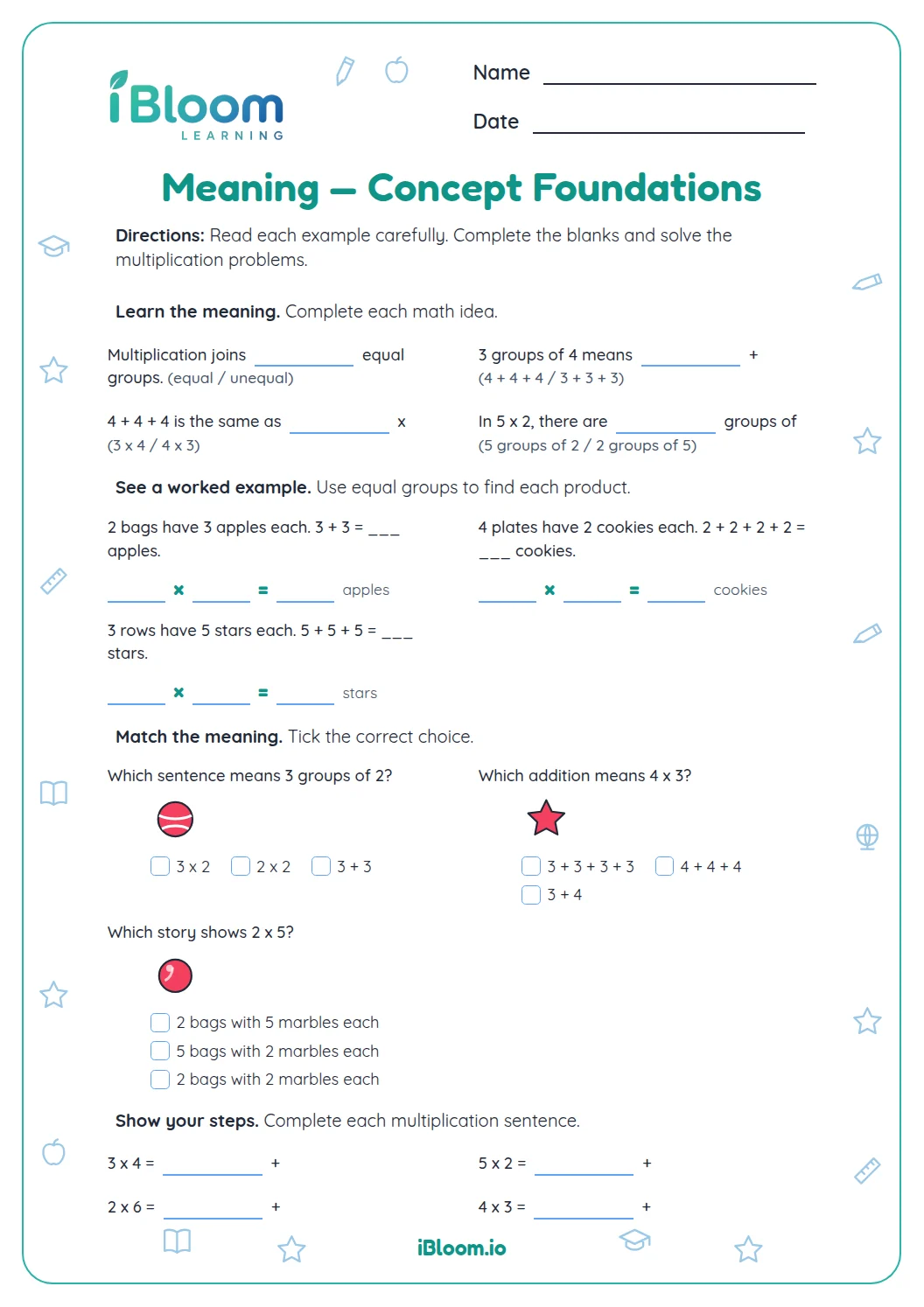
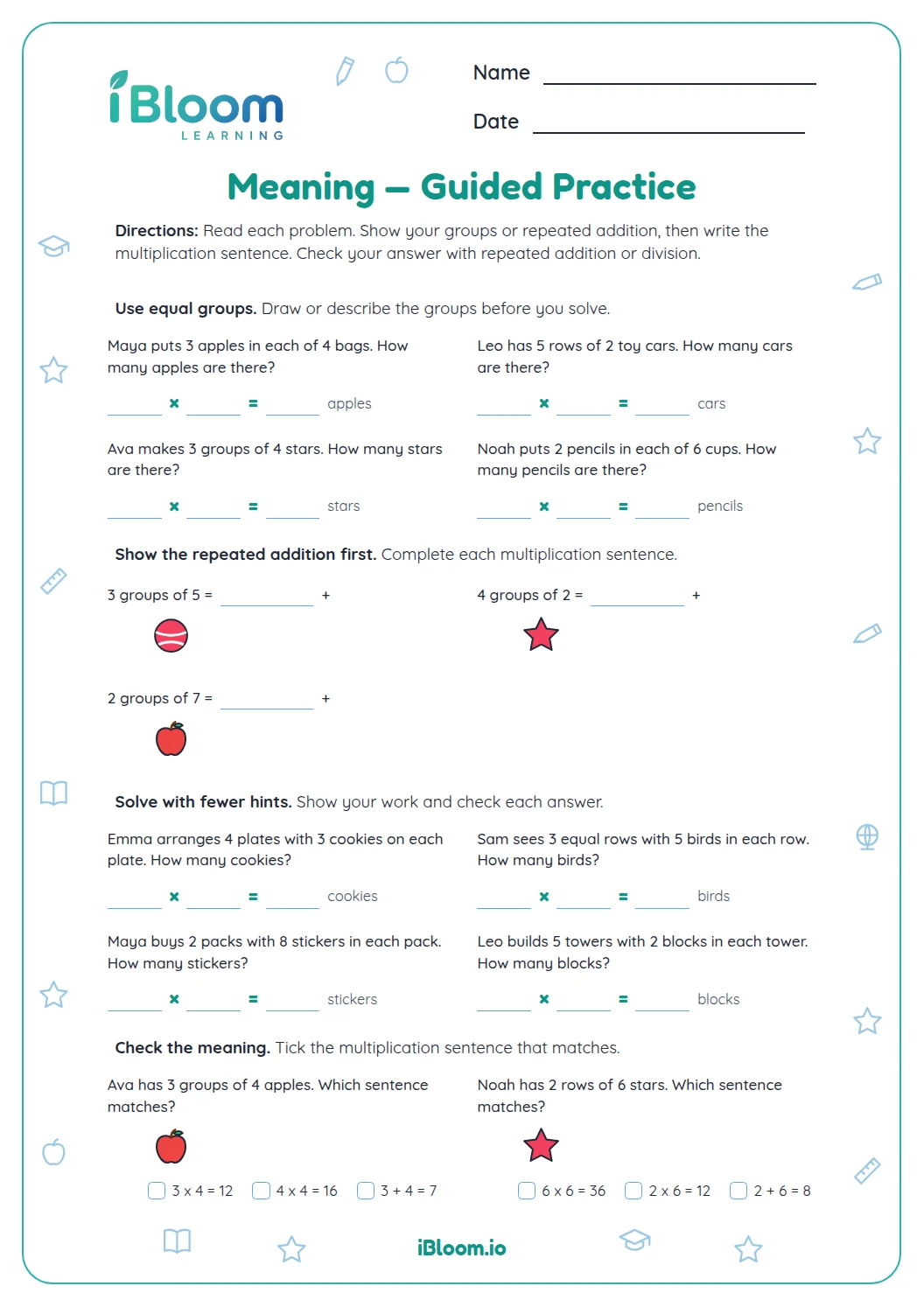
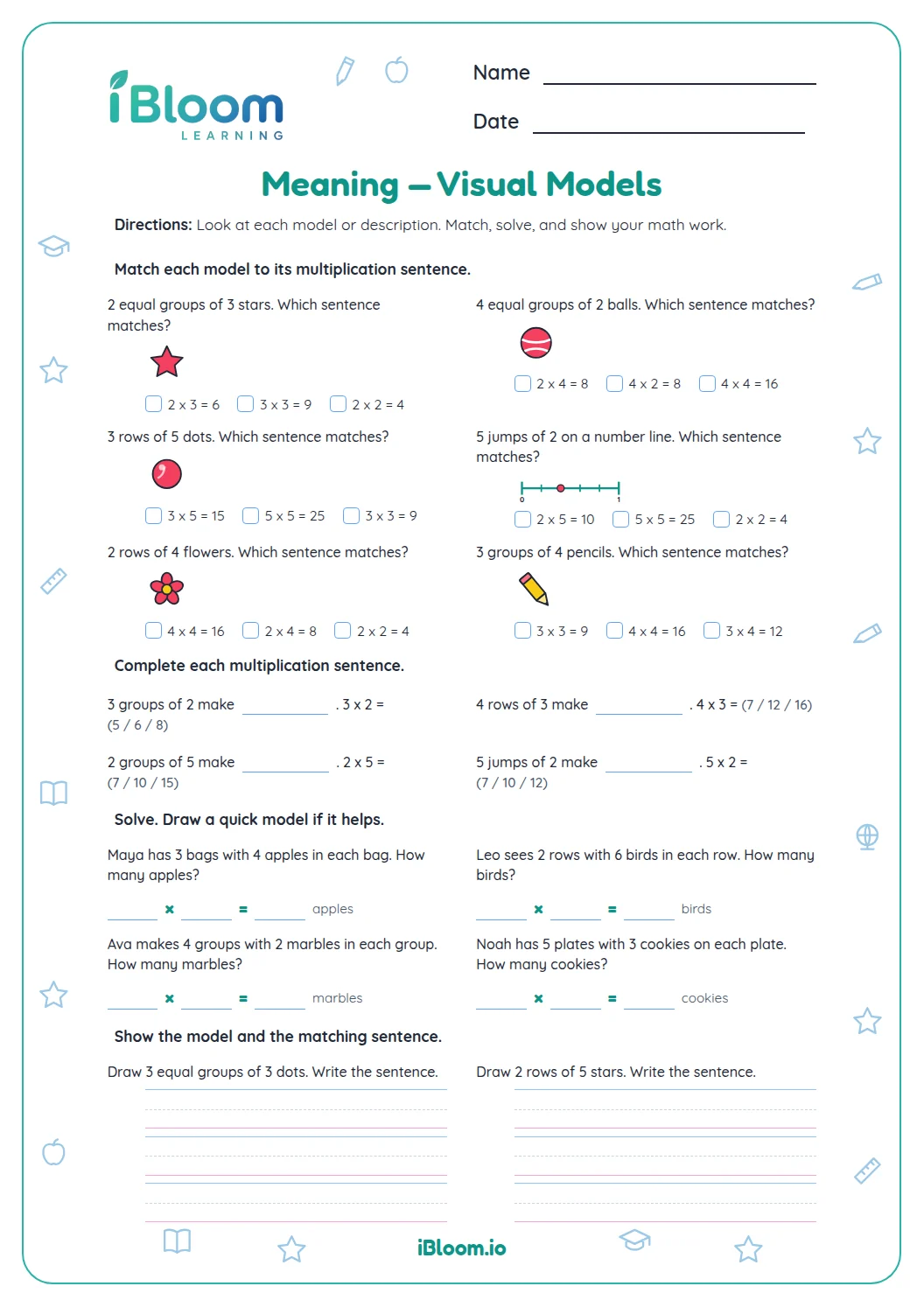
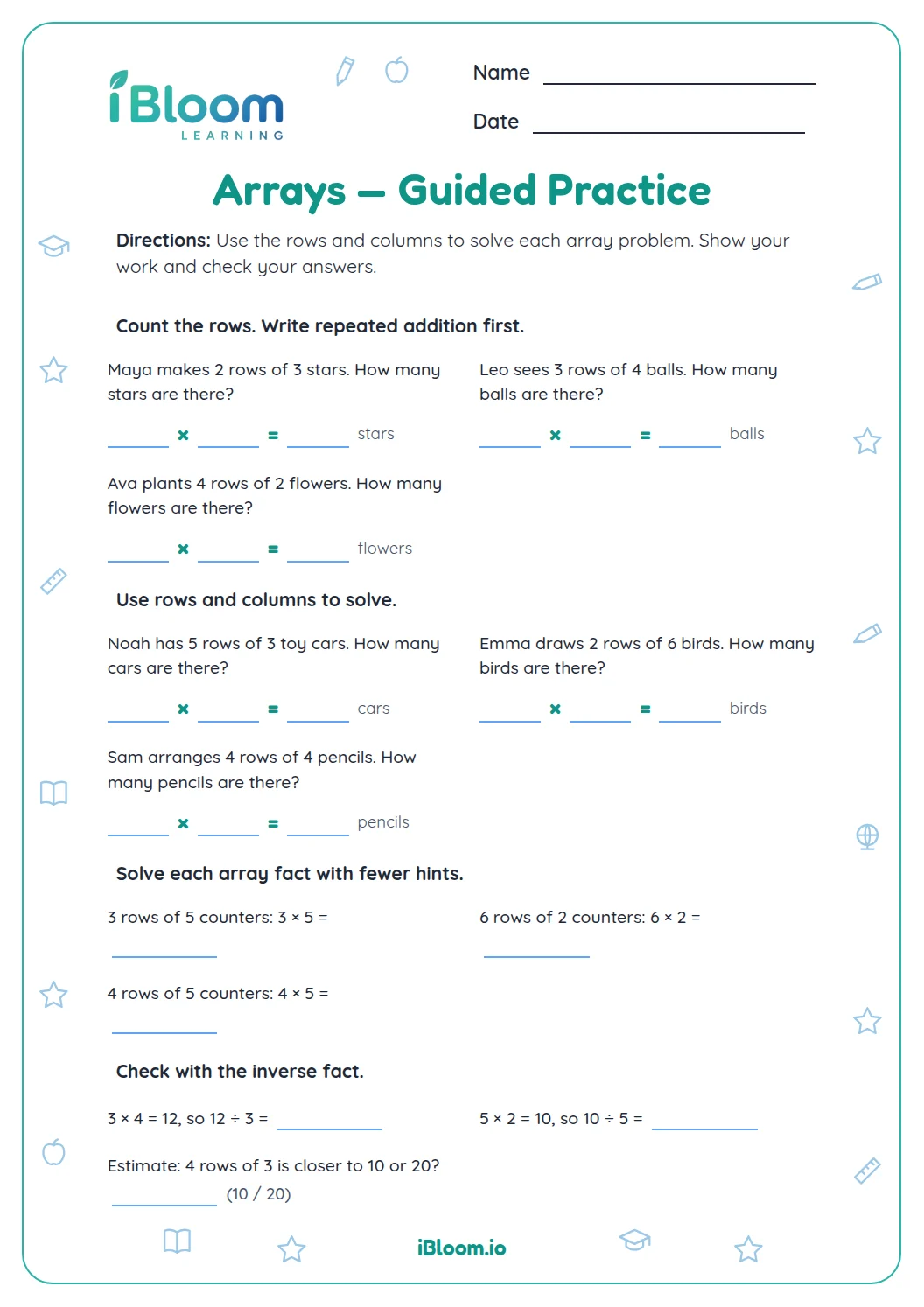
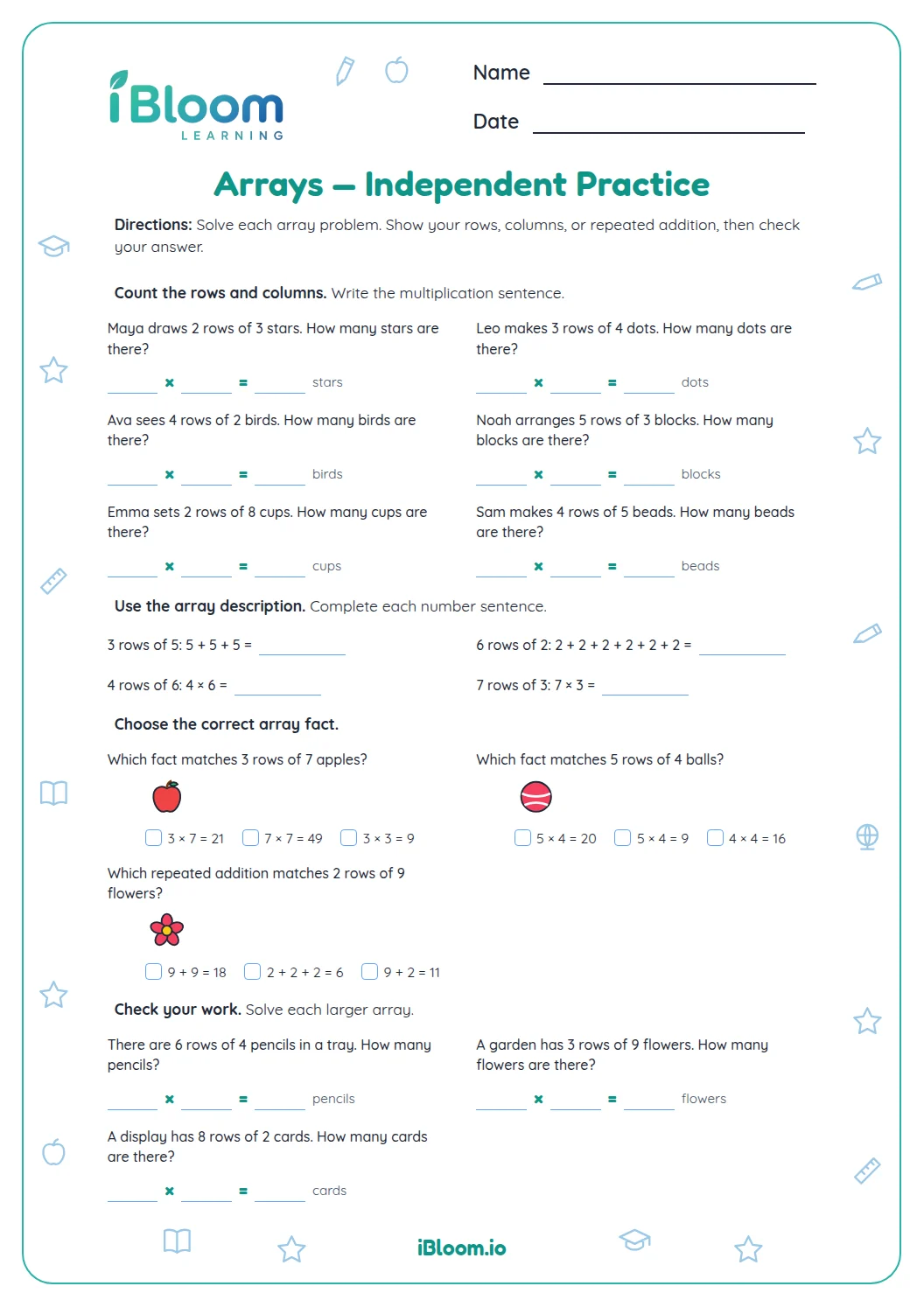
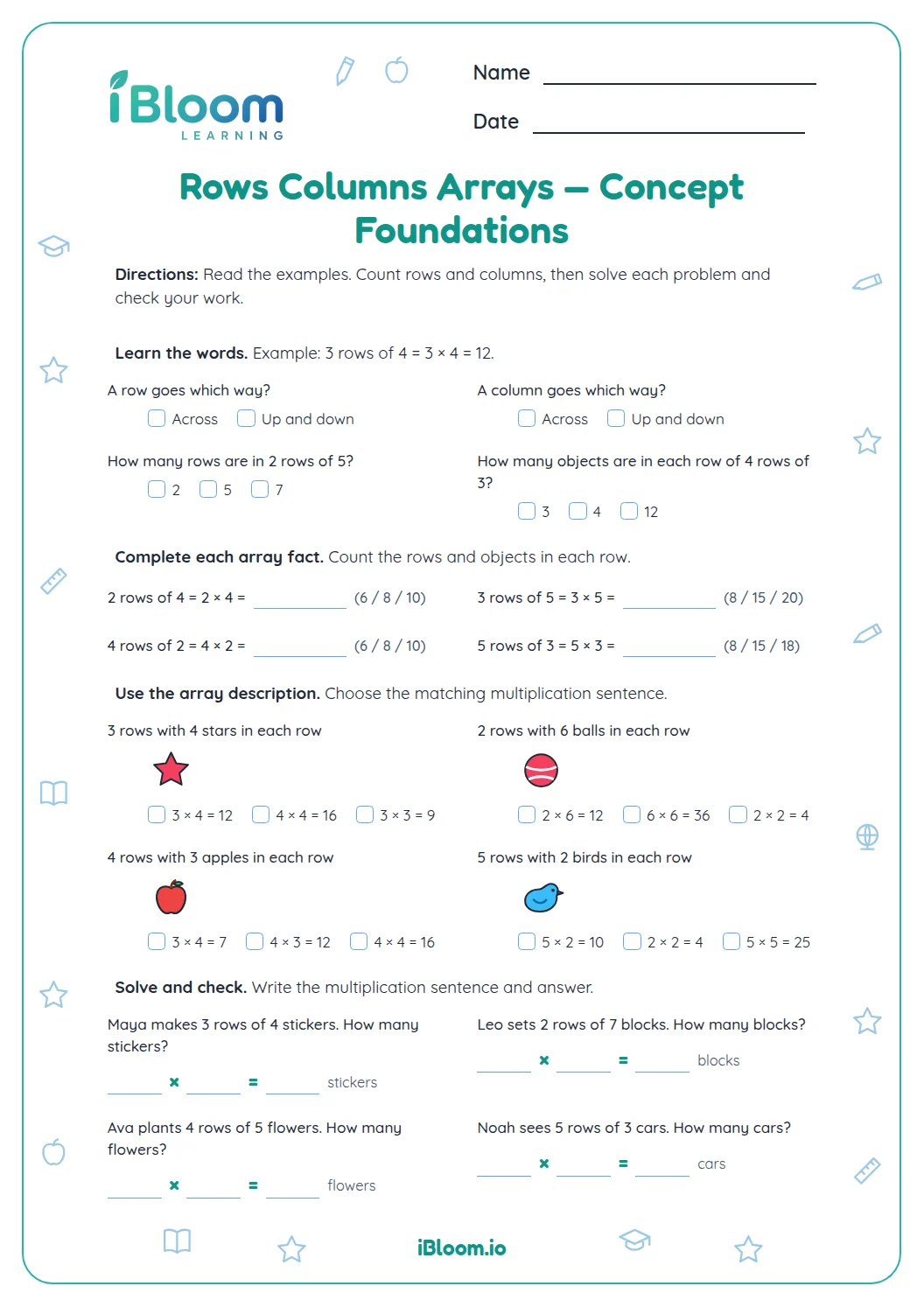
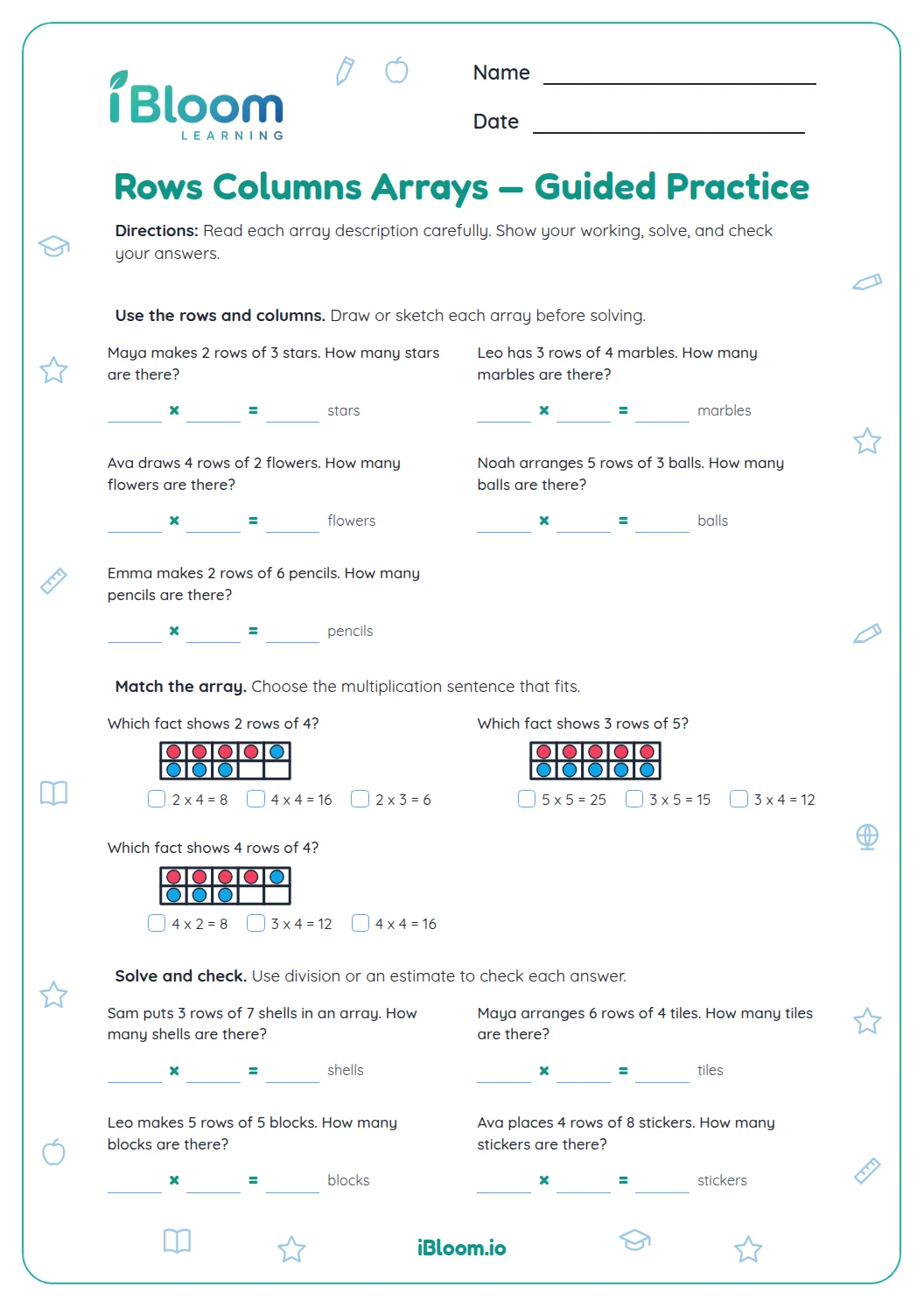
This Grade 2 multiplication worksheet builds the meaning of multiplication through equal groups. Students interpret short group descriptions, identify what a multiplication phrase represents, and solve familiar equal-group situations. The 14 multiple-choice questions practice the equal-group model named in Common Core 3.OA.A.1, with a separate answer key for checking totals and group descriptions.
Aligned to 3.OA.A.1
What does multiplication mean?
Multiplication can describe equal groups. Two rows with three counters in each row have six counters altogether. The rows tell how the groups are organized; the total counts every counter.
This sheet asks students to apply the equal-group idea to short descriptions and familiar situations.
- 1Two equal rows have three counters in each row.
- 2Count 3, then 3 more.
- 3There are 6 counters altogether.
- 4Answer: 6
How do arrays show equal groups?
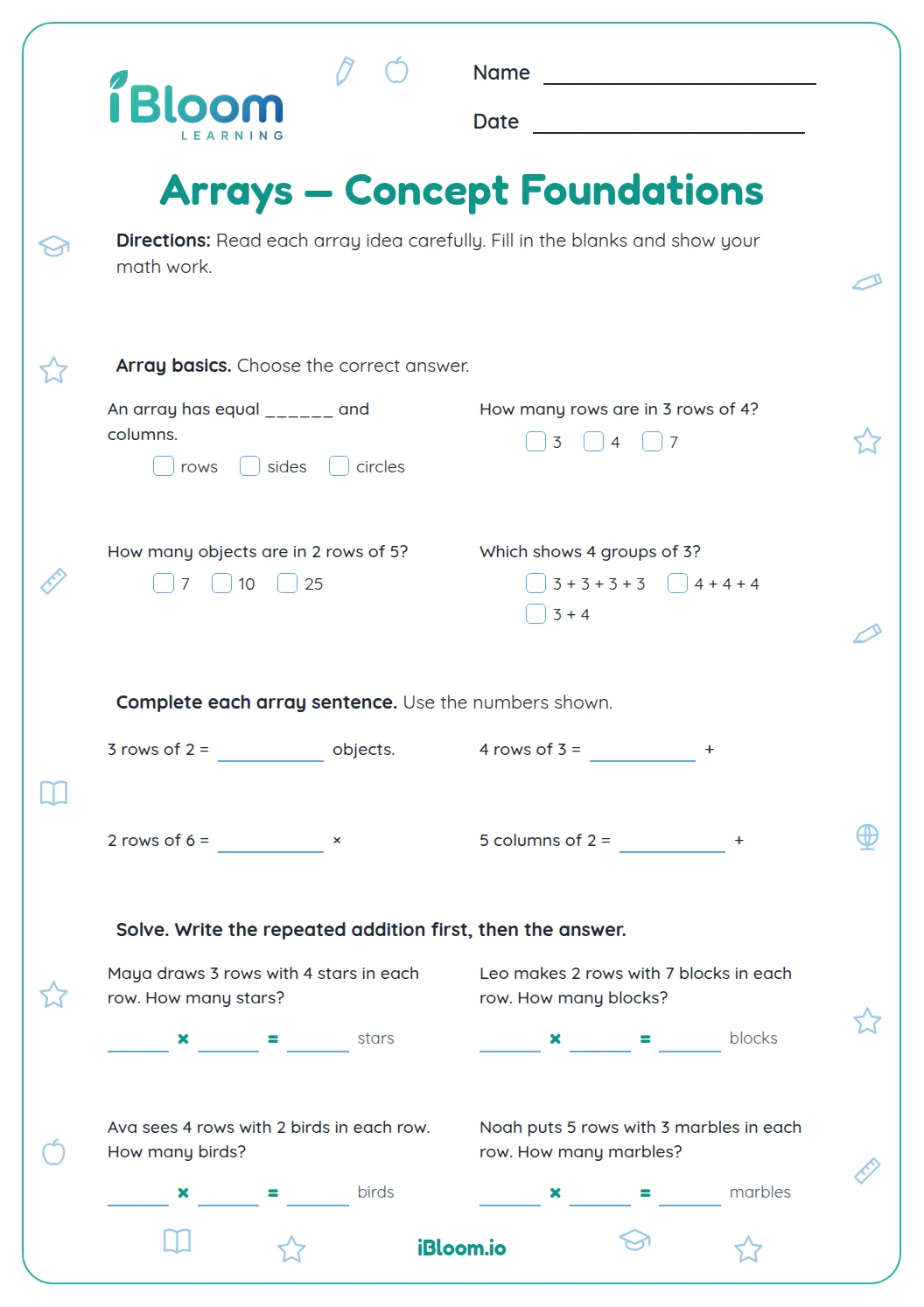
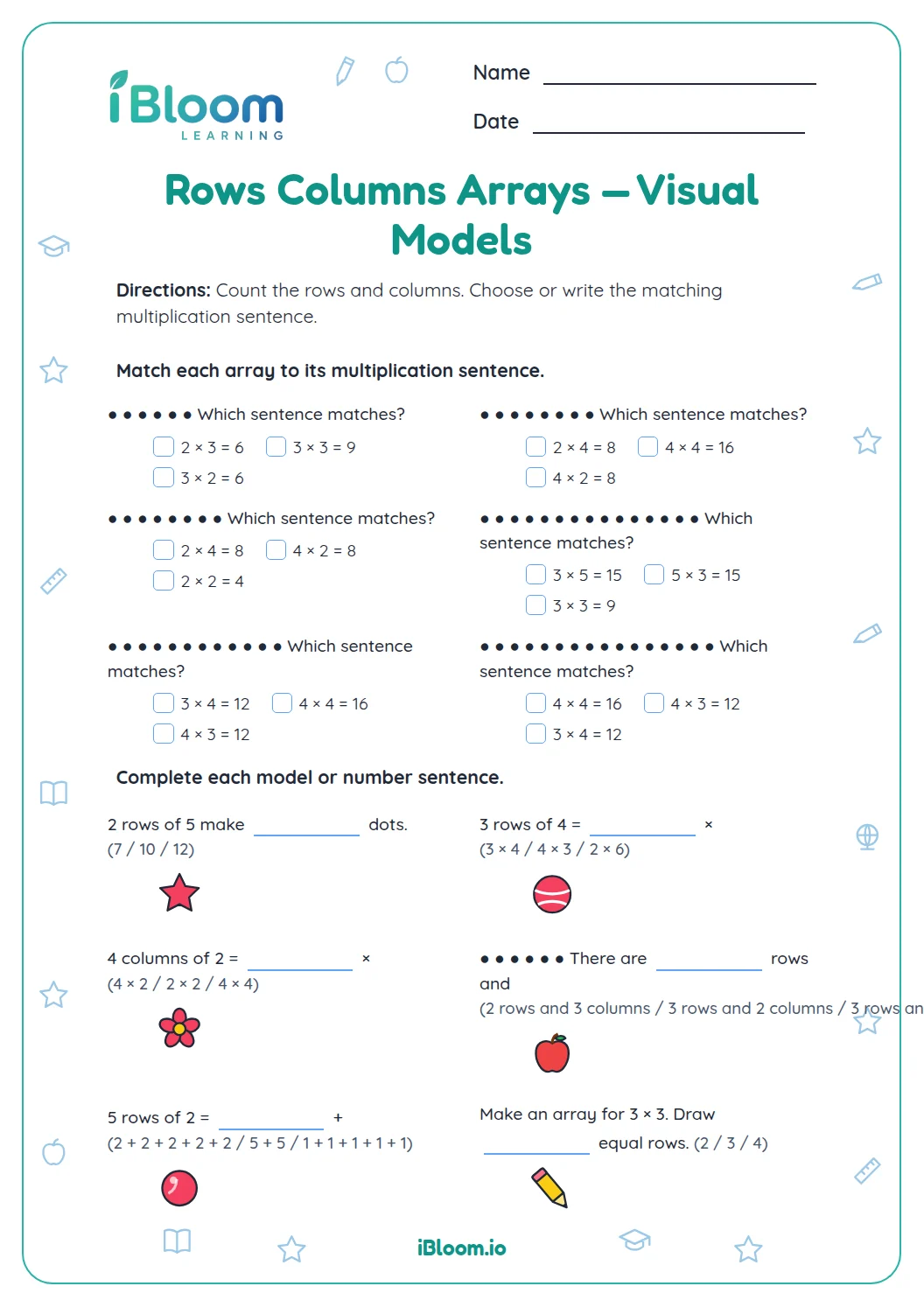
An array organizes objects in equal rows and columns. In the question “How many counters are in 3 equal rows of 4?” count four counters in each of three rows to find 12 altogether. The worksheet also asks students to match phrases such as “4 equal groups of 2” to the correct group description.
- 1Three rows have four counters in each row.
- 2Count 4, 8, 12 across the rows.
- 3There are 12 counters altogether.
- 4Answer: 12
What kinds of problems are included?
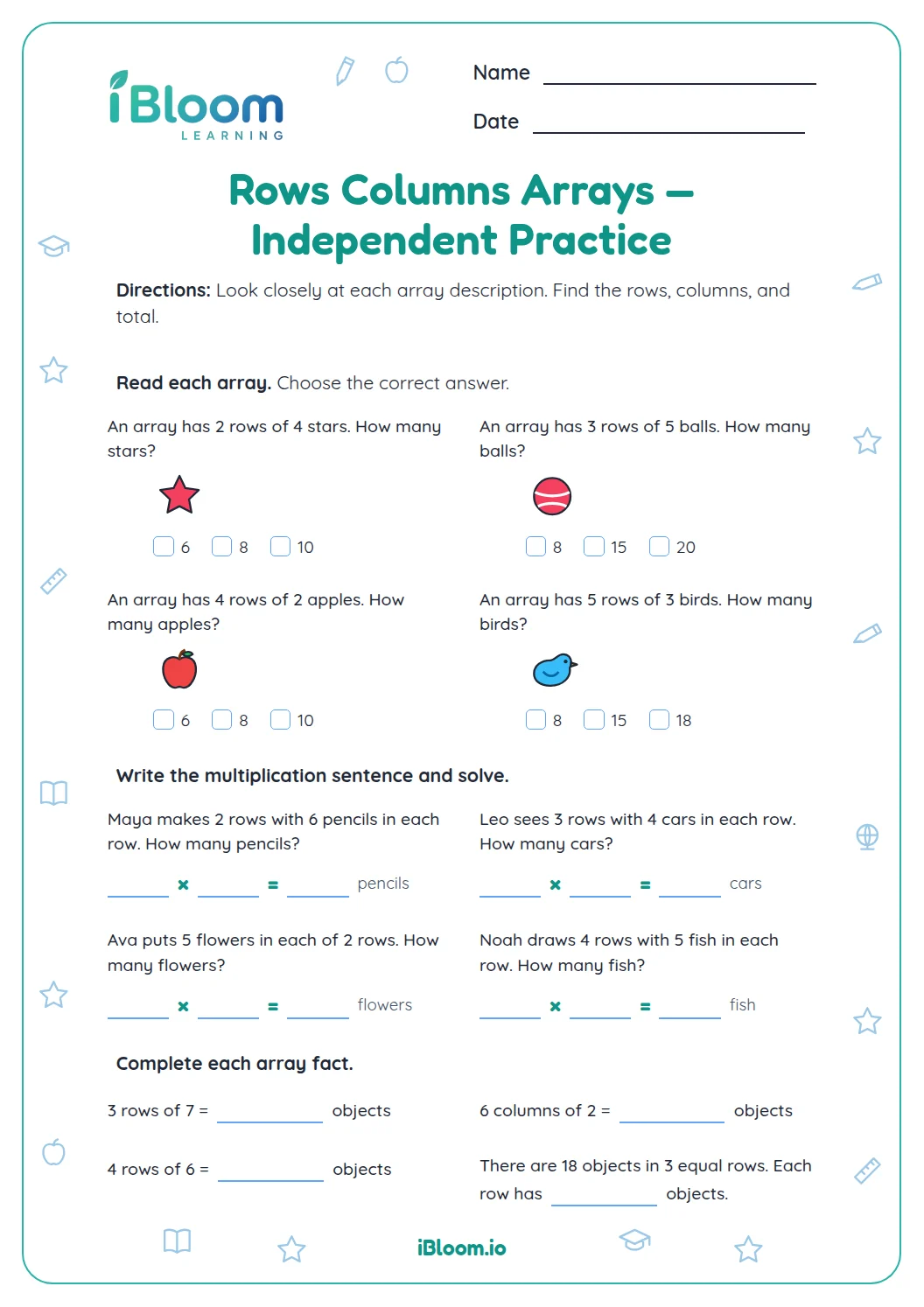
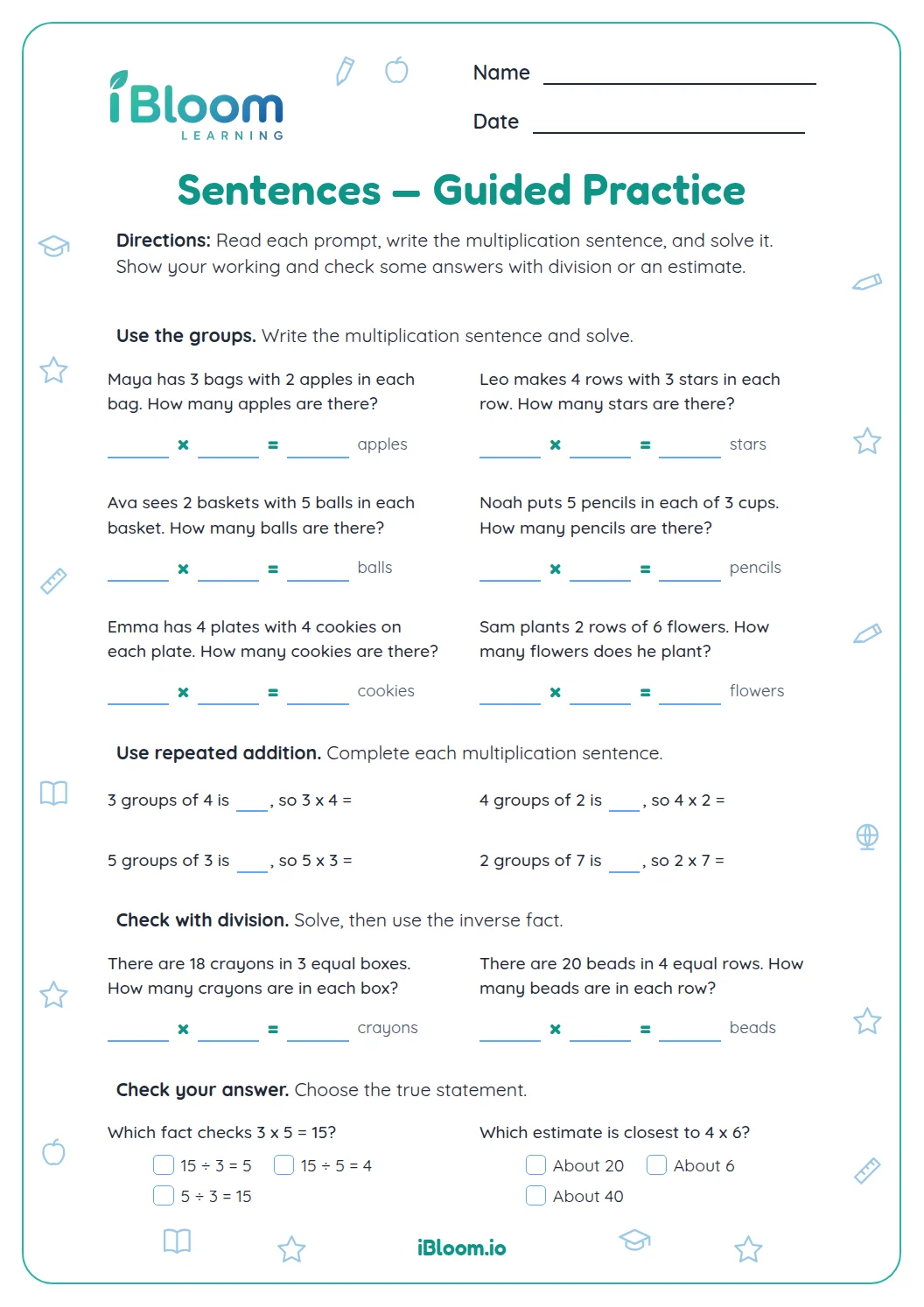
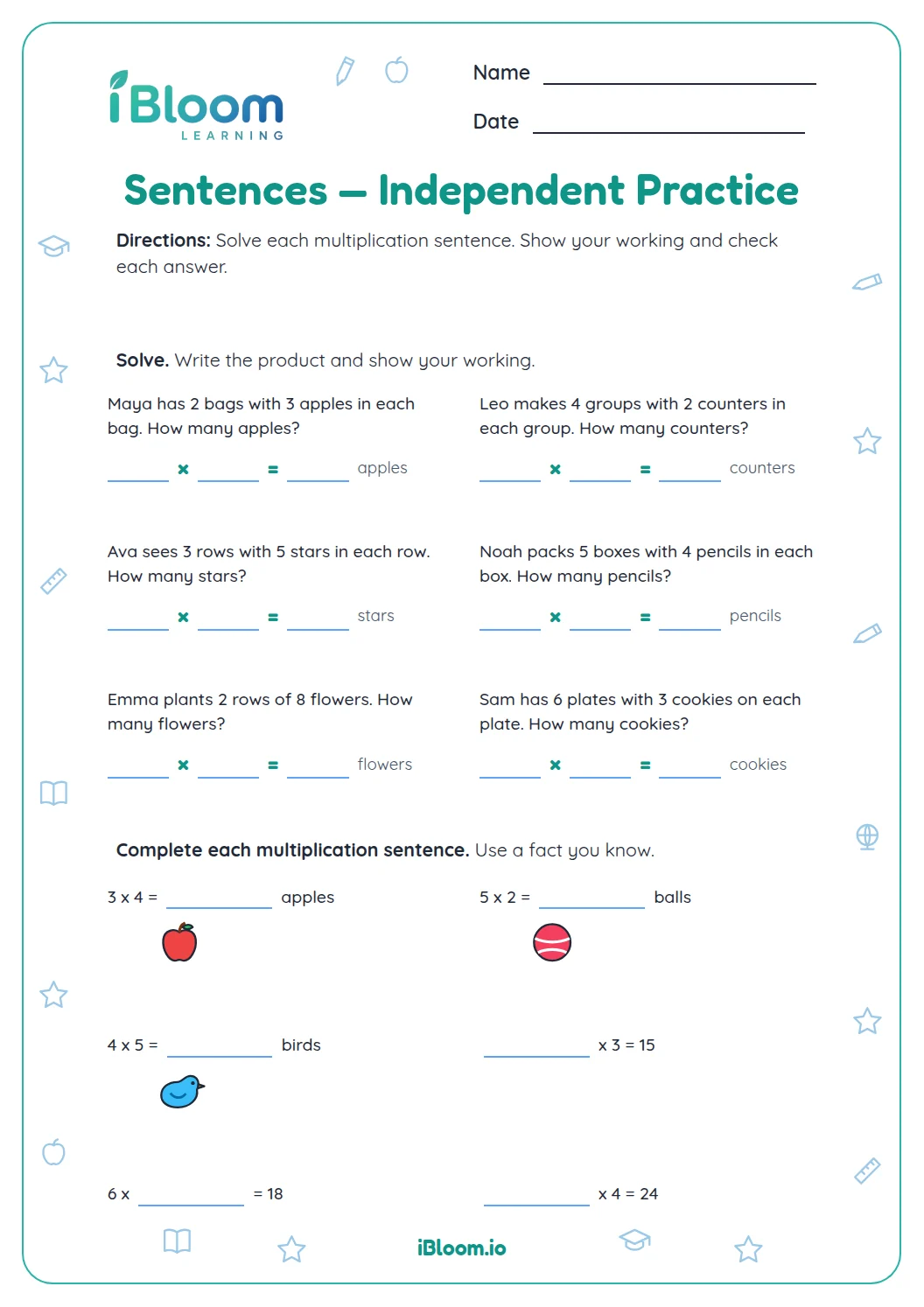
The 14 multiple-choice questions include group-meaning questions and equal-group stories. The answer key lists each numerical answer and phrase.
How to use this worksheet
- 1Count one row or group first.
- 2Check that every group has the same number of objects.
- 3Count each group to find the total.
- 4For a story, identify how many groups and how many objects are in each.
- 5Check the total with the separate answer key.
Common mistakes and quick fixes
The mistake
Counting only the number in one row.
The fix
Count that row repeatedly for every equal row.
The mistake
Mixing up the group count and group size.
The fix
Say “number of groups” and “in each group” before finding the total.
The mistake
Leaving out a group in a story.
The fix
Point to or list each group once as you count.
Common Core alignment
Students interpret multiplication as equal groups and connect a situation to its total.
Interpret a product as the total in equal groups.
On this sheet: The array and story questions connect equal groups, rows, and the total number of objects.
Show the official wordingHide the official wording
Interpret products of whole numbers, e.g., interpret 5 × 7 as the total number of objects in 5 groups of 7 objects each. For example, describe a context in which a total number of objects can be expressed as 5 × 7.
What to practice next
Make more practice
Further reading
Questions parents and teachers ask
What does multiplication mean on this worksheet?
Multiplication describes equal groups and their total. Two rows with three counters in each row have six counters altogether. The questions begin with row and group descriptions, then apply the same idea to everyday stories. Counting each group aloud provides a simple way to check.
Can my child count the objects one by one?
Yes. Counting one by one is a useful way to check a total. Students can also count by the number in each row or group, while making sure they include every group exactly once. The set includes five arrays, five equal-group stories, and five questions that connect totals to group size.
What is the difference between groups and objects in each group?
The number of groups tells how many sets there are. The group size tells how many objects are in each set. In “four bags hold two shells each,” there are four groups and two shells in each group. Reading the groups aloud as “how many groups” and “how many in each” helps keep the two quantities distinct.
How many questions are included?
There are 14 multiple-choice questions about group meaning and equal-group stories. The separate answer key lists the correct total or group description for each question, so students can review their choices. The set moves from direct group interpretation to short stories.
Which standard does this practice support?
The questions practice interpreting multiplication as equal groups and their total, aligned with Common Core 3.OA.A.1. Students look at rows, solve everyday group stories, and identify how totals relate to equal groups. The standard describes interpreting a product as the total number of objects in equal-sized groups.