


About this worksheet
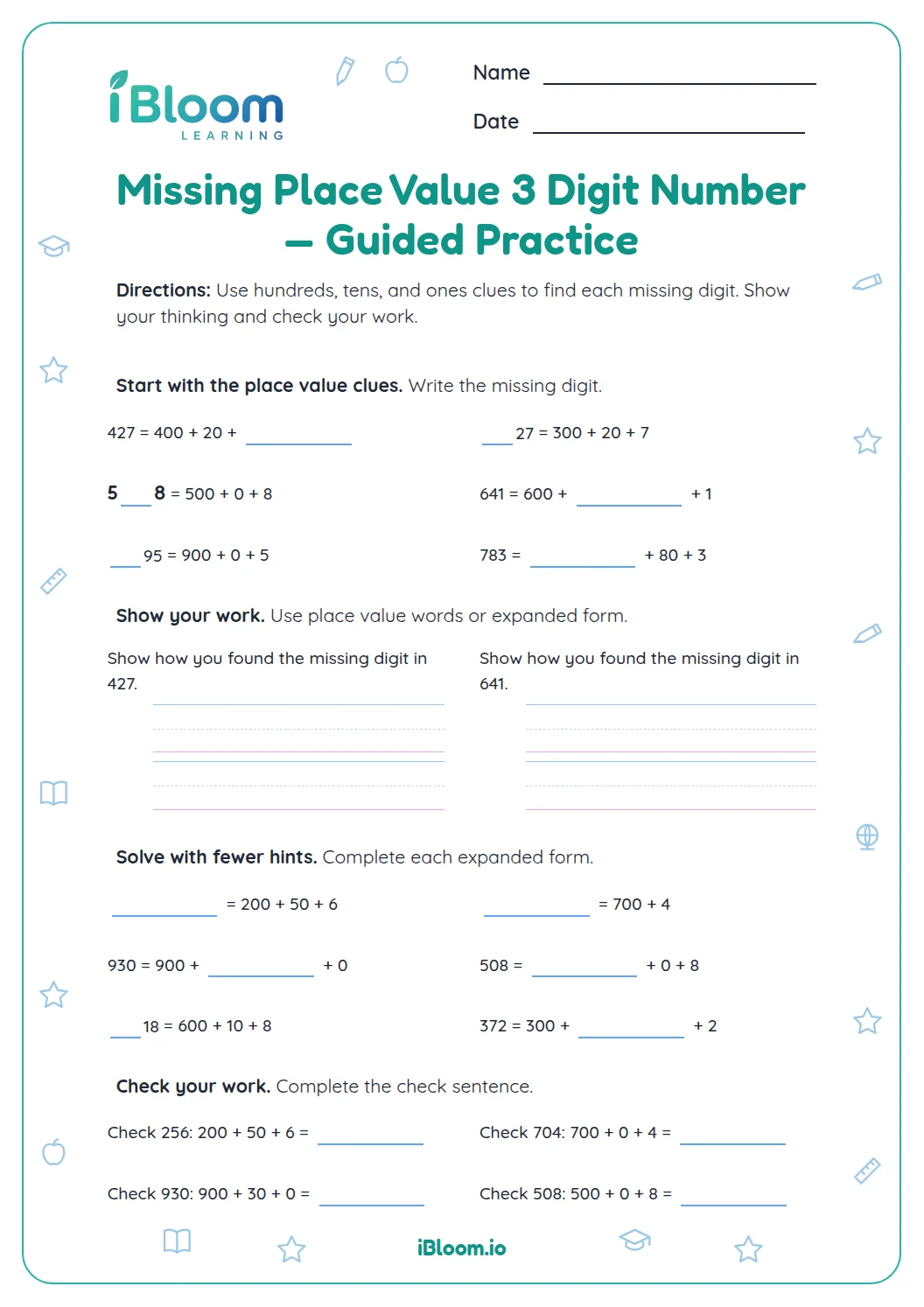
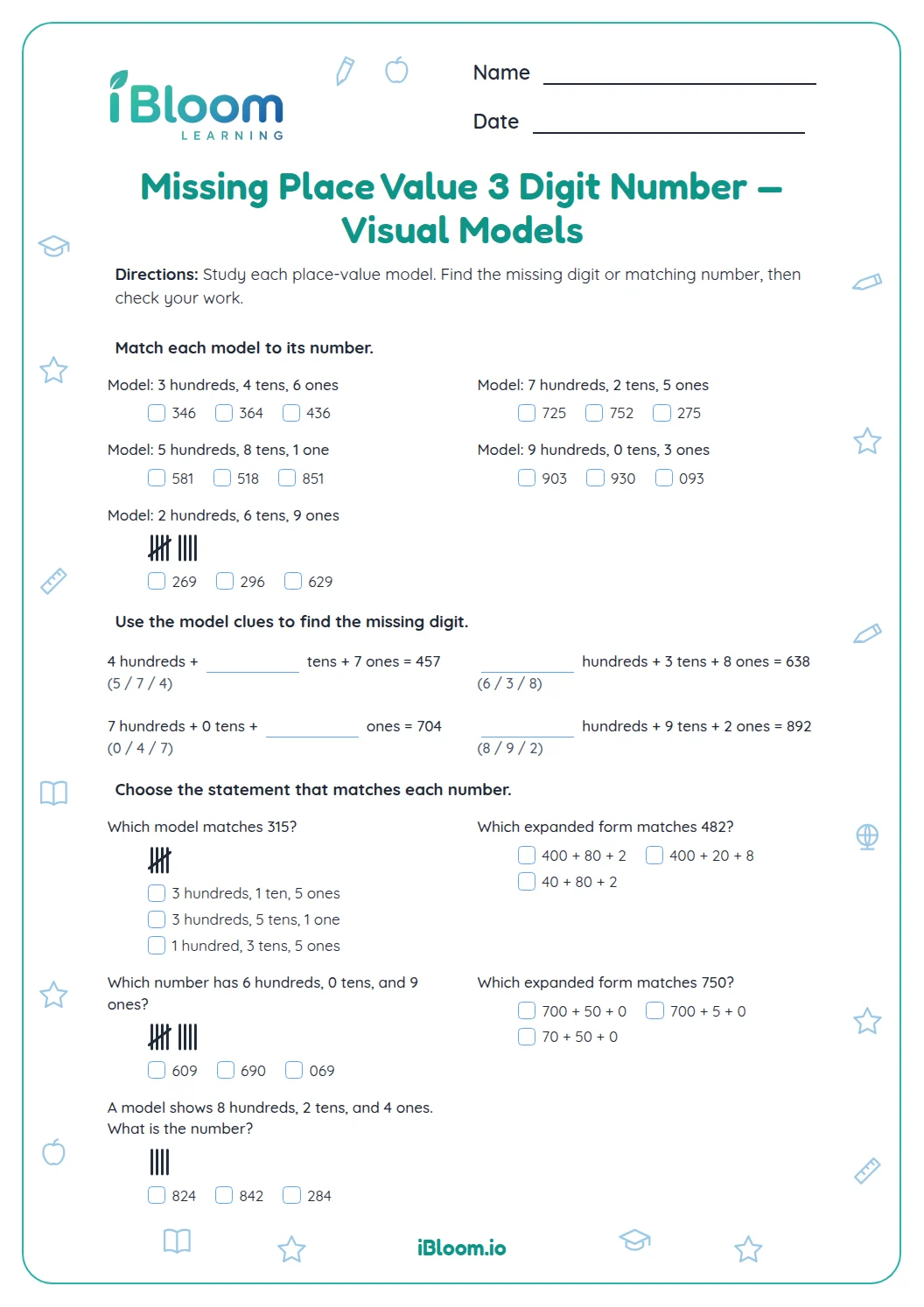
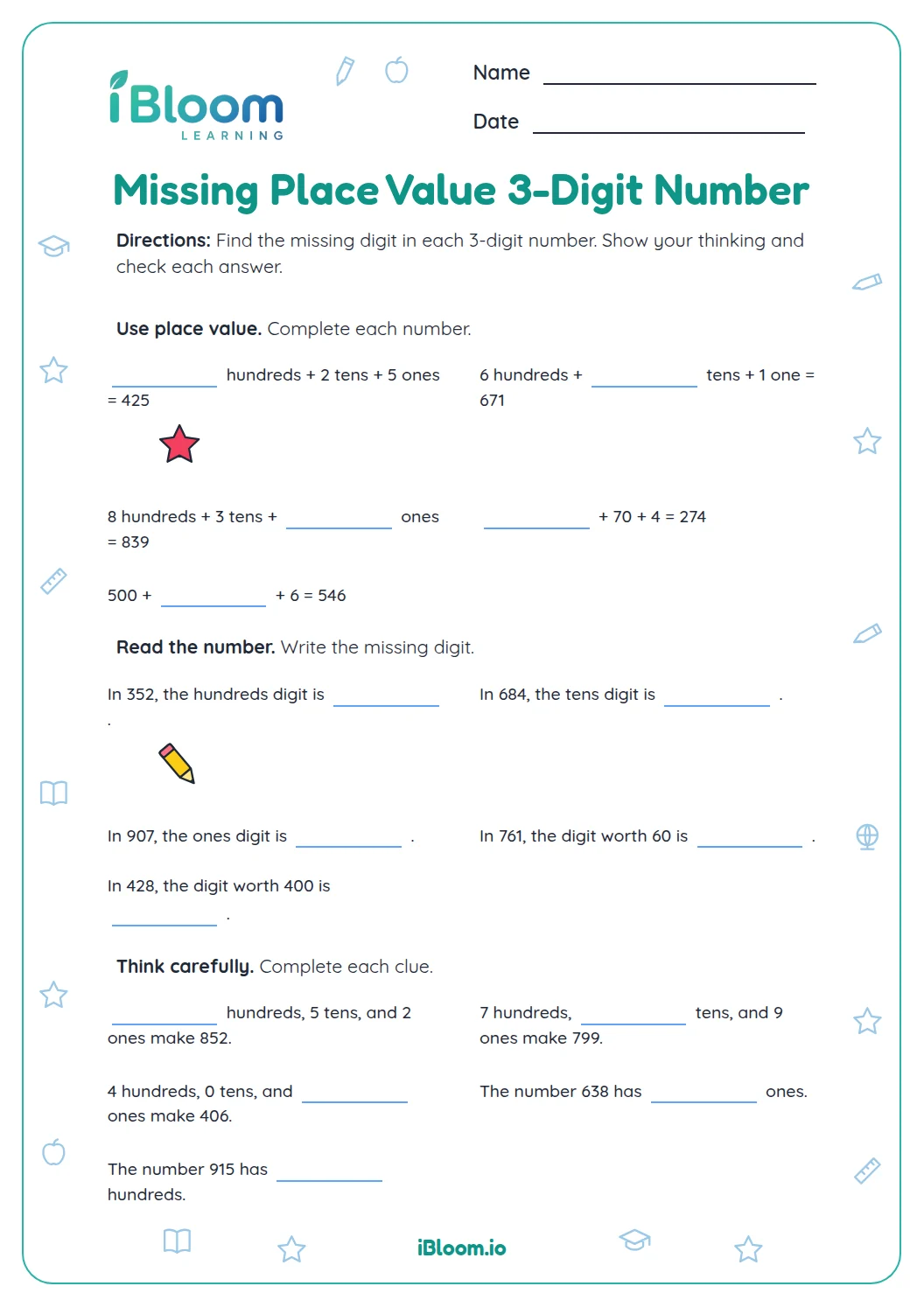
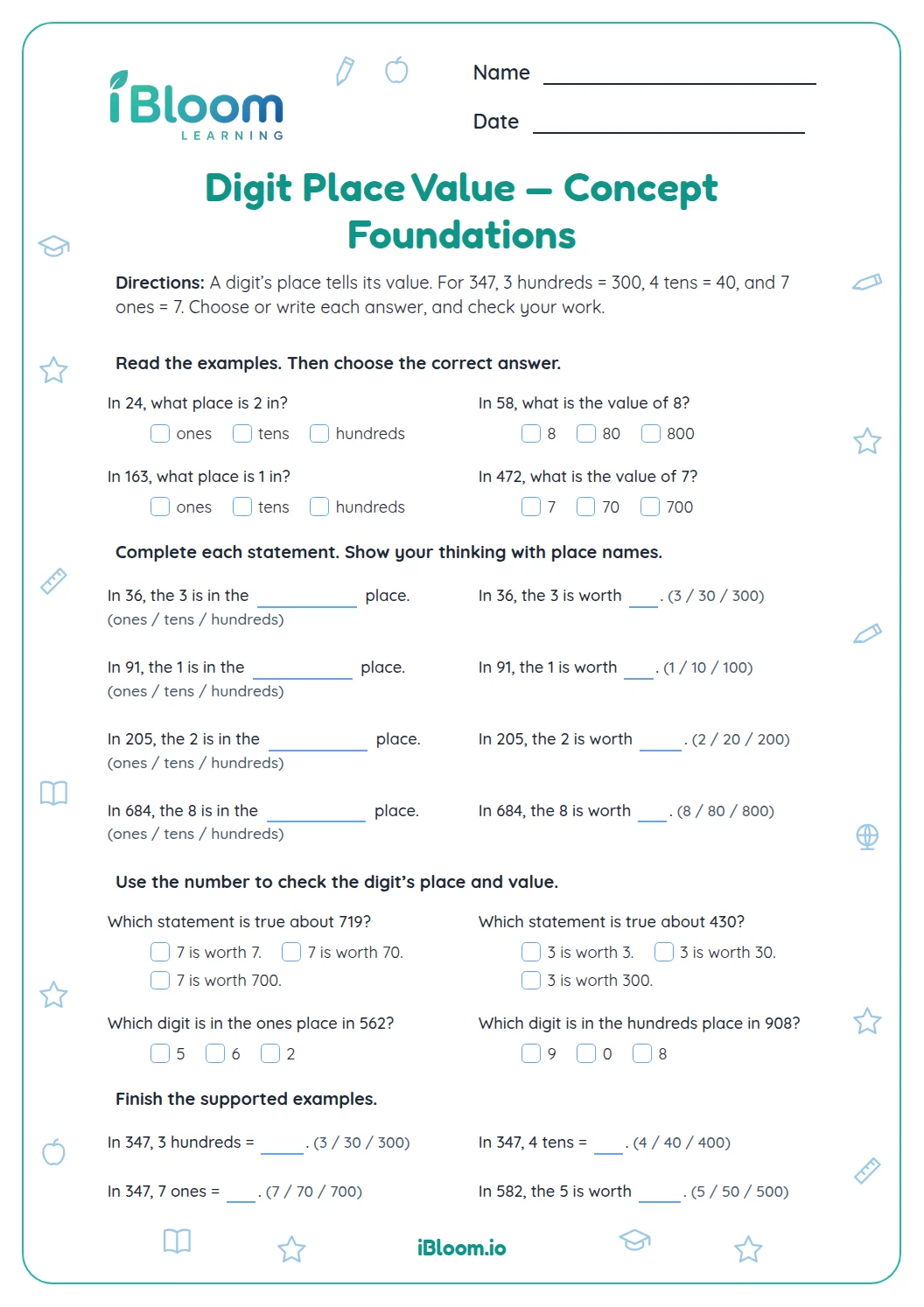
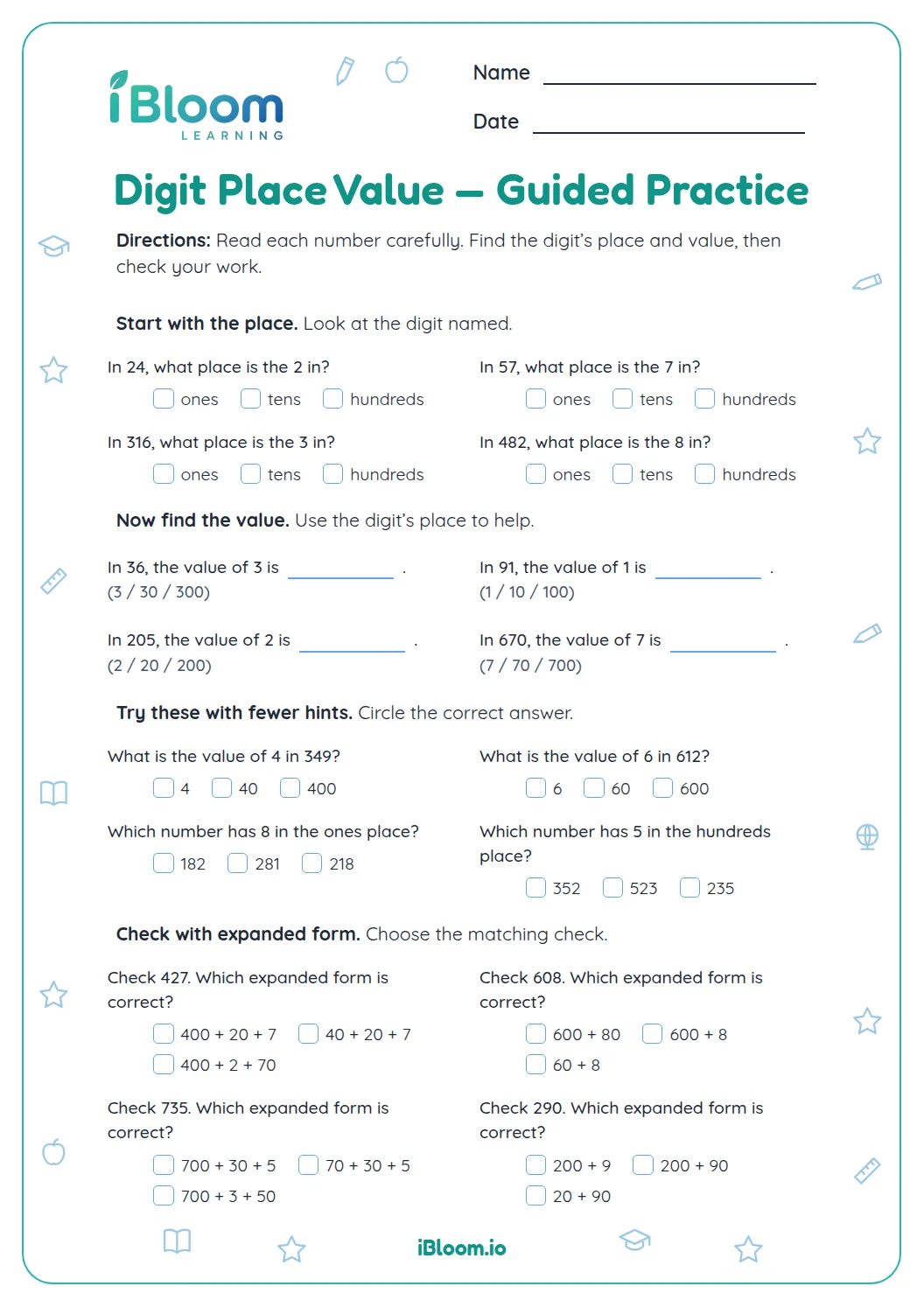
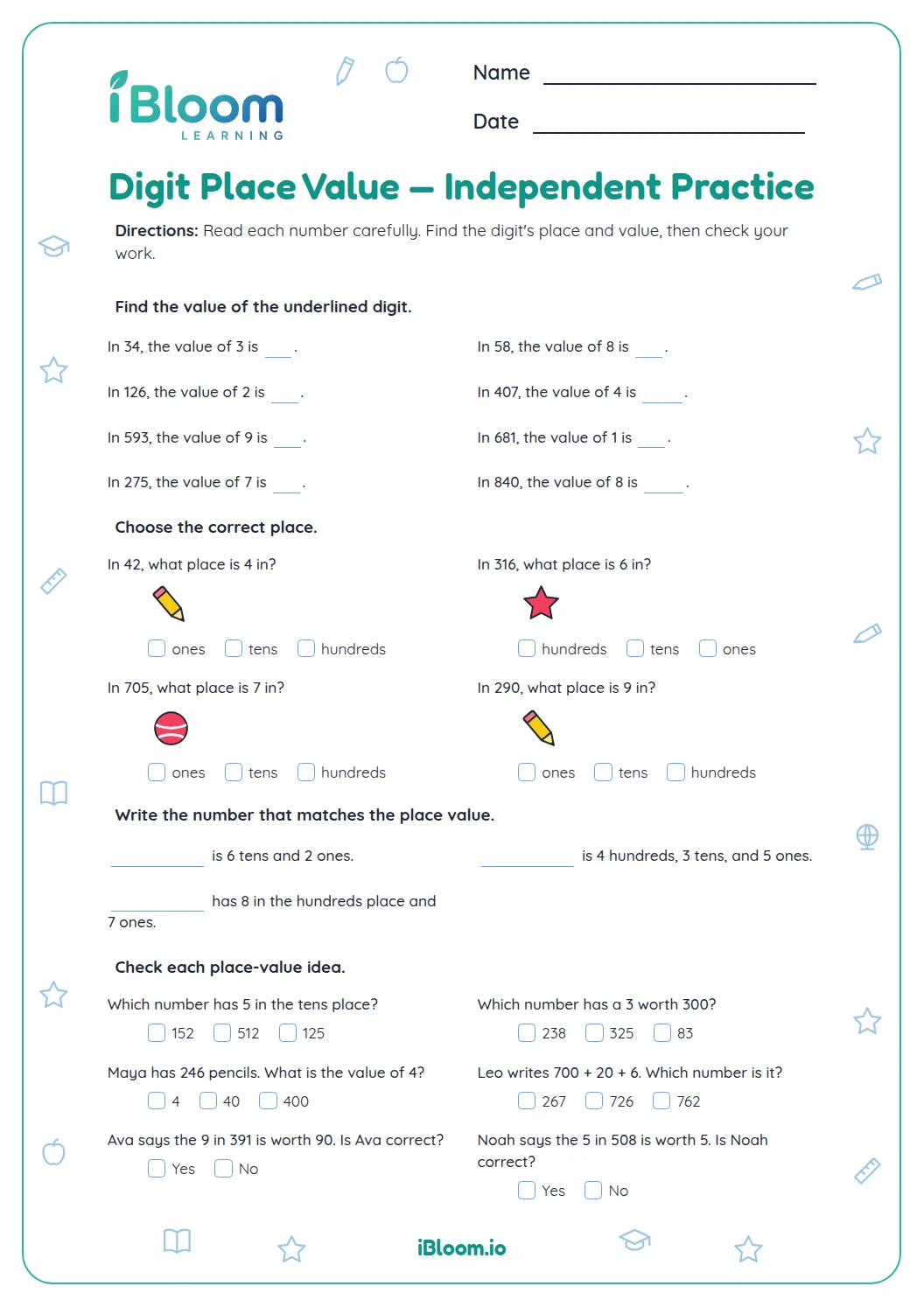
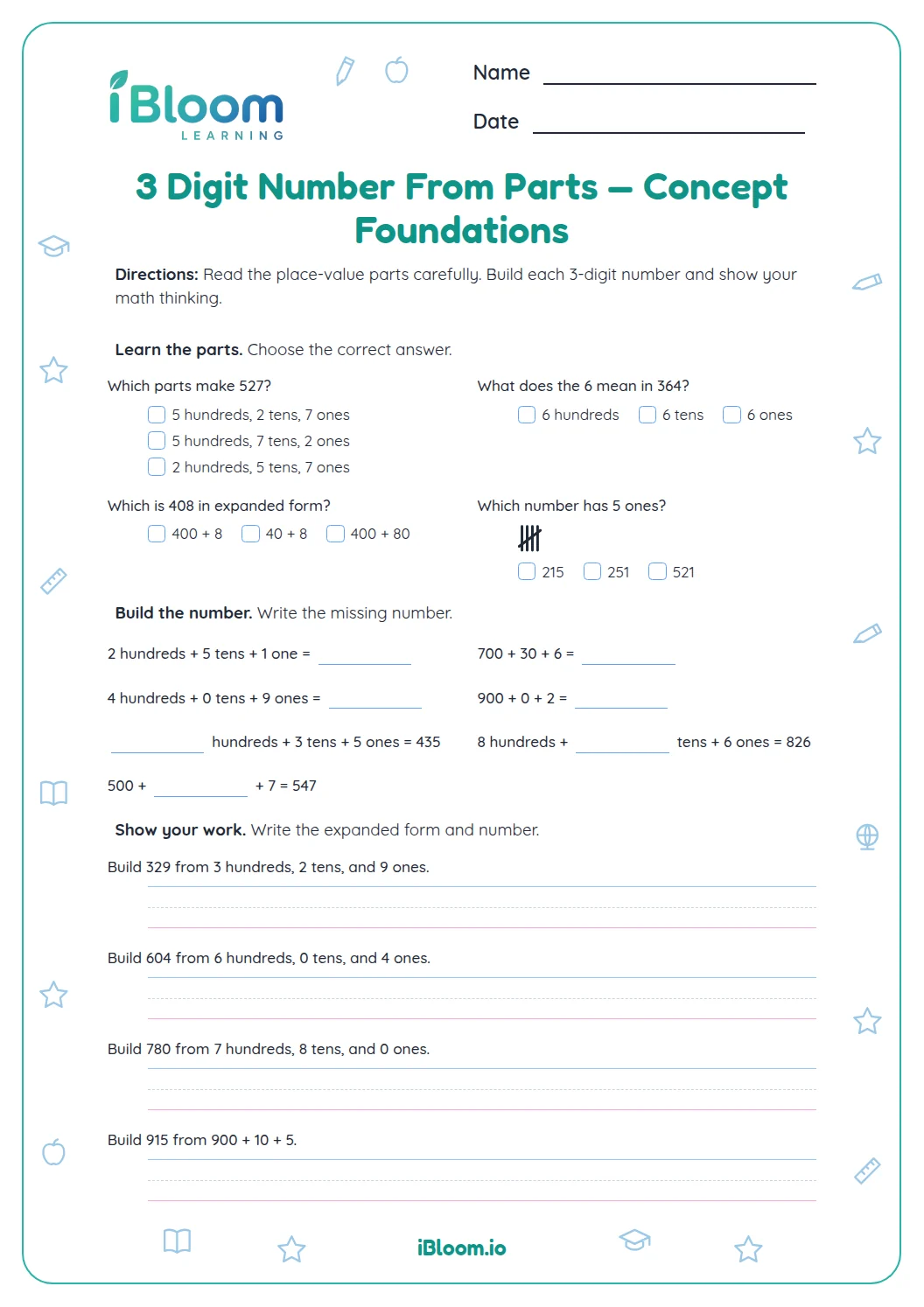
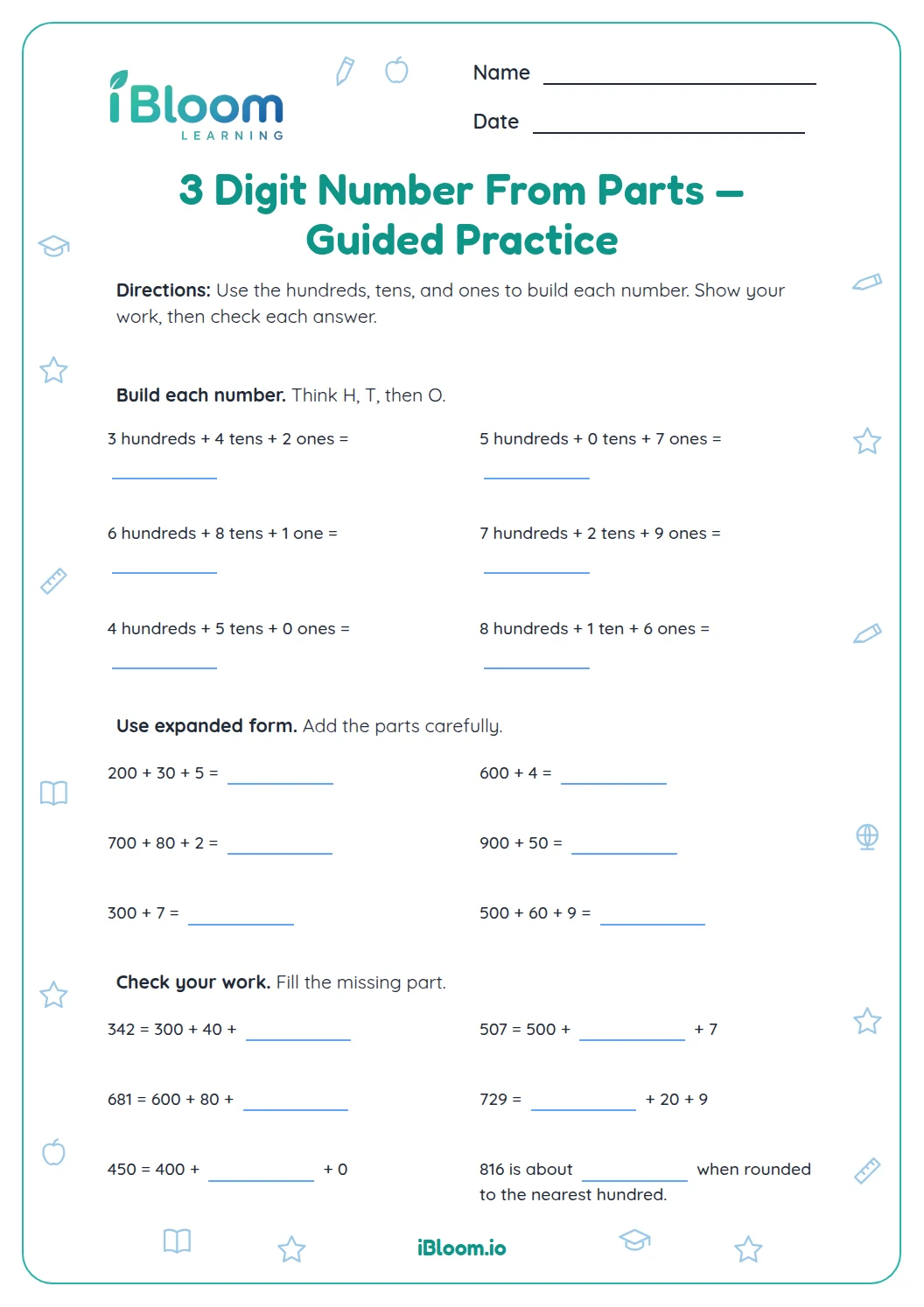
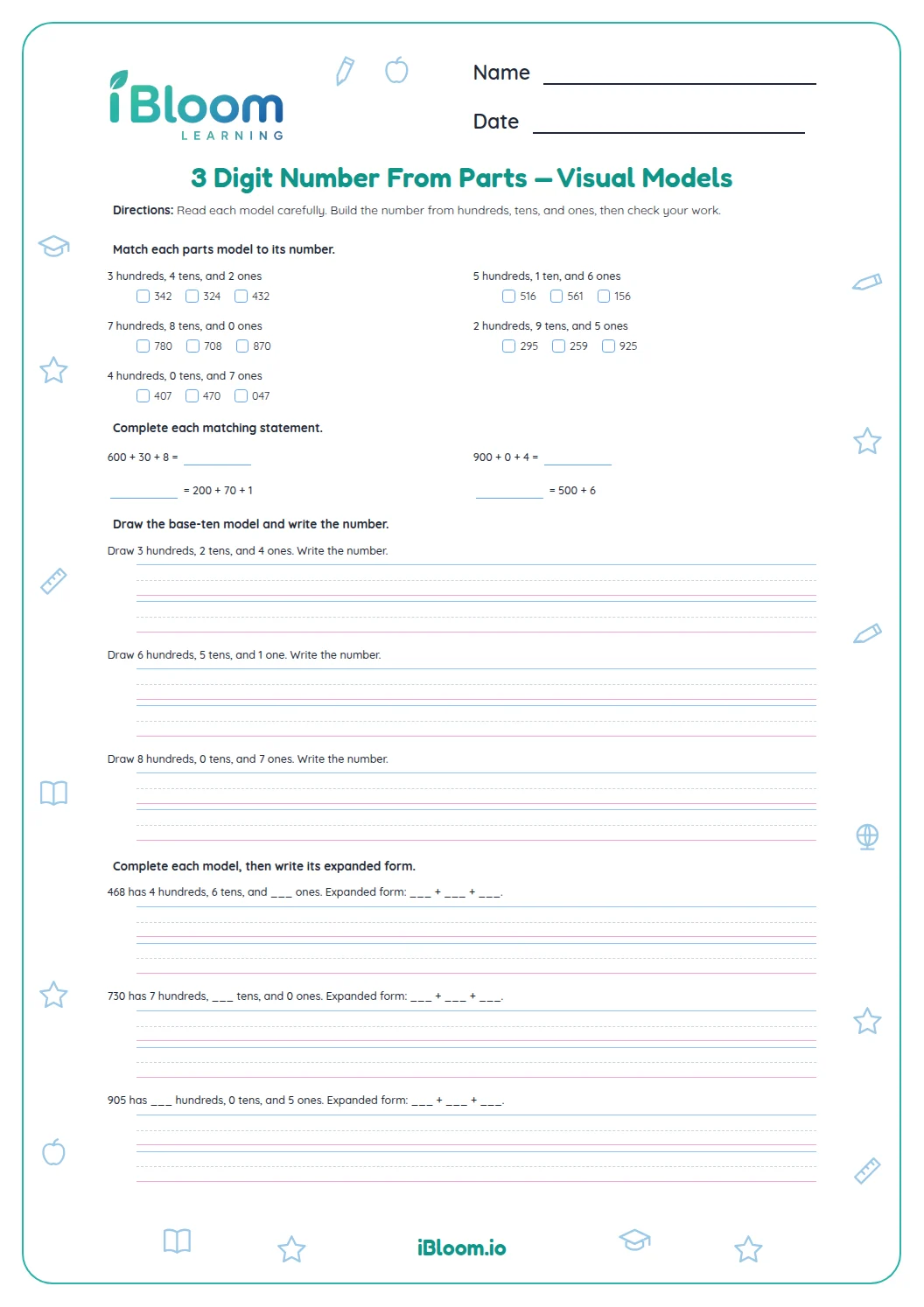
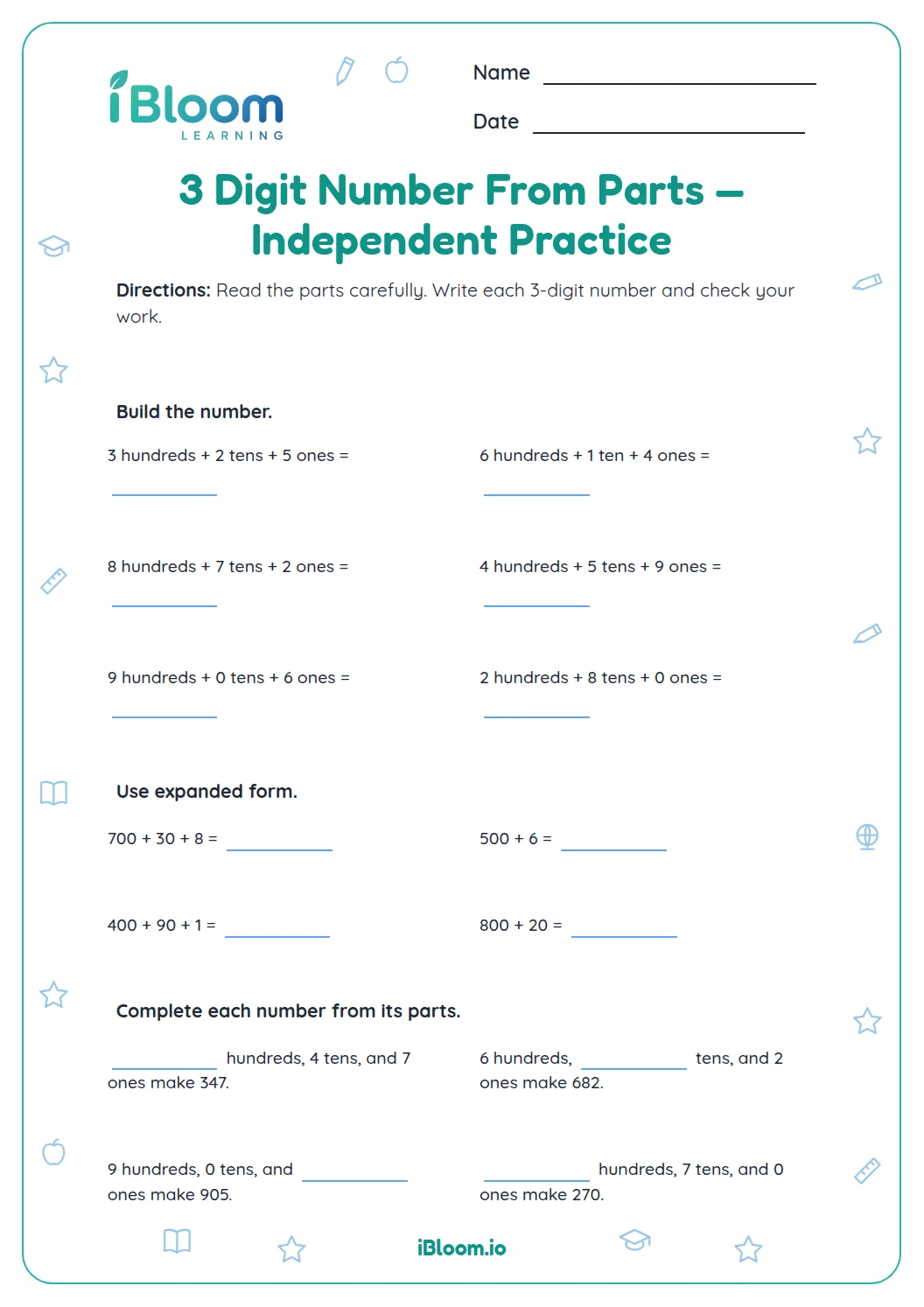
This Grade 2 printable builds understanding of three-digit place value. Students find missing digits, connect expanded sums to numbers, and identify the value of a digit in the hundreds, tens, or ones place. The 14 questions move from short clues to complete numbers, with a separate answer key.
Aligned to 2.NBT.A.1
How do you use hundreds, tens, and ones?
A three-digit number has a hundreds digit, a tens digit, and an ones digit. For 426, the digits mean 4 hundreds, 2 tens, and 6 ones. Expanded form writes those values as 400 + 20 + 6.
- 14 hundreds, 2 tens and ___ ones make 426.
- 2426 = 400 + 20 + 6.
- 3The missing ones digit is 6.
What kinds of number clues appear?
Part A asks for a missing digit or value in a place-value description or expanded form. Part B uses the position of a digit to identify a number. Part C builds three-digit numbers and completes expanded forms. Each answer follows from the hundreds, tens, and ones places.
How can an adult help check a number?
Ask the learner to read the number aloud by place value and write its expanded form. Then compare each part with the clue. For example, 5 hundreds, 8 tens, and 3 ones must make 583, so the tens digit is 8.
How to use this worksheet
- 1Read each clue and mark whether it names a digit or a value.
- 2Match the hundreds, tens, and ones places in order.
- 3Write expanded form as hundreds + tens + ones.
- 4Keep zero when a place has no tens or ones.
- 5Check each completed number against its clue and the answer key.
Common mistakes and quick fixes
The mistake
Treating the digit as its value.
The fix
In 582, the 8 is in the tens place, so its value is 80, or 8 tens.
The mistake
Forgetting a zero place.
The fix
Keep a zero in the tens or ones place when that place has no units, as in 604.
The mistake
Adding digit names instead of place values.
The fix
Write 400 + 20 + 6 for 426, not 4 + 2 + 6.
Common Core alignment
This printable practices the standard below through focused questions.
Each digit has a value based on its place: hundreds, tens, or ones.
On this sheet: The worksheet questions use this skill directly.
Show the official wordingHide the official wording
Understand that the three digits of a three-digit number represent amounts of hundreds, tens, and ones; e.g., 706 equals 7 hundreds, 0 tens, and 6 ones.
What to practice next
Make more practice
Further reading
Questions parents and teachers ask
How many questions are on this place-value worksheet?
There are 14 questions in three parts. They include missing place values, expanded-form equations, and questions about the position or value of a digit. The page is for Grade 2 and includes a separate answer key. Each part asks learners to use place names and number structure carefully.
What is the difference between a digit and its value?
A digit is the symbol in a number, while its value depends on its place. In 913, the digit 1 is in the tens place, so its value is 10. The worksheet asks learners to use both place names and values.
Why does 604 have a zero?
The number 604 has 6 hundreds, 0 tens, and 4 ones. The zero holds the tens place so the 6 stays in the hundreds place. One question asks learners to make a three-digit number with no tens. That zero keeps the other digits in their correct places.
How can expanded form help find a missing digit?
Expanded form separates a number into hundreds, tens, and ones. In 300 + 40 + ___ = 347, the missing part is 7 because 347 has 3 hundreds, 4 tens, and 7 ones. This same breakdown can check other blanks.
Does the page practice rounding?
The questions on this page practice missing place values in three-digit numbers: hundreds, tens, ones, and expanded form. The title’s “rounding” folder describes the broader skill collection; the worksheet itself stays focused on place value and number composition.