




About this worksheet
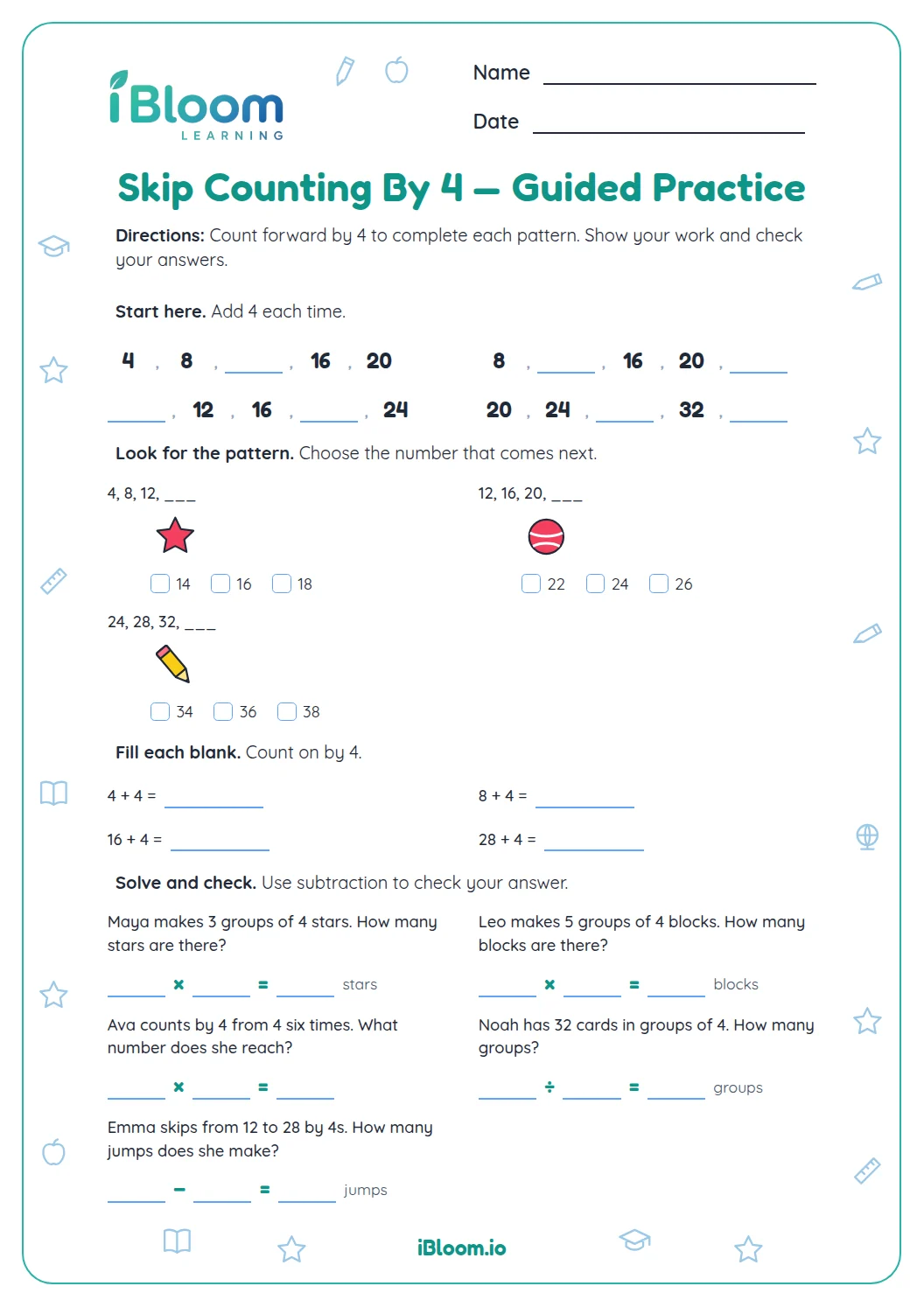
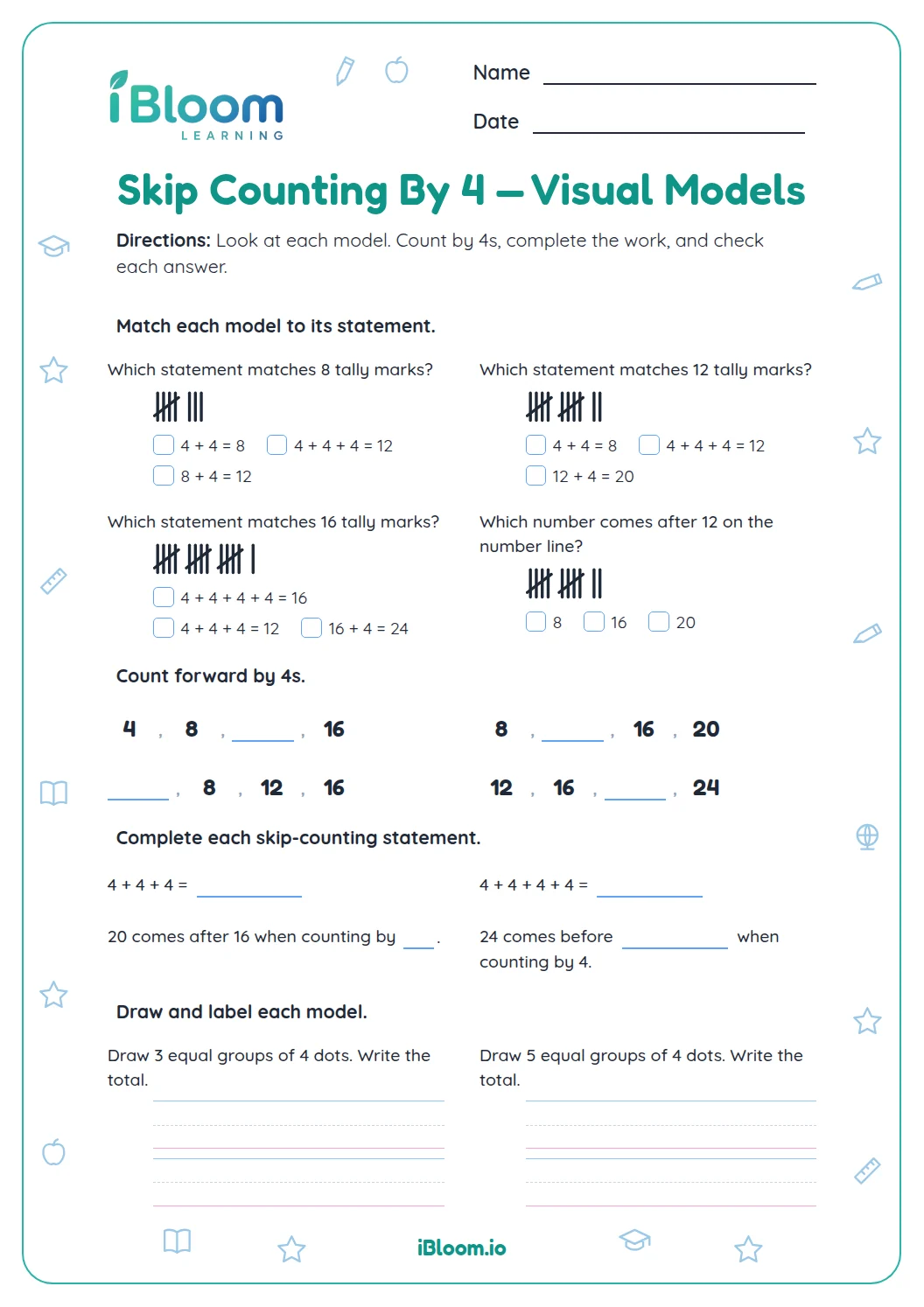
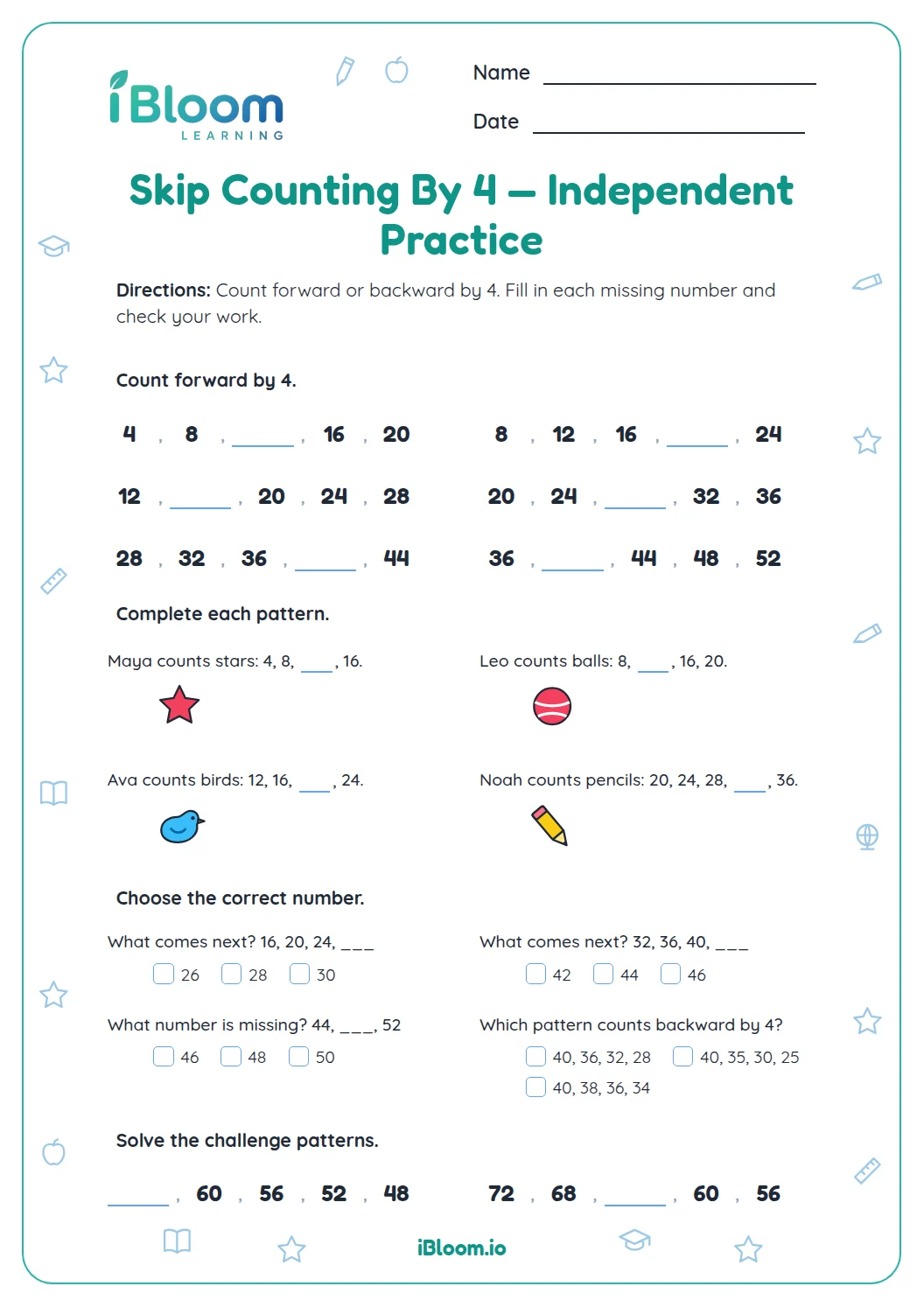
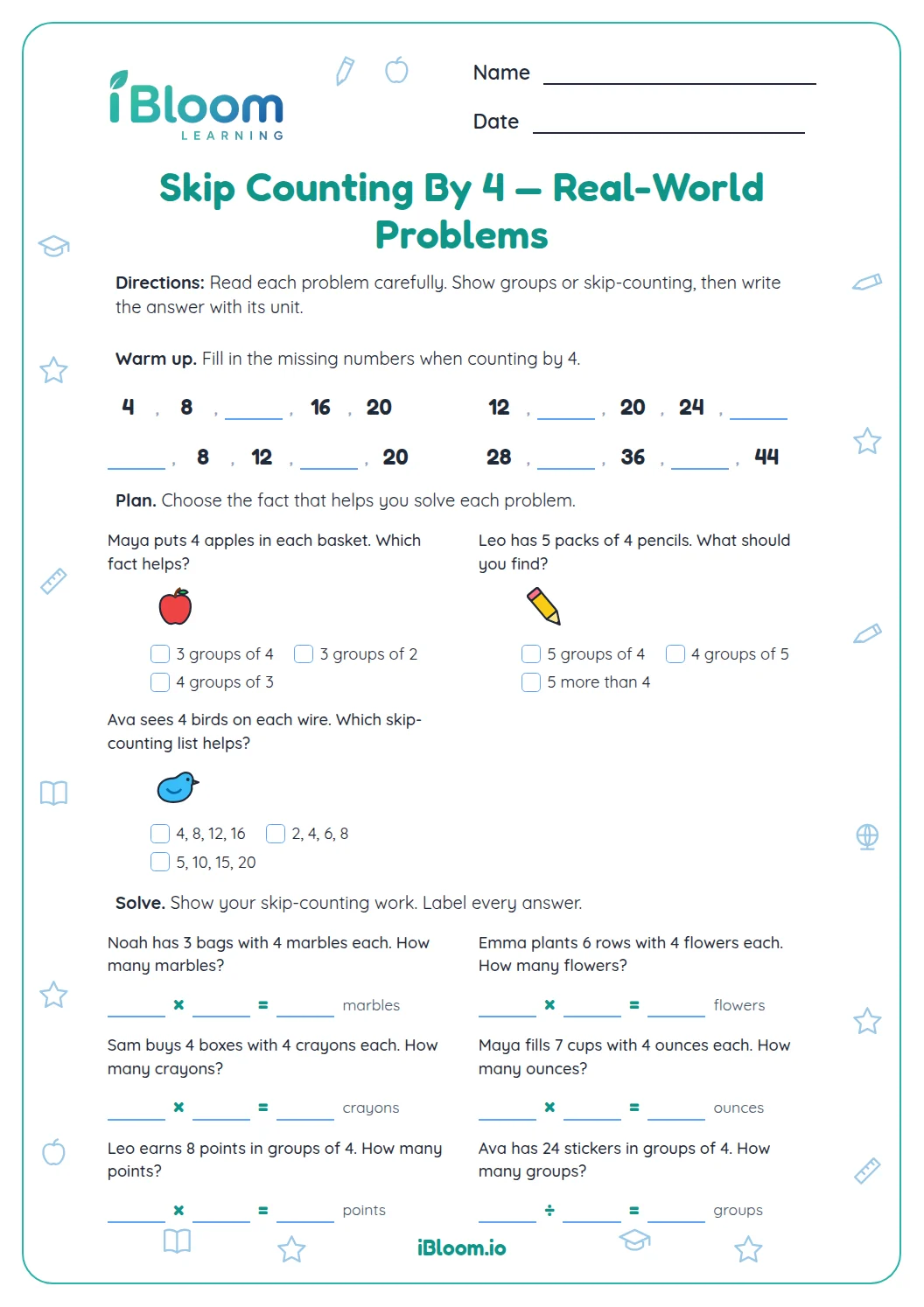
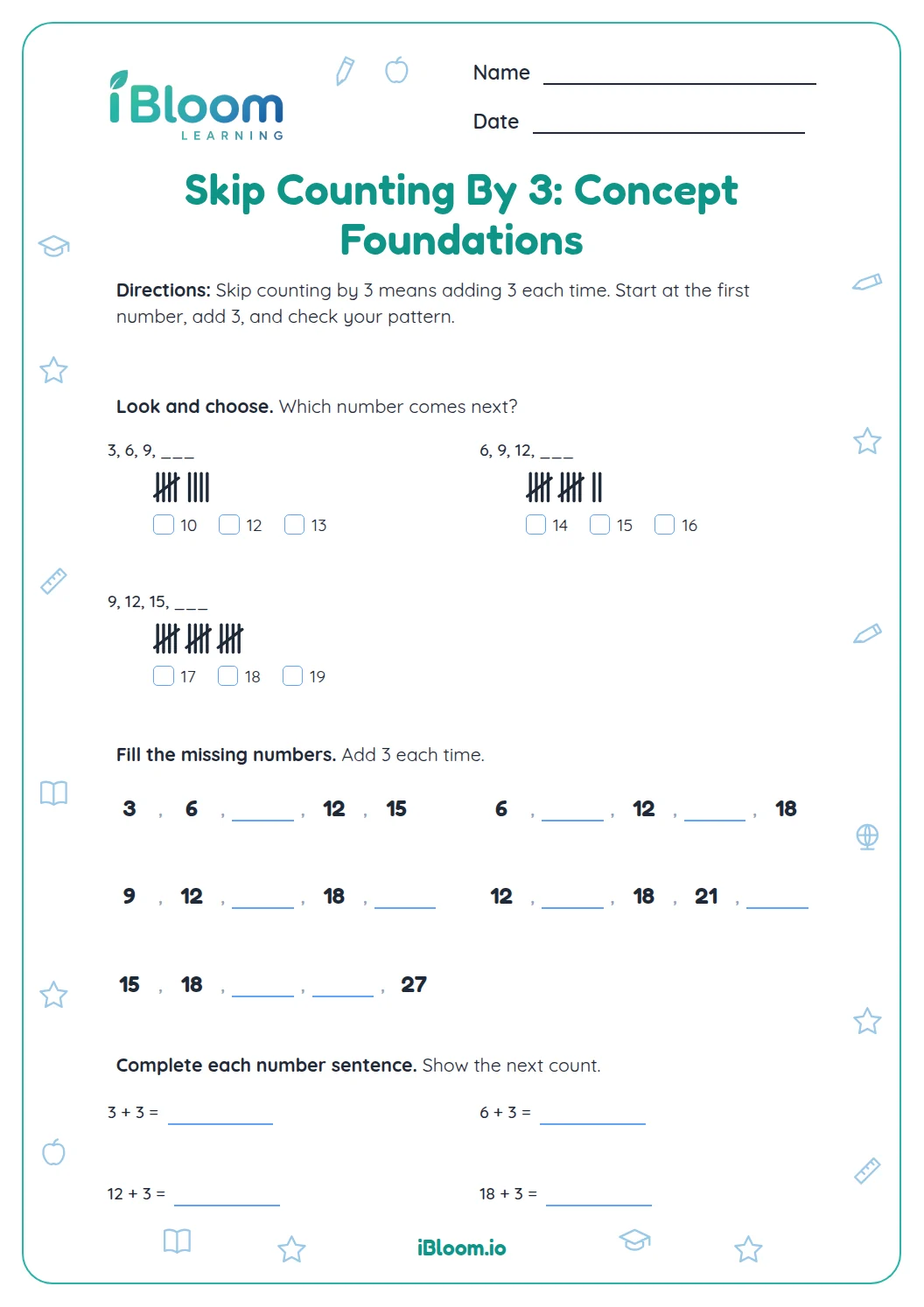
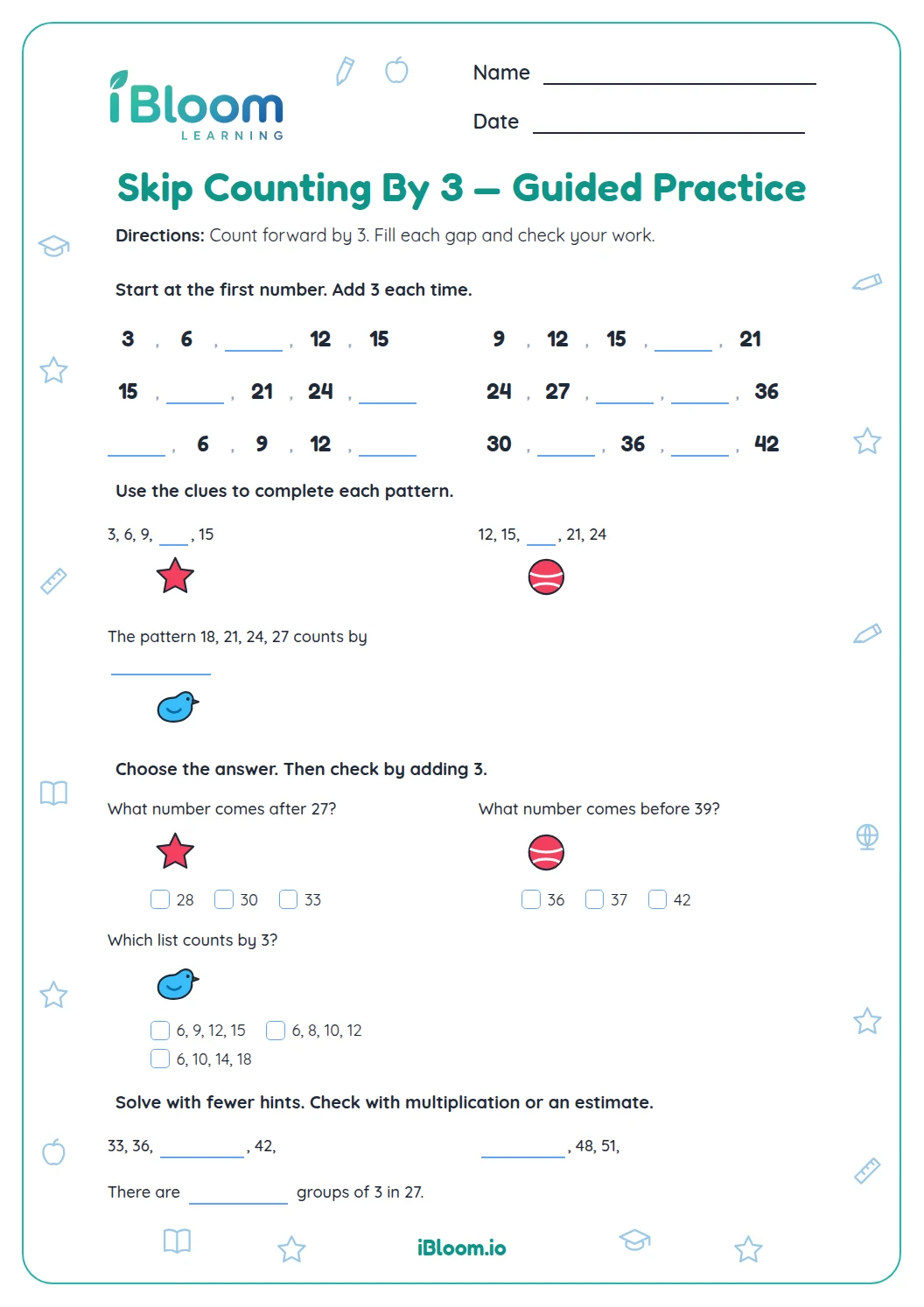
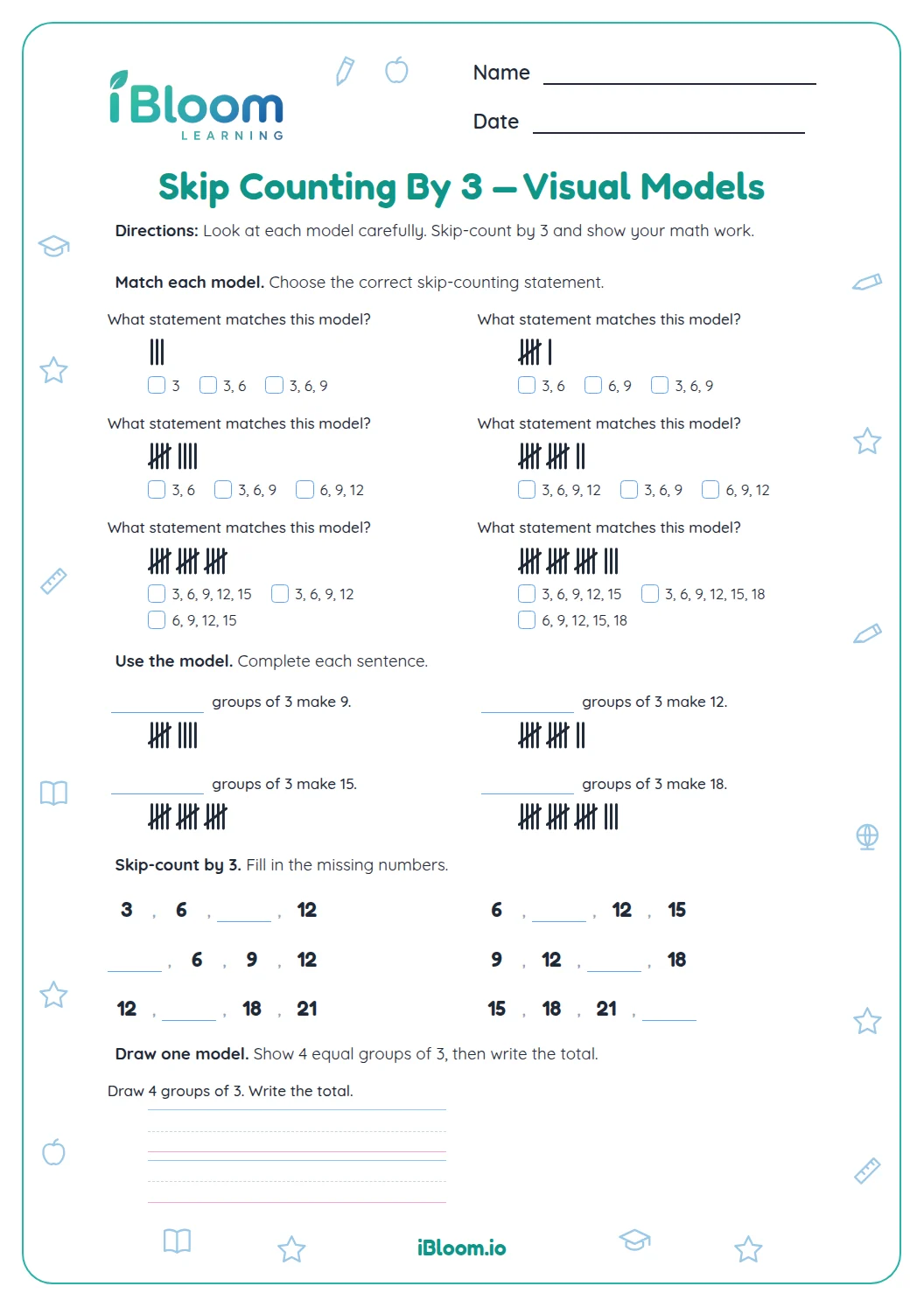
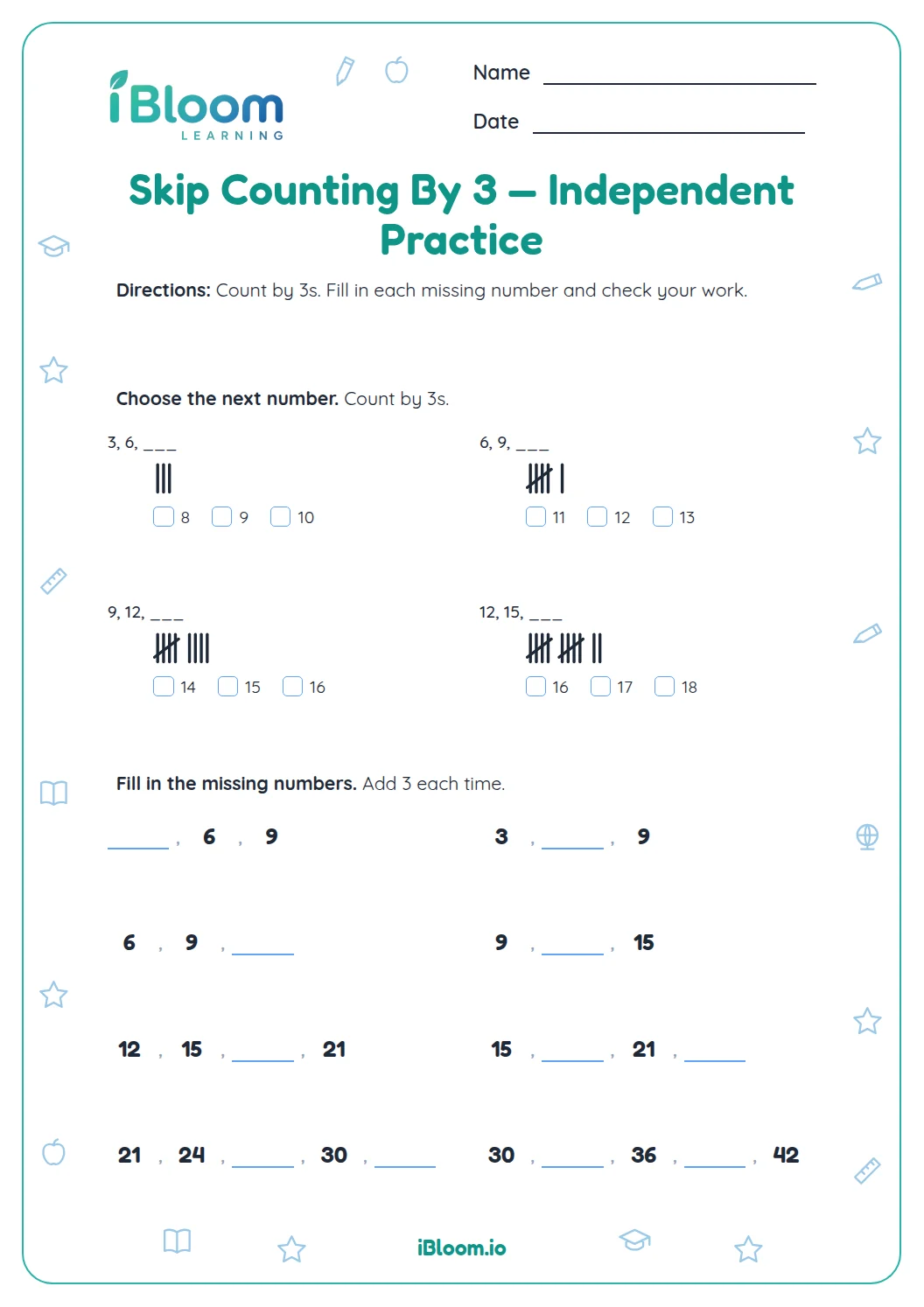
This concept-foundations page helps Grade 2 students build a steady count by four. Students continue sequences from different starting points, fill missing values, connect skip counting to “4 more” and “4 less,” and count from new starting numbers. The questions stay within 1,000 and use familiar multiples.
Continue by fours?
Say each number aloud and check that every jump adds 4. For groups, count one group of four at a time.
- 1What number comes next? 4, 8, 12, ___, 20.
- 2Answer: 16
Fill the missing number?
Fill the missing number uses the same strategy in a new way: skip counting by 4 and recognizing groups of four.
- 1Complete the pattern: 4, 8, ___, 16, 20.
- 2Answer: 12
How can students use the count?
The final questions use the same jump of 4 from familiar and new starting numbers. Students can track each jump to find a nearby term.
- 1Ava counts 4, 8, 12, 16, 20. What number does she say next?
- 2Answer: 24
How to use this worksheet
- 1Read the direction for continue by fours.
- 2Work through each item and write one answer for each question.
- 3Use the model or number pattern to check the result.
- 4Finish the last part, then use the answer key to review.
Common mistakes and quick fixes
The mistake
Ignoring the key step in skip counting by 4 and recognizing groups of four.
The fix
Say each number aloud and check that every jump adds 4. For groups, count one group of four at a time.
The mistake
Writing a result without its requested unit or form.
The fix
Reread the question and include the unit or comparison symbol it asks for.
The mistake
Checking only the final number.
The fix
Repeat the count, measurement, or addition step and compare it with the model.
What to practice next
Make more practice
Questions parents and teachers ask
What does this worksheet practice?
This sheet gives students 14 questions on continuing by-four patterns from different starting numbers. The separate answer key matches each question and includes the correct result. Start with the first part together if the model or vocabulary is new, then let the student finish the remaining items before checking.
How does skip counting reveal a pattern?
Each next number is 4 more than the one before it. Starting at 300, two jumps give 304 and then 308. Keep adding the same amount one step at a time, and check the spacing between neighboring terms. This approach works with small or larger starting numbers.
What can a student do when a pattern feels tricky?
Find two neighboring numbers and subtract to check the jump. In a by-four sequence, the difference should always be 4. Then continue one step at a time rather than trying to guess a later number. This also helps locate a missing term.
How can I use the answer key?
Have the student finish one part before opening the answer key. Compare each response with the matching question and revisit any difference by naming the step that led to the answer. The key is a check; the student can still explain a correct method in their own words.
Can this be used at home or in class?
This printable works for a short classroom practice session or at home. A teacher can assign one part at a time, while a family can review the model and then check the work with the included key. The questions use the same skill throughout so students can focus on the strategy.