


About this worksheet
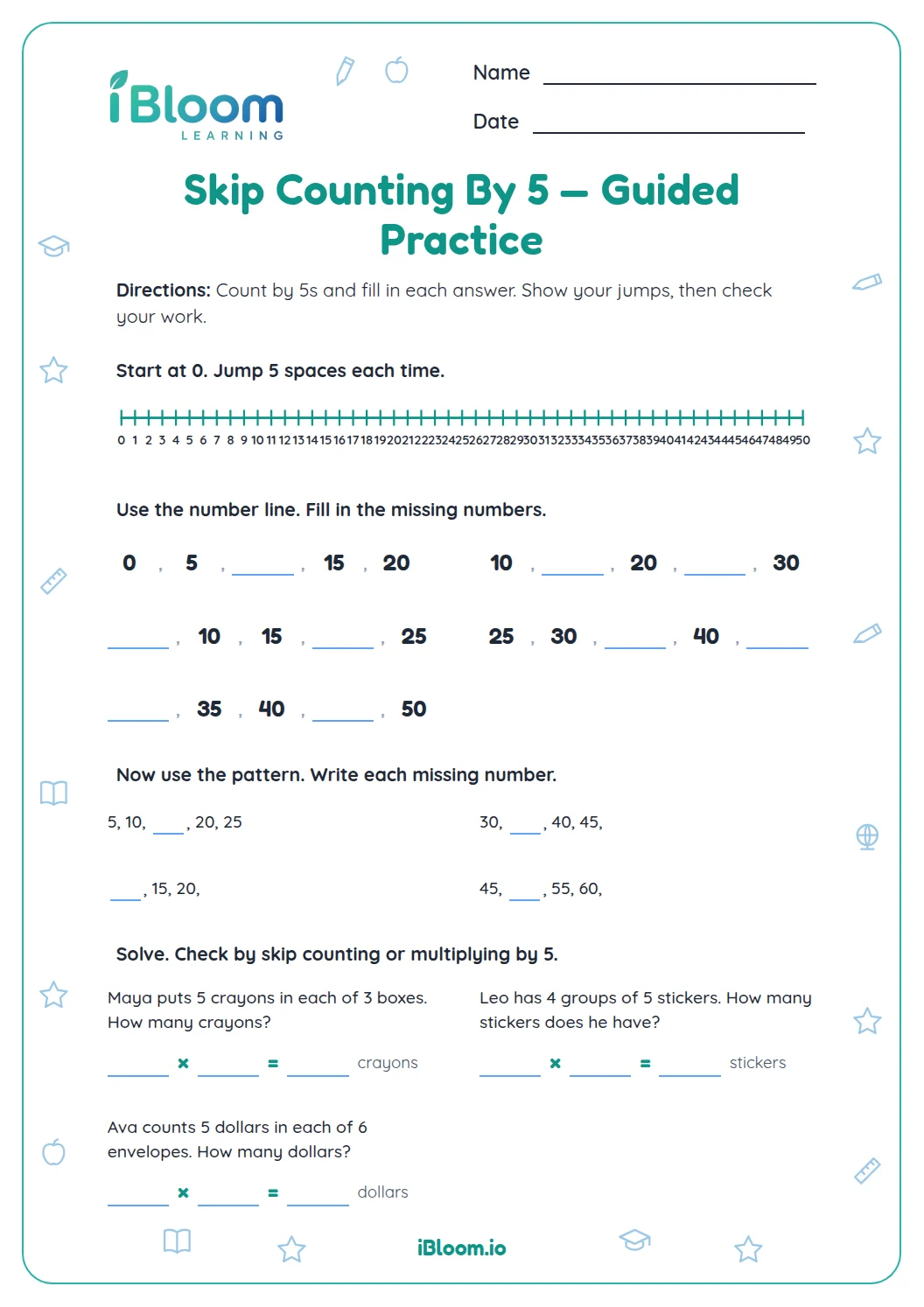
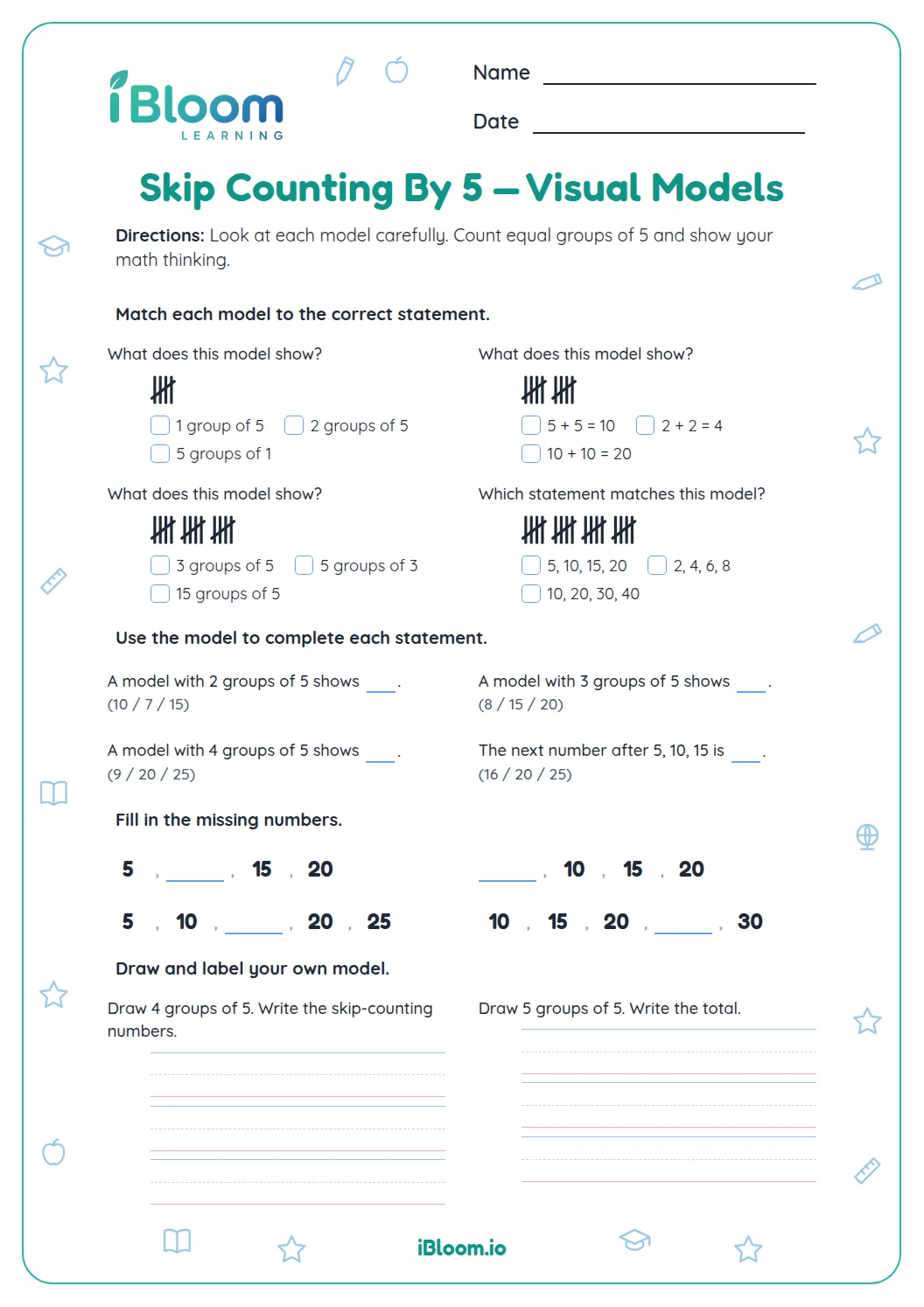
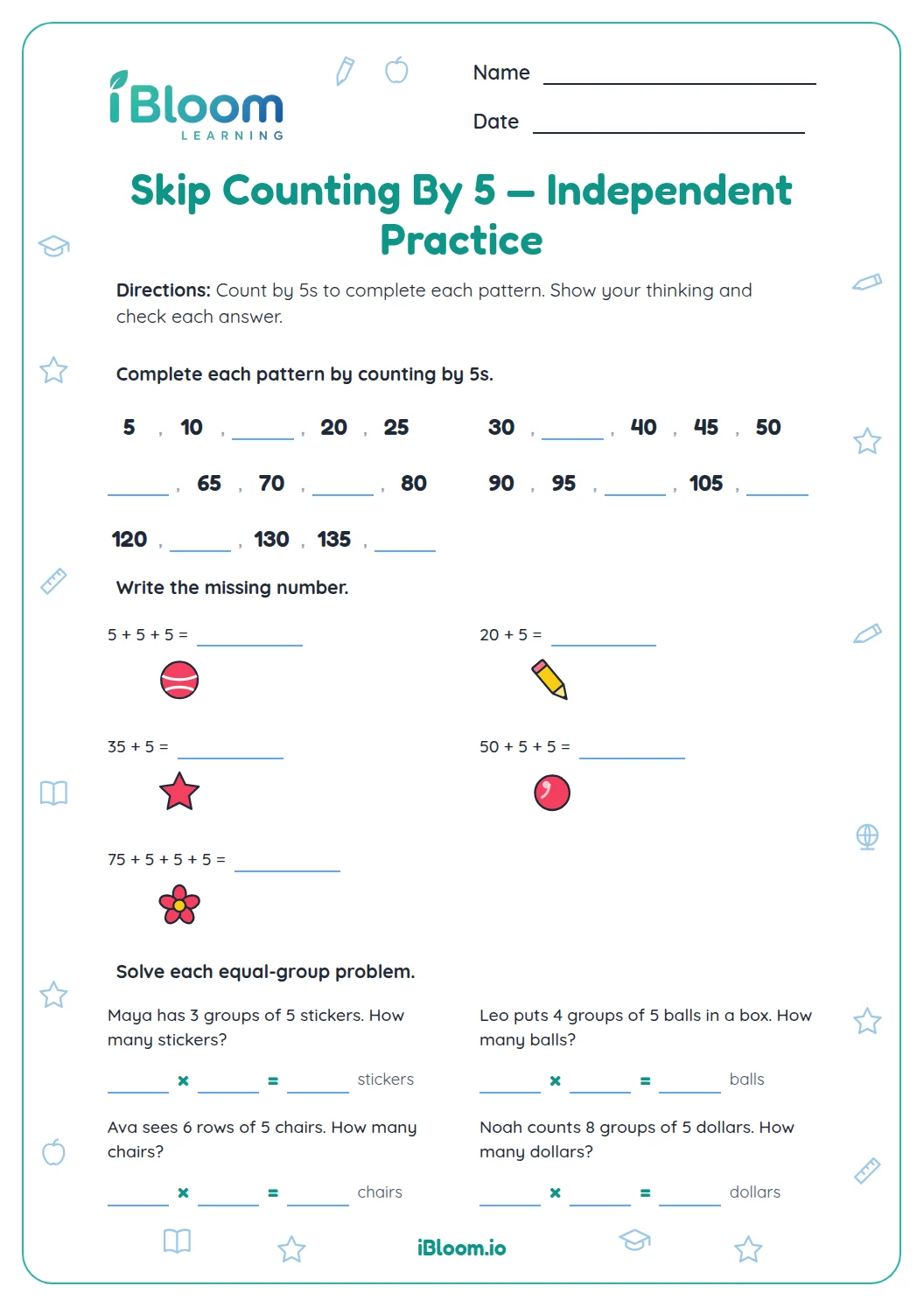
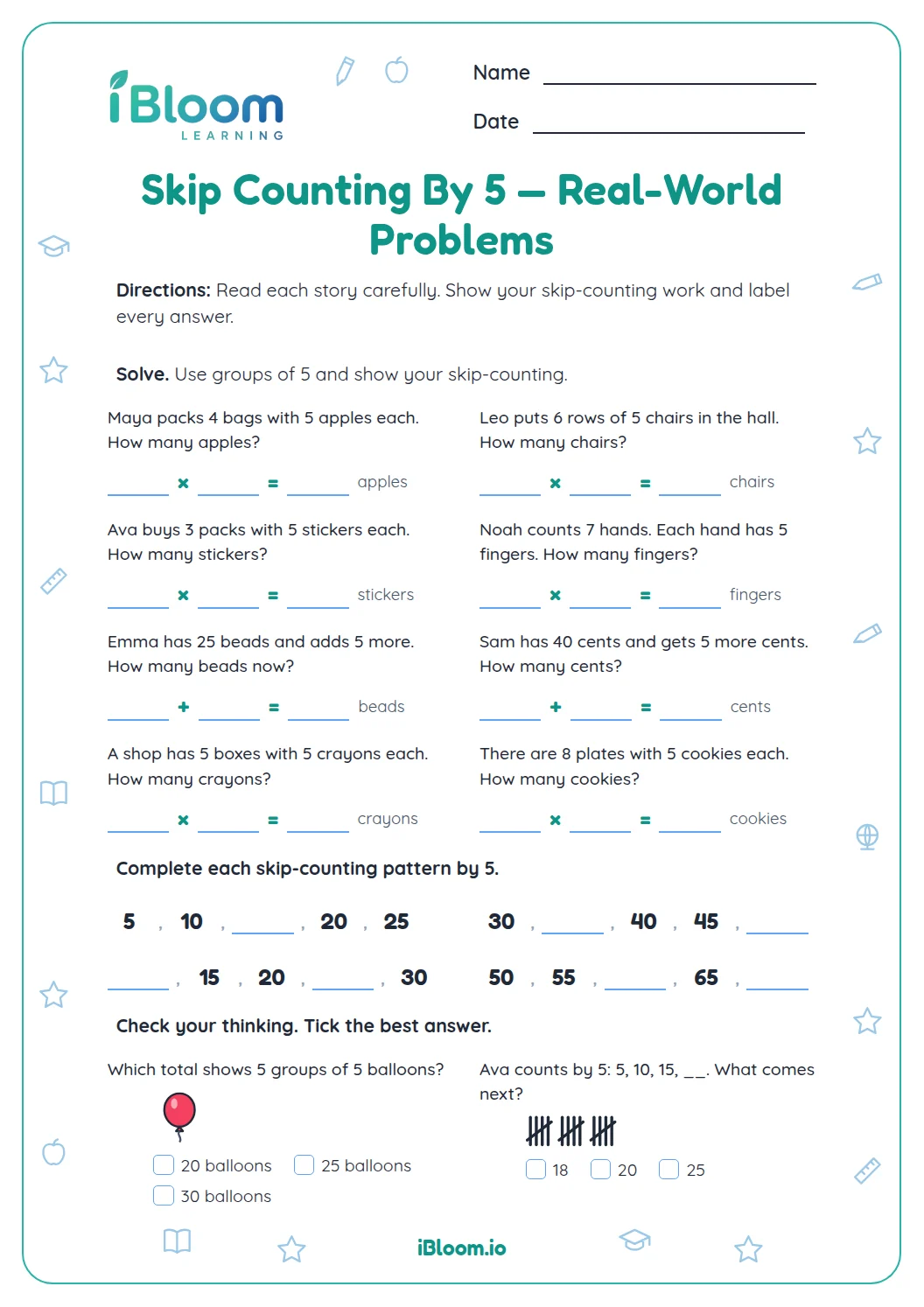
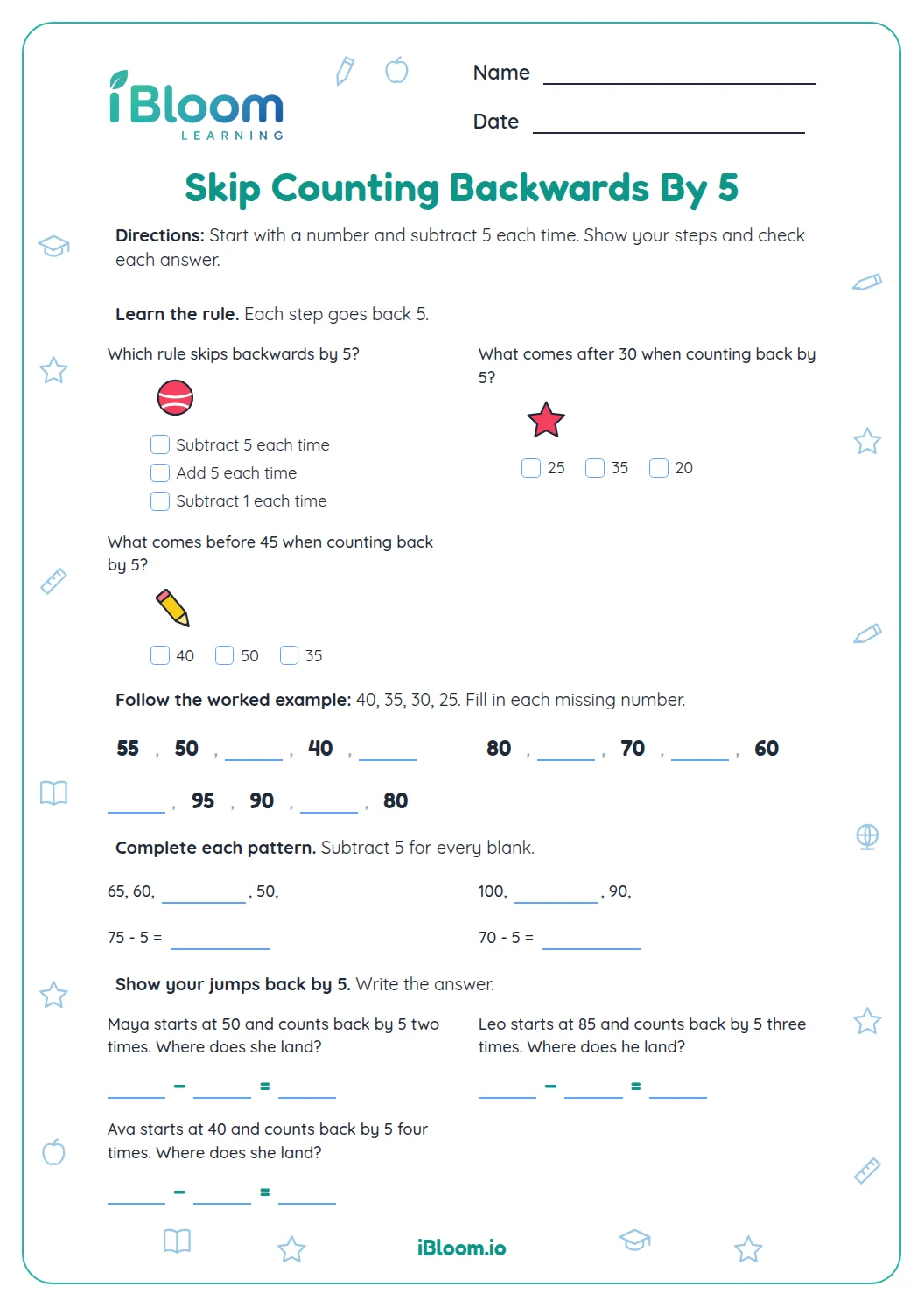
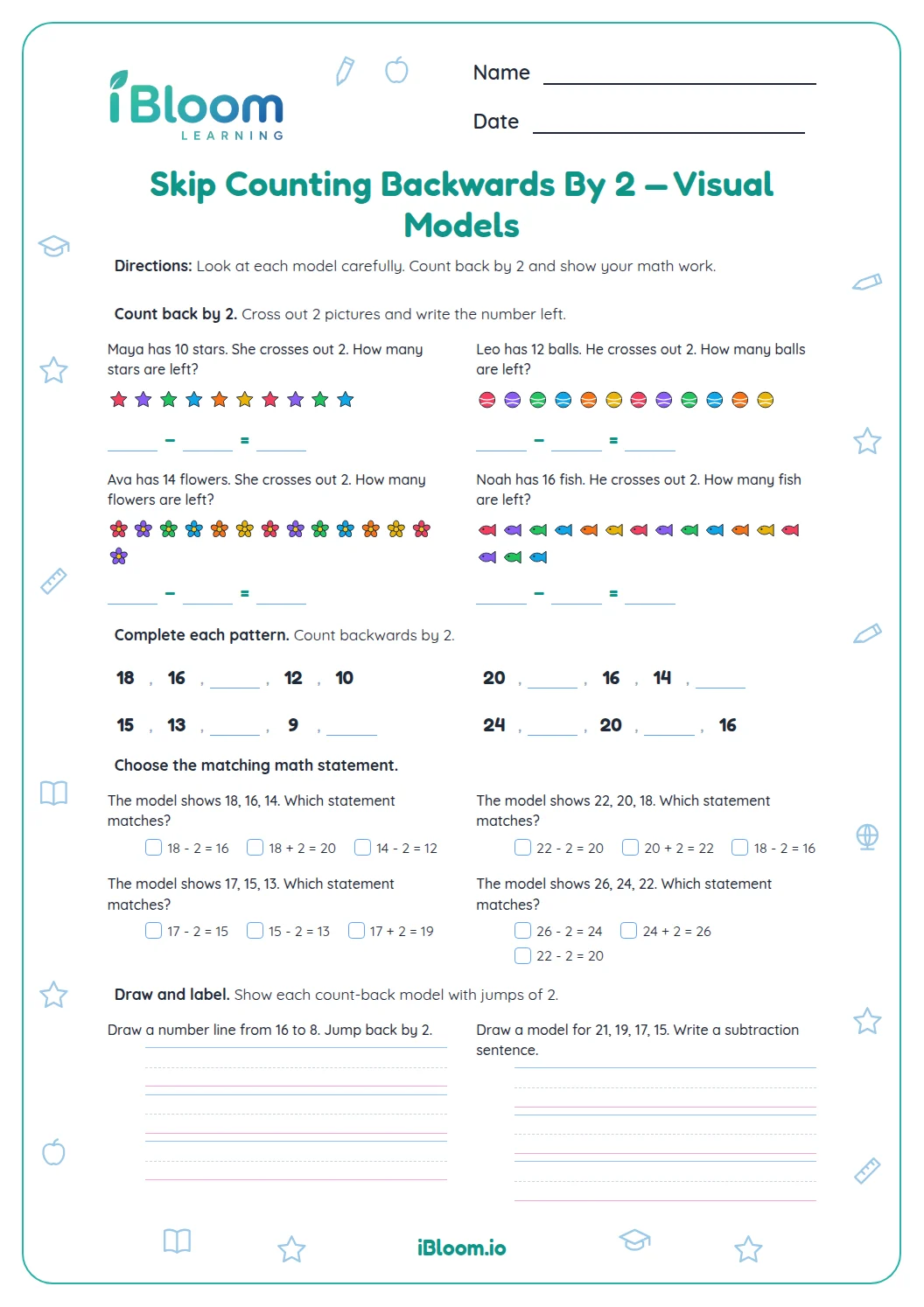
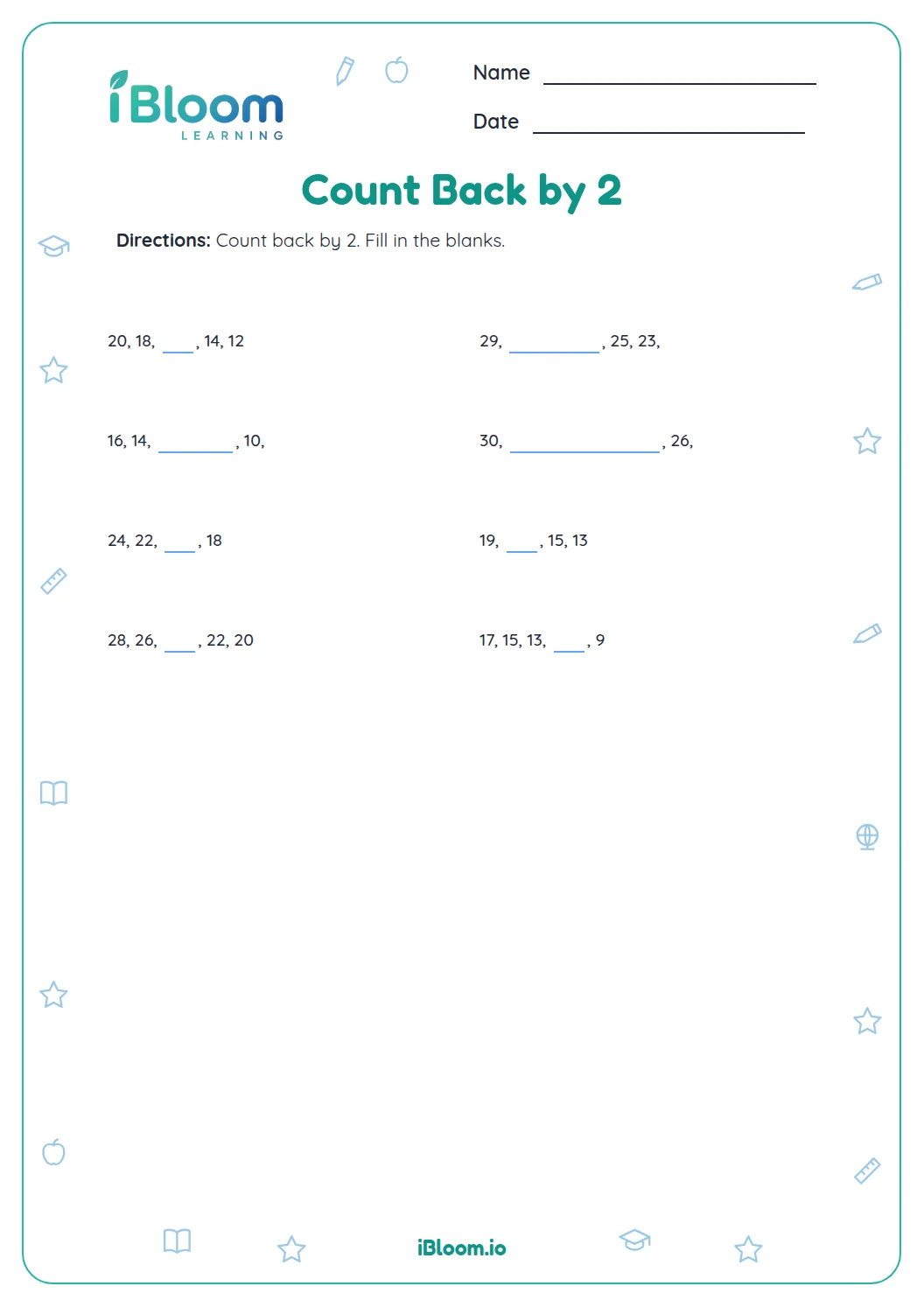
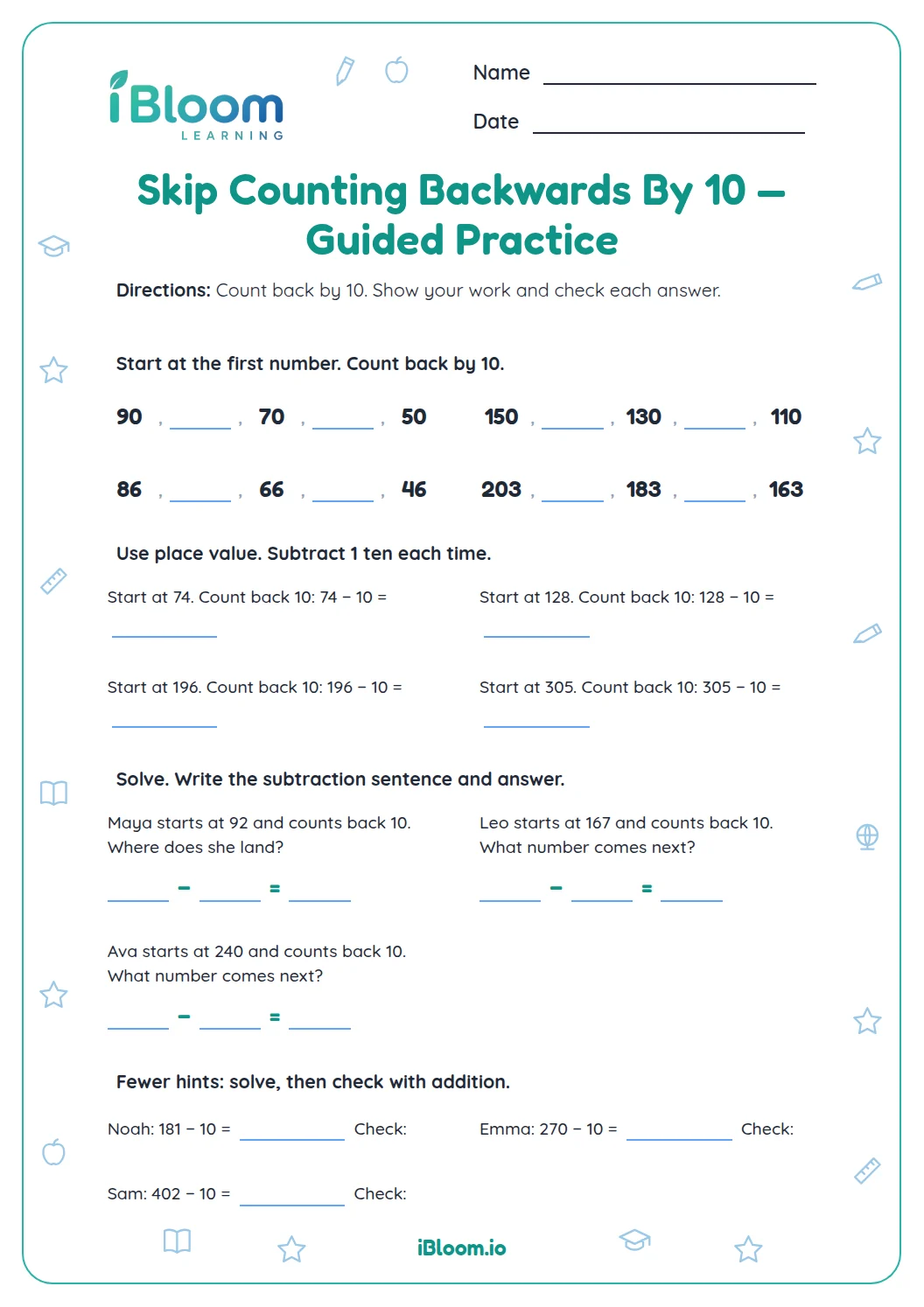
This Grade 2 worksheet builds skip counting by fives from short sequences to numbers near 1,000. Children fill missing terms, spot a list that follows the +5 rule, connect equal groups to totals, and count the jumps between two numbers. The answer key includes both missing numbers when a sequence has two blanks.
Aligned to 2.NBT.A.2
What is on this worksheet?
Part A completes skip-counting sequences. Part B checks the +5 pattern, Part C connects fives to equal groups, and Part D extends the counts near 1,000 and asks children to count jumps.
- Part A: 6 missing-number sequences
- Part B: 4 pattern questions
- Part C: 2 equal-group questions
- Part D: 4 larger counts and jump questions
How do you count the jumps?
Count intervals, not the numbers at the endpoints. From 20 to 50, the jumps land on 25, 30, 35, 40, 45, and 50, so there are six jumps.
How to use the worksheet
- 1Read the numbers in order and say each +5 jump aloud.
- 2Fill a blank by adding five to the number before it.
- 3Check a list by comparing neighboring numbers.
- 4For group questions, multiply the number of groups by five or count by fives.
- 5For jump questions, count the spaces between the endpoints.
Common mix-ups
The mistake
Counting the starting number as a jump. Count each move of five instead.
The fix
The mistake
Skipping 1,000 when counting from 995. Add five to get 1,000, then add five again to get 1,005.
The fix
The mistake
Treating 96 as part of a count by fives. The ones digits alternate between 0 and 5.
The fix
Curriculum alignment
The questions practice counting by fives and understanding equal groups.
Count within 1,000; skip-count by 5s, 10s, and 100s.
On this sheet: The worksheet questions give direct practice with this skill.
Show the official wordingHide the official wording
Count within 1,000; skip-count by 5s, 10s, and 100s.
What to practice next
Make more practice
Further reading
Questions parents and teachers ask
What does it mean to skip count by 5?
Skip counting by five means adding five to the previous number each time. A count can start at different numbers, but every jump stays five. This worksheet moves from short patterns to numbers near 1,000 and asks children to keep the step size steady.
Why do counts by five end in 0 or 5?
Adding five alternates the ones digit between 0 and 5. For example, 30, 35, 40, and 45 follow the pattern. Checking the ones digits can help, but children should also make sure the difference between neighboring numbers is five.
How do you find the number of jumps between two numbers?
Count each step of five from the starting number to the ending number. Do not count the starting number as a jump. Going from 20 to 50 takes six jumps: 25, 30, 35, 40, 45, and 50. Each interval is one jump.
Are the numbers within Grade 2 practice?
The sequences stay within 1,000, including a count across 1,000 from 995 to 1,005. Children practice the Grade 2 skill of skip counting by fives while keeping the step size consistent from one number to the next. The practice includes both patterns and groups.
What does the answer key show?
The key lists the missing term or terms for each sequence and answers the group and jump questions. For the item with two blanks, both values appear in order, matching the blanks from left to right on the worksheet.