





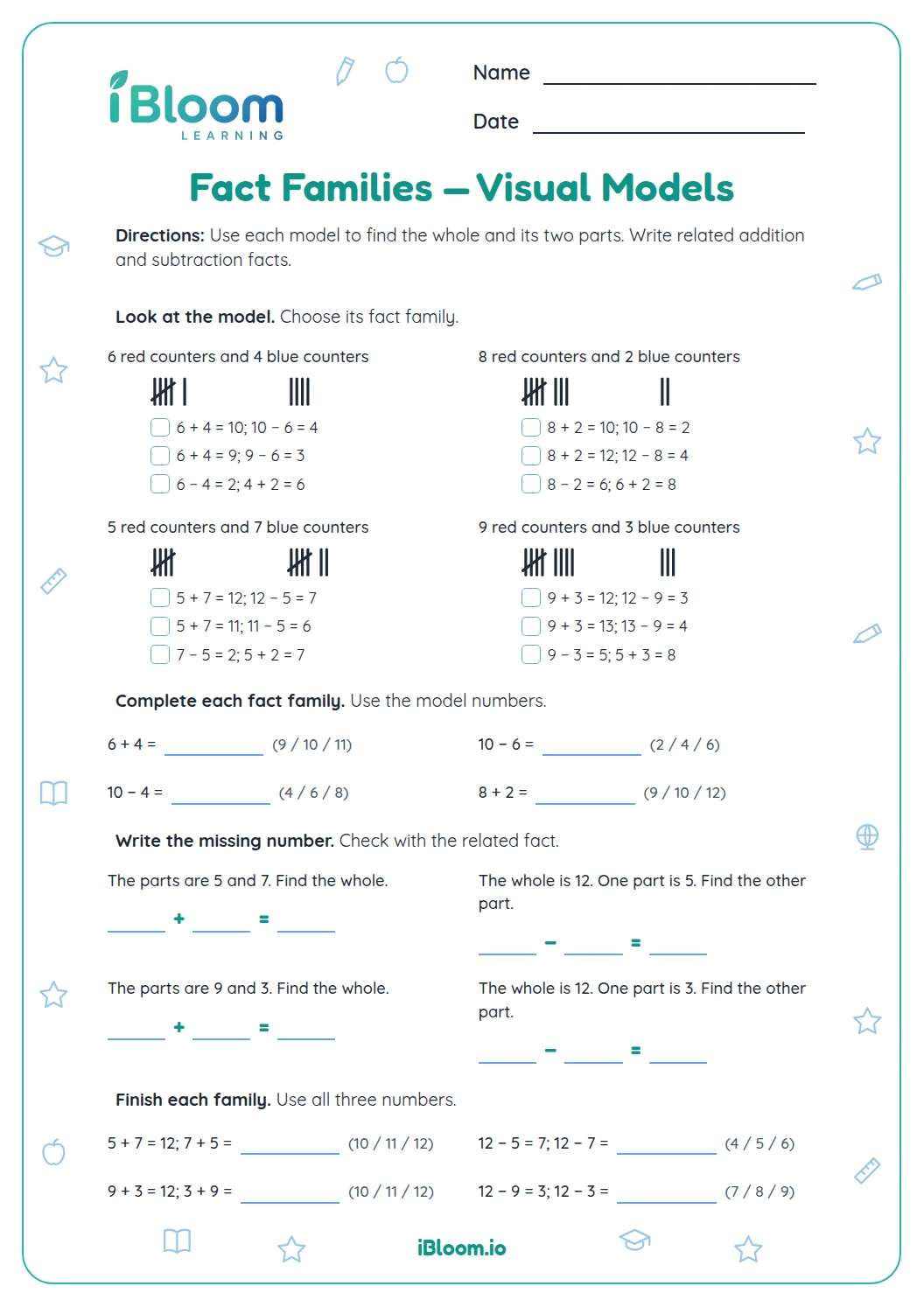
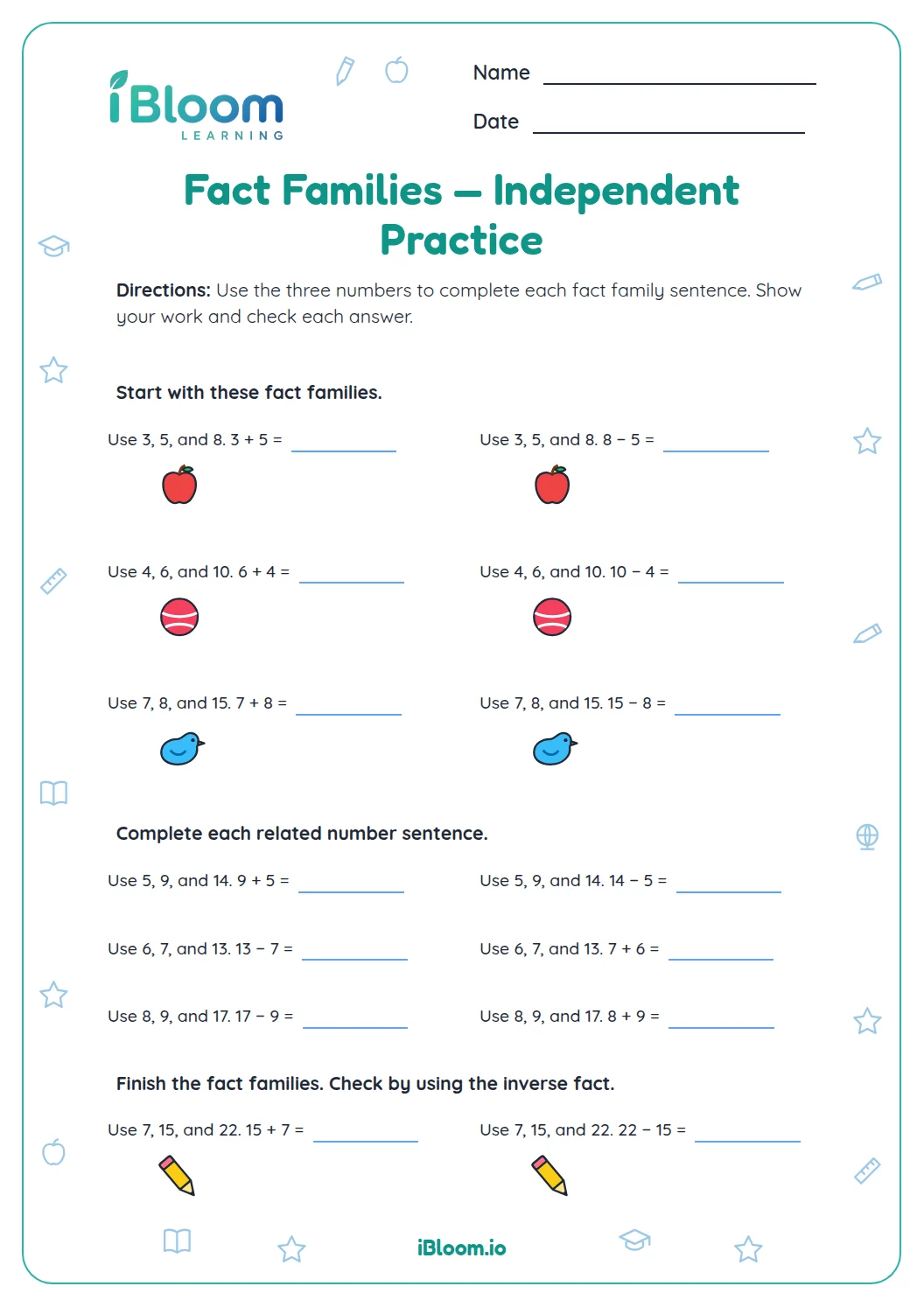
About this worksheet
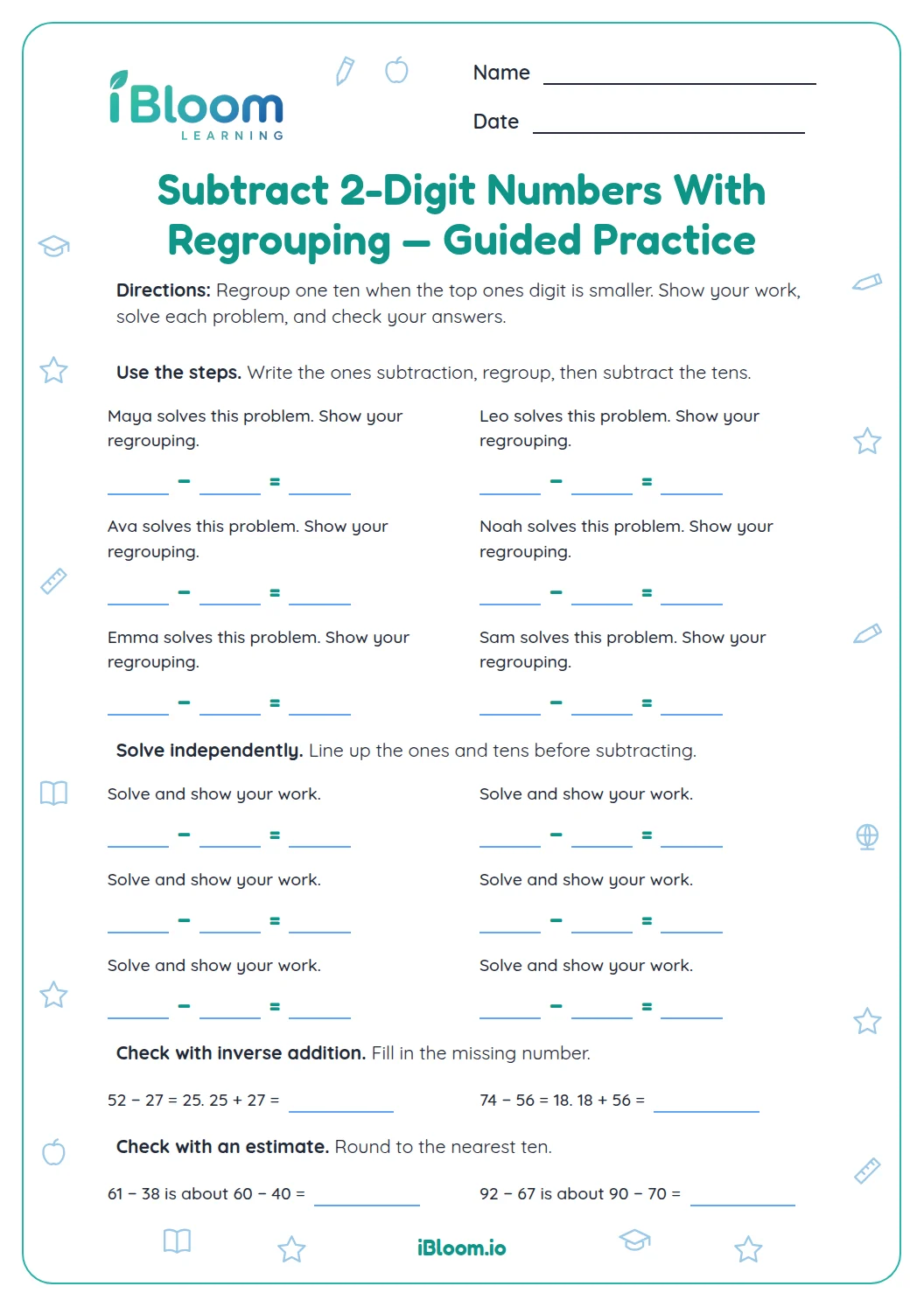
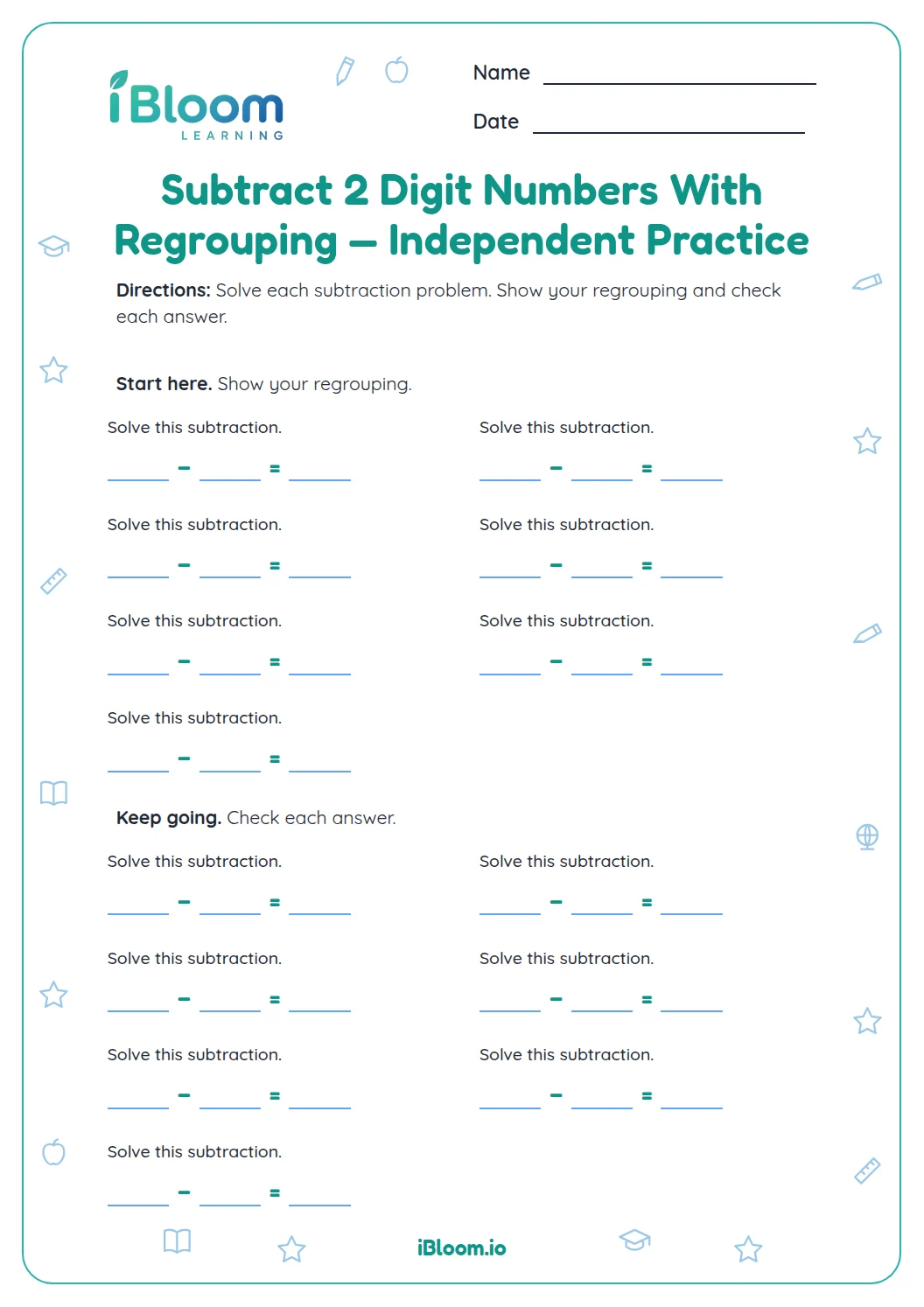
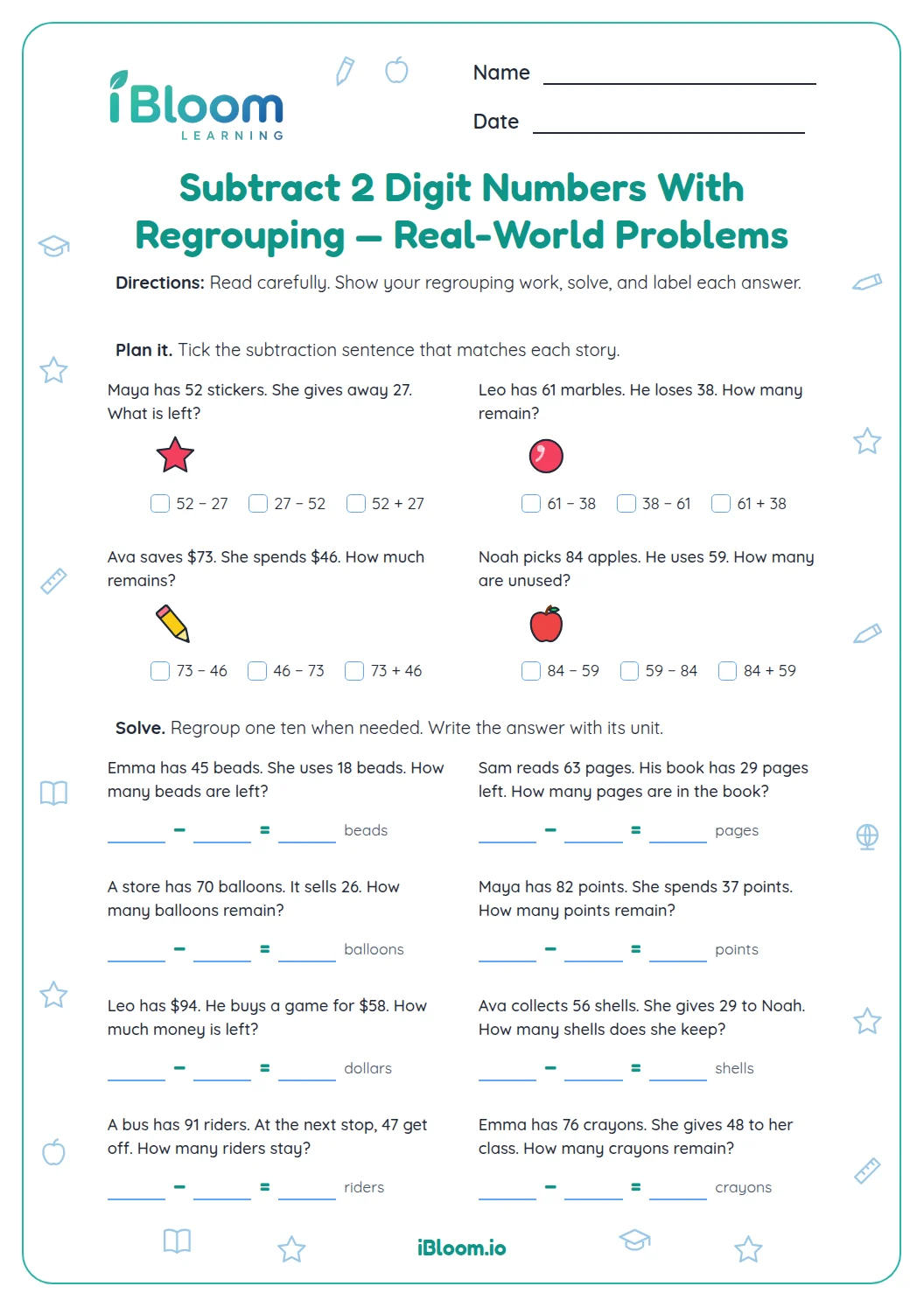
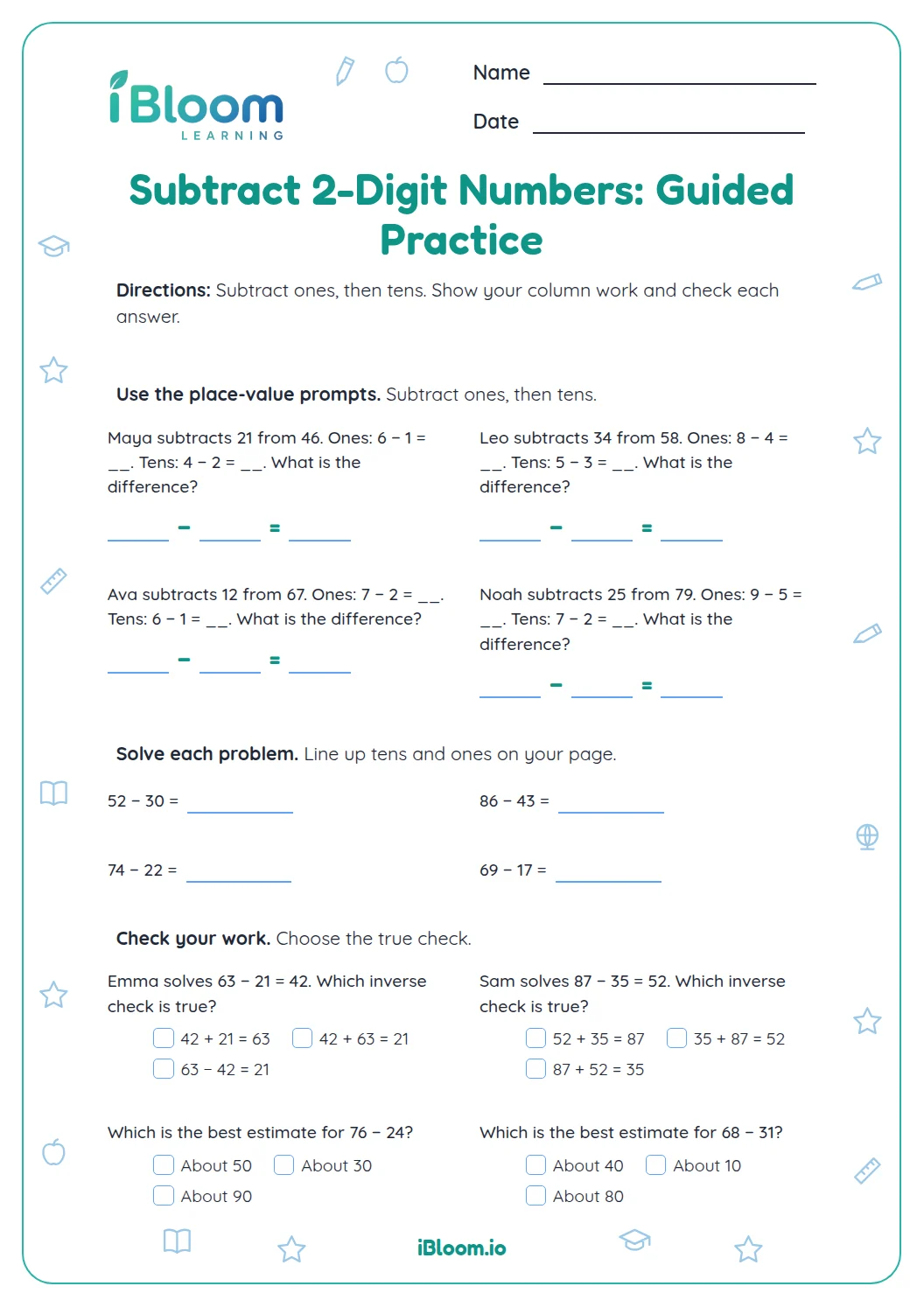
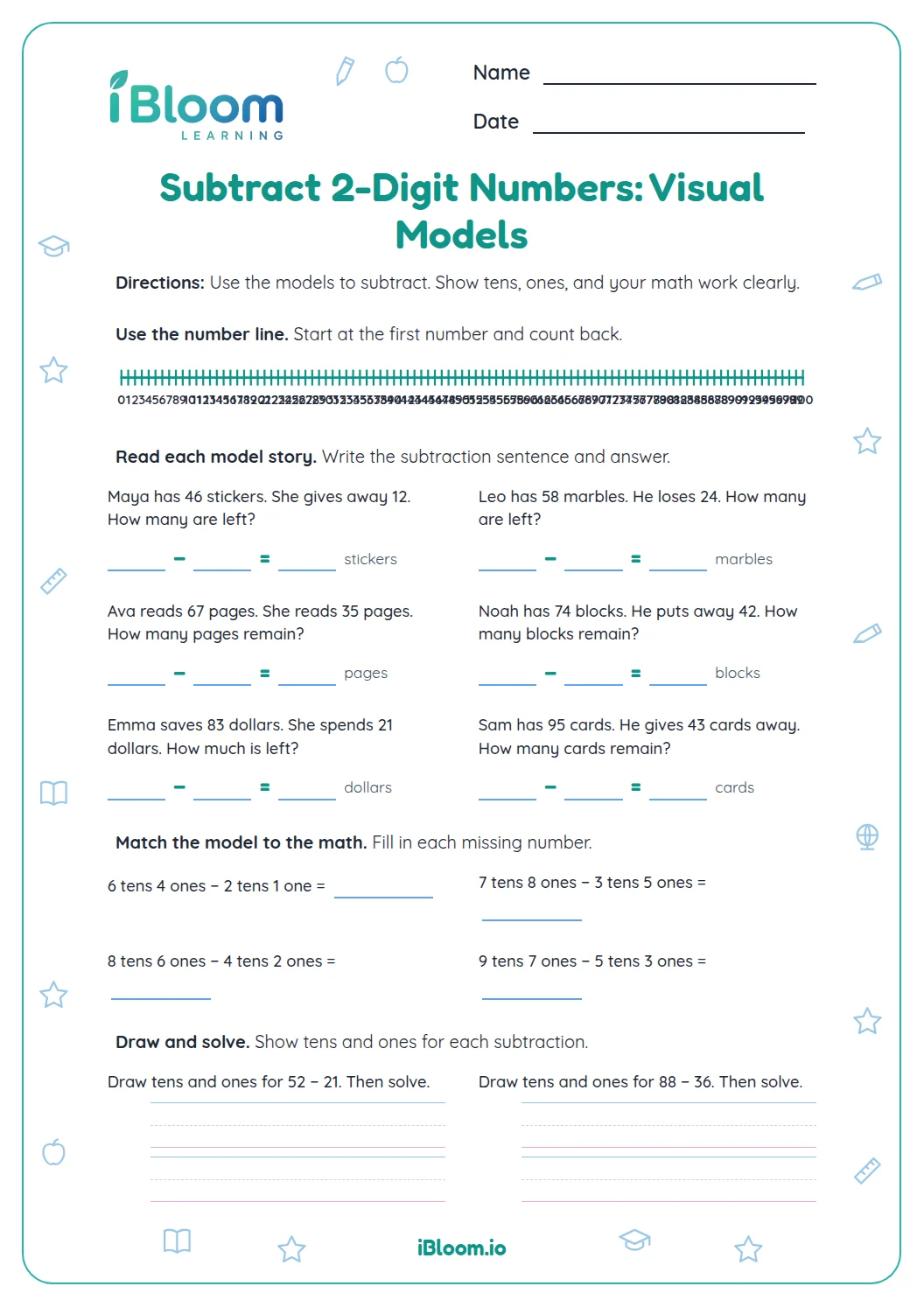
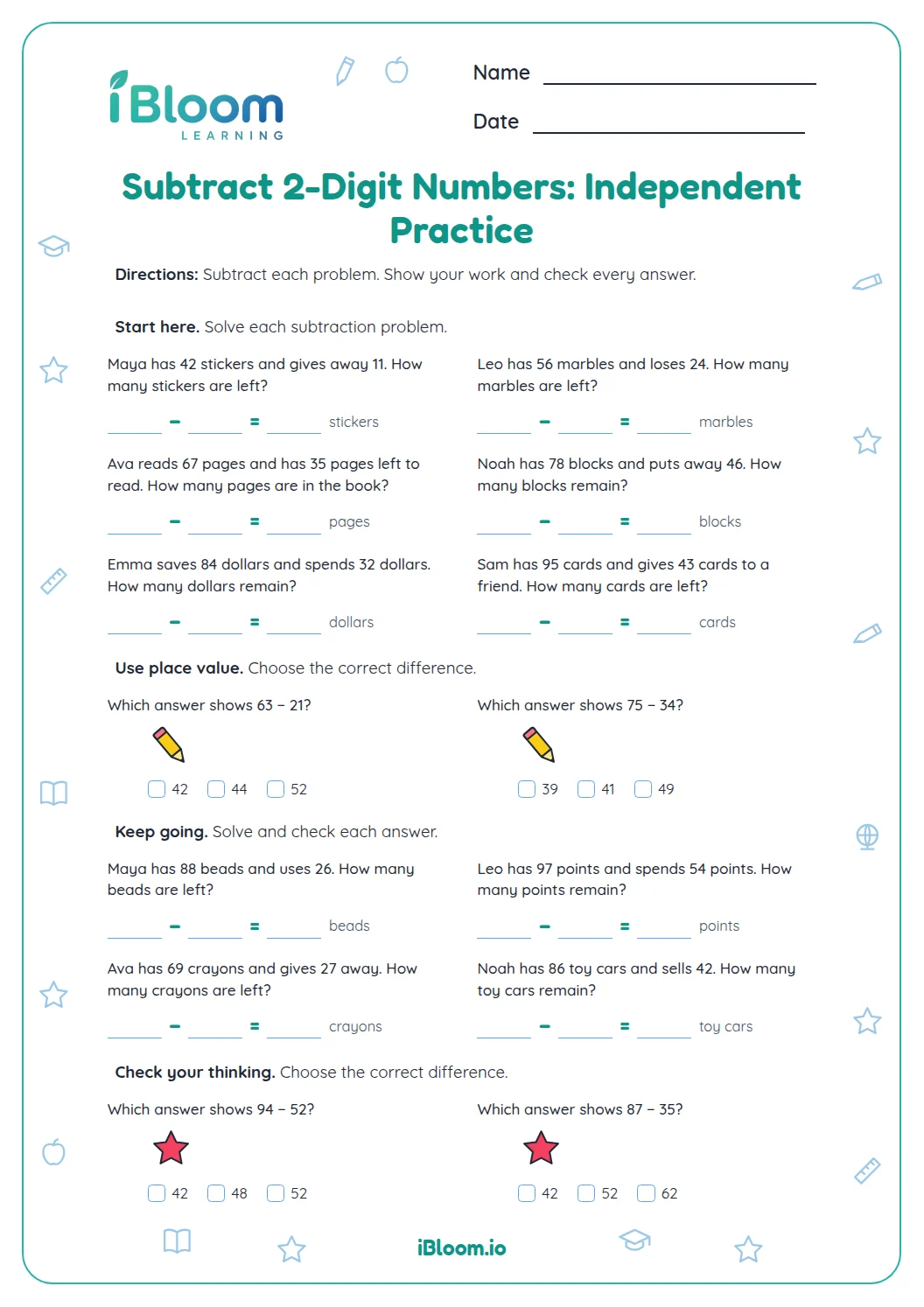
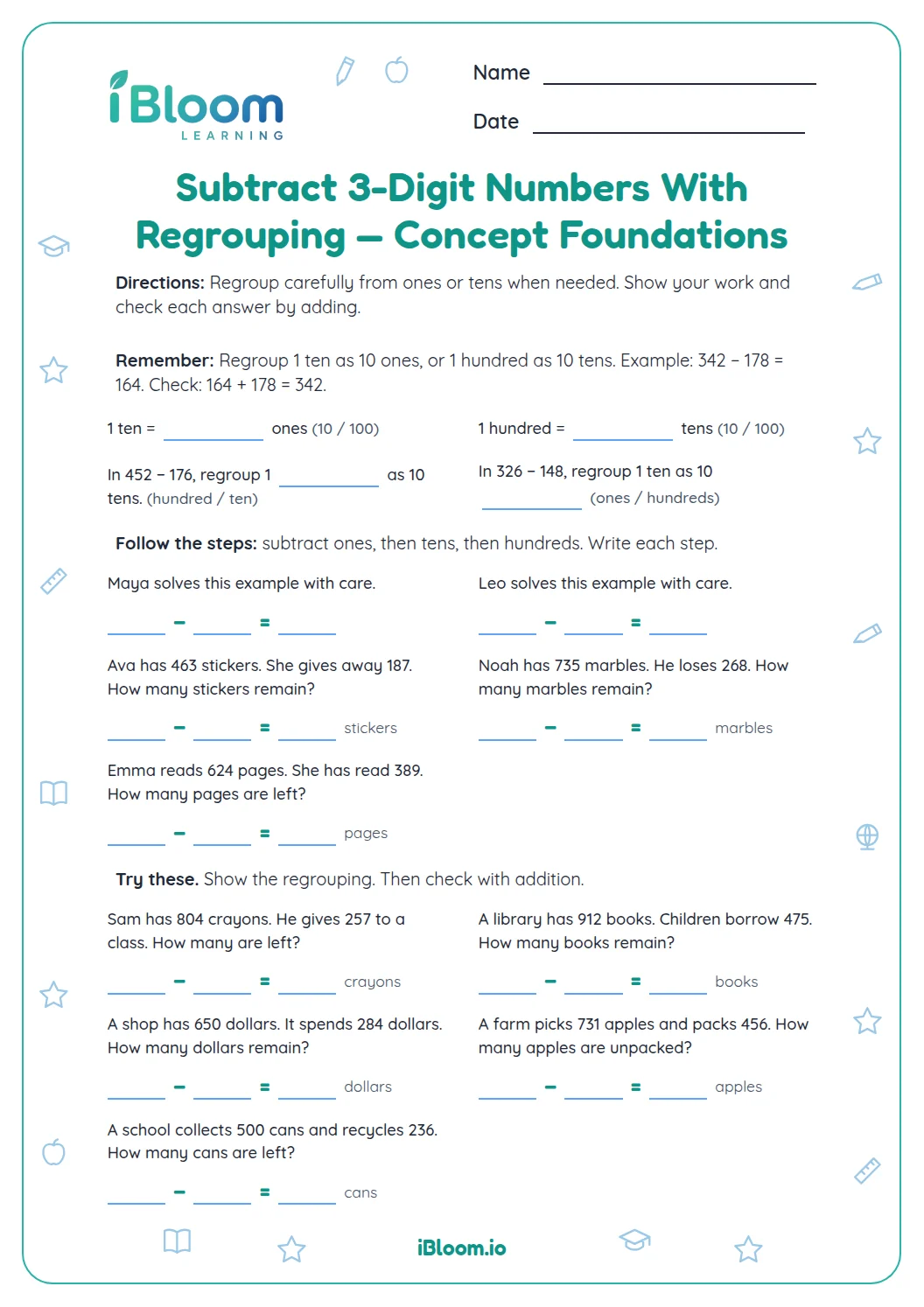
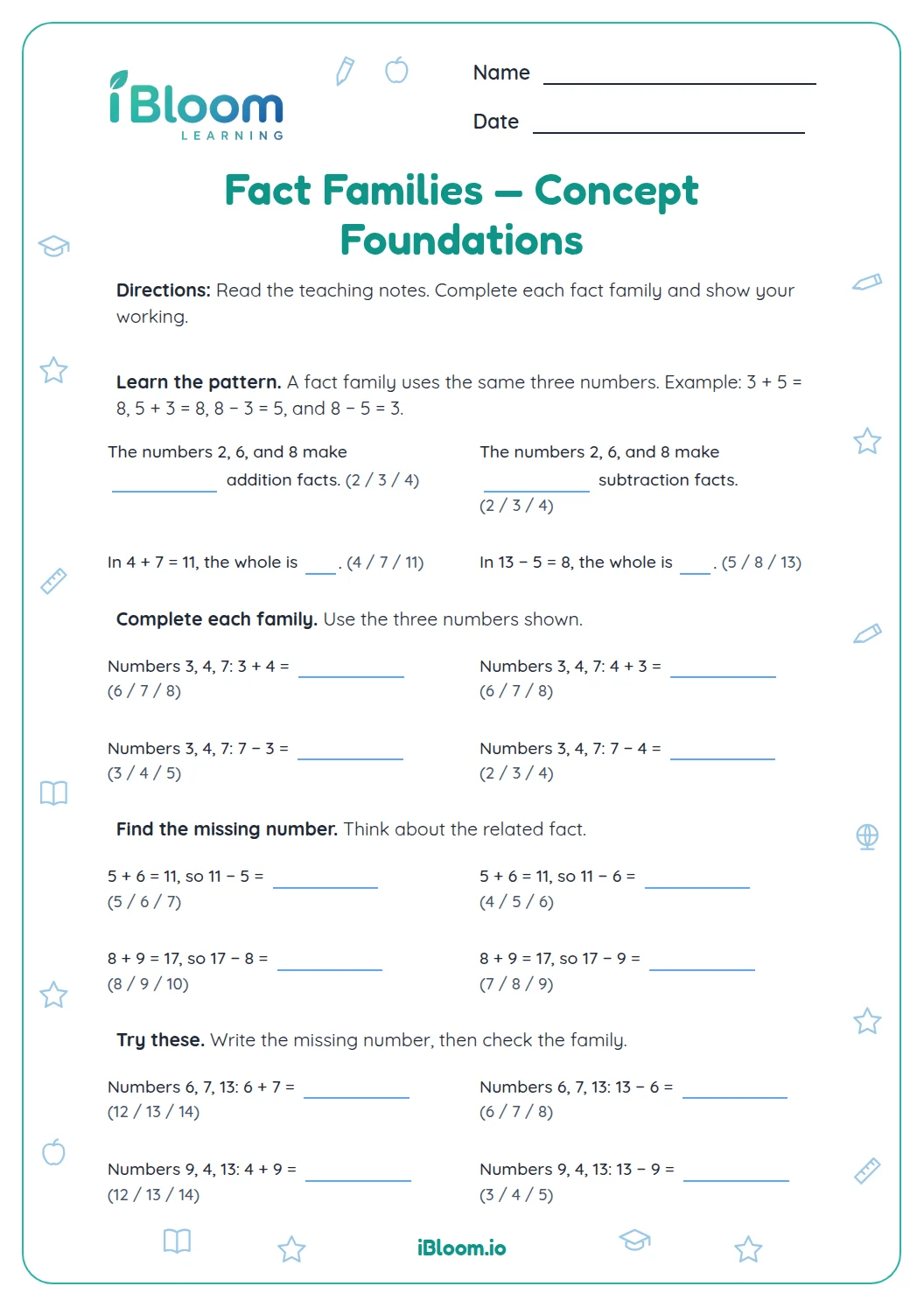
This free printable Grade 2 worksheet builds two-digit subtraction with regrouping through short, focused practice. Children work through 14 questions in 2 parts, beginning with clear examples and moving toward independent decisions. The page uses dino artwork and includes a separate answer key for checking each response. The practice aligns with Common Core State Standards for Mathematics 2.NBT.B.5: subtract within 100 by using place-value strategies and the addition relationship.
Aligned to 2.NBT.B.5
How does trading a ten help?
Use each base-ten drawing to see the minuend in tens and ones before subtracting.
When there are not enough ones, trade one ten for ten ones.
- 152 − 27 = ___ → 25
Can you regroup on your own?
Solve more two-digit subtraction problems, regrouping when needed.
Check each difference by adding it to the number subtracted.
- 146 − 19 = ___ → 27
How to use this worksheet
- 1Read the tens and ones in the base-ten drawing.
- 2Compare the ones digits; if the top has fewer, trade one ten for ten ones.
- 3Subtract the ones, then subtract the tens after regrouping.
- 4Keep the minuend and subtrahend in their original order.
- 5Add the difference to the subtrahend to check the starting number.
Common mistakes and quick fixes
The mistake
Subtracting the smaller ones digit from the larger one when the top digit is too small.
The fix
Regroup one ten into ten ones before subtracting.
The mistake
Forgetting that a traded ten leaves one fewer ten.
The fix
After trading, reduce the tens count by one.
The mistake
Reversing the subtraction to avoid regrouping.
The fix
Keep the original order and use regrouping to solve the difference.
Common Core alignment
This page practices 2.NBT.B.5 through its printed questions.
Subtract within 100 by using place-value strategies and the addition relationship.
On this sheet: The questions ask students to apply two-digit subtraction with regrouping directly.
Show the official wordingHide the official wording
Fluently add and subtract within 100 using strategies based on place value, properties of operations, and/or the relationship between addition and subtraction.
What to practice next
Make more practice
Further reading
Questions parents and teachers ask
What does this Grade 2 worksheet practice?
This worksheet practices subtracting two-digit numbers within 100, with regrouping. Six problems include base-ten drawings of the starting number, followed by eight more subtraction problems. A separate answer key gives the difference for each item. The base-ten models make the exchange from one ten to ten ones visible.
How should my child use the answer key?
The key lists the answer to all 14 subtraction problems. For a drawn model such as 52 − 27, show 52 as five tens and two ones, trade a ten for ten ones, then subtract to get 25.
How can I help if an answer is wrong?
When the top ones digit is smaller, trade one ten for ten ones before subtracting. For example, in 52 − 27, 2 ones cannot subtract 7 ones, so regroup 5 tens as 4 tens and 12 ones. The paired answer and starting number can be checked with addition.
Can this page be used for independent practice?
Yes. The first six questions pair subtraction with base-ten drawings, and the second part gives independent practice. Students can refer to the model while learning the trade, then check later answers with addition. The model section offers a concrete way to begin regrouping.
How long should the worksheet take?
Plan for about 20 minutes to work through 14 problems across two worksheet pages and check the key. Allow time to draw or mark the regrouping steps on the model questions. Use the answer key after the student completes both pages.