

About this worksheet
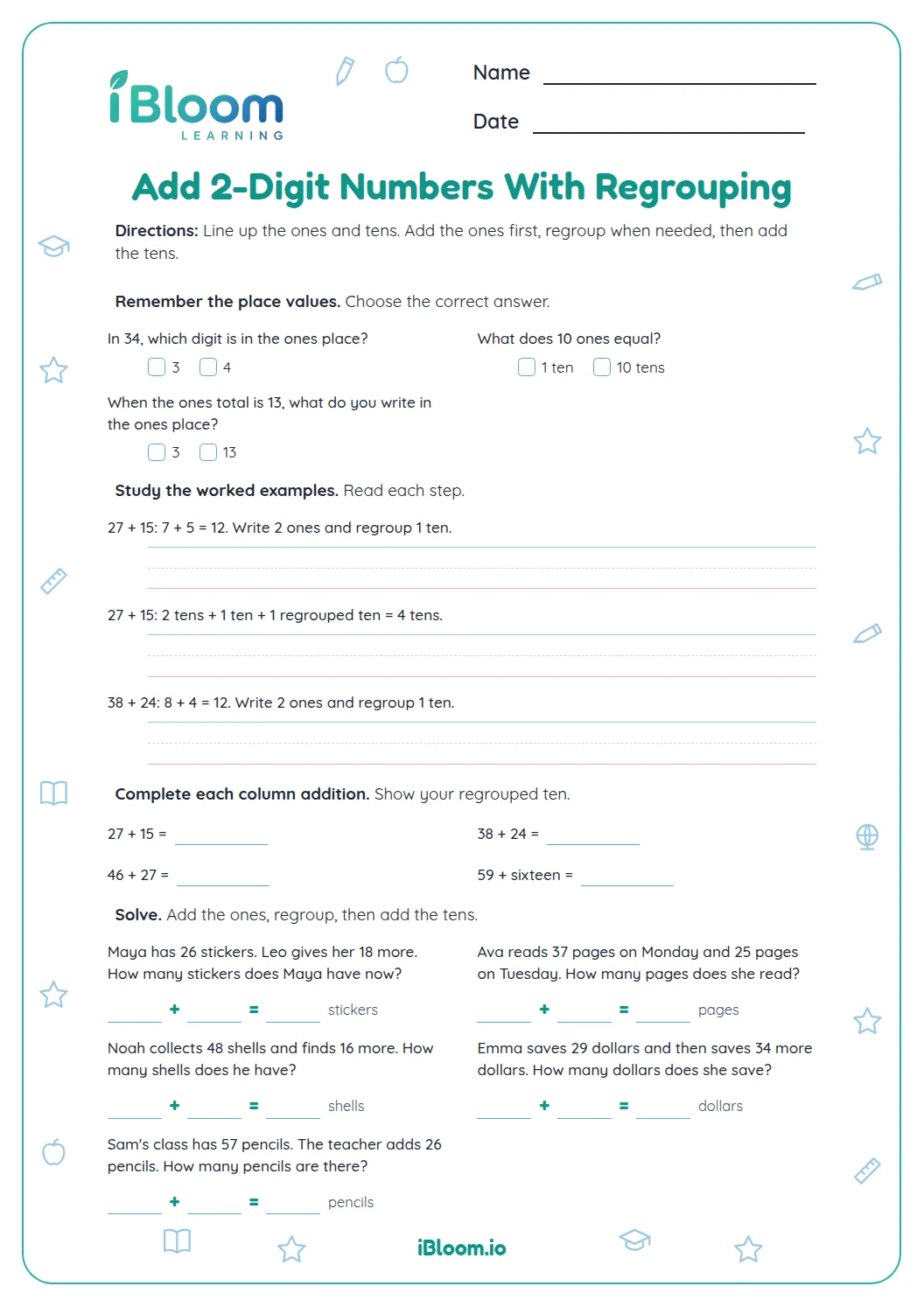
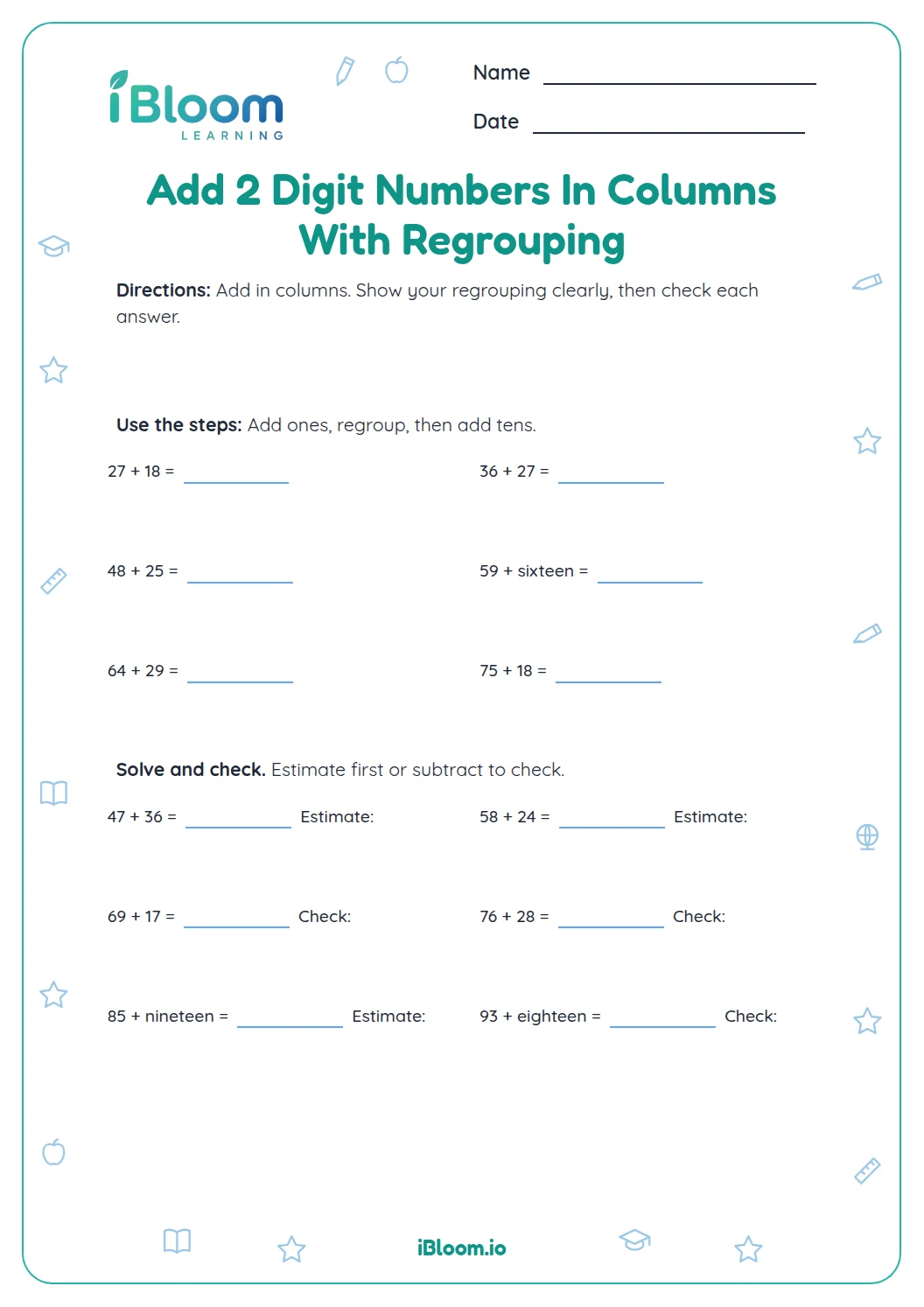
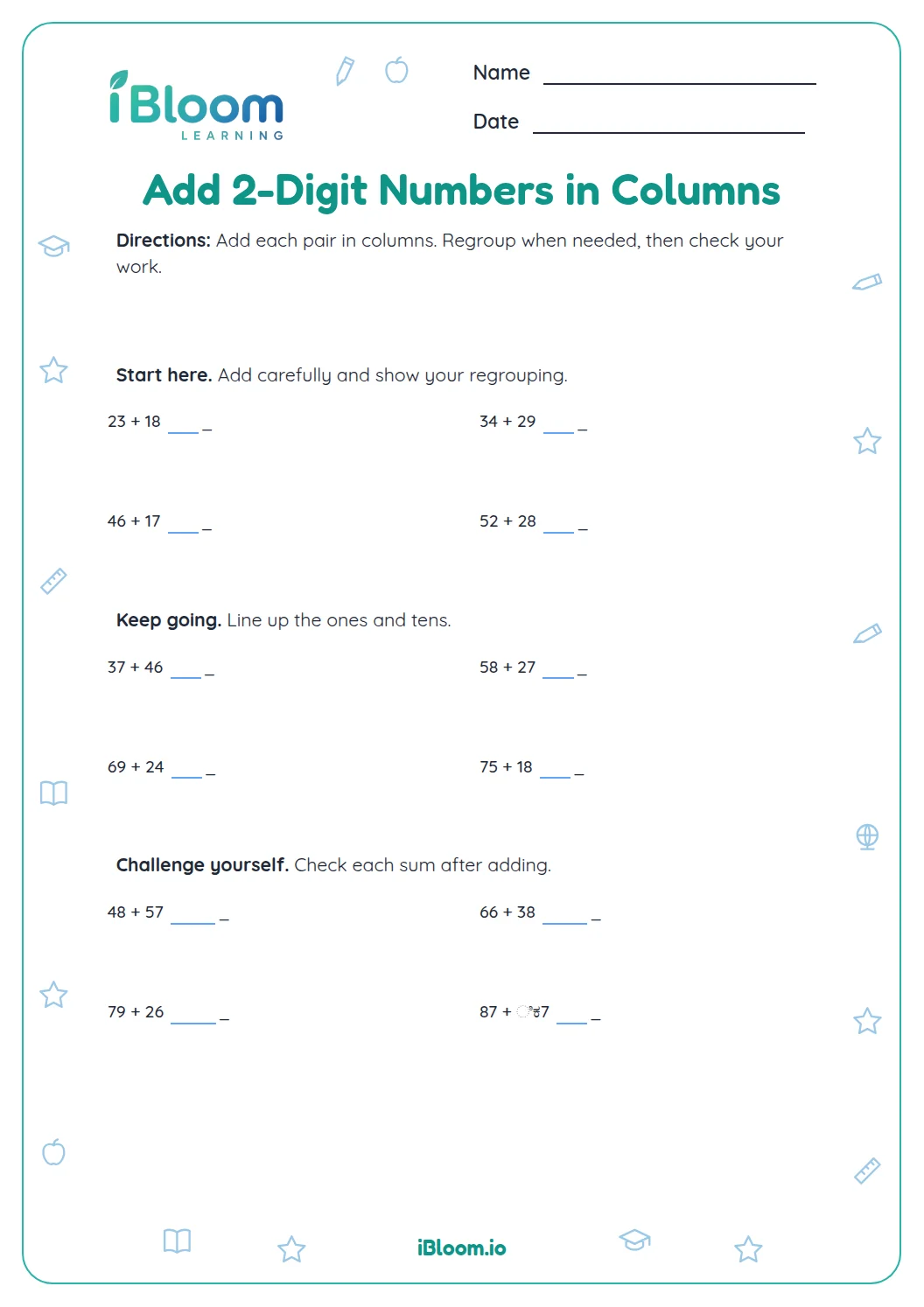
Practice Grade 3 two-digit addition with regrouping through real-world stories and an estimate check.
How do you add the story numbers?
For 28 + 47, add 8 ones and 7 ones to make 15 ones. Regroup 10 ones as 1 ten, then add the tens for 75 stickers.
How can an estimate check the sum?
Round both addends to the nearest ten and compare the estimate with the exact total.
What to practice next
Questions parents and teachers ask
What does this worksheet help learners practice?
This printable gives learners focused practice with the specific skill named on the page, with a separate answer key for checking work. Its questions move through short tasks and applied examples, so adults can review one section at a time and discuss a strategy after each set.
How should learners use the answer spaces?
Learners should write neatly in each answer space and show steps whenever a prompt asks for working. For a written response, use a complete sentence with a clear idea. Encourage learners to reread each response and make sure it answers the whole question.
Can an adult use this for guided practice?
Yes. An adult can read the directions with the learner and model one example from the same skill. Then the learner can complete the remaining questions independently. Review the answer key together afterward and talk through any missed item without rushing.
What should learners do after finishing?
Learners can check each response with the answer key, correct mistakes, and explain one strategy they used. Reworking a missed question can show whether an error came from reading, computation, or recording. Keep the corrected work as a useful example for later review.