



About this worksheet
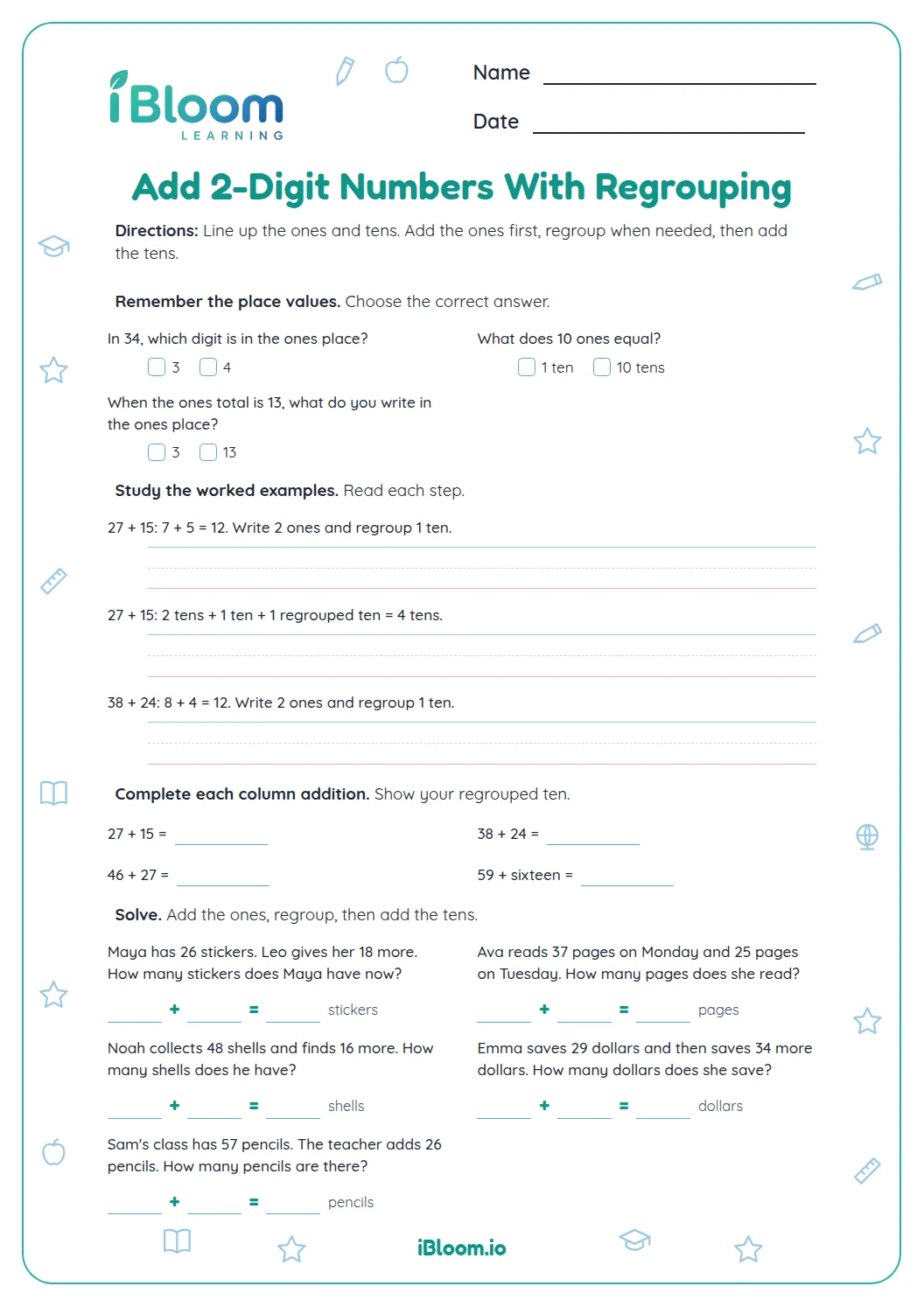
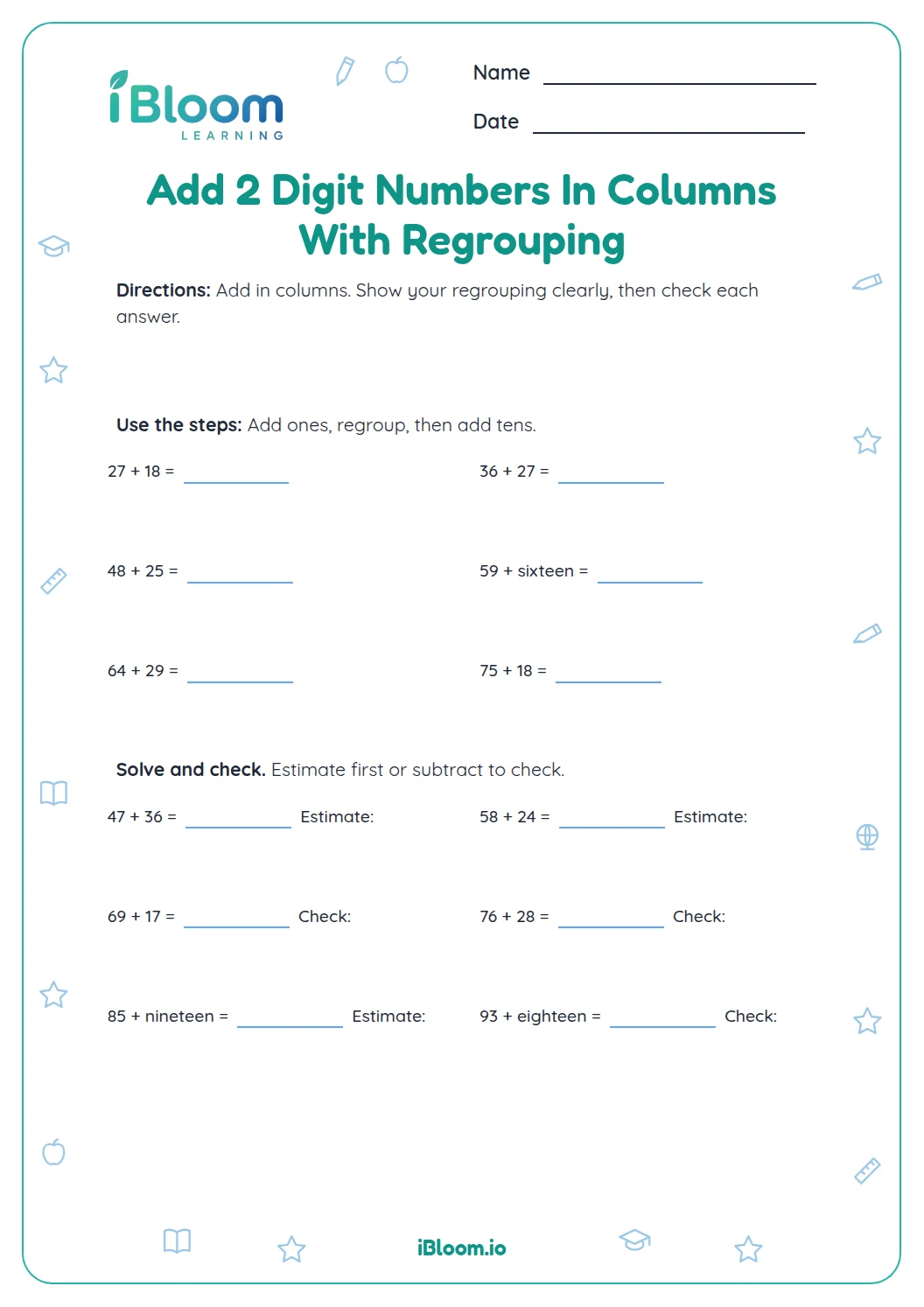
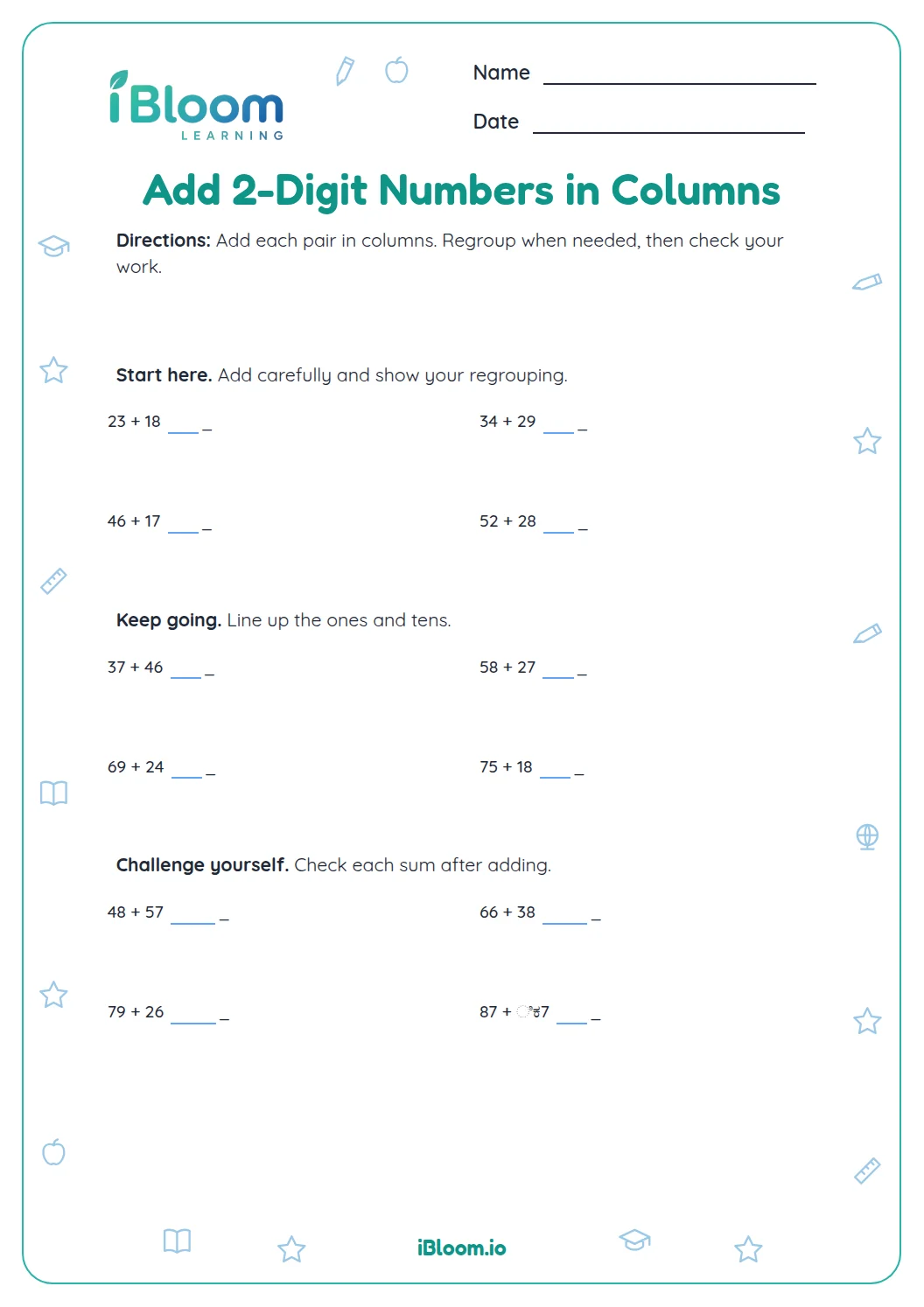
This Grade 3 reasoning challenge practices adding two-digit numbers in columns when the ones make a new ten. Students solve eight sums, correct common regrouping slips, find a missing addend, and apply addition to short problems. A final explanation connects the written carry to place value. The work supports CCSS 2.NBT.B.5, fluently adding within 100 using strategies based on place value and properties of operations.
Aligned to 2.NBT.B.5
What is on this worksheet?
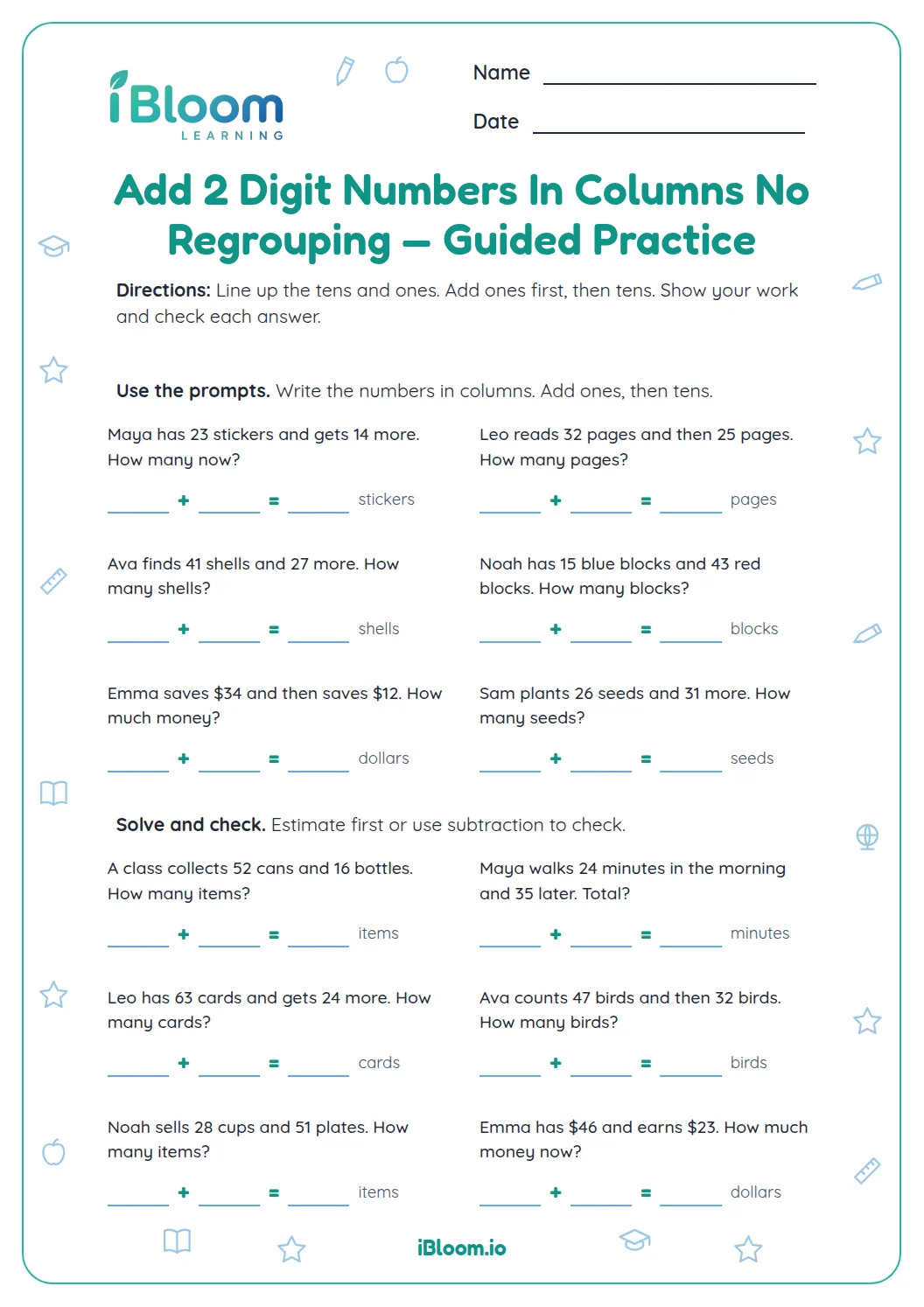
Part A has eight two-digit sums with column workspace. Part B asks students to correct regrouping errors and find a missing addend. Part C applies addition to a short situation and explains the value of regrouping.
How can you solve one carefully?
For 38 + 27, add the ones: 8 + 7 = 15. Write 5 in the ones place and regroup 1 ten. Then add 3 tens + 2 tens + 1 ten to get 6 tens, for a sum of 65.
- 1 38
- 2+ 27
- 3 65
How can you check your work?
The small 1 represents one regrouped ten. Add it with the tens digits; do not treat it as one extra one.
How to use this worksheet
- 1Write each addend with ones under ones and tens under tens.
- 2Add the ones digits first.
- 3If the ones total is 10 or more, write the ones digit and regroup one ten.
- 4Add both tens digits and the regrouped ten.
- 5Check the sum by subtracting one addend from it.
Common mistakes and quick fixes
The mistake
Writing 15 in the ones column when 8 + 7 = 15.
The fix
Write 5 ones and regroup 1 ten.
The mistake
Forgetting the regrouped ten in the tens column.
The fix
Point to the small 1 and include it with the tens digits.
The mistake
Thinking 47 + 26 = 613 by writing each column total side by side.
The fix
Regroup the 13 ones as 1 ten and 3 ones, then add tens to get 7 tens.
Common Core alignment
Column sums and error checks use place-value strategies for addition within 100.
Fluently add within 100 using place-value strategies and operation properties.
On this sheet: Students add two-digit numbers, regroup a ten, and reason about the value of each column.
Show the official wordingHide the official wording
Fluently add and subtract within 100 using strategies based on place value, properties of operations, and/or the relationship between addition and subtraction.
What to practice next
Make more practice
Further reading
Questions parents and teachers ask
What does regrouping mean in addition?
Regrouping means trading 10 ones for 1 ten when the ones column totals 10 or more. For 38 + 27, the 15 ones become 1 ten and 5 ones, which helps make the sum 65. Then include the regrouped ten with the tens digits.
Does this worksheet show addition in columns?
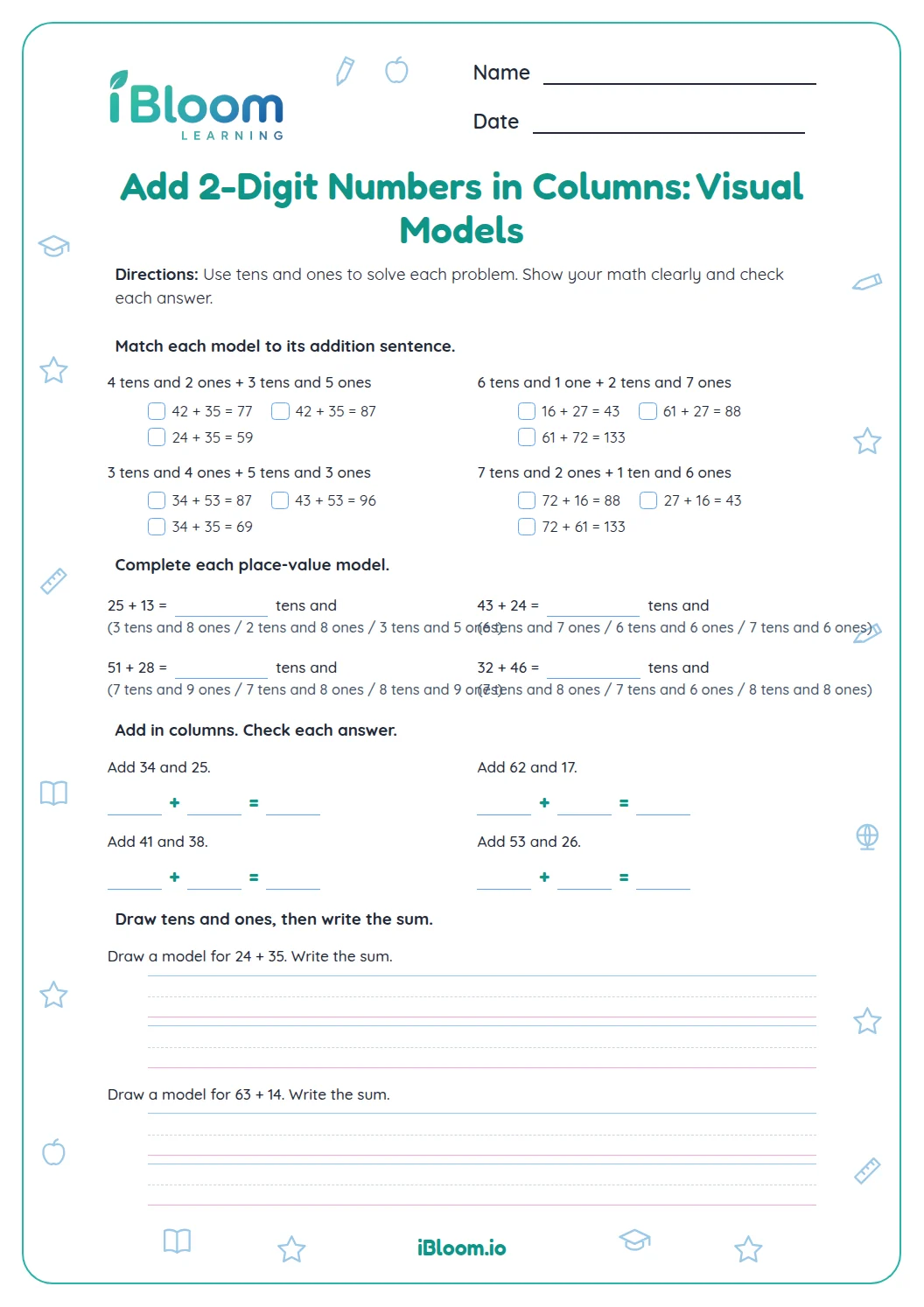
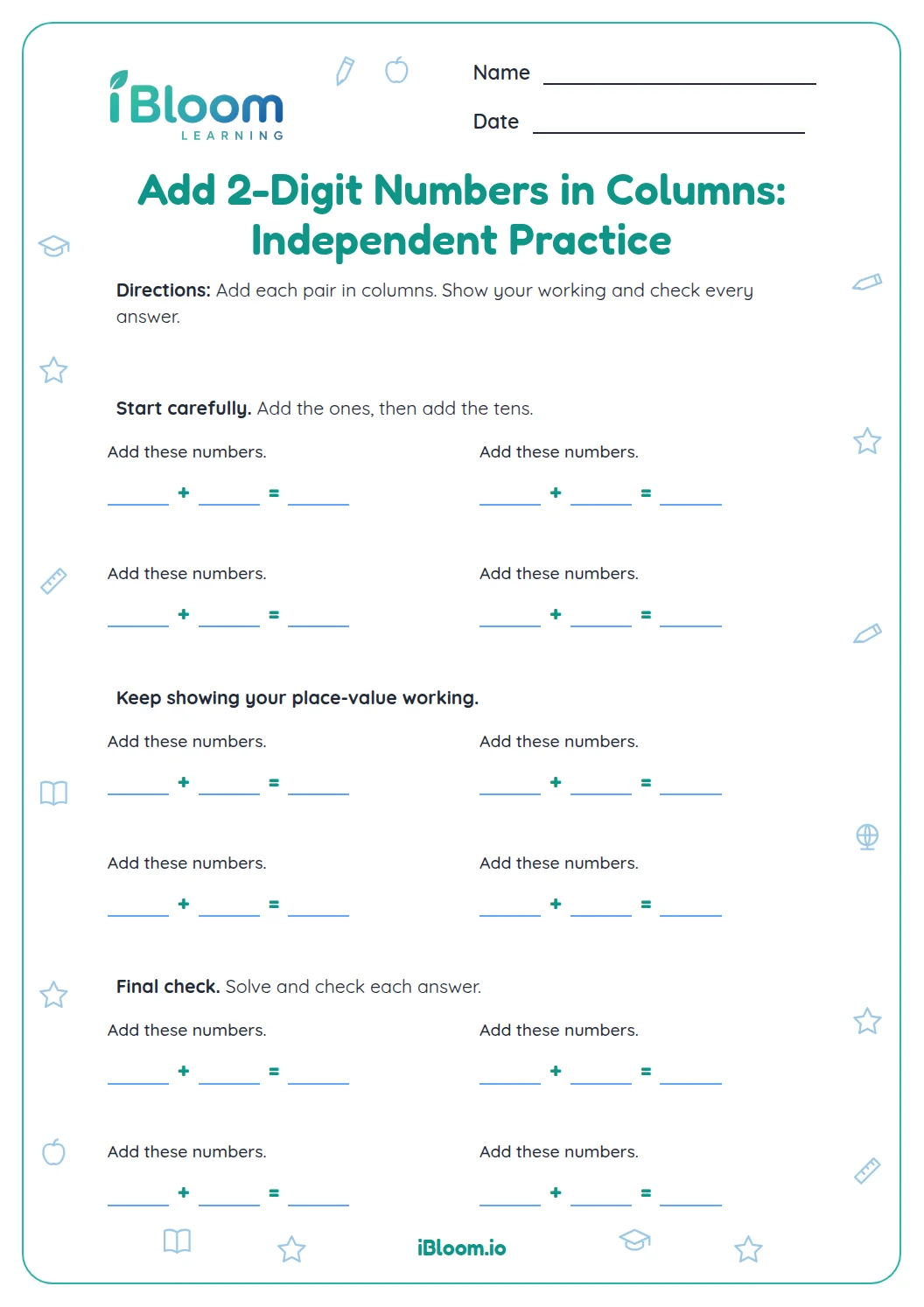
Yes. The first eight questions provide space to add two-digit numbers in columns. The remaining questions ask students to correct regrouping errors, find a missing addend, solve a short situation, and explain place value. Each column sum has its own working space.
What is the correct answer to 47 + 26?
The sum is 73. Add 7 + 6 to get 13 ones, write 3 ones and regroup 1 ten; then add 4 + 2 + 1 tens to get 7 tens. The worksheet’s error-check question uses this same sum.
Why is 47 + 26 not 613?
That answer comes from writing 4 + 2 = 6 and 7 + 6 = 13 side by side. Since 13 ones equal 1 ten and 3 ones, regroup before combining the columns. The correct sum is 73.
Can students use another strategy?
Students can use place-value reasoning to check their work, such as adding tens and ones mentally. The worksheet asks for column work on its first eight sums, making the regrouped ten visible. Subtracting one addend from the sum also checks the result.
Is an answer key included?
Yes. The answer key lists all 14 results and gives sample wording for the place-value question. For written explanations, accept another clear description that ten ones have the same value as one ten. The sample explains the place-value trade.