





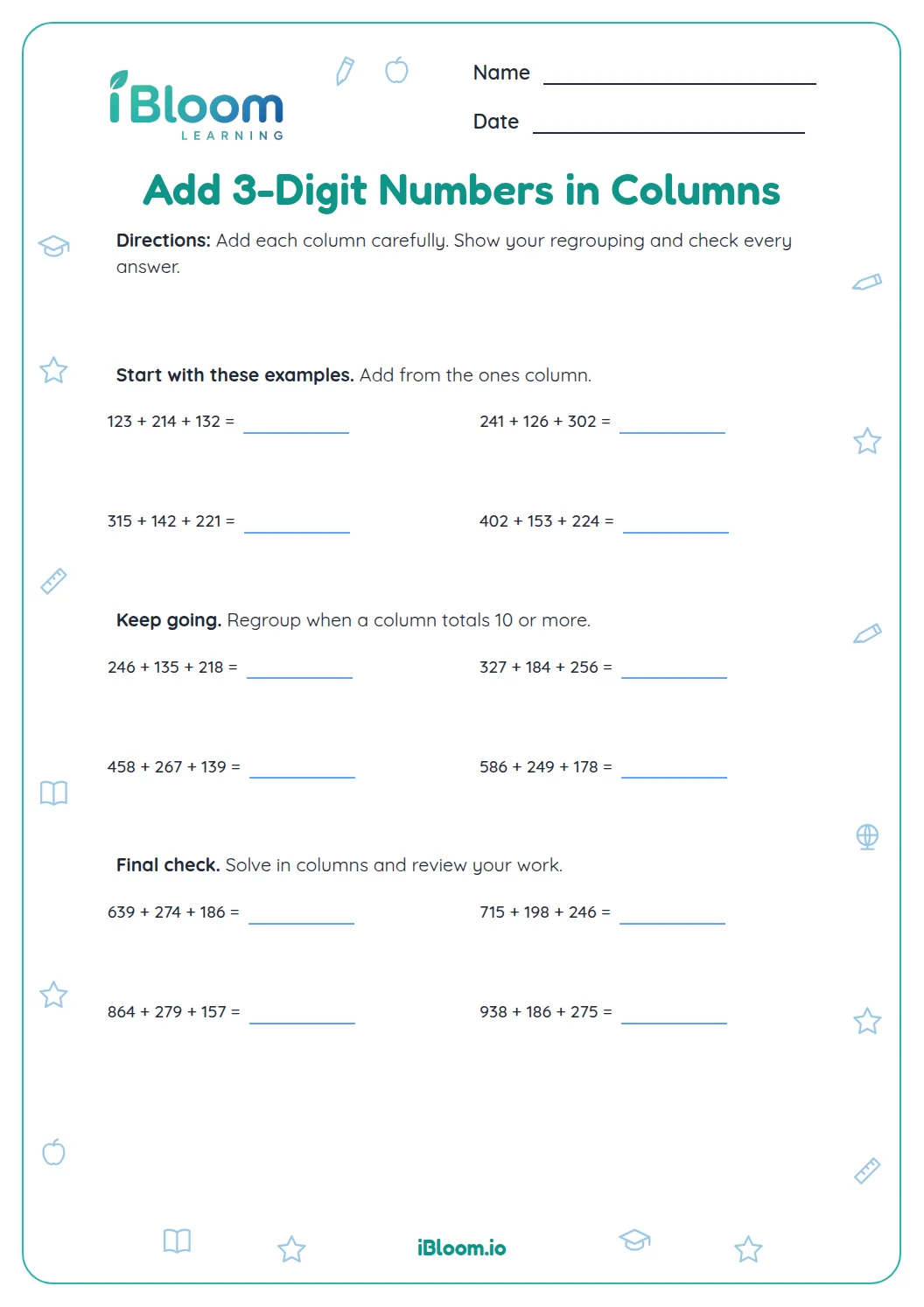
About this worksheet
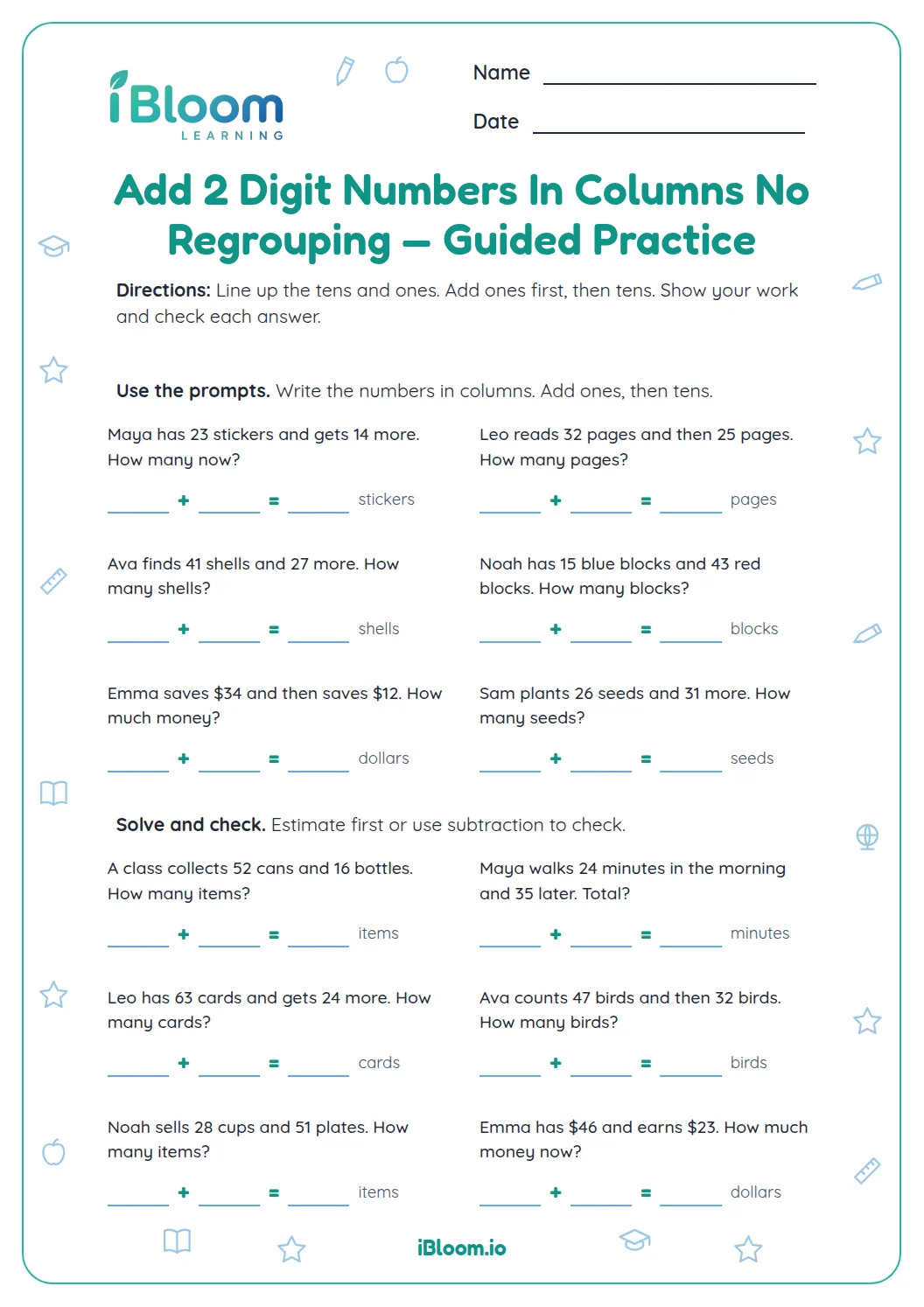
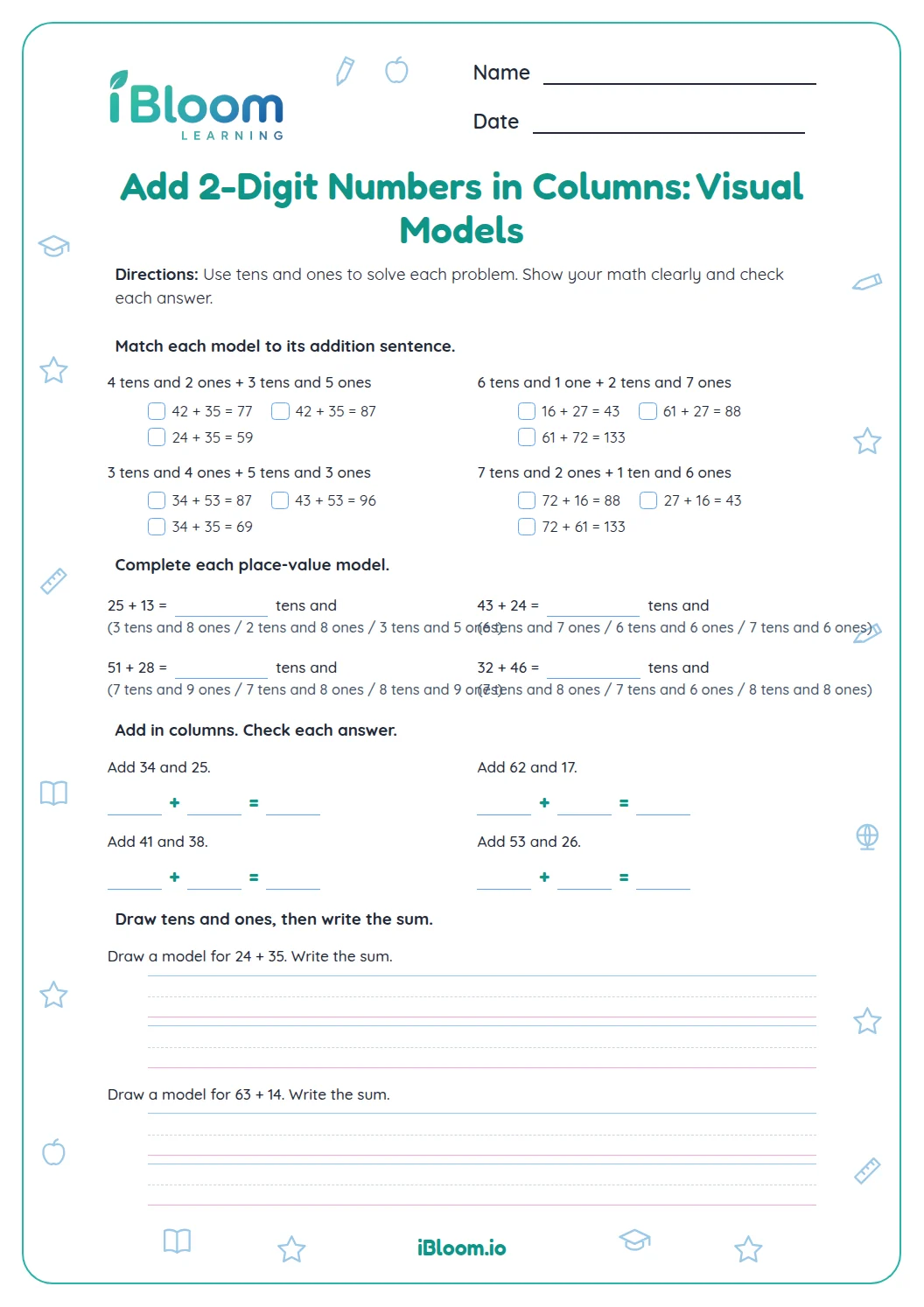
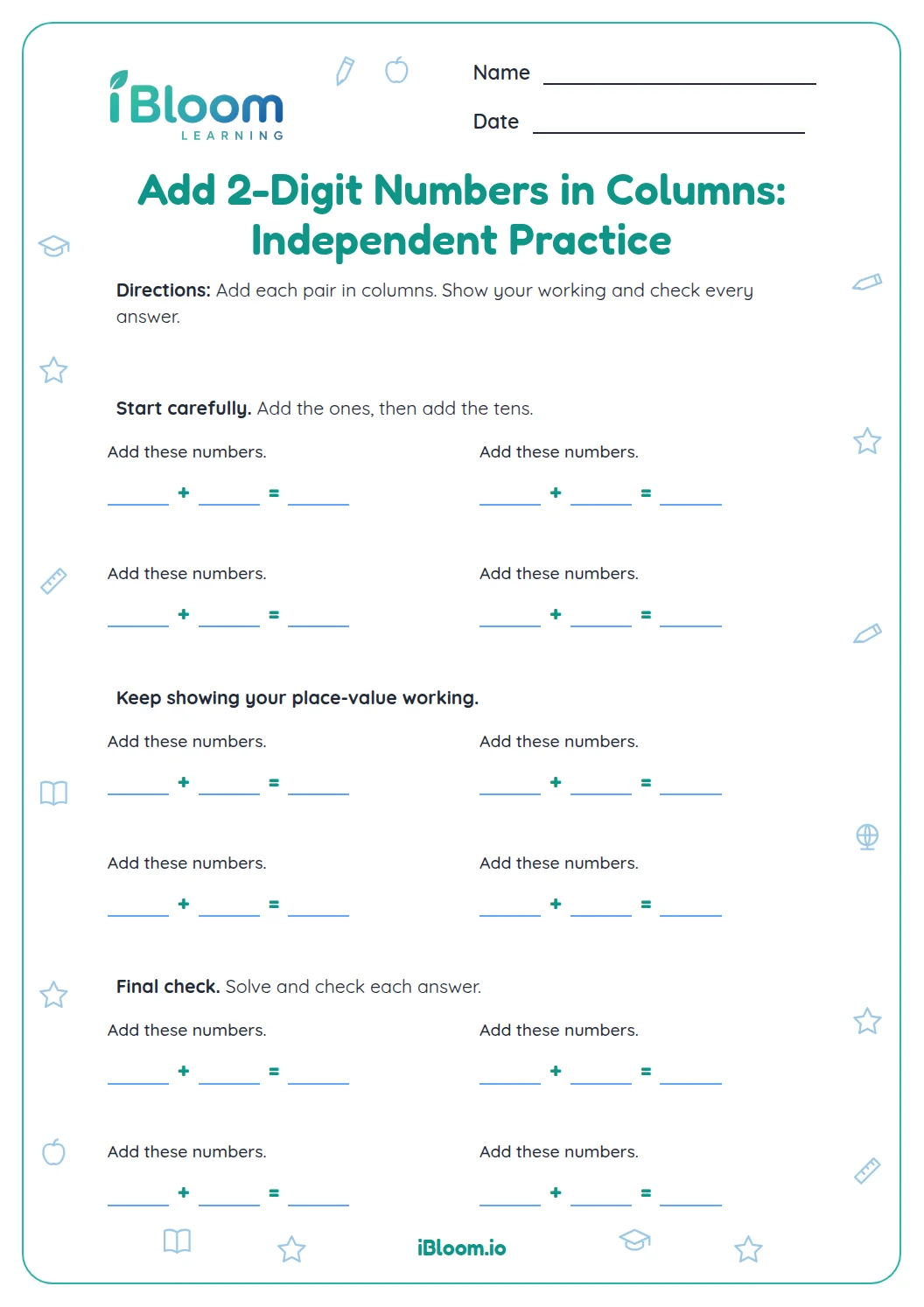
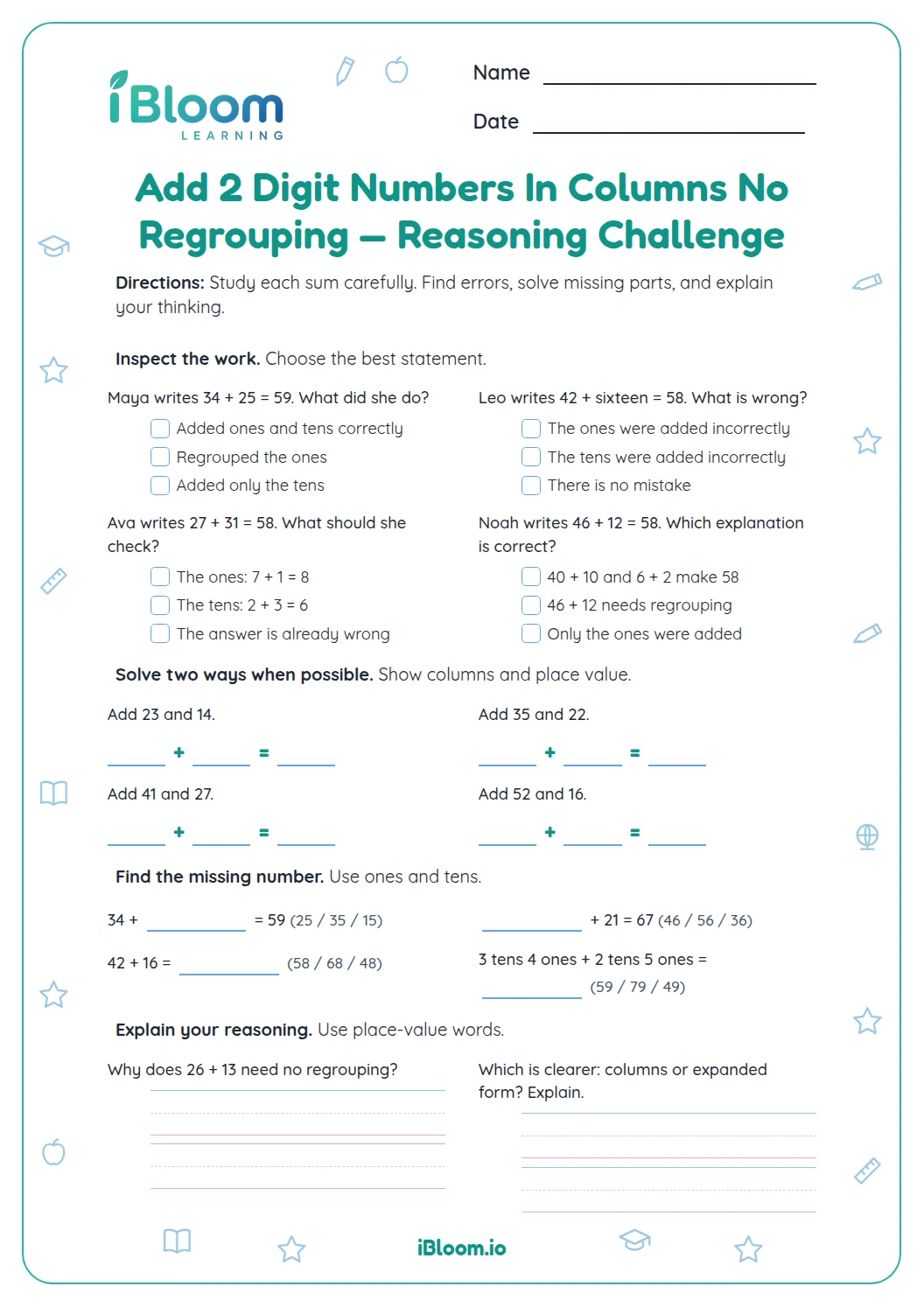
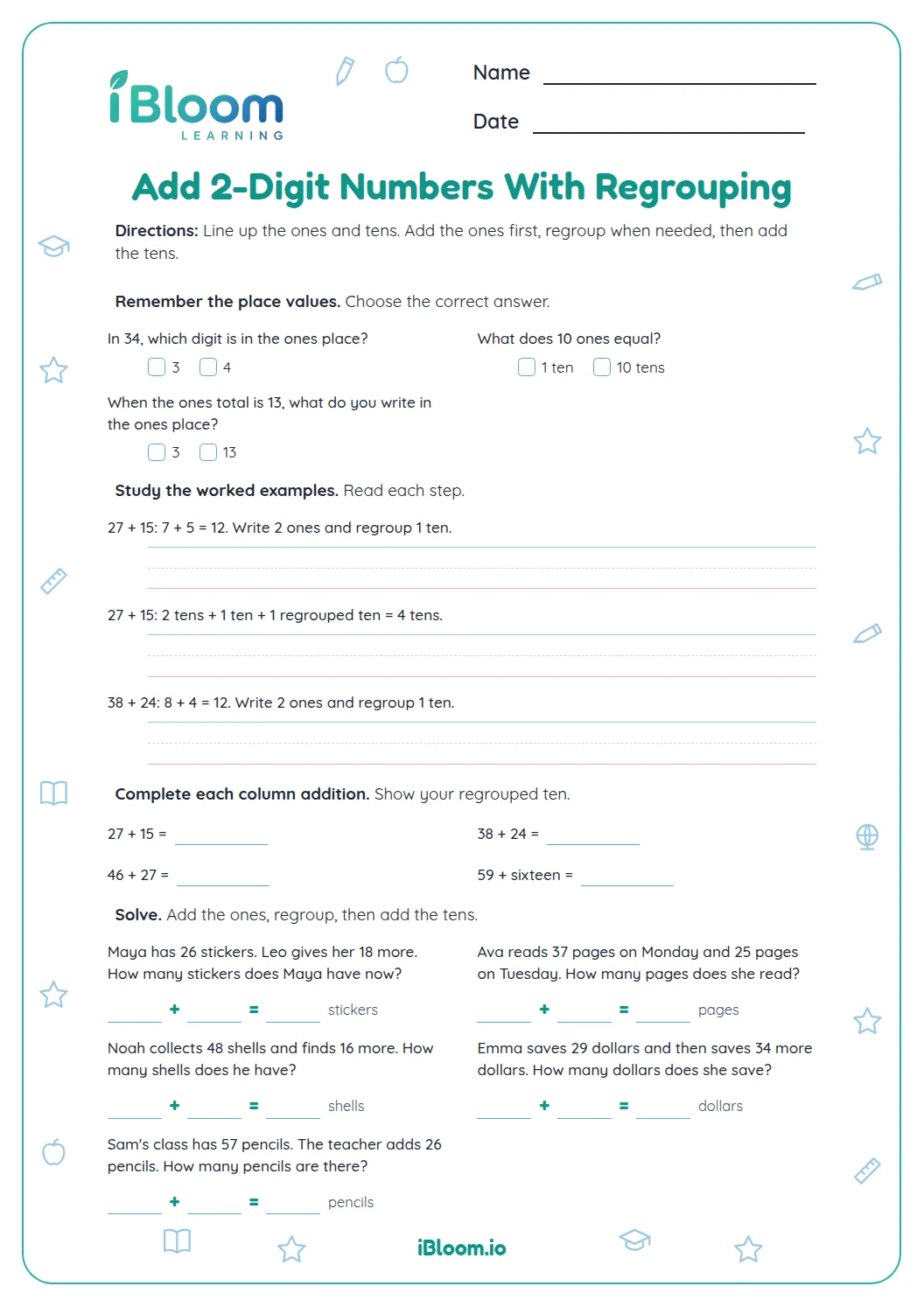
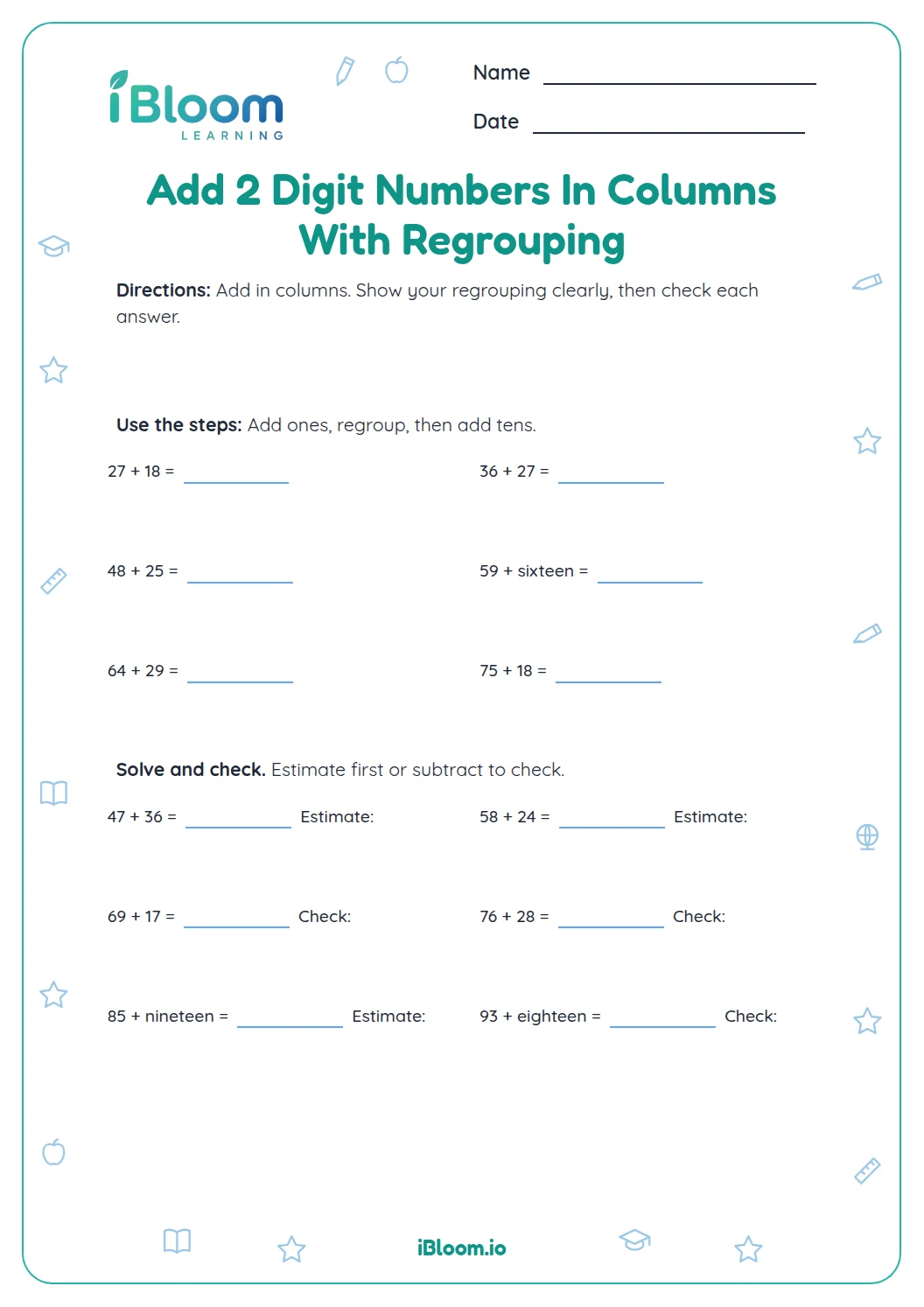
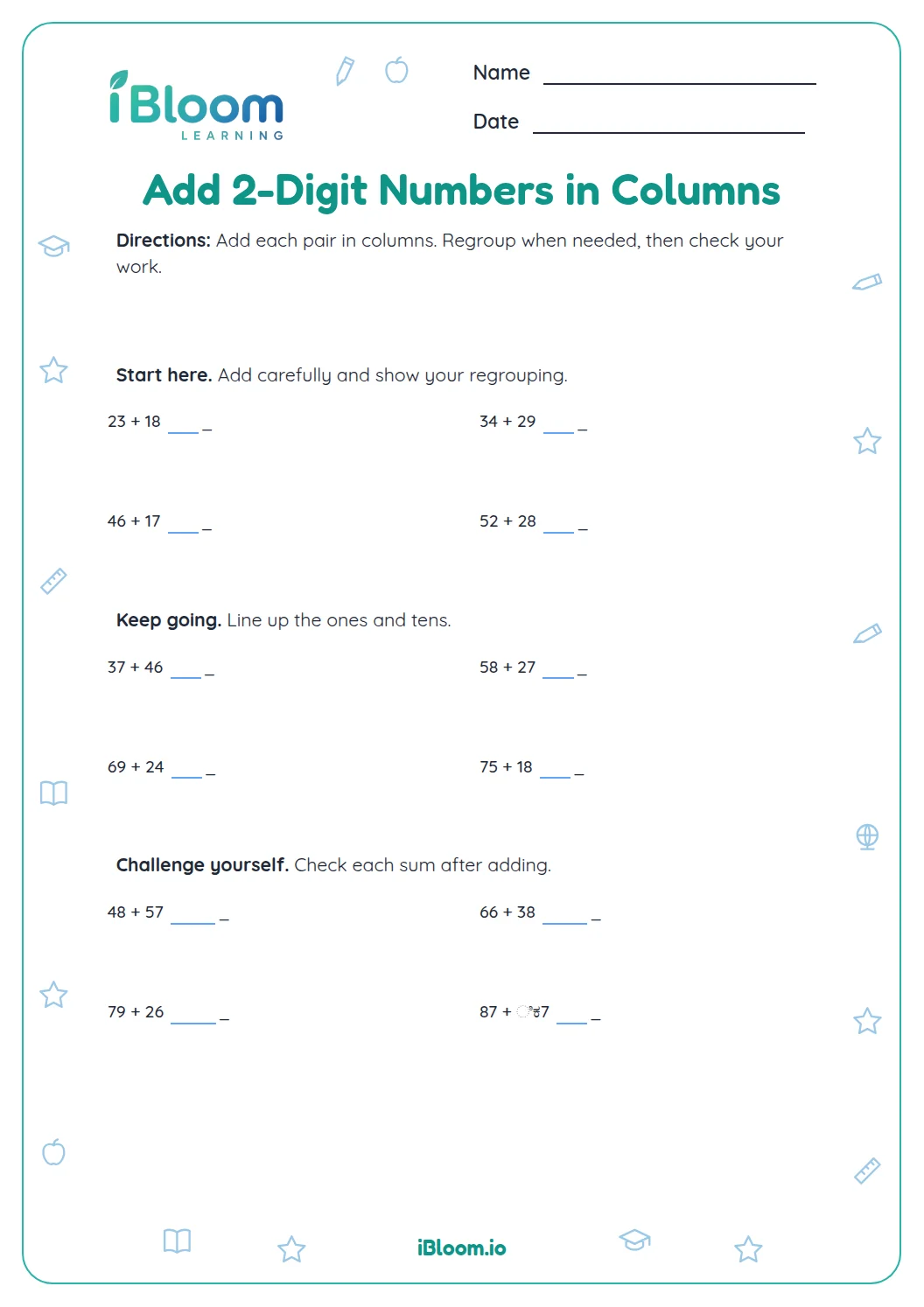
This Grade 3 printable focuses on two-digit addition without regrouping. Learners solve 16 numerical sums, then use the same place-value strategy in four short word problems. In every problem, each column can be added without regrouping. The answer key gives each result. The page practices place-value addition strategies described in CCSS 3.NBT.A.2.
Aligned to 3.NBT.A.2
How can you add without regrouping?
Keep the ones and tens in their own columns. Add the ones first, then add the tens. Since neither column reaches ten, each digit stays in its place.
- 123 + 14
- 2Ones: 3 + 4 = 7; tens: 2 + 1 = 3
- 3Answer: 37
How can you check a sum?
Estimate with tens or use the inverse operation. For 23 + 14 = 37, subtract 14 from 37 to return to 23.
What is on the printable?
The 20 questions include 16 two-digit sums and four word problems. Each problem is chosen so the ones and tens can be added without regrouping. The separate key lists all results.
Add in place-value columns
- 1Line up the ones digits and tens digits.
- 2Add the ones digits.
- 3Write that ones digit in the answer.
- 4Add the tens digits.
- 5Check that neither column needed regrouping.
Addition checks
The mistake
Adding a tens digit to an ones digit.
The fix
Keep each place aligned and add down its column.
The mistake
Starting with the tens column and overlooking the ones.
The fix
Add the ones first, then the tens.
The mistake
Writing the digits in reverse order.
The fix
Put the ones sum in the ones place and the tens sum in the tens place.
Common Core alignment
The problems use place-value addition strategies with two-digit numbers.
Add two-digit numbers by place value, with no regrouping in either column.
On this sheet:
Show the official wordingHide the official wording
Fluently add and subtract within 1000 using strategies and algorithms based on place value, properties of operations, and/or the relationship between addition and subtraction.
What to practice next
Make more practice
Further reading
Questions parents and teachers ask
How many addition problems are on the sheet?
There are 20 problems: 16 two-digit sums and four short word problems. Each is selected so the ones digits total less than ten and the tens digits total less than ten, so no regrouping is needed. Together, the questions provide repeated practice with place-value sums and real situations.
What does no regrouping mean here?
The ones column and tens column can each be added without making a group of ten. For example, 23 + 14 gives 3 + 4 ones and 2 + 1 tens, which makes 37. The word problems use the same method.
Is there an answer key?
Yes. A separate answer key lists the sum for each numerical and word problem. Encourage the learner to compare the ones and tens columns separately when checking a missed answer, then confirm the total. Use it after solving so the learner can check each result independently.
How should children solve the sums?
Line up matching place values, add the ones, and then add the tens. Write the ones result in the ones place and the tens result in the tens place. The final four questions ask children to apply this method to short situations.
What can come next?
After learners can add two-digit numbers without regrouping, they can practice addition with regrouping. The related links lead to more addition skills and extend place-value work with larger numbers or a missing addend. This provides a clear next step after no-regrouping practice.