


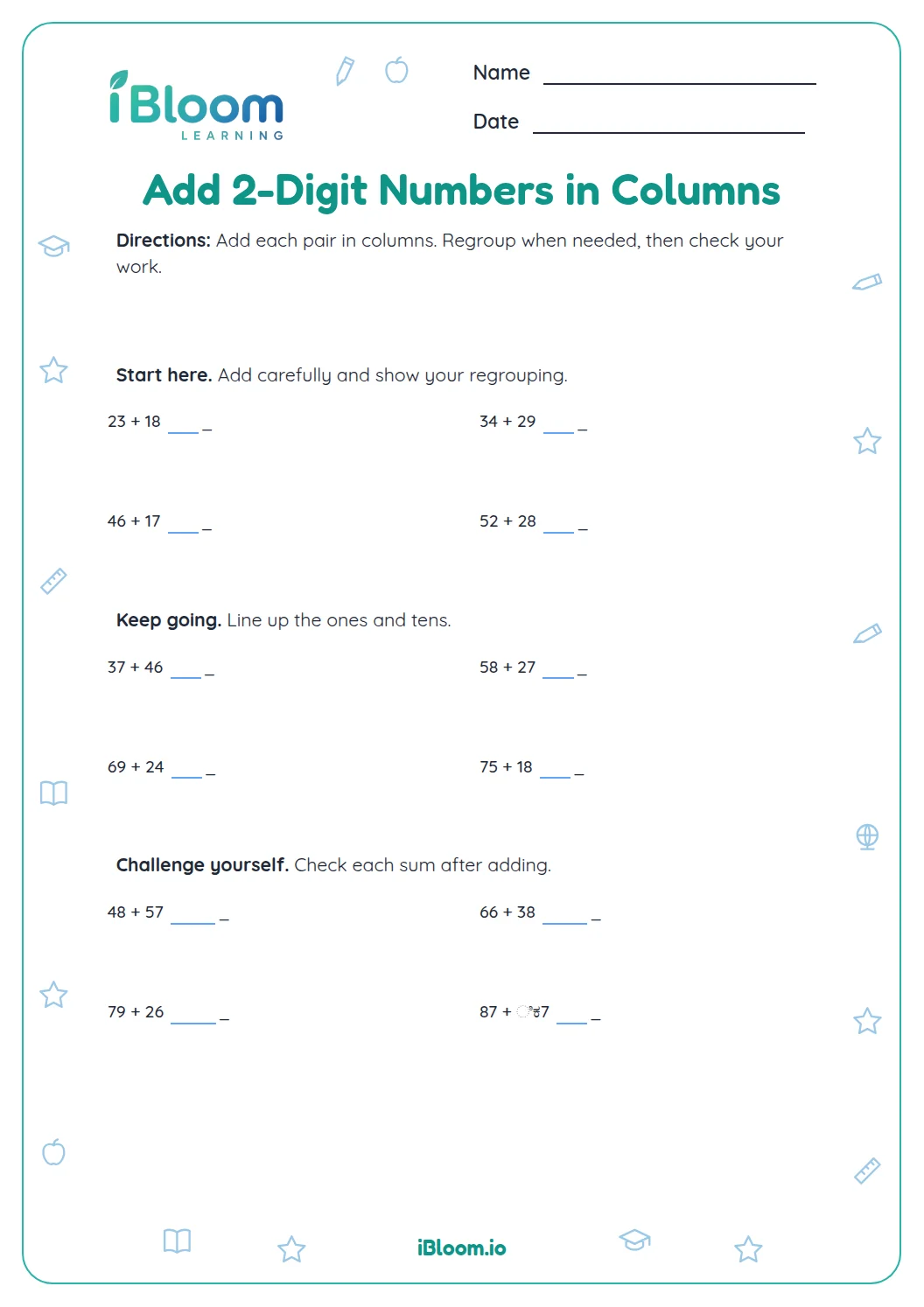
About this worksheet
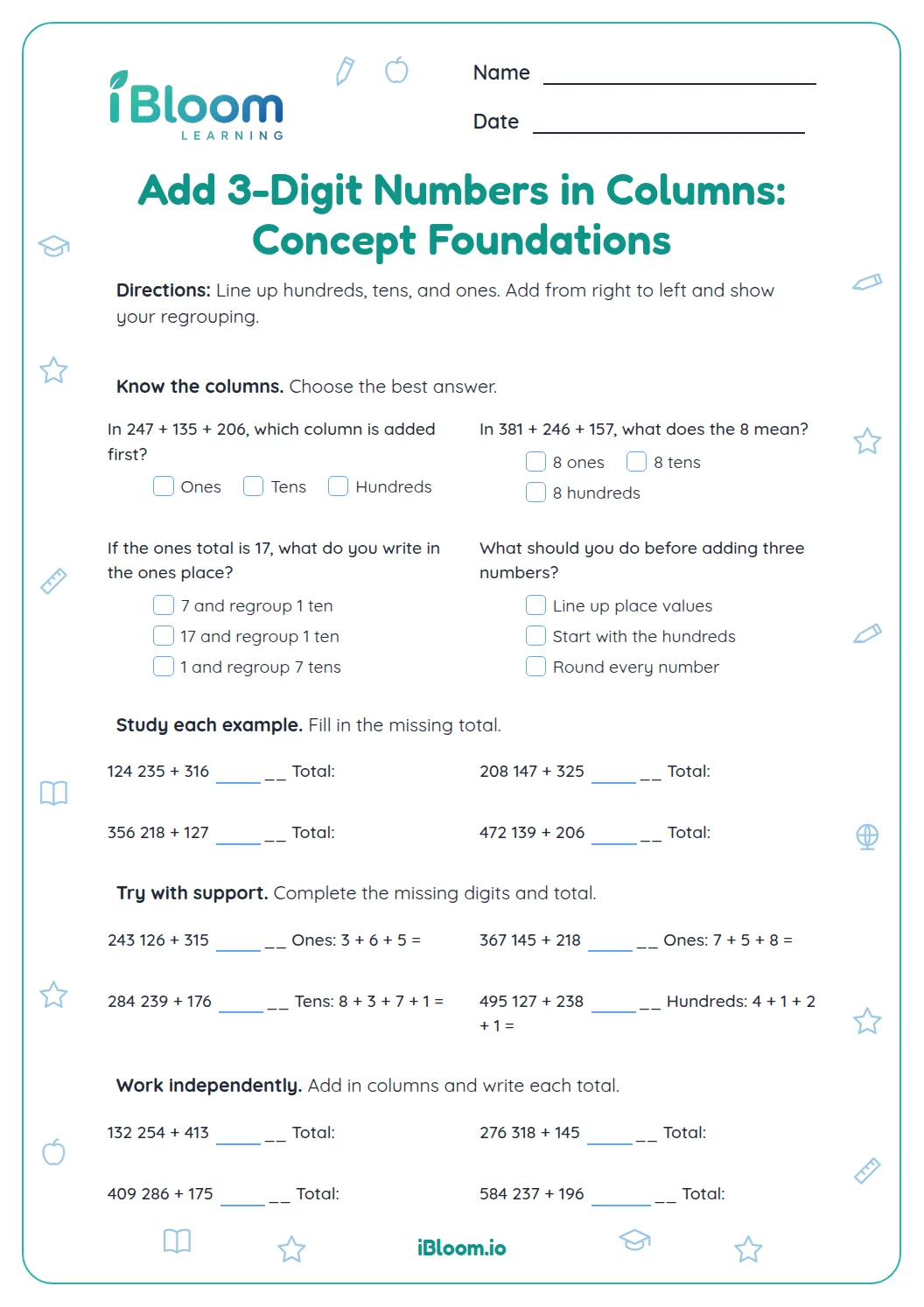
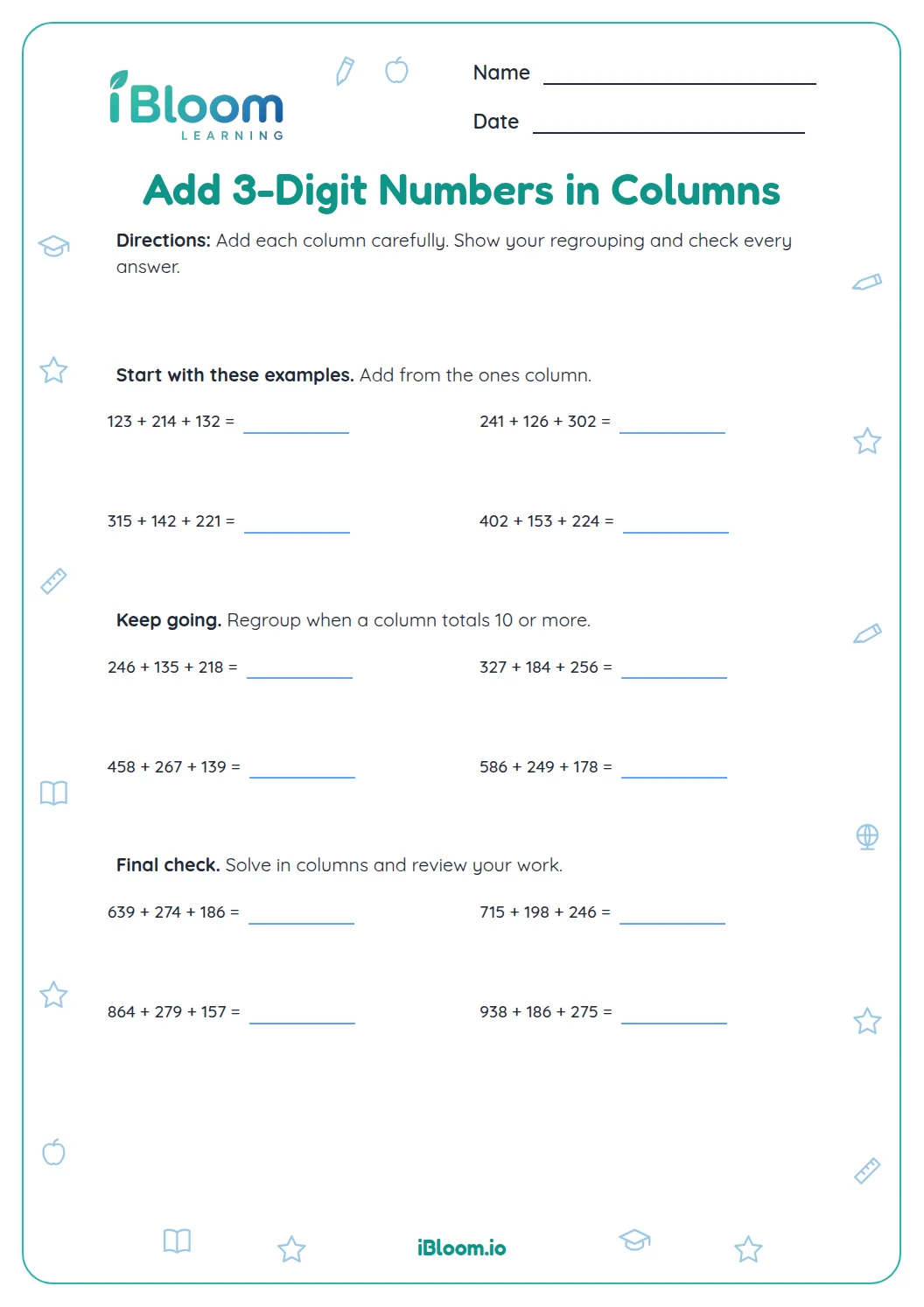
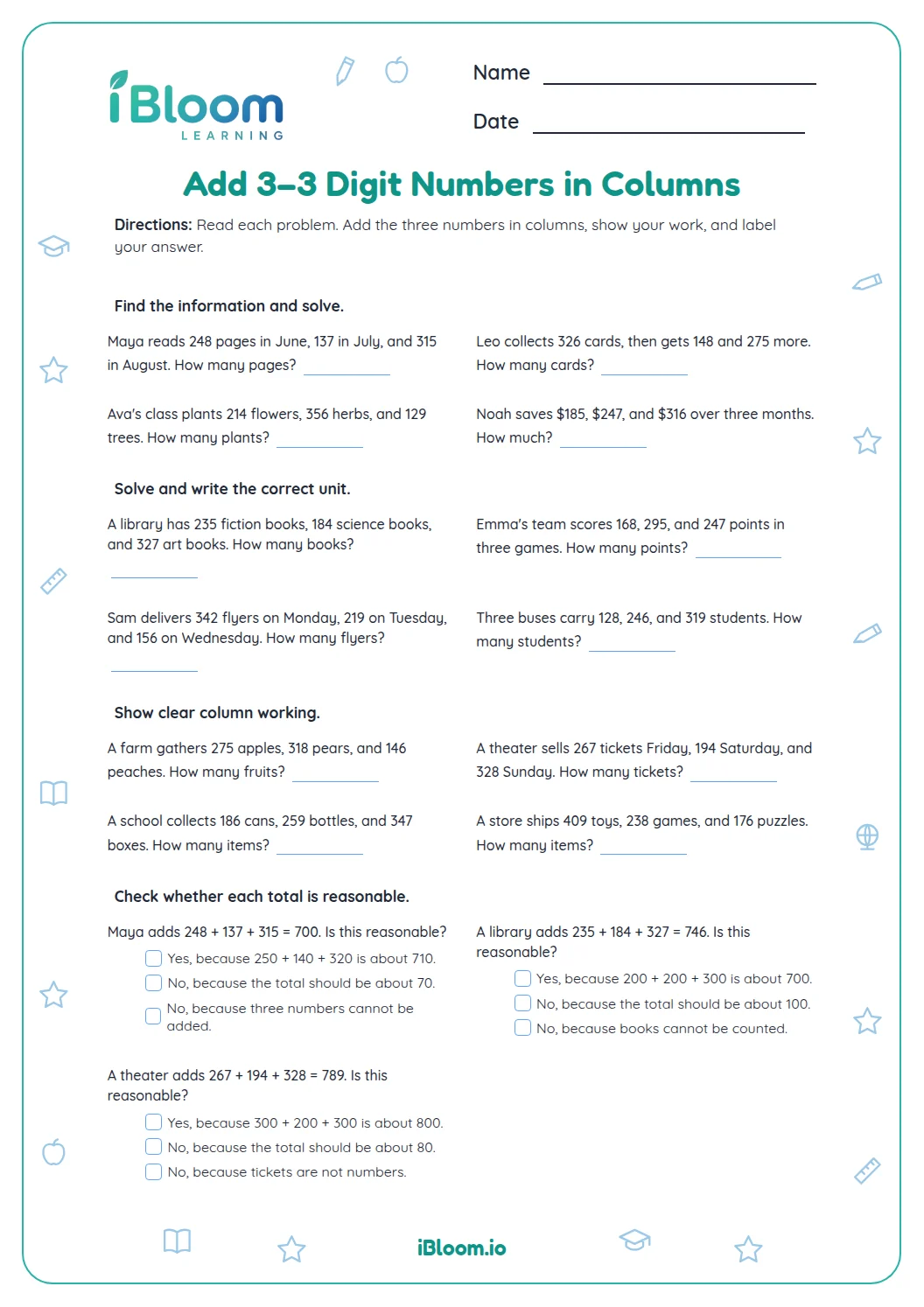
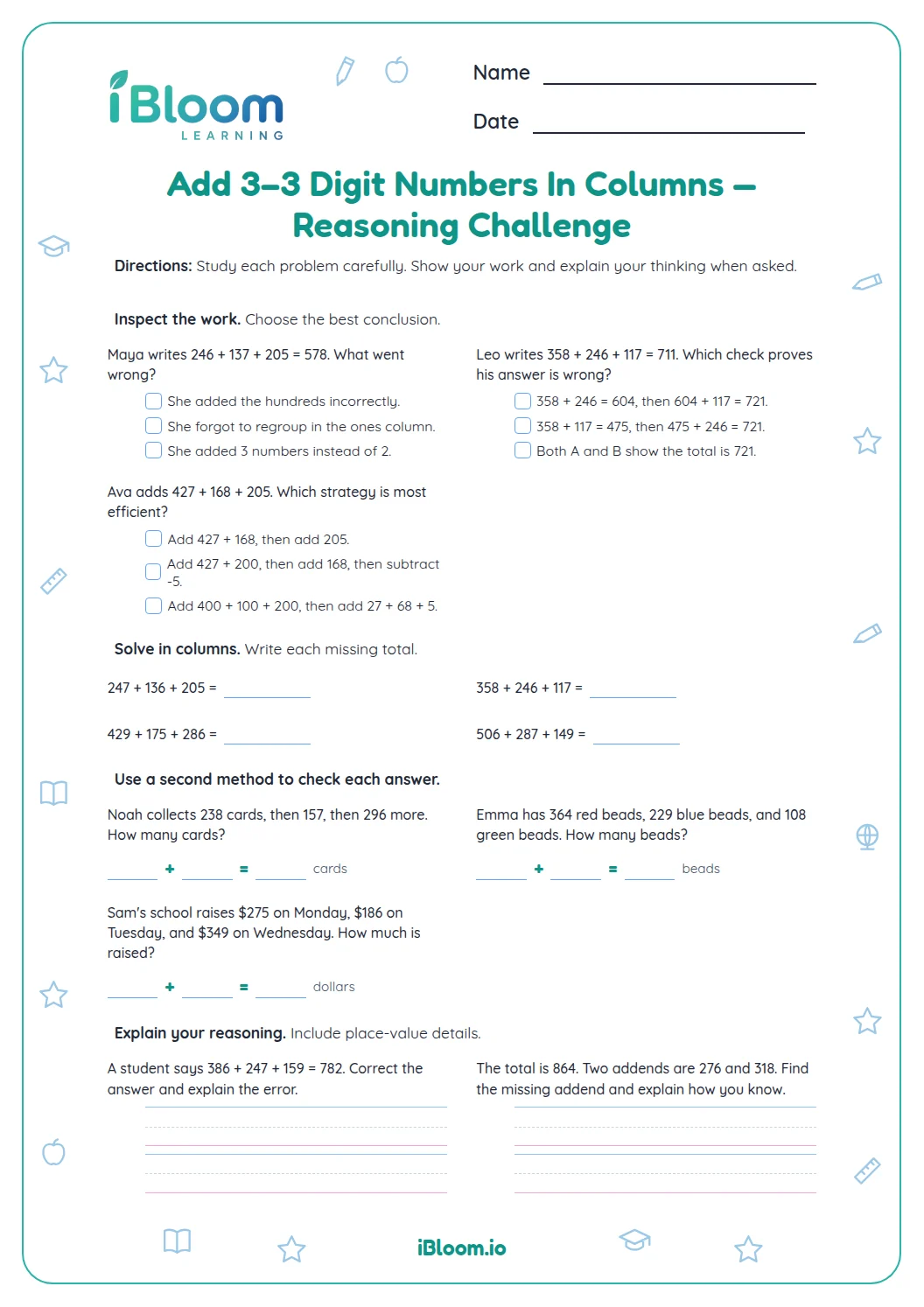
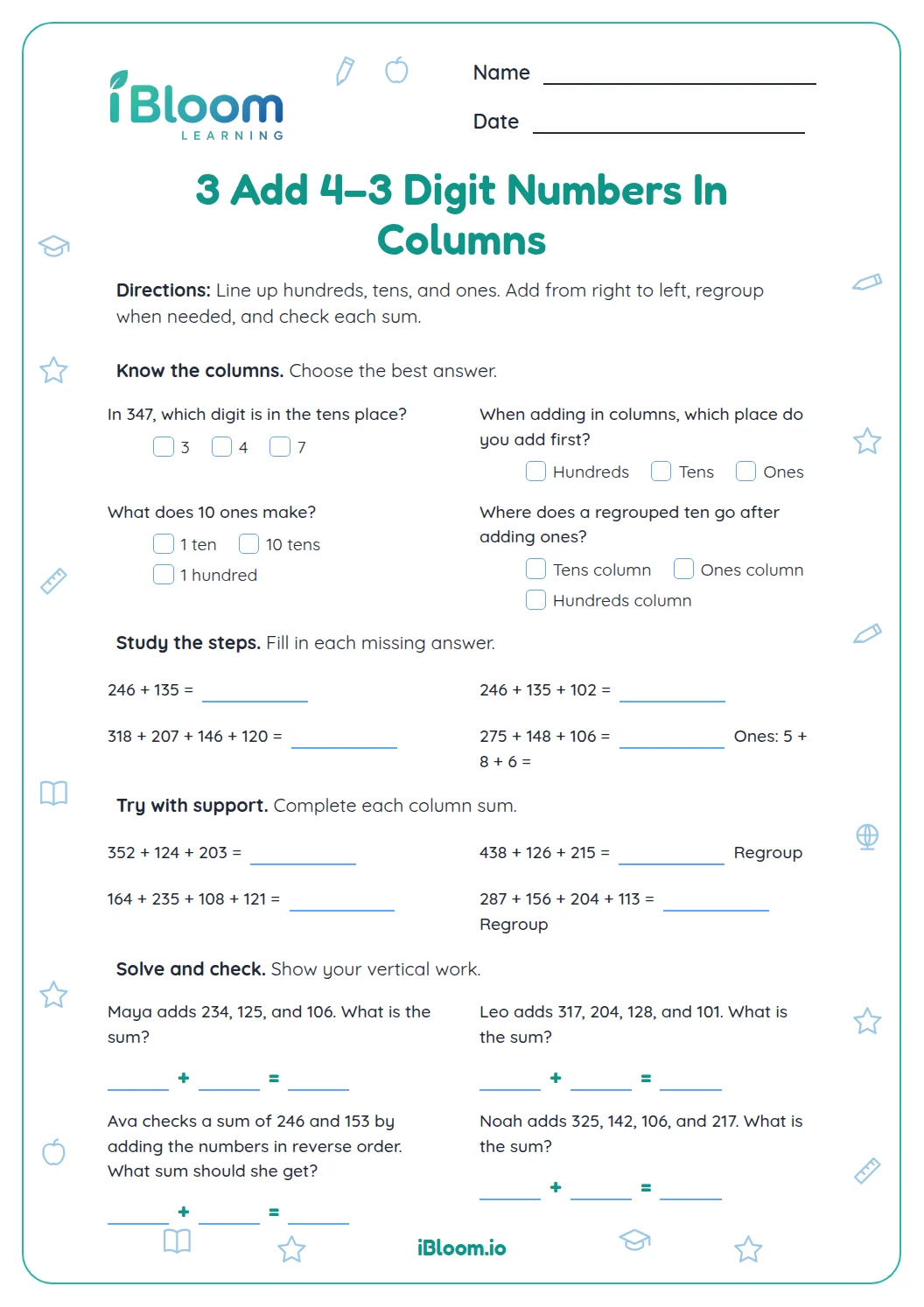
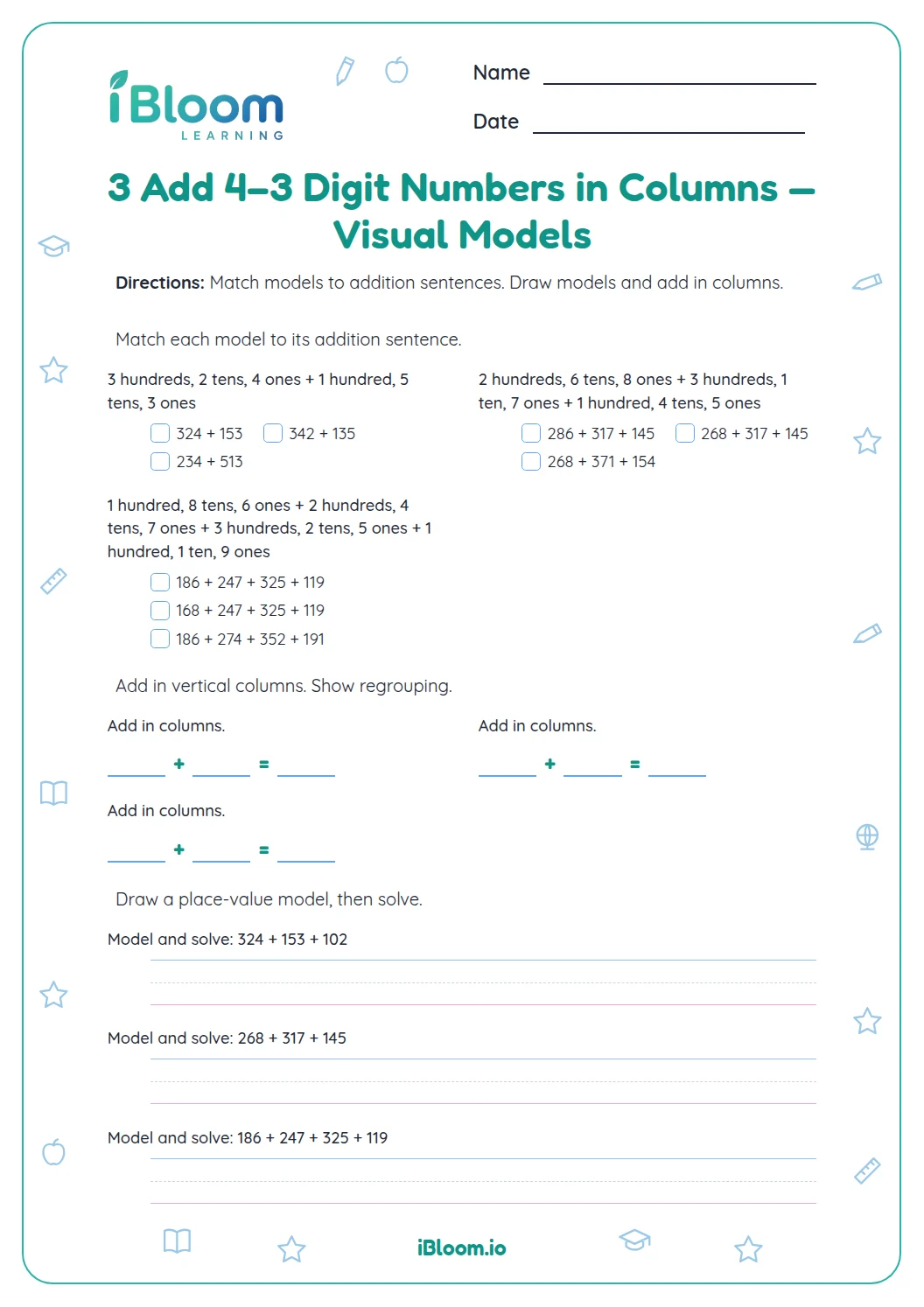
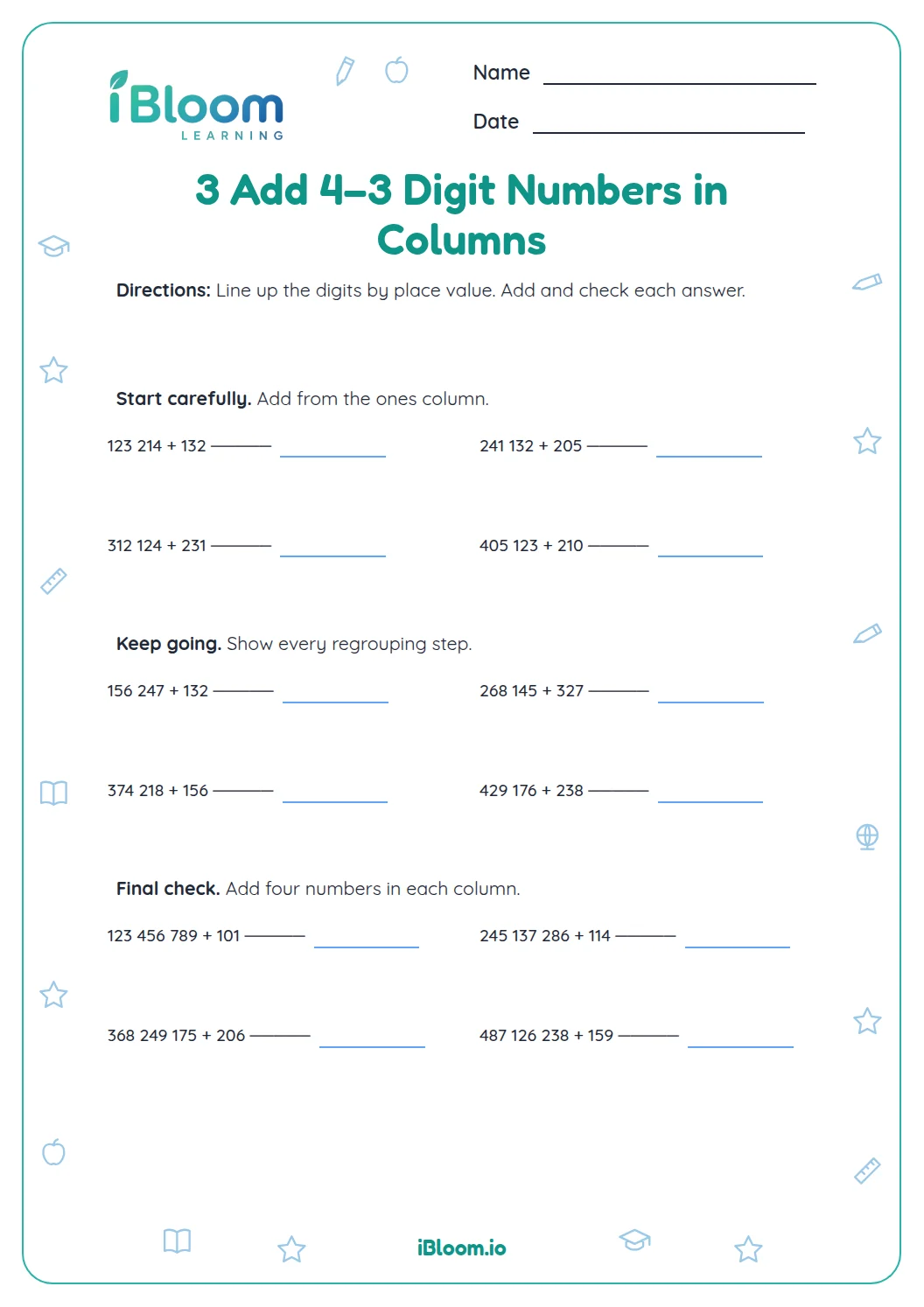
This free Grade 3 printable gives students 16 problems adding three numbers in columns. Each item names the three addends clearly and provides working space for lining up ones, tens, and hundreds and recording regrouping. The set moves between sums with different regrouping demands with totals from 527 to 1,000. It practices Common Core 3.NBT.A.2, adding within 1,000 with place-value strategies and algorithms. An answer key lists every sum.
Aligned to 3.NBT.A.2
What does guided practice include?
Every prompt identifies three addends and asks students to add them in columns. The learner has room to write the digits vertically and track regrouping between ones, tens, and hundreds. One addend has two digits, and one total is exactly 1,000.
- 1246 + 153 + 128
- 2Ones: 6 + 3 + 8 = 17; write 7 ones and regroup 1 ten.
- 3The completed sum is 527.
When do students regroup?
Regroup whenever the sum in a place is 10 or more. A column total of 17 means 7 stays in that place and 1 is added to the next column.
How can students check a sum?
Add the addends in a different order or estimate the total first. If the exact answer is far from the estimate, check digit alignment and each regrouped value.
How can you use this worksheet?
- 1Copy the three addends with ones under ones, tens under tens, and hundreds under hundreds.
- 2Add the ones column and regroup if needed.
- 3Add tens, including any value regrouped from the ones.
- 4Finish with the hundreds column and write the sum.
- 5Estimate or add in another order to check.
What slips should you watch for?
The mistake
Starting with digits that are not lined up.
The fix
Use place-value columns and keep every ones digit directly under the others.
The mistake
Forgetting to add the regrouped ten or hundred.
The fix
Circle or mark the carried value, then include it in the next column total.
The mistake
Writing a two-digit column total in one place.
The fix
Keep only the ones digit in the current column and regroup the remaining ten.
Common Core alignment
This practice connects directly to the skills described in the Common Core standards.
Use place value strategies and the standard algorithm to add within 1,000.
On this sheet: Use place value strategies and the standard algorithm to add within 1,000.
Show the official wordingHide the official wording
Fluently add and subtract within 1000 using strategies and algorithms based on place value, properties of operations, and/or the relationship between addition and subtraction.
What to practice next
Make more practice
Further reading
Questions parents and teachers ask
What does “in columns” mean?
Write each addend so the ones digits line up, the tens digits line up, and the hundreds digits line up. Then add each place and regroup a ten or hundred when a column total reaches 10 or more. Ask the learner to explain the clue or operation used, then compare the completed response with the separate answer key.
How many addition problems are included?
The worksheet has 16 sums, each with three addends. Most addends have three digits; one addend is 96. Totals range from 527 to 1,000. Ask the learner to explain the clue or operation used, then compare the completed response with the separate answer key.
What is regrouping in addition?
Regrouping means trading ten ones for one ten, or ten tens for one hundred. When a column adds to 10 or more, write the ones digit in that column and carry the remaining value to the next place. Ask the learner to explain the clue or operation used, then compare the completed response with the separate answer key.
Why are there three addends?
Adding three addends gives practice combining the ones, tens, and hundreds from more than two numbers while keeping place value organized. Students can add any two addends first mentally, then finish the column method. Ask the learner to explain the clue or operation used, then compare the completed response with the separate answer key.
Is there an answer key?
Yes. The key shows all 16 sums. Students should still show their own columns on the worksheet, because the written work makes it easier to find a place-value slip when a sum does not match. Ask the learner to explain the clue or operation used, then compare the completed response with the separate answer key.