






About this worksheet
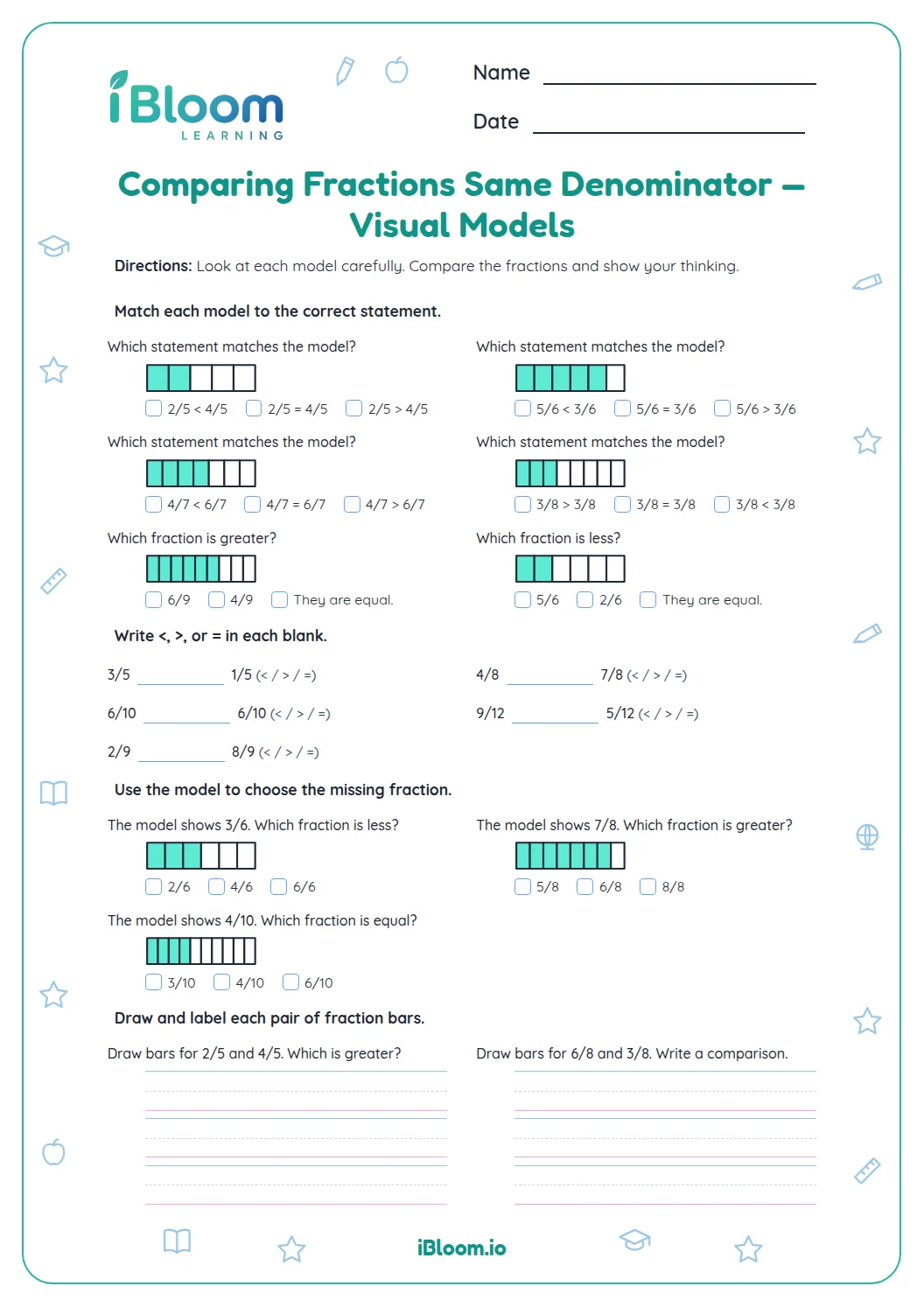
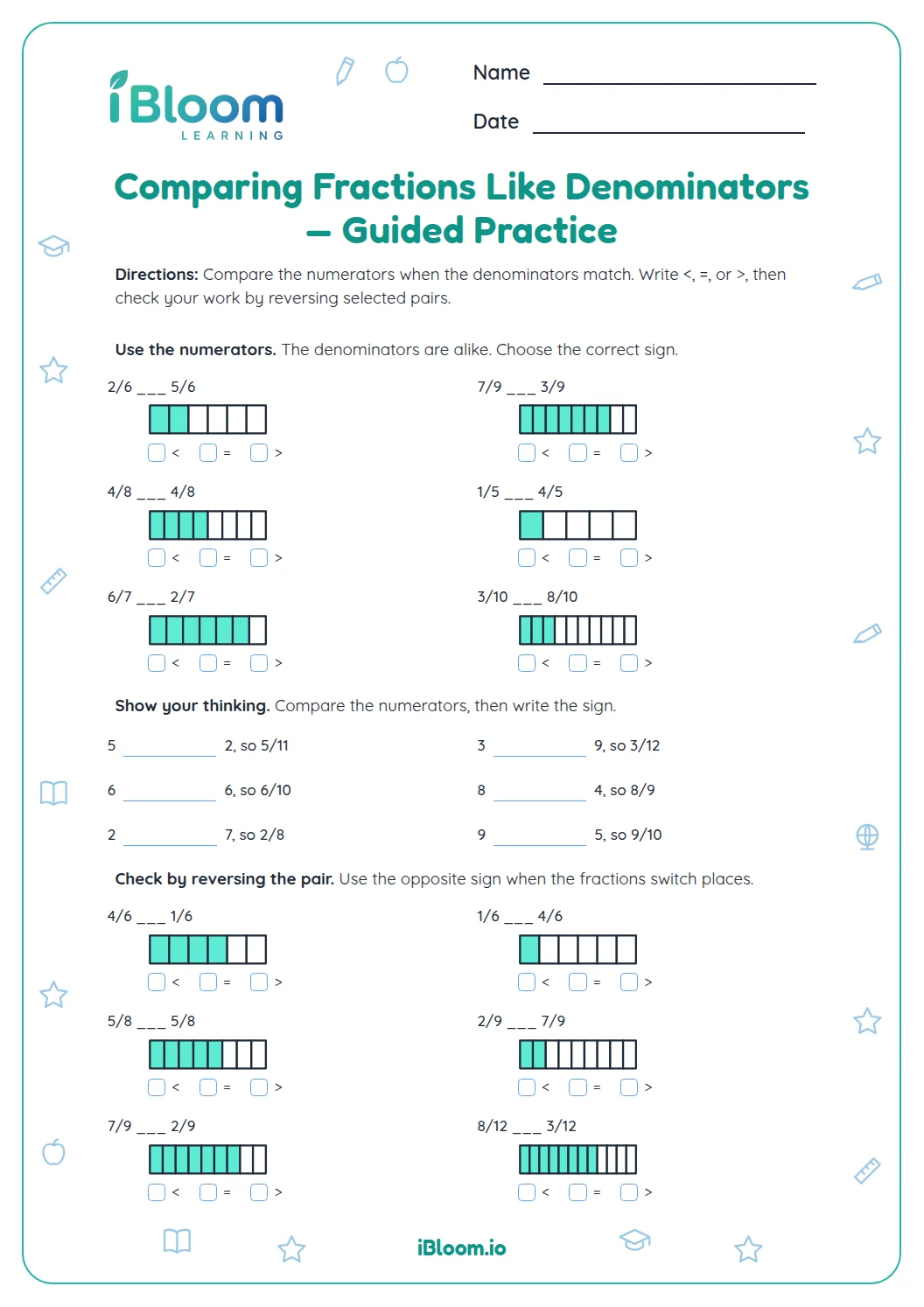
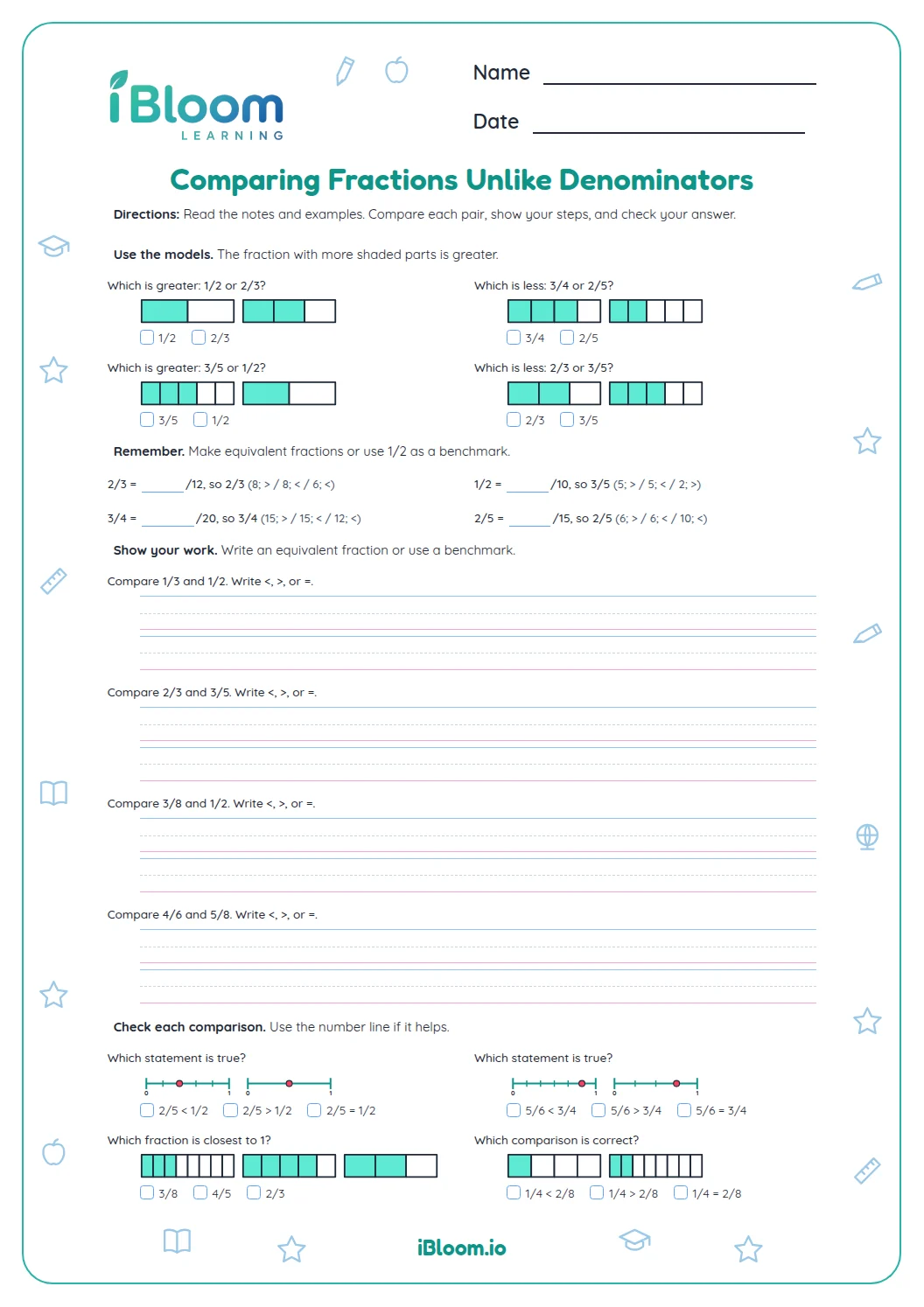
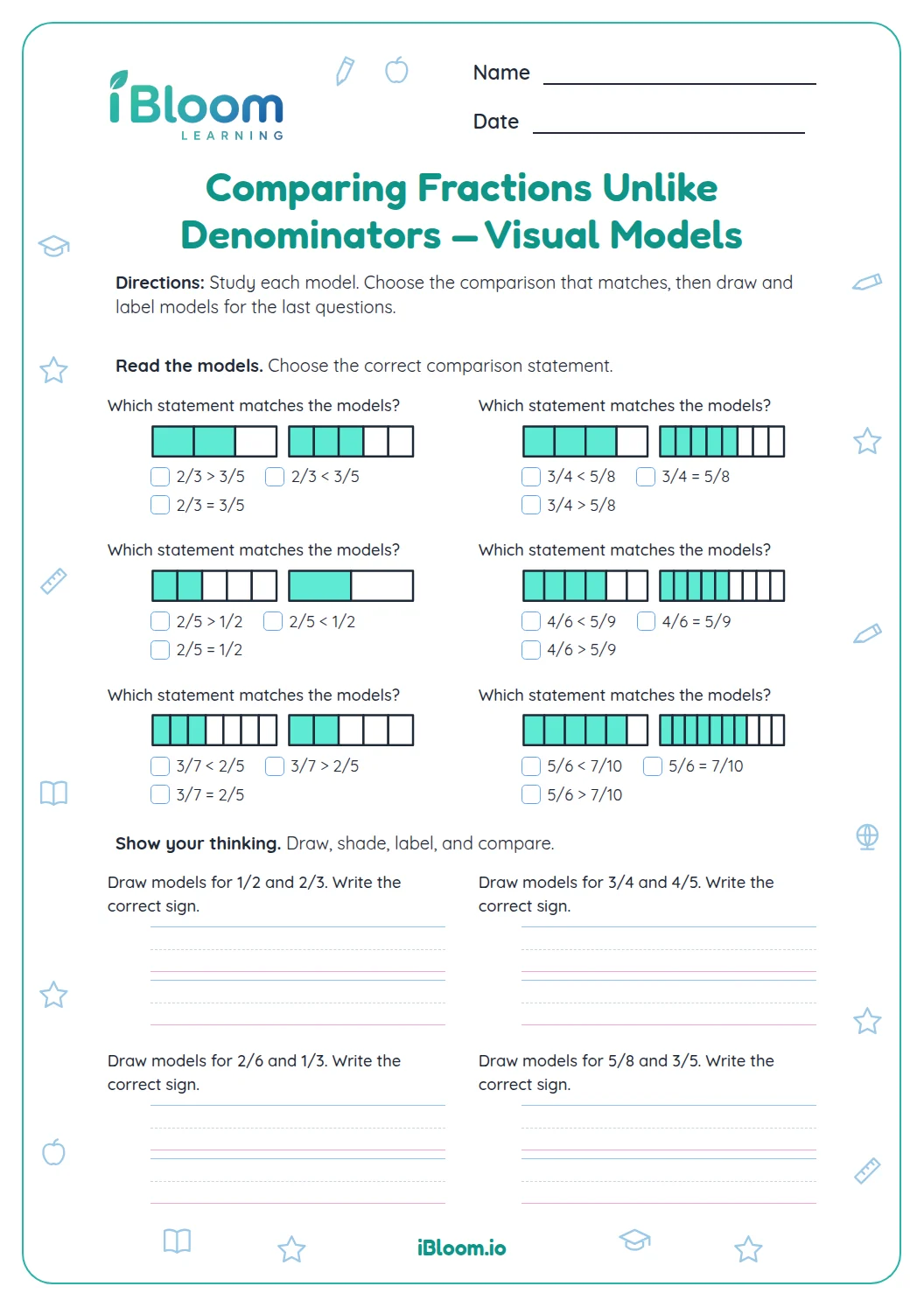
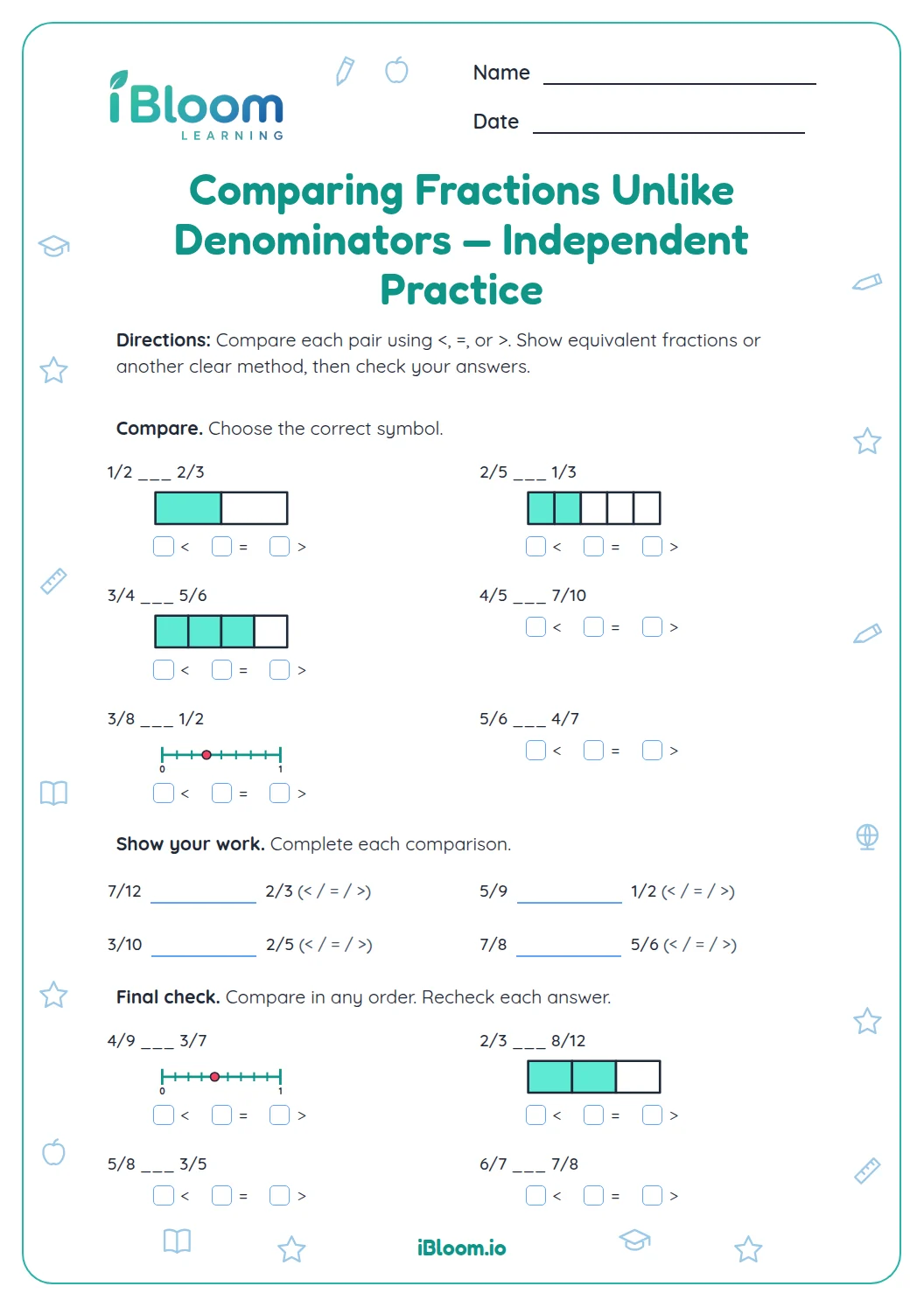
This Grade 3 worksheet uses shaded fraction bars to make equal parts visible as learners name fractions and compare amounts. It includes 15 questions across four parts: reading models, comparing with symbols, choosing the greater fraction, and explaining one comparison. The comparisons focus on familiar equal-part fractions and mixed numbers.
Aligned to 3.NF.A.3.d
Read the equal parts?
Read each shaded bar by counting the equal parts in one whole and the parts that are shaded. A mixed-number model shows one or more full bars before its remaining fraction.
The first model question asks learners to compare a shaded model with one half. Four equal parts with two shaded make the same amount as one half.
Compare one part at a time?
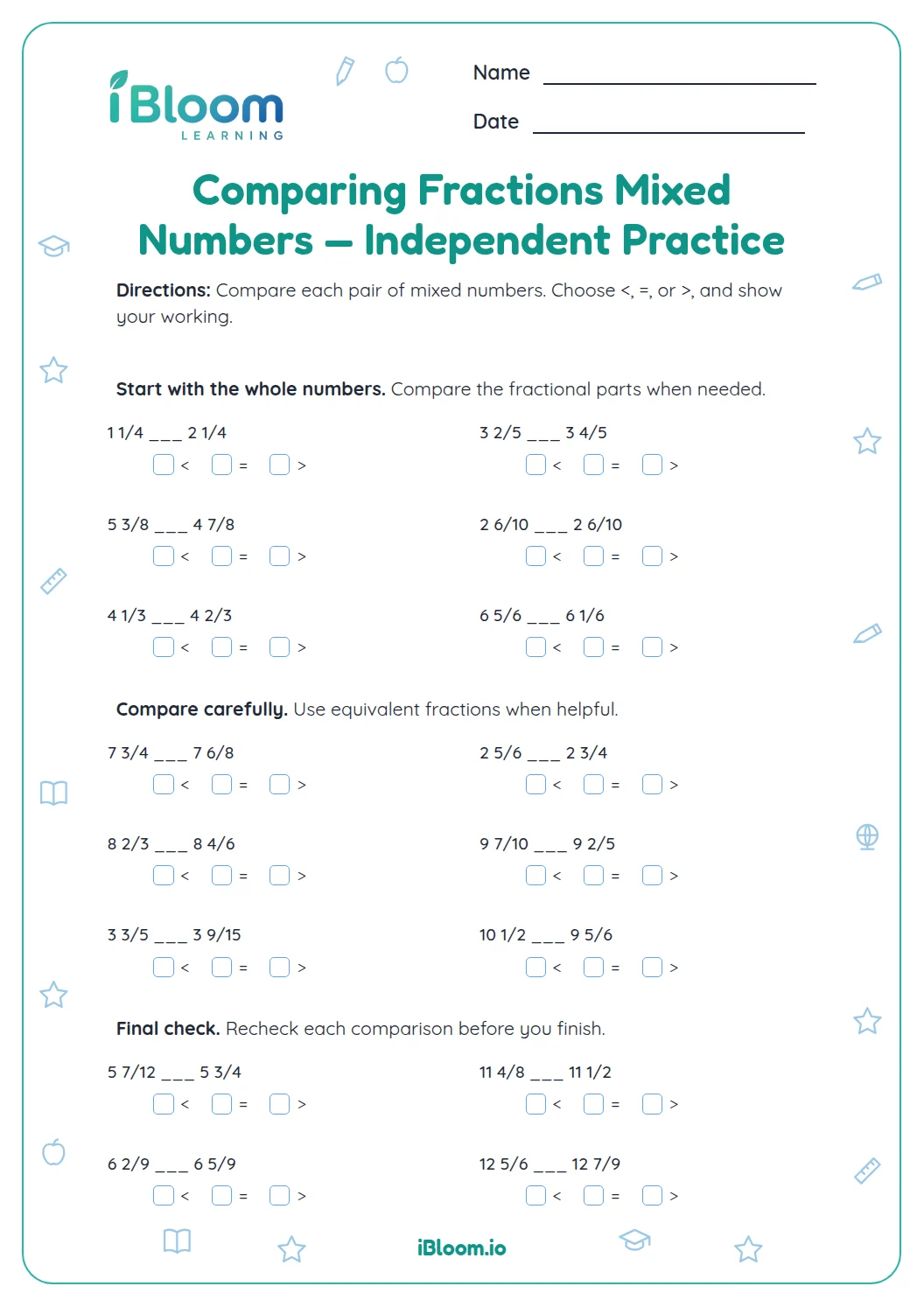
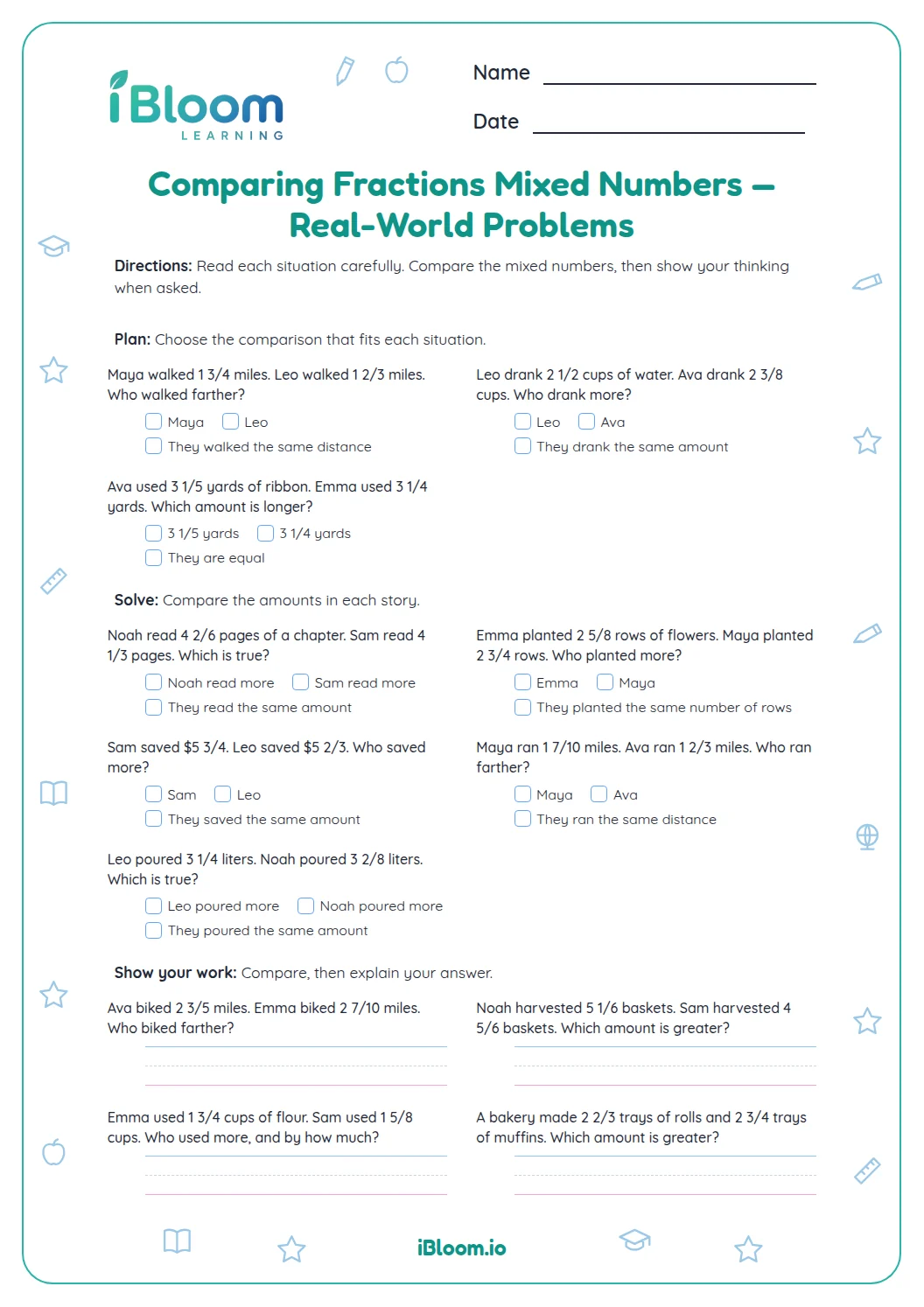
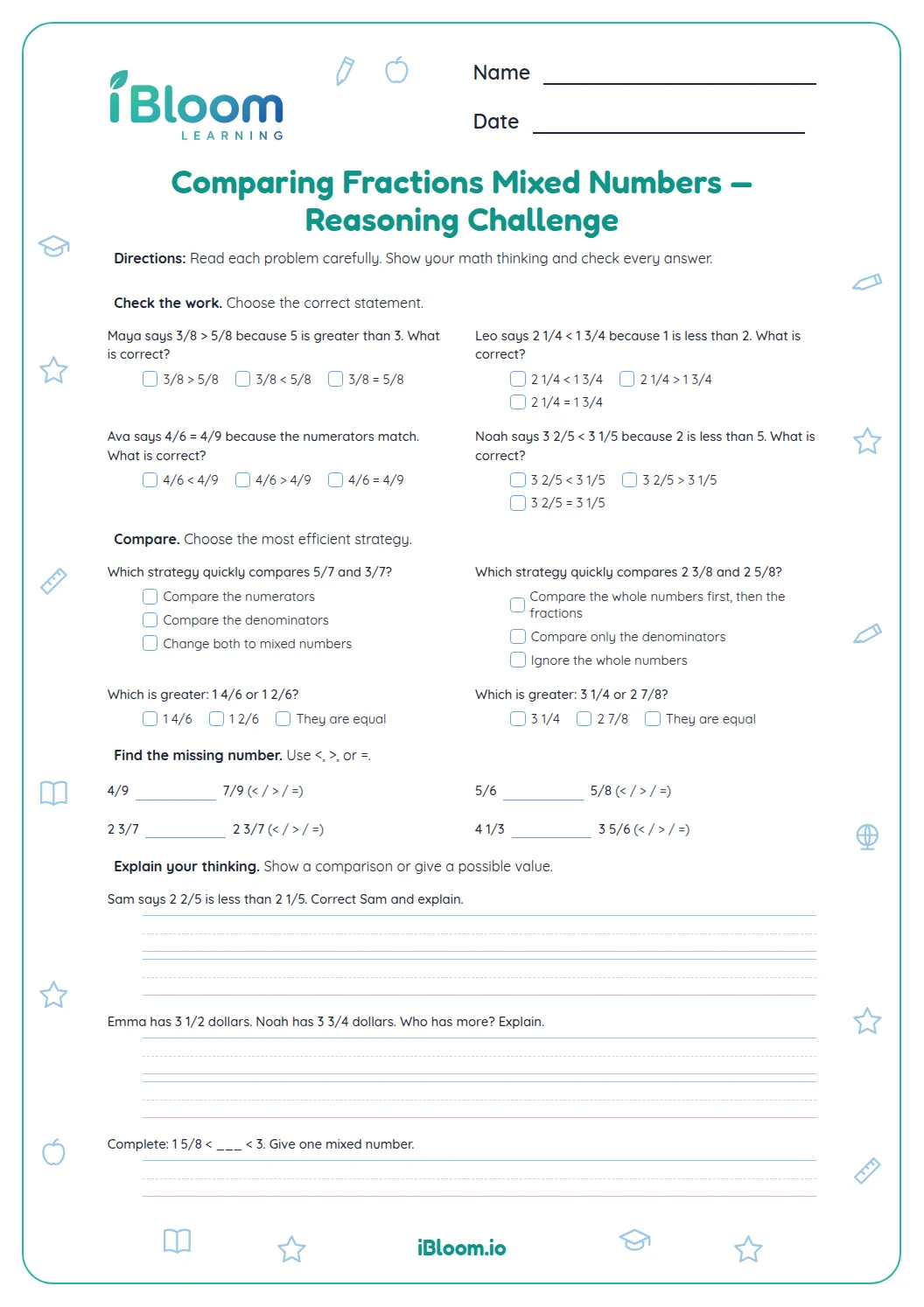
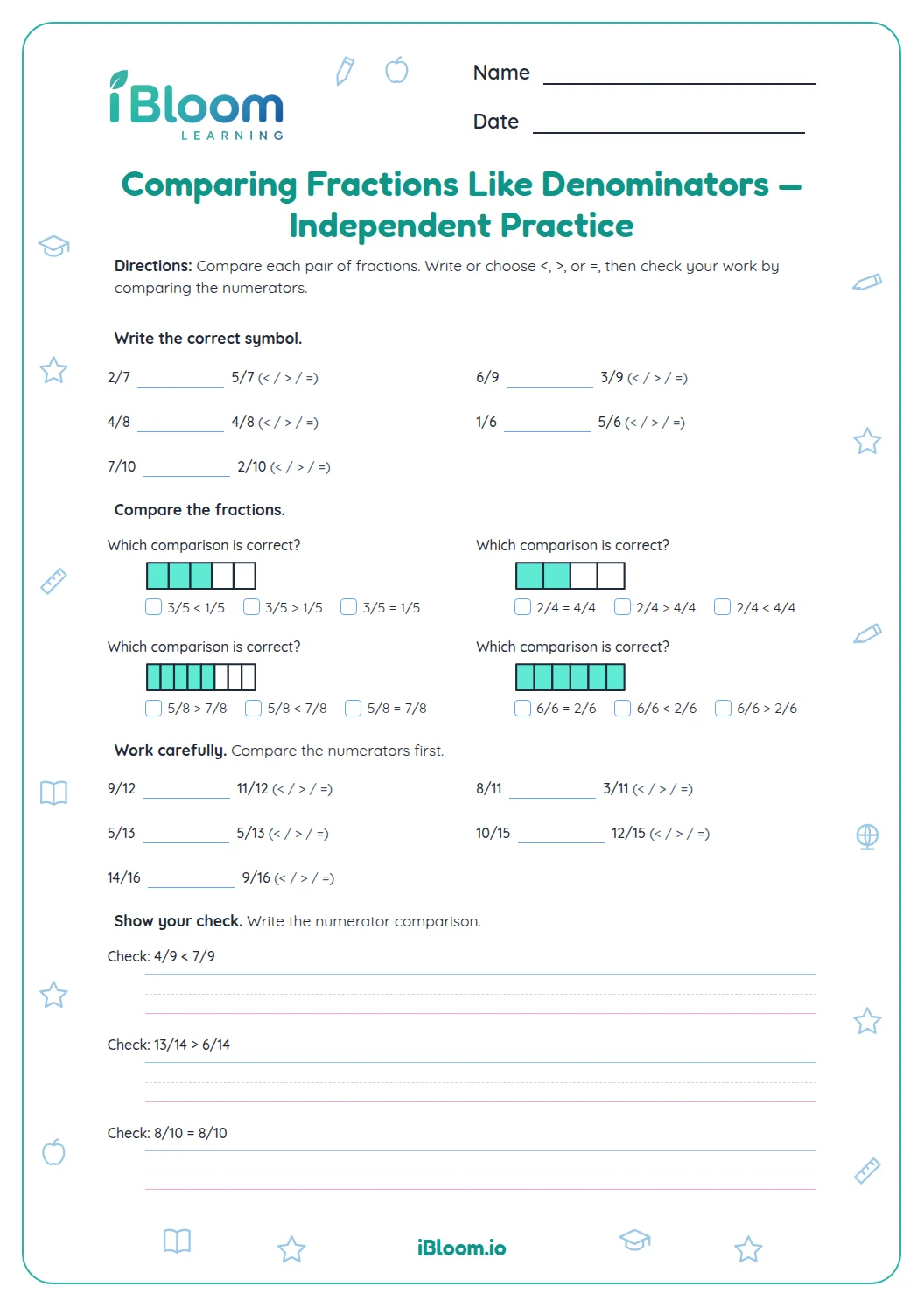
When fractions have the same denominator, the pieces are the same size, so compare the numerators. For mixed numbers, compare the whole-number parts first. If those match, compare the fraction parts.
The final explanation prompt asks a learner to describe why two mixed numbers with one whole can still have different sizes.
How to use this worksheet
- 1For a model, count total equal parts before shaded parts.
- 2For mixed numbers, name full wholes before remaining parts.
- 3When denominators match, compare the number of shaded parts.
- 4Use the final explanation to say which part made one number larger.
Common mix-ups
The mistake
Counting shaded parts but not naming the size of each part.
The fix
Use the denominator to say whether the pieces are fourths, sixths, or eighths.
The mistake
Comparing only the fraction parts in mixed numbers.
The fix
Compare the whole numbers first, then compare the fractions if the wholes match.
The mistake
Comparing only the numerators when denominators differ.
The fix
Think about the size of each equal part, then compare the amounts.
The mistake
Comparing only the numerators when denominators differ.
The fix
Think about the size of each equal part, then compare the amounts.
The mistake
Comparing only the numerators when denominators differ.
The fix
Think about the size of each equal part, then compare the amounts.
Curriculum alignment
This worksheet gives focused practice with the skill named in its title.
Compare fractions by reasoning about their size and using visual fraction models.
On this sheet: Learners use shaded bars and equal-part comparisons to compare fractions.
Show the official wordingHide the official wording
Compare two fractions with the same numerator or the same denominator by reasoning about their size.
What to practice next
Make more practice
Further reading
Questions parents and teachers ask
How do I read a shaded fraction model?
Count the equal parts in one whole to find the denominator. Count the shaded parts to find the numerator. For a mixed number, count each fully shaded whole and then the shaded parts of the next shape in the model.
How do I compare fractions with the same denominator?
The denominator tells that the pieces have the same size. Compare how many pieces are named by the numerators. The fraction with more same-sized pieces is greater, as long as both fractions refer to the same size whole and are divided evenly.
How should a child compare mixed numbers?
Compare the whole-number parts first. A mixed number with more wholes is greater. If both have the same number of wholes, compare the fraction parts by using equal-sized pieces and counting how many parts each number names. This makes the comparison clear.
Why use models for fraction comparisons?
Models make the size of the pieces visible. They help children connect a written fraction to a quantity before comparing symbols or mixed numbers without a drawing. The models on this page use equal parts to make each amount clear.
How can an adult help with this page?
Read the directions aloud and let the learner try each item before offering a clue. Ask the child to point to the part of the word, picture, or sentence that supports the answer. The answer key can help an adult check responses and talk through any uncertain item.