







About this worksheet
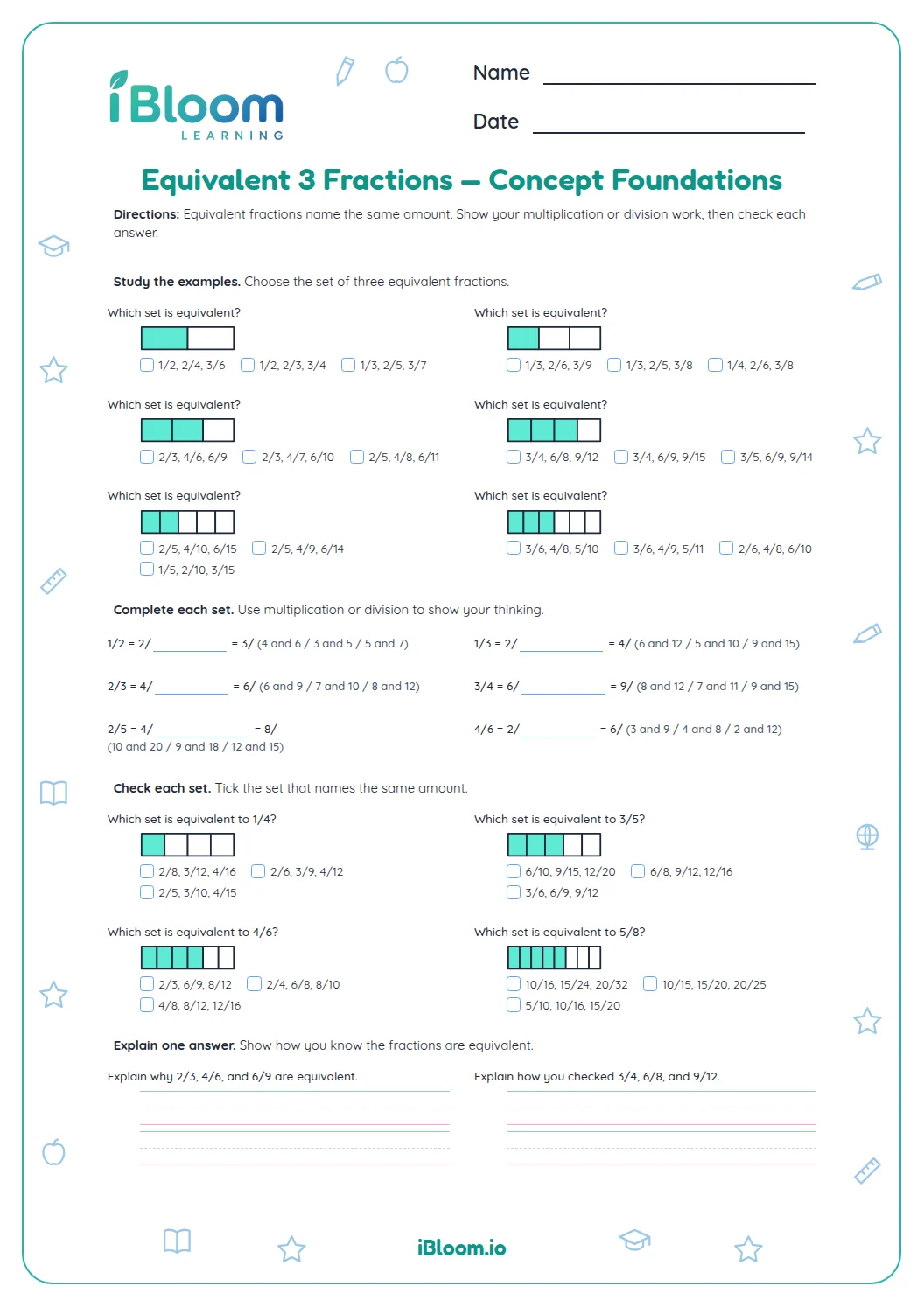
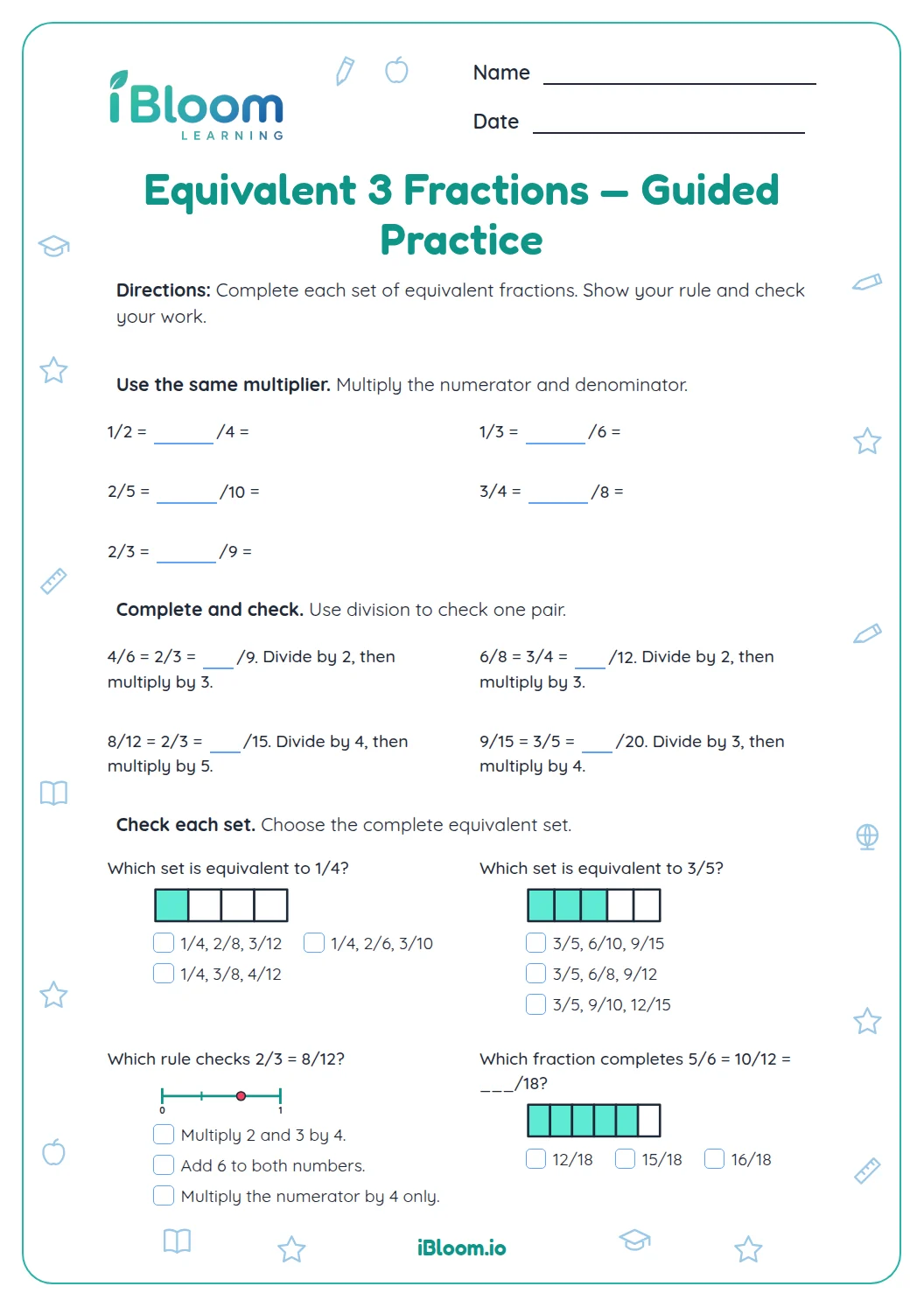
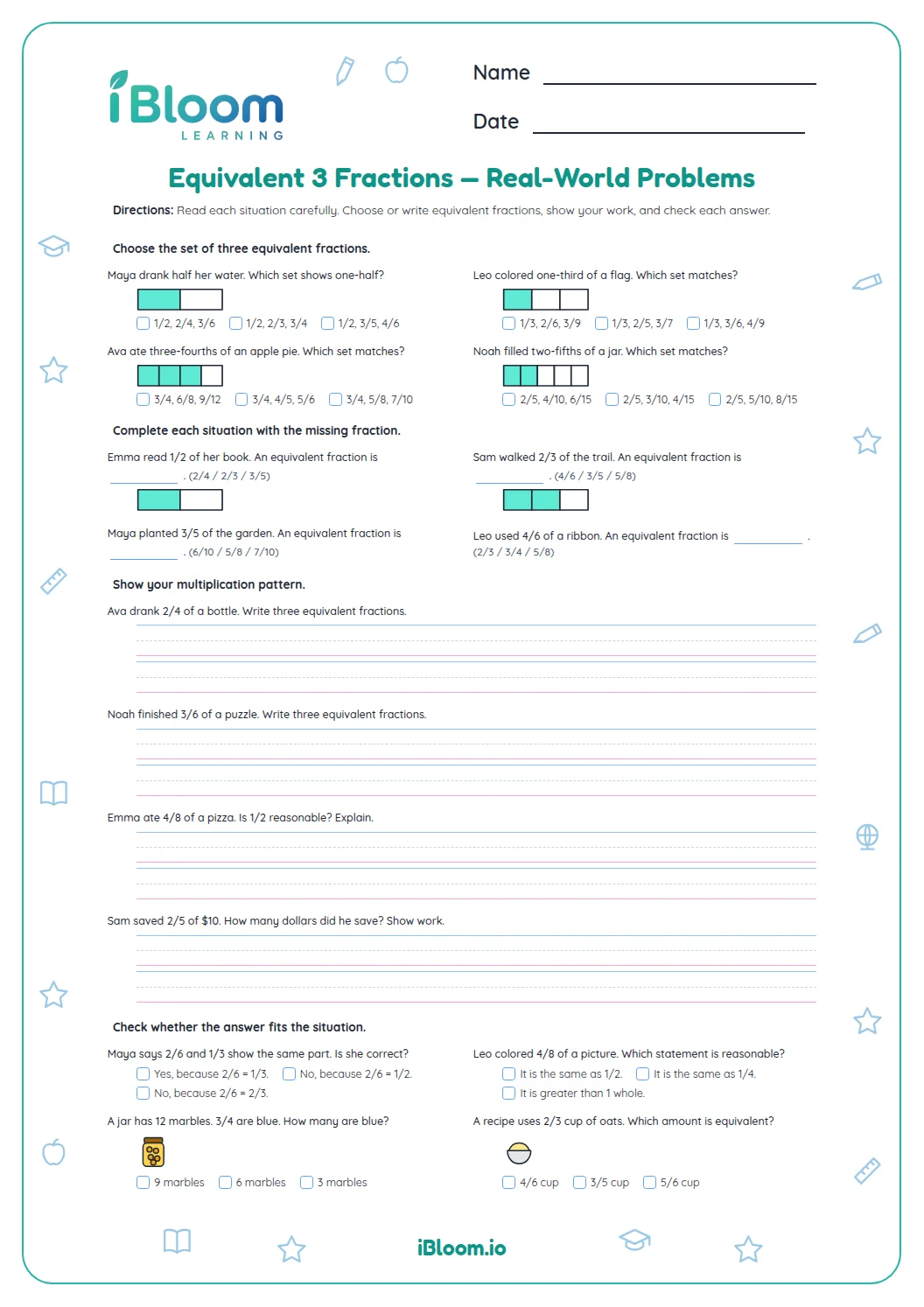
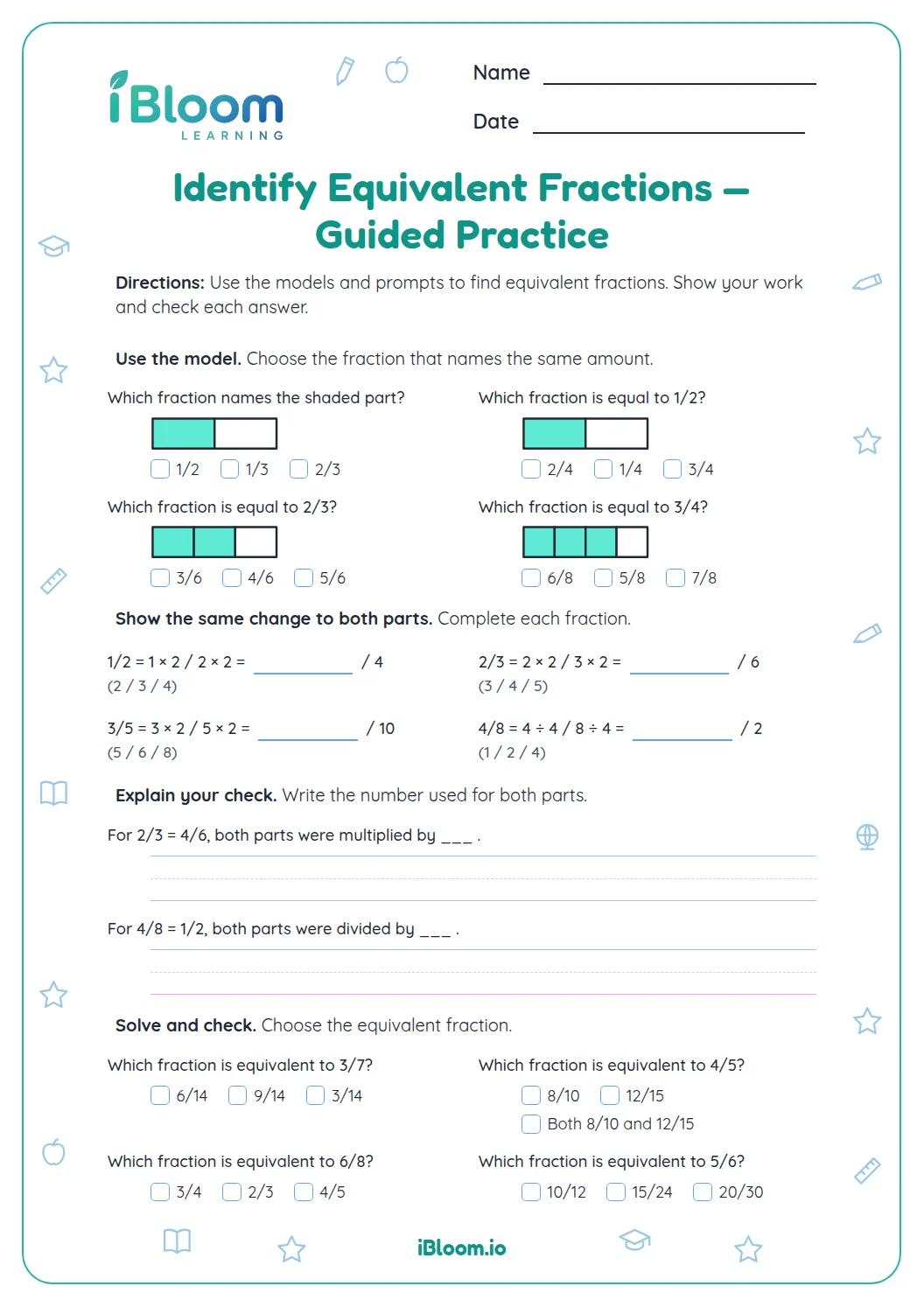
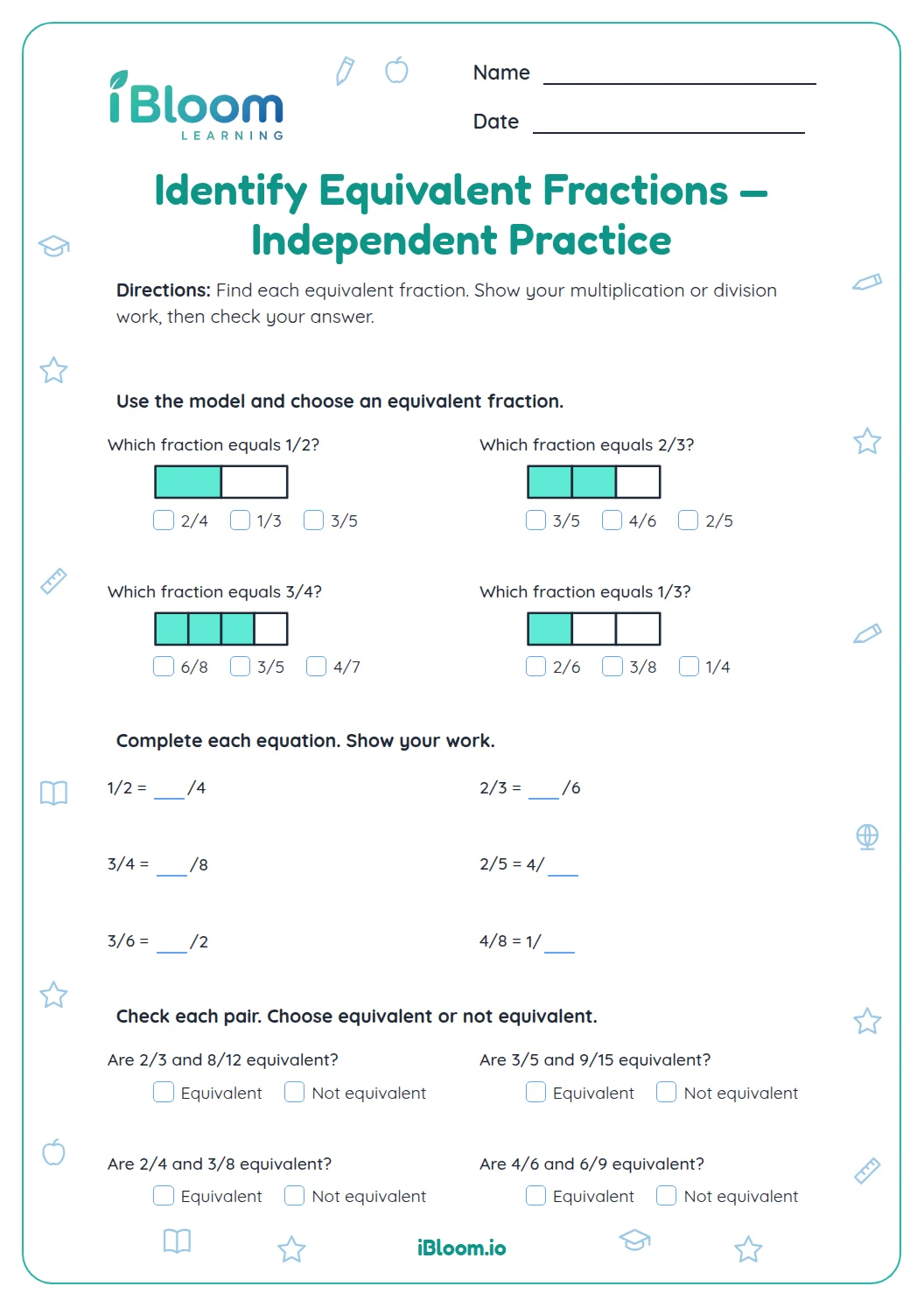
This Grade 3 worksheet asks students to recognize and explain equivalent fractions. Ten equations provide missing numerators or denominators; three multiple-choice items ask children to compare values; and two written responses ask for reasoning. The examples use familiar denominators such as 2, 3, 4, 6, and 8, and a separate answer key supports review. The page practices Common Core 3.NF.A.3.
Aligned to 3.NF.A.3
What makes two fractions equivalent?
Equivalent fractions name the same size even when their numerators and denominators differ. For example, 1/2 and 2/4 describe equal amounts. The questions ask students to keep the value constant while changing the numbers.
How do you fill a missing numerator or denominator?
Determine the factor connecting the known numerator or denominator, then apply the same factor to the other part. In 2/3 = ___/6, the denominator doubles, so the numerator doubles too.
What should an explanation include?
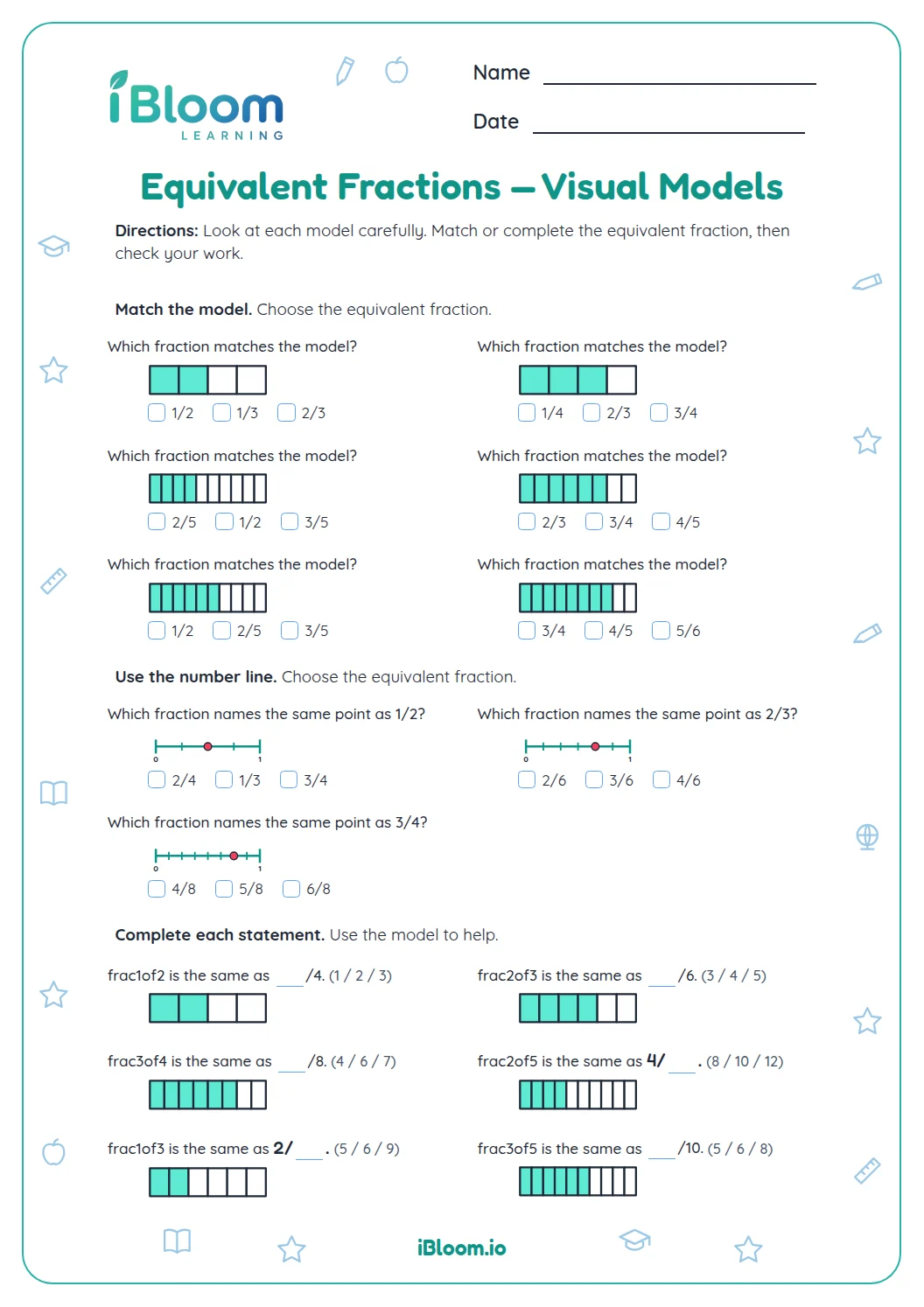
Name an equivalent fraction and describe how you know the values match. A fraction bar can help show that four of eight equal parts covers the same amount as one of two equal parts.
How to use this worksheet
- 1For each equation, find the scale factor between the known numbers.
- 2Apply that same factor to the missing numerator or denominator.
- 3For the choices, compare fraction values rather than top numbers alone.
- 4Use the fraction bar in the written item to connect 4/8 with an equivalent fraction.
- 5Explain how both parts change in the final response.
- 6Check your 15 answers with the key.
Common mistakes and quick fixes
The mistake
Changing only one number
The fix
Multiply or divide both numerator and denominator by the same factor.
The mistake
Comparing numerators alone
The fix
Compare the whole fraction values; different numerators can name the same amount.
The mistake
Treating “not equal” as “equal”
The fix
Read the word NOT carefully and choose the one fraction that names a different amount.
Curriculum alignment
This worksheet gives practice with the named skill through its printed questions.
Understand two fractions as equivalent when they name the same size.
On this sheet: Learners complete equivalent fraction equations and compare familiar fractions with denominators 2, 3, 4, 6, and 8.
Show the official wordingHide the official wording
Explain equivalence of fractions in special cases, and compare fractions by reasoning about their size.
What to practice next
Make more practice
Further reading
Questions parents and teachers ask
Are 2/4 and 1/2 equivalent?
Yes. Both fractions name one half of a whole. You can divide the numerator and denominator of 2/4 by 2 to get 1/2, or compare equal-sized fraction bars. The matching values should cover the same portion of one whole. This gives a quick check.
How does the worksheet use fraction models?
One written question includes a bar divided into eight equal parts, with four shaded. Students name an equivalent fraction with denominator 2 and explain the relationship they see. The matching values should cover the same portion of one whole. This gives a quick check.
How many questions are on the page?
There are 15 questions in three parts: ten missing-value equations, three multiple-choice comparisons, and two written explanations. A separate answer key is included. The matching values should cover the same portion of one whole. This gives a quick check. This gives a quick check.
What denominators appear?
The equation and choice items use familiar Grade 3 denominators including 2, 3, 4, 6, and 8. These values let students compare simple fractions and reason about equal parts. The matching values should cover the same portion of one whole.
How can a child check an equivalent fraction?
Use a fraction strip or bar, or multiply or divide the numerator and denominator by the same number. The resulting fraction should describe the same portion of a whole. The matching values should cover the same portion of one whole.