






About this worksheet
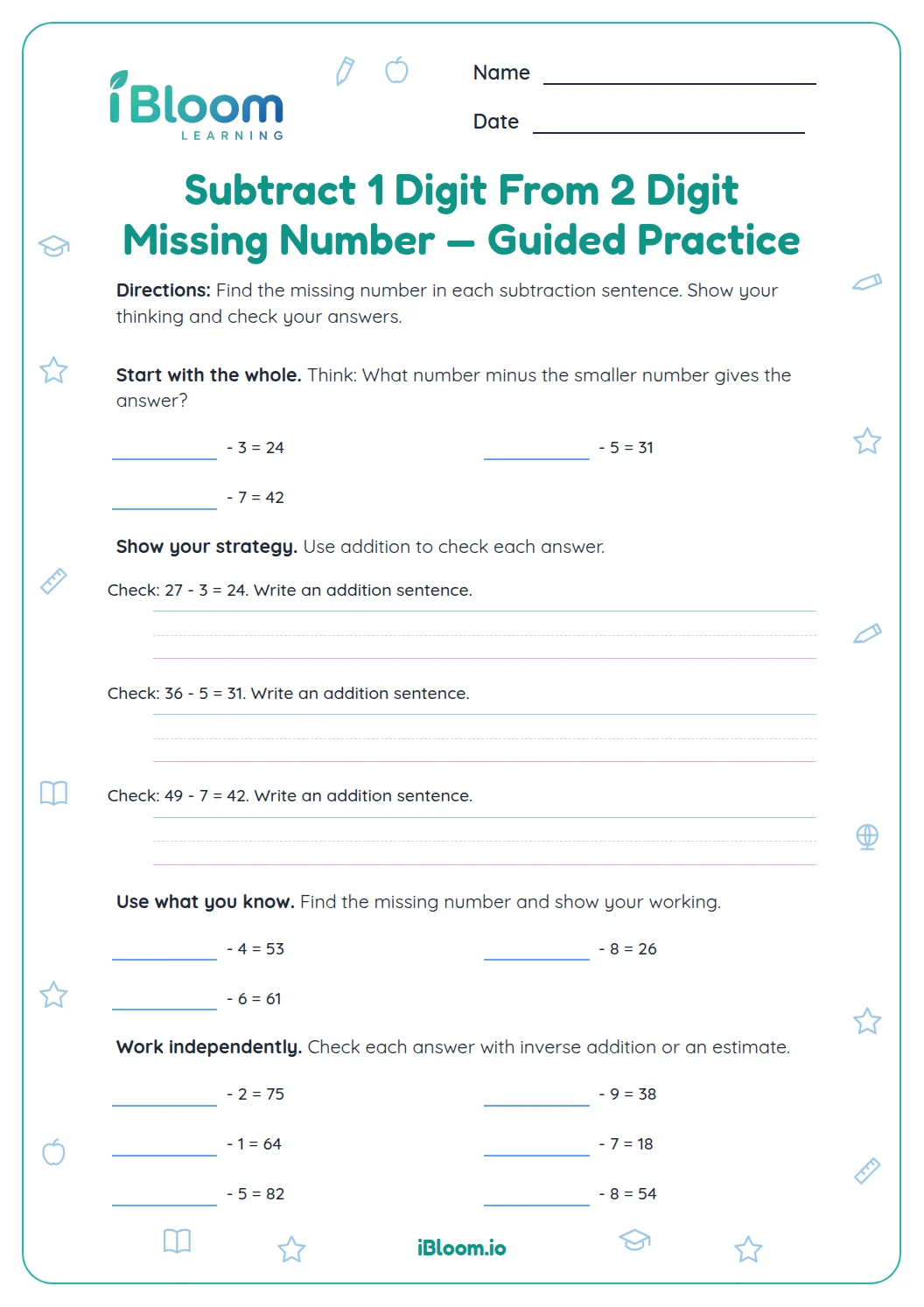
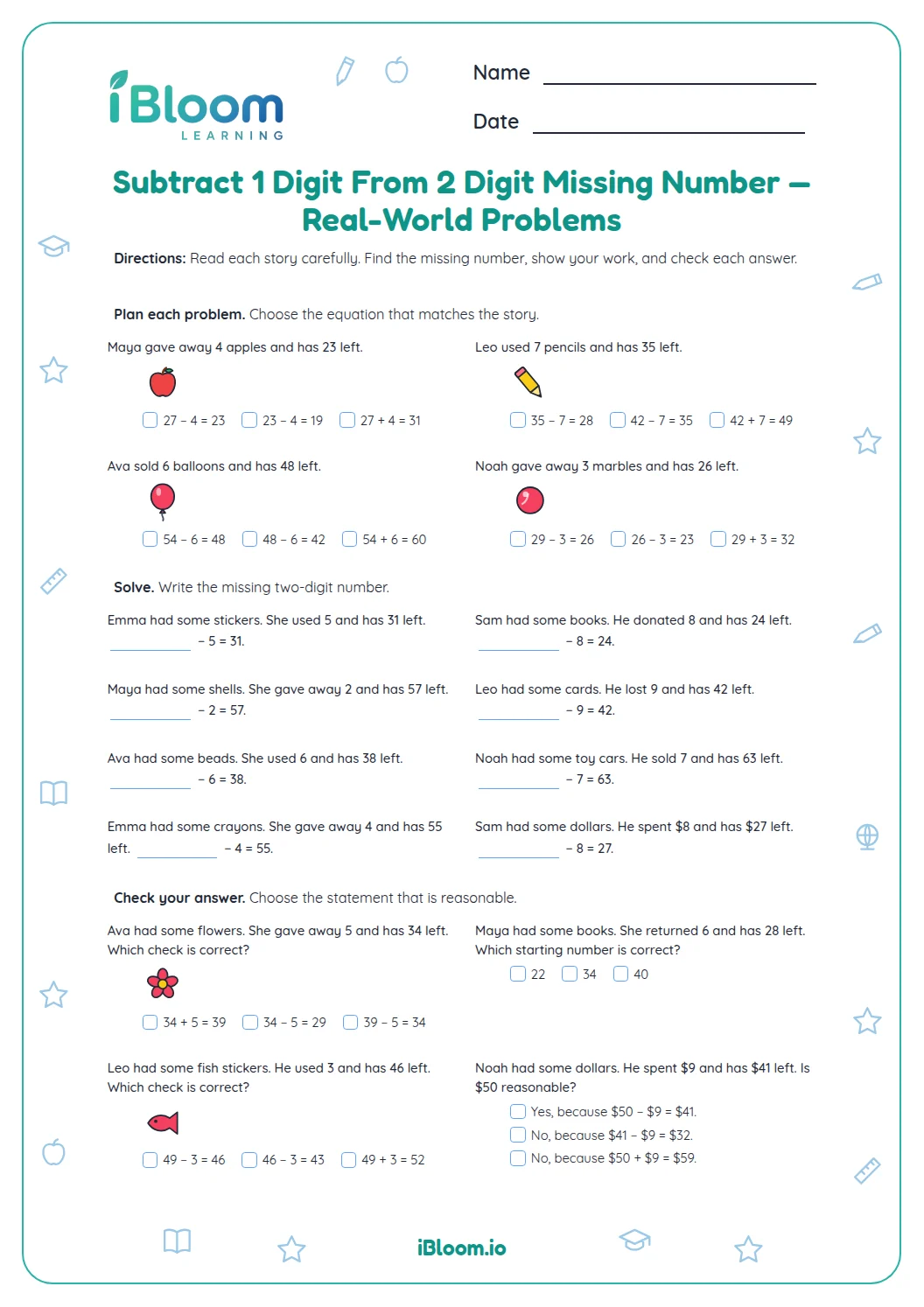
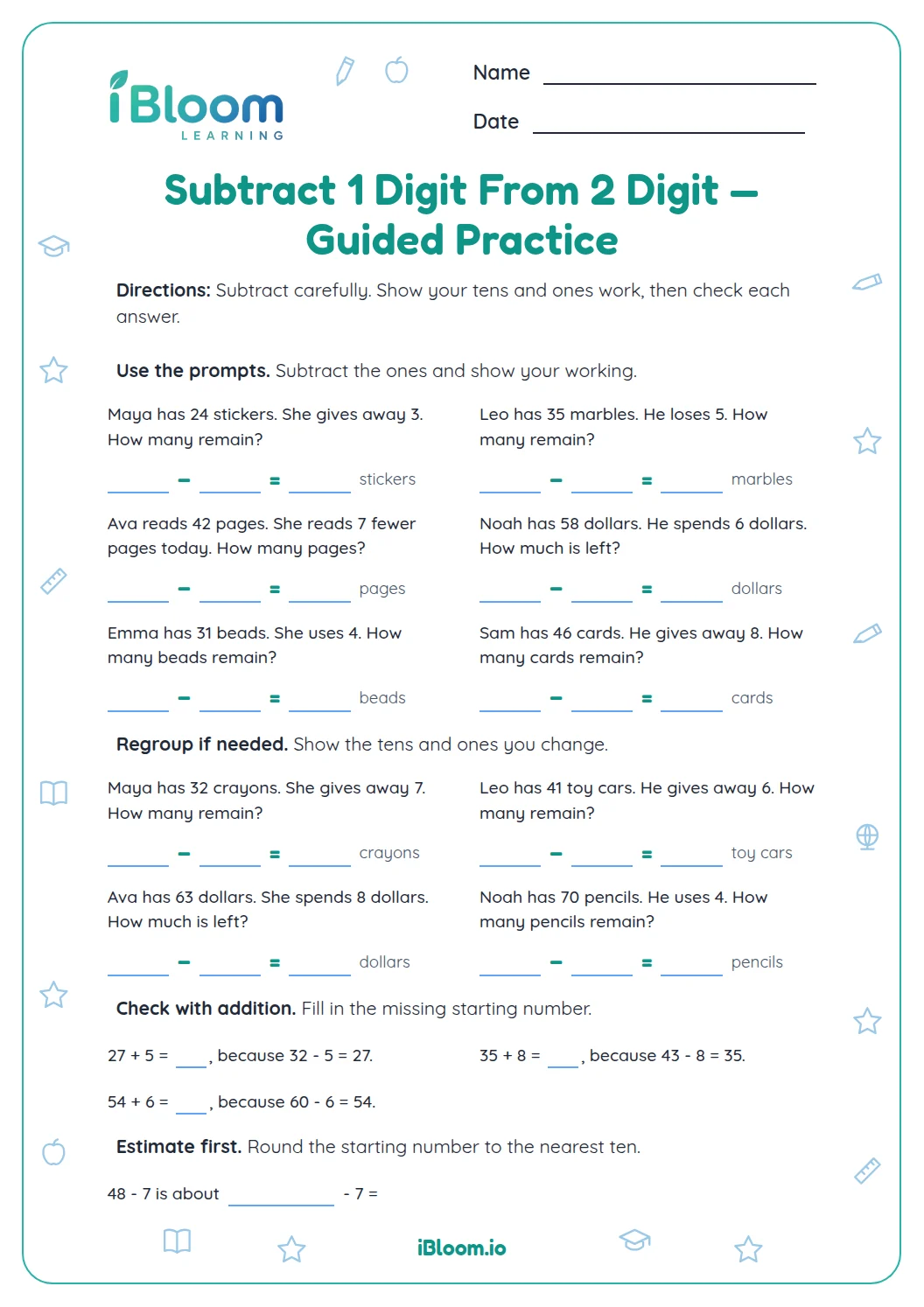
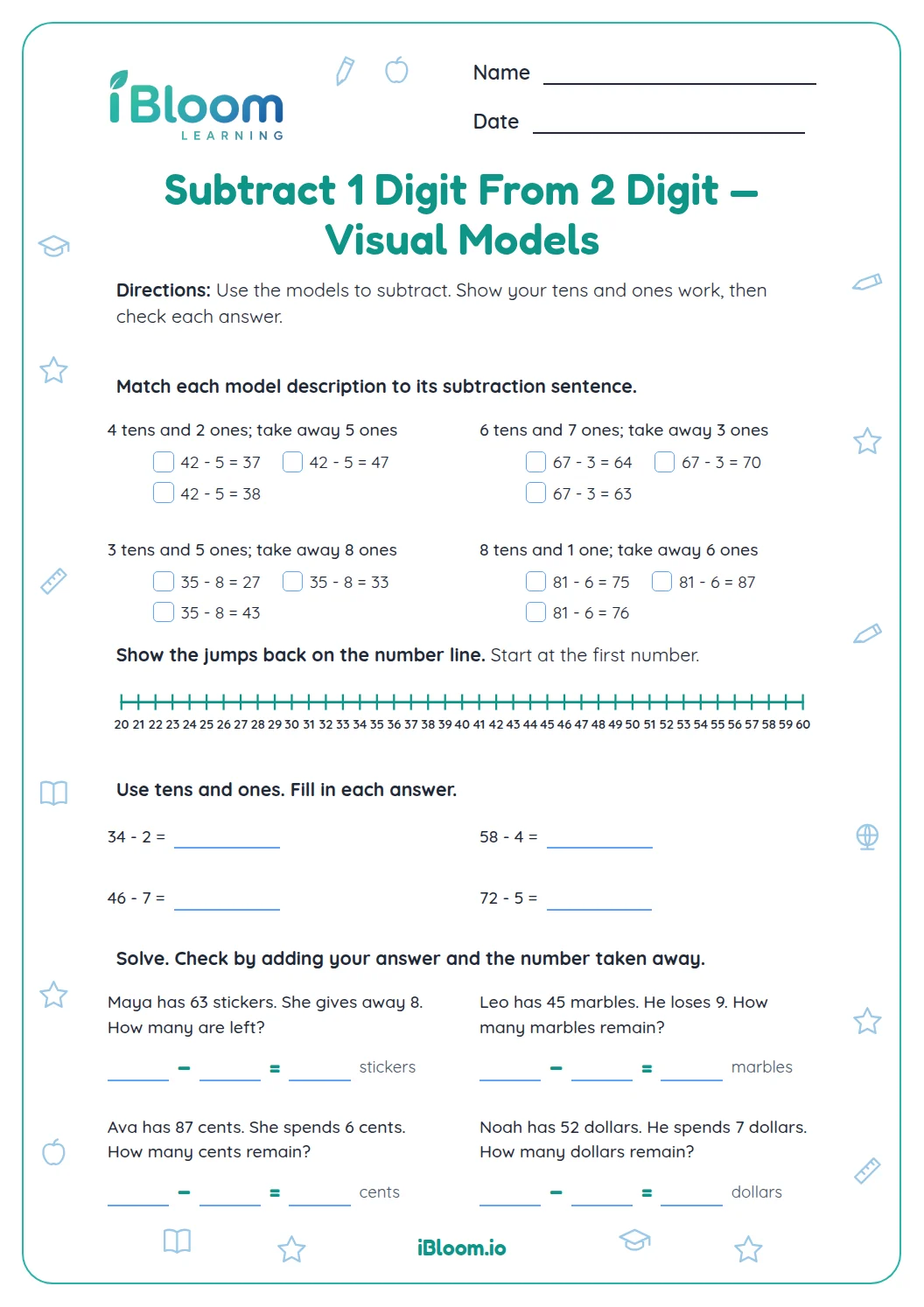
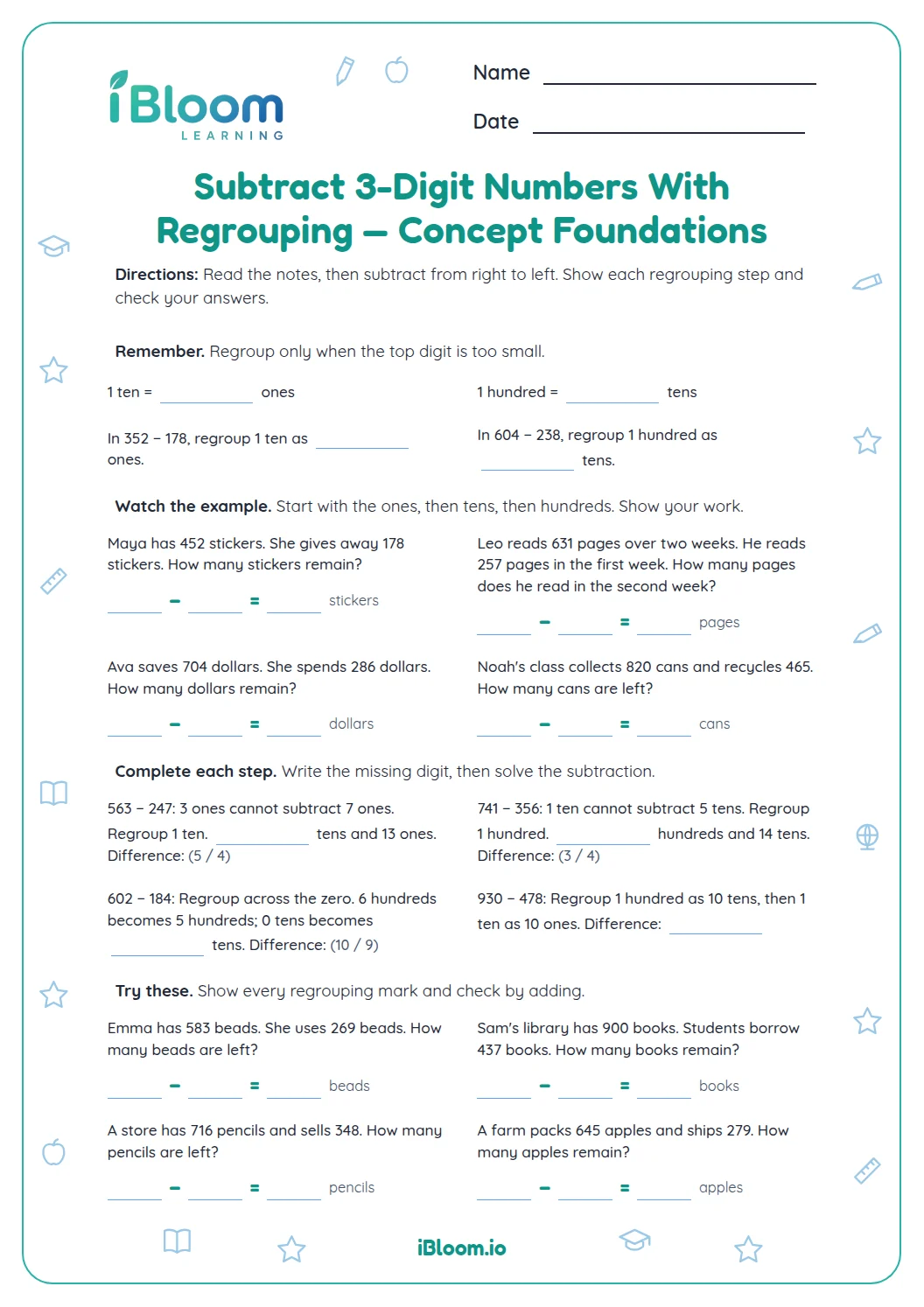
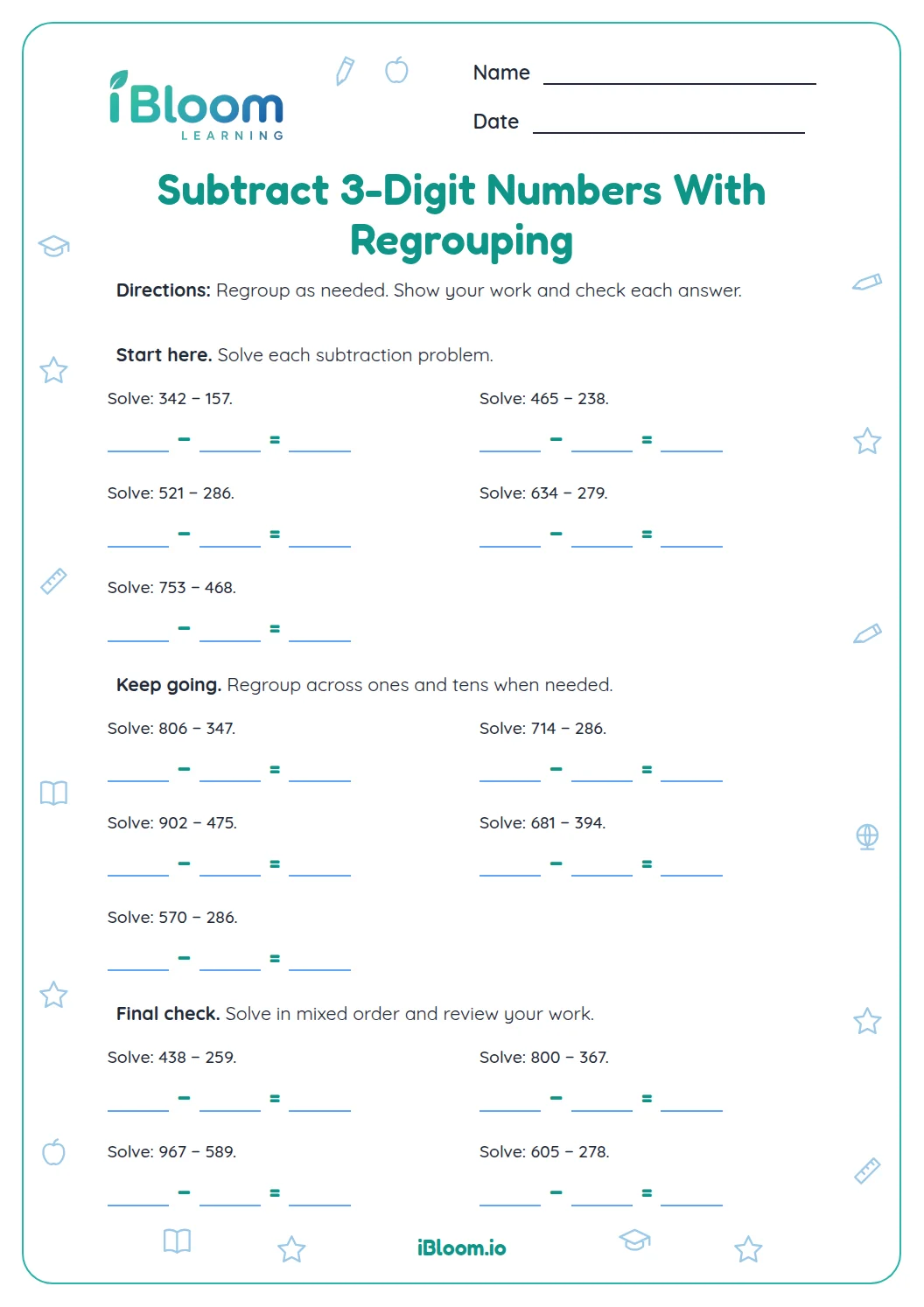
This Grade 3 practice keeps the original method: each subtraction equation hides the starting number. Across 15 problems, learners use the known subtrahend and difference to reason backward, then substitute their answer to check the equation.
What is on this worksheet?
All 15 equations hide the minuend, or starting number. Learners combine the known difference and one-digit subtrahend to find that number, then check by subtracting.
How to use this worksheet
- 1Read the direction at the start of each part before beginning.
- 2Work from Part A toward the final part; the questions move from recognition to applying the skill.
- 3Use the answer key to check each response and discuss any answer that was difficult.
Common mix-ups
The mistake
Subtracting the visible number even when the blank is the starting number.
The fix
Ask what number must be before the subtraction to leave the stated result.
What to practice next
Make more practice
Questions parents and teachers ask
How do I find a missing starting number?
Add the difference to the number being subtracted. For ___ − 8 = 28, add 28 and 8 to get 36; then check that 36 − 8 equals 28. This reverses the subtraction and recovers the amount before anything was taken away.
What is the starting number called?
The starting number in a subtraction equation is the minuend. In 36 − 8 = 28, 36 is the minuend, 8 is the subtrahend, and 28 is the difference. Knowing these names can help learners describe which part of the equation is missing.
How can students check each answer?
Replace the blank with the answer and subtract the visible one-digit number. The result should match the difference printed after the equals sign. For example, after finding 36, calculate 36 − 8 and confirm that it equals 28.
Are all missing numbers two digits?
Yes. Each answer is a two-digit starting number. The subtrahend is one digit, and the difference is also a two-digit number. Learners use both visible numbers to reconstruct the amount before subtraction, then verify the relationship by solving the equation.
What strategy can help find the blank?
Think of subtraction and addition as inverse operations. Add the difference and the subtrahend to recover the number before subtraction began. Then put that total back into the equation and subtract to see whether the printed difference returns.