








About this worksheet
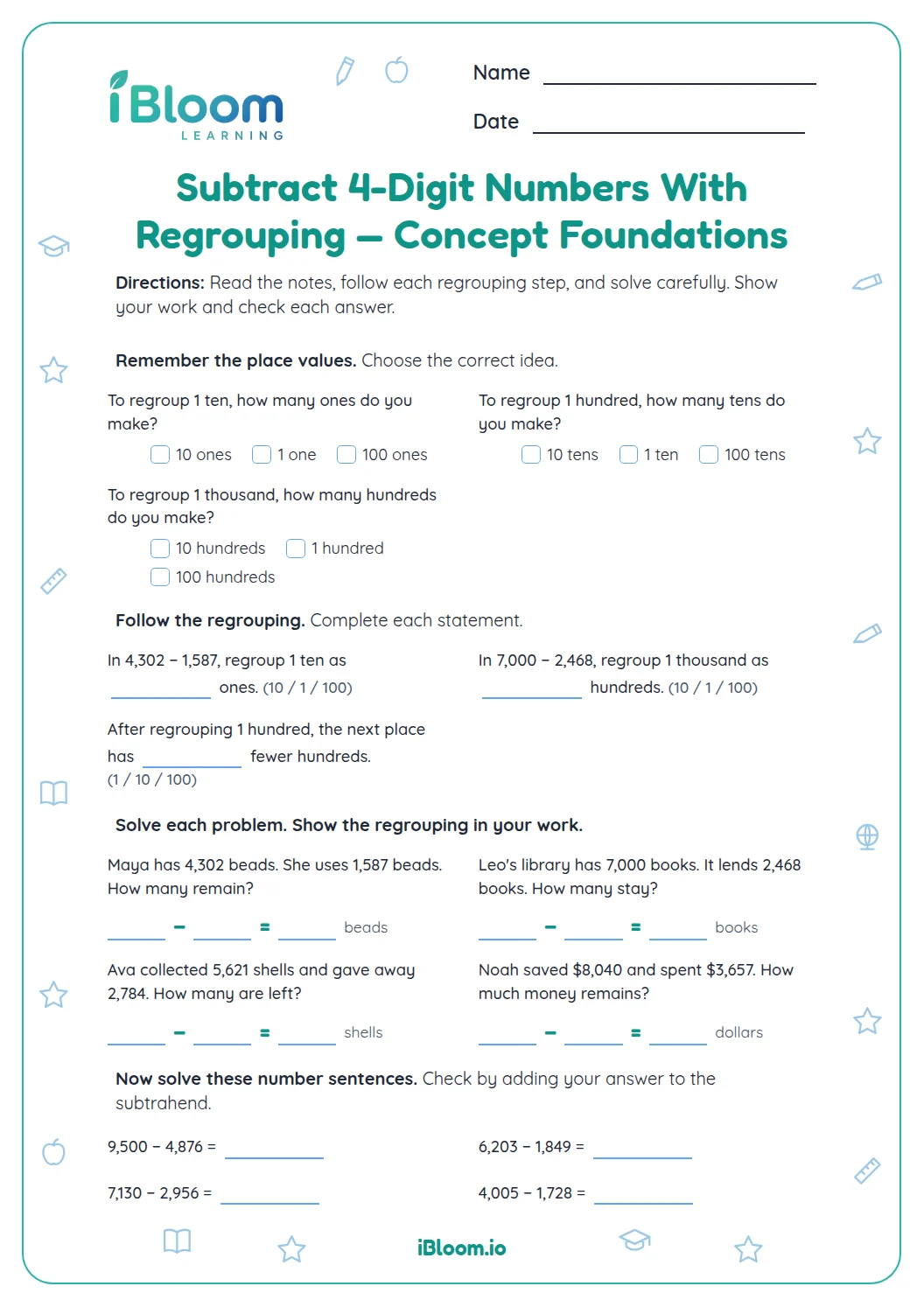
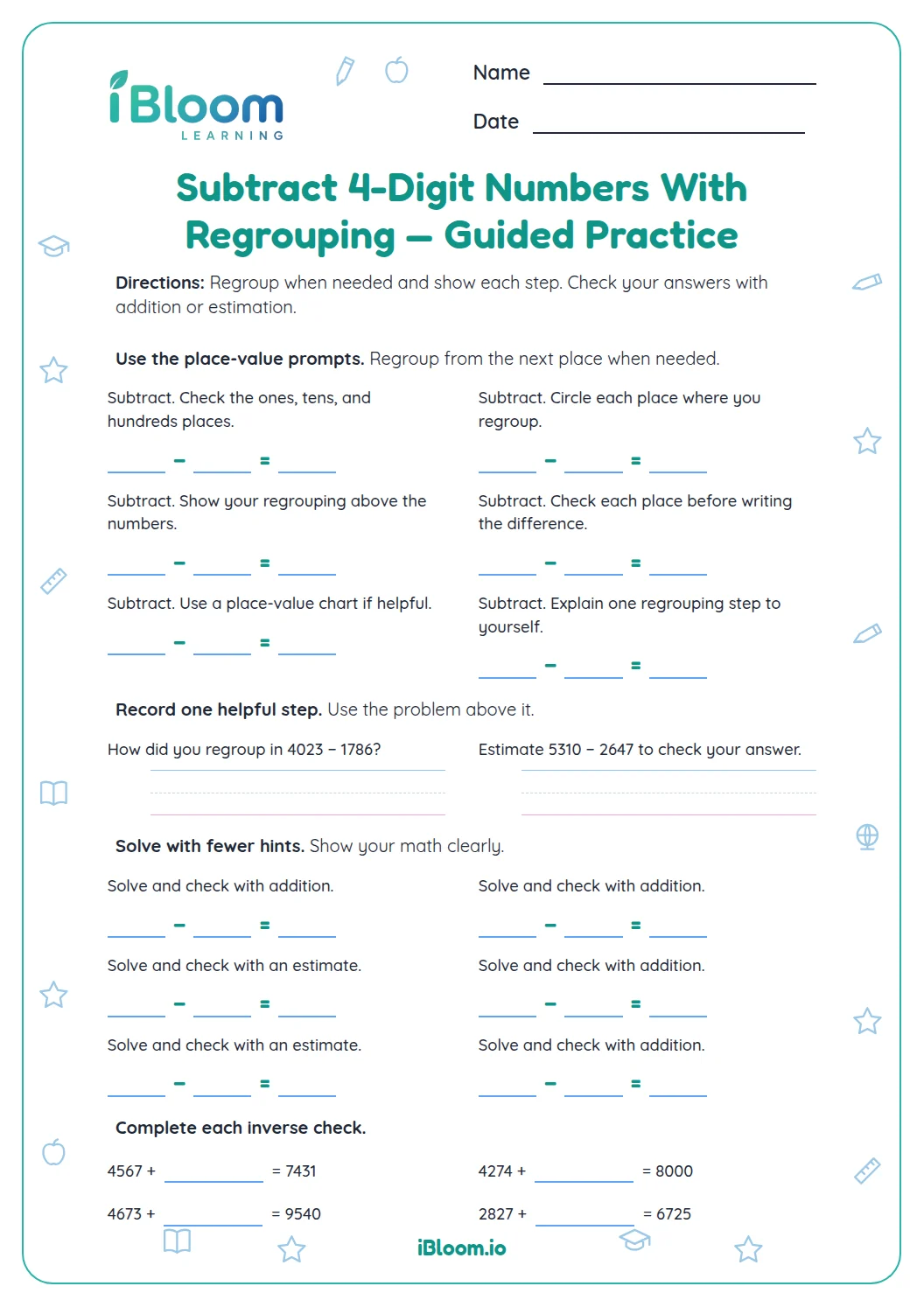
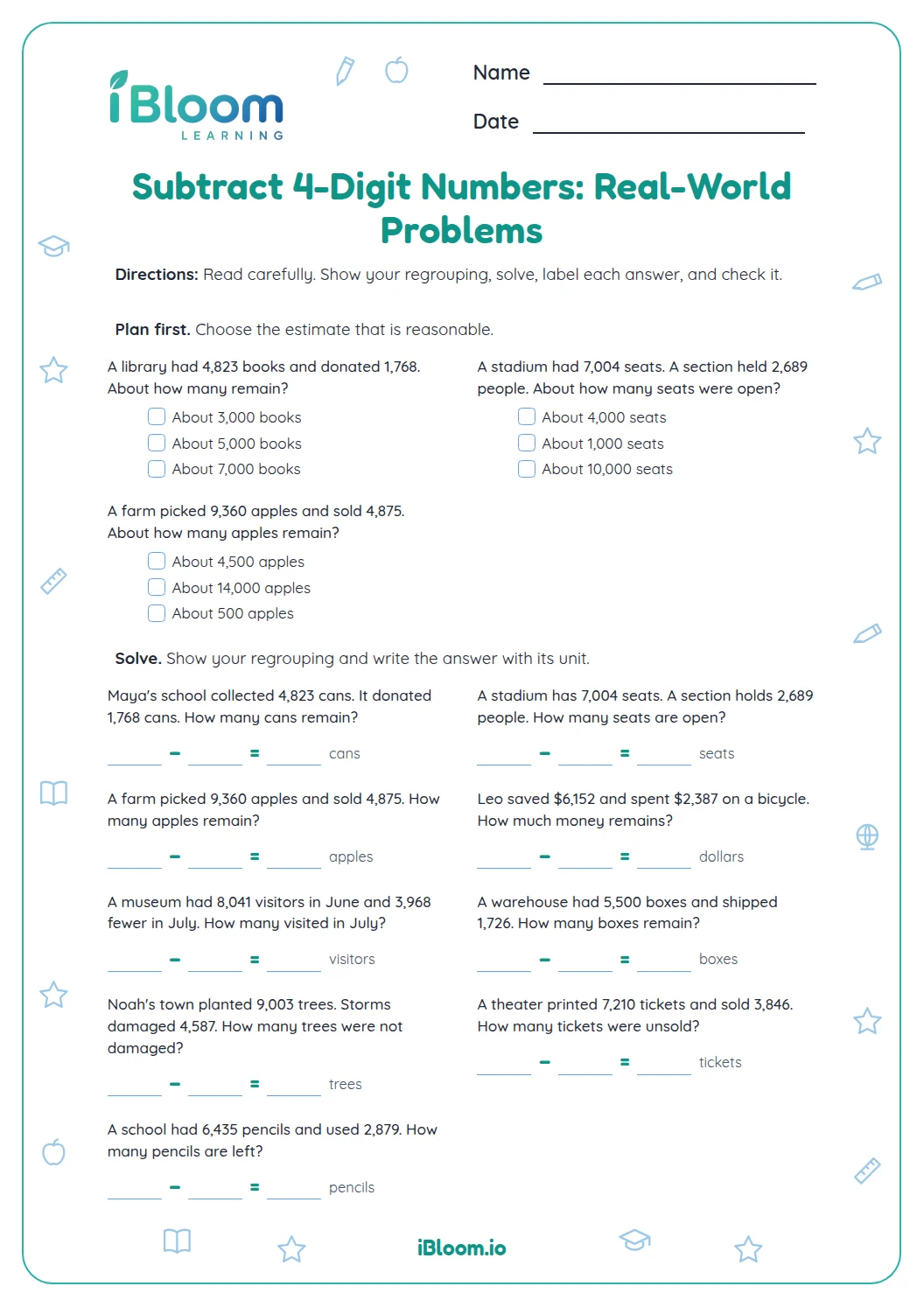
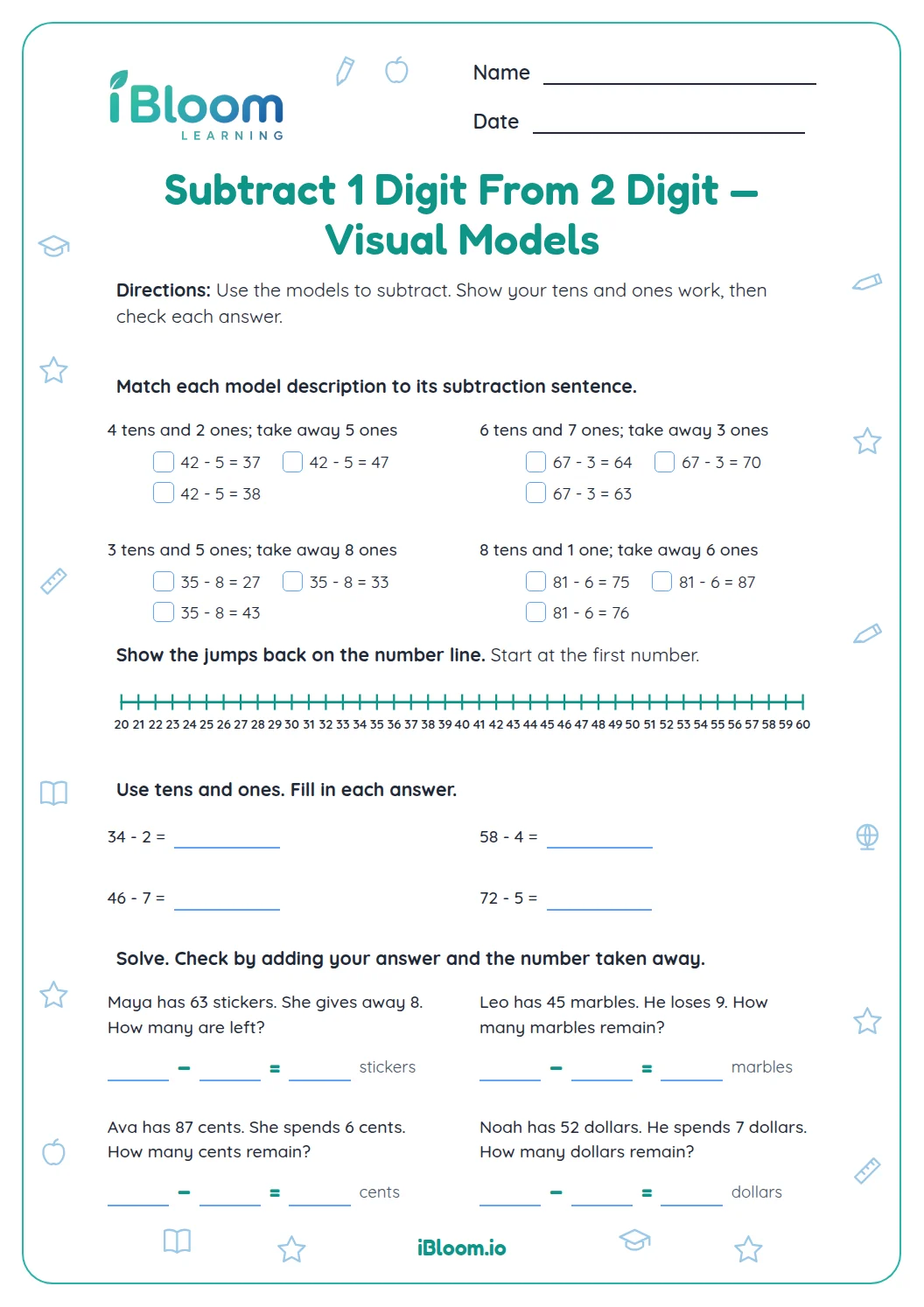
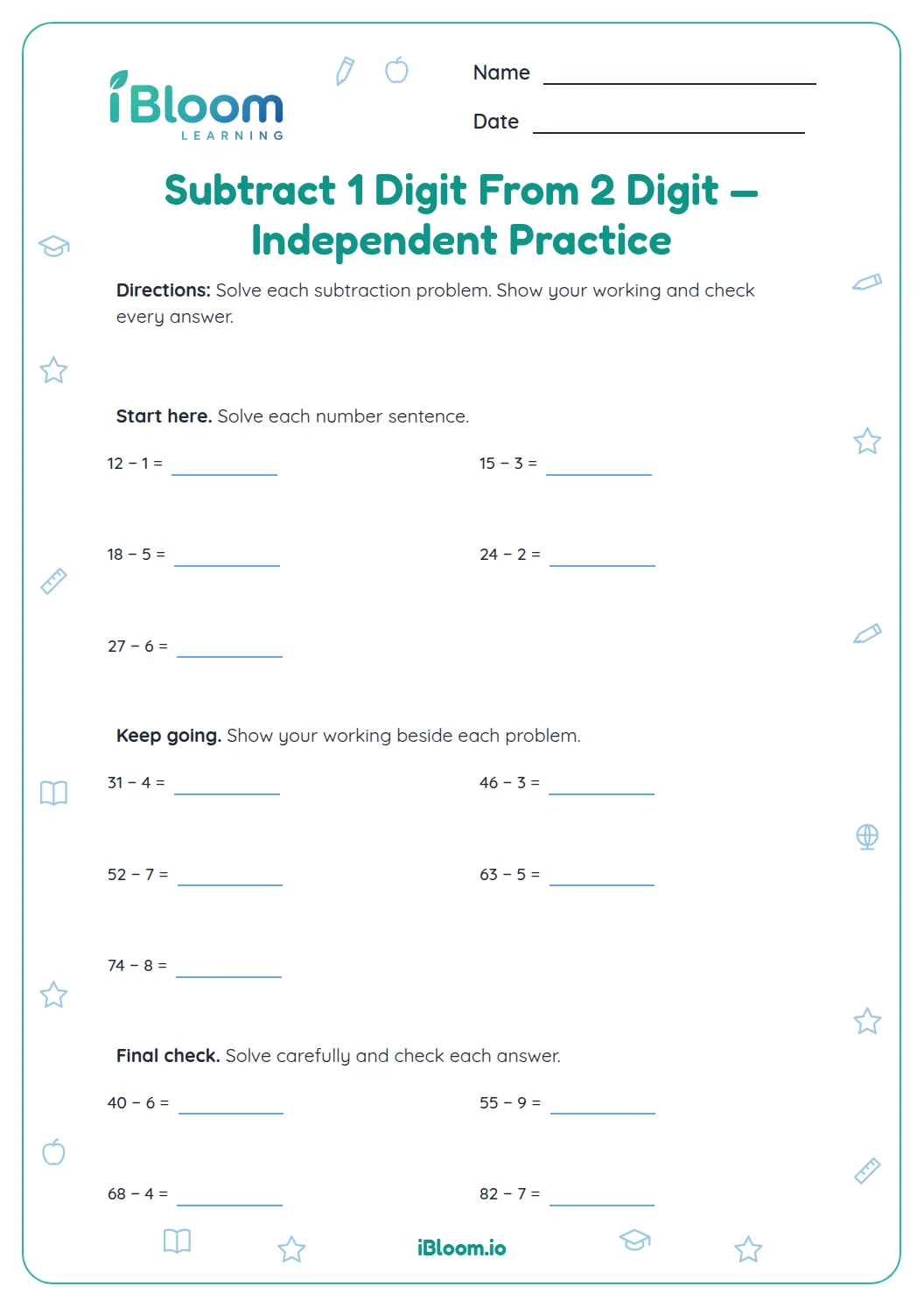
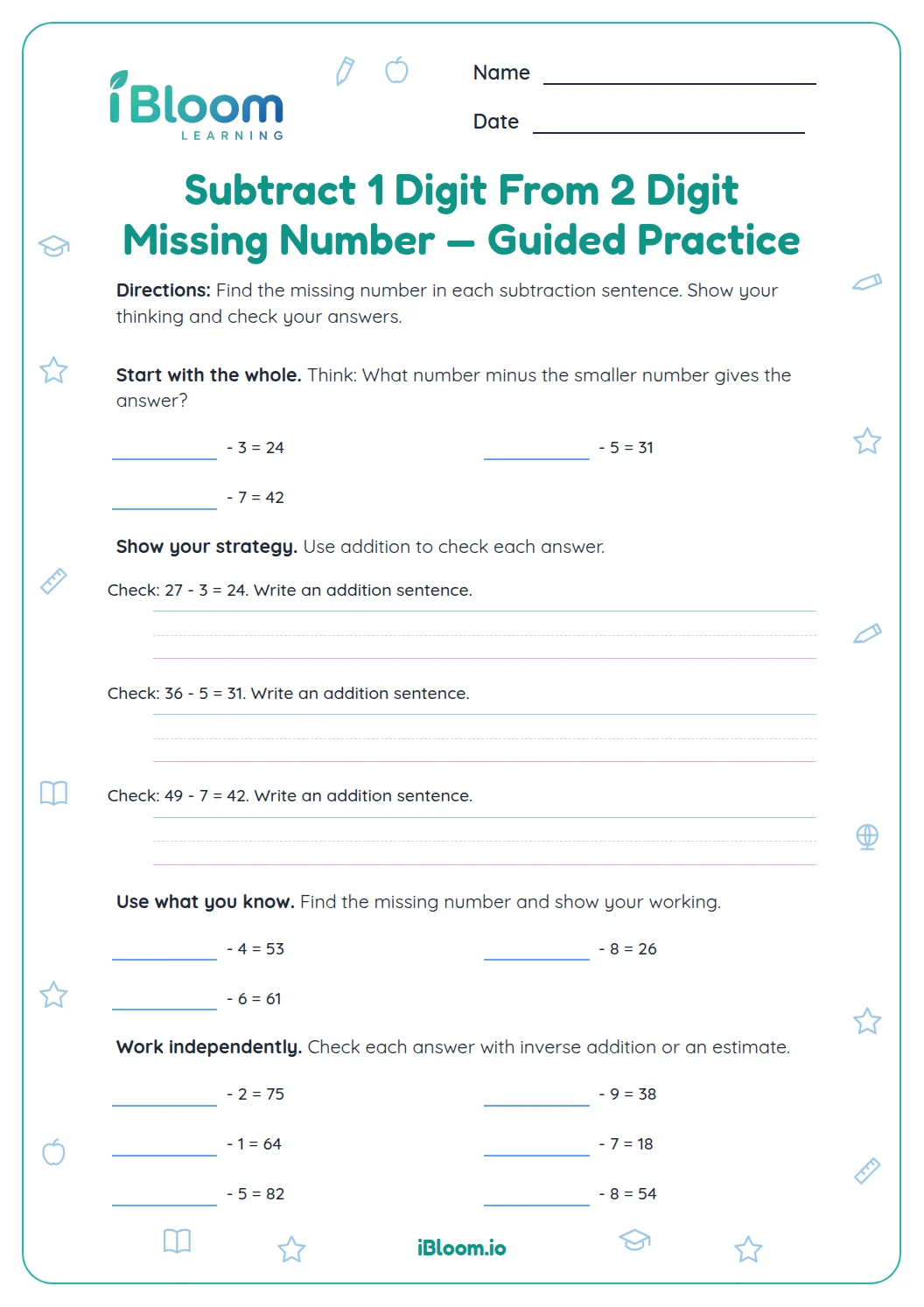
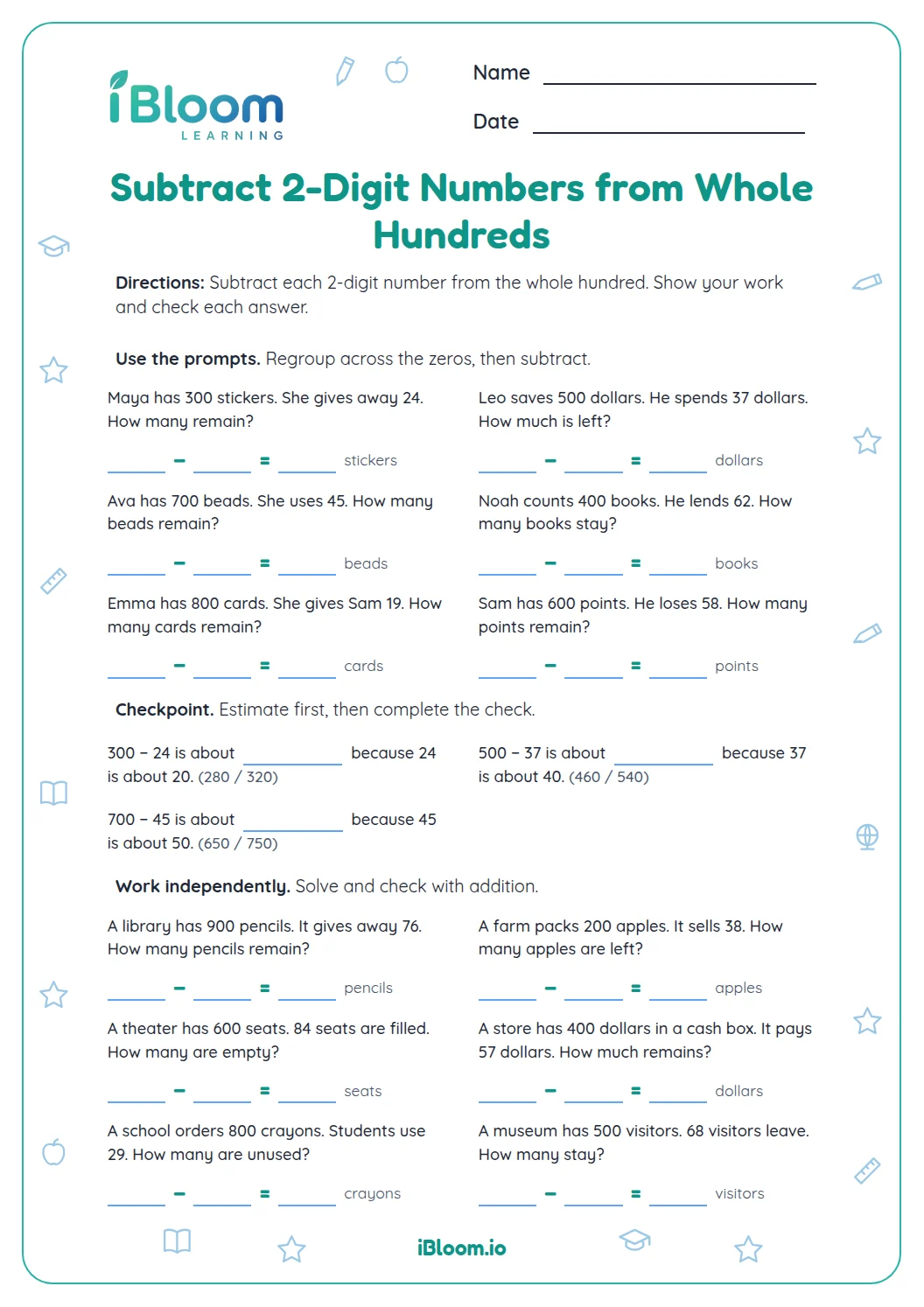
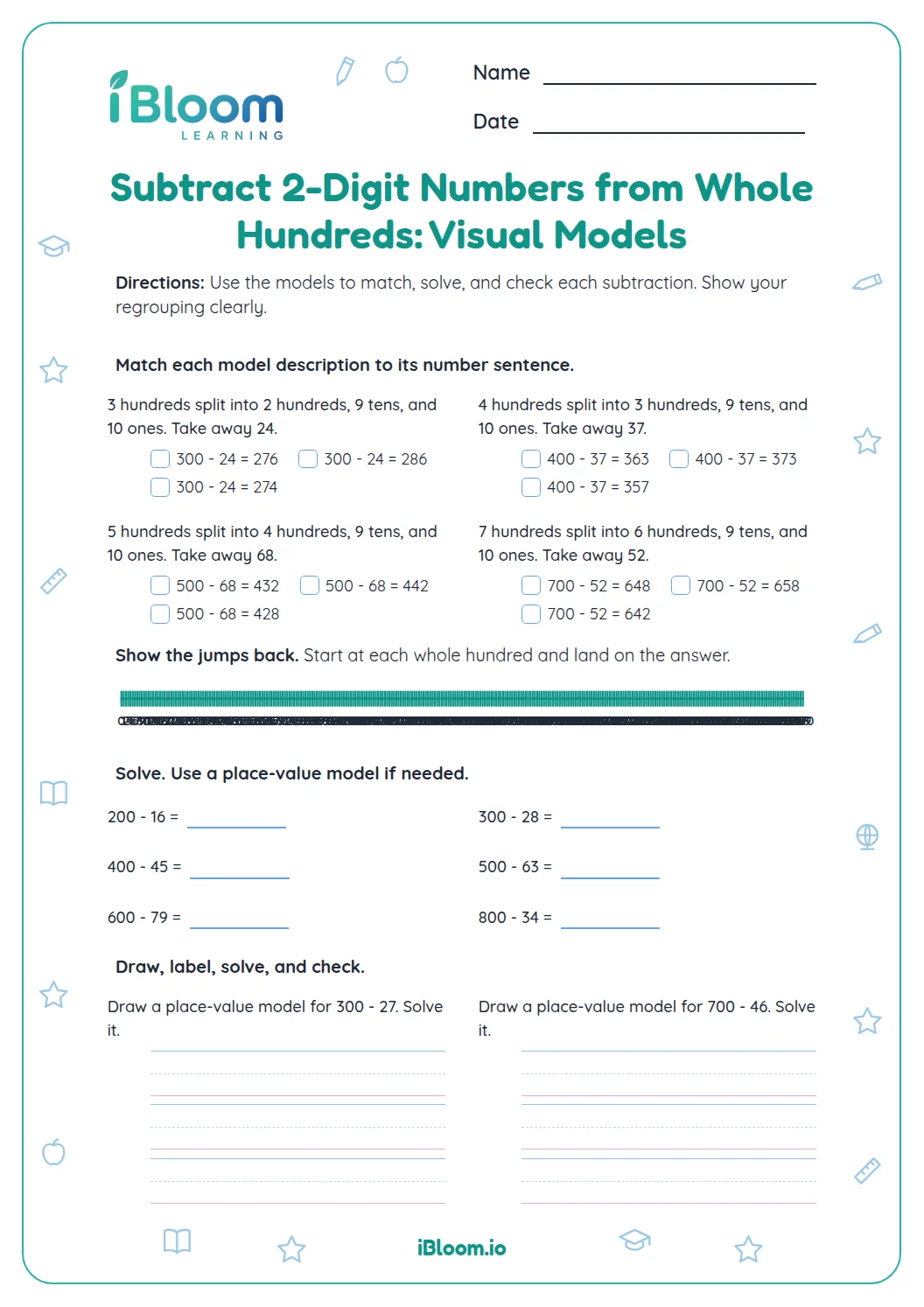
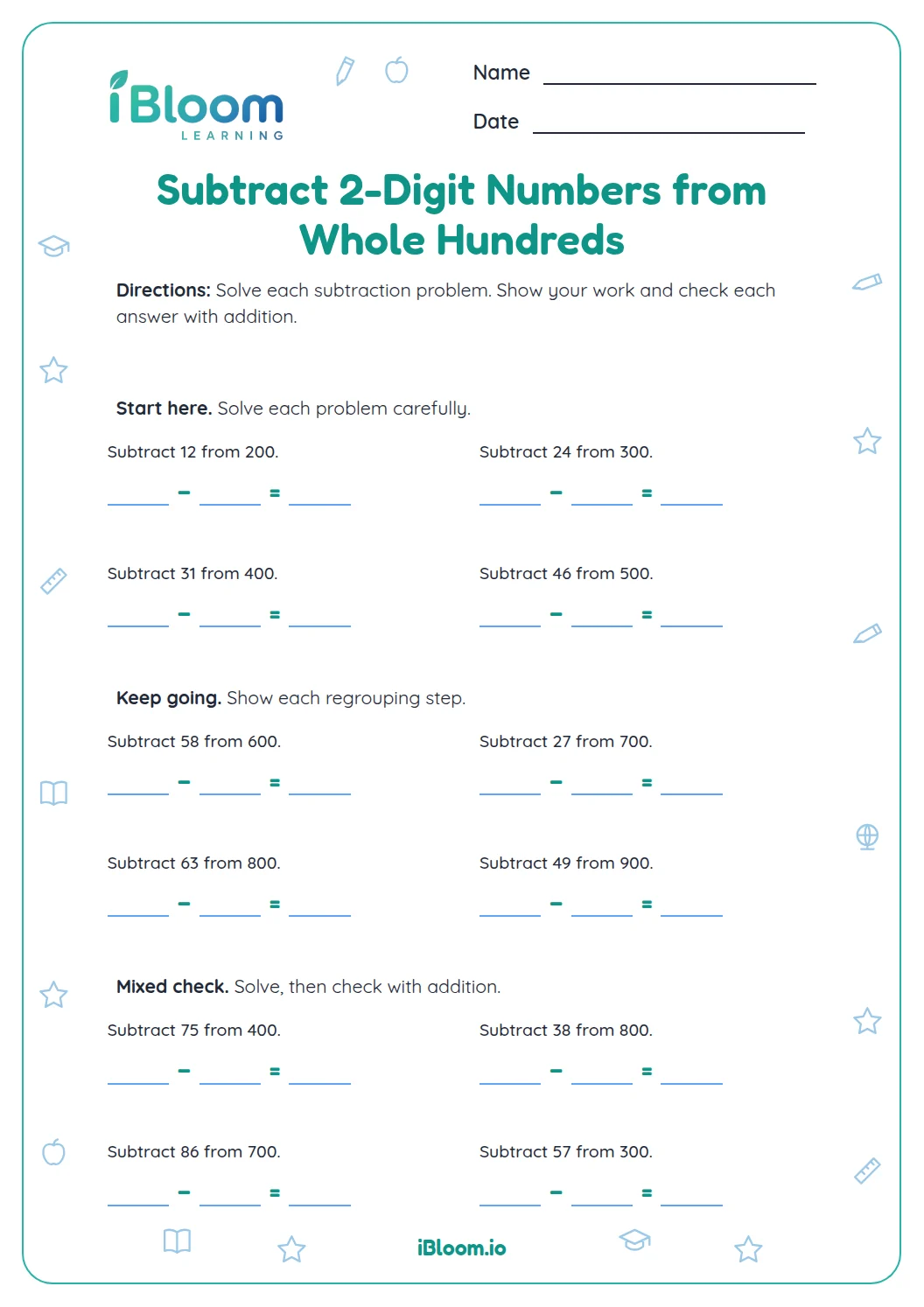
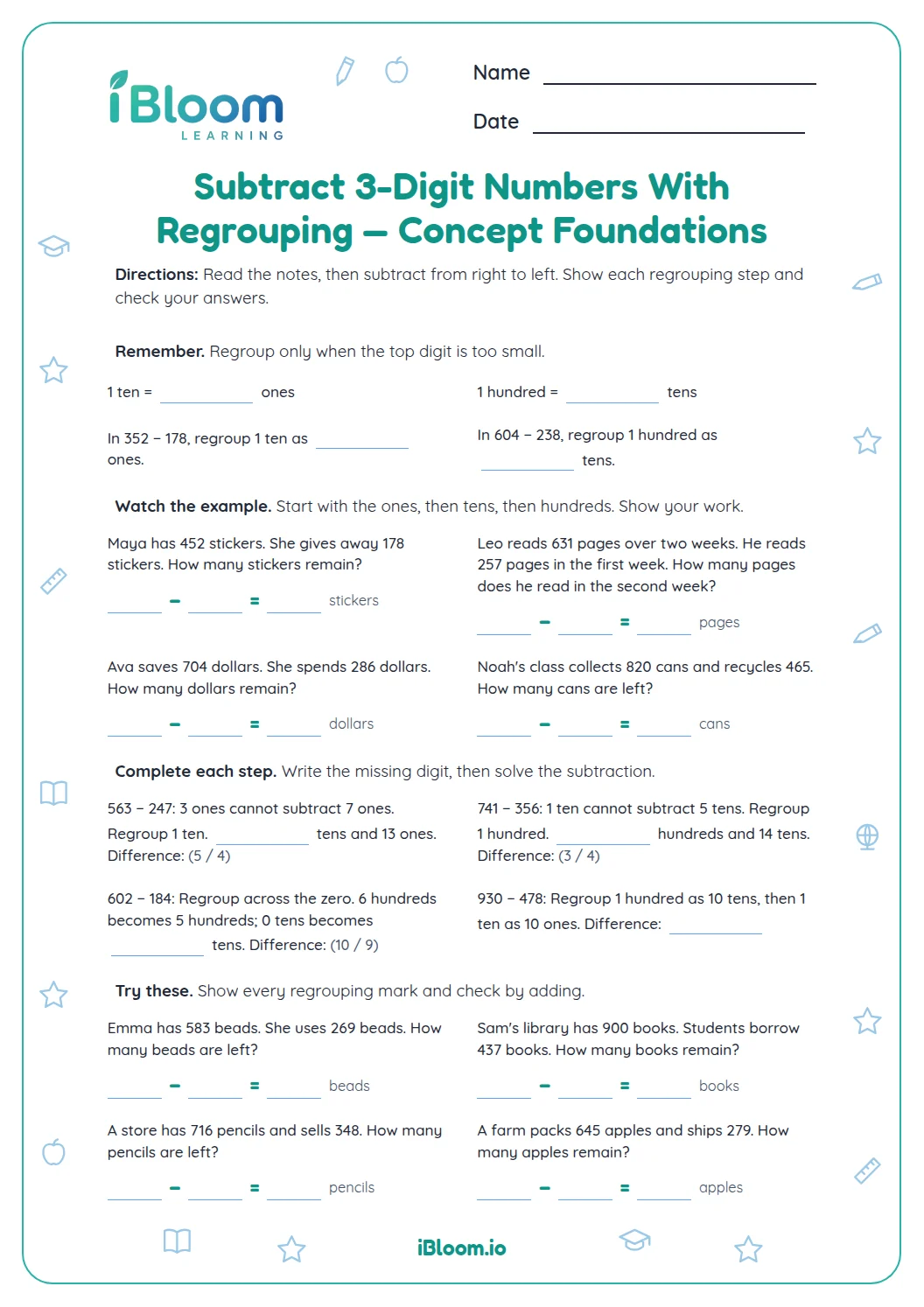
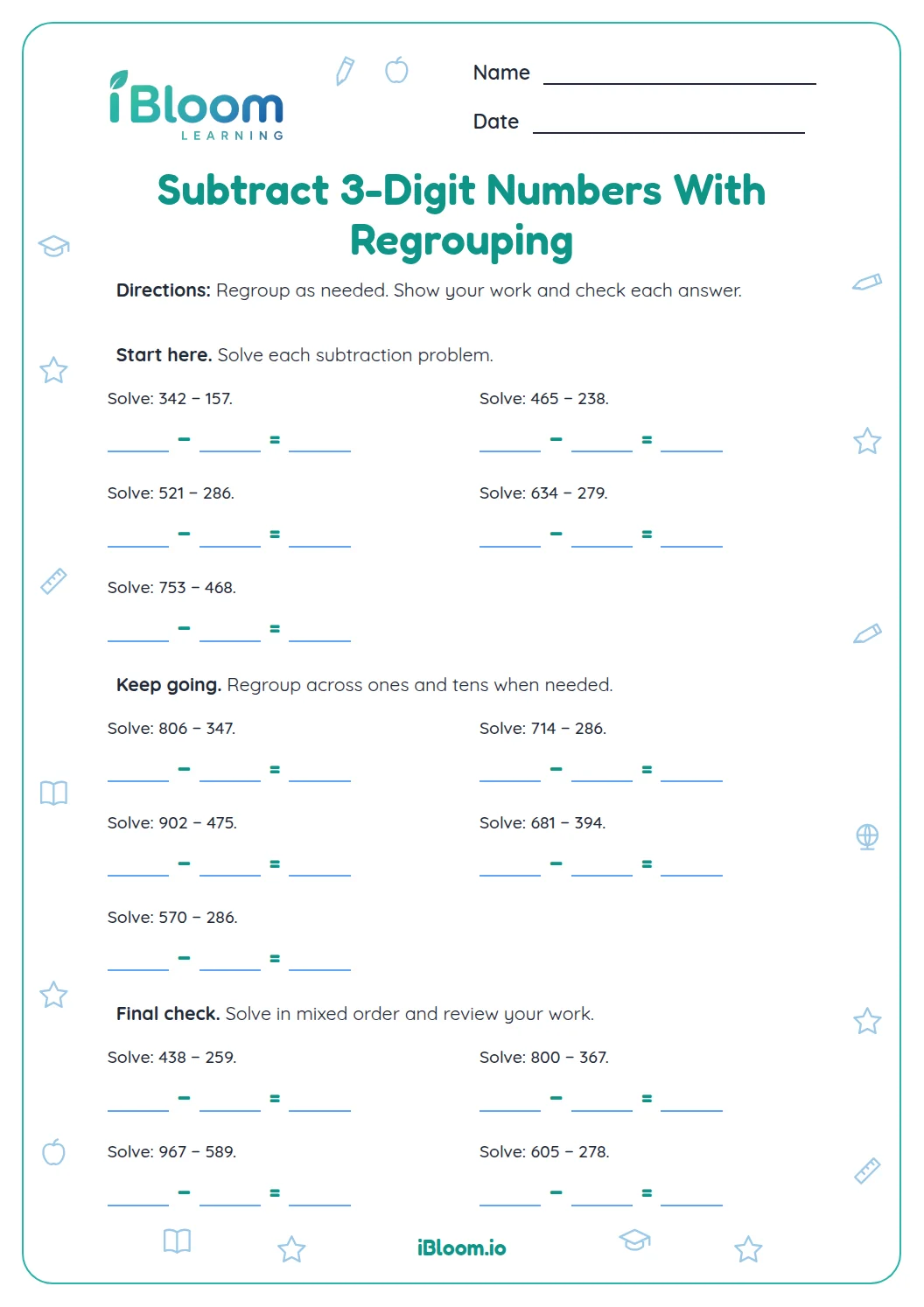
This printable gives Grade 3 learners practice subtracting four-digit numbers when regrouping is needed, including across zeros. It moves from direct computation to checking with addition, identifying a regrouping situation, solving story problems, and explaining a result.
What is the first regrouping step?
For 5,204 − 1,876, the ones column has 4 − 6, so rename one ten as 10 ones. Continue left as needed, then add 3,328 and 1,876 to check that the sum is 5,204.
How can addition check a difference?
The check reverses subtraction: difference + subtrahend = starting number. For 6,205 − 2,738 = 3,467, calculate 3,467 + 2,738. If it equals 6,205, the difference is consistent.
How does regrouping across zeros work?
In 4,006 − 1,989, trade one thousand for ten hundreds, then one hundred for ten tens, then one ten for ten ones. Keep each renamed place value visible while subtracting.
How to work through the page
- 1Read each part’s direction before starting its questions.
- 2Underline or point to the word, number, or detail that supports an answer.
- 3Work through the questions in order and pause to explain a tricky choice.
- 4Use the separate answer key to check responses and revisit any missed clue.
Common mistakes and quick fixes
The mistake
Subtract the smaller digit from the larger digit in each column.
The fix
Regroup from the next place first; keep the top number’s value intact.
The mistake
Forget to reduce a place after trading.
The fix
Cross out the old digit and write the renamed digit before moving right.
The mistake
Check by subtracting the answer again.
The fix
Add the difference and the number taken away; the total should be the starting number.
What to practice next
Questions parents and teachers ask
How can a child practice four-digit subtraction with regrouping?
This printable has 14 problems across three worksheet pages, including regrouping across zeros, an addition check, missing-number work, and short applications. The matching answer key also spans three pages and shows the completed responses. Learners can compare their calculations and revisit any regrouping step that needs a closer look.
What is the first regrouping step?
For 5,204 − 1,876, the ones column has 4 − 6, so rename one ten as 10 ones. Continue left as needed, then add 3,328 and 1,876 to check that the sum is 5,204. Rereading the complete example helps keep the answer tied to the evidence on the page.
How can addition check a difference?
The check reverses subtraction: difference + subtrahend = starting number. For 6,205 − 2,738 = 3,467, calculate 3,467 + 2,738. If it equals 6,205, the difference is consistent. Learners can point to the exact clue or step that supports their response. This check uses addition to confirm the relationship between all three numbers.
How does regrouping across zeros work?
In 4,006 − 1,989, trade one thousand for ten hundreds, then one hundred for ten tens, then one ten for ten ones. Keep each renamed place value visible while subtracting. The answer key provides a concise model for checking this kind of response.
How many pages and questions are included?
There are 14 questions across three worksheet pages, followed by a three-page answer key. Read the directions at the start of each part, complete the items in order, and compare each response with the matching answer. Written responses include a model answer for checking.