






About this worksheet
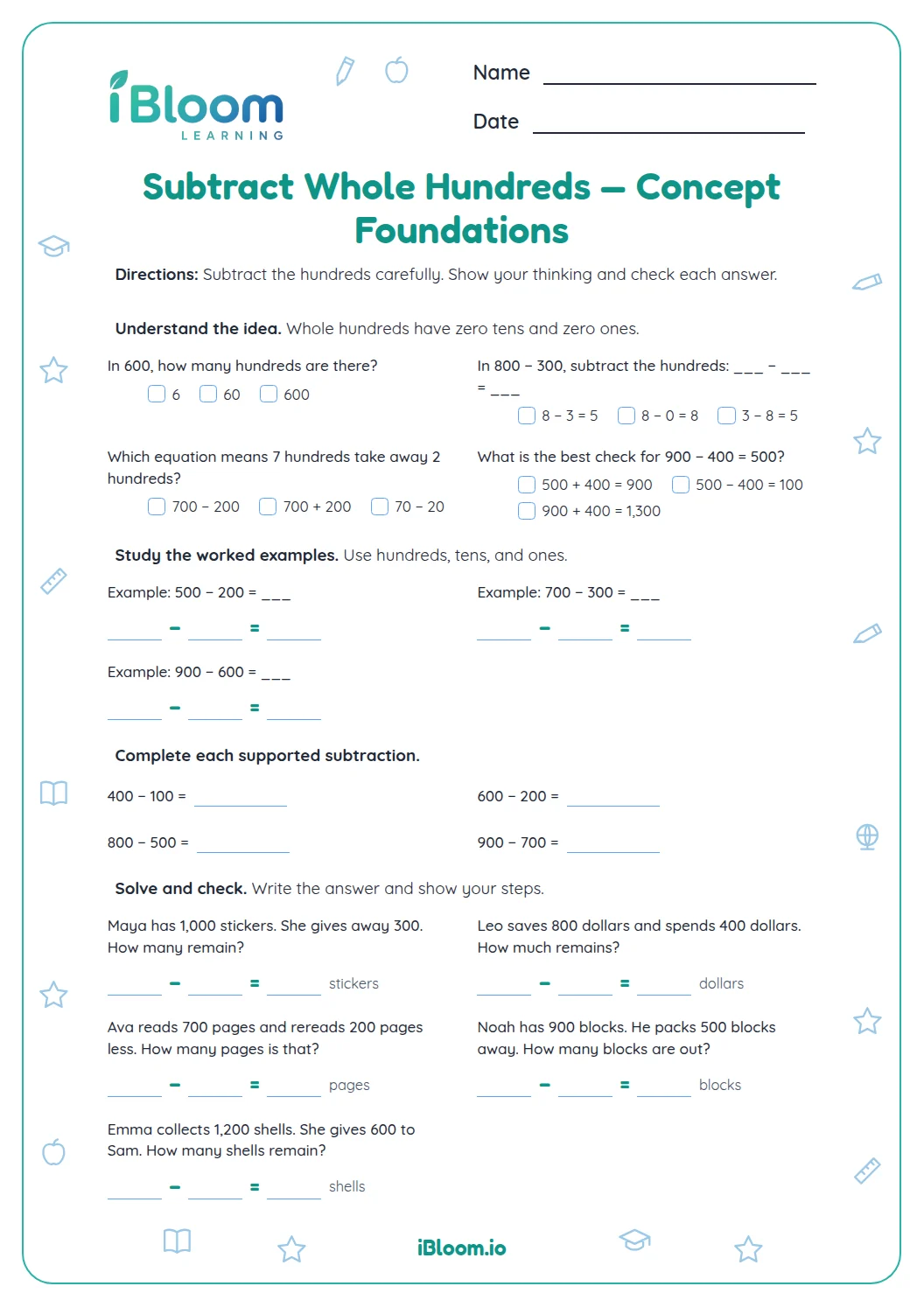
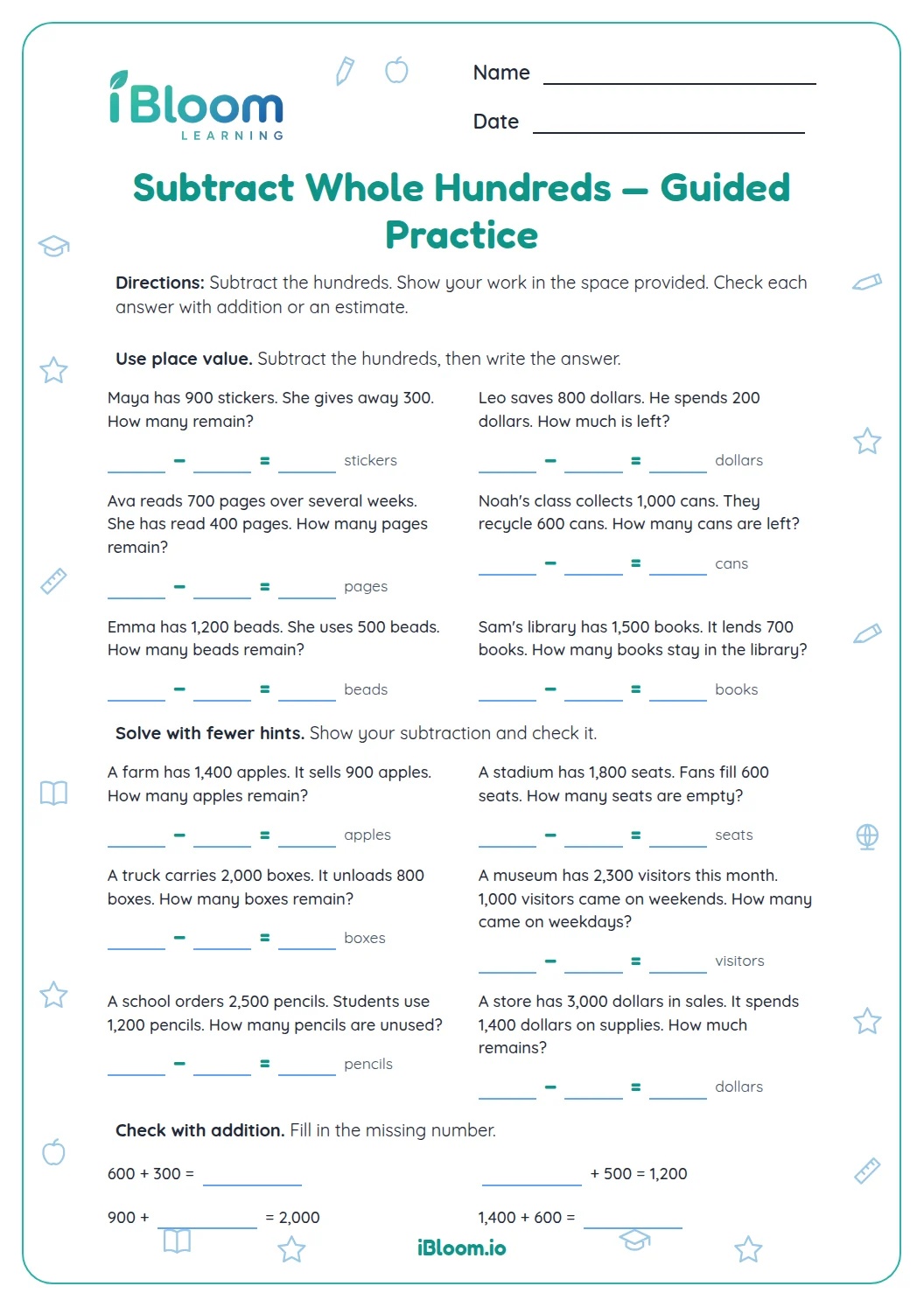
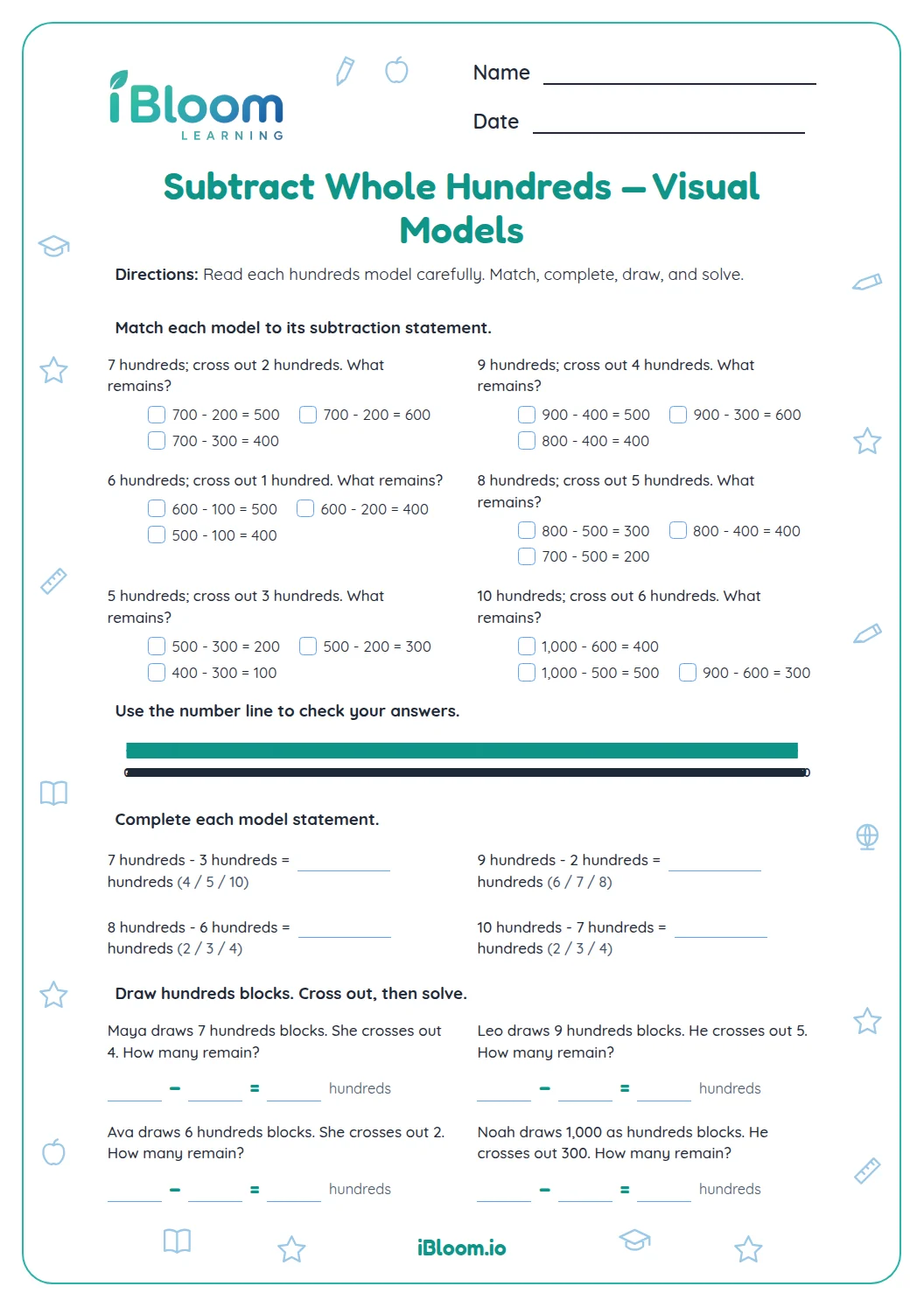
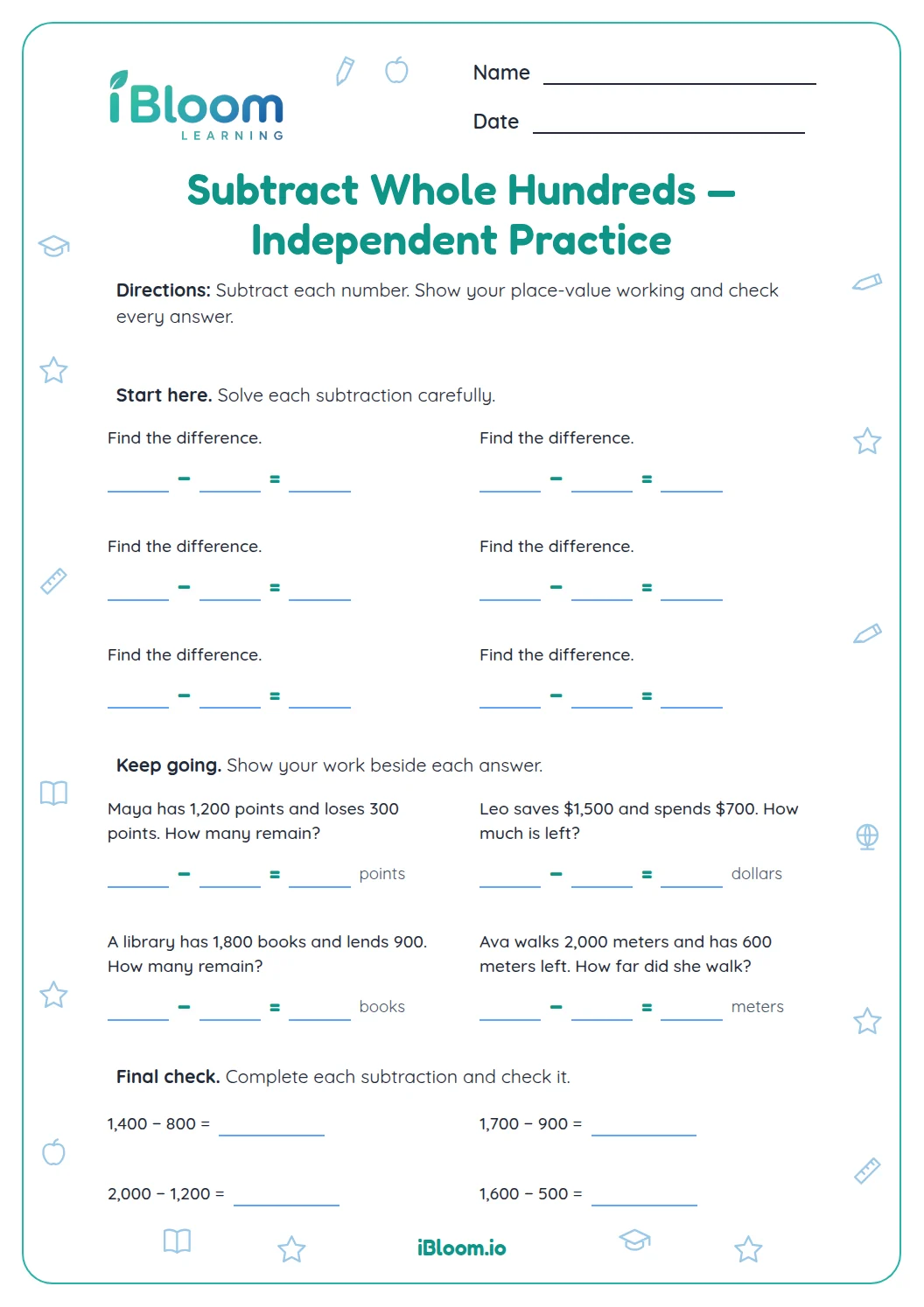
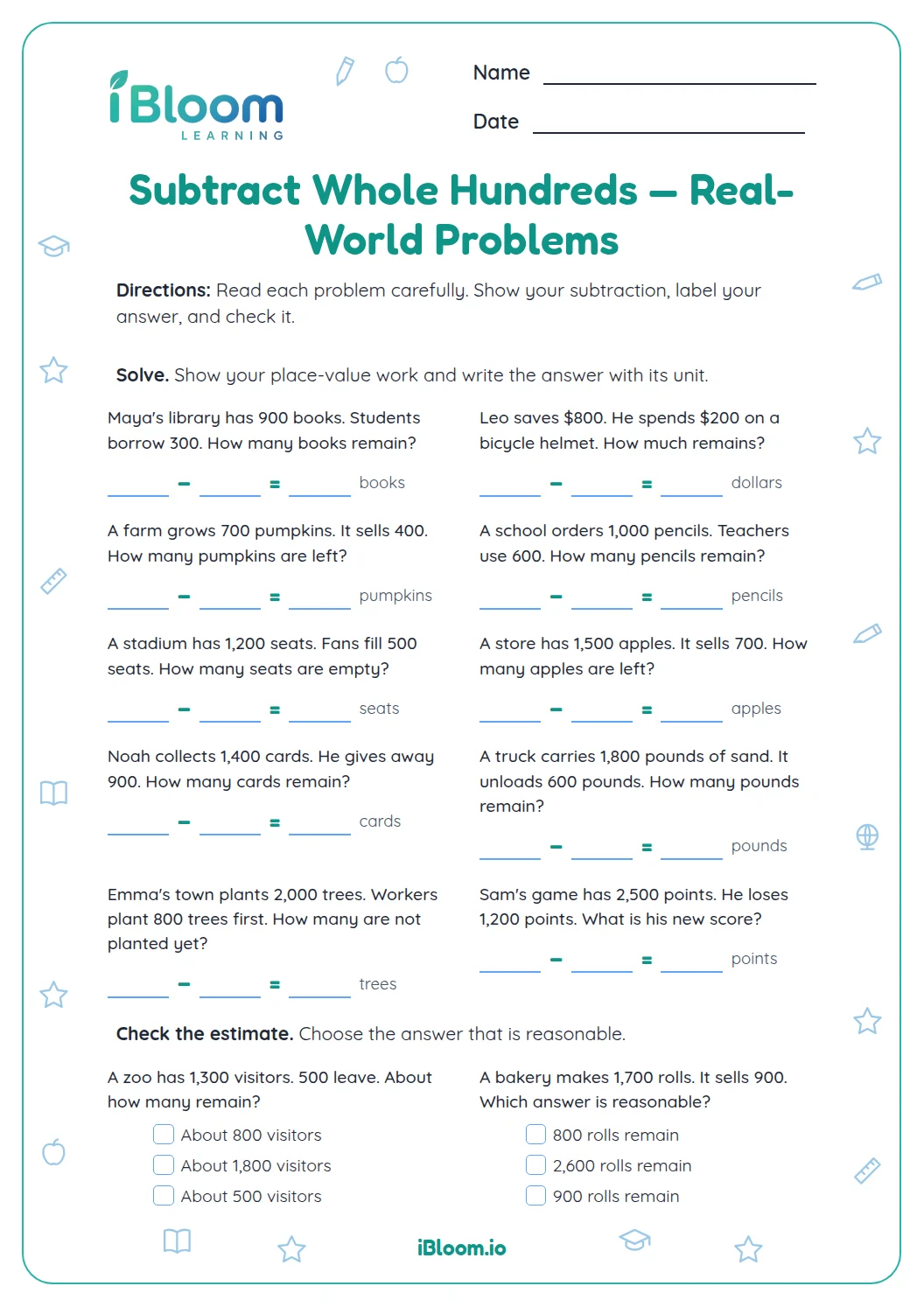
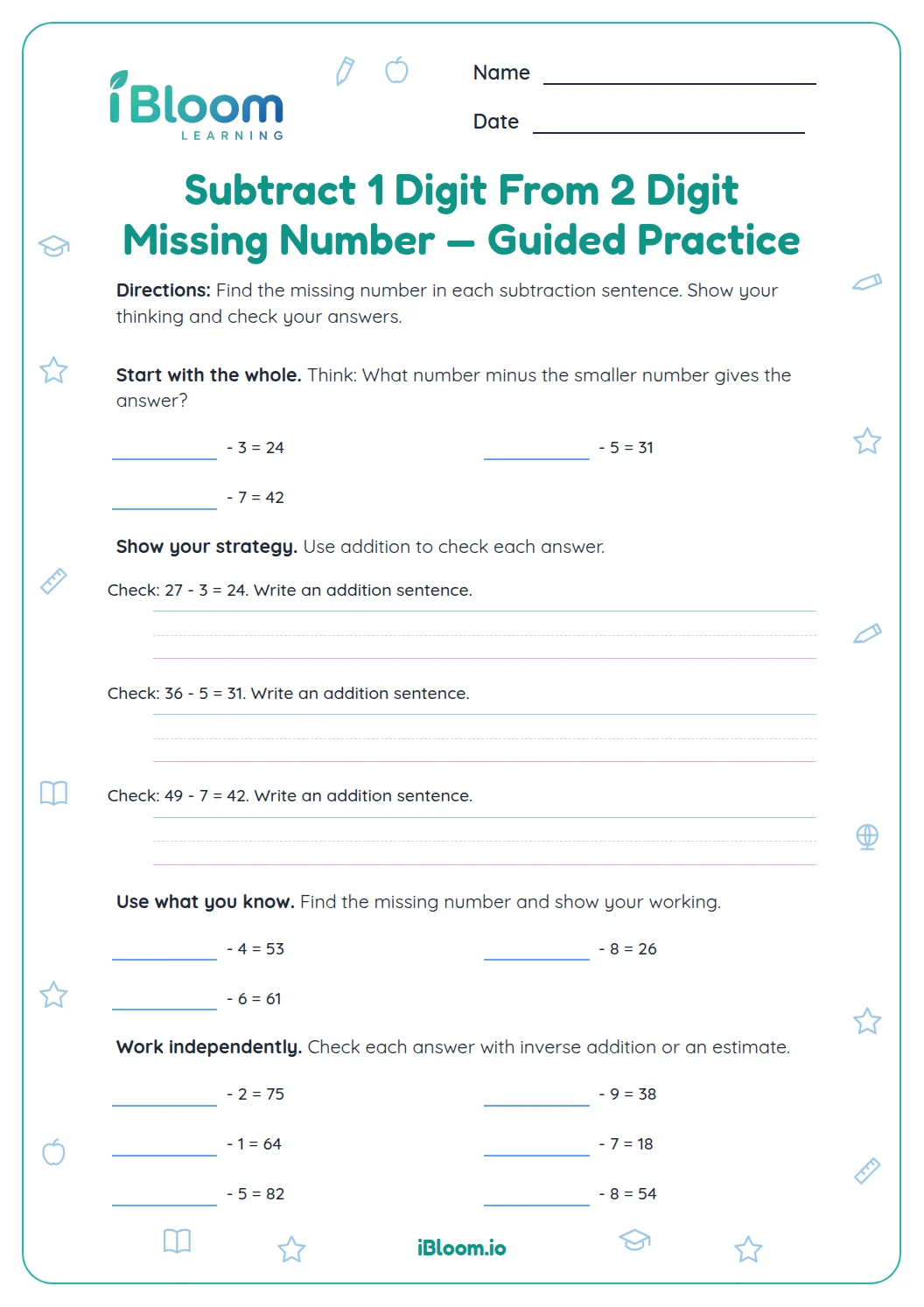
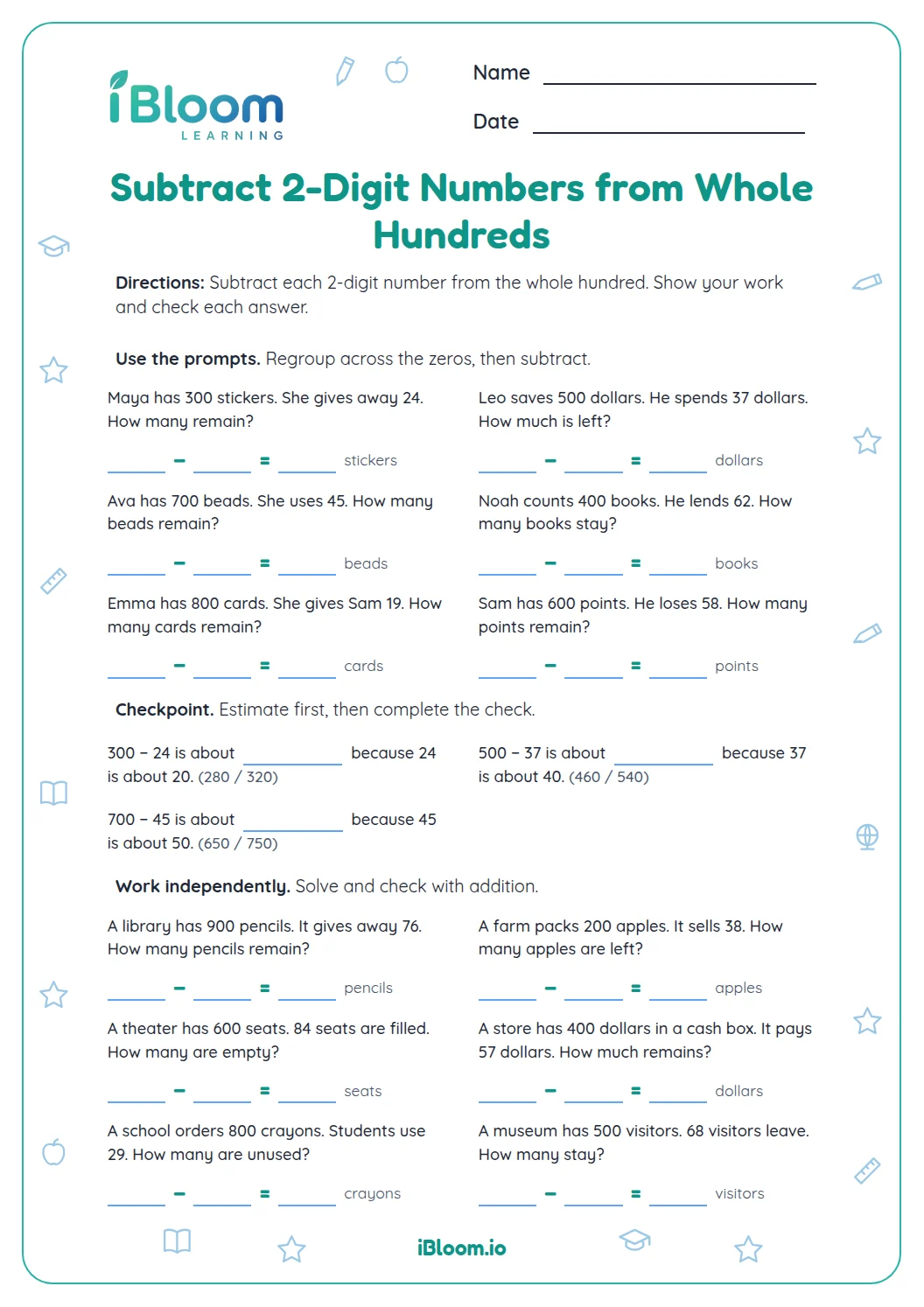
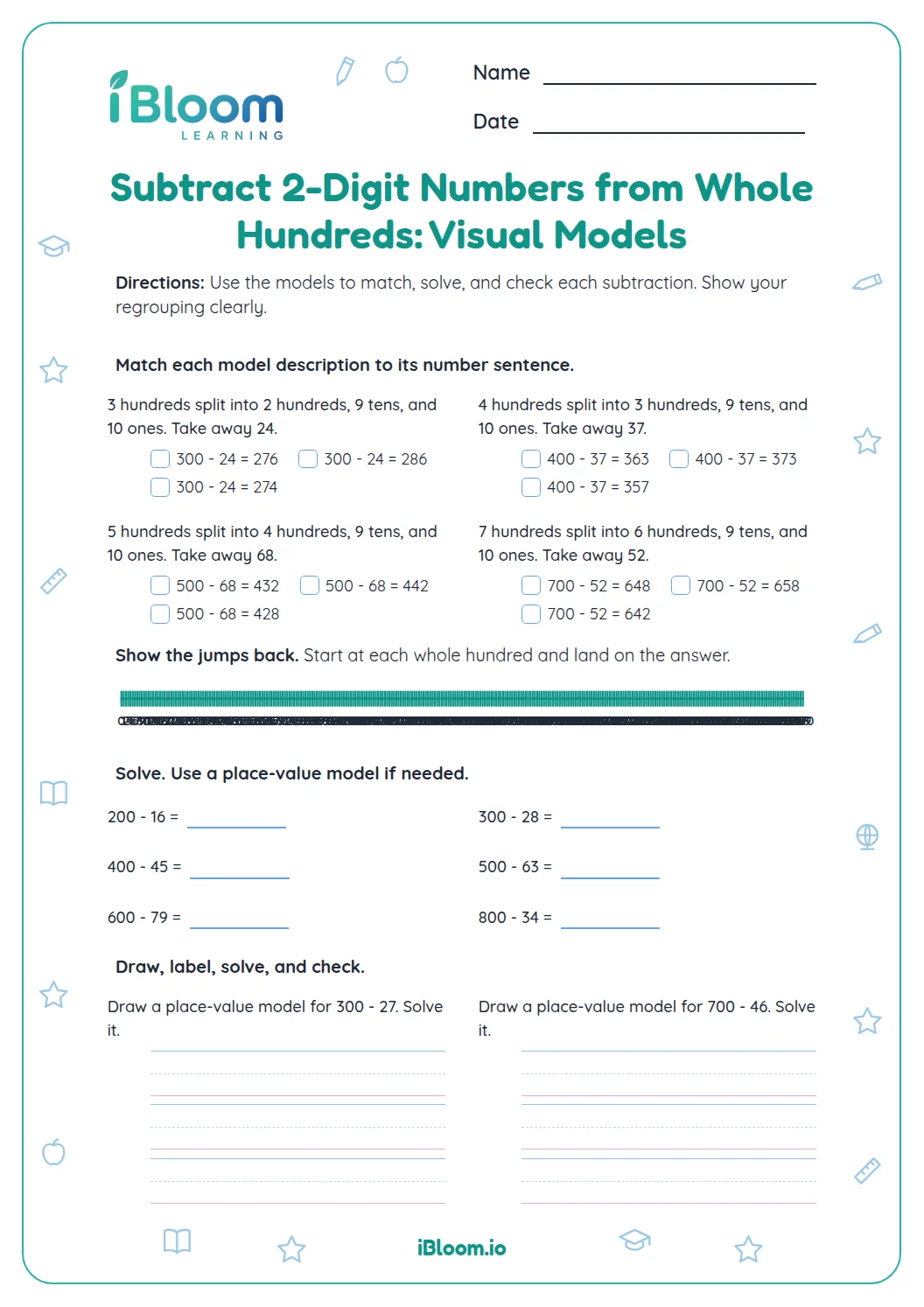
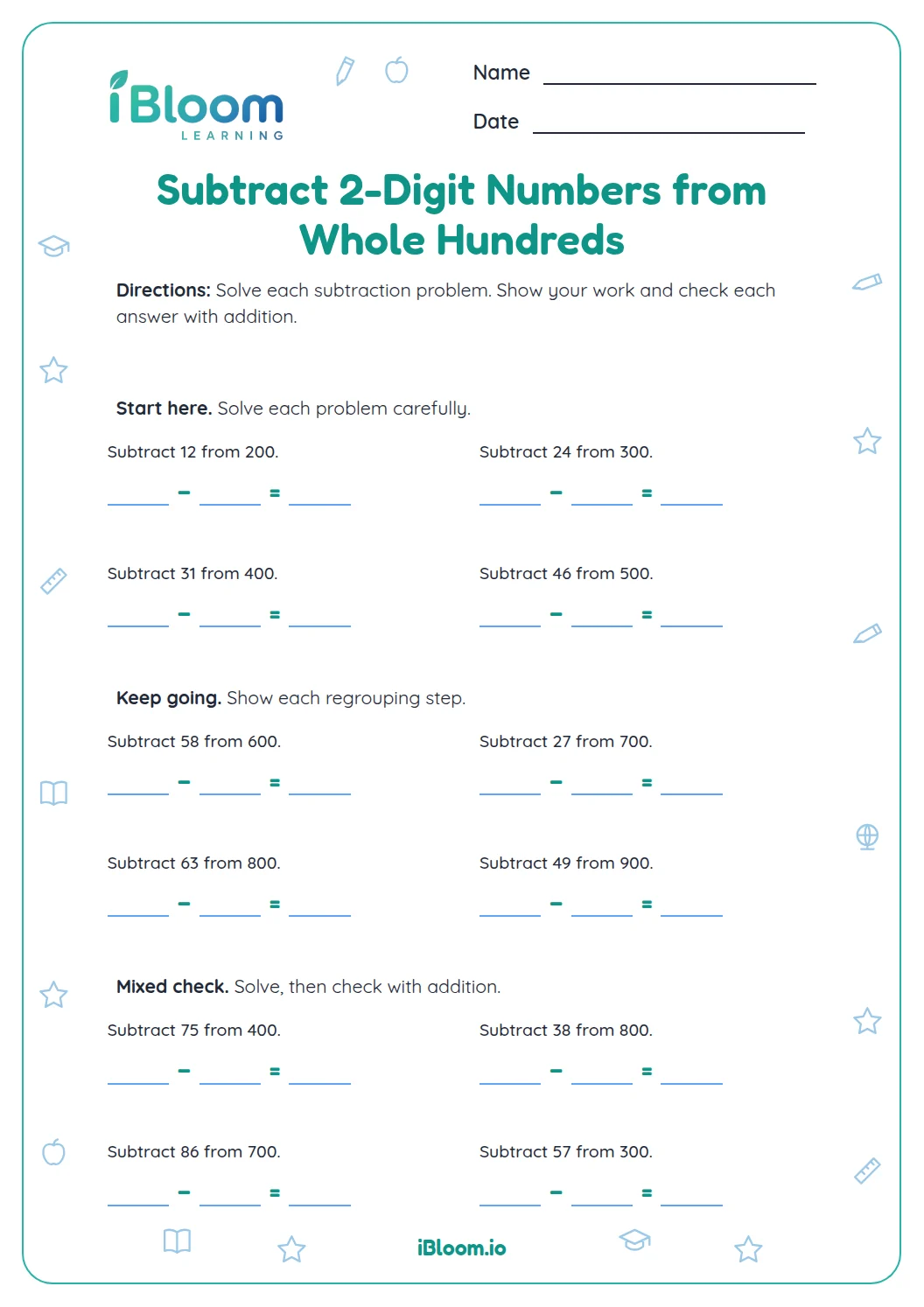
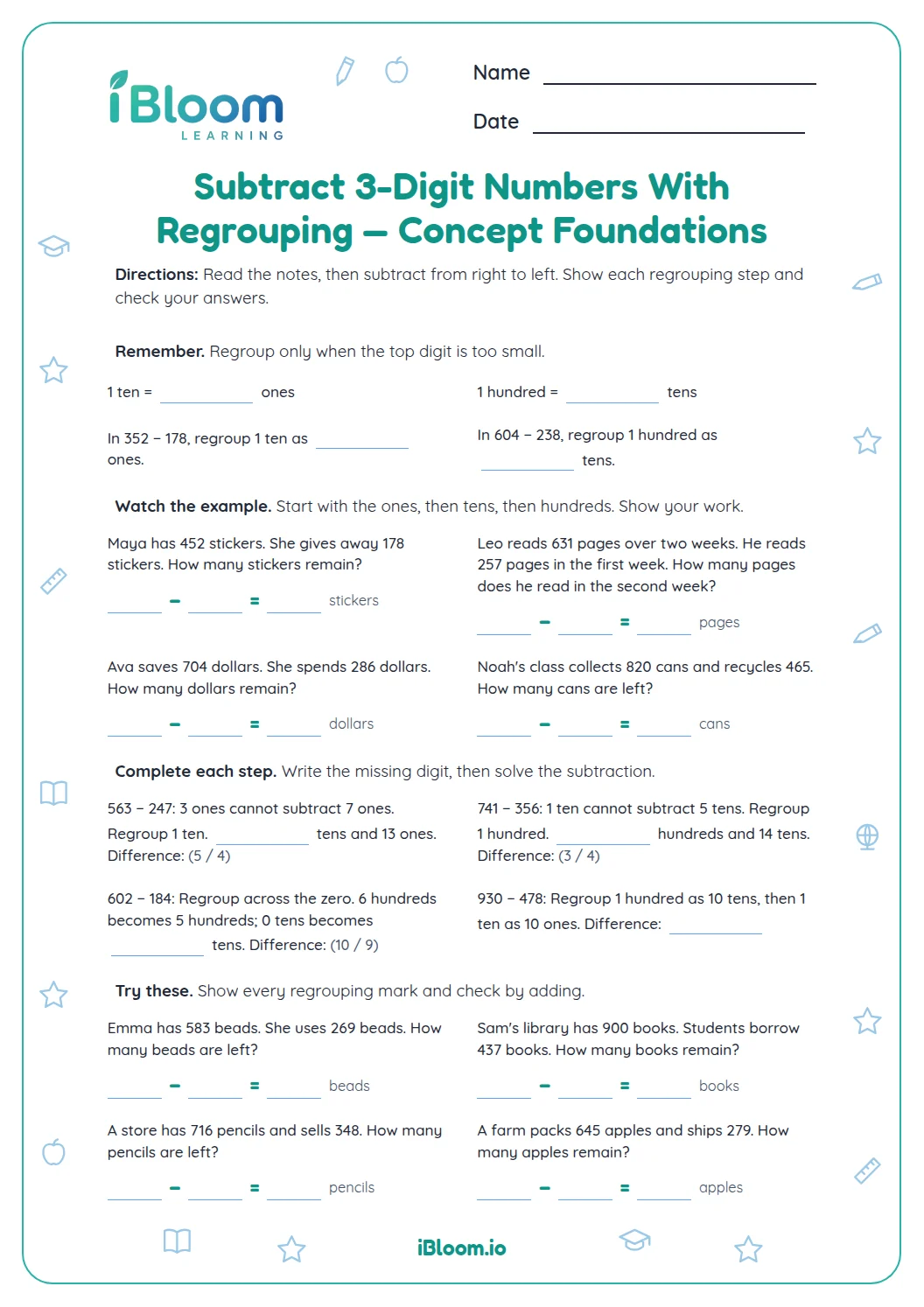
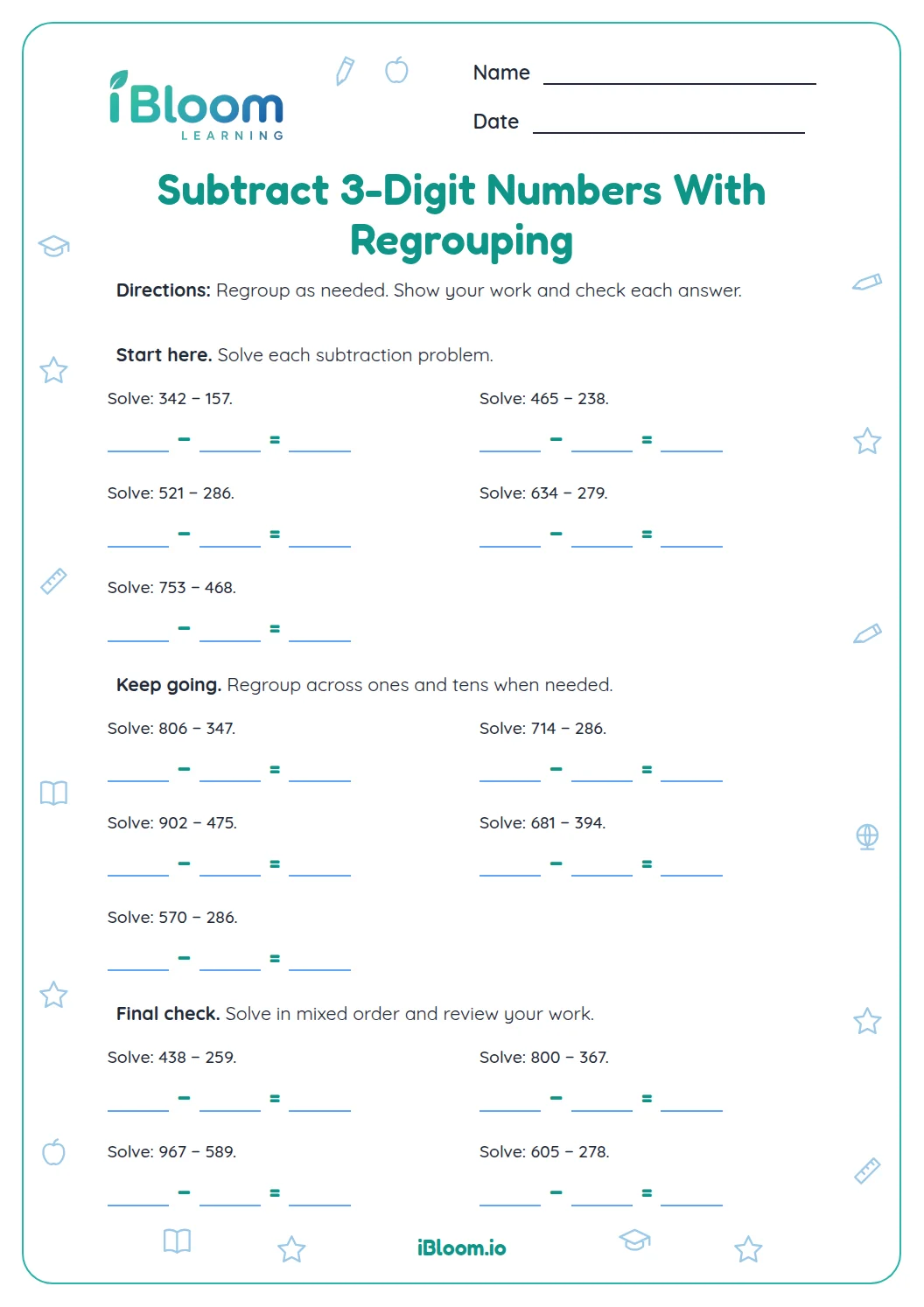
This Grade 3 worksheet gives students 17 problems subtracting whole hundreds from three-digit numbers, including numbers with zero in the tens or ones place. The practice moves from direct subtraction to missing values and a comparison, reinforcing place-value strategies for CCSS 3.NBT.A.2. It replaces the old error-detection and strategy-selection sheet with a focused two-page practice set and separate answer key.
Aligned to 3.NBT.A.2
What idea helps solve these questions?
This Grade 3 worksheet gives students 17 problems subtracting whole hundreds from three-digit numbers, including numbers with zero in the tens or ones place. The practice moves from direct subtraction to missing values and a comparison, reinforcing place-value strategies for CCSS 3.NBT.A.2. It replaces the old error-detection and strategy-selection sheet with a focused two-page practice set and separate answer key.
How does the practice build?
Subtract the hundreds digit while keeping the tens and ones digits in place; check missing values with addition.
How to use this worksheet
- 1Subtract the hundreds and keep track of the tens and ones.
- 2For a missing starting number, add the difference and the amount taken away.
- 3For a missing amount subtracted, find the difference between the starting number and result.
- 4Compare both differences before choosing a symbol.
- 5Use the separate key to check each answer.
Common mistakes and quick fixes
The mistake
Subtracting the smaller hundreds digit from the larger one without checking place value.
The fix
Keep the tens and ones digits aligned, especially when one is zero.
The mistake
Treating the blank as the answer to an ordinary subtraction problem.
The fix
Use the equation to decide which number is missing, then check by substitution.
The mistake
Choosing a comparison sign by looking only at the first number.
The fix
Work out both differences before comparing them.
Common Core alignment
Subtract whole hundreds within 1,000 using place-value reasoning and the subtraction relationship.
On this sheet: Subtract whole hundreds within 1,000 using place-value reasoning and the subtraction relationship.
Show the official wordingHide the official wording
Fluently add and subtract within 1000 using strategies and algorithms based on place value, properties of operations, and/or the relationship between addition and subtraction.
What to practice next
Make more practice
Further reading
Questions parents and teachers ask
What does the worksheet include?
It has 17 whole-hundred subtraction questions on two pages and a separate two-page answer key. Students solve direct equations, find two missing values, and compare differences. This gives the learner a chance to connect the written clue to the strategy before moving on to another problem.
How can I check a missing starting number?
Add the amount subtracted to the difference. For example, if ___ − 300 = 420, then 420 + 300 gives the missing starting number, 720. This gives the learner a chance to connect the written clue to the strategy before moving on to another problem.
Why does the sheet include numbers such as 905?
The zero in 905 helps students attend to place value. Subtracting 500 changes the hundreds while the zero tens and five ones stay the same. This gives the learner a chance to connect the written clue to the strategy before moving on to another problem.
What does the comparison question ask?
It compares 760 − 300 with 760 − 500. Solve both expressions first; taking away fewer hundreds leaves the greater difference. This gives the learner a chance to connect the written clue to the strategy before moving on to another problem.
Is the answer key included?
Yes. The two-page answer key follows the two worksheet pages and provides the answers for checking. This gives the learner a chance to connect the written clue to the strategy before moving on to another problem. The learner can also show the related equation and explain how it checks the result.