



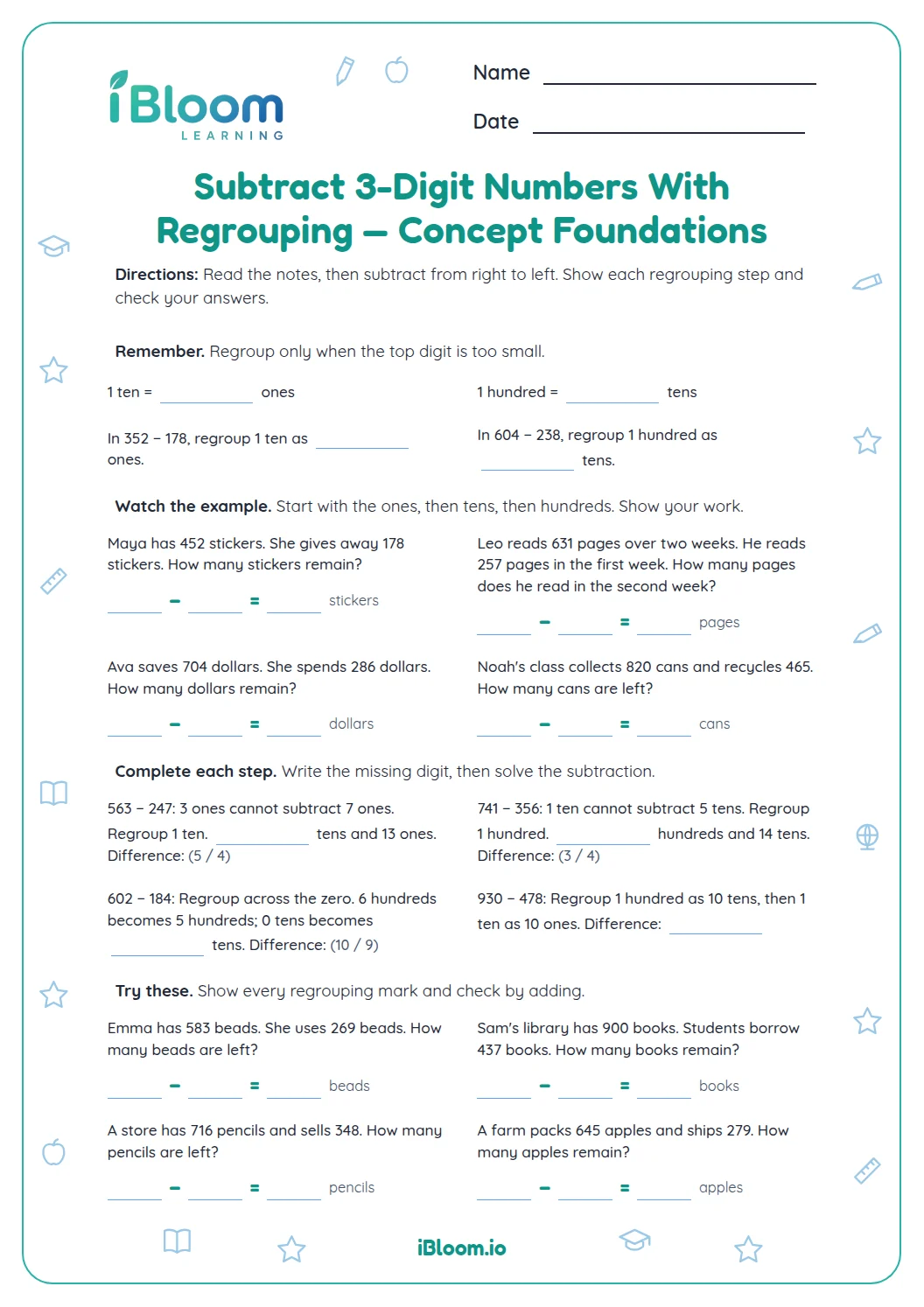


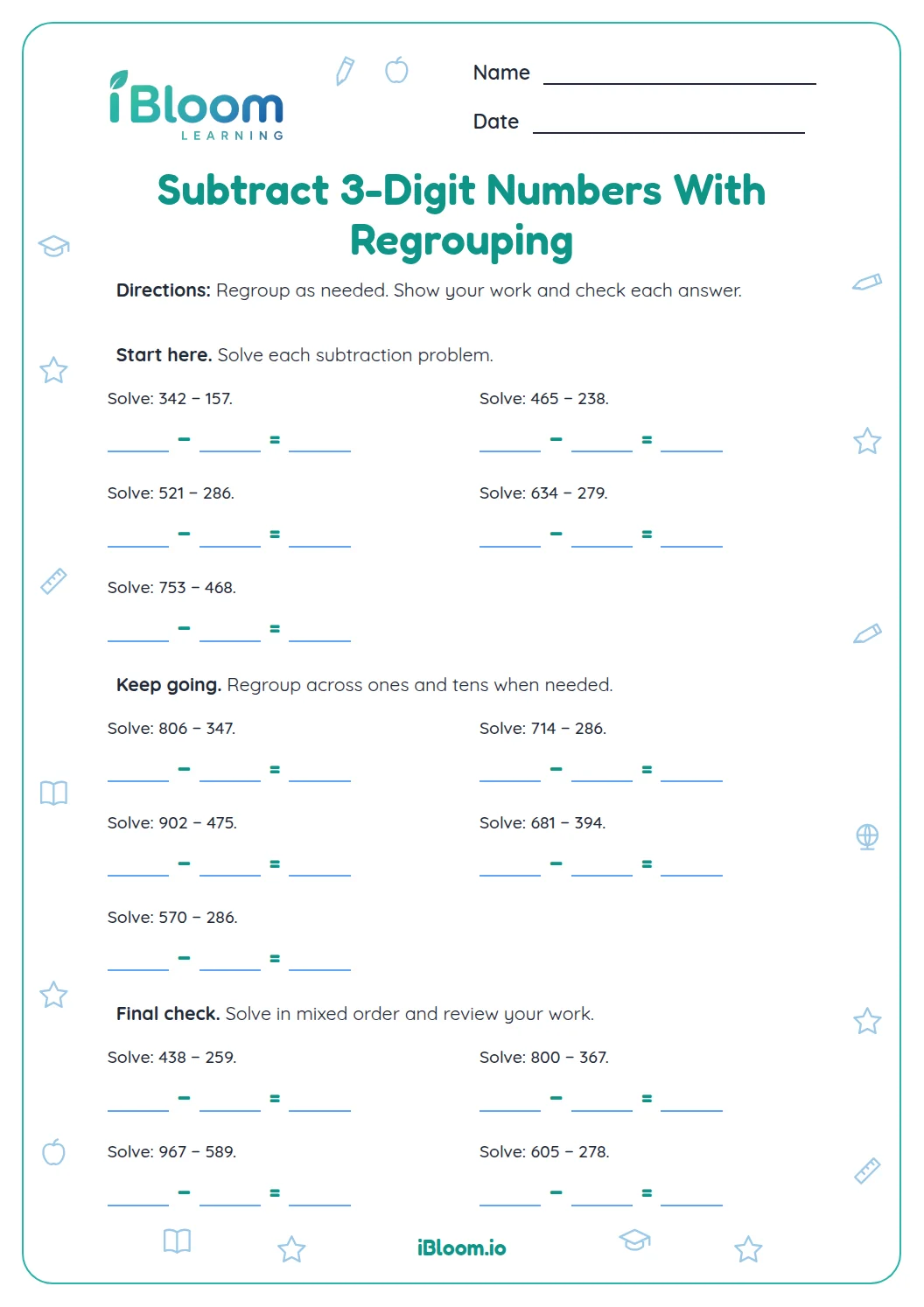
About this worksheet
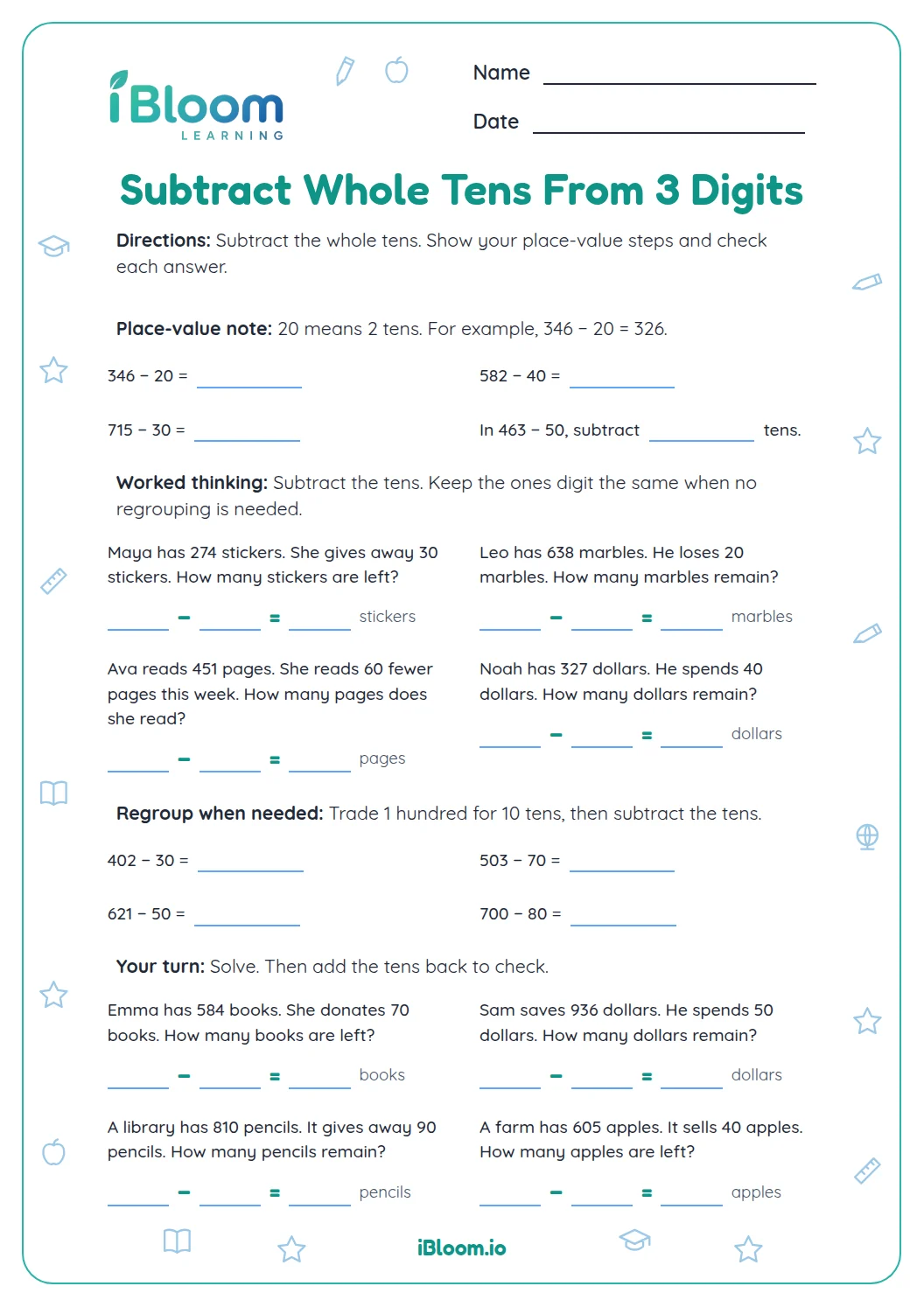
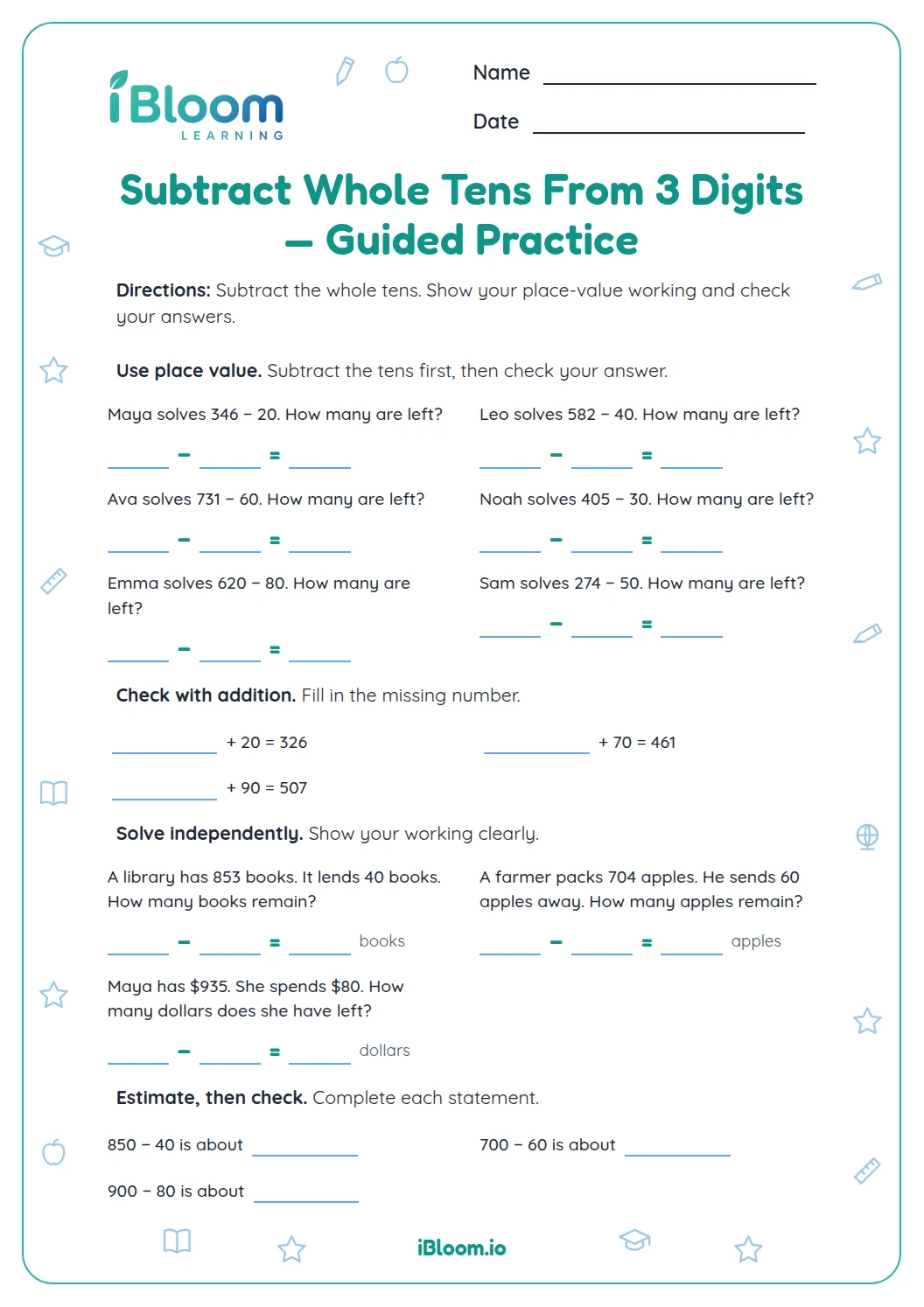
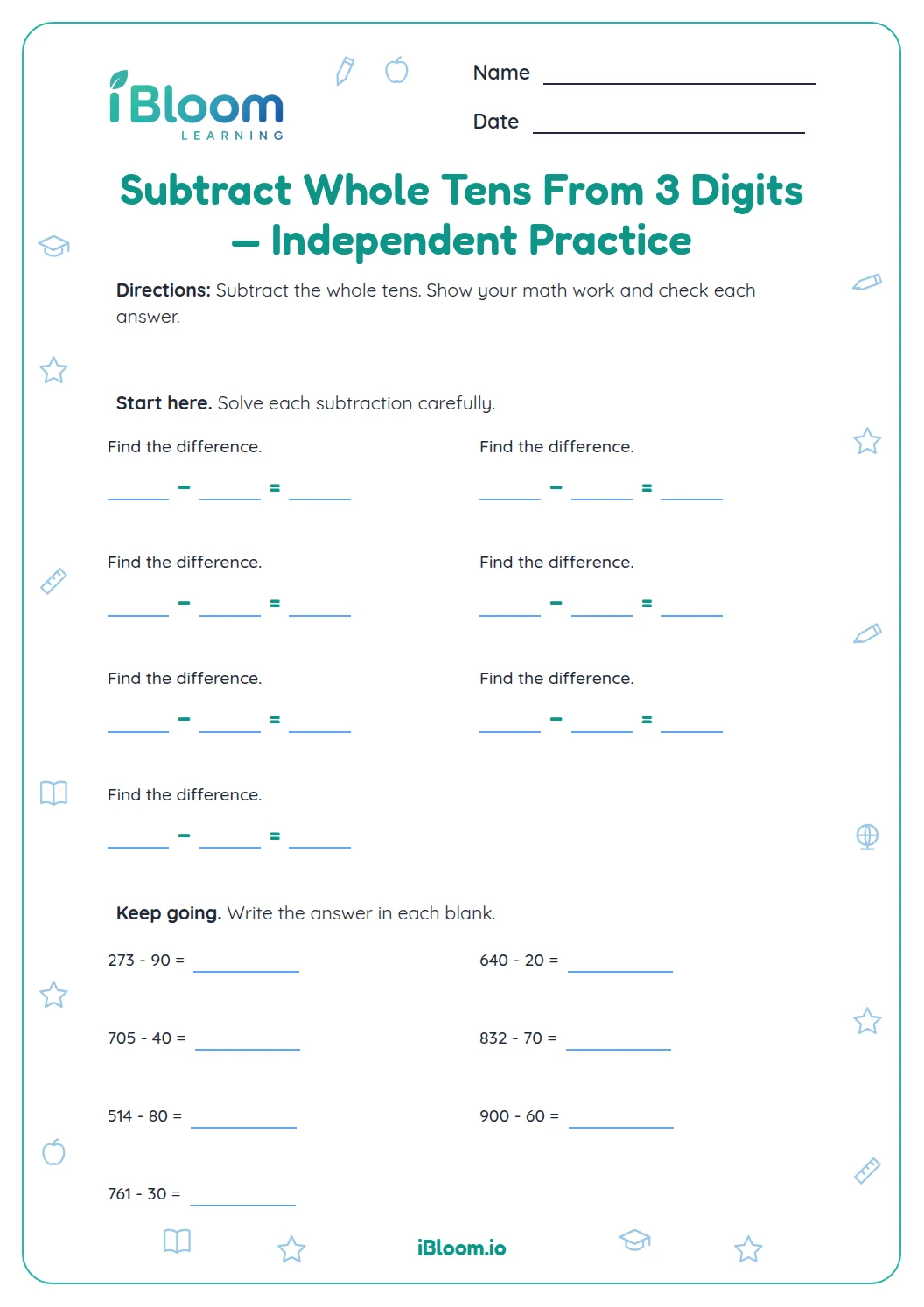
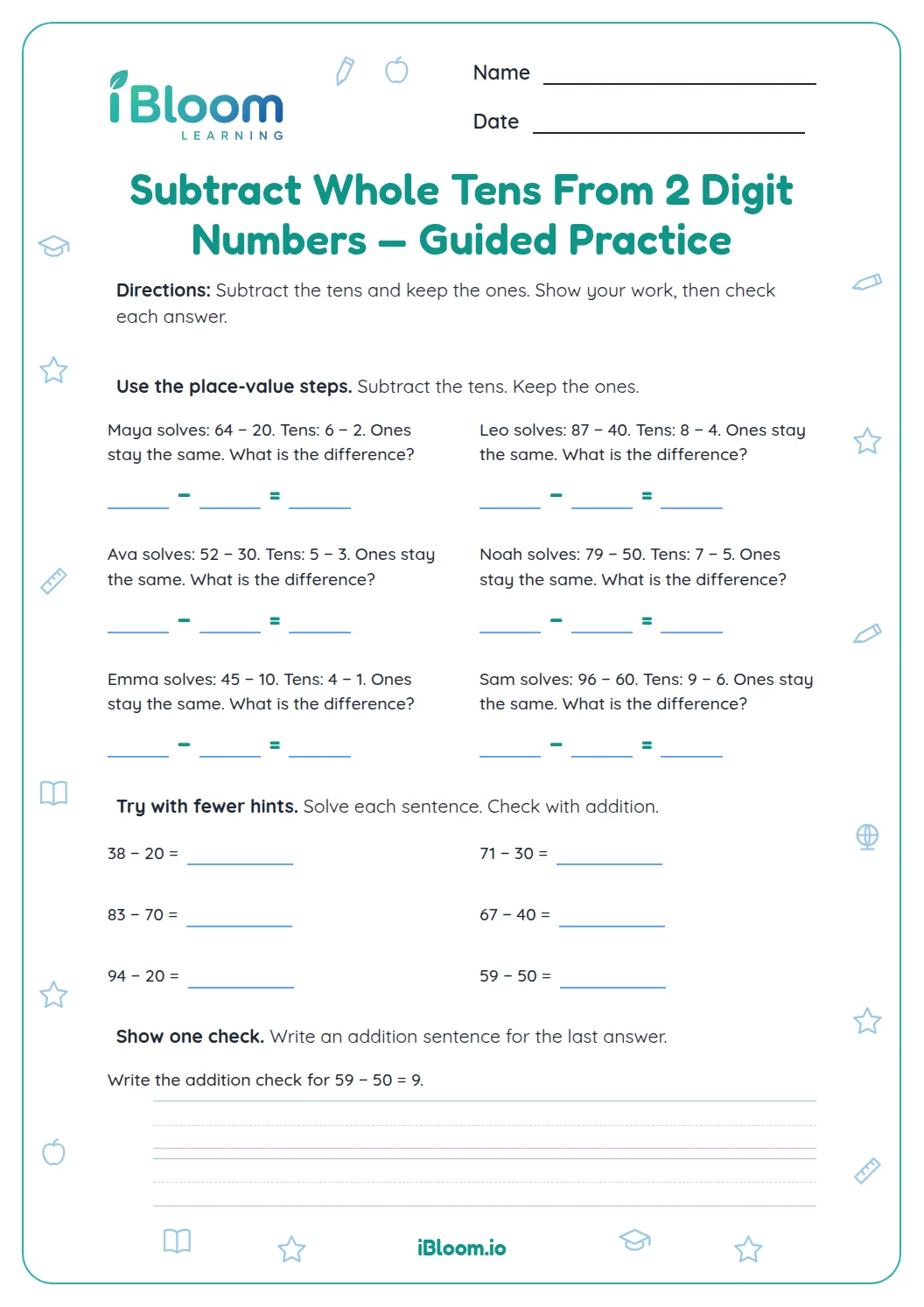
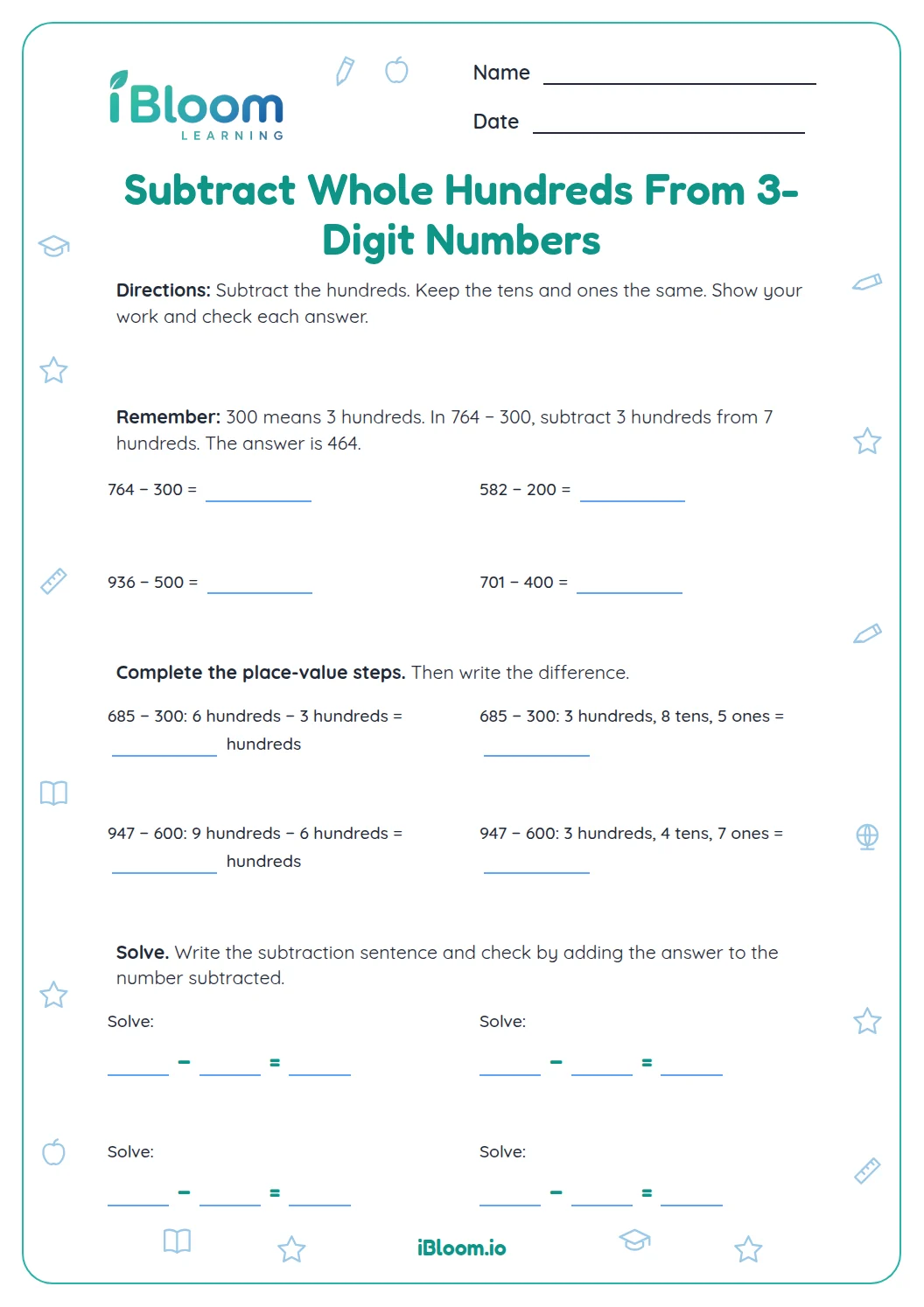
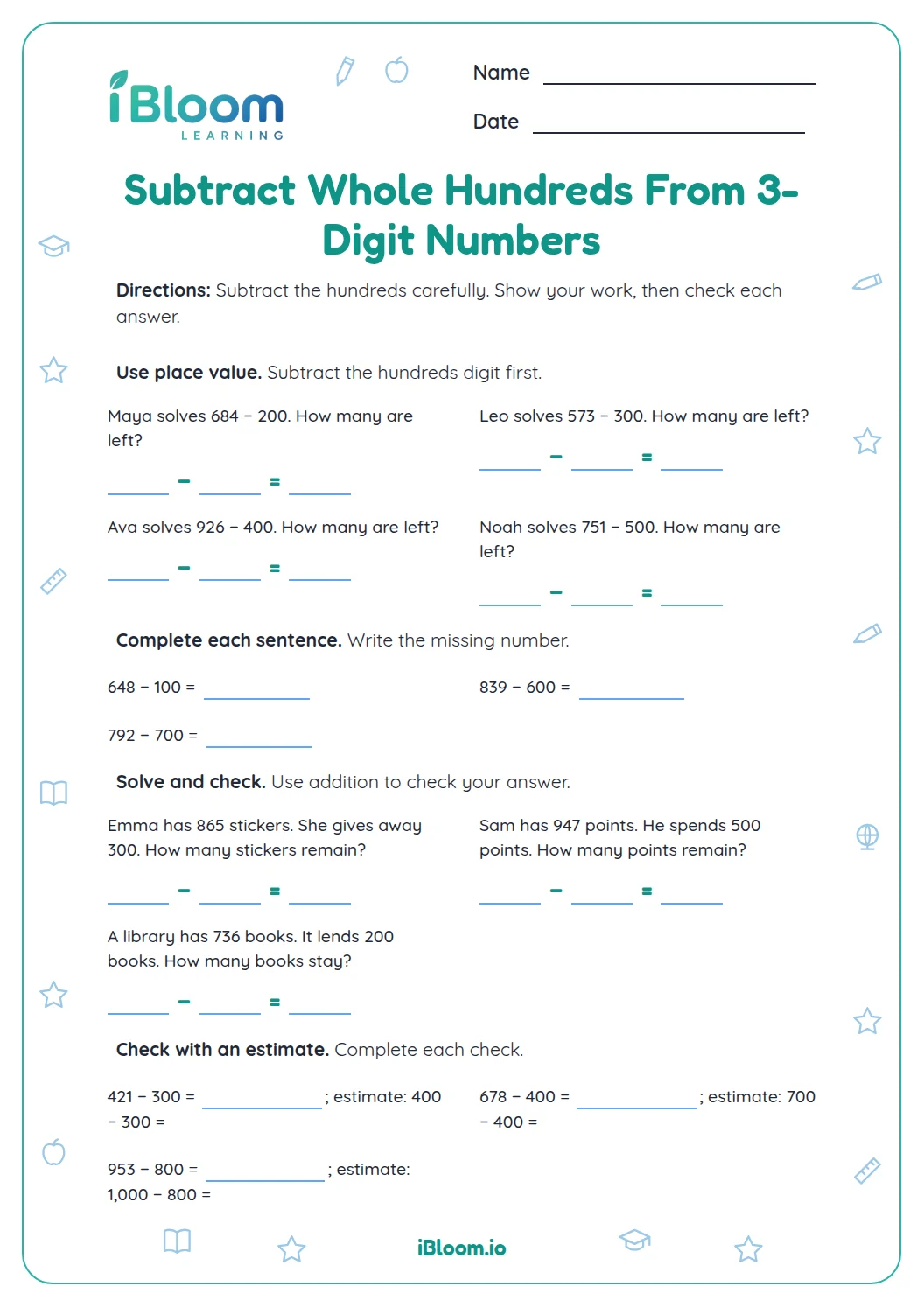
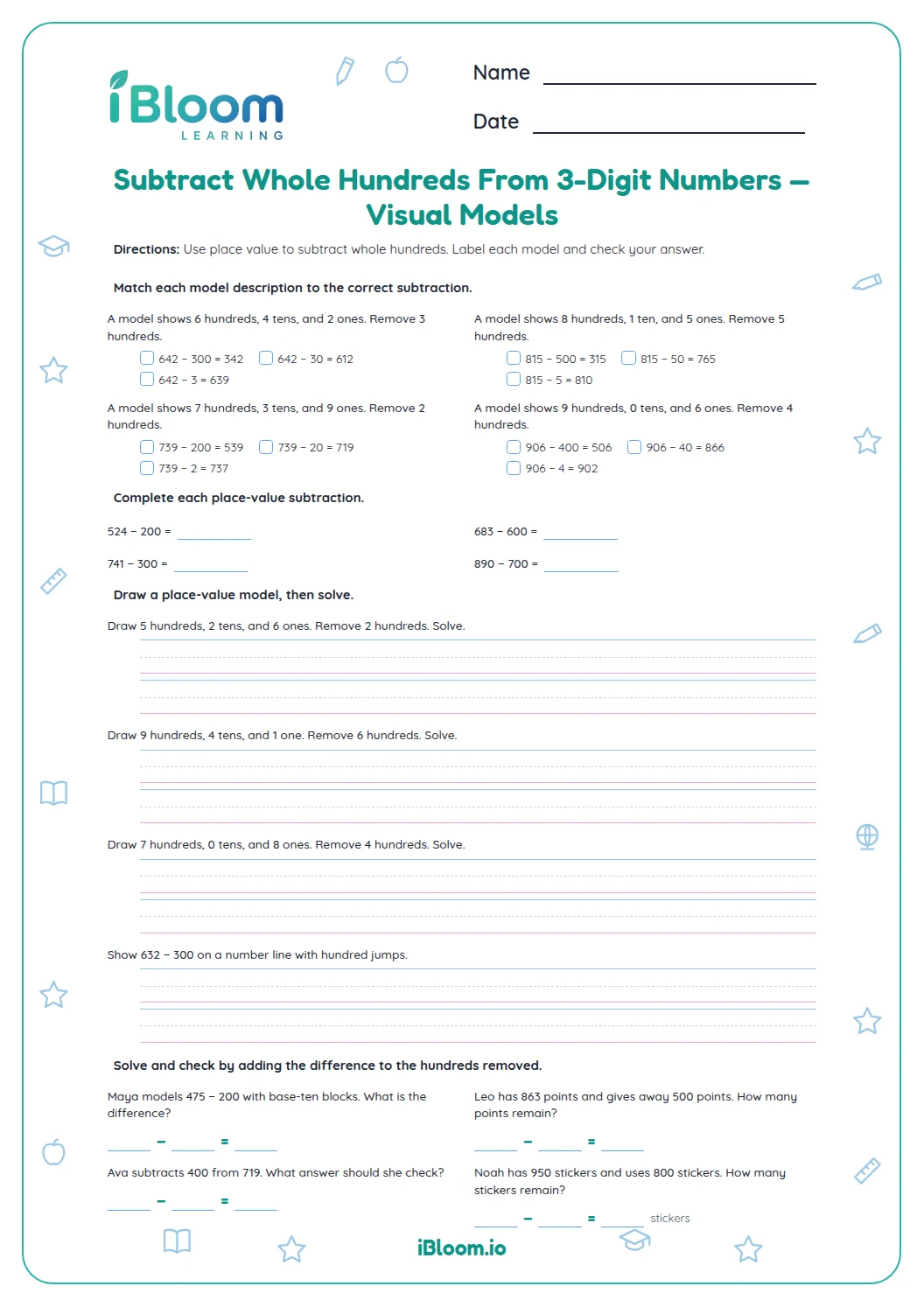
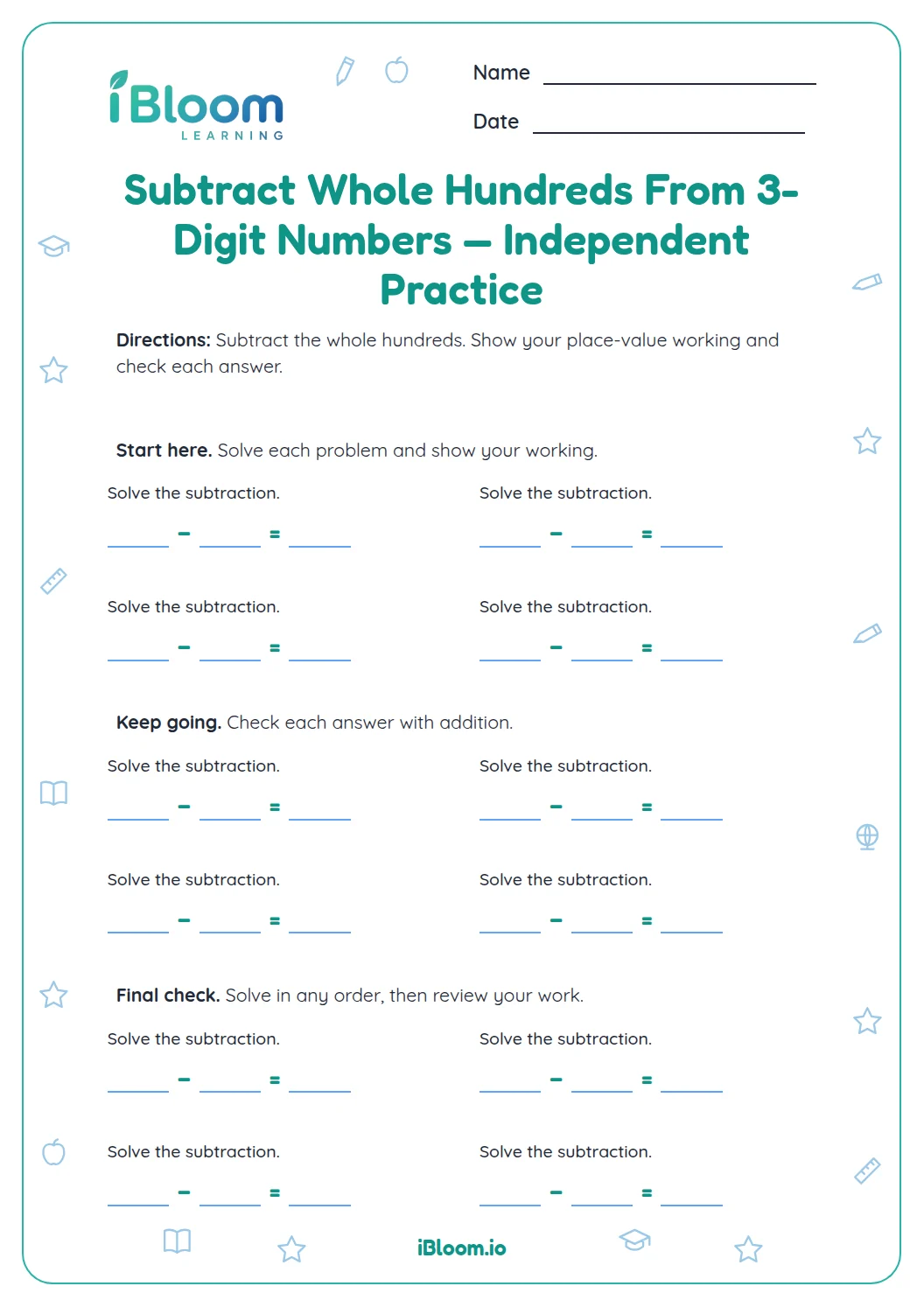
This Grade 3 math worksheet gives students 16 problems on subtracting whole tens from three-digit numbers. Practice moves from calculations to place-value reasoning, short word problems, and checking subtraction with addition. Every subtrahend is a multiple of ten. The page practices Common Core standard 3.NBT.A.2 and includes a two-page answer key.
Aligned to 3.NBT.A.2
What is included?
Sixteen items progress from direct subtraction to place-value reasoning, word problems, and missing-number equations. Students identify a likely place-value error and use addition to check a difference.
All subtraction amounts are whole tens, and the answers stay within 1,000.
- Part A: subtract whole tens from three-digit numbers
- Part B: reason about tens and missing values
- Part C: solve three short subtraction stories
- Part D: check subtraction with its inverse
How does place value help?
A whole ten changes the tens digit when there is no regrouping across a place. For example, subtracting 30 from 582 removes three tens, so the difference is 552.
To check, add the number taken away to the difference. If 552 + 30 returns 582, the subtraction is consistent.
How to use this worksheet
- 1Read the tens amount aloud as groups of ten.
- 2For a mistake-analysis item, compare subtracting 7 with subtracting 70.
- 3Use addition to check at least one difference.
Common mistakes and quick fixes
The mistake
Subtracting the tens digit amount as ones, such as subtracting 7 instead of 70.
The fix
Say “seven tens” and write the amount as 70 before calculating.
The mistake
Changing the hundreds digit when only tens are removed.
The fix
Use place-value language and check whether the change in the result matches the tens removed.
The mistake
Treating an empty seat as an occupied seat in a subtraction story.
The fix
Subtract the empty seats from the total seats to find how many are occupied.
Curriculum alignment
Students use place-value strategies and the relationship between subtraction and addition.
Fluently add and subtract within 1,000 using strategies and algorithms based on place value.
On this sheet: Every calculation subtracts a whole-ten amount from a three-digit number, and students use place value and addition to check.
Show the official wordingHide the official wording
Fluently add and subtract within 1000 using strategies and algorithms based on place value, properties of operations, and/or the relationship between addition and subtraction.
What to practice next
Make more practice
Further reading
Questions parents and teachers ask
What does subtracting 70 mean?
It means taking away seven tens, or 70. For example, 531 − 70 = 461. Keeping the tens amount visible helps students avoid subtracting 7 ones or 700 by mistake. Place value makes the size of the change clear.
How can addition check a subtraction answer?
Add the amount taken away to the difference. For example, 552 + 30 = 582 checks the subtraction 582 − 30 = 552. If the sum returns the starting number, the subtraction is consistent. This is an inverse operation check.
Does this page practice regrouping?
The main focus is subtracting whole tens from three-digit numbers. Students reason about place value, solve story problems, and work with missing numbers. The examples keep the subtrahend a multiple of ten so attention stays on the named skill.
What grade is the challenge written for?
It is written for Grade 3. The questions use three-digit numbers and whole tens, with an explanation item that asks students to check subtraction using addition. Students can show their strategy with place-value thinking or mental math and then use the key to review.