



About this worksheet
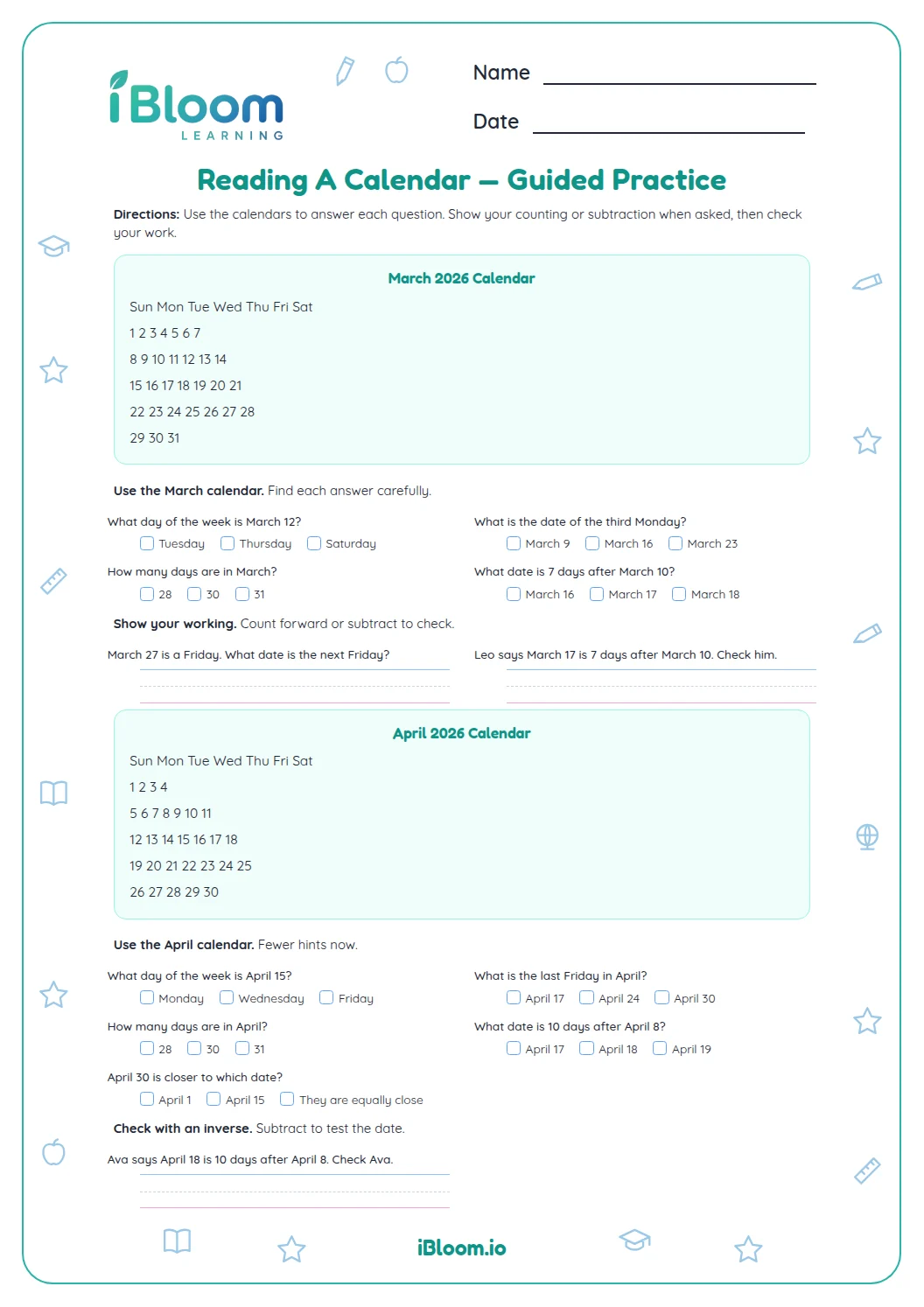
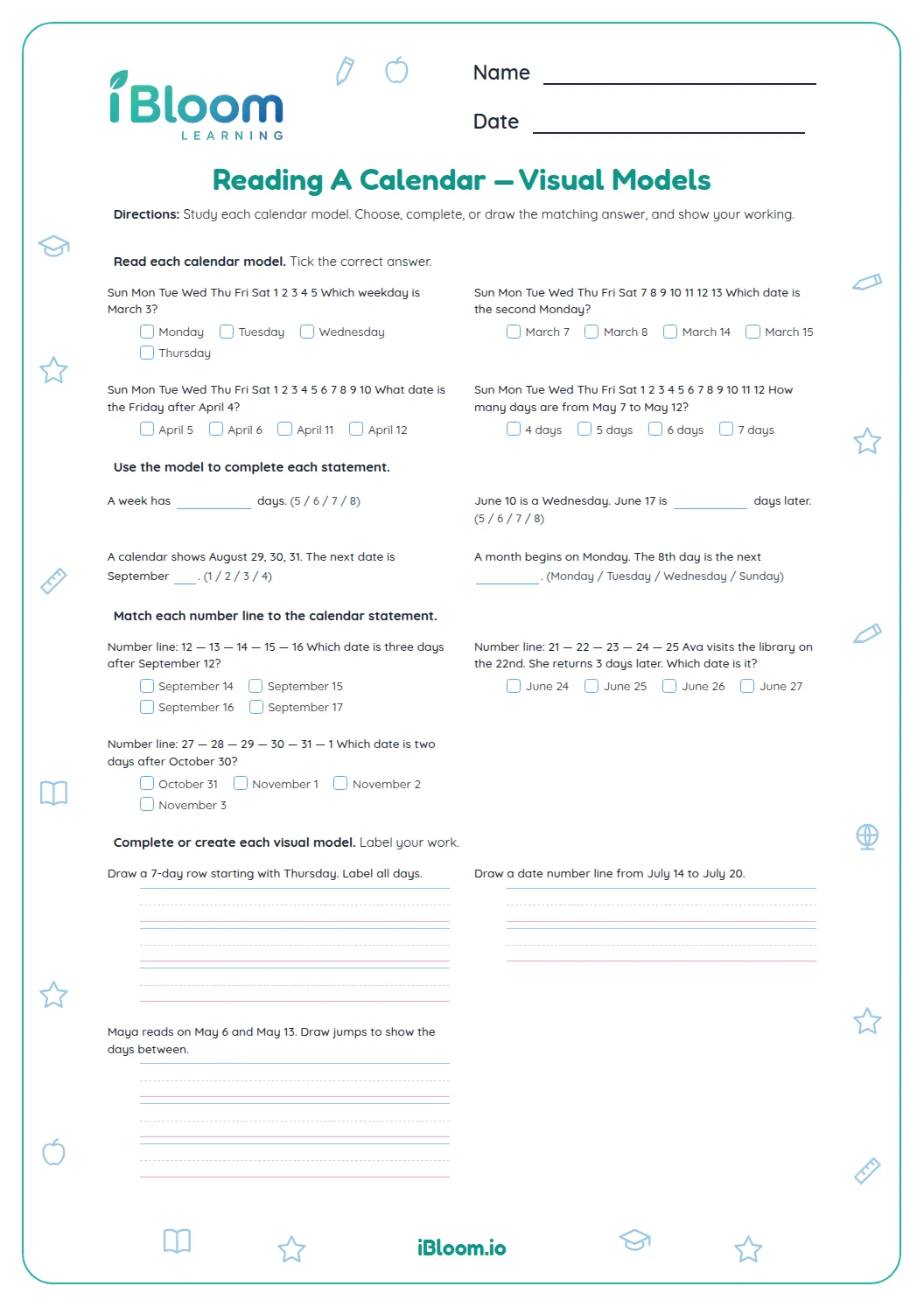
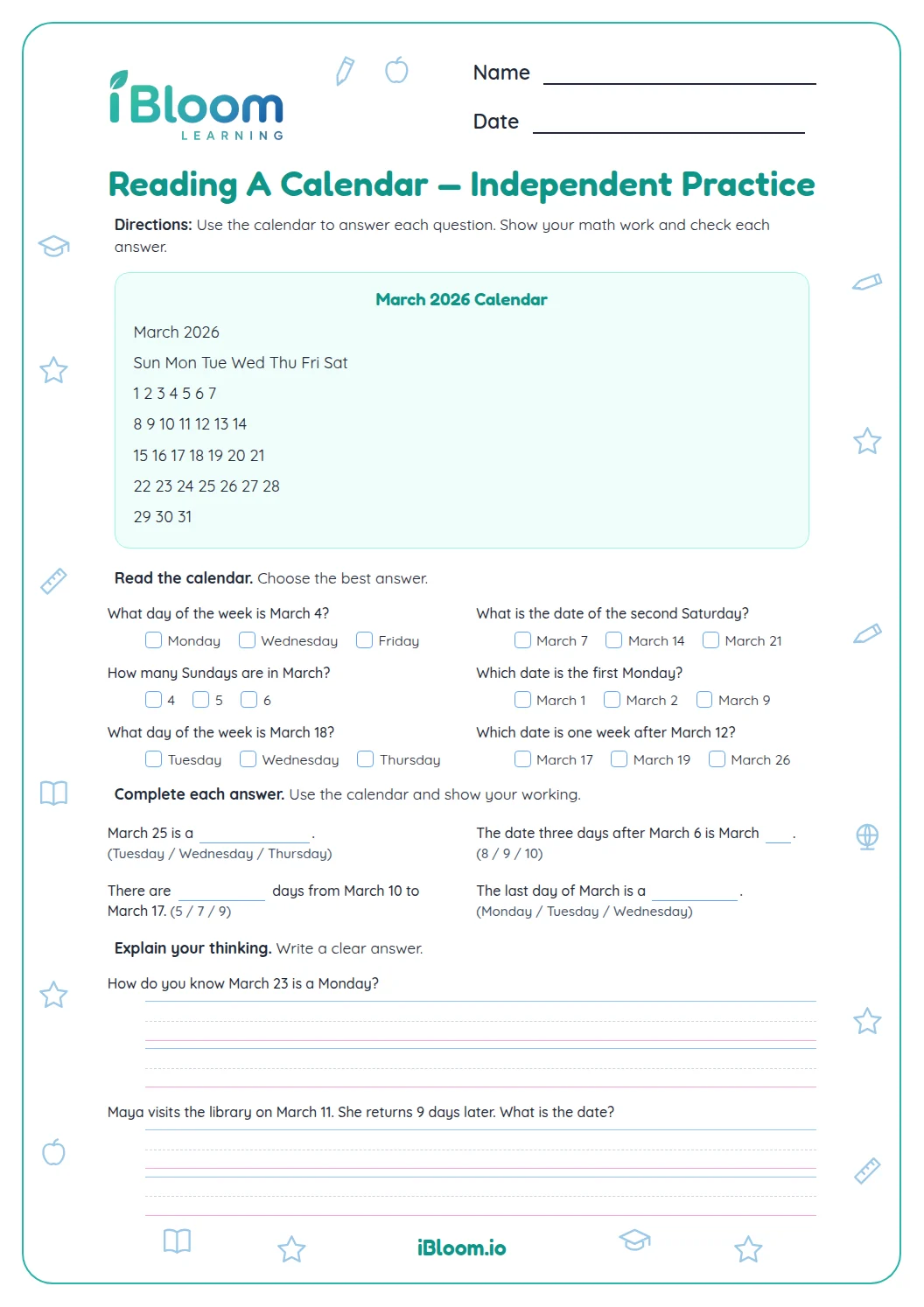
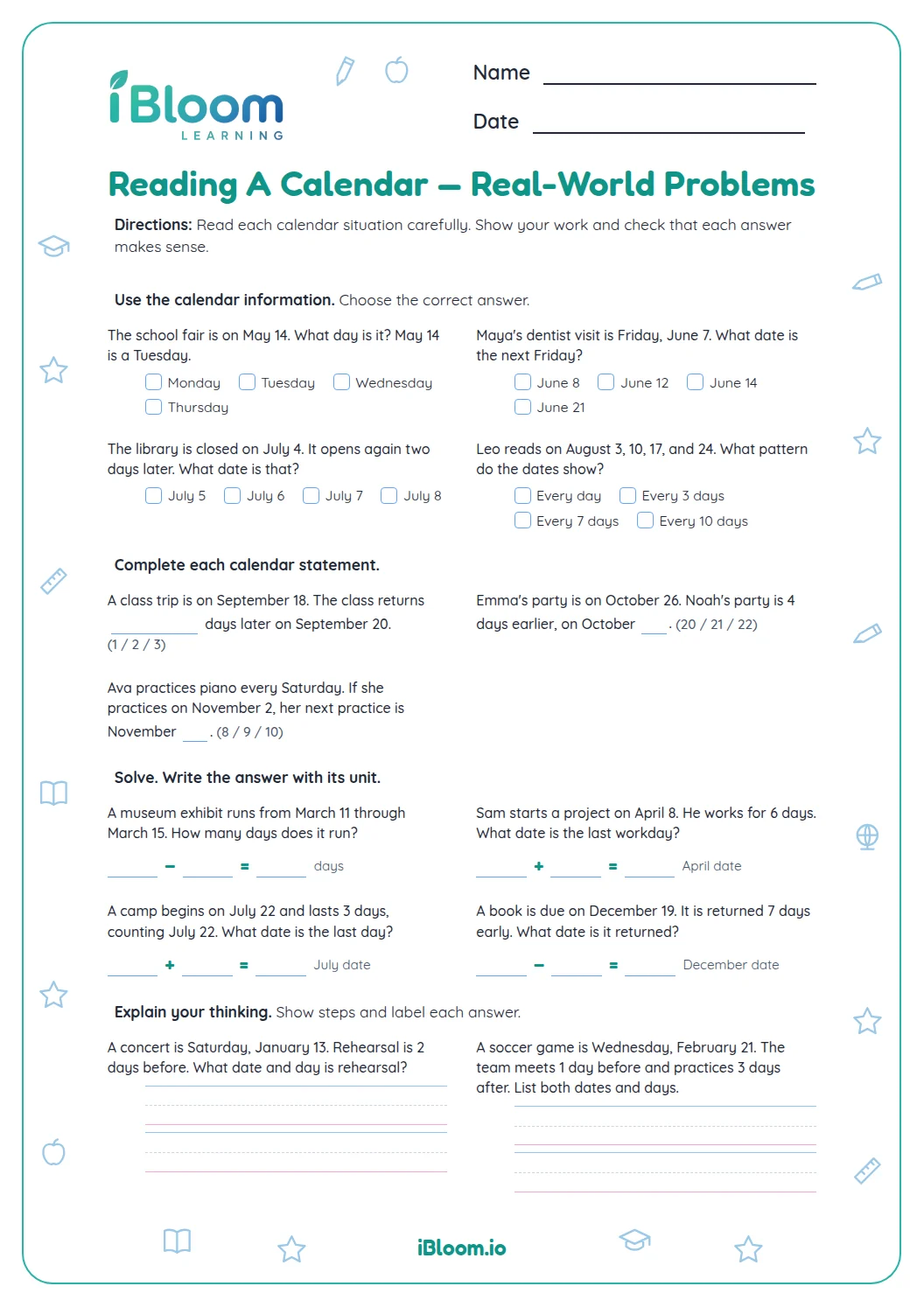
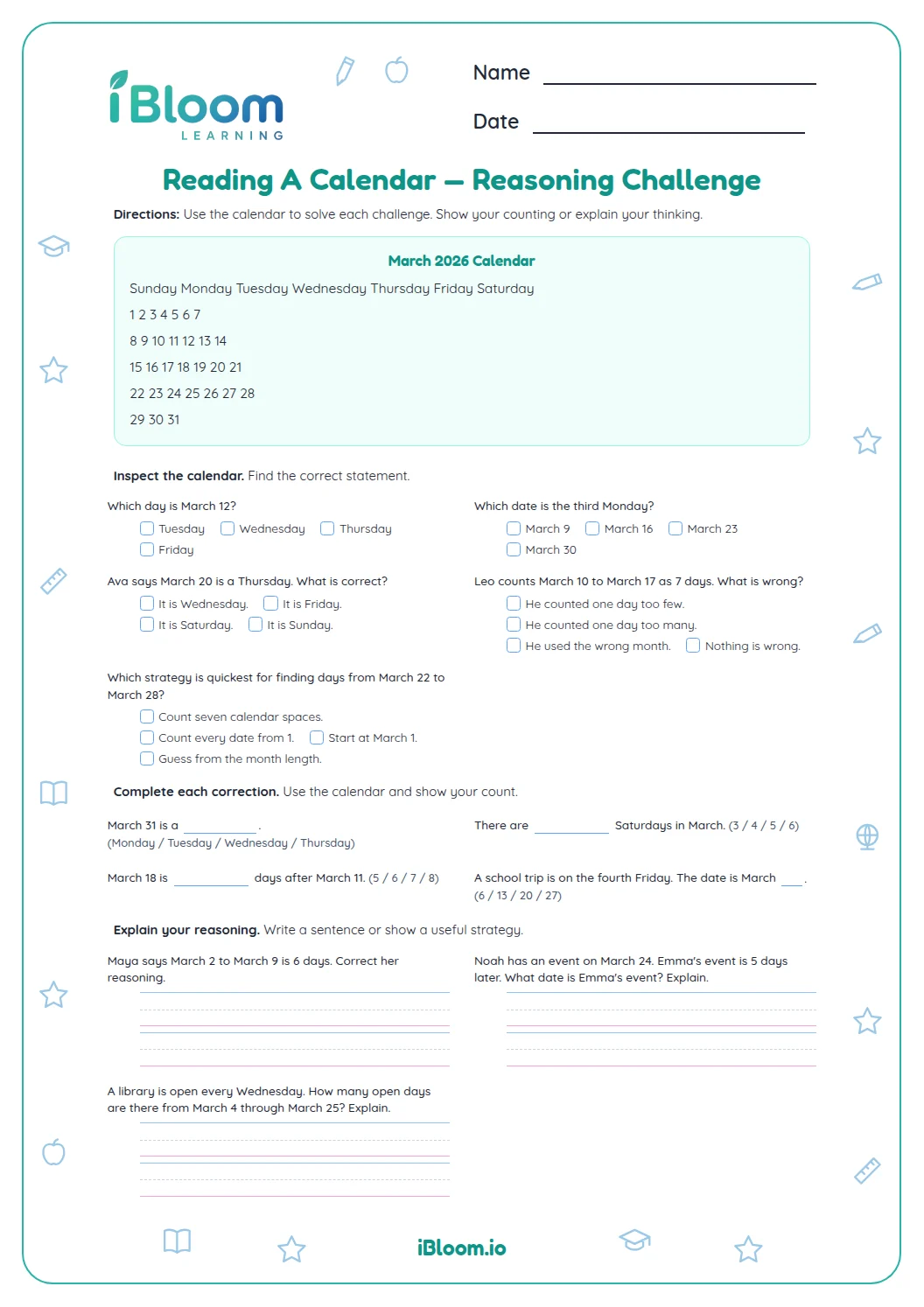
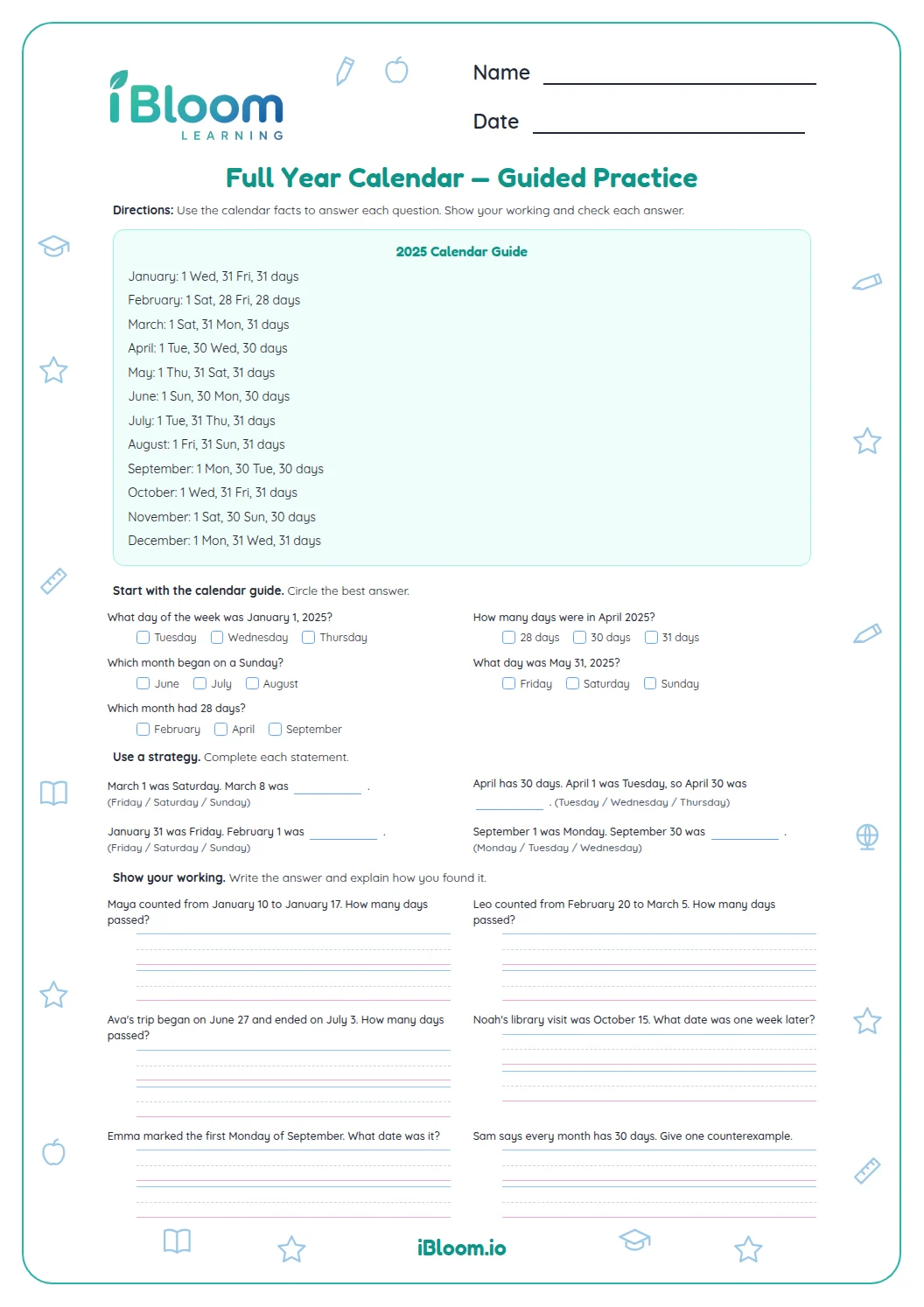
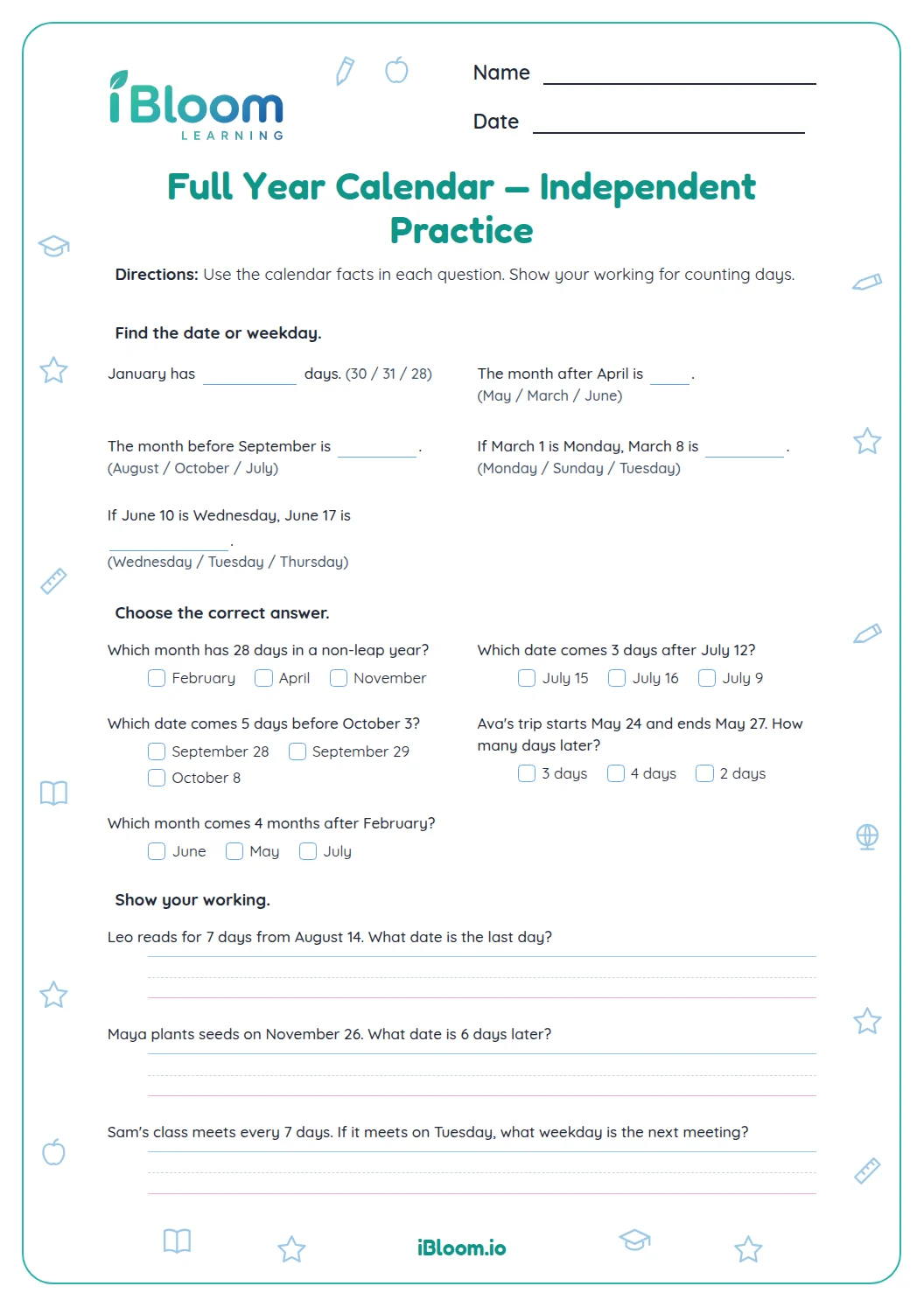
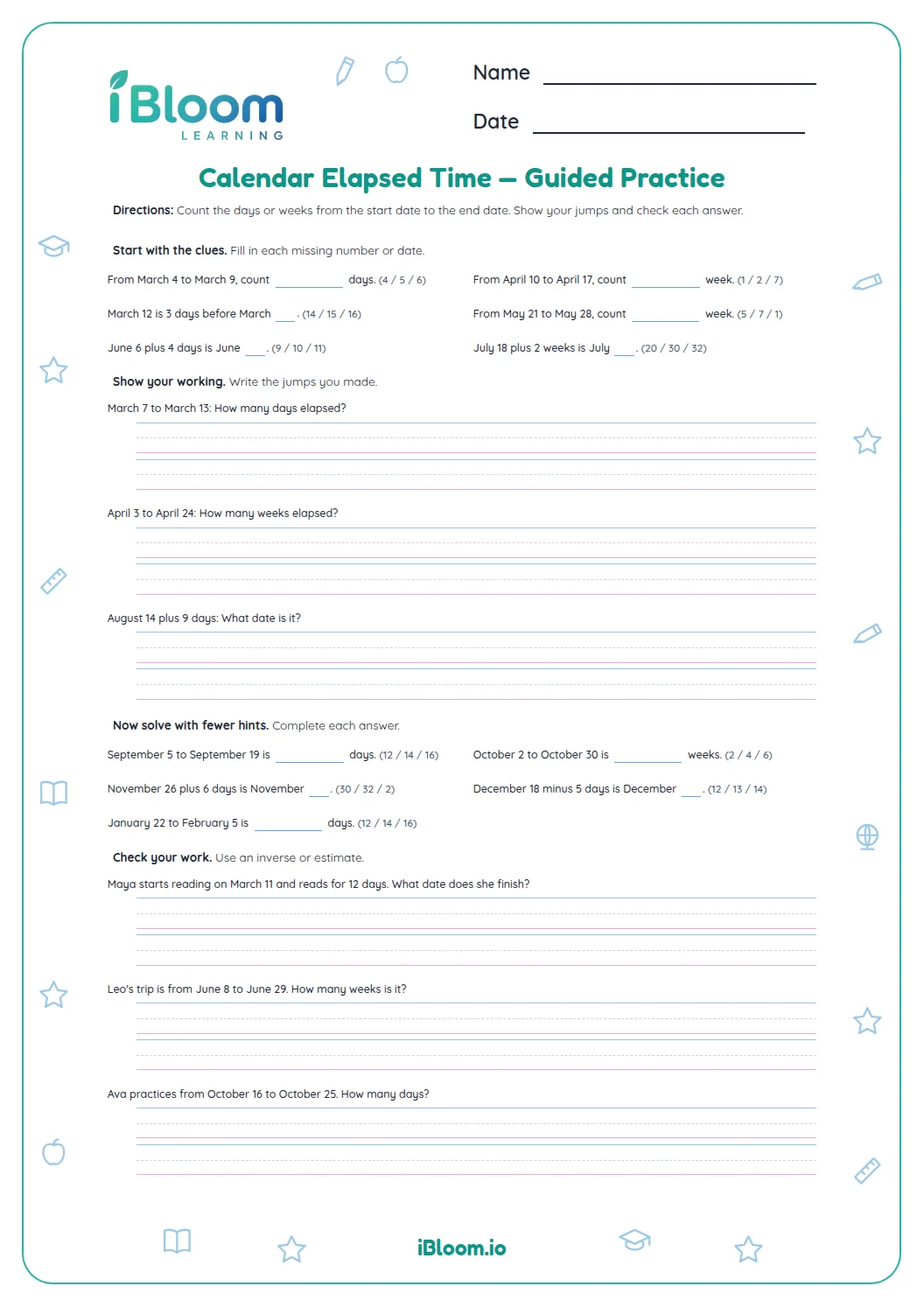
This Grade 3 printable introduces calendar reading with two month grids and short date questions. Students locate a date in a weekday column, complete a missing date, use the seven-day week pattern, and count forward or backward by days and weeks. The answer key lists each weekday or date.
How do you find a weekday on a month grid?
Start with the column labels across the top. Find the date in its row, then read up to its weekday. The April calendar question uses this strategy to identify the weekday for April 18.
- 1April 18 appears in the Friday column → Friday
How can you count forward by weeks?
A week later is the same weekday with a date seven greater. For example, if July 1 is Saturday, July 8 and July 15 are also Saturdays.
Why do month grids have blank spaces?
The first date does not always fall on Sunday, and the final week may end before Saturday. Empty cells keep each date aligned with its weekday.
How to use this worksheet
- 1Scan the weekday headings before locating a date.
- 2Find the date in the correct row and column.
- 3For “one week later,” add seven days and keep the weekday.
- 4For earlier dates, count back carefully across week boundaries.
- 5Check each answer with the month grid or weekday cycle.
Common mistakes and quick fixes
The mistake
Reading a date from the wrong column.
The fix
Trace straight up from the date to the weekday heading.
The mistake
Thinking one week later means the next calendar row.
The fix
Add seven to the date; the weekday stays the same.
The mistake
Counting both the starting and ending date as a full day.
The fix
For “one day after,” move to the next date only once.
What to practice next
Make more practice
Questions parents and teachers ask
How many questions are included?
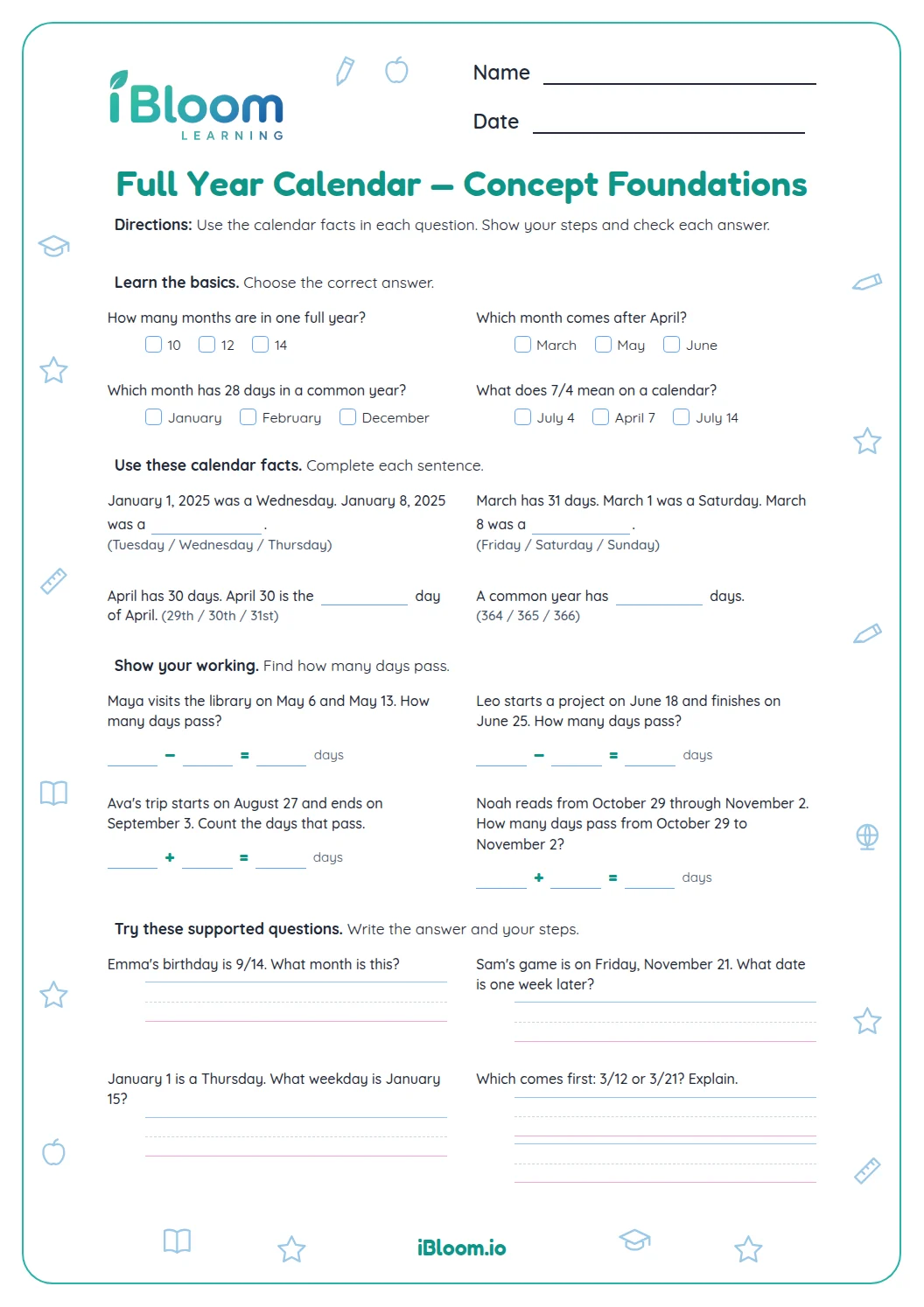
There are 16 questions in two parts. The first two use weekday and date tables, and the remaining items ask about weekday order, date sequences, and week patterns. A separate answer key lists a weekday or date for each item.
Why are some calendar cells empty?
The first part includes small tables with a missing weekday or date. Children use the neighboring entries and the weekday sequence to fill the blank. These are short date tables rather than full month grids, so they focus attention on the calendar pattern needed for each answer.
What does “one week after” mean?
One week is seven days. Moving forward or backward by seven keeps the weekday the same, while changing the date by seven. For example, a Friday followed by one week is the next Friday. Several questions apply this pattern to dates and repeated weekly events.
How can a child check a weekday answer?
Start with a weekday the child knows, then count one day at a time through the week names. For a date one or two weeks away, count by sevens and keep the weekday fixed. The answer key can confirm the result after the child explains the counting.
Are the month examples real calendars for a particular year?
No. The dates are practice examples, not a calendar for a particular year. The worksheet asks children to use weekday order and date patterns, and the key gives the answer for each example. Check the month and starting weekday named in a prompt before counting.