









About this worksheet
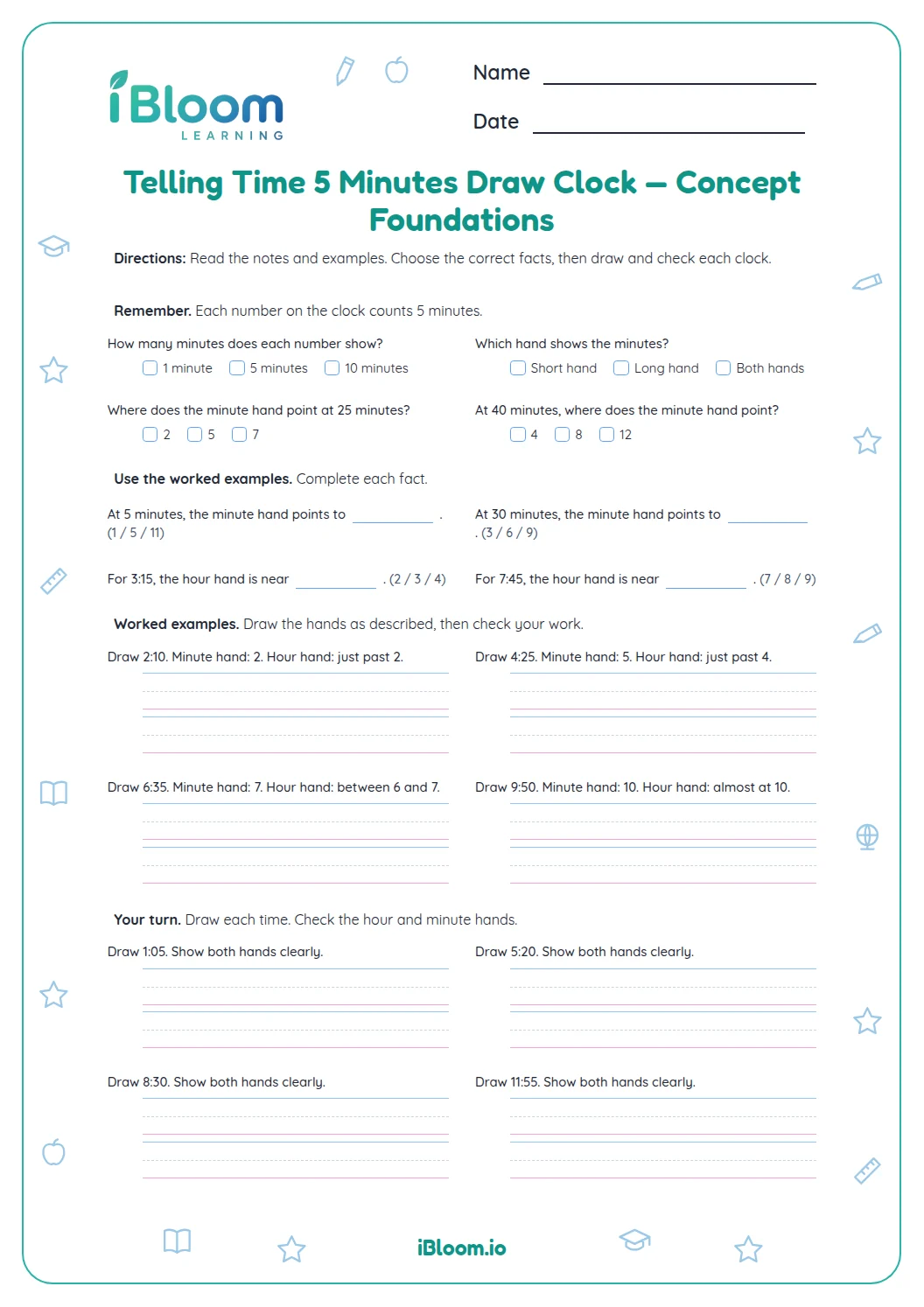
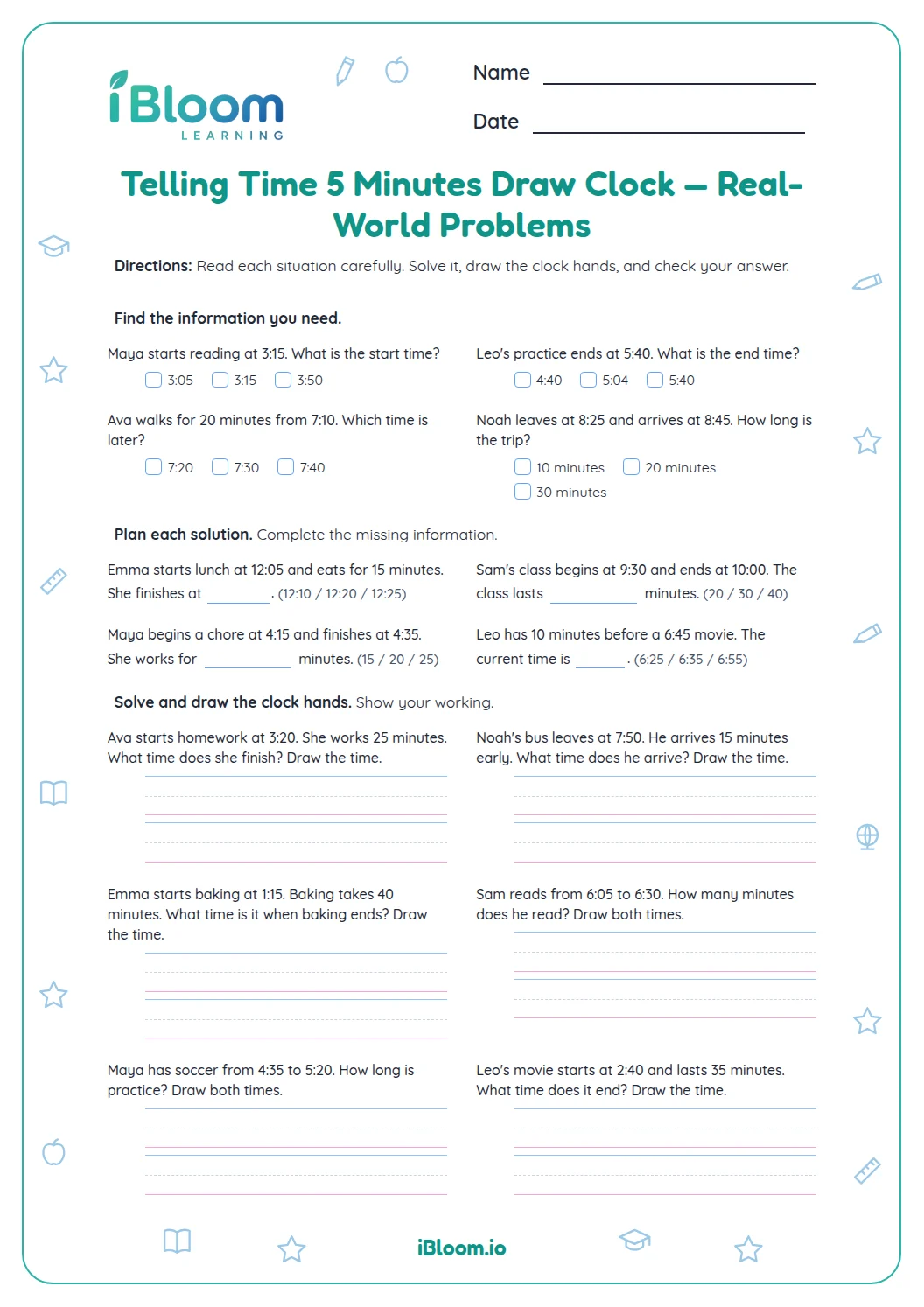
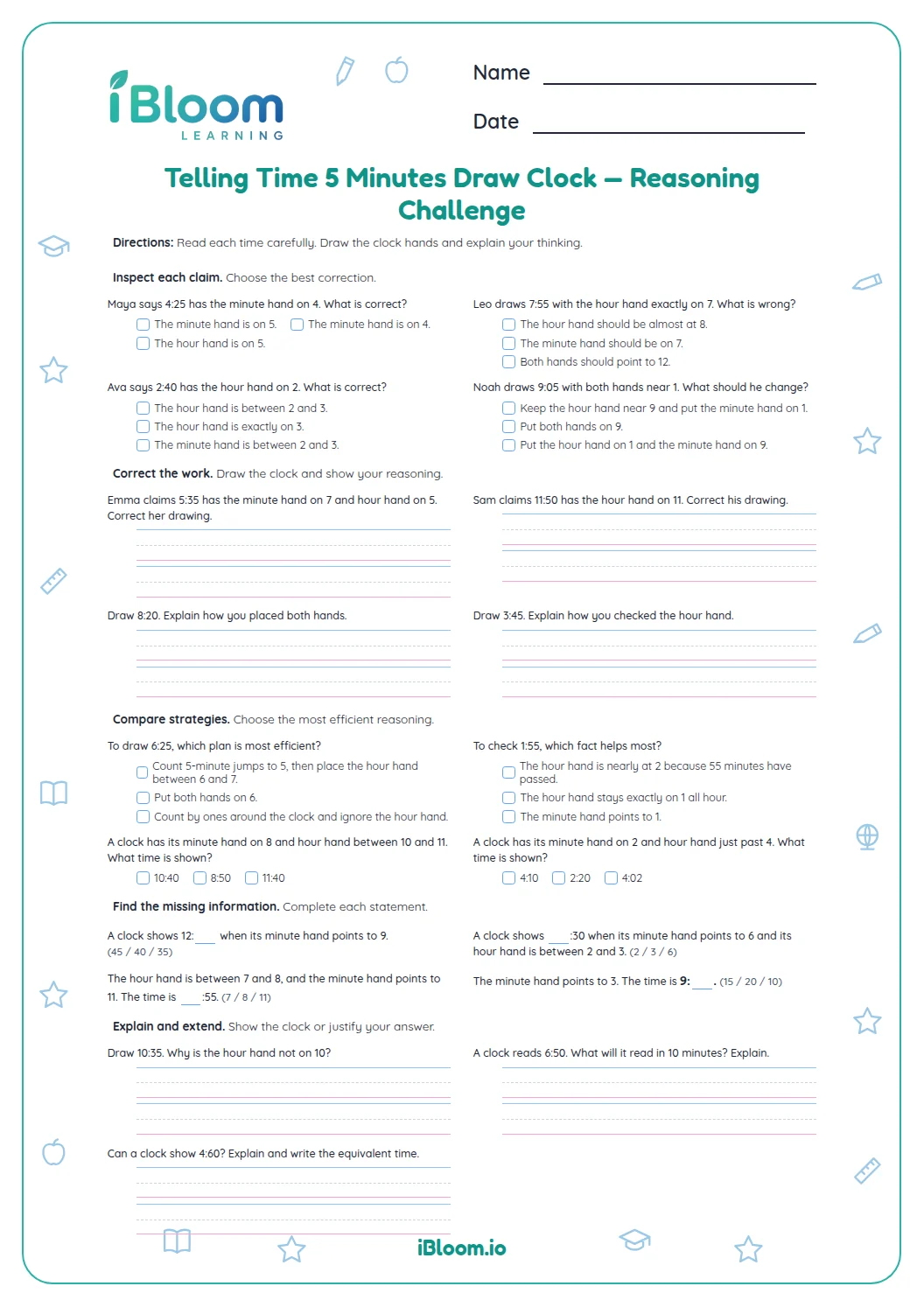
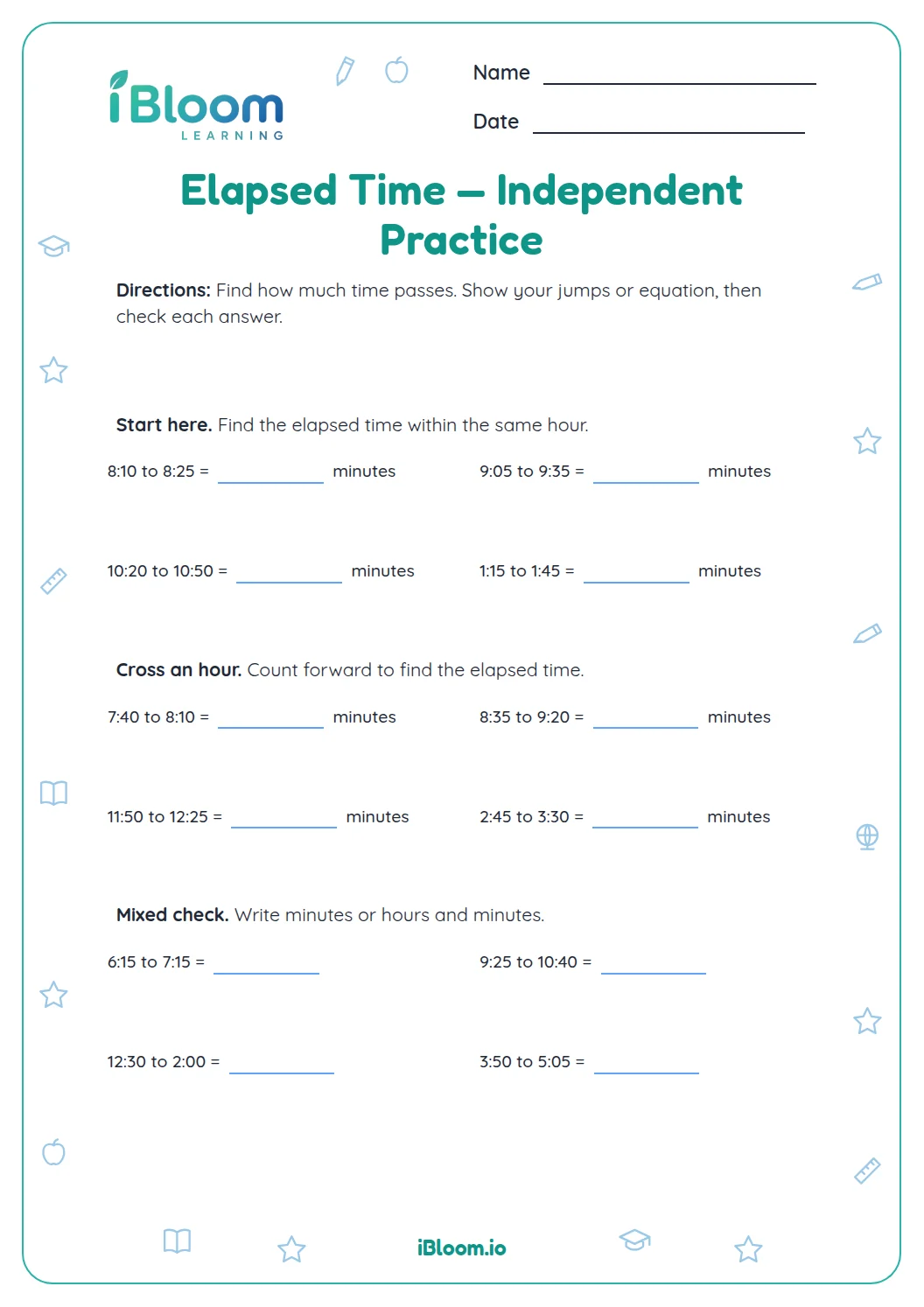
This free Grade 3 printable gives learners practice reading analog clocks and working with five-minute increments. Four clock drawings ask children to write the time shown; 12 more questions ask for the time five minutes later. The separate answer key gives a response for every item. The old sheet asked children to draw hands, so this replacement uses the template’s available clock drawings and written time questions to practice the same five-minute reading method.
Aligned to 3.MD.A.1
How do the clock hands show time?
The longer minute hand points to a number that counts by fives. The shorter hour hand shows the hour and moves between numbers as minutes pass. Read the hour first, then count the minutes.
How can learners read a five-minute time?
If the minute hand points to 7, count 5, 10, 15, 20, 25, 30, 35. The hour hand is between 4 and 5, so the hour is still 4.
- 1Minute hand points to 7: count 35 minutes.
- 2Hour hand is between 4 and 5, so the hour is 4.
- 3Answer: 4:35
What happens when five minutes pass?
The first four questions ask children to read a clock. The remaining 12 ask them to add five minutes to a written time. When the minutes pass 12, the hour changes too, as in 3:55 becoming 4:00.
How to use this worksheet
- 1Find the longer minute hand on each clock.
- 2Count by fives from 12 to name the minutes.
- 3Use the shorter hand to identify the current hour.
- 4For a written time, add five minutes and update the hour if needed.
- 5Check the result with the answer key.
Common mix-ups and quick fixes
The mistake
Reading the number under the minute hand as the minute count.
The fix
Count by fives from 12; the 7 means 35 minutes.
The mistake
Moving to the next hour too early.
The fix
At 4:35, the hour is still 4 because the short hand has not reached 5.
The mistake
Switching the hour and minute hands.
The fix
The longer hand shows minutes; the shorter hand shows hours.
Common Core alignment
The sheet practices reading time and reasoning about five-minute increments.
Read clocks and work with time intervals in five-minute increments.
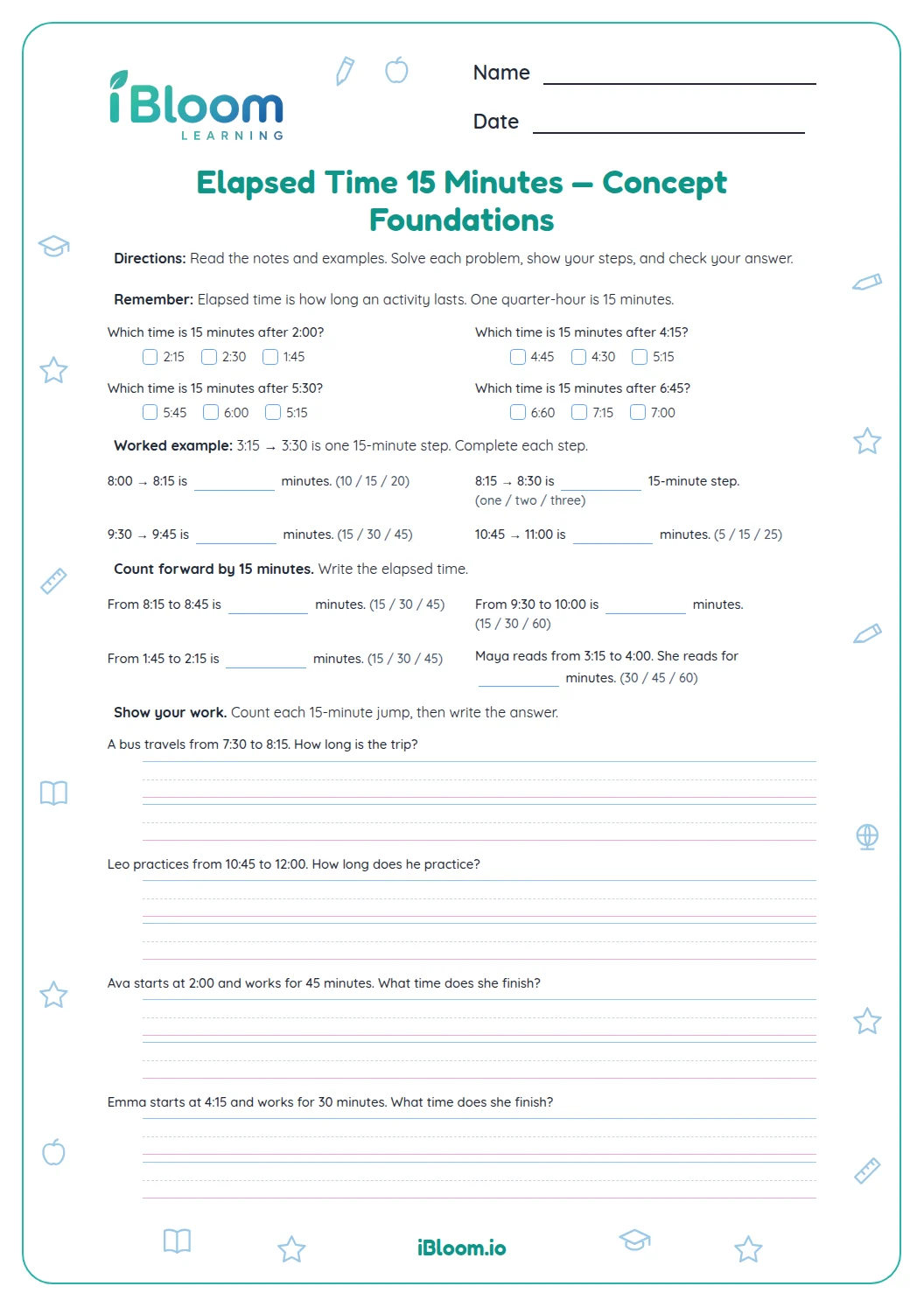
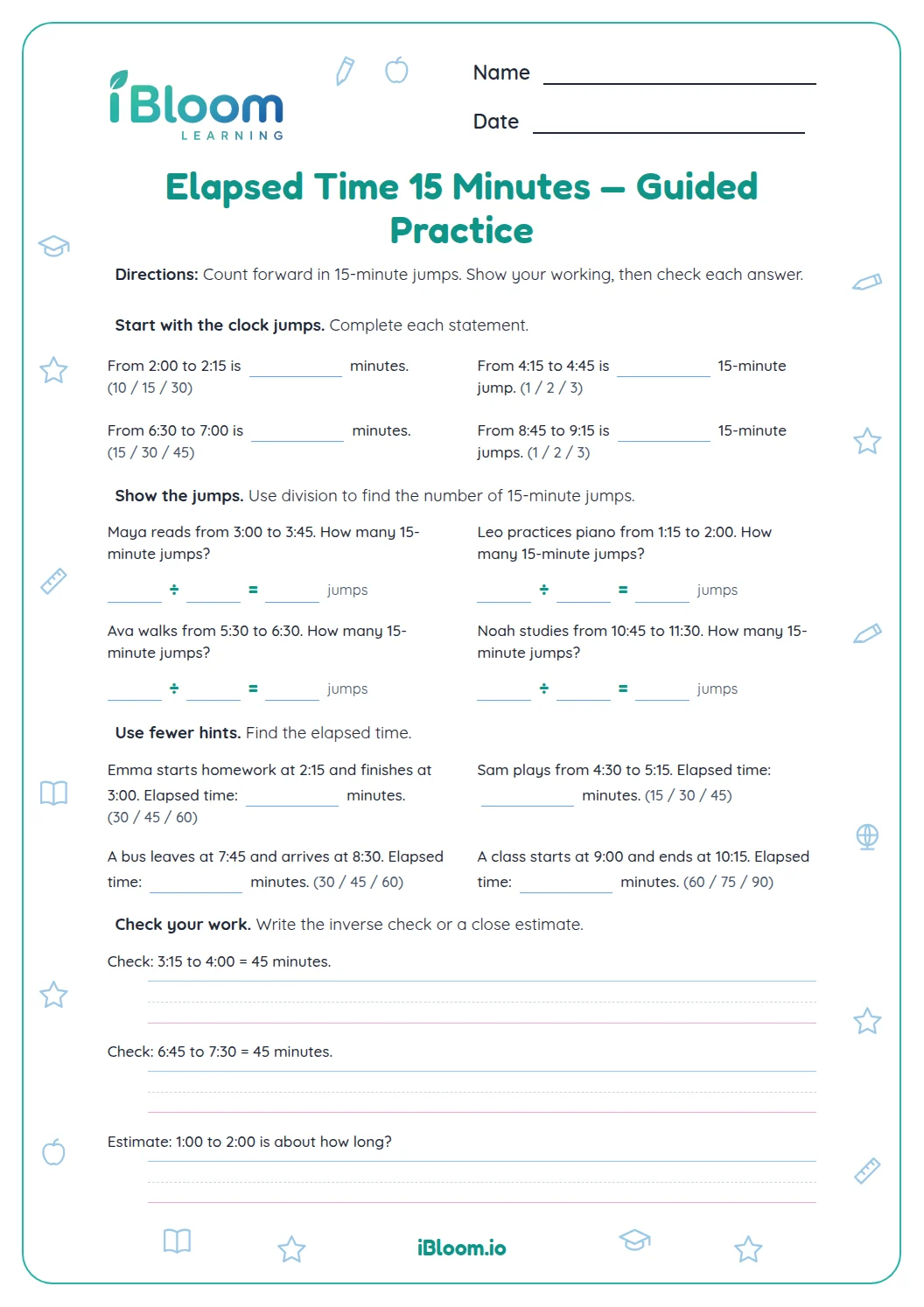
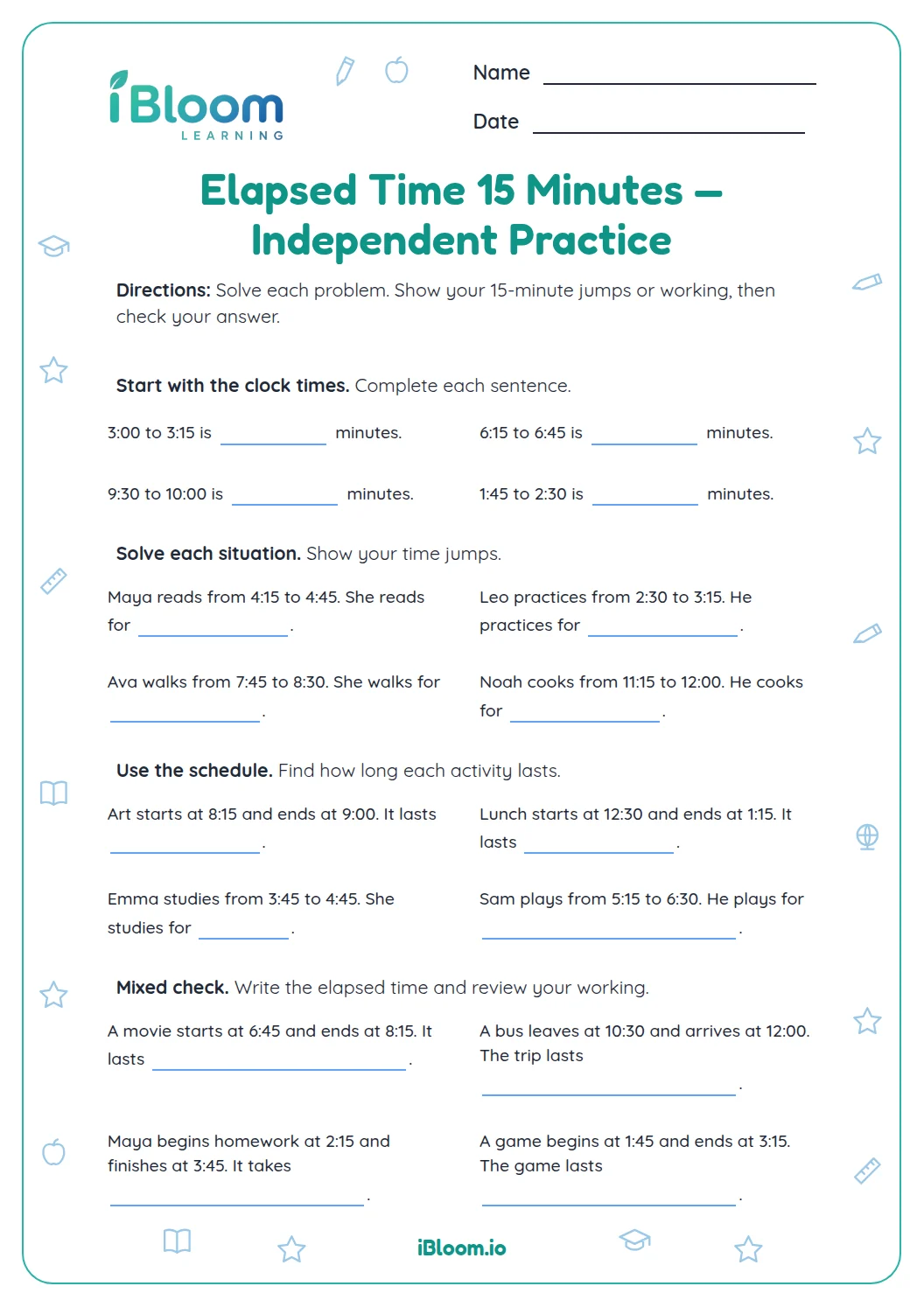
On this sheet: Learners read clocks and find the time five minutes after a given time.
Show the official wordingHide the official wording
Tell and write time to the nearest minute and measure time intervals in minutes. Solve word problems involving addition and subtraction of time intervals in minutes, e.g., by representing the problem on a number line diagram.
What to practice next
Make more practice
Further reading
Questions parents and teachers ask
Why is the hour hand between two numbers?
The hour hand moves gradually as minutes pass. At 4:35 it is between 4 and 5, but the hour is still 4. Look at the number the short hand has passed, then use the long hand to read the minutes.
How do children count minutes on an analog clock?
Start at 12 and count by fives in the direction the long minute hand moves. Each number stands for five more minutes, so 6 means 30 minutes and 9 means 45 minutes. The hour hand is the shorter hand. These repeated counts make each clock interval clear.
What does this worksheet ask learners to do?
The first four questions show analog clocks for children to read. The next 12 give a written time and ask what time it will be five minutes later. This replacement uses the available clock drawings and written time practice to keep the old sheet’s five-minute focus.
Is an answer key included?
Yes. A separate answer key gives the time shown on each of the four clocks and the result for all 12 five-minute questions. Check that the hour changes when the added minutes move past 12, such as 3:55 becoming 4:00.
How long will this take?
Plan for about 20 minutes. Learners read four analog clocks, then add five minutes to 12 written times. Some items pass the hour, so allow time to notice when the short hand moves into the next hour. Pause between pages if helpful.