


About this worksheet
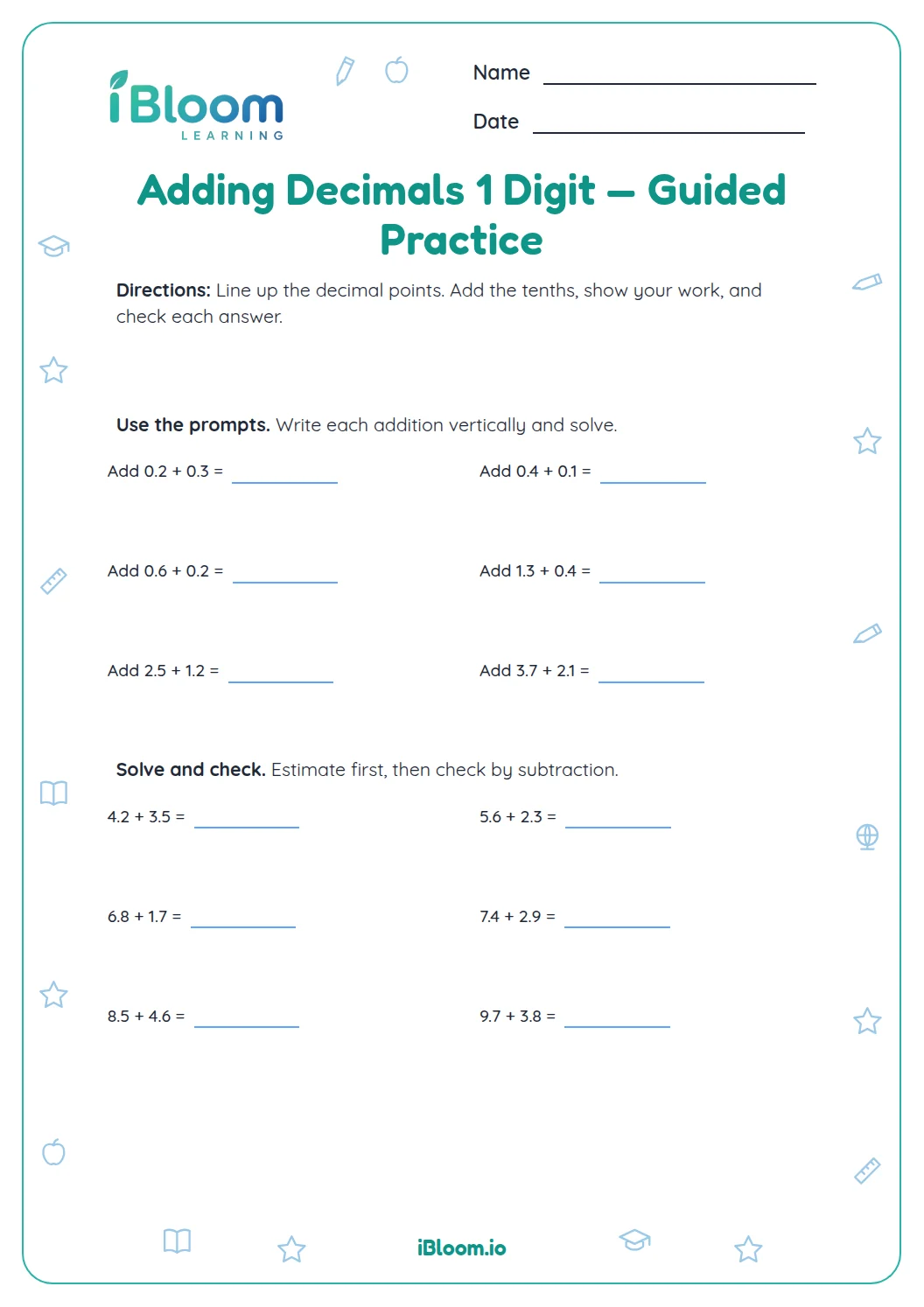
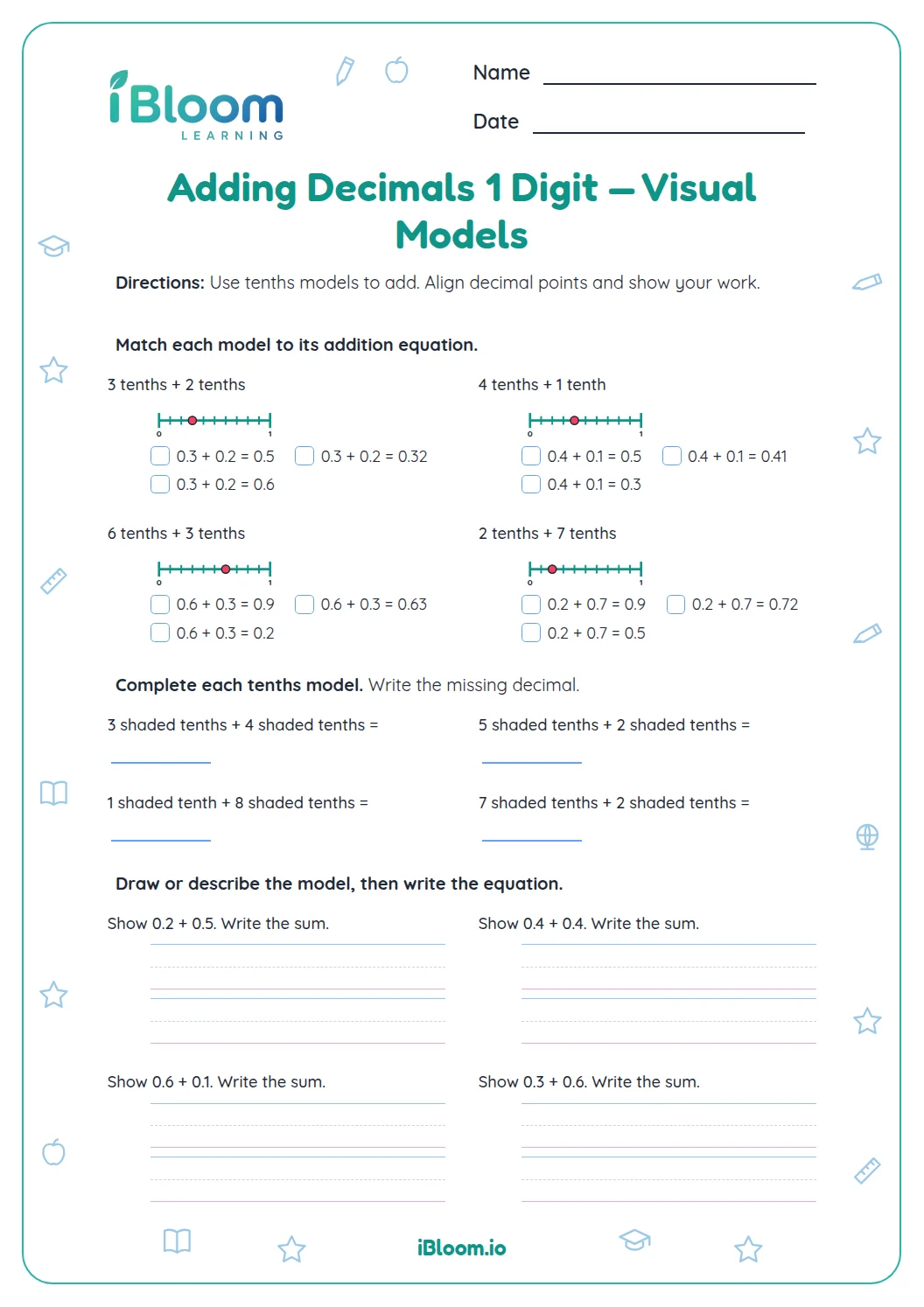
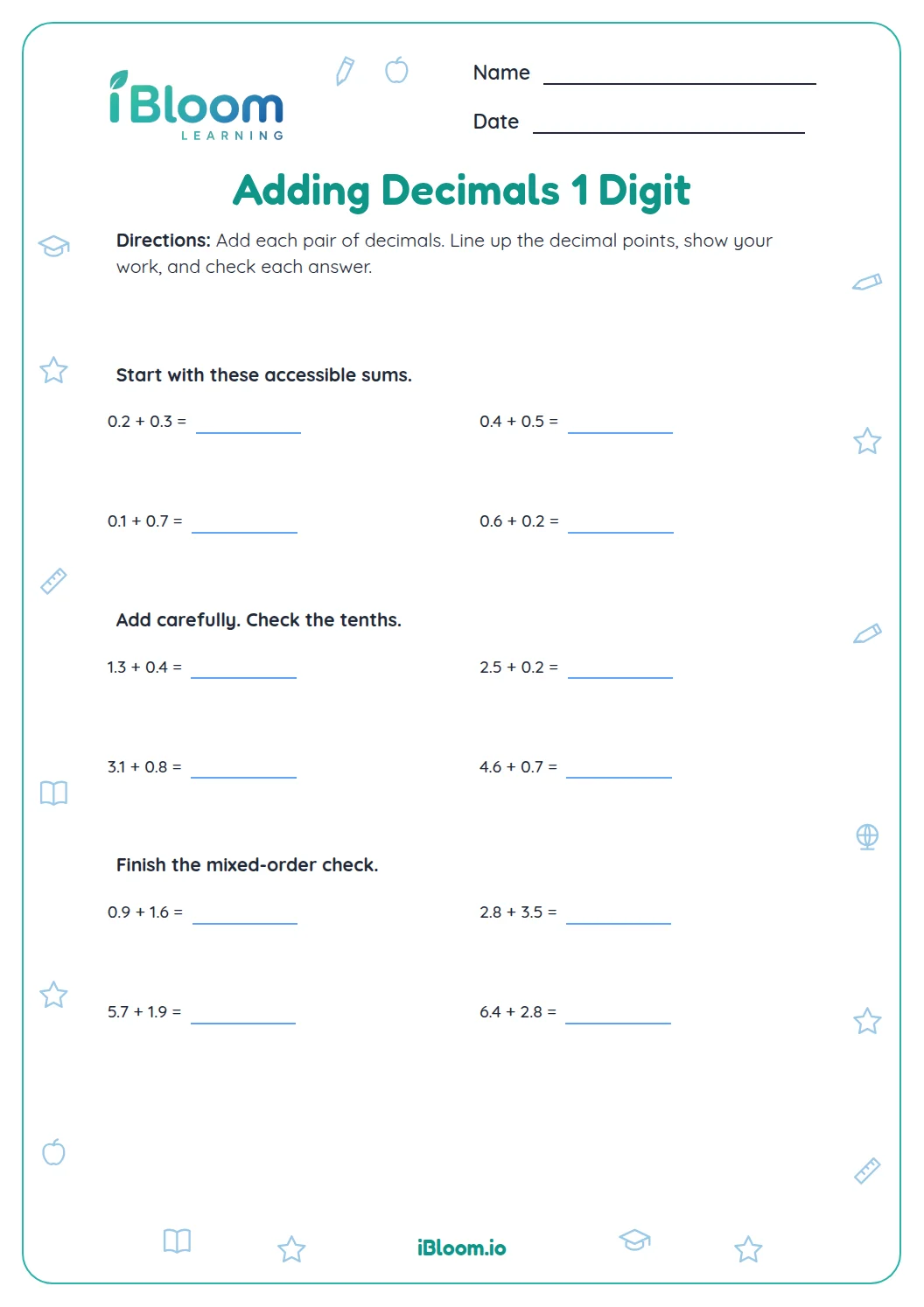
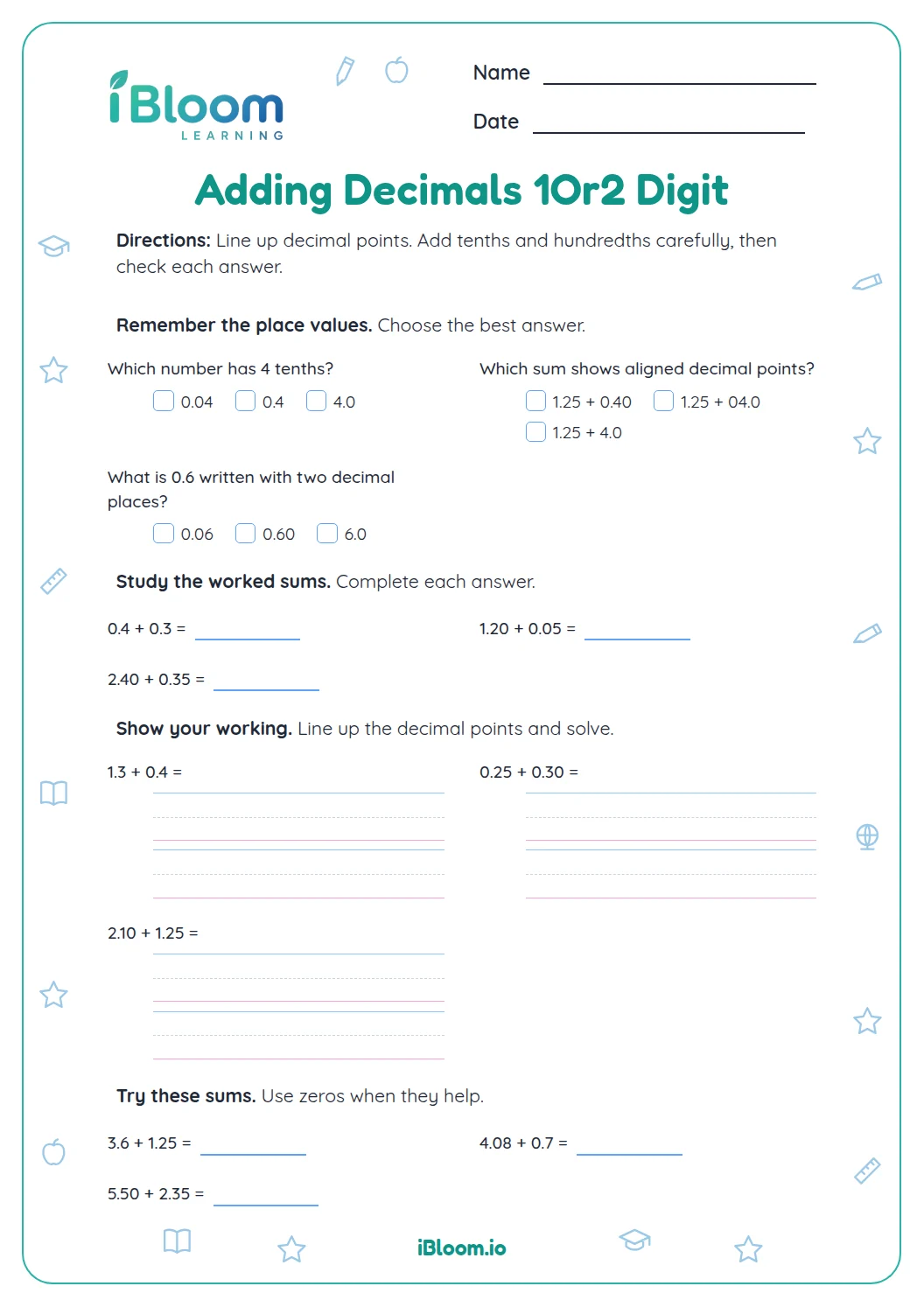
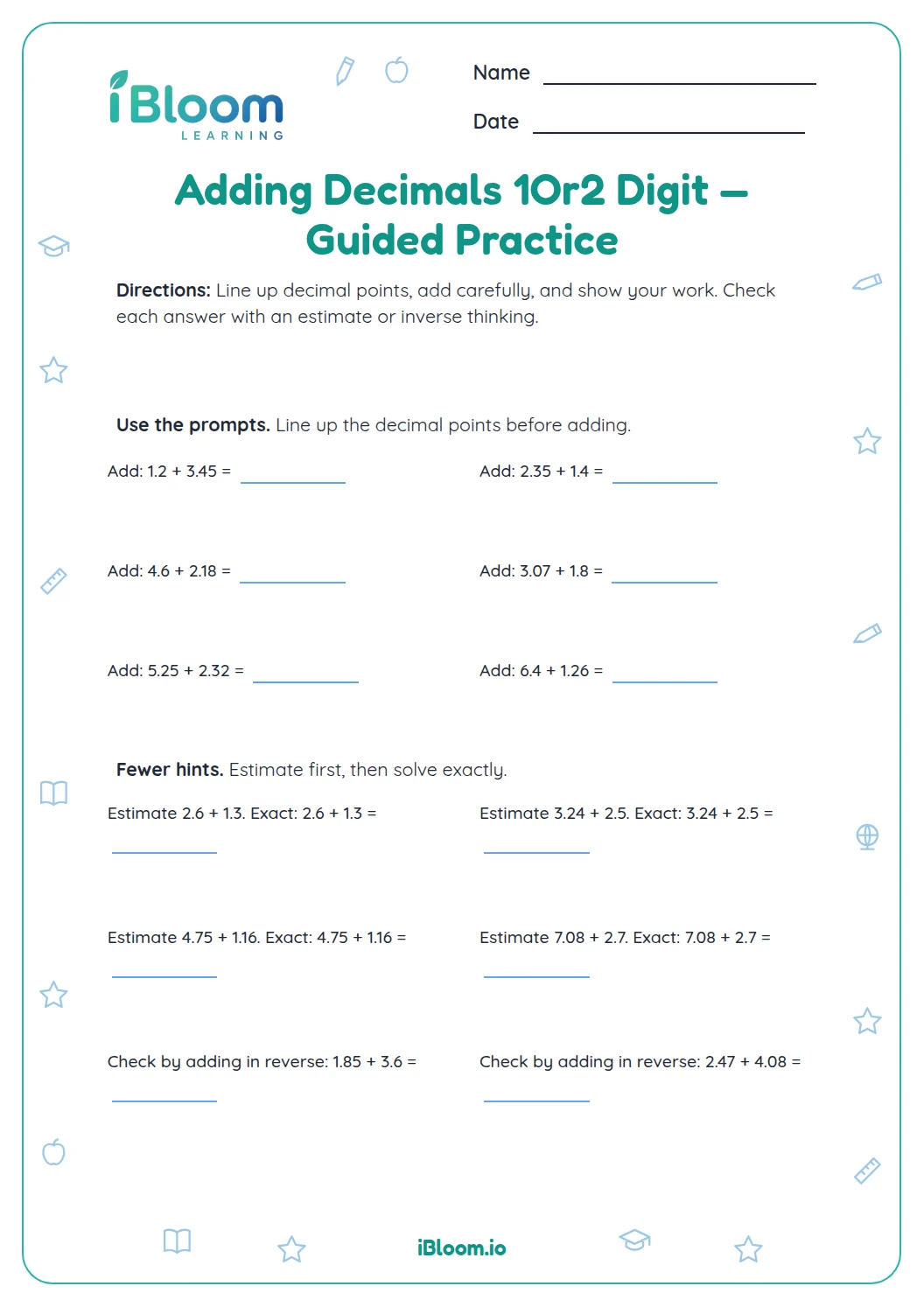
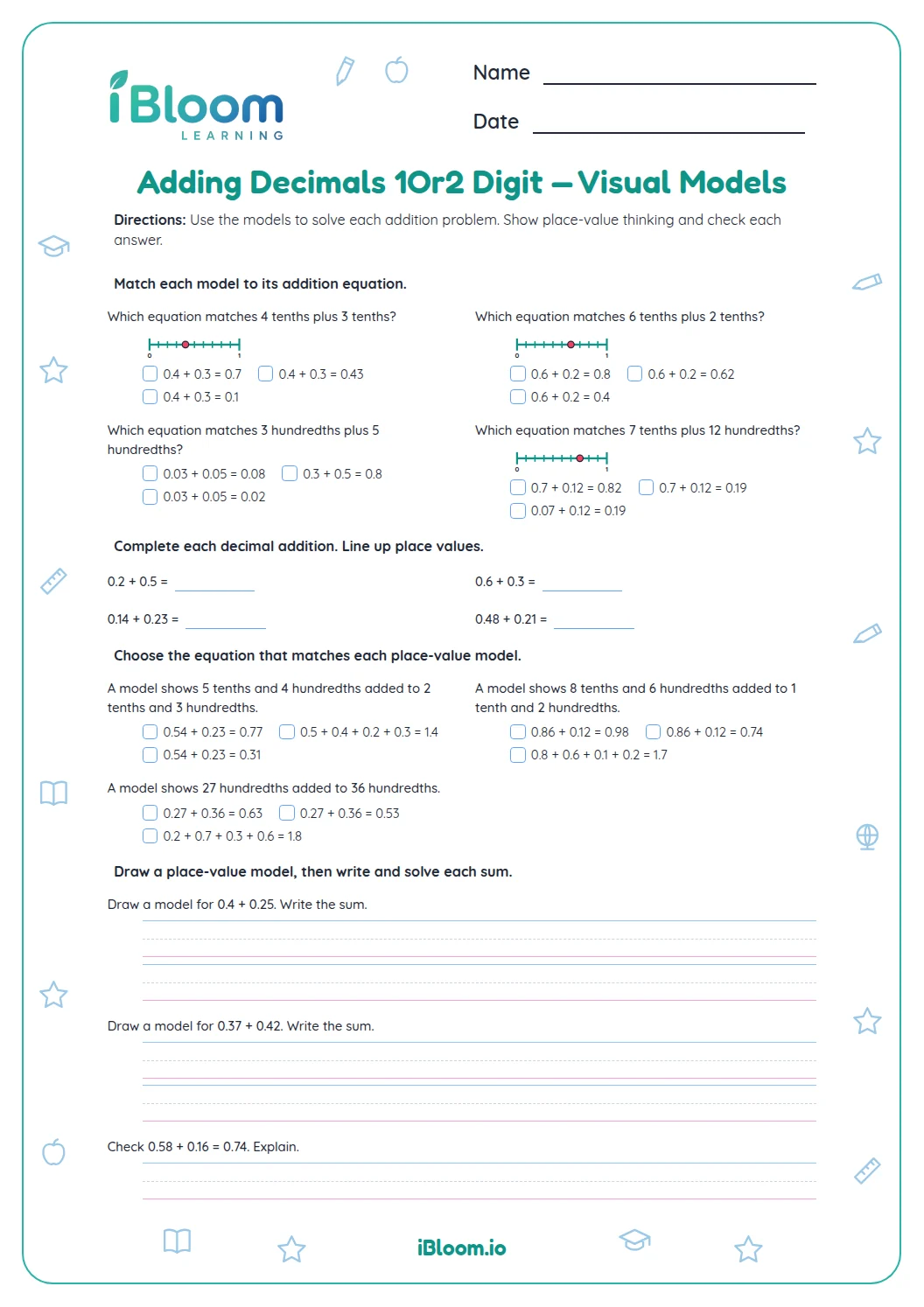
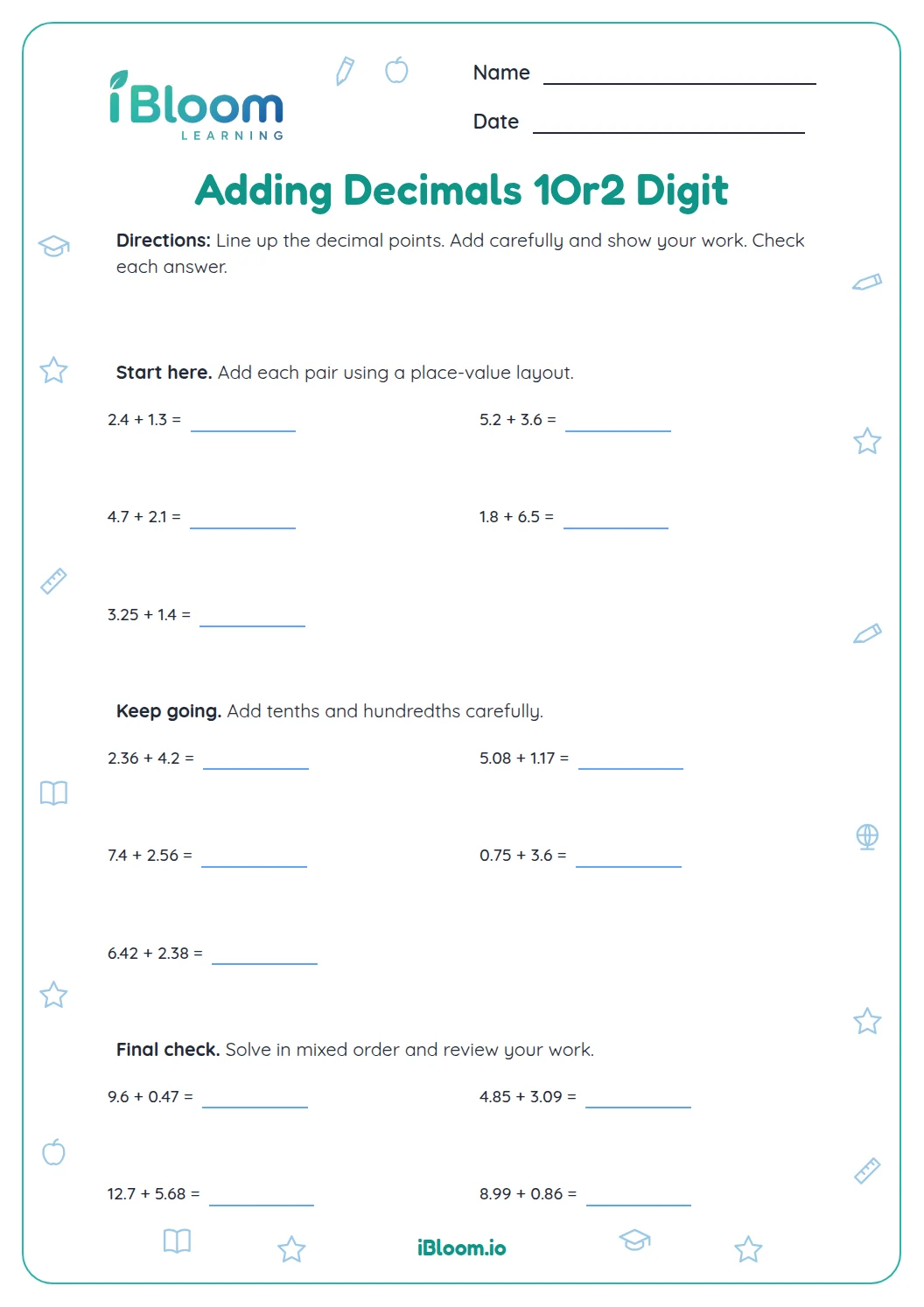
This worksheet puts one-digit decimal addition into measurement stories. Learners align decimal points, add tenths and whole-number parts, and report a total with its unit. The 15 amounts stay in tenths, with some sums crossing a whole-number boundary. A separate key is included. It practices 5.NBT.B.7.
Aligned to 5.NBT.B.7
Add tenths by place value
A decimal point separates whole units from fractional units. In 2.4 + 1.3, line up the points and add tenths to tenths: 4 tenths + 3 tenths = 7 tenths. Then add 2 ones and 1 one to get 3.
Some sums make a new whole. In 3.7 + 2.5, seven tenths plus five tenths make twelve tenths. That is 1 whole and 2 tenths, so the total is 6.2.
- 1 3.7
- 2+ 2.5
- 3 6.2
- 47 tenths + 5 tenths = 12 tenths = 1.2
Keep the measurement unit
Each story asks for a total amount of the same unit. Add the numbers, then include the unit named in the question: meters with meters, liters with liters, and so on.
How to use this worksheet
- 1Underline the two amounts being combined.
- 2Write them in a vertical equation with decimal points aligned.
- 3Add tenths first; regroup 10 tenths as 1 whole when needed.
- 4Include the unit and check that the total is greater than either addend.
Common mistakes and quick fixes
The mistake
Placing digits by the end of the number instead of aligning decimal points.
The fix
Line up the decimal points first. This keeps tenths in the tenths column.
The mistake
Writing 3.7 + 2.5 = 5.12 by joining the tenths digits.
The fix
Add 7 tenths and 5 tenths to make 12 tenths, or 1.2.
The mistake
Adding the digits after the decimal point as if they were separate whole numbers.
The fix
Treat each digit after the point as a tenths amount and regroup 10 tenths as 1 whole.
Curriculum alignment
This worksheet focuses on the skill named in its title. The standard below describes the work children practice.
Add and subtract decimals to hundredths using place value strategies.
On this sheet: The page practices decimal addition to tenths, a simpler case within the decimal place-value skill described by this standard.
Show the official wordingHide the official wording
Add, subtract, multiply, and divide decimals to hundredths, using concrete models or drawings and strategies based on place value, properties of operations, and/or the relationship between addition and subtraction.
What to practice next
Make more practice
Further reading
Questions parents and teachers ask
What does one digit after the decimal point represent?
It represents tenths. For example, 2.4 is 2 ones and 4 tenths. For example, 2.4 meters plus 1.3 meters is 3.7 meters. Both quantities use the same unit, so their numerical amounts can be added directly. Write meters in the final response.
Why do the decimal points need to line up?
That places ones under ones and tenths under tenths so each place is added correctly. In 3.7 + 2.5, the tenths make 12 tenths. Rename that as 1 whole and 2 tenths before adding the whole-number parts. This is regrouping.
What if the tenths add to more than 9?
Regroup 10 tenths as 1 whole. For example, 7 tenths + 5 tenths = 1 whole and 2 tenths. The stories use tenths rather than hundredths, and each addition combines quantities expressed in the same unit. The total should be larger than either amount.
Does the answer key include units?
Yes. The key gives each total with the unit from its story. The answer key lists each sum with its measurement unit. Learners can compare their decimal placement and regrouping with the worked values. Show the aligned numbers to check the process.
What does one digit after the decimal point mean?
One digit after the decimal point names tenths. In 2.4, the 4 means four tenths. The worksheet adds amounts such as meters, liters, and miles written to tenths, then asks students to record the total with the matching unit.