


About this worksheet
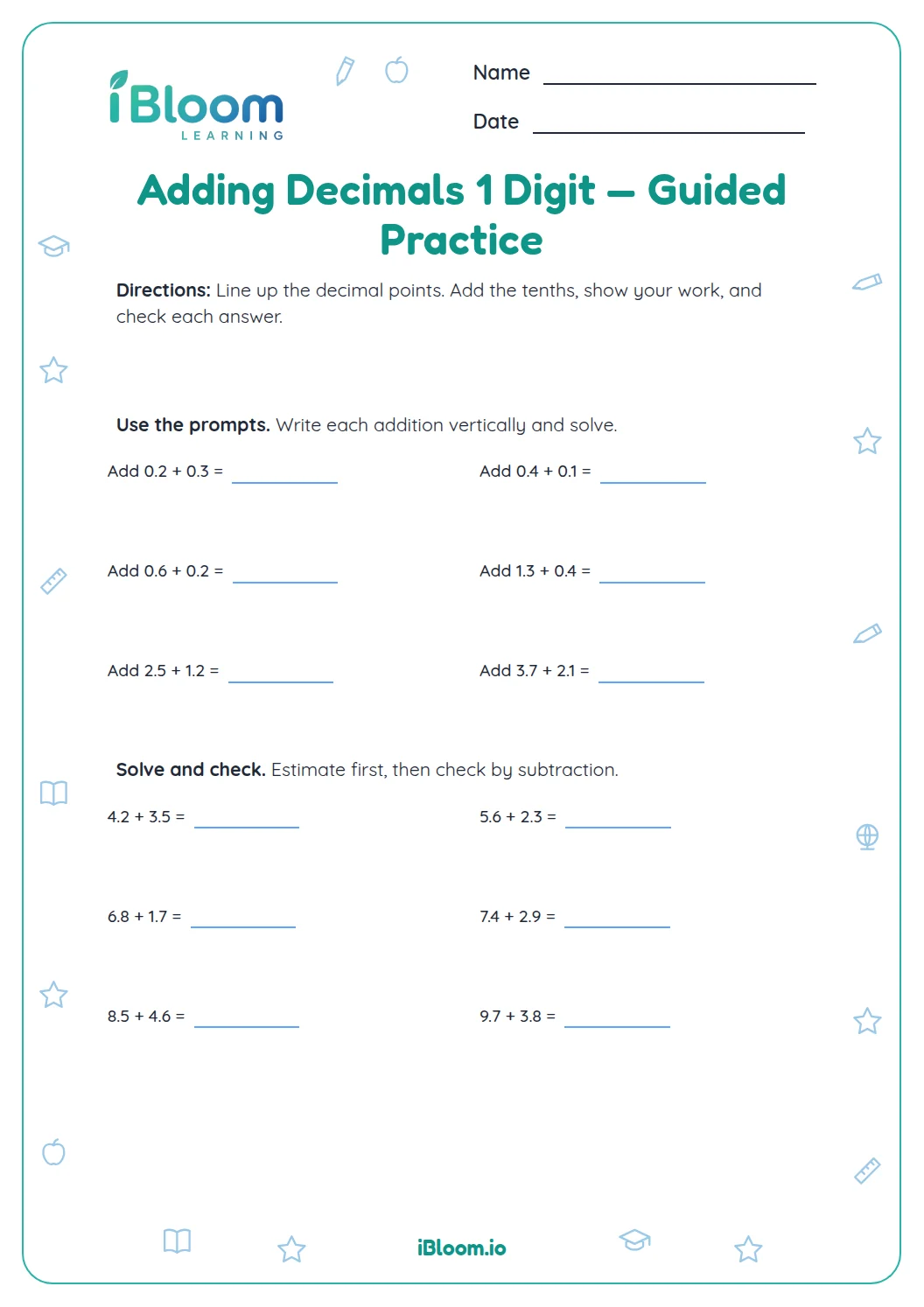
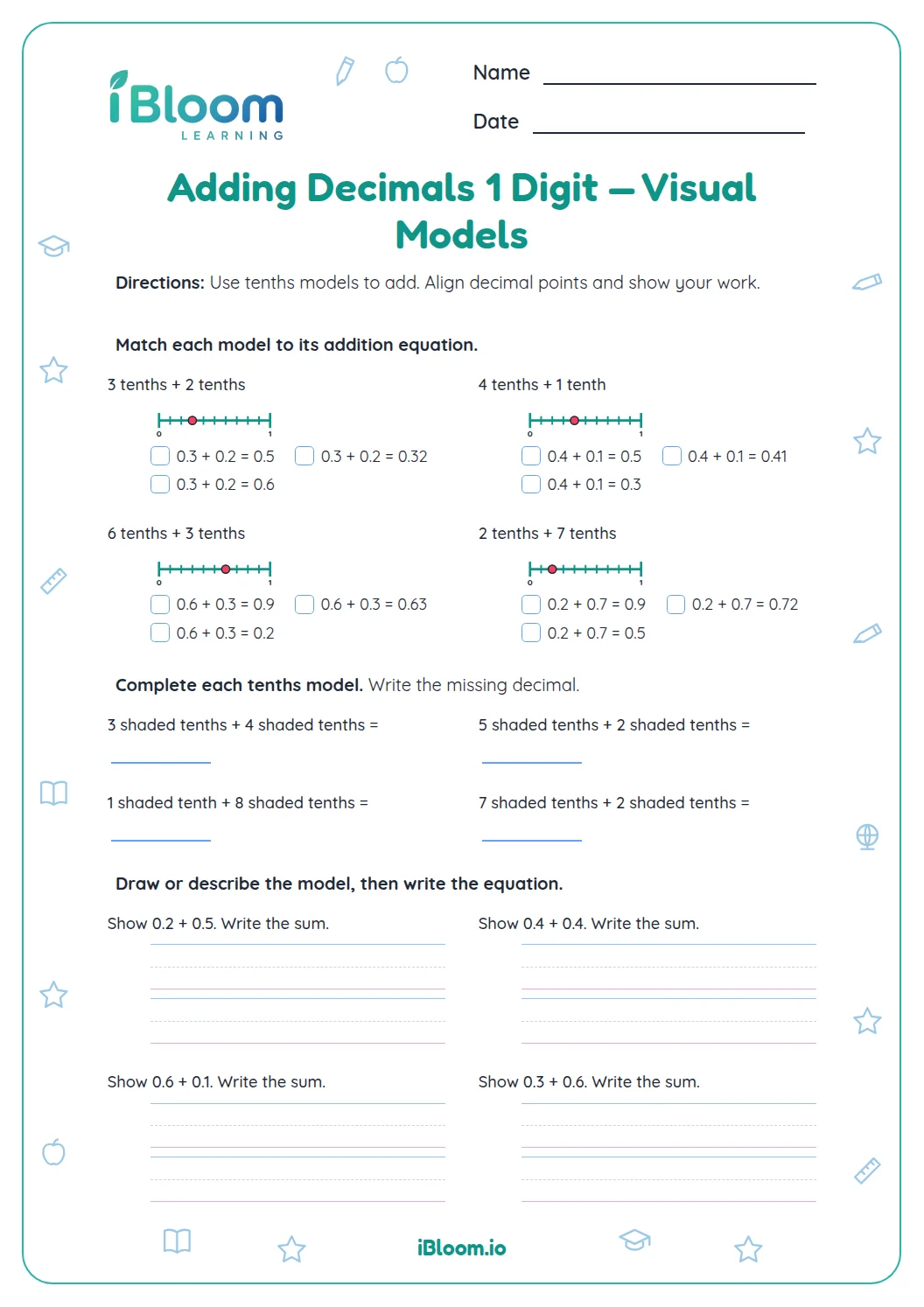
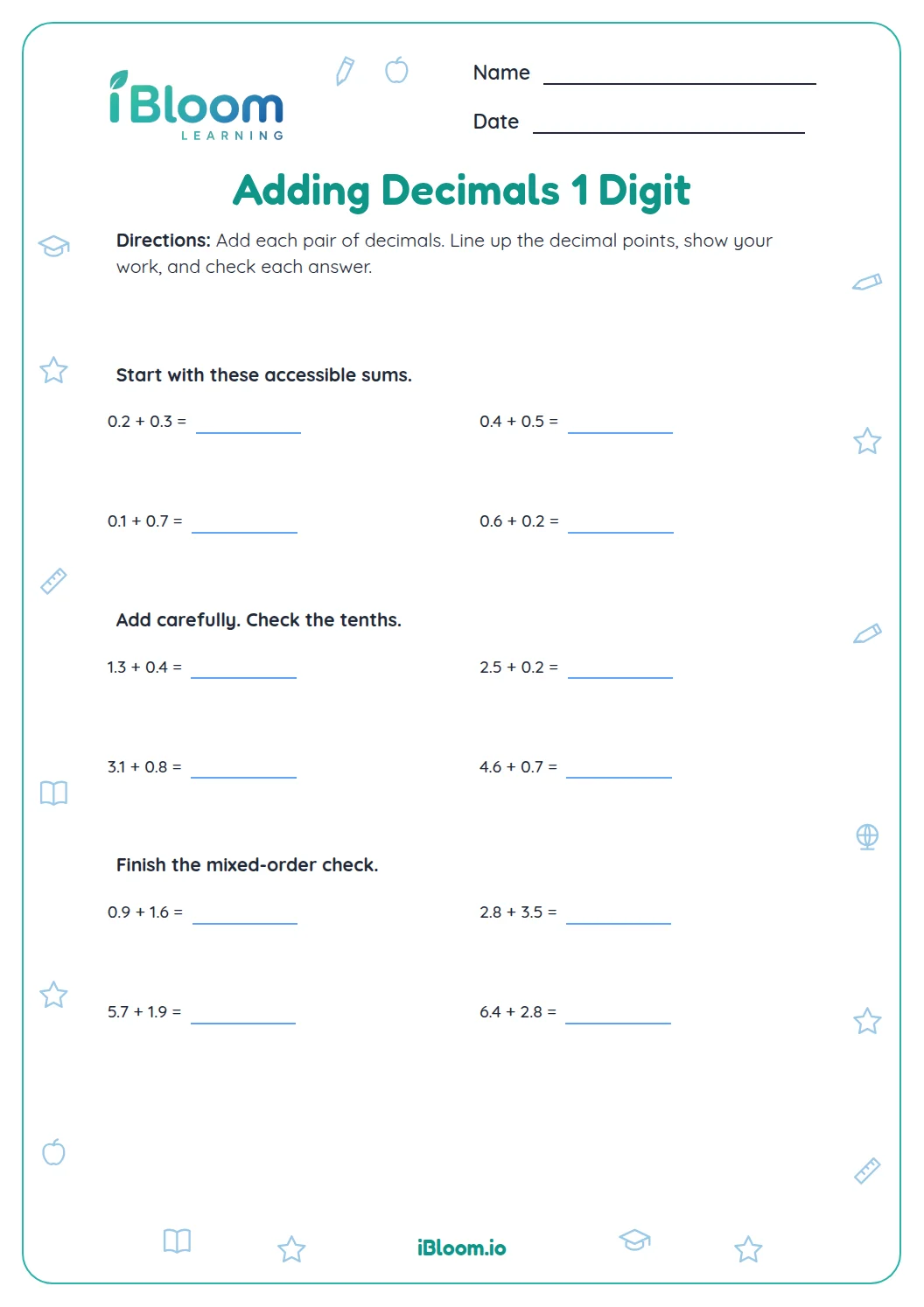
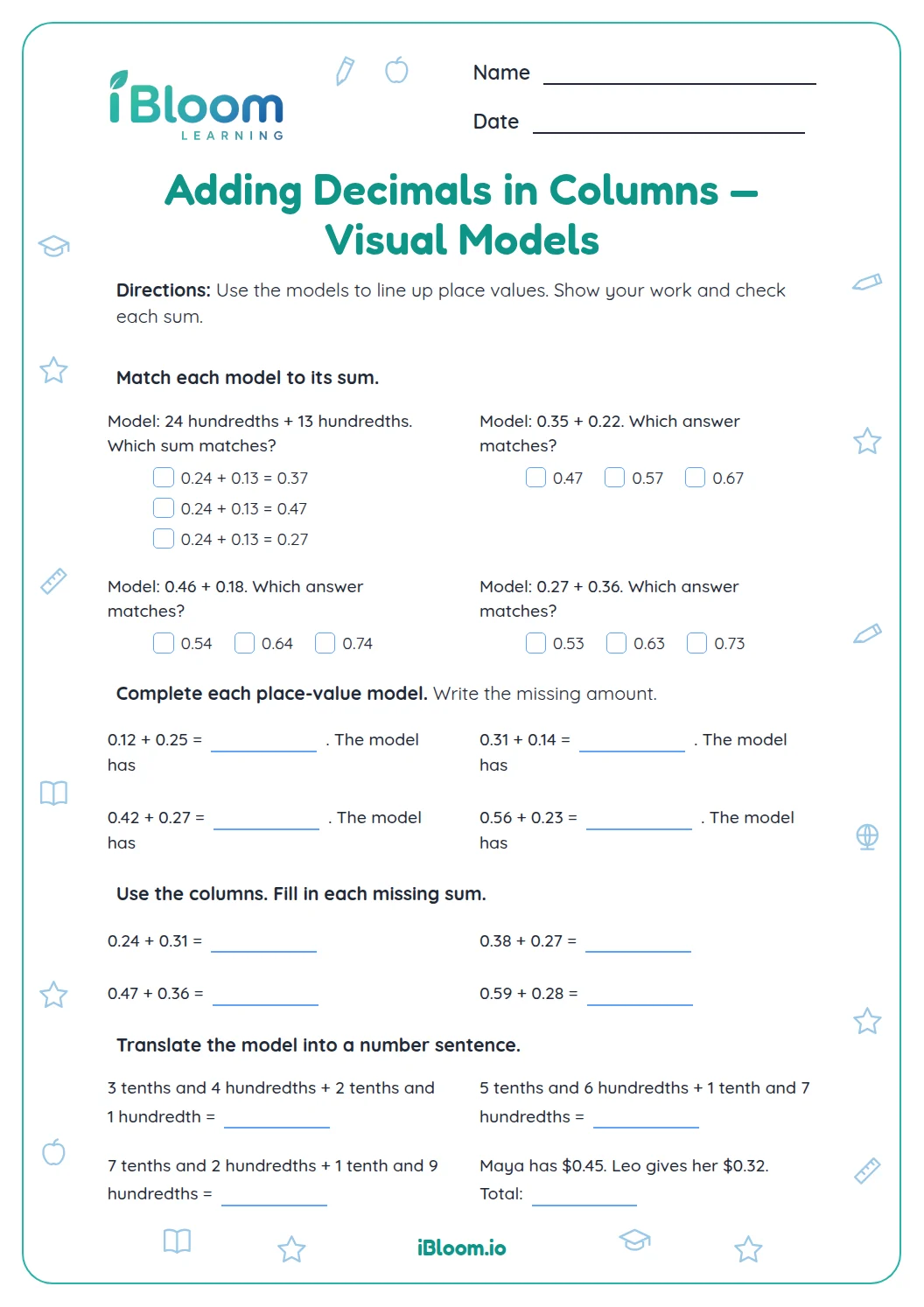
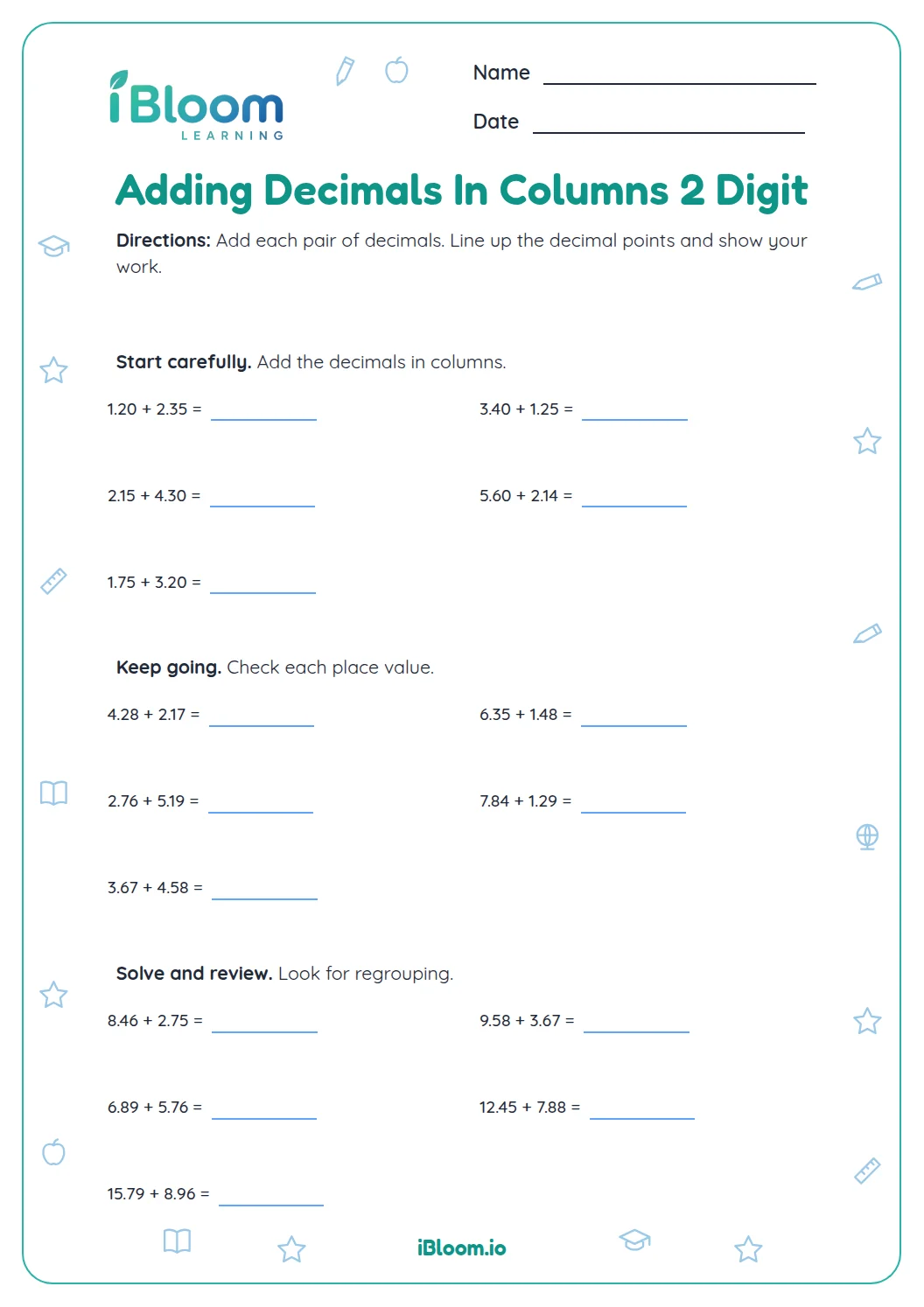
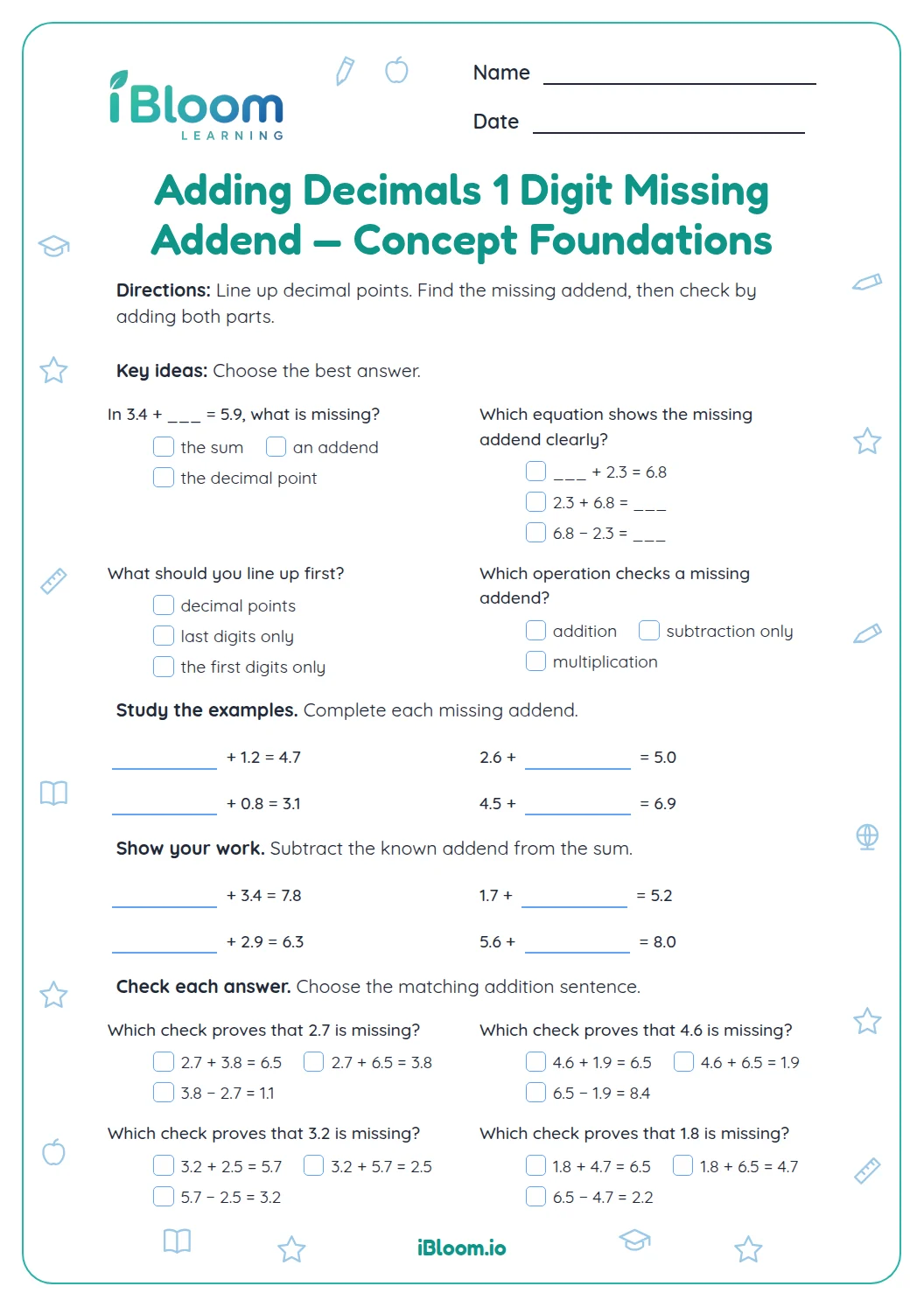
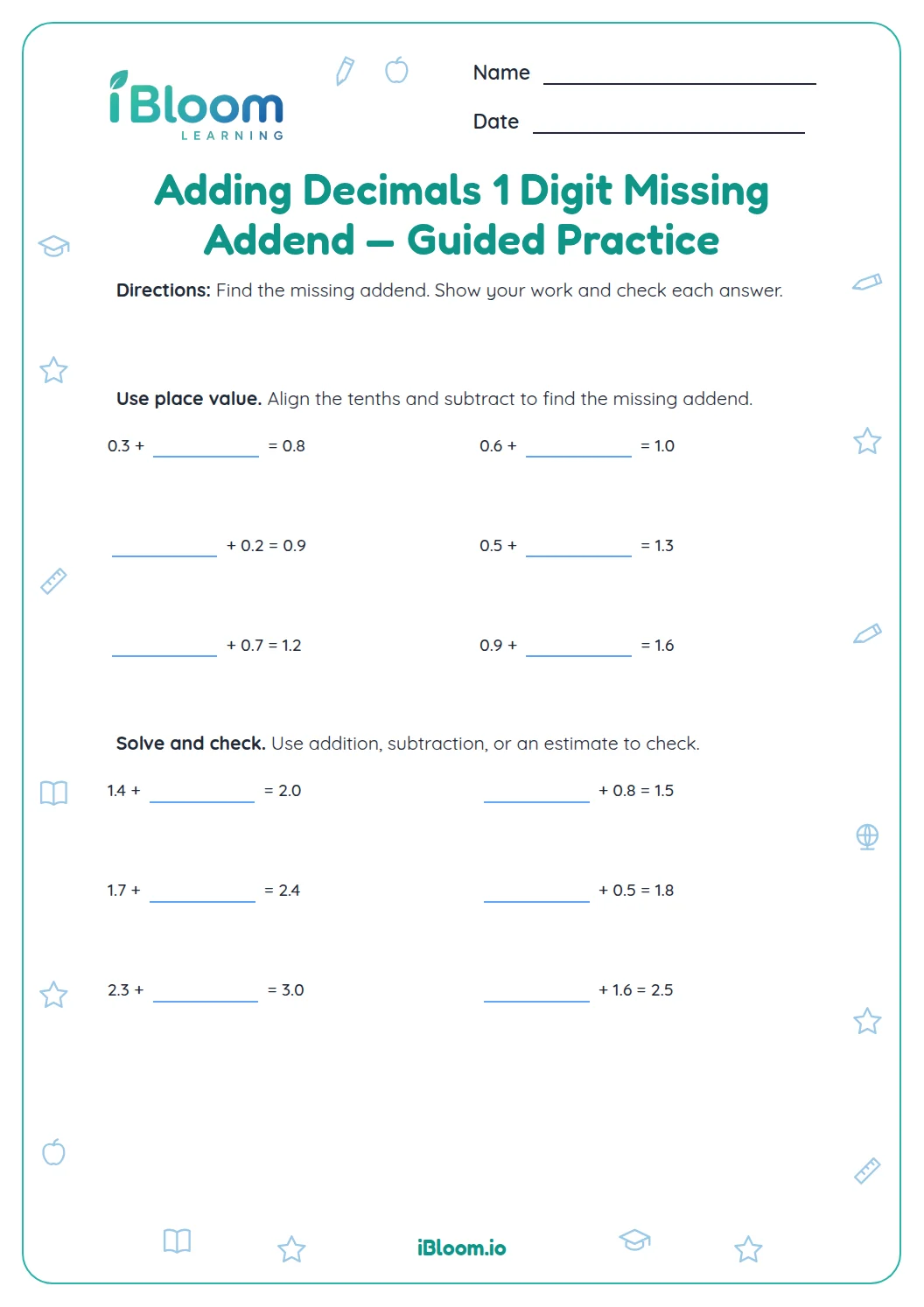
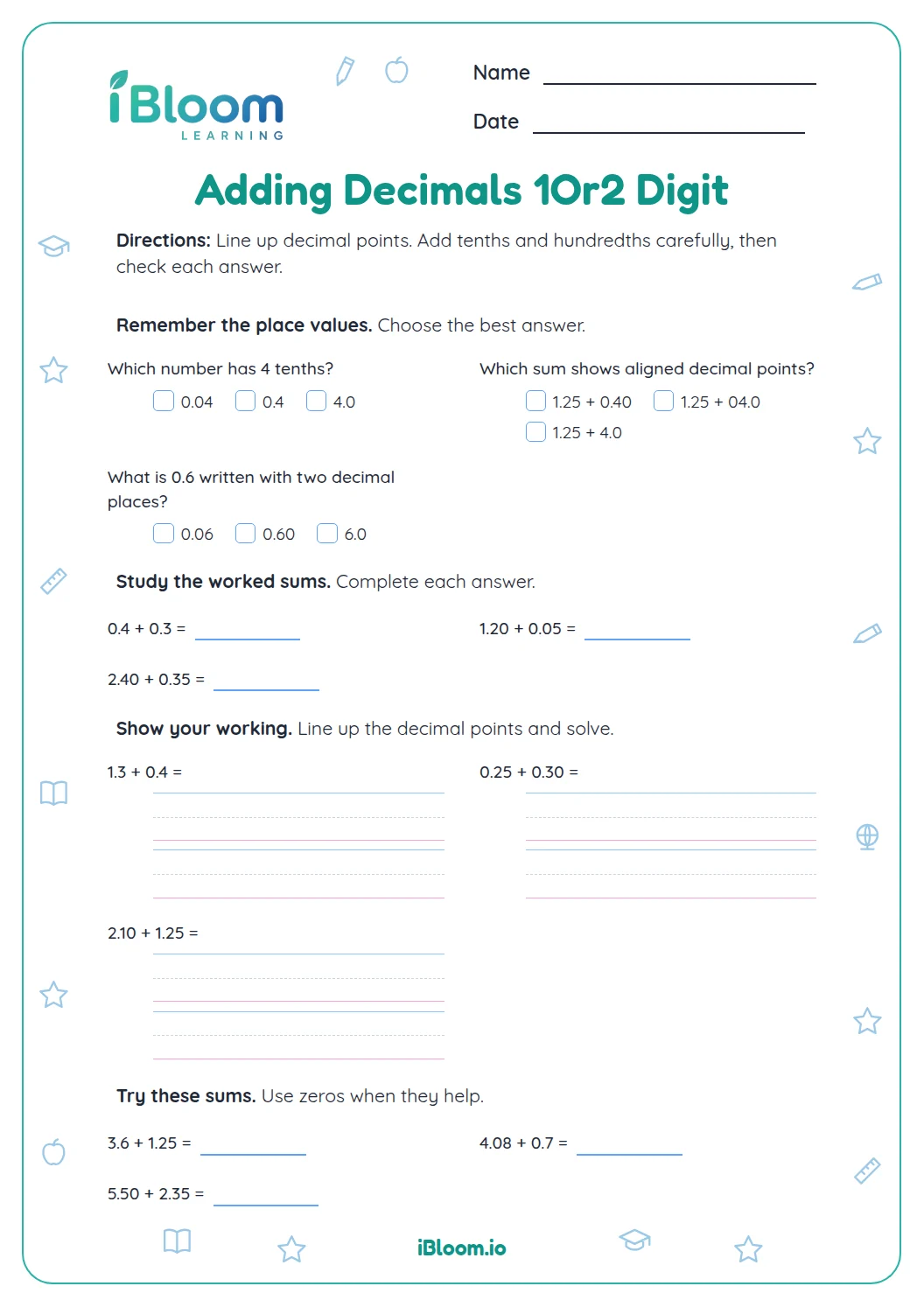
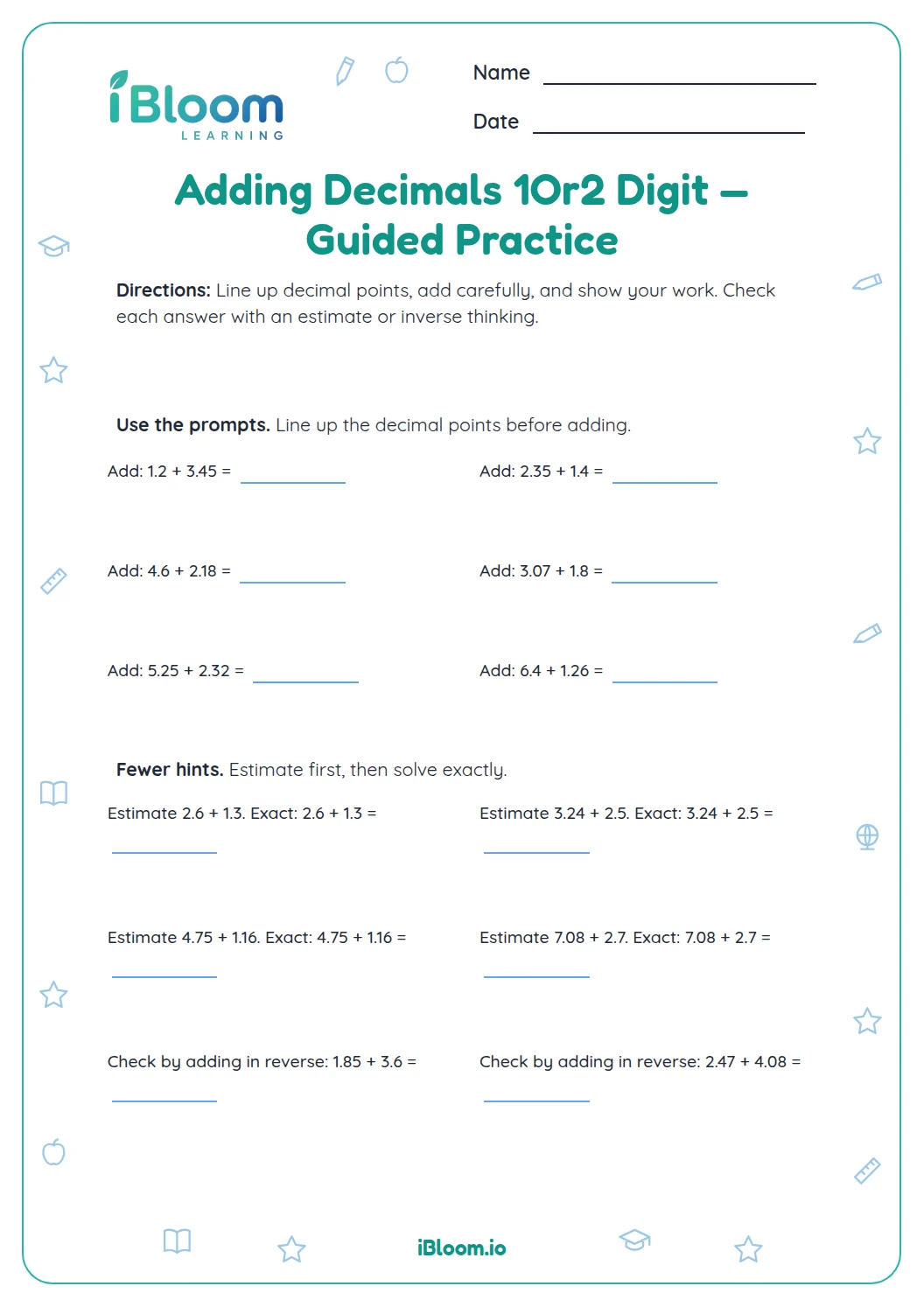
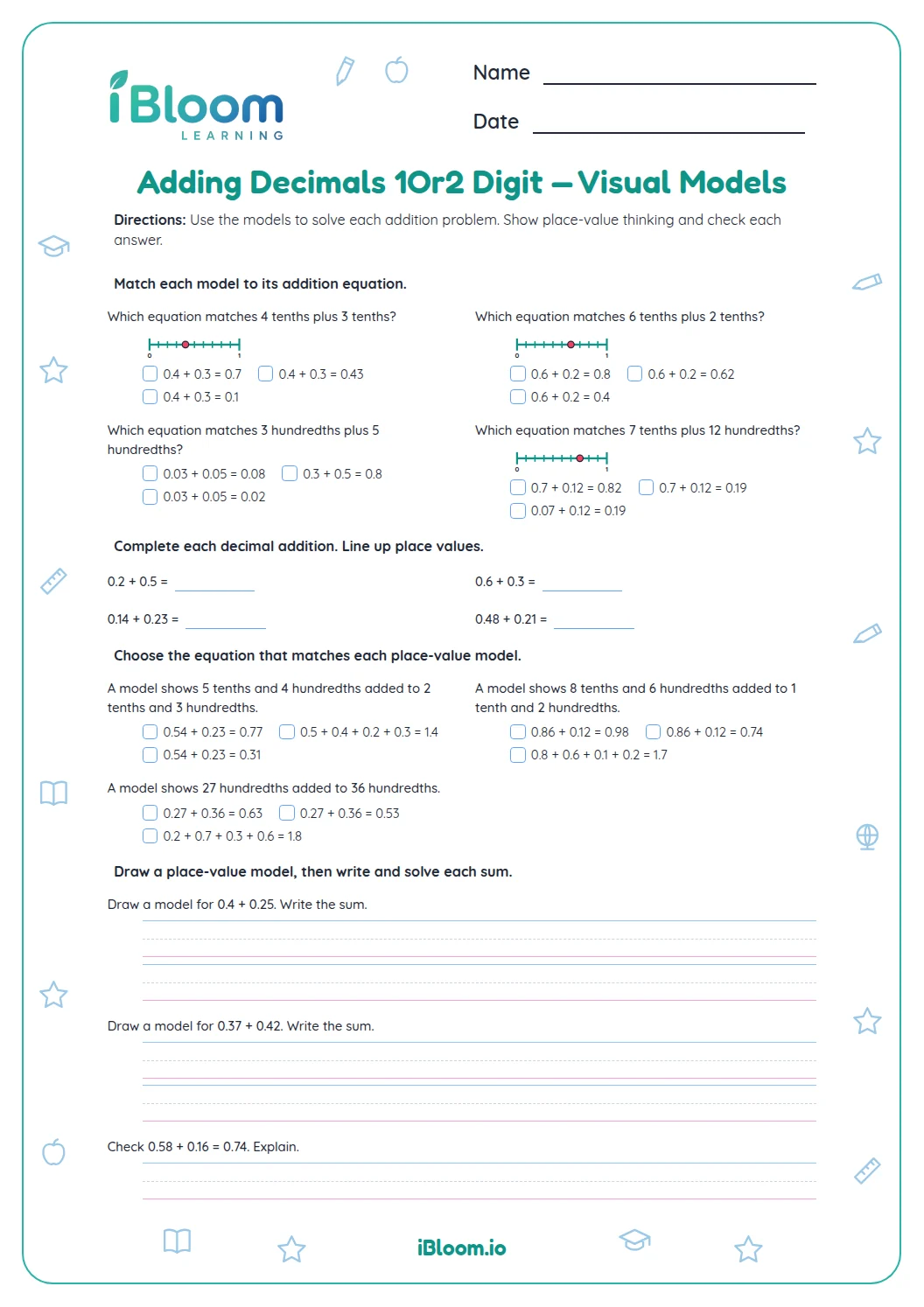
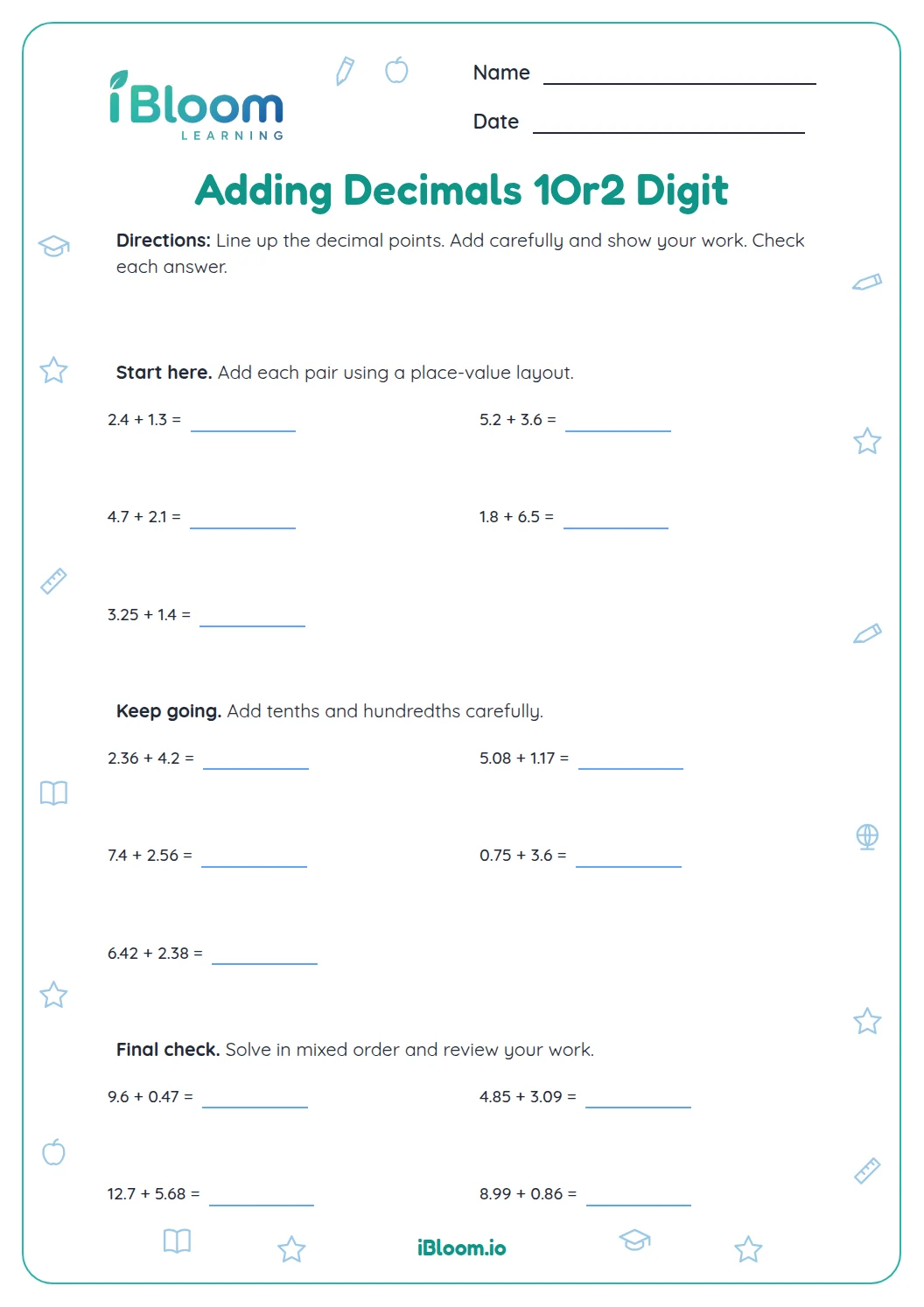
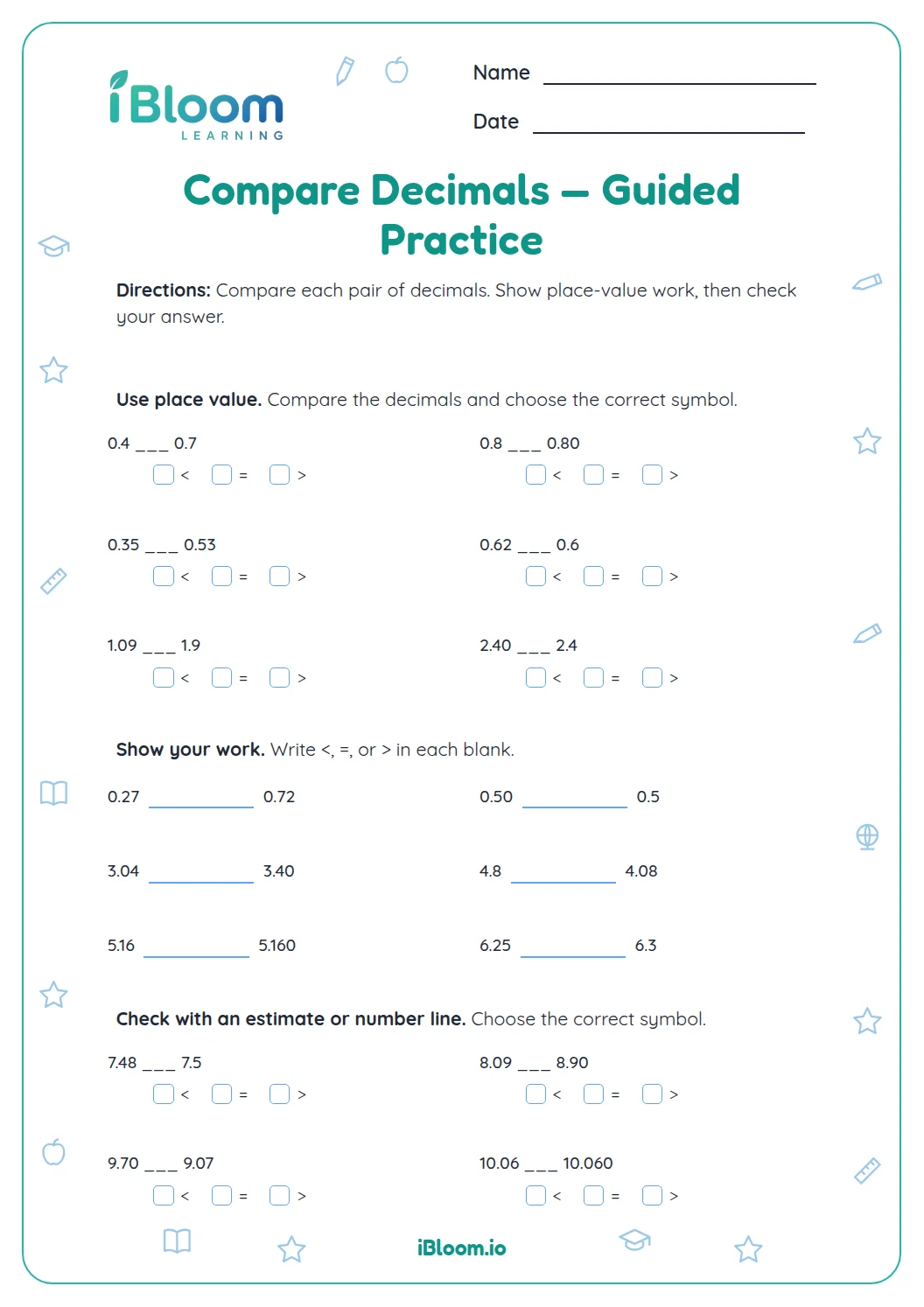
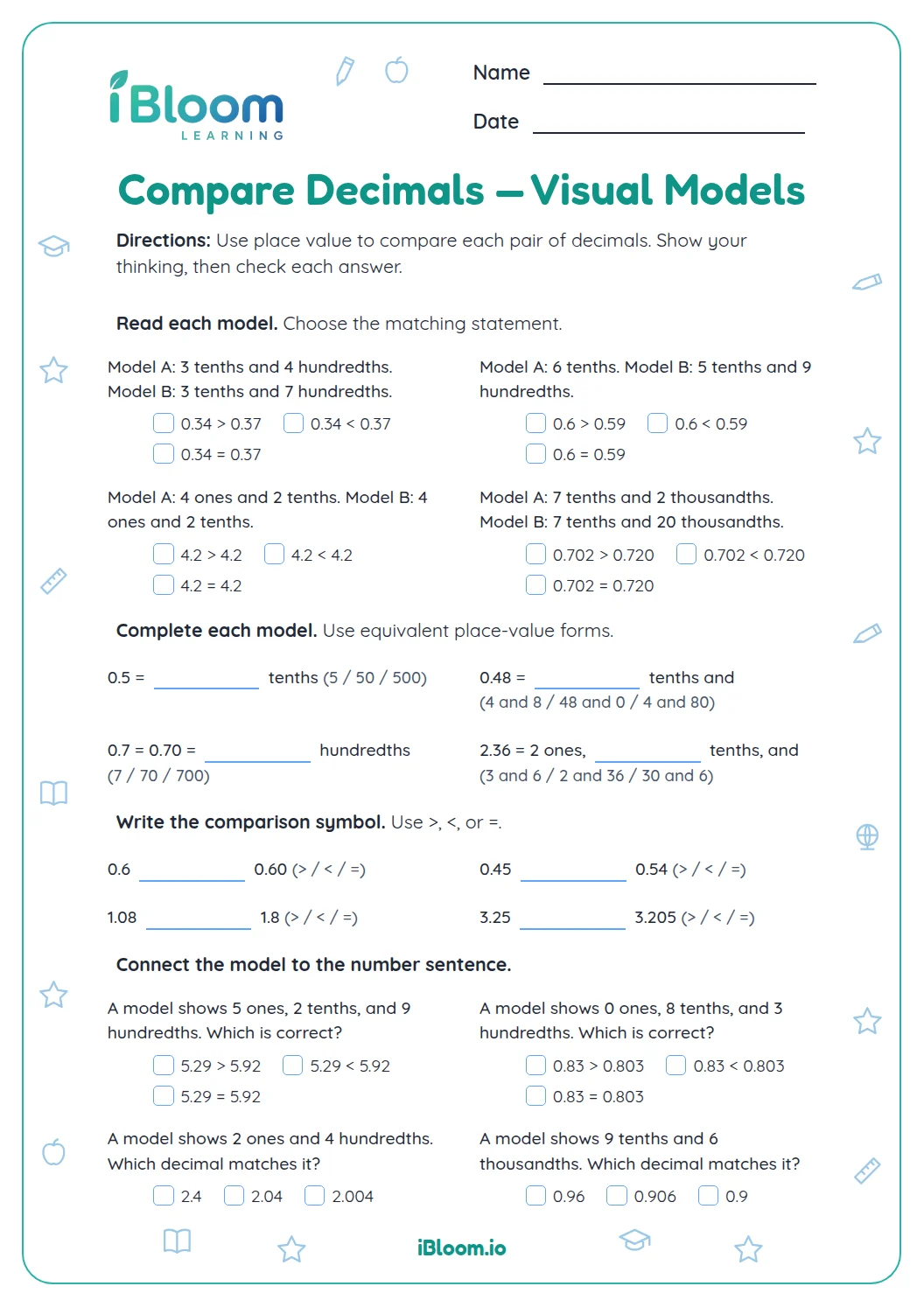
This Grade 4 printable gives focused practice adding decimals with one digit after the decimal point. Sixteen questions move from direct sums to regrouping, comparison, missing addends, and measurement situations. Learners keep tenths aligned and rename ten tenths as one whole. The answer key is included. Its tenths addition practices CCSS 5.NBT.B.7.
Aligned to 5.NBT.B.7
How do tenths regroup into a whole?
For 0.6 + 0.8, combine 6 tenths and 8 tenths to get 14 tenths, or 1.4.
- 1For 0.6 + 0.8, combine 6 tenths and 8 tenths to get 14 tenths, or 1.4.
How is the practice organized?
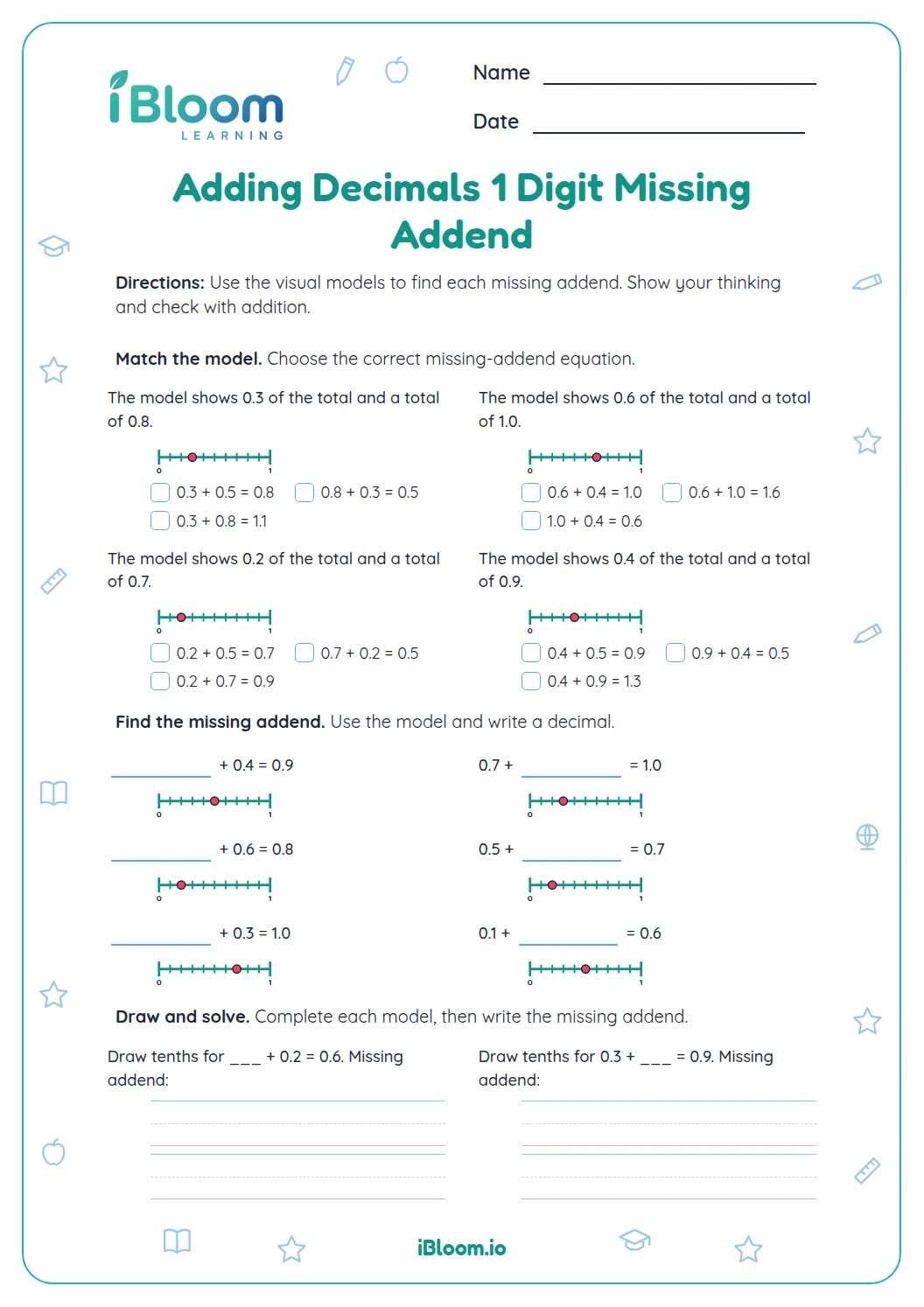
Part A adds tenths. Part B reasons about sums, and Part C applies addition and finds missing addends.
How can the answer key support review?
After finishing, compare each response with the key. For a missed item, reread the prompt and use the relevant relationship or text detail to correct it.
How to use this worksheet
- 1Read the directions and look over the parts.
- 2Try the first item in each part slowly.
- 3Use the key idea to solve the remaining items.
- 4Check each result against the prompt.
- 5Use the answer key to review any missed items.
Common mistakes and quick fixes
The mistake
Writing 0.8 + 0.5 as 0.13.
The fix
Add the tenths: 8 tenths + 5 tenths = 13 tenths = 1.3.
The mistake
Forgetting to regroup when tenths total 10 or more.
The fix
Trade every 10 tenths for 1 whole, then write the leftover tenths.
The mistake
Adding digits without matching place values.
The fix
Keep tenths under tenths and whole numbers under whole numbers.
Common Core alignment
This worksheet gives focused practice with the standards below.
Add decimals by using place value and connect the strategy to a written method.
On this sheet: Add decimals by using place value and connect the strategy to a written method.
Show the official wordingHide the official wording
Add, subtract, multiply, and divide decimals to hundredths, using concrete models or drawings and strategies based on place value, properties of operations, and/or the relationship between addition and subtraction; relate the strategy to a written method and explain the reasoning used.
What to practice next
Make more practice
Further reading
Questions parents and teachers ask
What decimal skill does this worksheet practice?
The worksheet focuses on adding decimals with one digit after the decimal point. It includes sums that stay below one, sums that regroup ten tenths as a whole, comparisons, and missing addends. Measurement units appear in several application questions. This gives a clear chance to review the skill.
How many questions are included?
There are 16 questions in three parts. Learners add tenths, reason about sums and a common decimal error, then solve measurement sums and missing-addend equations. The questions progress from direct computation to choosing and applying a strategy. This gives a clear chance to review the skill.
How can students check a decimal sum?
Estimate the size, then add by place value. For 0.6 + 0.8, six tenths plus eight tenths is fourteen tenths, or 1.4. Since the sum is greater than one, an answer such as 0.14 signals that the decimal place needs checking.
What does regrouping mean with tenths?
Ten tenths are equal to one whole. When the tenths digits total ten or more, trade ten tenths for one whole and keep any tenths left over. For example, 0.8 + 0.5 makes one whole and three tenths, or 1.3.
Does the sheet include a separate key?
Yes. A separate answer key follows the two practice pages and lists the correct sums, comparisons, and missing addends. Learners can solve the questions first, then check each result and revisit the place value in any item they missed. This gives a clear chance to review the skill.