


About this worksheet
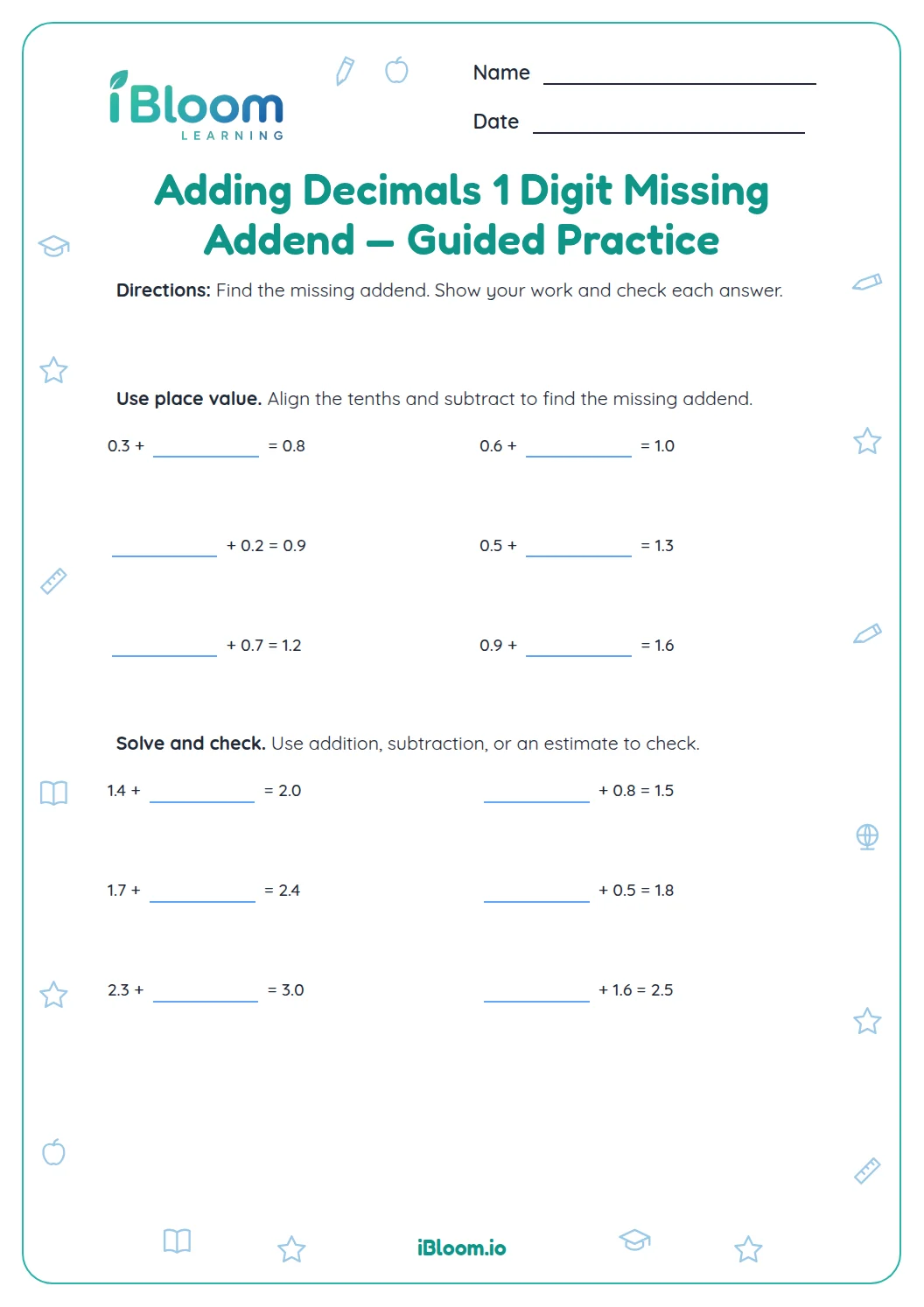
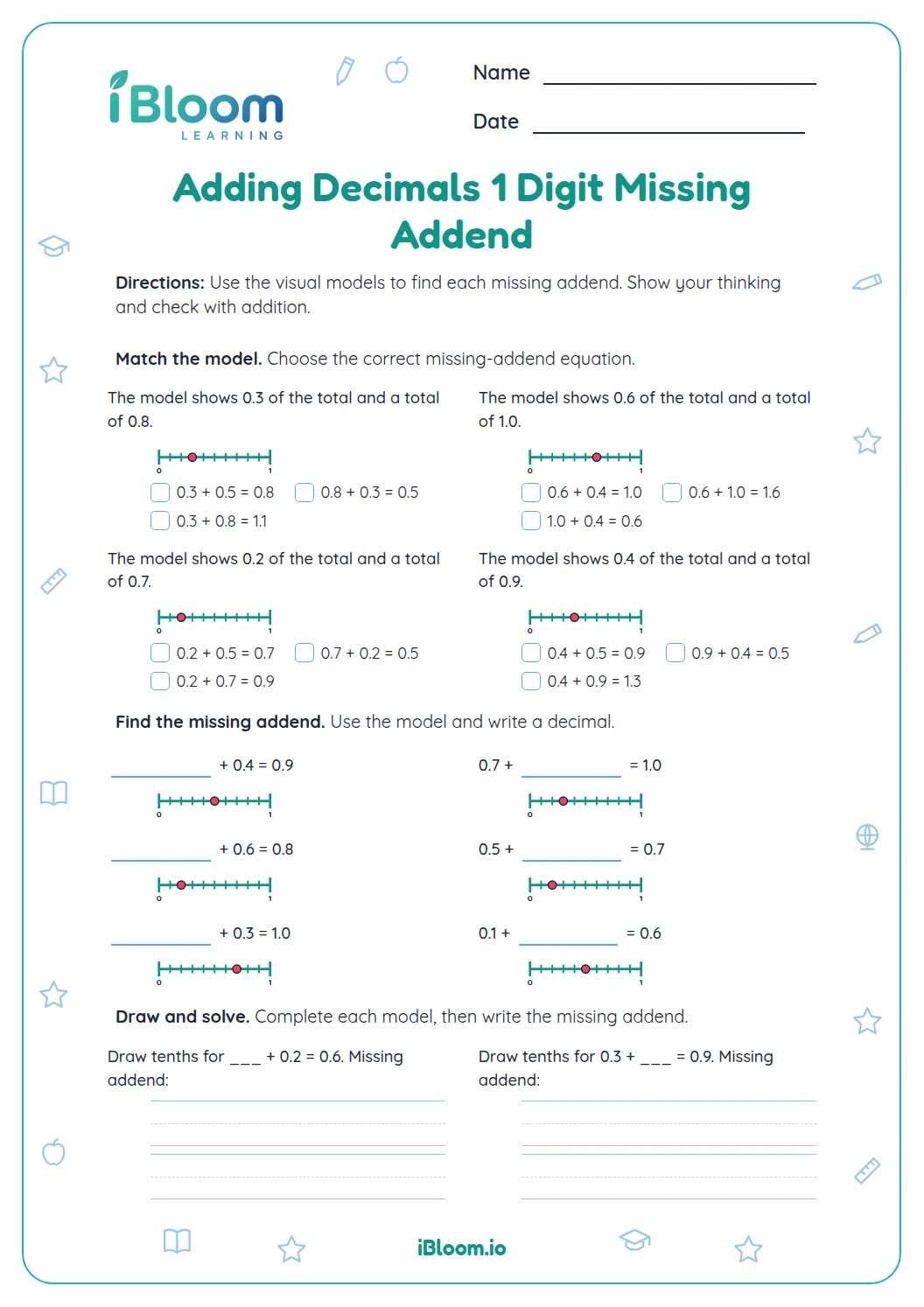
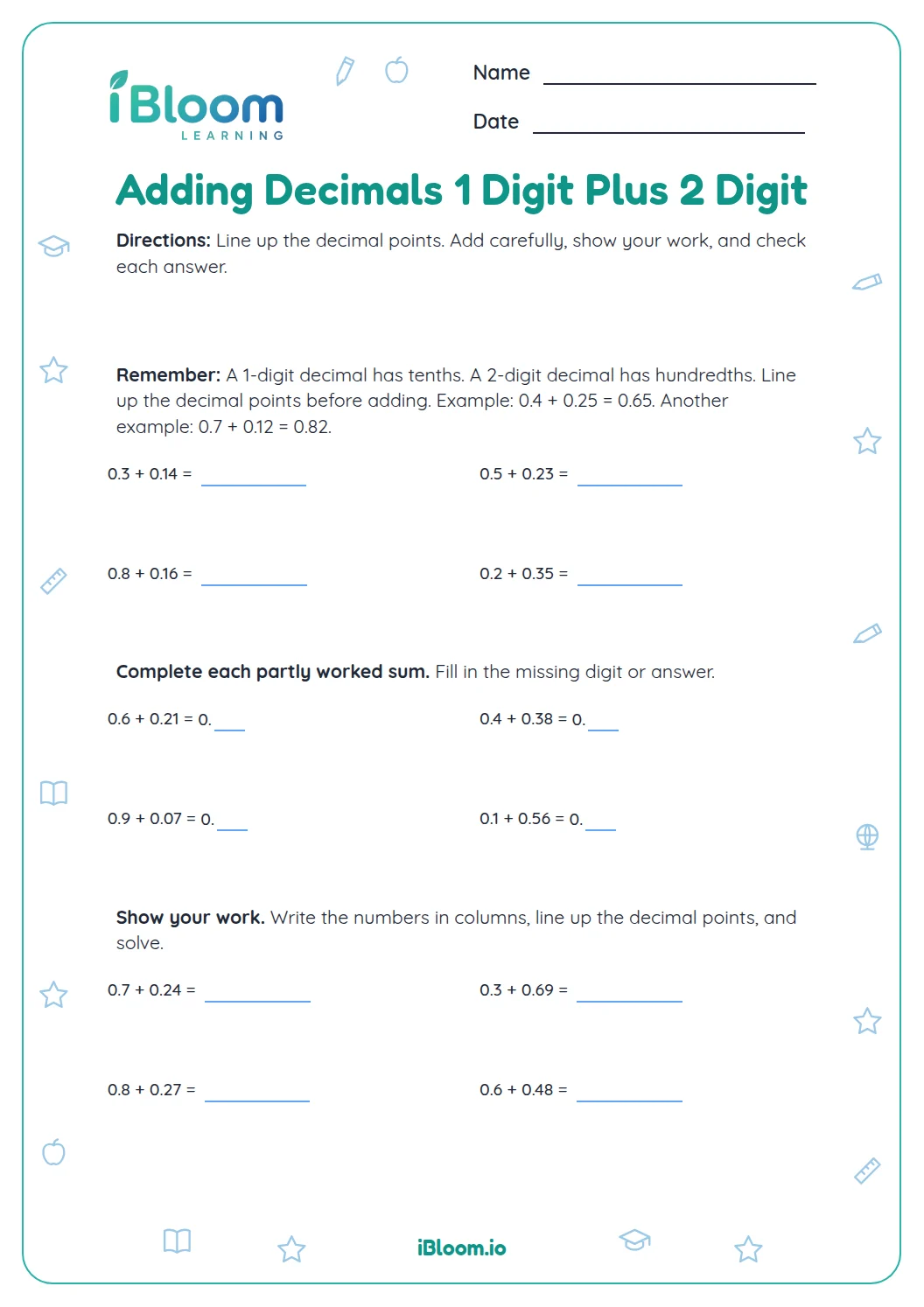
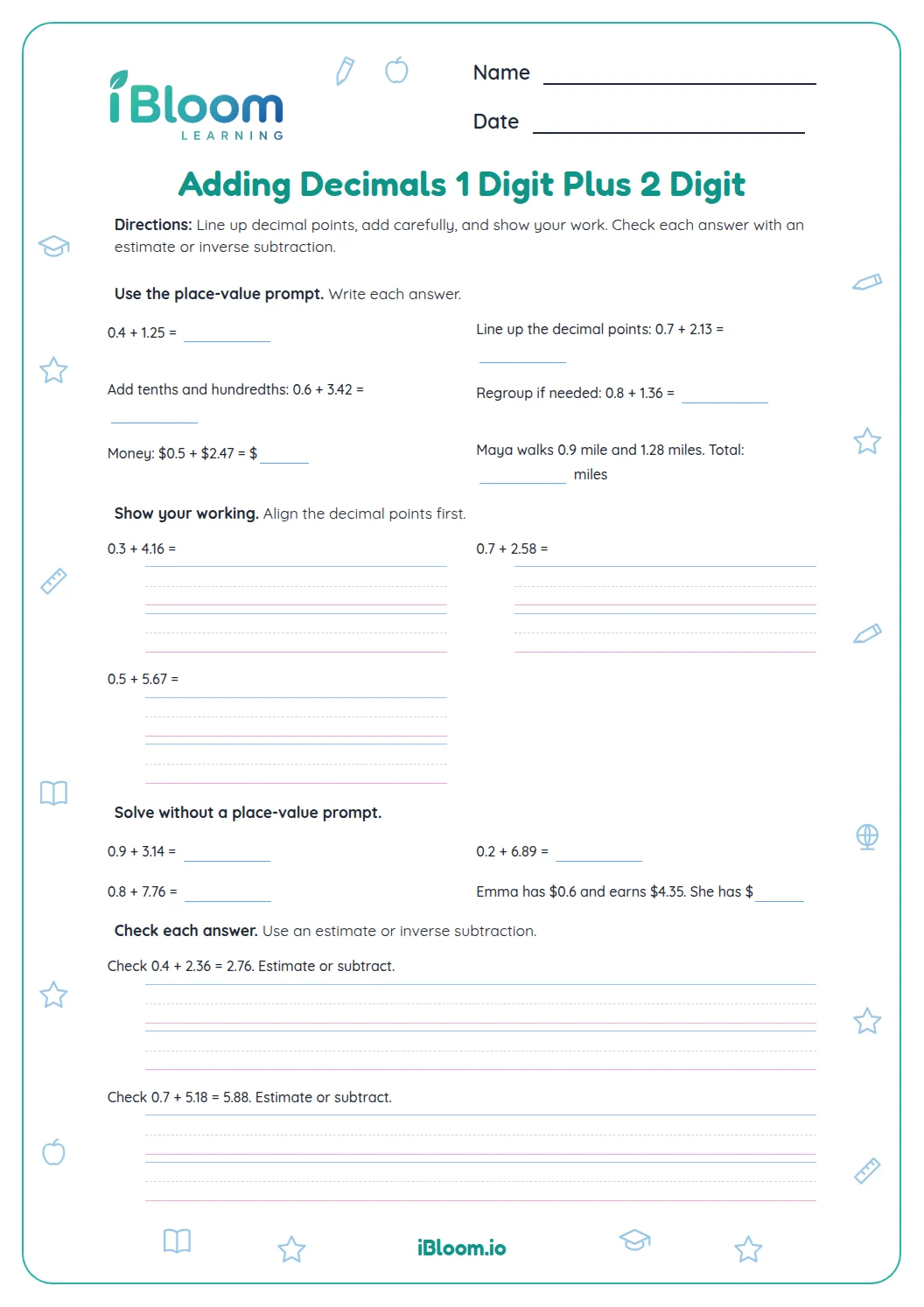
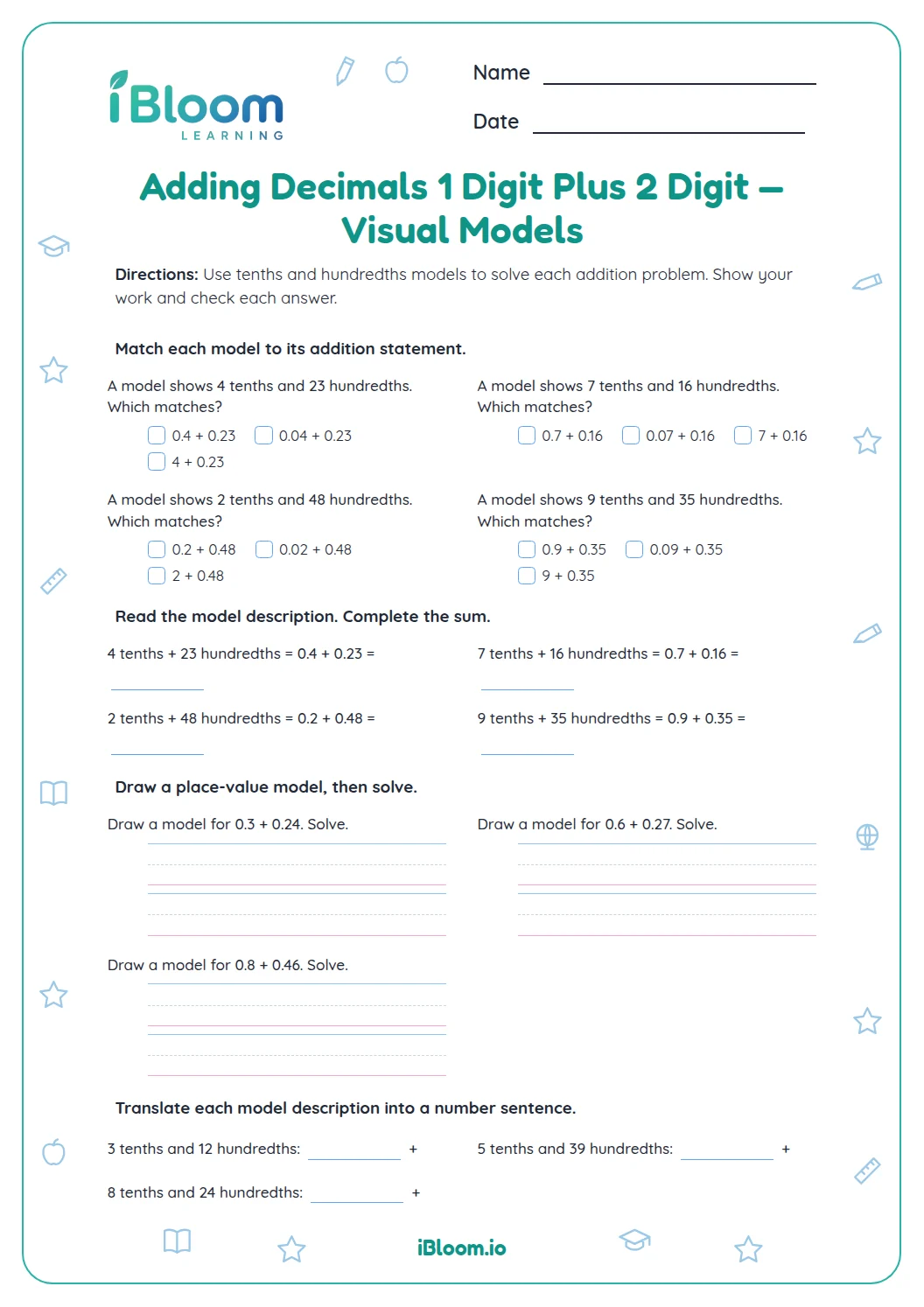
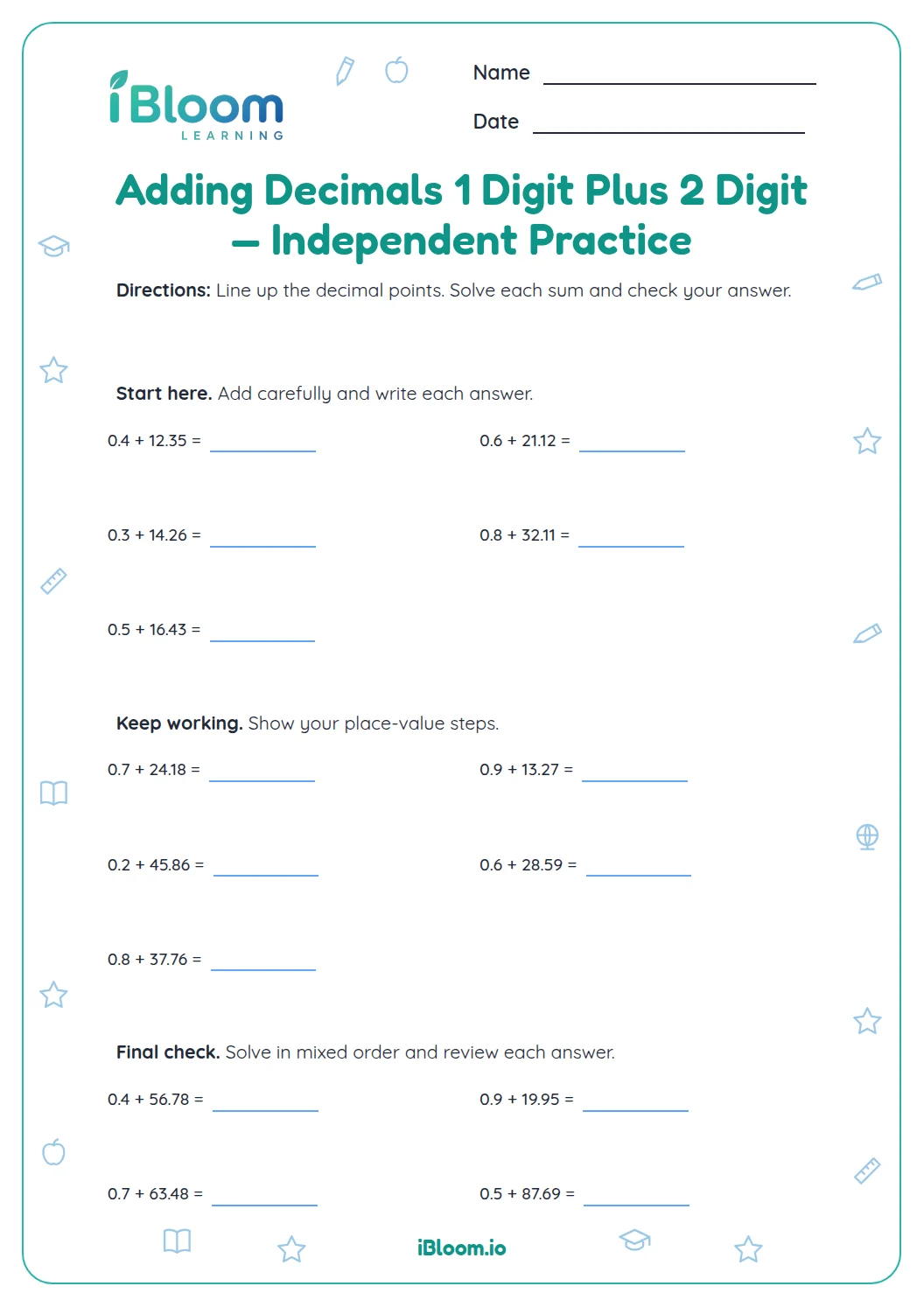
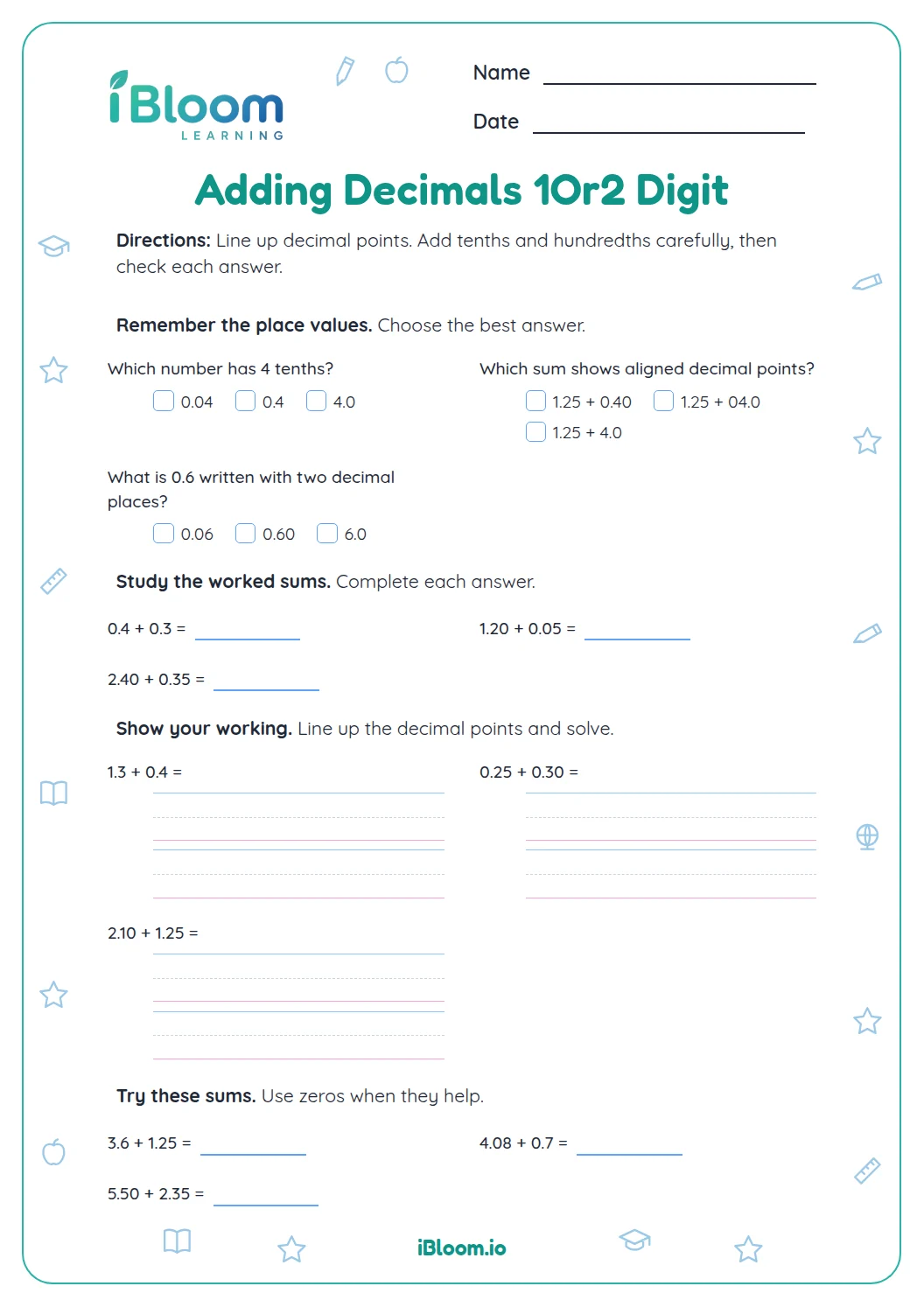
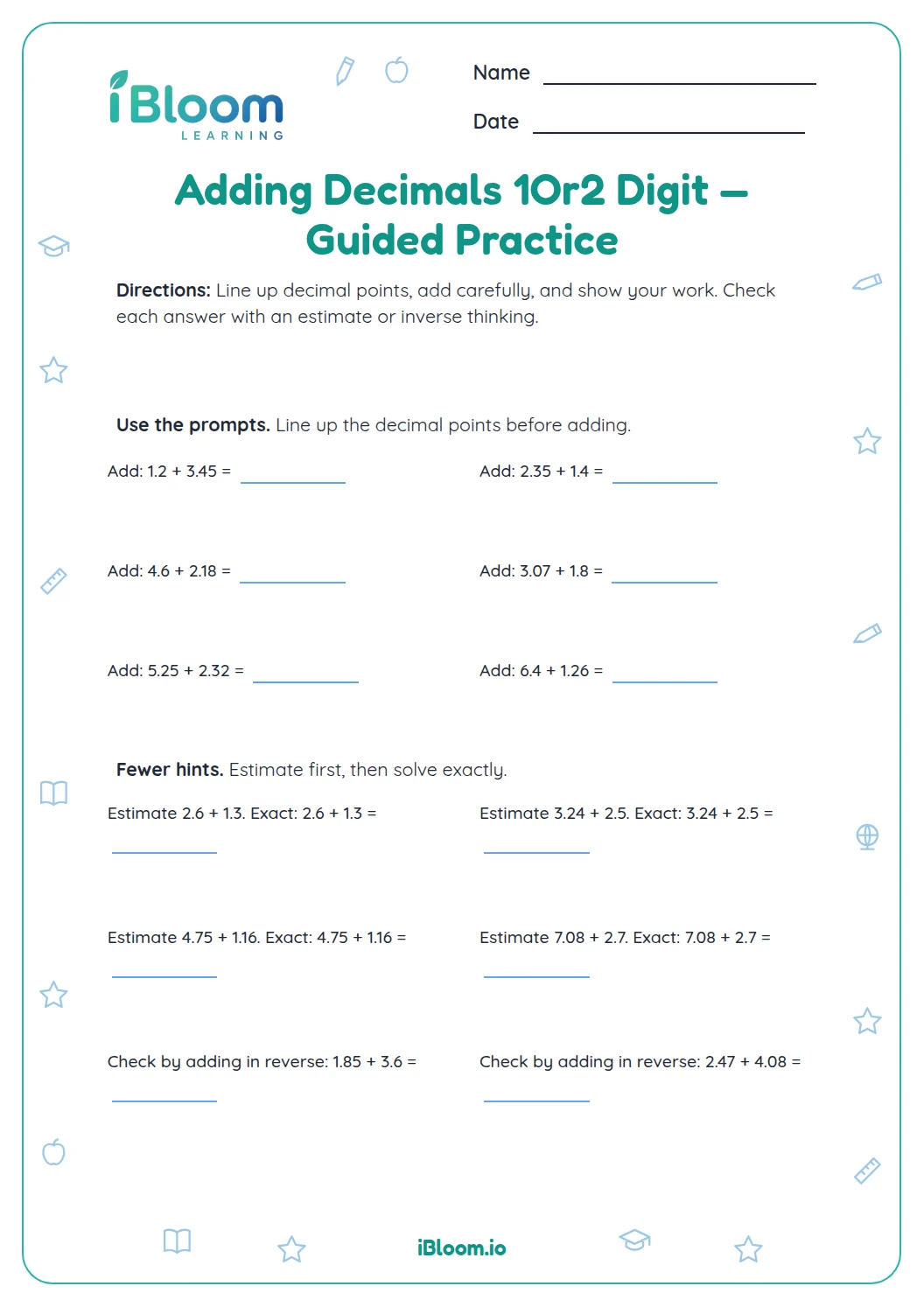
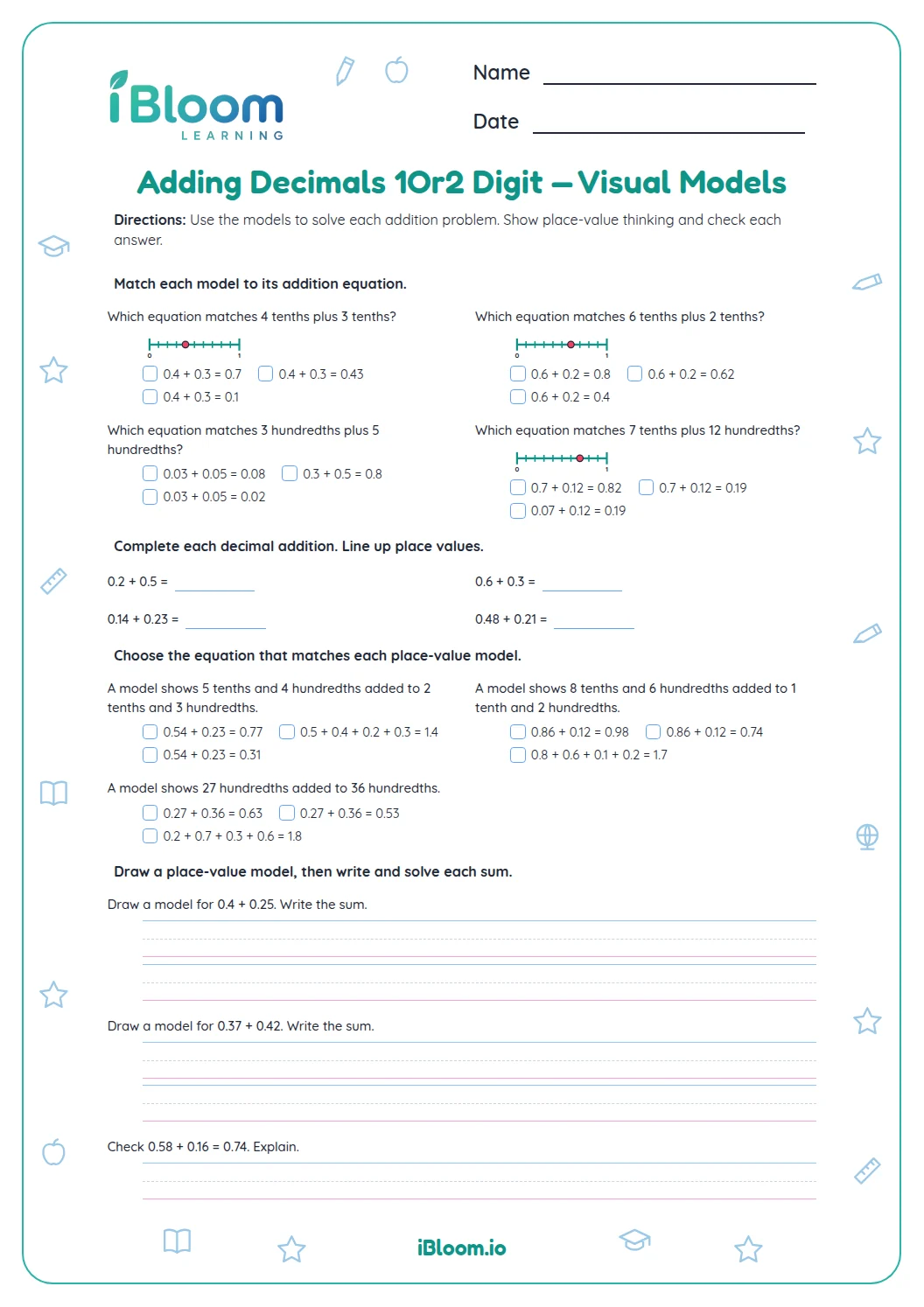
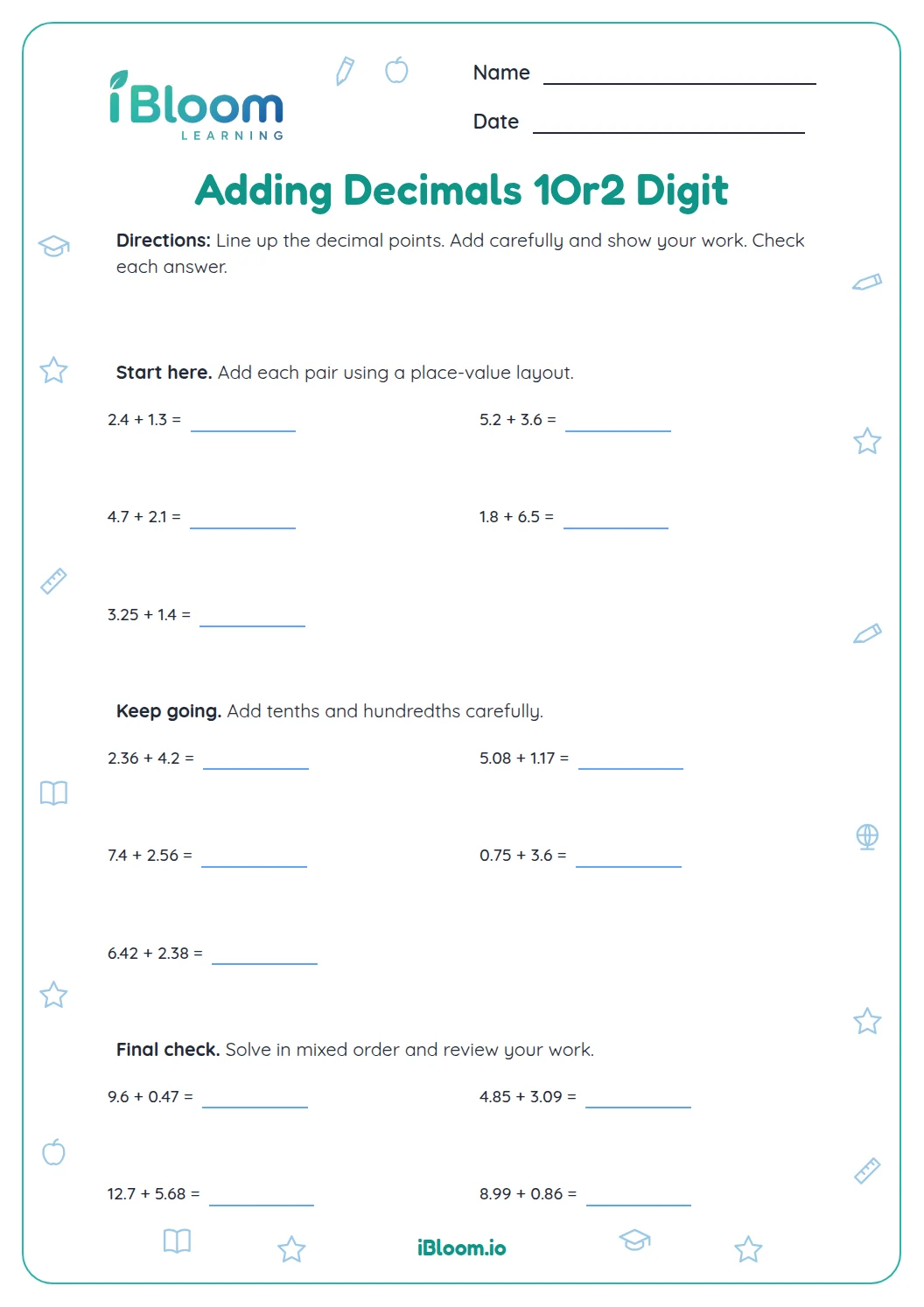
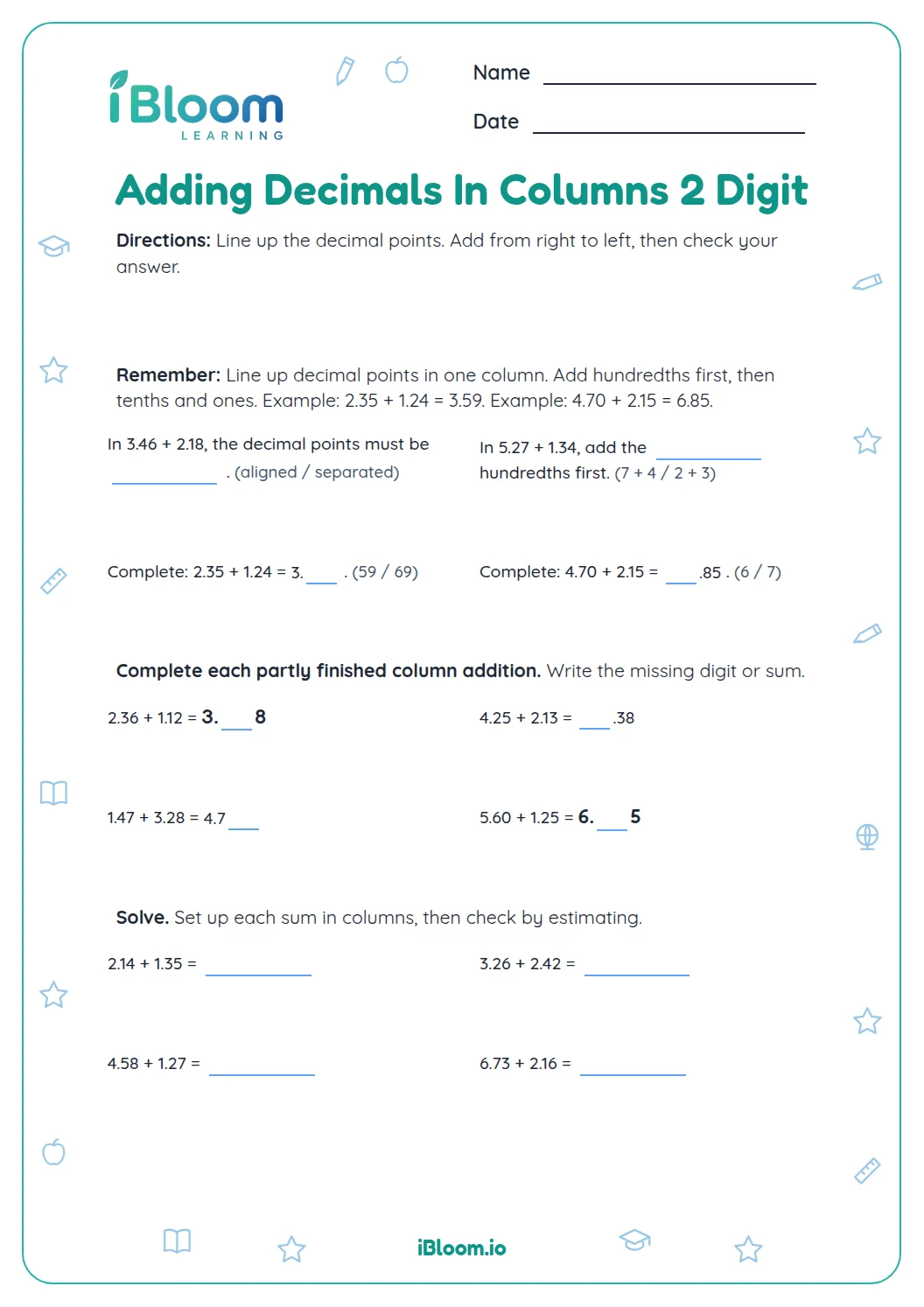
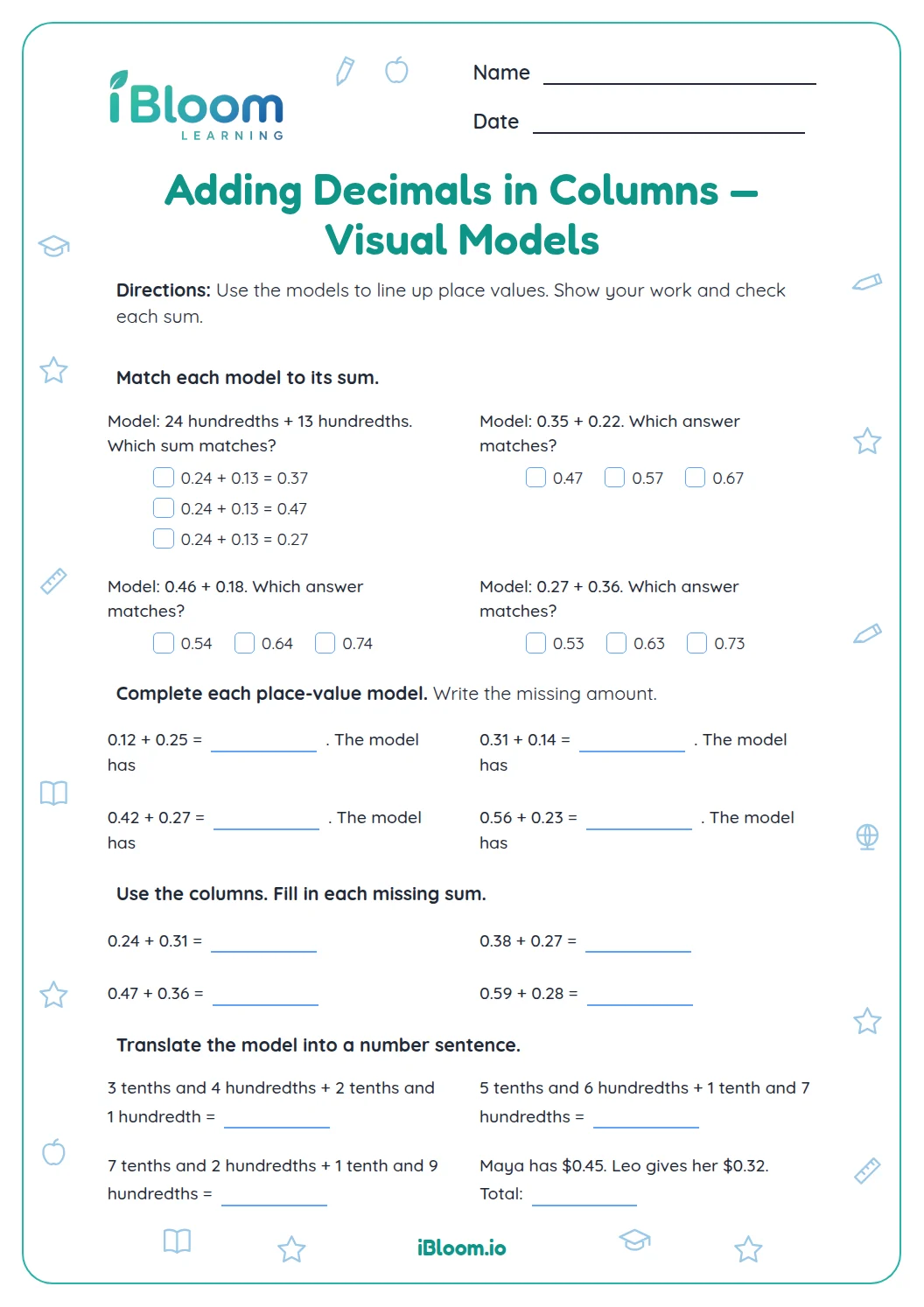
This worksheet practices subtracting decimal amounts in tenths and hundredths, the skill named in its title. Students solve number sentences and measurement situations, including one problem with space to record working. It has 14 questions across two worksheet pages and a separate two-page answer key, and practices Common Core 5.NBT.7.
Aligned to 5.NBT.7
Why should decimal points line up?
Each digit must stay in its place-value column. Write a zero in an empty hundredths place when it helps, then subtract the aligned numbers. For example, 4.25 − 1.10 = 3.15.
- 1 4.25
- 2− 1.10
- 3 3.15
- 4Check: 3.15 + 1.10 = 4.25
What decimal subtraction is included?
The worksheet begins with tenths, then combines tenths and hundredths, including regrouping. Later questions use measurements and money to connect the written subtraction to a context.
How to subtract decimals
- 1Write the numbers so their decimal points align.
- 2Add a trailing zero if one number has fewer decimal places.
- 3Subtract by place-value column, regrouping when needed.
- 4Bring the decimal point straight down into the answer.
- 5Add the difference to the number subtracted to check.
- 6Use the answer key after attempting all 20 questions.
Decimal subtraction slips
The mistake
Aligning the last digits instead of the decimal points.
The fix
Line up the decimal points so tenths and hundredths stay in their columns.
The mistake
Subtracting a smaller digit from a larger one without regrouping.
The fix
Regroup from the next place value before subtracting.
The mistake
Dropping a zero place in a hundredths calculation.
The fix
Write a trailing zero to show matching place values, such as 6.5 = 6.50.
Common Core alignment
This page practices decimal subtraction with place-value reasoning.
Subtract decimal amounts to hundredths using place-value reasoning.
On this sheet: Students subtract decimal amounts to hundredths in calculations and measurement situations.
Show the official wordingHide the official wording
Add, subtract, multiply, and divide decimals to hundredths, using concrete models or drawings and strategies based on place value, properties of operations, and/or the relationship between addition and subtraction; relate the strategy to a written method and explain the reasoning used.
What to practice next
Make more practice
Further reading
Questions parents and teachers ask
Why do the decimal points need to line up?
The printable contains 14 questions in three parts: decimal subtraction sentences, a measurement story with a work grid, and short measurement questions. A separate two-page answer key lists the result for each problem. Learners can check place-value alignment as well as the subtraction result.
When should a zero be added?
A zero can be written in an empty decimal place without changing the number. For example, 6.5 is the same amount as 6.50. Writing both values to the hundredths place can make the subtraction columns easier to align.
How can I check a decimal difference?
Align tenths and hundredths by place value, then subtract. For example, in 6.75 − 2.40, subtract hundredths, tenths, and ones to get 4.35. The worksheet practices the same method with tenths and hundredths in number sentences and measurement situations.
What kinds of problems are included?
The 20 questions include direct subtraction with tenths and hundredths, calculations that require regrouping, and short situations involving measurements or money. Learners practice keeping place values aligned in both number sentences and contexts, then check answers with the separate key.
Is an answer key included?
Yes. The answer key is separate from the worksheet and lists a response for each of the 20 questions. Learners can attempt the calculations first, then use the key to check the differences and correct any place-value or regrouping errors.
What standard is listed?
The page lists CCSS 5.NBT.B.7, which includes decimal computation to hundredths using place-value strategies. This worksheet asks learners to subtract tenths and hundredths, align the decimal places, and check results using addition. The standard is listed as a math alignment.