




About this worksheet
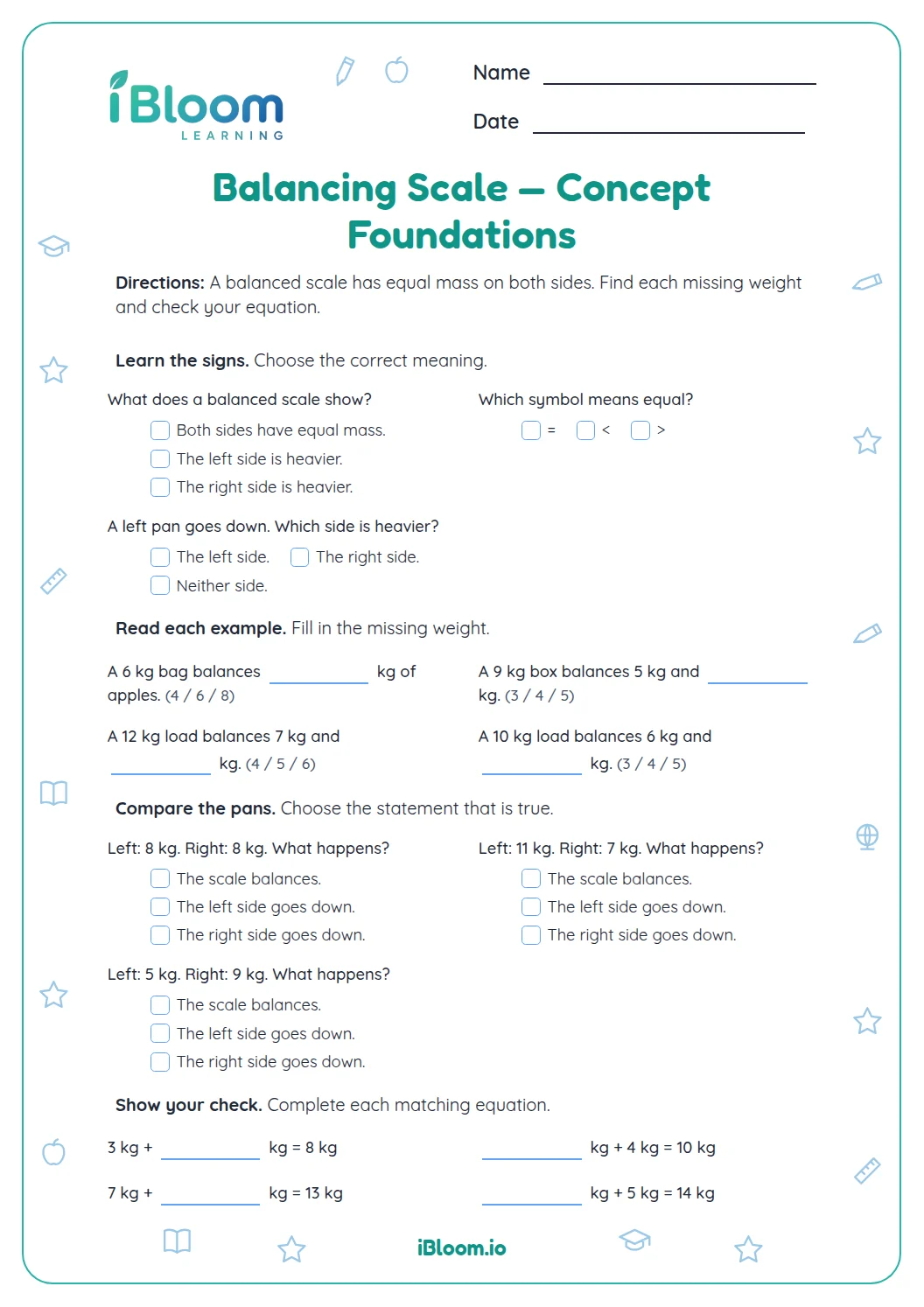
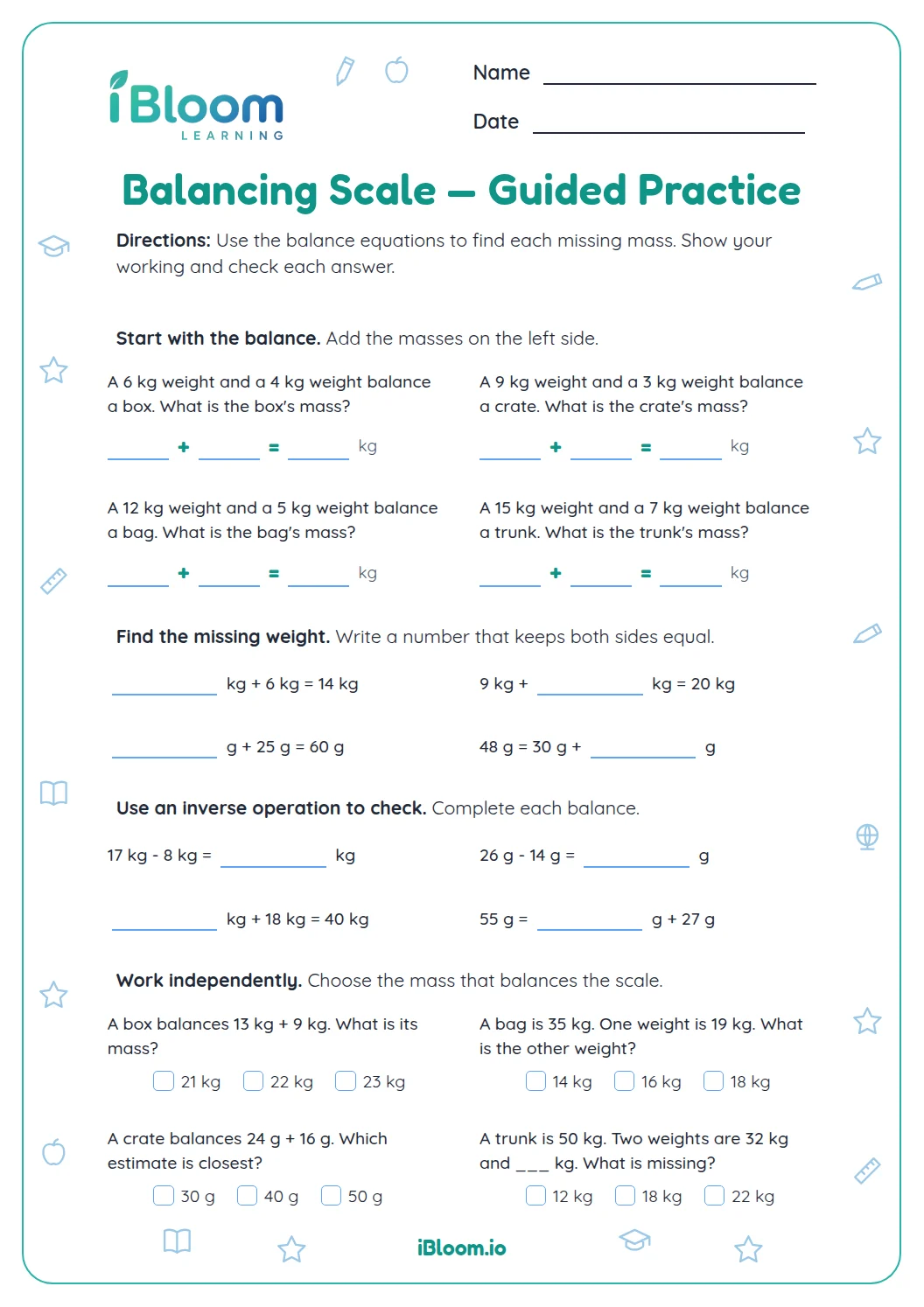
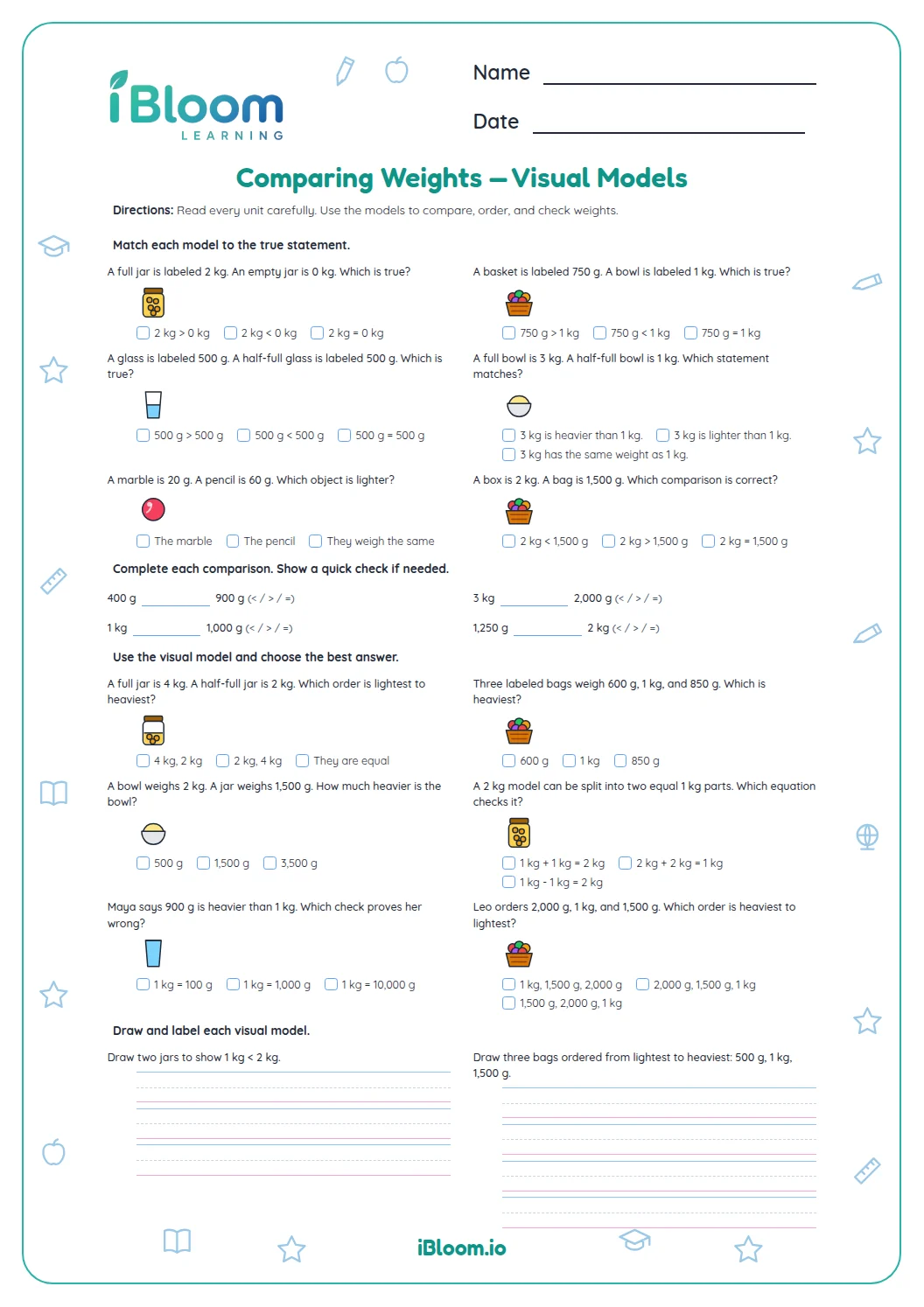
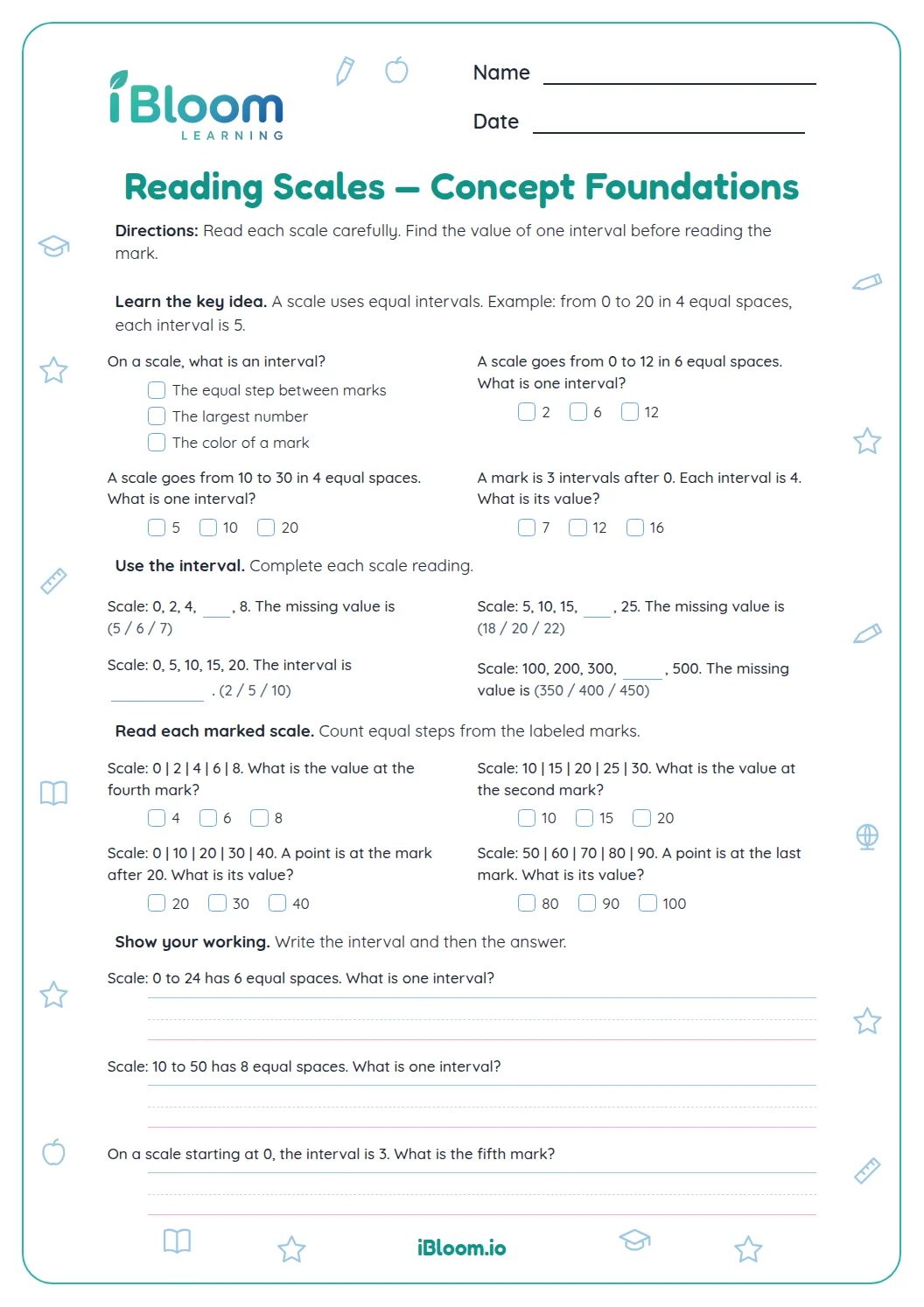
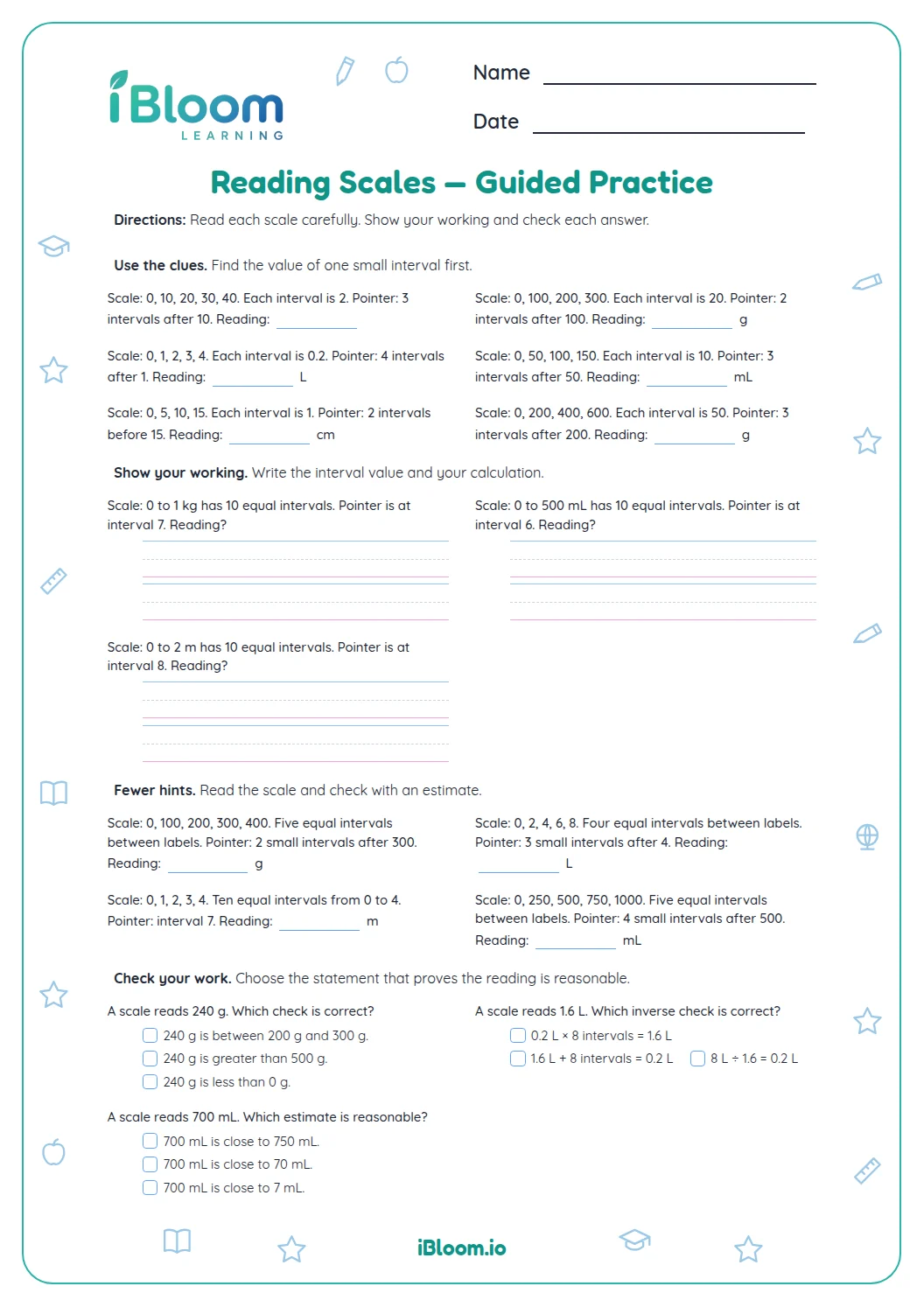
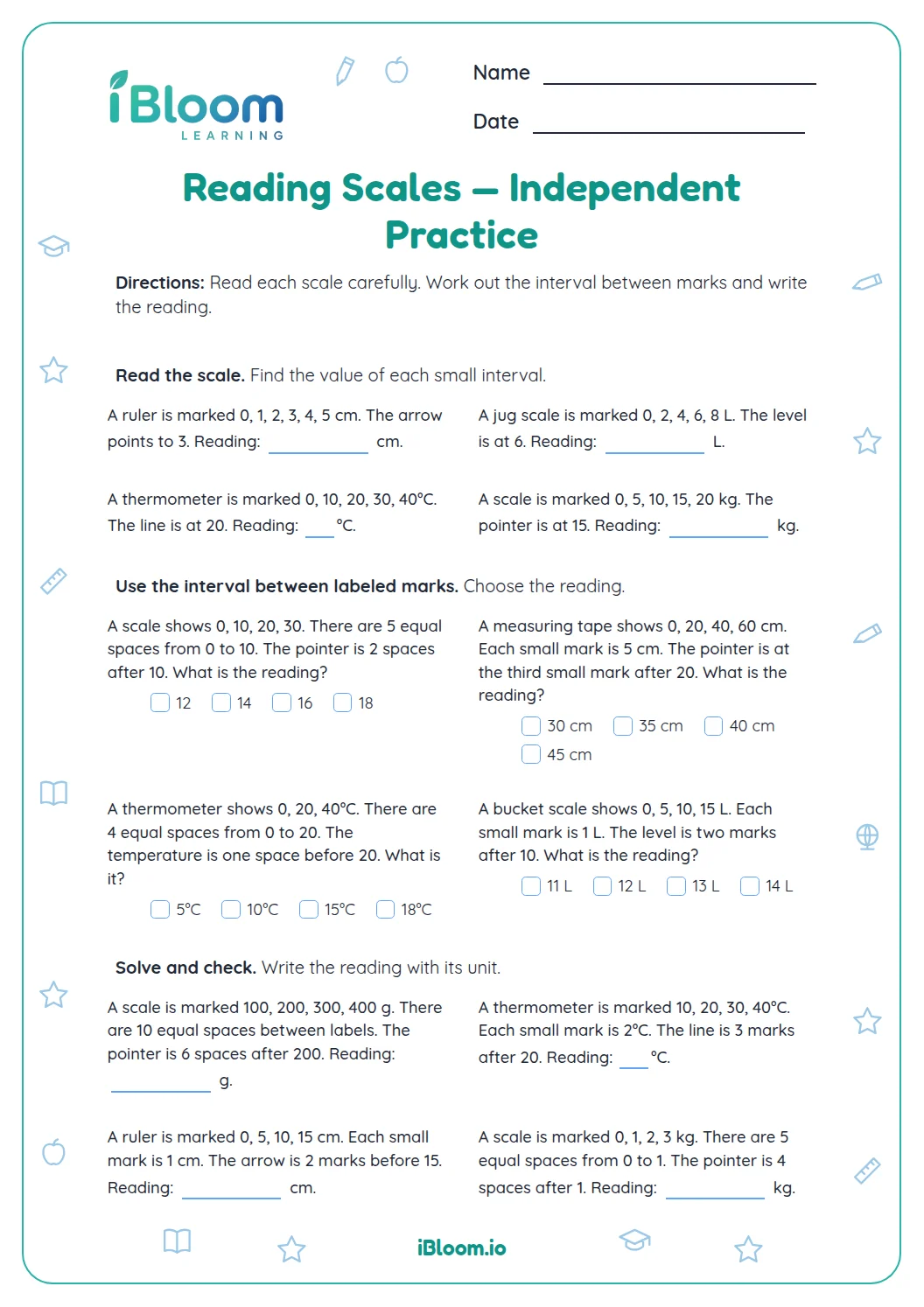
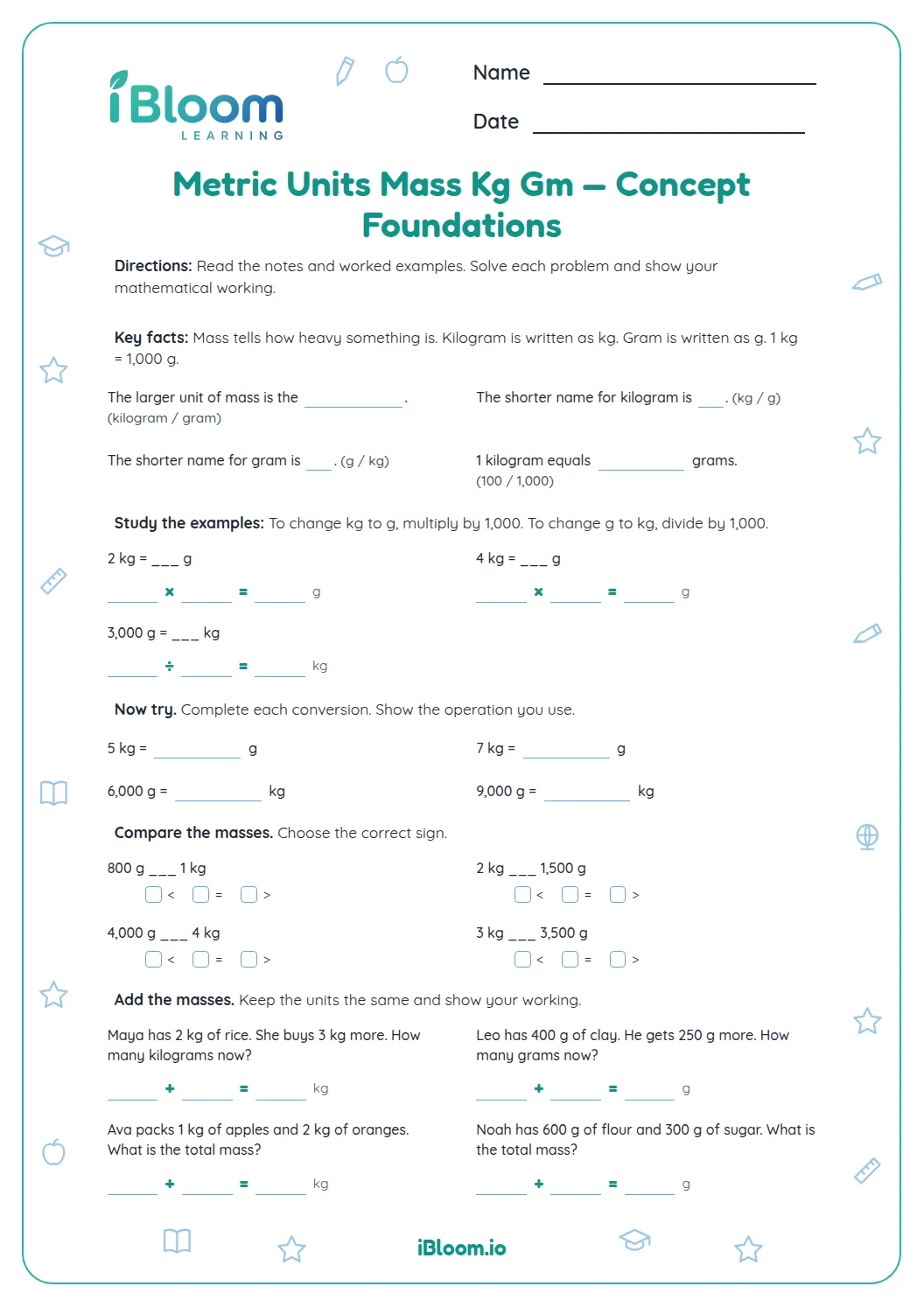
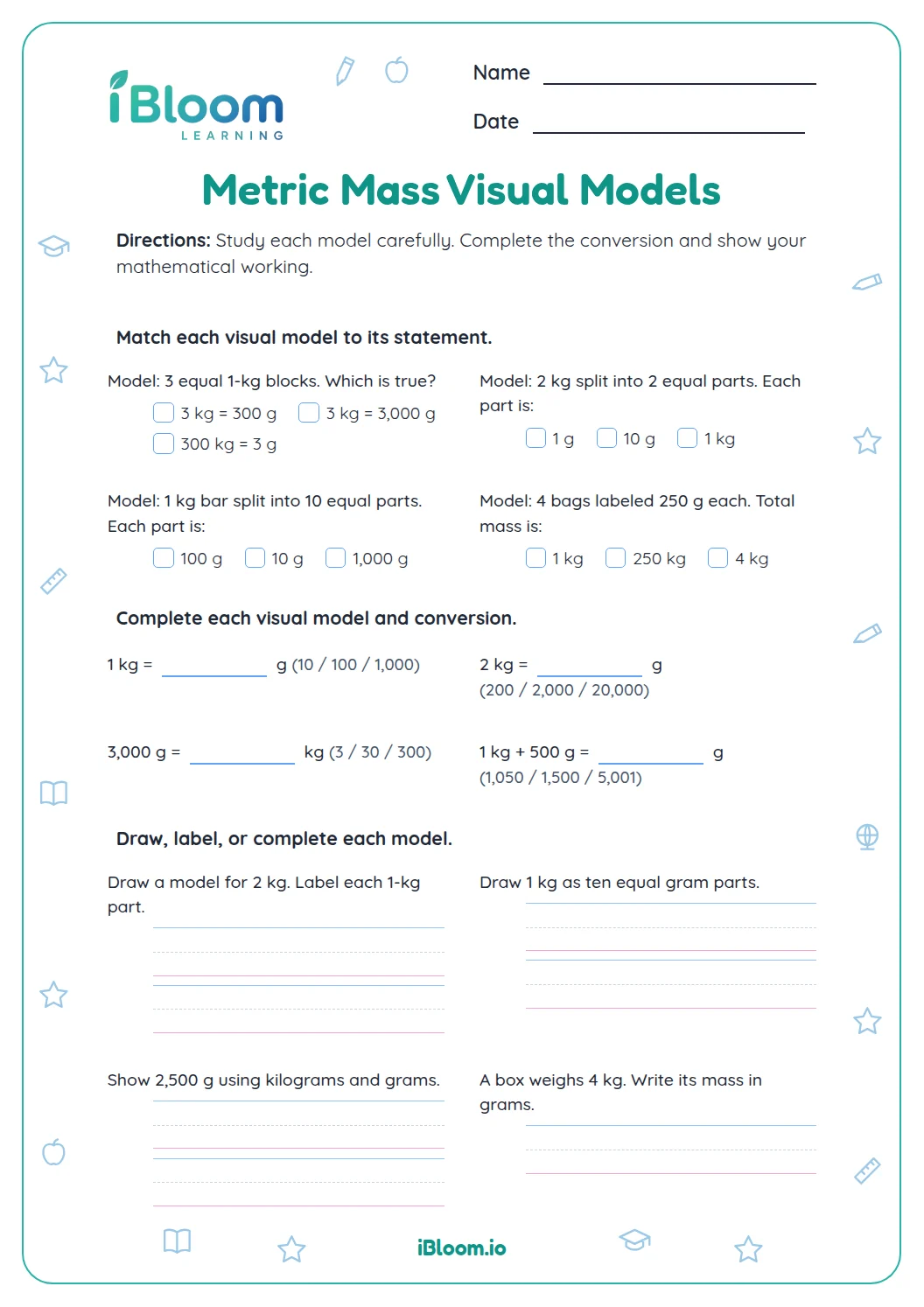
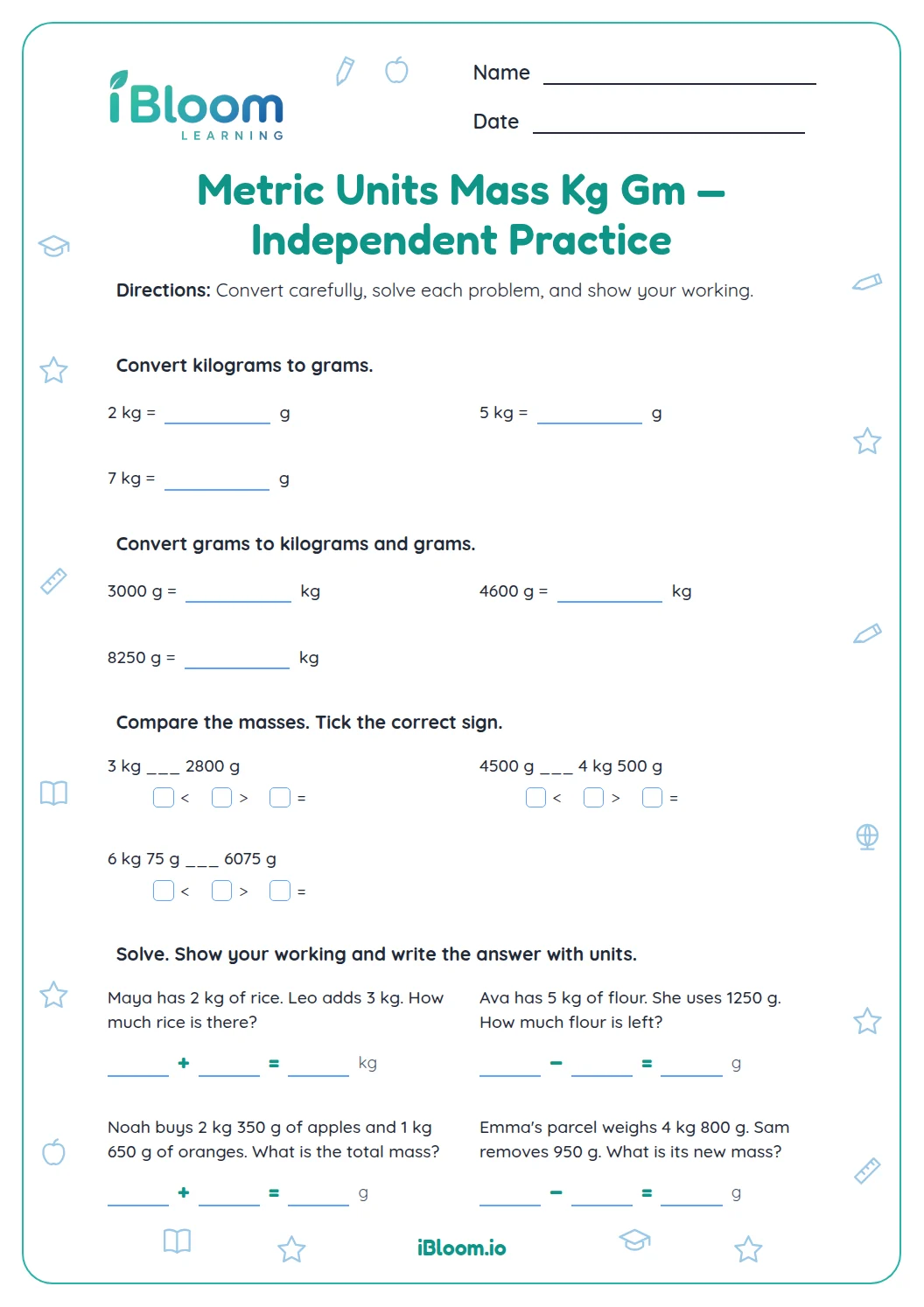
This Grade 4 worksheet uses the equal-mass idea of a balanced scale. Students find missing values in equations, solve mass situations with grams and kilograms, and check which equations have equal totals. It includes 16 questions across three parts, with an answer key for checking the arithmetic.
Aligned to 4.MD.A.2
What does a balanced scale mean?
A level scale represents equal masses. In an equation, the expressions on the left and right must have the same value.
How can you find the missing amount?
Part A asks for missing values in equations. Part B applies equal totals to mass stories. Part C checks which equations are balanced, and Part D evaluates a balance claim and a missing value.
What kinds of problems are included?
Part A practices equal equations, Part B applies the idea to masses, and Part C checks balance claims and missing values.
How to use this worksheet
- 1Read the directions and the worked example together.
- 2Complete each part in order, returning to the story or number clues as needed.
- 3Check one answer by pointing to the matching detail or recalculating both sides.
- 4Use the answer key to review any item that needs another try.
Common mistakes and quick fixes
The mistake
Solve one side but leave the other unchecked.
The fix
Substitute the answer and calculate both totals to confirm they match.
The mistake
Split a total unevenly between identical bags.
The fix
Divide the total equally by the number of identical bags.
The mistake
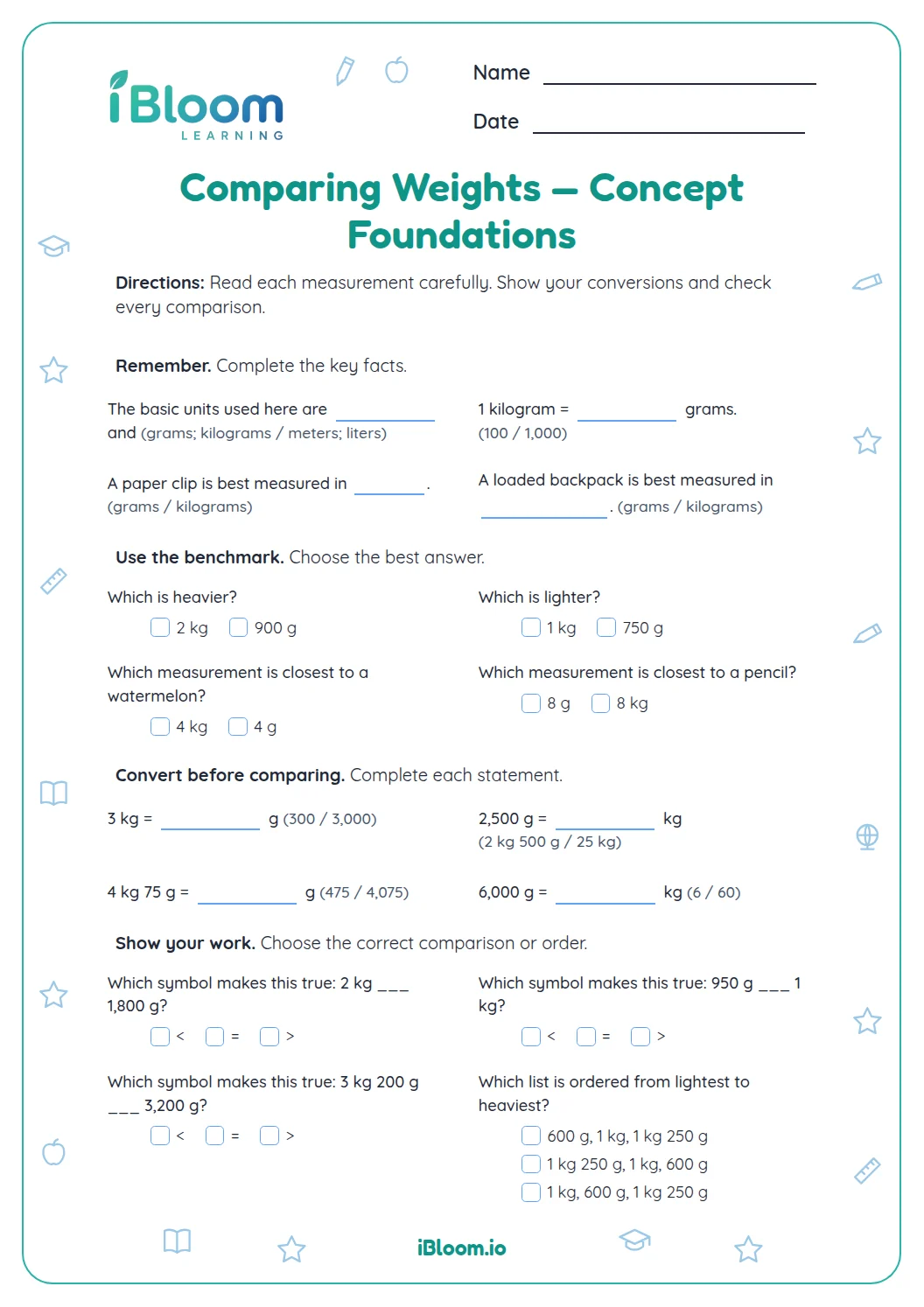
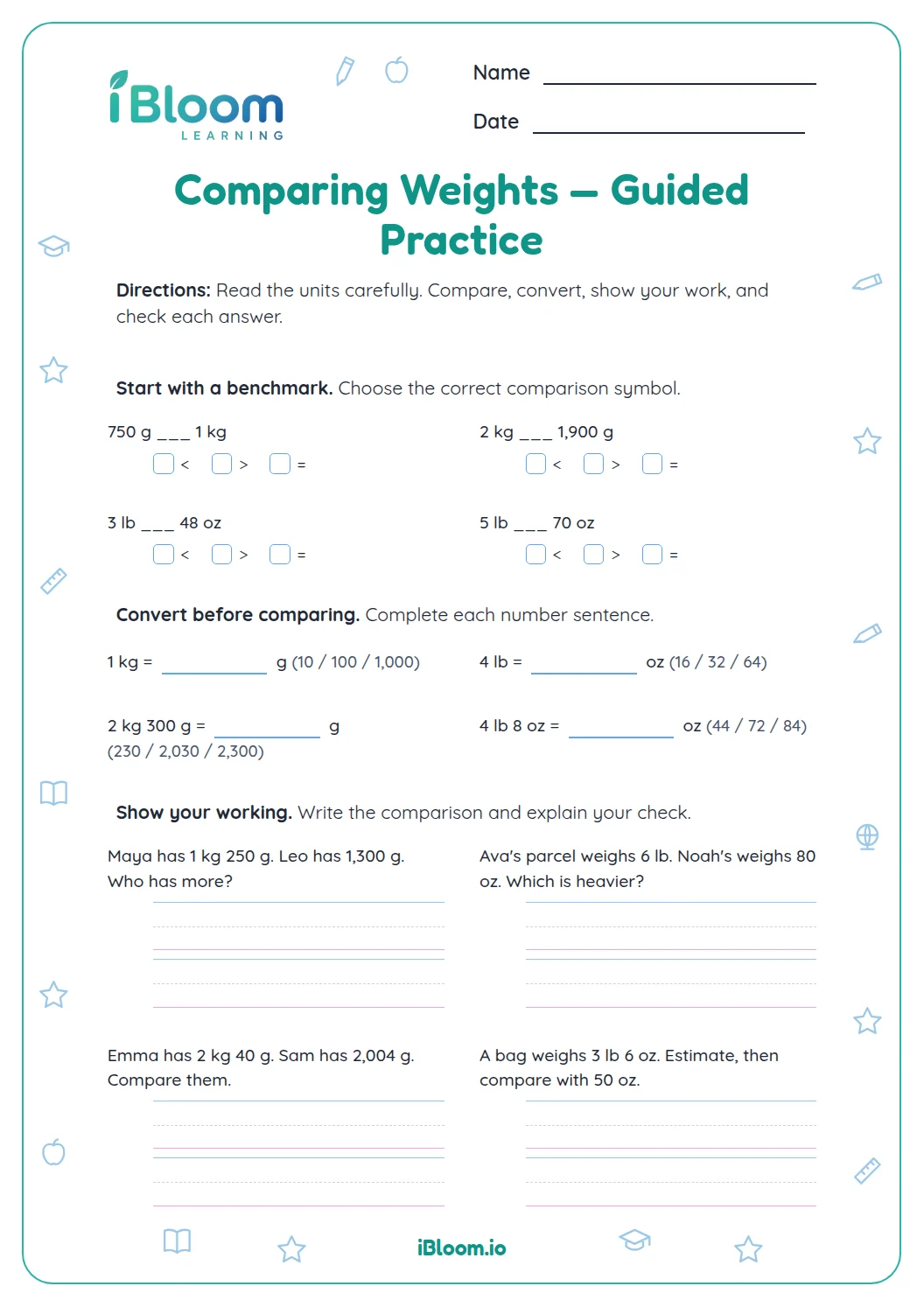
Mix grams and kilograms in one comparison.
The fix
Keep both sides in the same unit or convert before comparing.
Common Core alignment
Grade 4 measurement work includes solving problems involving measurement and converting units; this sheet practices reasoning about equal quantities in that context.
Solve measurement word problems with masses and the four operations.
On this sheet: Students use equal-mass scale situations and operations to find unknown masses.
Show the official wordingHide the official wording
Use the four operations to solve word problems involving distances, intervals of time, liquid volumes, masses of objects, and money.
What to practice next
Make more practice
Further reading
Questions parents and teachers ask
What does a balanced scale tell us about two amounts?
A balanced scale shows that the total amount on one side equals the total amount on the other side. For a number equation, the left side and right side must have the same value. Calculate known parts first, then find the missing amount.
How can students check a missing value in an equation?
Substitute the value into the blank and calculate each side separately. If the totals match, the equation is balanced. If they do not, revisit the operation and check whether the missing amount was added, subtracted, multiplied, or divided. Rechecking both values is a reliable way to catch an arithmetic slip.
Why do some balance problems use kilograms and grams?
A mass story makes equal quantities concrete: the two sides of a level scale have the same mass. Keep units with the answer and make sure the quantities on both sides are expressed consistently before comparing them. This check helps prevent unit mix-ups.
What should students do when an equation has more than one operation?
Follow the order and meaning of the equation carefully. Work out the side with known values, then decide which value makes the other side equal. Finally, substitute the answer and verify both totals. Showing that check helps catch arithmetic slips.
How do you find an unknown mass on a balanced scale?
Treat the two sides as equal totals. Calculate the known side, then find the mass that makes the other side match; for example, two identical bags balancing 124 g weigh 62 g each. Rechecking both values is a reliable way to catch an arithmetic slip.