




About this worksheet
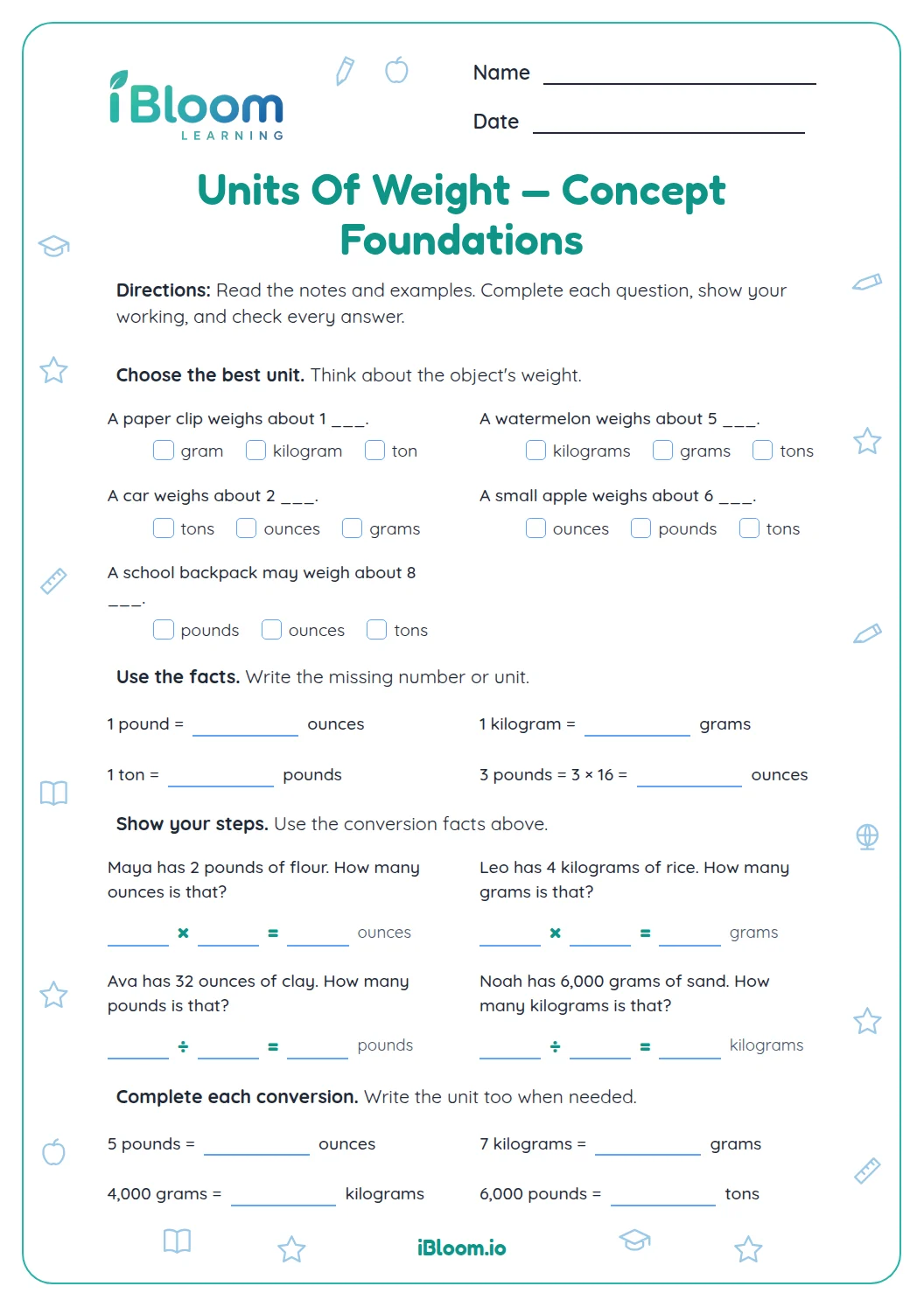
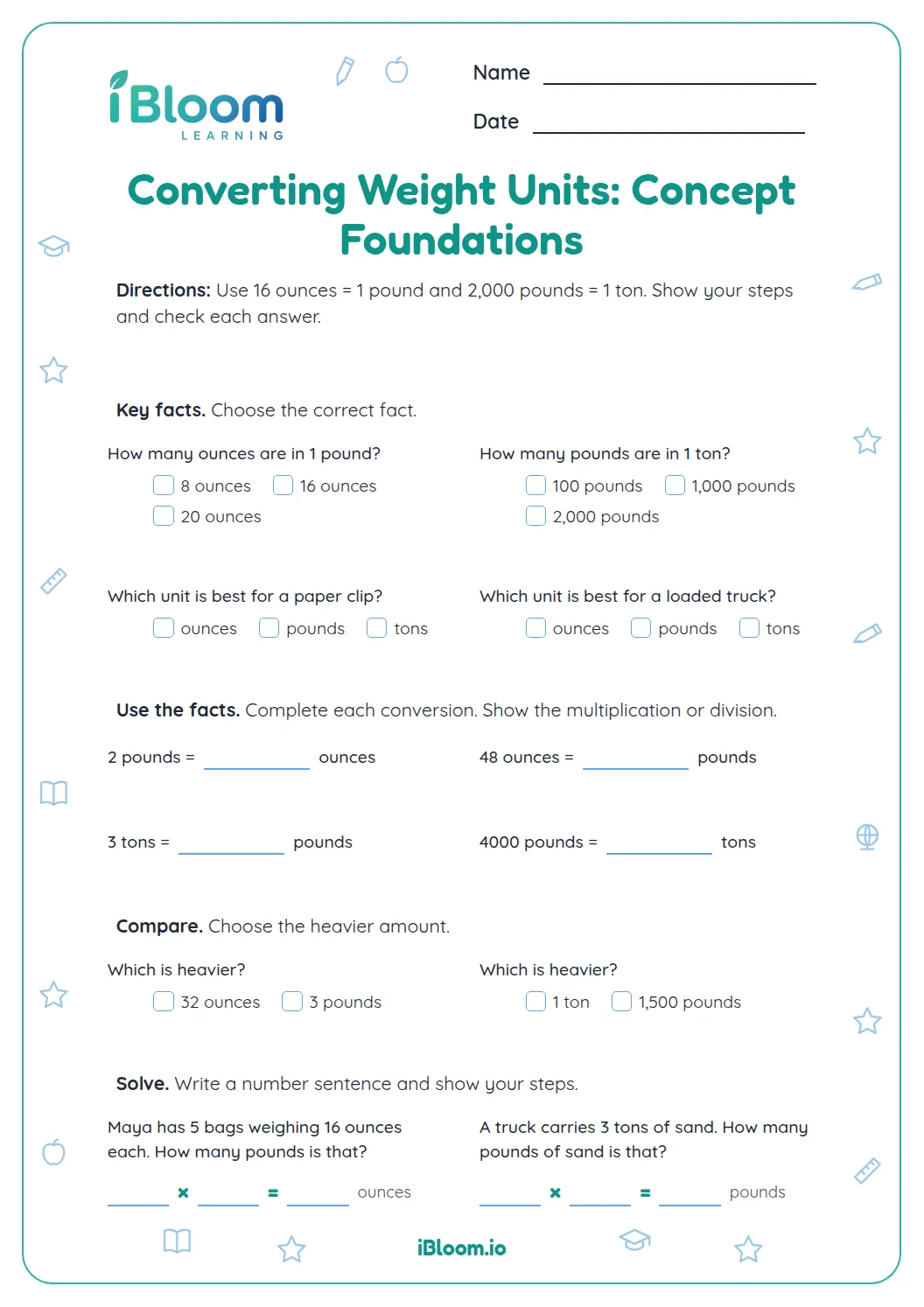
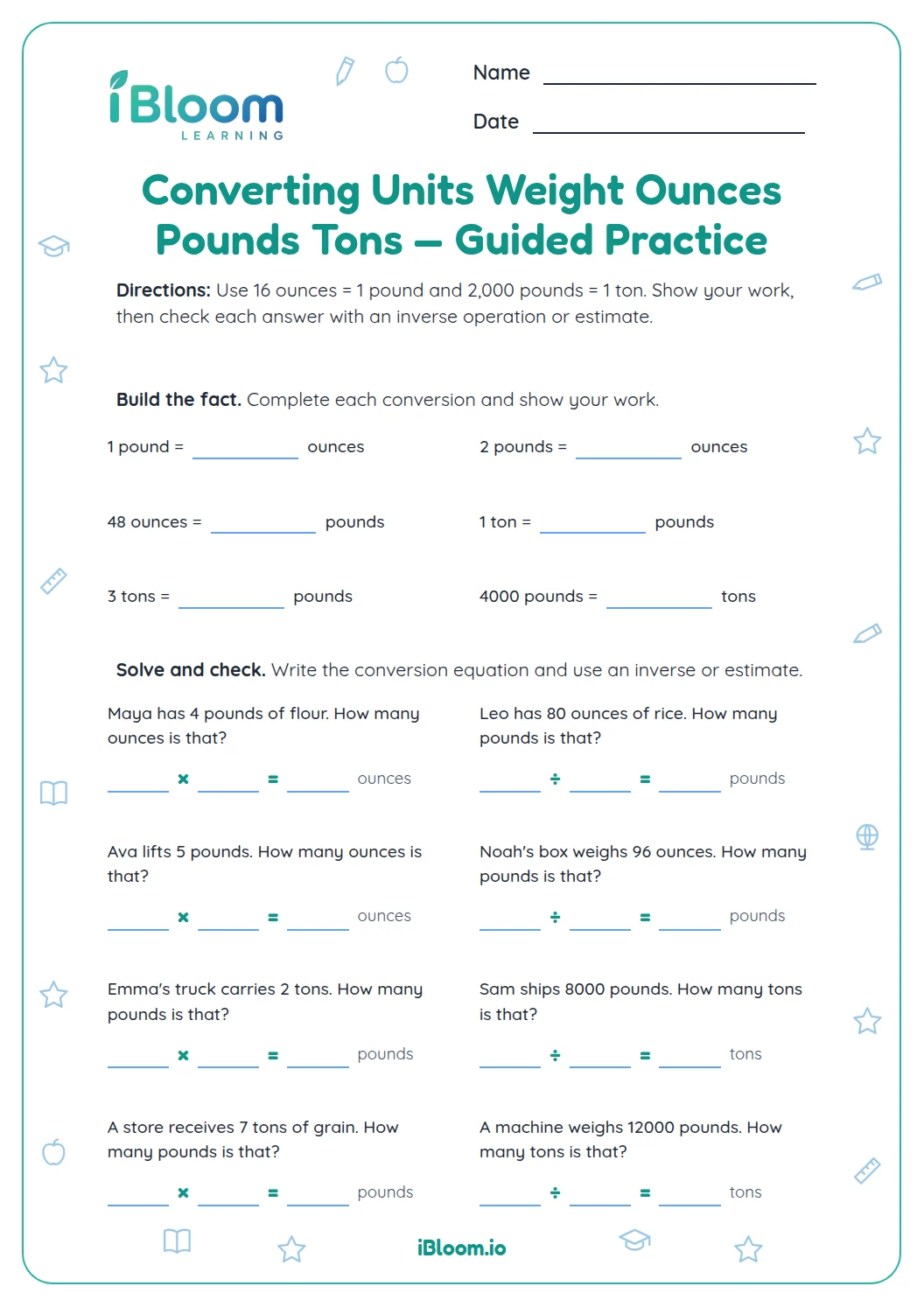
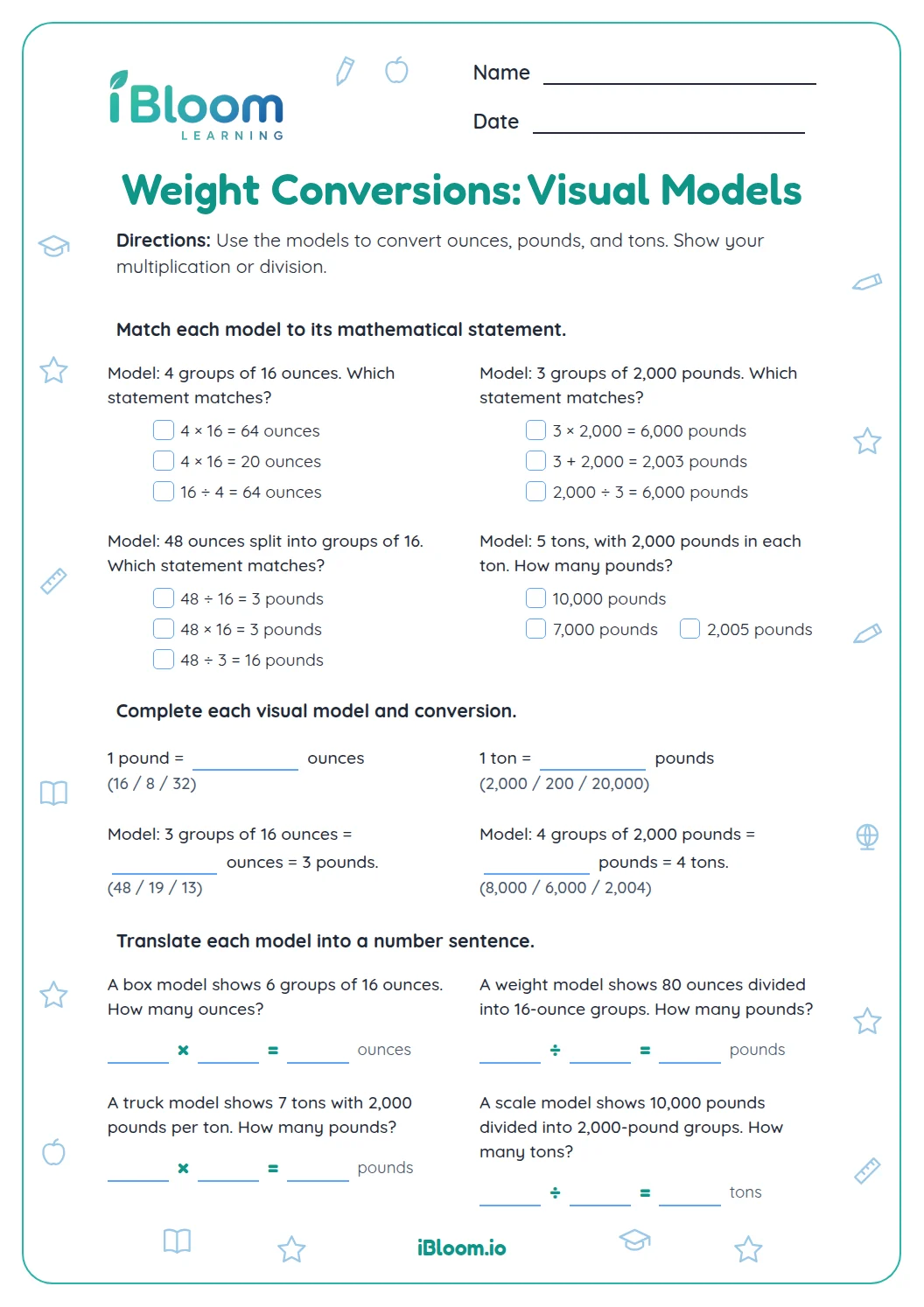
This Grade 4 printable builds measurement reasoning through real-world weight problems. Students add, subtract, multiply, and divide pounds; convert pounds and ounces; and compare amounts after converting to a common unit. Each problem asks for an equation and unit labels. A separate answer key supports checking. The set practices measurement word problems in CCSS 4.MD.A.2.
Aligned to 4.MD.A.2
What weight skills are practiced?
The 16 stories use pounds, ounces, and tons. Students combine and compare amounts, find equal shares, convert mixed pounds-and-ounces measurements to ounces, and solve multi-step situations. Every problem asks for an equation and a labeled answer.
How do you convert pounds to ounces?
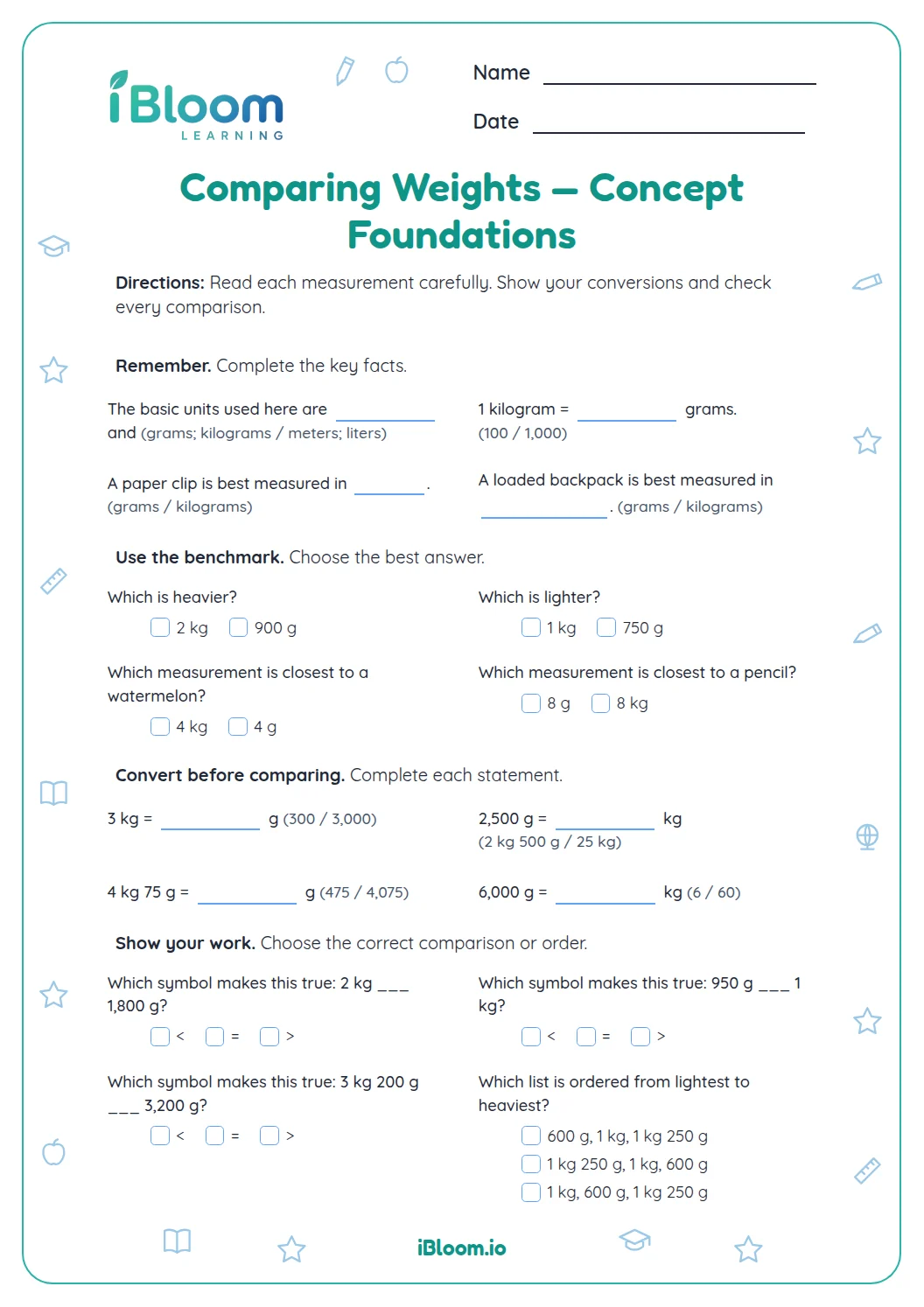
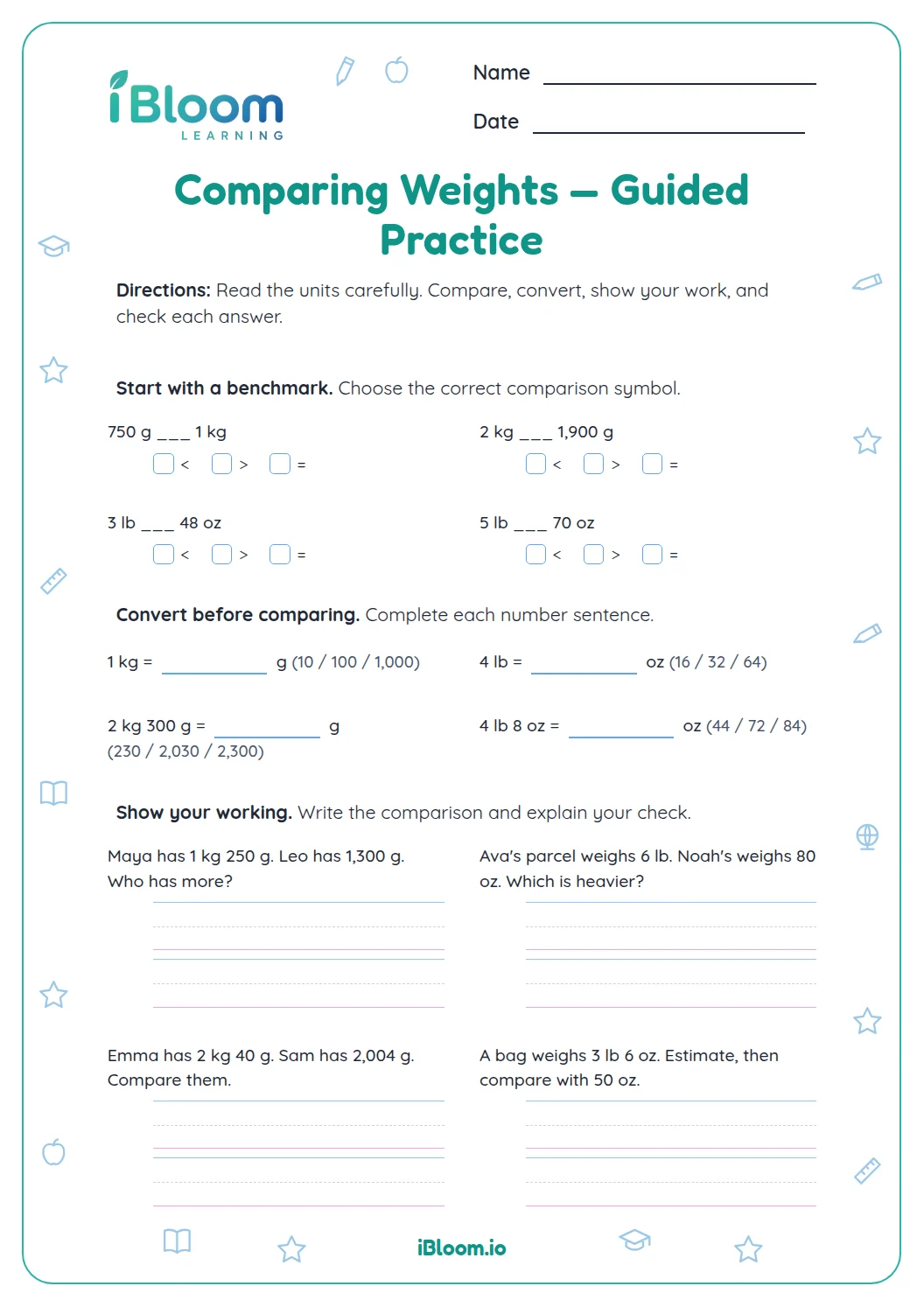
One pound equals 16 ounces. For 2 lb 8 oz, multiply 2 by 16 and add 8: 32 + 8 = 40 oz. For a mixed-unit addition or subtraction, convert both amounts to the same unit before operating.
- 12 lb 8 oz = (2 × 16) + 8 = 40 oz.
When should students use a common unit?
Use one unit before adding or comparing unlike measurements. For example, convert 3 lb to 48 oz before comparing it with 47 oz. For equal groups stated in pounds, students can divide the pound amounts directly.
What should a checked answer include?
The answer should match the question’s requested unit and include a sensible equation. Check conversions with 16 oz = 1 lb, and check a mixed amount by converting it back to pounds and leftover ounces.
How to use this worksheet
- 1Read the units or model before calculating.
- 2Write a number sentence that matches the question.
- 3Keep units attached to measurements.
- 4Estimate whether the answer is reasonable.
- 5Check each result with the answer key.
Common mistakes and quick fixes
The mistake
Add measurements without converting first.
The fix
Convert to a common unit before combining.
The mistake
Use the right number but attach the wrong unit.
The fix
Read the question again and label the final amount.
The mistake
Skip a check on a multi-step story problem.
The fix
Estimate first, then compare the result with the estimate.
Use operations to solve weight problems, including conversions to smaller customary units.
On this sheet: The questions directly practice customary weight unit conversions and word problems.
Show the official wordingHide the official wording
Use the four operations to solve word problems involving distances, intervals of time, liquid volumes, masses of objects, and money, including problems involving simple fractions or decimals, and problems that require expressing measurements given in a larger unit in terms of a smaller unit.
What to practice next
Make more practice
Further reading
Questions parents and teachers ask
What does this worksheet practice?
It has 16 Grade 4 word problems about customary weight. Students use pounds, ounces, and tons with addition, subtraction, multiplication, division, conversions, and comparisons. The key shows equations and answers with units, making it possible to check both the operation and the measurement.
How many ounces are in a pound?
There are 16 ounces in 1 pound. To convert pounds to ounces, multiply the number of pounds by 16, then add any extra ounces. For example, 2 lb 8 oz equals 32 oz + 8 oz, or 40 oz.
How do I compare pounds and ounces?
Convert both measurements to the same unit first. In the final comparison item, 3 lb equals 48 oz, which is 1 oz more than 47 oz. Comparing 3 and 47 directly would mix unlike units and produce a misleading result.
Why are units part of each answer?
The number alone may not answer the question. A result of 40 could mean 40 ounces or 40 pounds, which are very different weights. Keep the unit in the equation and in the final answer, then reread the prompt to confirm it asks for that unit.
How long does it take to complete?
The 16 story problems fill three worksheet pages, followed by a separate answer-key page. Plan about 25 minutes for solving and checking; students may need additional time to show equations for the conversions and multi-step problems. The answer key spans the remaining page, and it can be printed separately for checking after students finish.
What should students do if an answer seems unreasonable?
Estimate before checking the key. If a 9 lb box loses 2 lb 5 oz, the result should be a little under 7 lb, not more than 9 lb. Recheck the conversion or regrouping, then verify the final amount and unit against the question.