



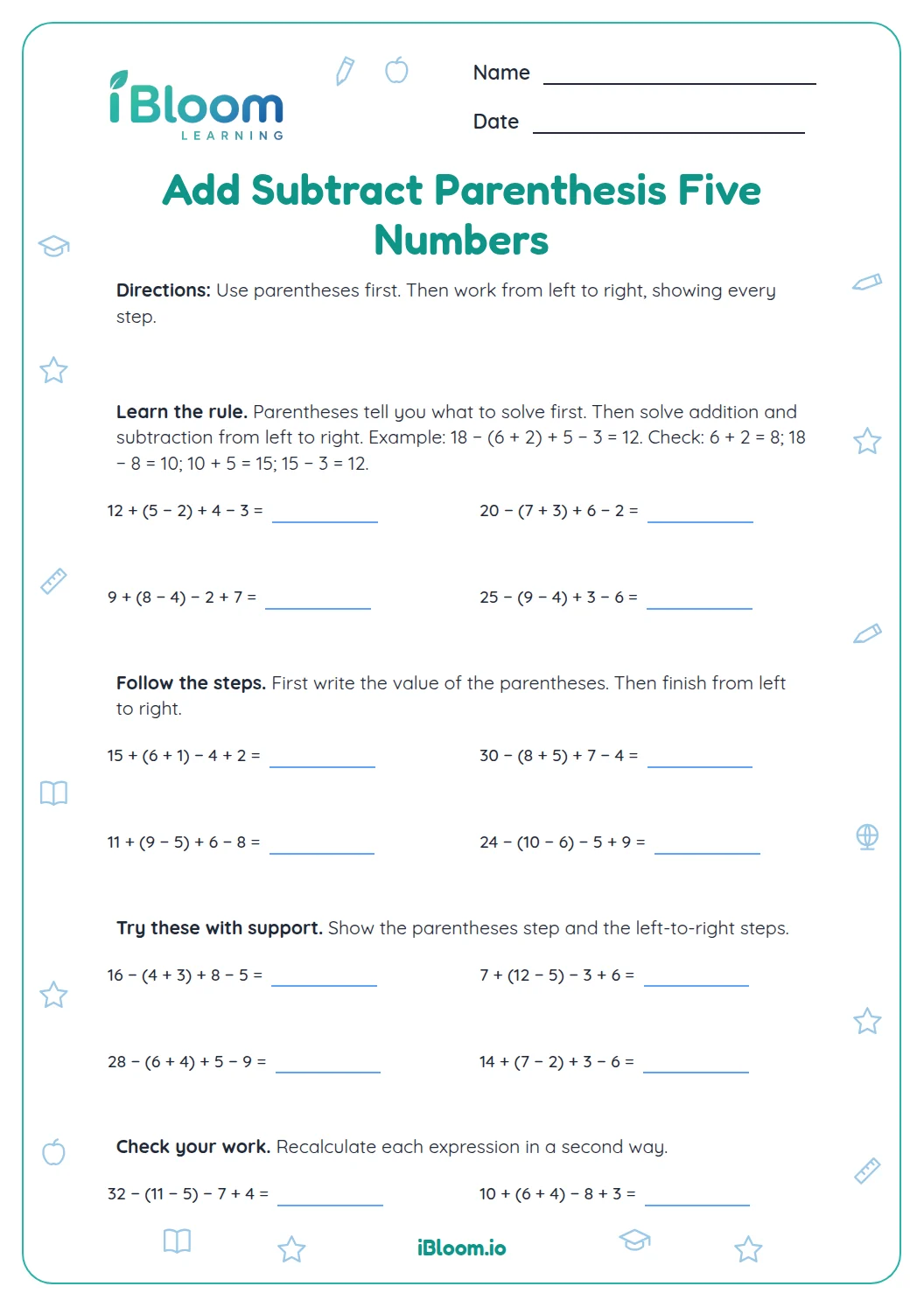


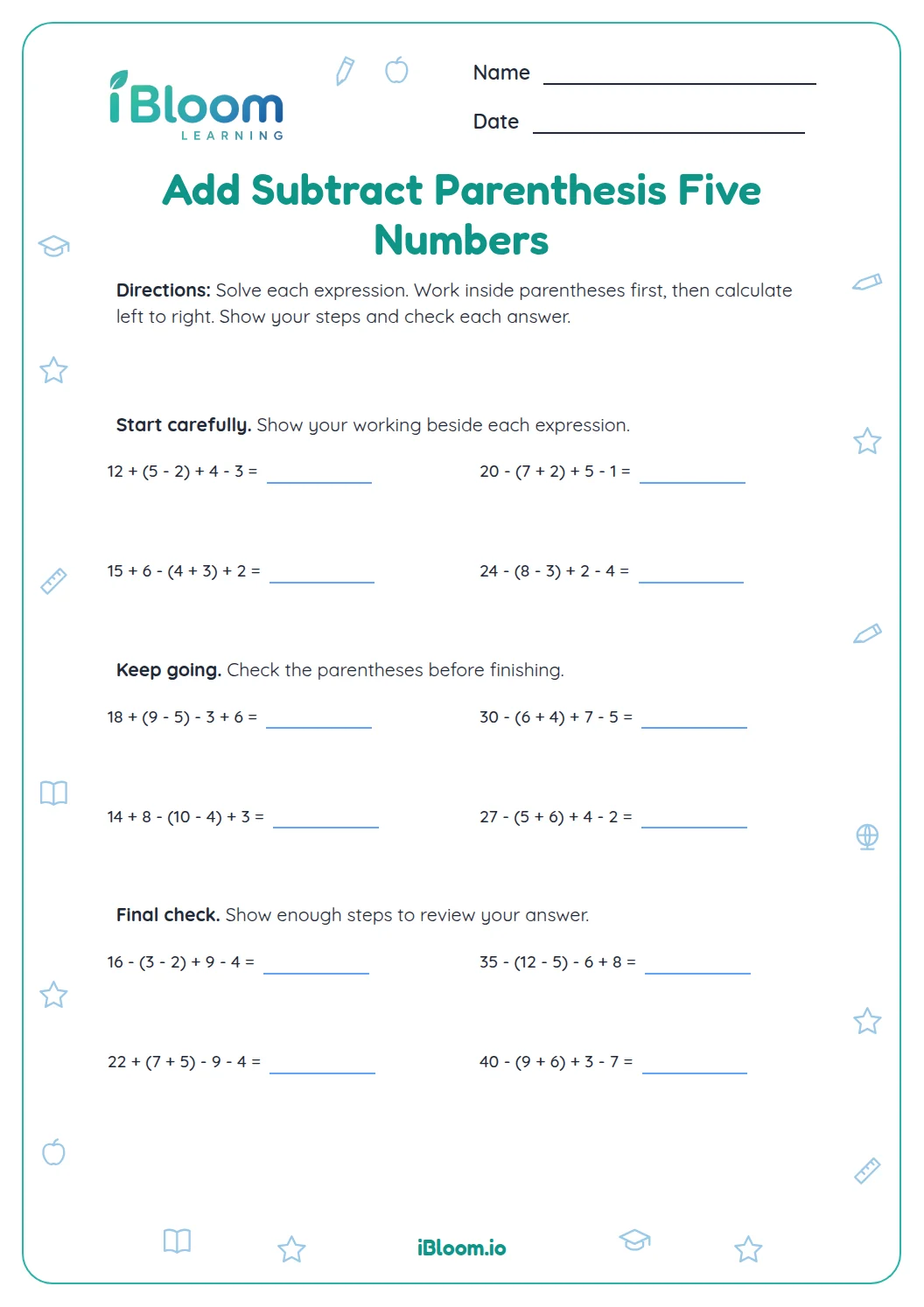
About this worksheet
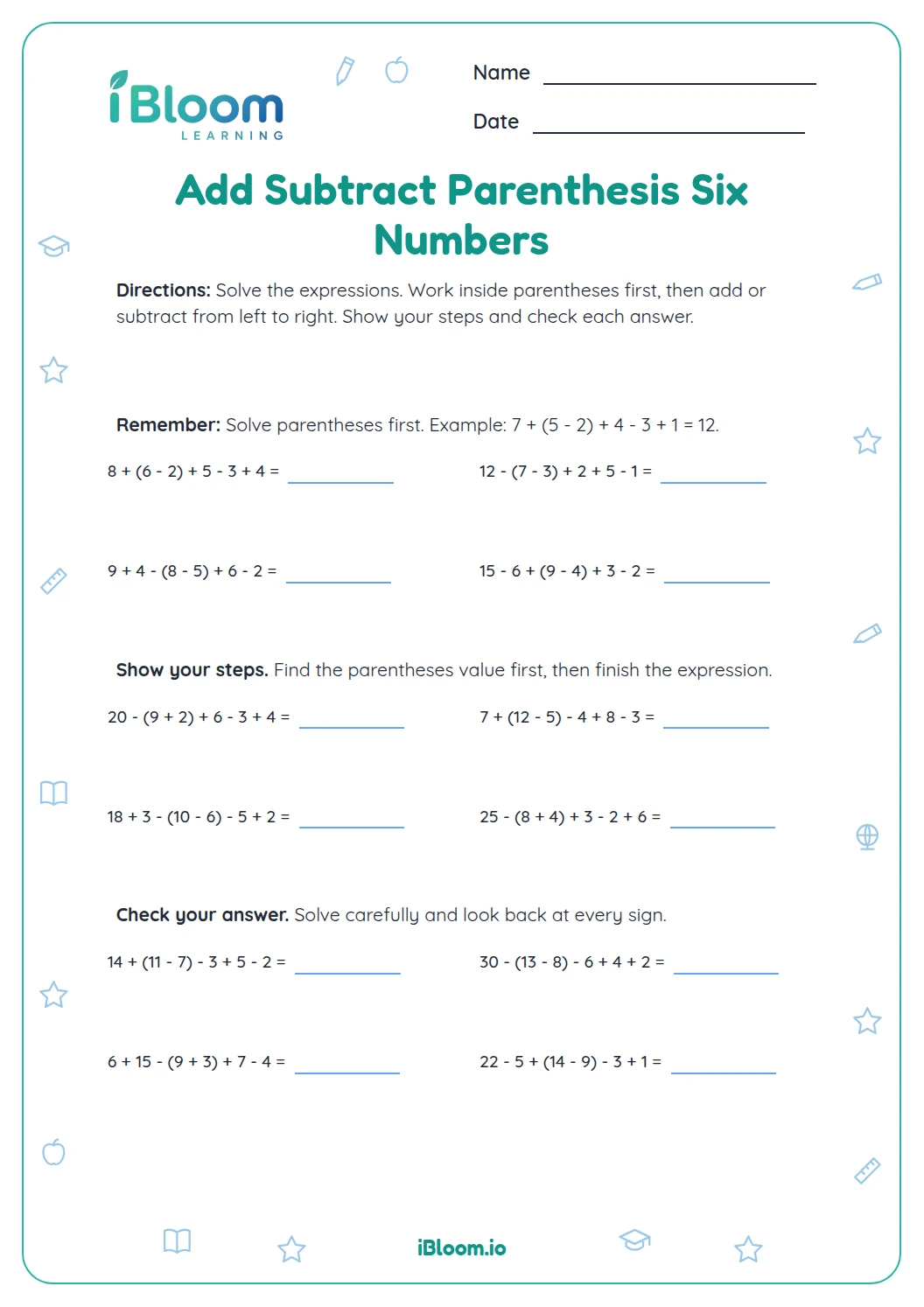
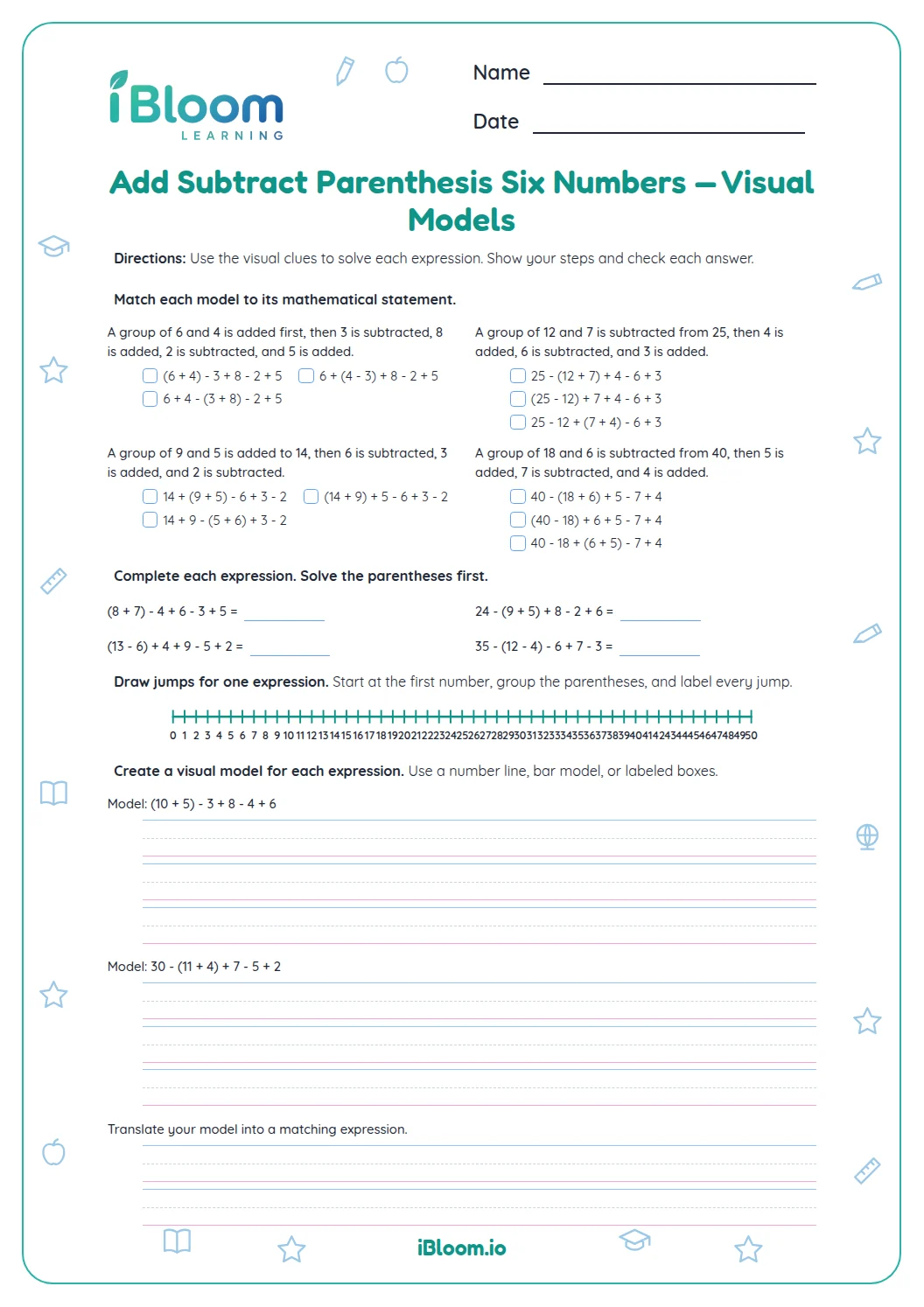
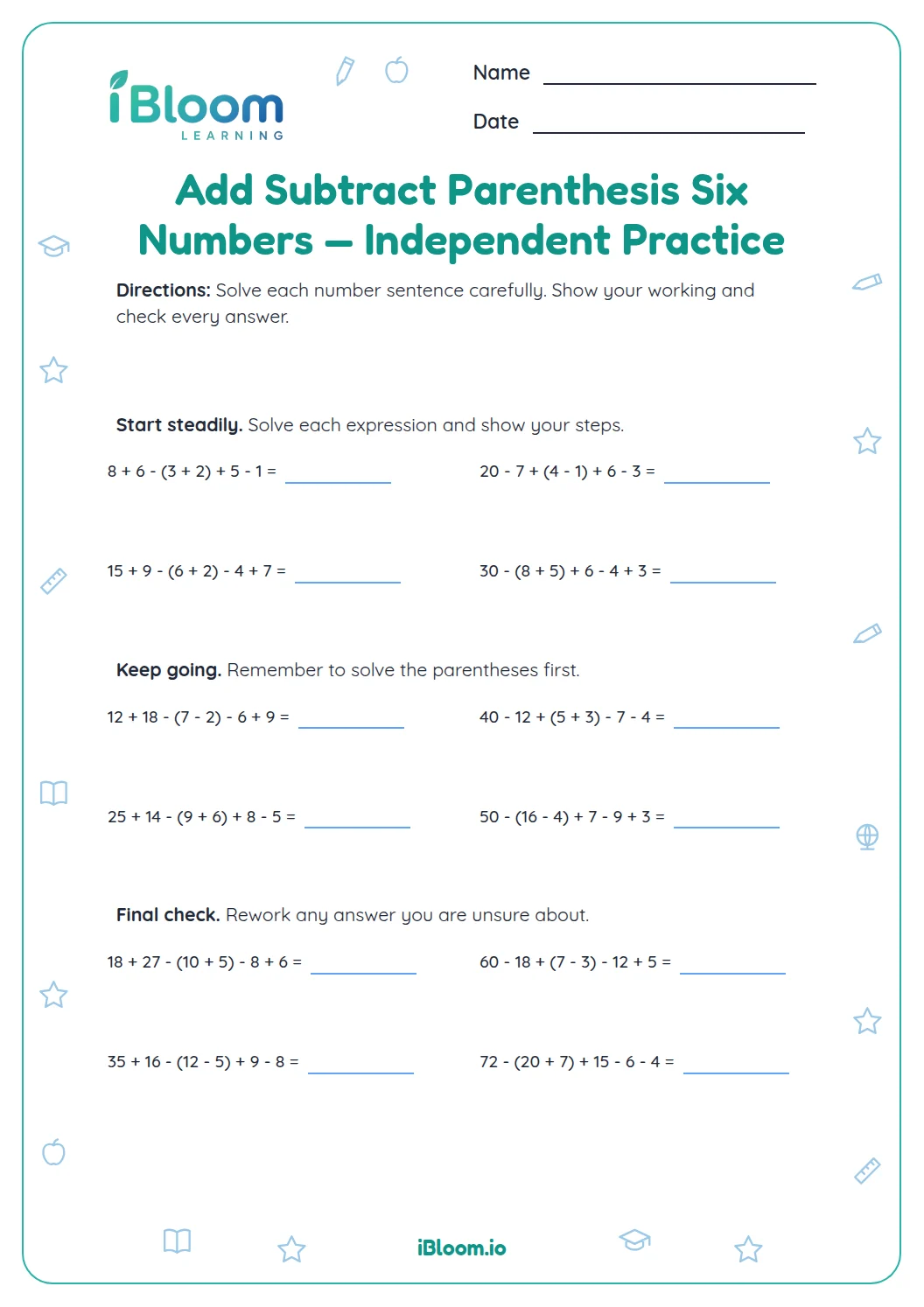
This Grade 4 printable asks students to evaluate six-number addition and subtraction expressions, compare expressions that use parentheses differently, check classmates’ claims, and place a pair of parentheses to meet a target. The sequence builds from finding values to explaining how grouping changes a result. A separate answer key includes each value and model expression. It practices CCSS 5.OA.A.1, evaluating numerical expressions with parentheses.
Aligned to 5.OA.A.1
What do parentheses tell you to do first?
Evaluate the complete group inside the parentheses. Then continue addition and subtraction from left to right, keeping each sign attached to the number that follows it.
- 118 + (7 − 3) + 9 − 5 + 2
- 27 − 3 = 4
- 318 + 4 + 9 − 5 + 2 = 28
How do parentheses affect a value?
A pair of parentheses can change the result by changing which amount is added or subtracted together. In question 6, the first expression is 22 and the second is 18, so the first is greater.
What skills appear in the five parts?
Students evaluate expressions, compare results, check a calculation, choose a grouping for a target, and apply the same steps to a score story. Each expression uses addition and subtraction with six numbers.
- Part A: evaluate 4 expressions
- Part B: compare 3 pairs and check 3 claims
- Part C: place parentheses in 3 expressions
- Part D: solve 1 score problem
How to use this worksheet
- 1Read the expression before calculating.
- 2Find the value inside the parentheses.
- 3Continue addition and subtraction from left to right.
- 4Solve both expressions before comparing them.
- 5For target questions, test the listed grouping and recompute.
- 6Check the final answer with the key.
Common mistakes and quick fixes
The mistake
Adding every positive number before subtracting.
The fix
After parentheses, follow each operation from left to right.
The mistake
Subtracting only part of a grouped amount.
The fix
Find the value of all terms inside the parentheses first.
The mistake
Assuming parentheses always make an expression larger.
The fix
Calculate both versions; grouping can raise or lower a result.
Common Core alignment
The expressions provide practice with evaluating numerical expressions that use parentheses.
Evaluate numerical expressions that use parentheses.
On this sheet: Every part evaluates, compares, or places parentheses in numerical expressions.
Show the official wordingHide the official wording
Use parentheses, brackets, or braces in numerical expressions, and evaluate expressions with these symbols.
What to practice next
Make more practice
Further reading
Questions parents and teachers ask
What order should students use?
First evaluate the parentheses. Then work through addition and subtraction from left to right. For question 1, 7 − 3 = 4, so the expression becomes 18 + 4 + 9 − 5 + 2, which equals 28. The answer key gives a result for every expression and choice.
Why can parentheses change an answer?
Parentheses change which terms are grouped before the rest of the expression is evaluated. In question 6, grouping 9 + 6 makes the first value 22, while the second expression equals 18. Comparing completed values helps students see the effect of the grouping.
Does this sheet include multiplication or division?
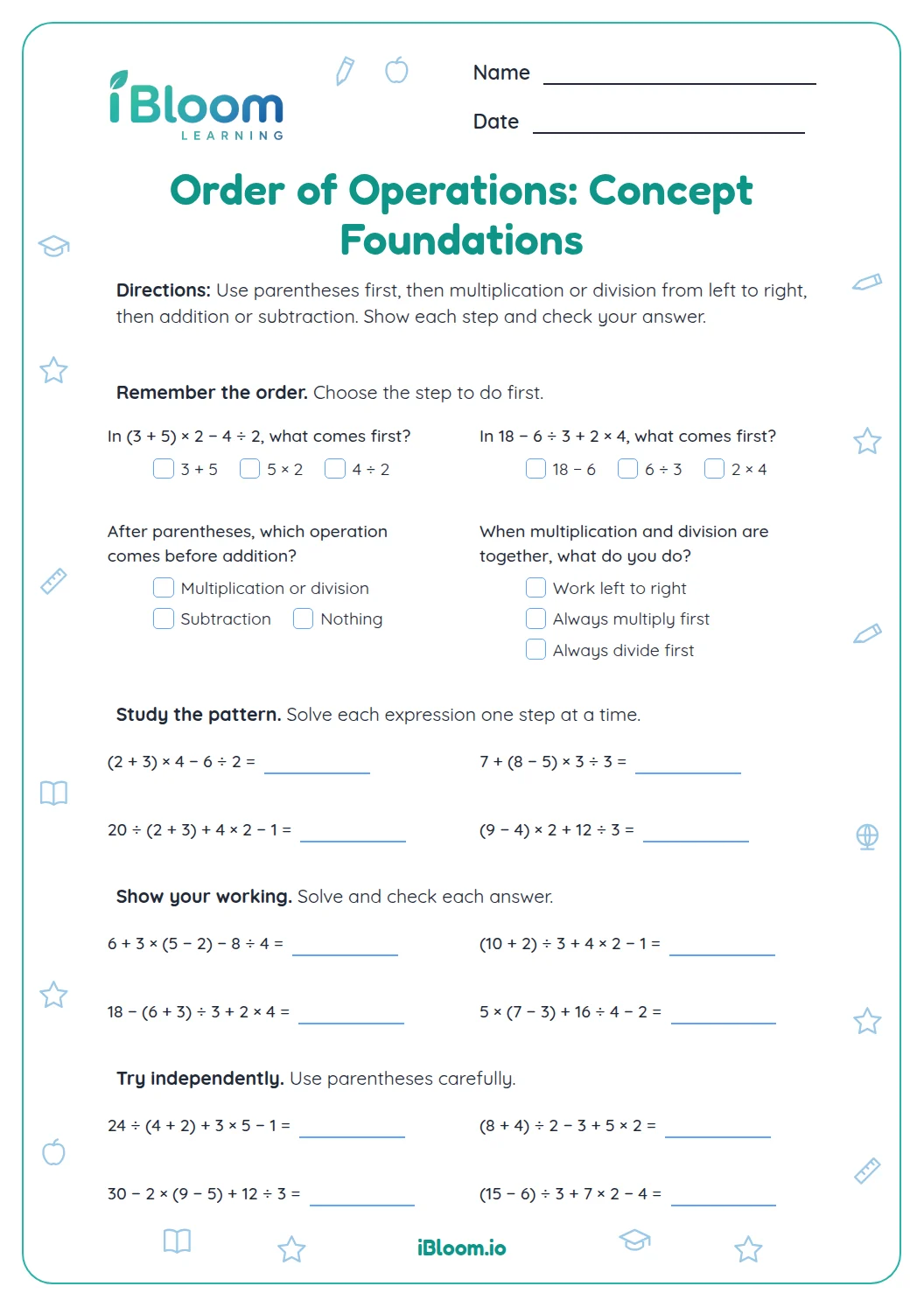
No; every expression on this page uses addition and subtraction with parentheses. The practice focuses on evaluating and comparing those six-number expressions, checking values, choosing a grouping, and solving one score story. The separate answer key lists the correct results.
What is the challenge section?
Part C asks students to add parentheses to make three expressions equal target values. Part D applies addition and subtraction in a short score story, with each gain and loss followed in order. The key shows the three intended groupings and the final score.
How many questions and pages are included?
There are 14 questions in four parts. The template renders two worksheet pages and two answer-key pages. The separate key follows the worksheet questions and lists the correct values, comparisons, groupings, and score. Students can work through one part at a time and use the key to check each result.