



About this worksheet
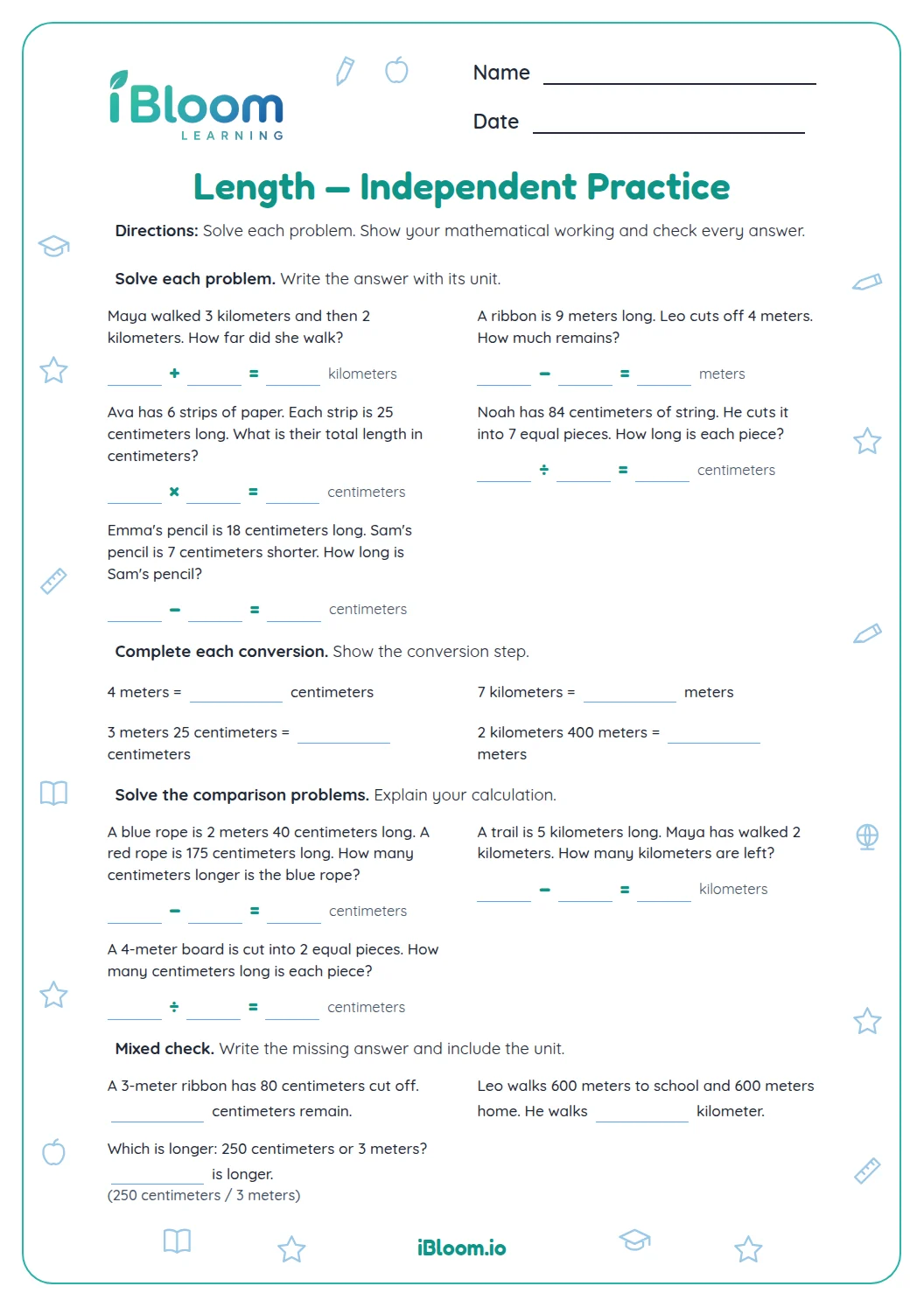
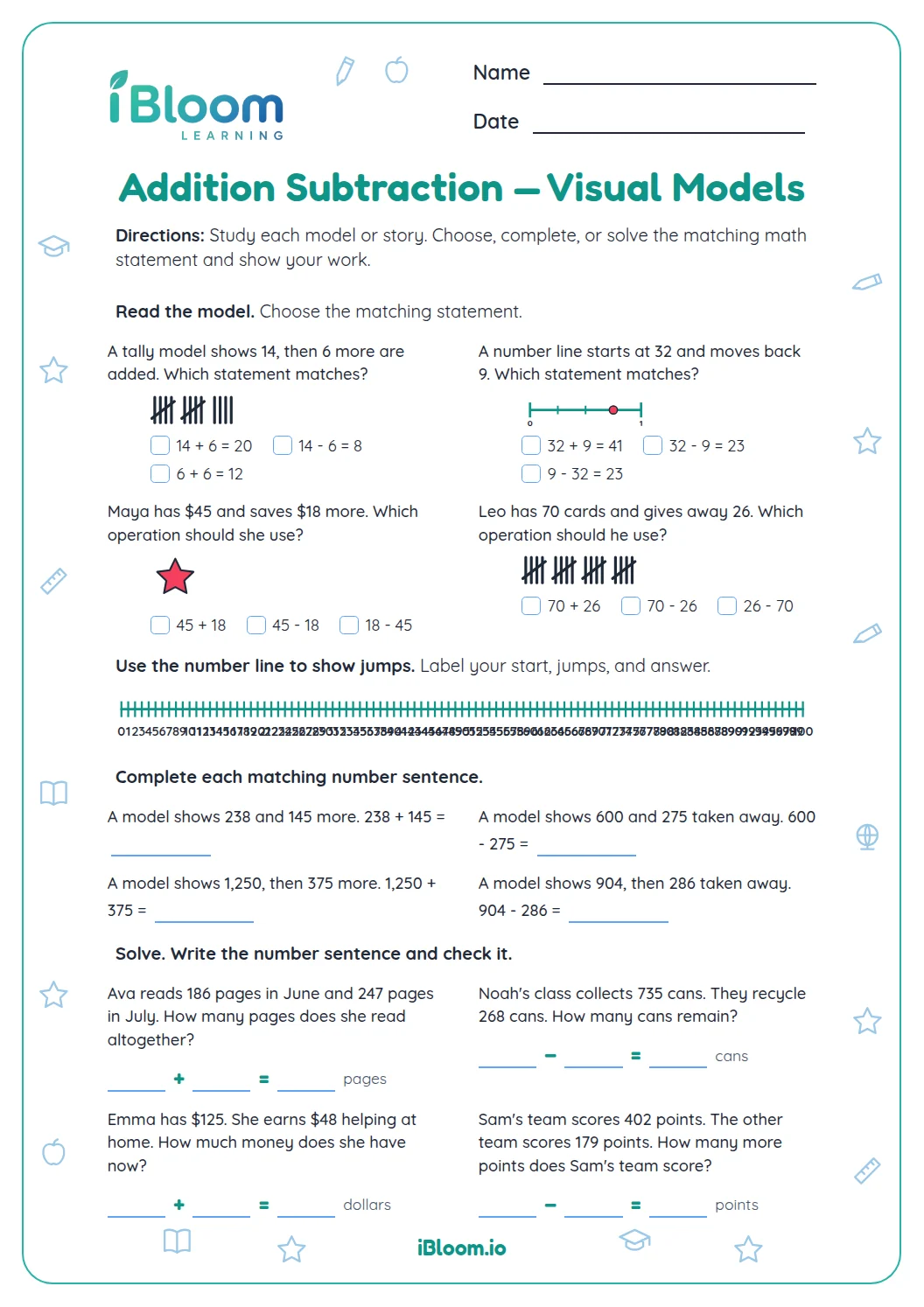
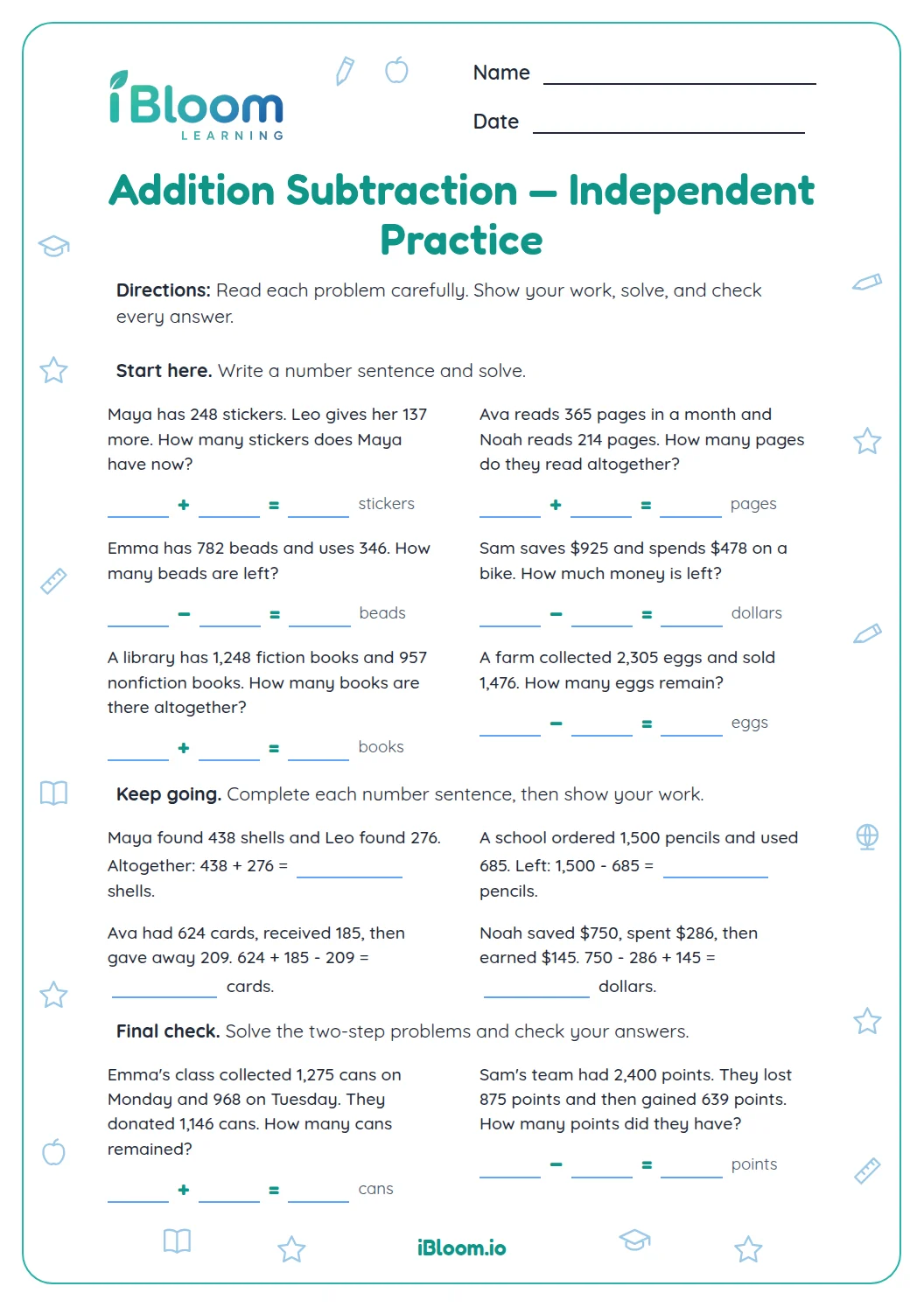
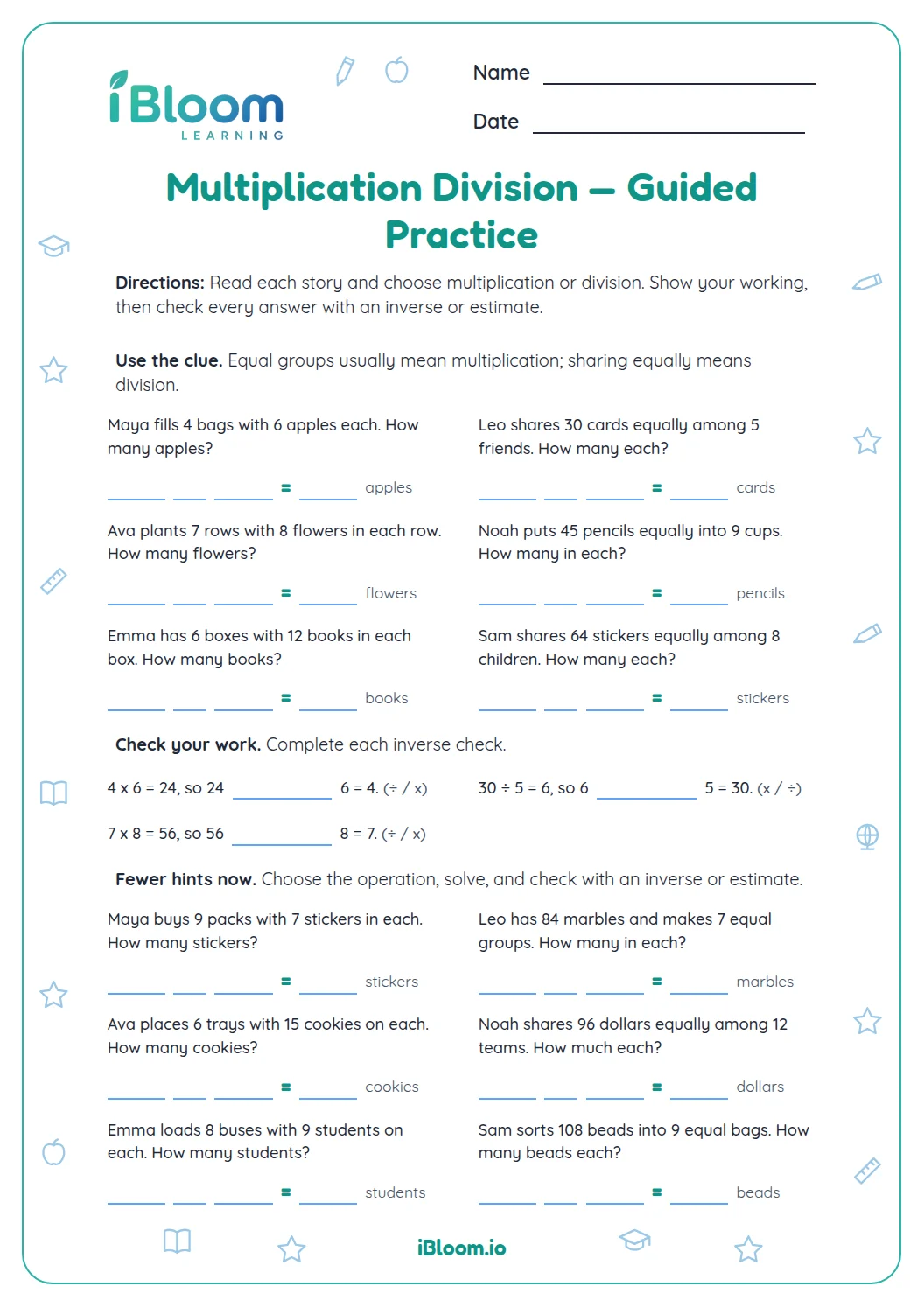
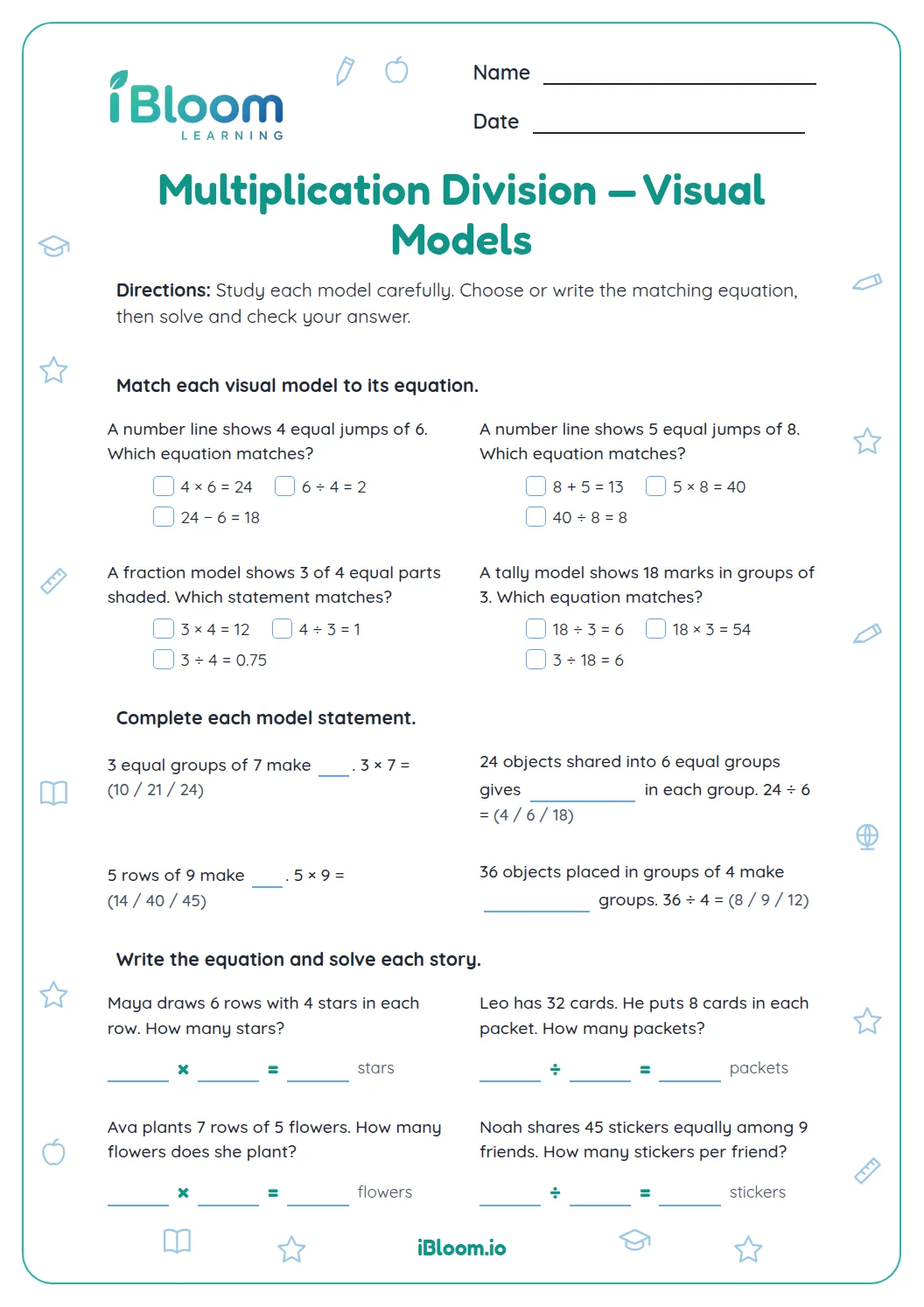
This Grade 4 worksheet gives learners 16 length word problems using meters, centimeters, and kilometers. They add, subtract, multiply, divide, and convert units while keeping each answer attached to its unit. The separate key supports checking calculations. The questions practice CCSS 4.MD.A.2 through real-world measurement situations.
Aligned to 4.MD.A.2
When should you convert units before subtracting?
Convert both measurements to the same unit before subtracting. In question 2, 8 m 35 cm is 835 cm and 2 m 70 cm is 270 cm. Subtracting gives 565 cm, or 5 m 65 cm.
- 18 m 35 cm − 2 m 70 cm
- 2835 cm − 270 cm
- 3565 cm = 5 m 65 cm
How can multiplication and division model length?
Equal lengths can be combined with multiplication or split with division. Four boards that are each 125 cm long total 500 cm. For question 6, 6 m is 600 cm; 600 ÷ 8 = 75 cm per piece.
How do you keep a multi-step measurement answer clear?
Write the operation that matches the situation, then keep the unit in the final answer. In question 13, three 275 cm pieces use 825 cm from a 12 m board. Convert 12 m to 1,200 cm; 1,200 − 825 = 375 cm remains.
How can learners work through this sheet?
- 1Circle the length units in the prompt.
- 2Convert mixed units to one unit before adding or subtracting.
- 3Choose the operation that matches the situation.
- 4Calculate, then convert back if a larger unit is clearer.
- 5Write the unit and check whether the result fits the story.
Common mistakes and quick fixes
The mistake
Subtracting meters from centimeters without regrouping.
The fix
Rename one meter as 100 centimeters before subtracting.
The mistake
Multiplying the number of groups by the wrong length.
The fix
Check that each equal group uses the same length stated in the prompt.
The mistake
Giving a bare number without a unit.
The fix
Include meters, centimeters, or kilometers in the final answer.
Common Core alignment
The problems combine distance, unit conversion, and the four operations.
Solve measurement word problems and represent quantities with diagrams.
On this sheet: Learners use the four operations and convert larger length units to smaller units.
Show the official wordingHide the official wording
Use the four operations to solve word problems involving distances, intervals of time, liquid volumes, masses of objects, and money, including problems involving simple fractions or decimals, and problems that require expressing measurements given in a larger unit in terms of a smaller unit. Represent measurement quantities using diagrams such as number line diagrams that feature a measurement scale.
What to practice next
Further reading
Questions parents and teachers ask
How do you subtract 2 m 70 cm from 8 m 35 cm?
Rename 8 m 35 cm as 835 cm and 2 m 70 cm as 270 cm. Then 835 − 270 = 565 cm, which is 5 m 65 cm. Question 2 uses this regrouping idea. Keeping both measures in centimeters makes the subtraction easier to follow.
How many centimeters are in 6 meters?
There are 600 centimeters in 6 meters because each meter contains 100 centimeters. Question 6 divides that length into 8 equal pieces: 600 ÷ 8 = 75, so each piece is 75 cm long, with no length left over. Convert first, then divide carefully.
How can I check the board problem?
Multiply the length of one board by the number of boards: 125 cm × 4 = 500 cm. The total should be longer than one board, and 500 cm is four equal lengths of 125 cm. This is question 3 on the sheet.
Why does question 13 use centimeters?
The question asks how many more centimeters of trim are needed. Convert 12 m to 1,200 cm, then subtract the three 275 cm pieces already on hand: 1,200 − 825 = 375 cm. Keeping everything in centimeters avoids mixing units during subtraction.
Does the worksheet include an answer key?
Yes. The separate key lists the results with units, including multi-step conversions. Encourage the learner to write the equation first and estimate whether the answer should be larger or smaller than the starting length before checking the key. This quick estimate adds a useful reasonableness check.