
About this worksheet
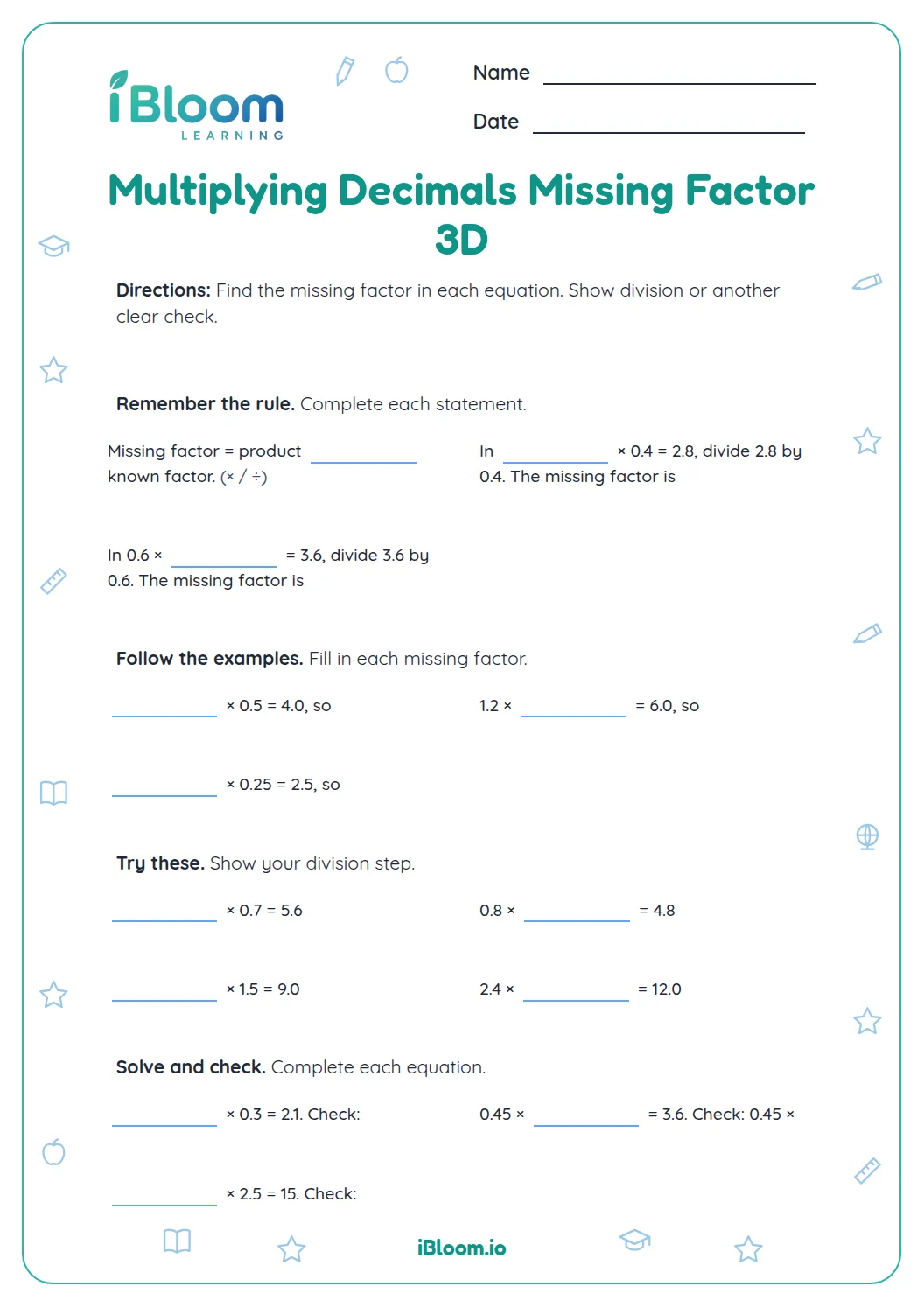
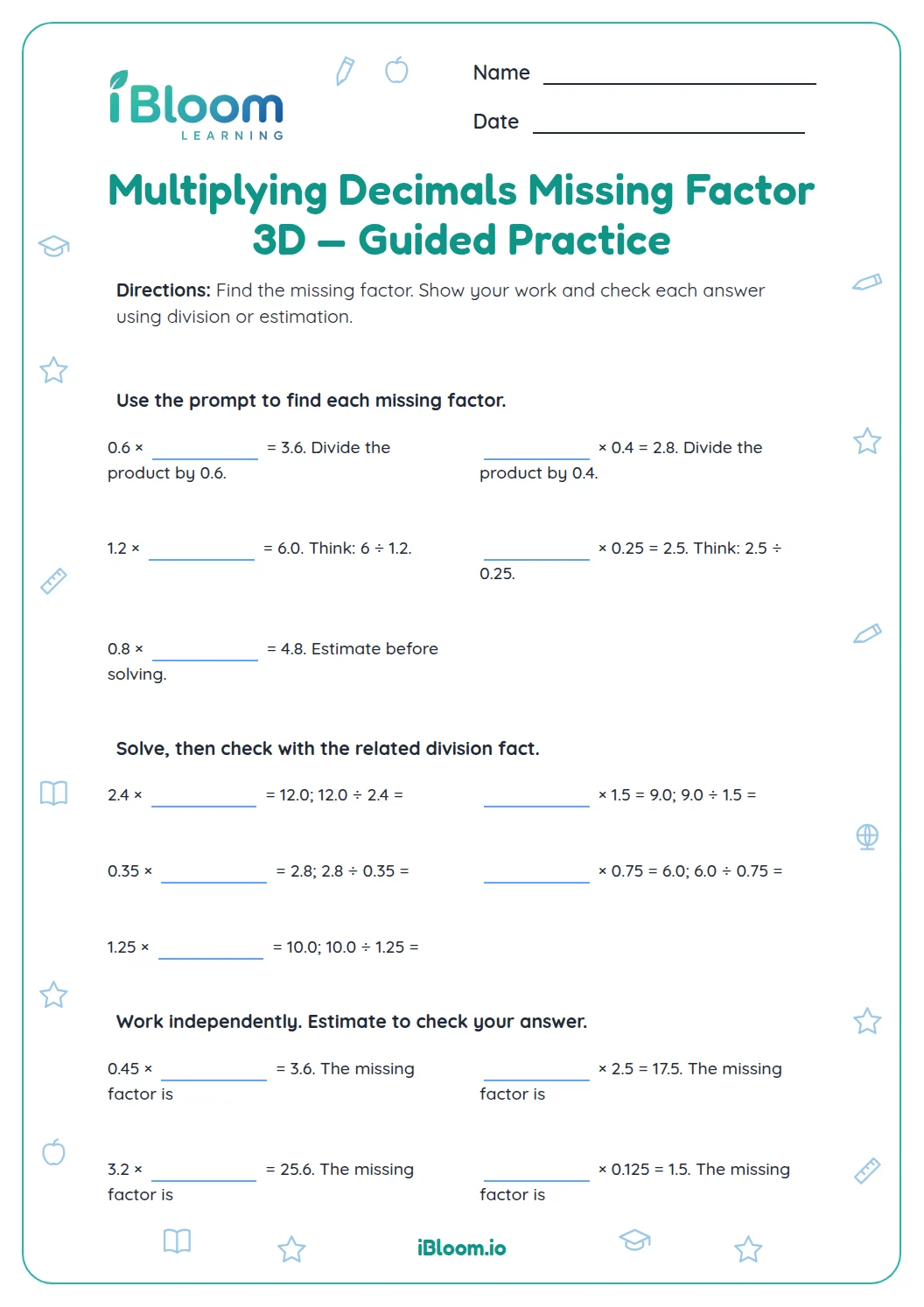
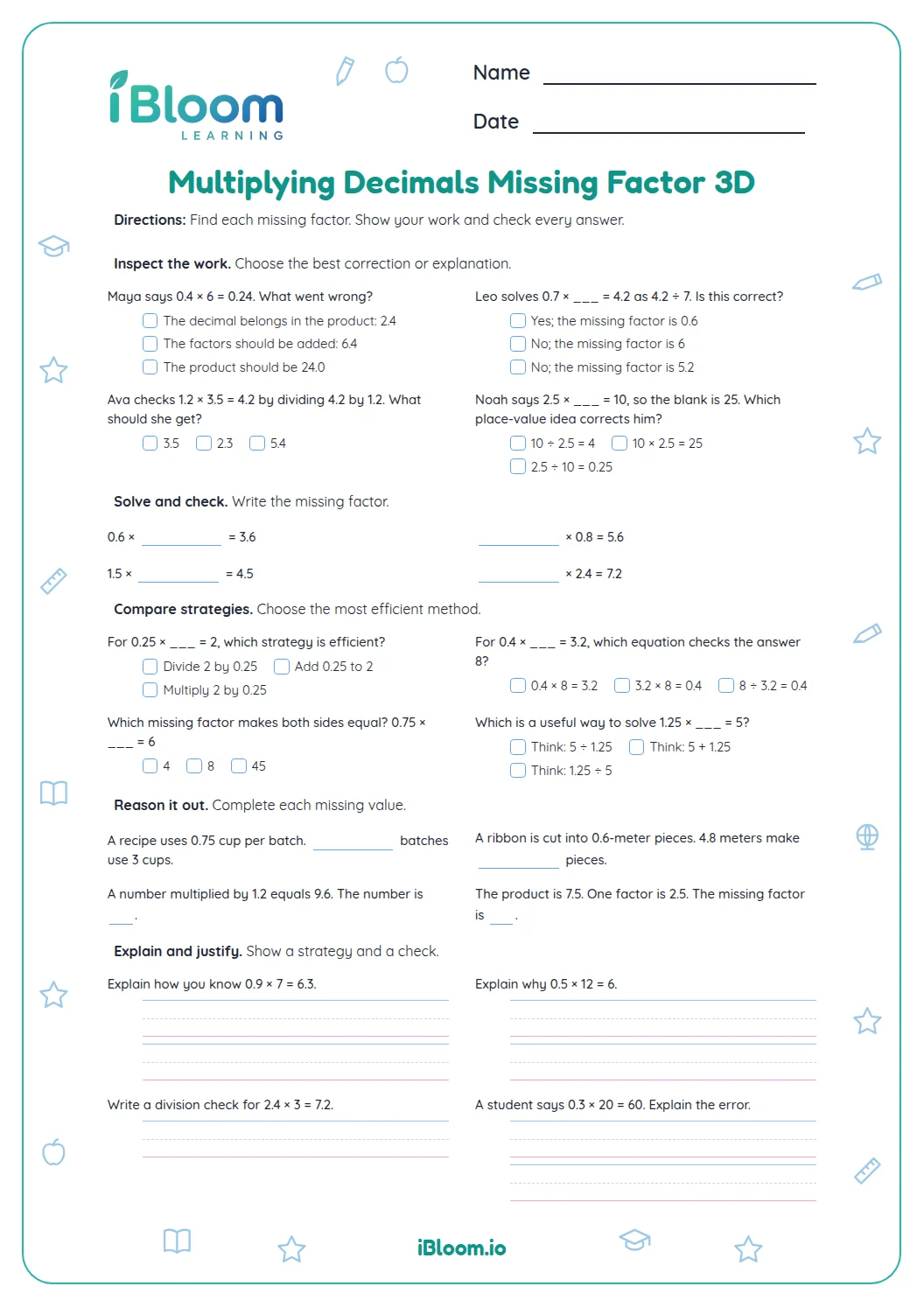
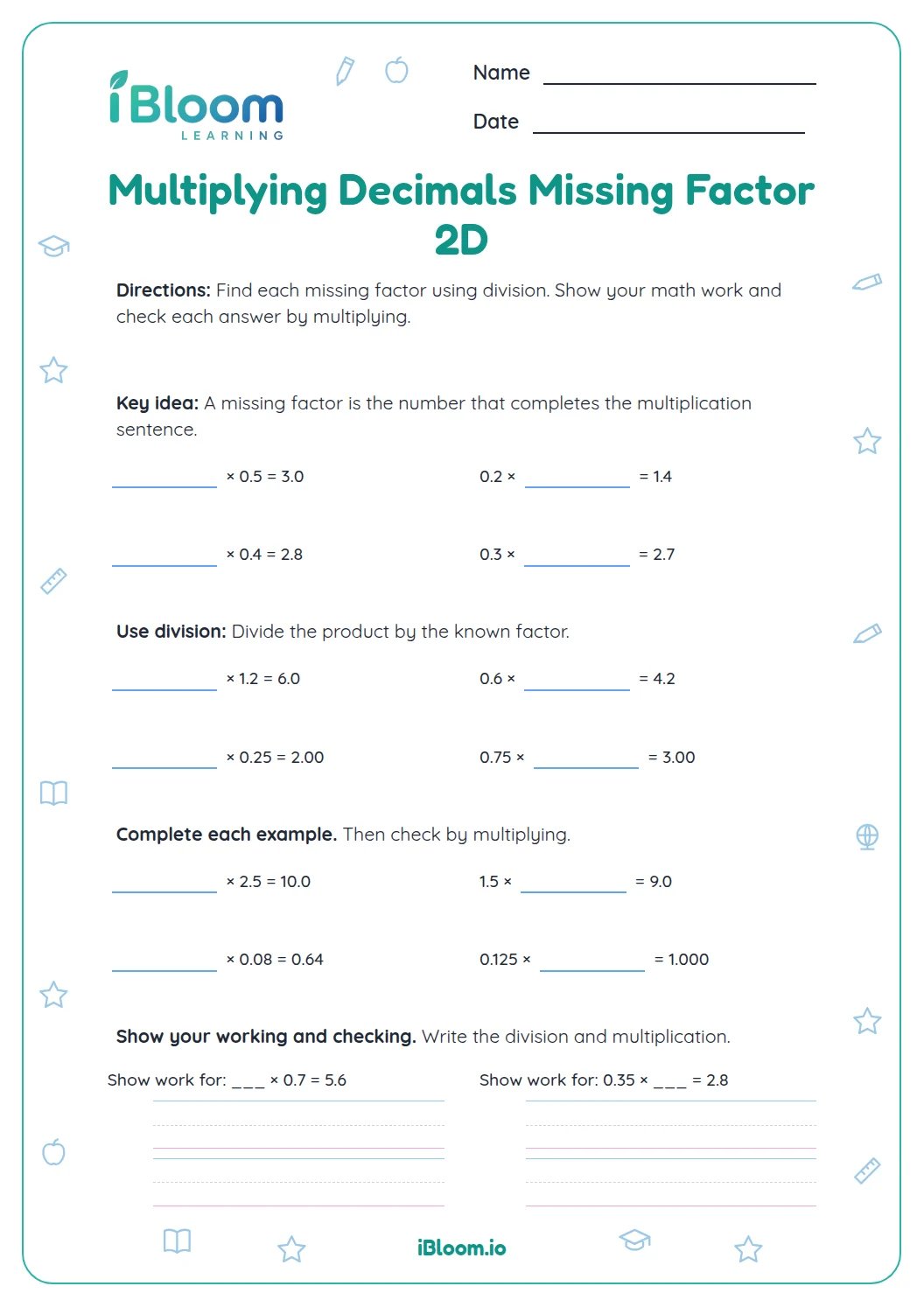
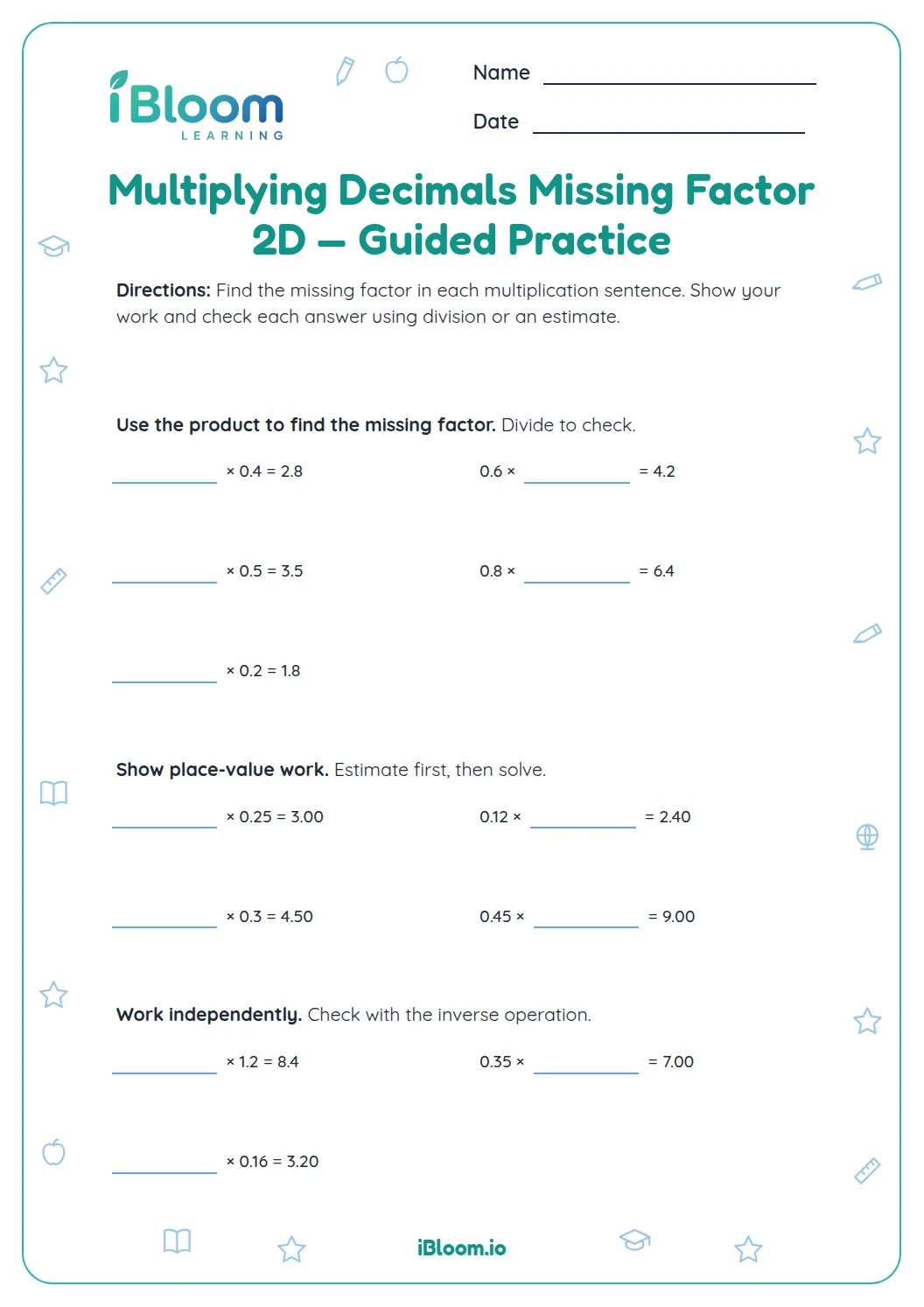
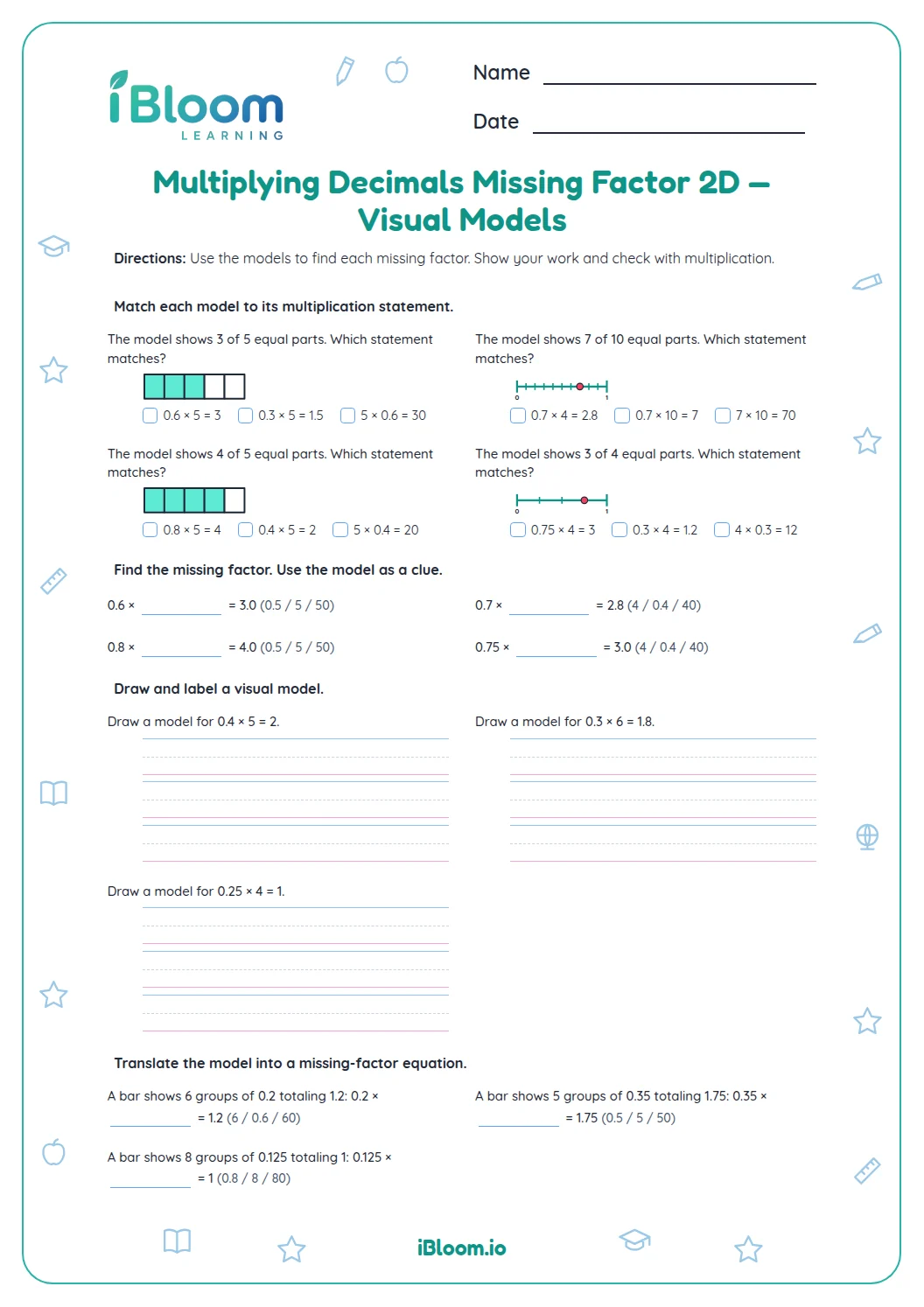
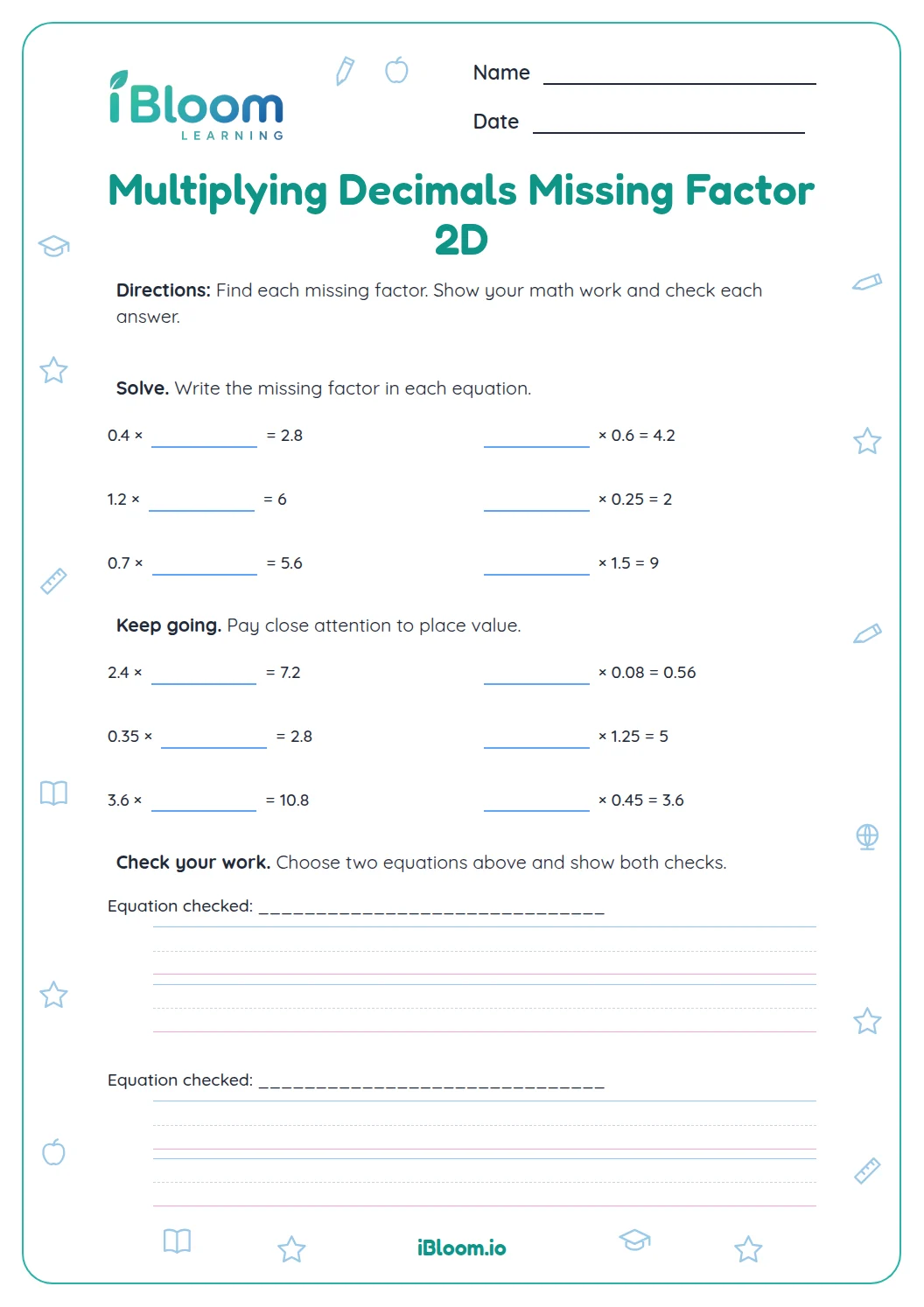
This Grade 5 worksheet practices finding an unknown factor when decimal multiplication gives a known product. Across 15 questions, students use division to solve equations and measurement situations. Decimal values extend through thousandths, and a separate answer key supports review. The page practices Common Core 5.NBT.B.7 through decimal operations and inverse relationships.
How does division help?
Each equation gives a product and one factor, so students determine the missing factor using division or a related multiplication fact. Values use tenths and hundredths; each product is exact.
What should I do with decimal places?
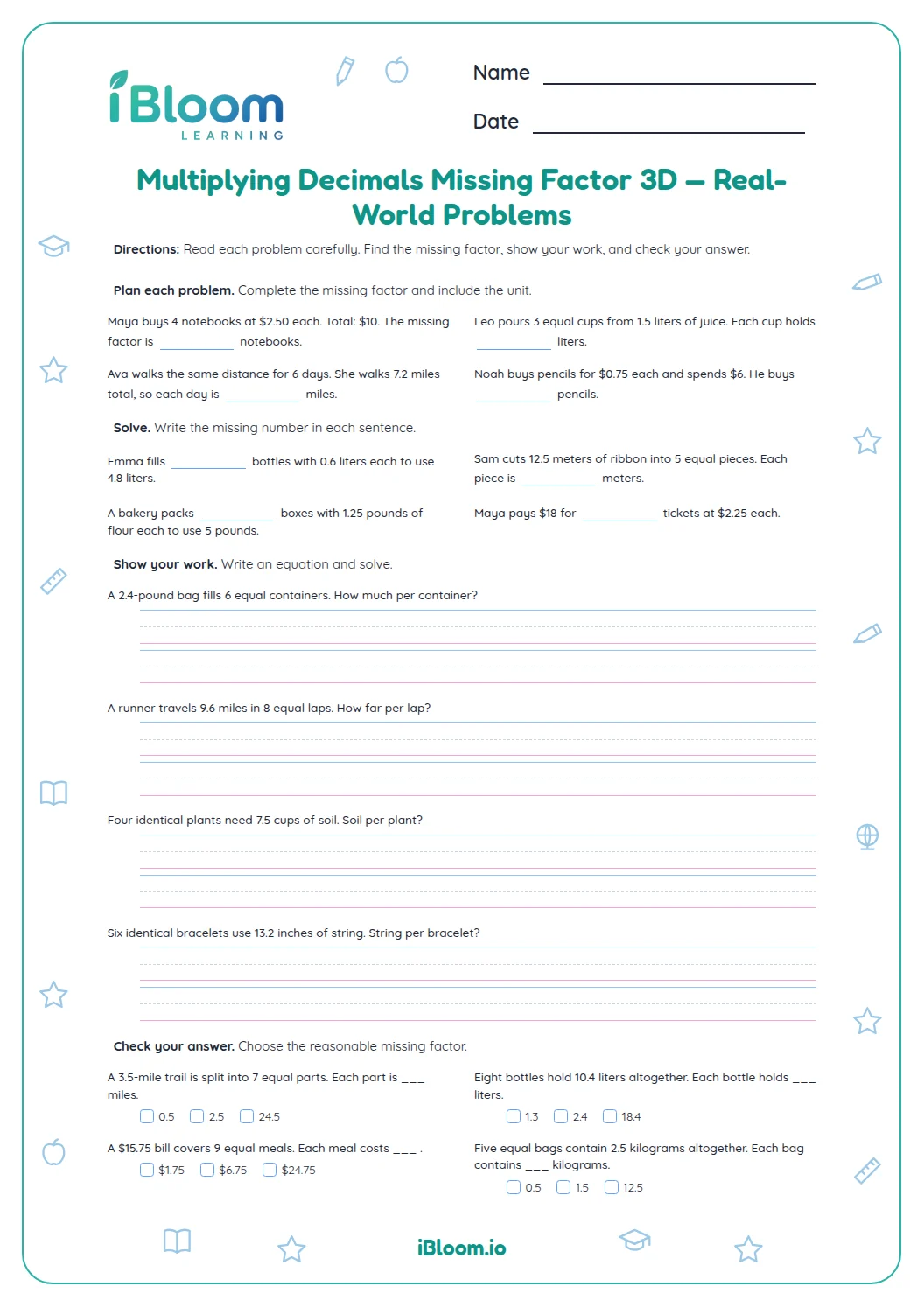
The 15 items include missing-factor equations and measurement situations, with a separate answer key for checking.
How do the story questions work?
Each story gives an amount per group and a total. Divide the total by the amount in each group to find the number of groups, and label the answer with the unit asked for.
How to use this worksheet
- 1Read the product and the factor shown in each equation.
- 2Divide the product by the known factor.
- 3Use place value carefully with hundredths.
- 4In each story, identify the per-group amount and total.
- 5Multiply the known and missing factors to check.
- 6Review all 15 responses with the separate key.
Common mistakes and quick fixes
The mistake
Dividing in the wrong order
The fix
Divide the product by the known factor, not the known factor by the product.
The mistake
Losing a decimal place
The fix
Estimate the size first, then multiply the factor back to see whether the product is reasonable.
The mistake
Leaving off the story unit
The fix
Include pouches, boards, cups, laps, or packets in contextual answers.
What to practice next
Make more practice
Further reading
Questions parents and teachers ask
Why divide to find a factor?
Multiplication and division are inverse operations. When a product and one factor are known, divide the product by the known factor to find the missing factor. Multiply the two factors to check that they reproduce the given product.
How can I check decimal placement?
Estimate the missing factor before dividing, then multiply it by the known factor. The product should match the equation. If it does not, check the division and decimal placement. This multiplication check works for the equation items and the short measurement situations.
What is included in the worksheet?
The worksheet has 15 questions: ten missing-factor equations and five short measurement situations. Factors use tenths, hundredths, and thousandths where appropriate. The separate answer key supports checking, and students can verify each result by multiplying the factors.
How should students solve the context problems?
Treat the total as the product and the amount in each group as the known factor. Divide total by that amount to find the missing number of groups, include the requested unit, and multiply back to check that the product matches.
How does decimal place value help?
Estimate the size of the missing factor before dividing. Then check the decimal placement by multiplying the answer by the known factor and comparing the product with the equation. Estimate the quotient first so the decimal point lands in a reasonable place.
How can students solve the context problems?
The title suffix 3D identifies this variant in the source collection. The worksheet itself practices missing-factor decimal multiplication: divide the product by the known factor, then multiply to check. Its values and questions make the skill clear without relying on the suffix.