

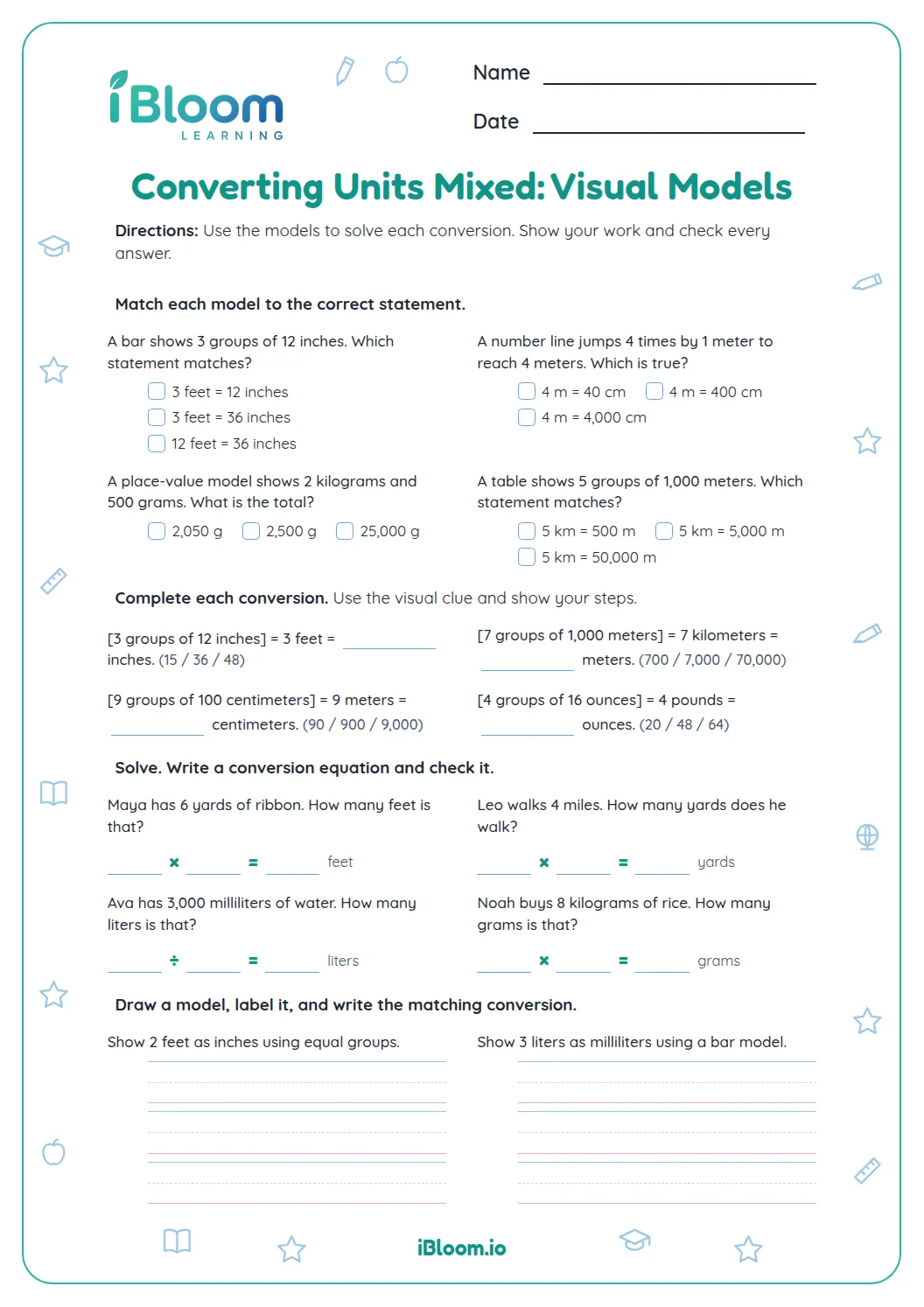
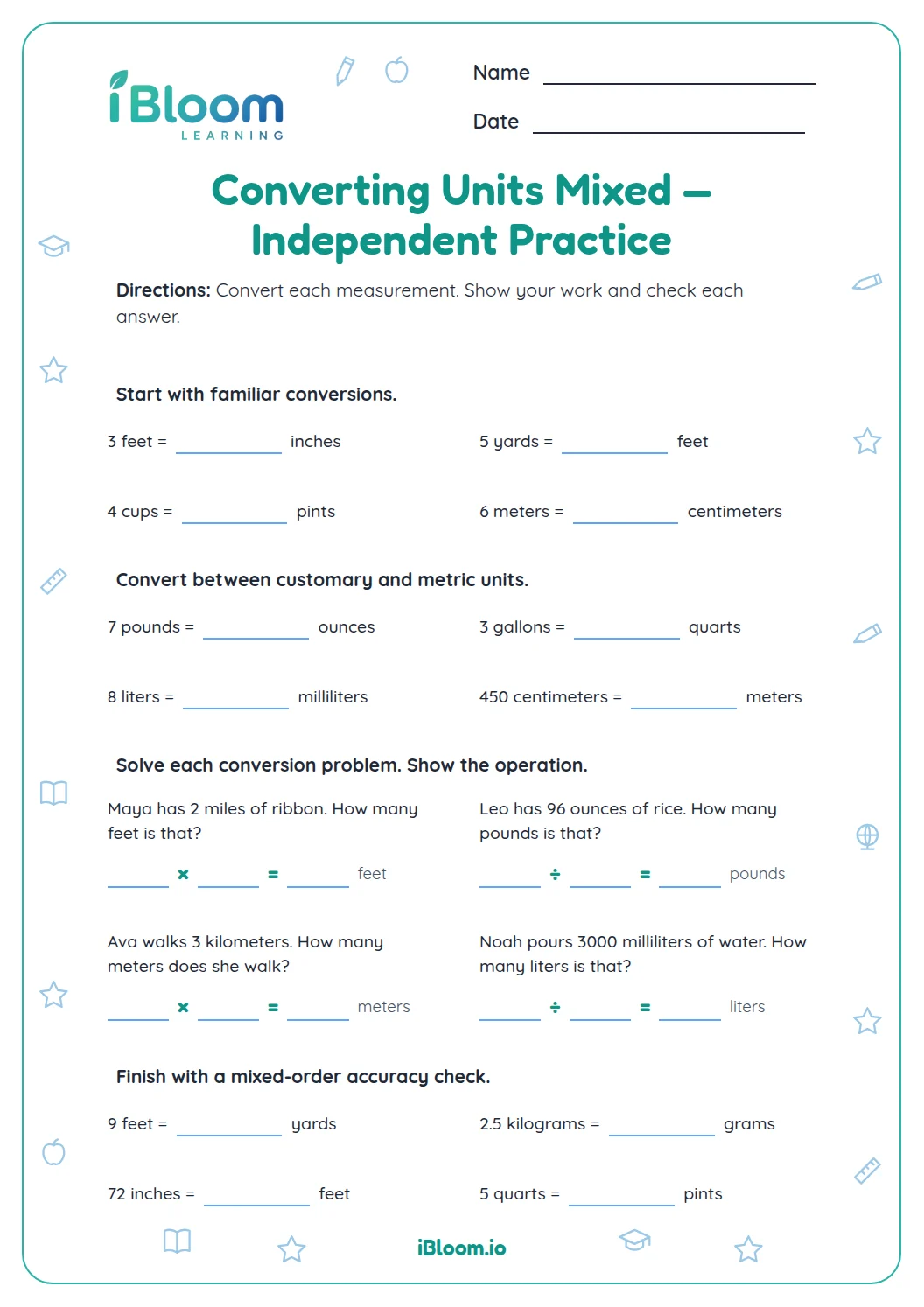
About this worksheet
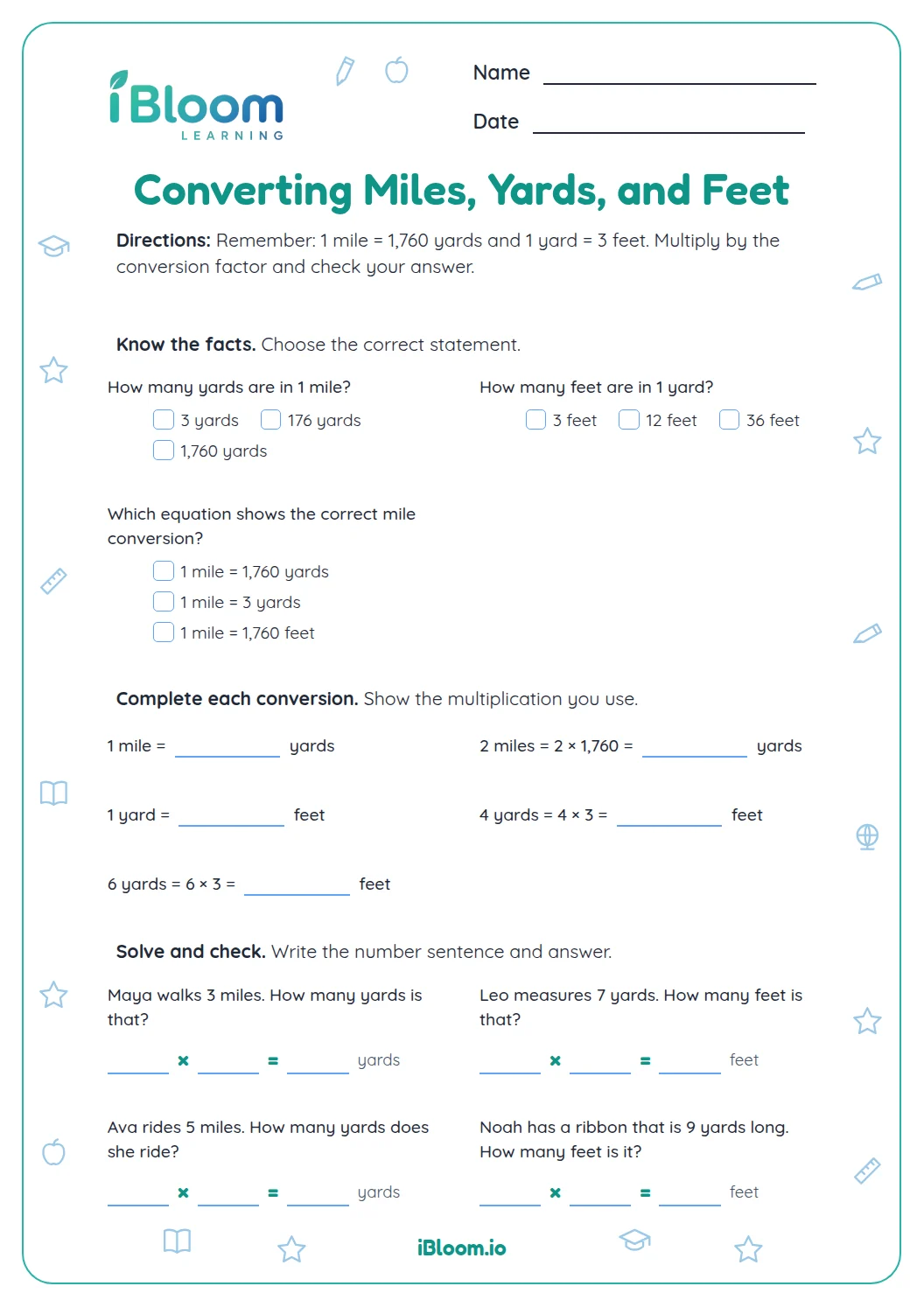
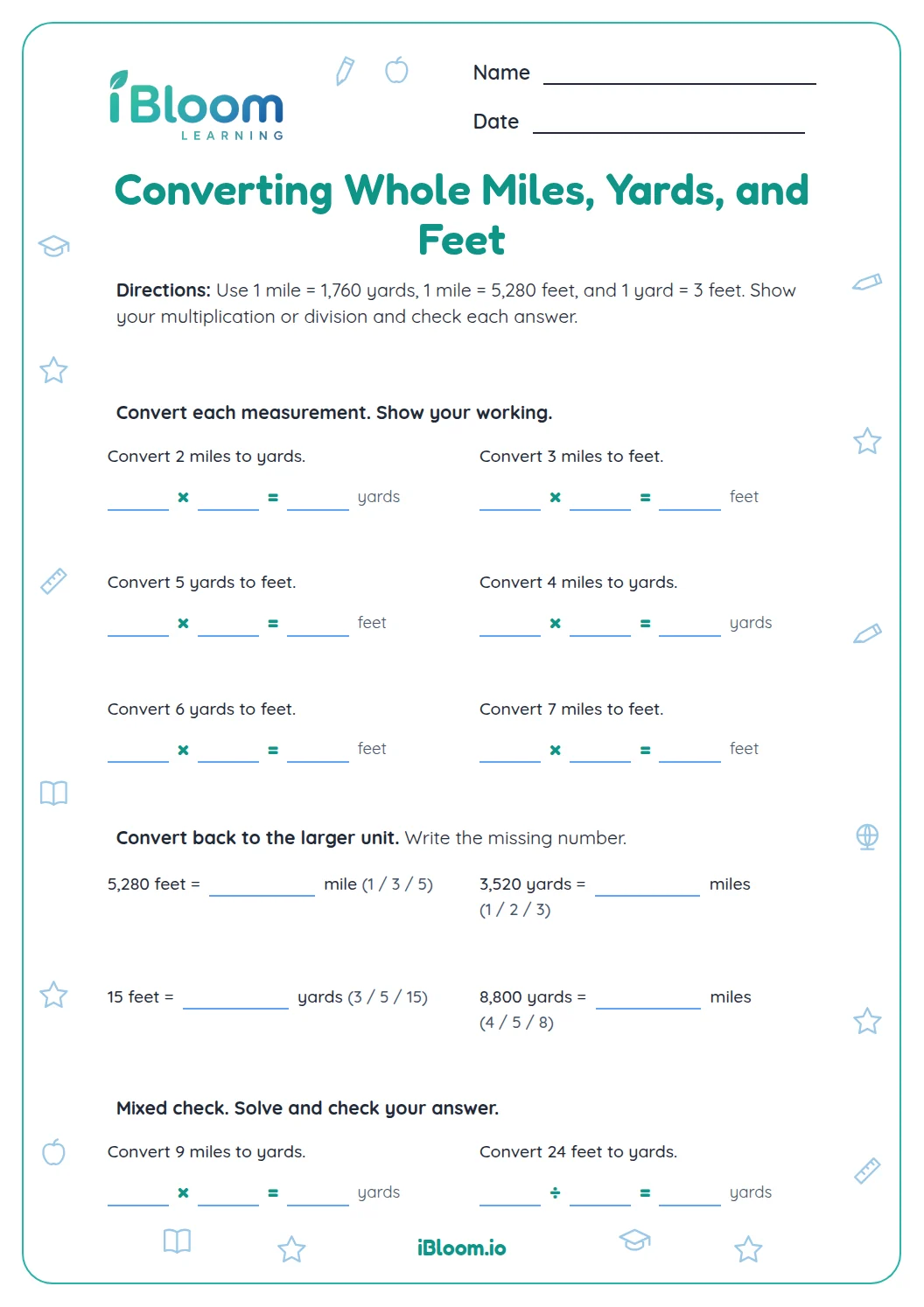
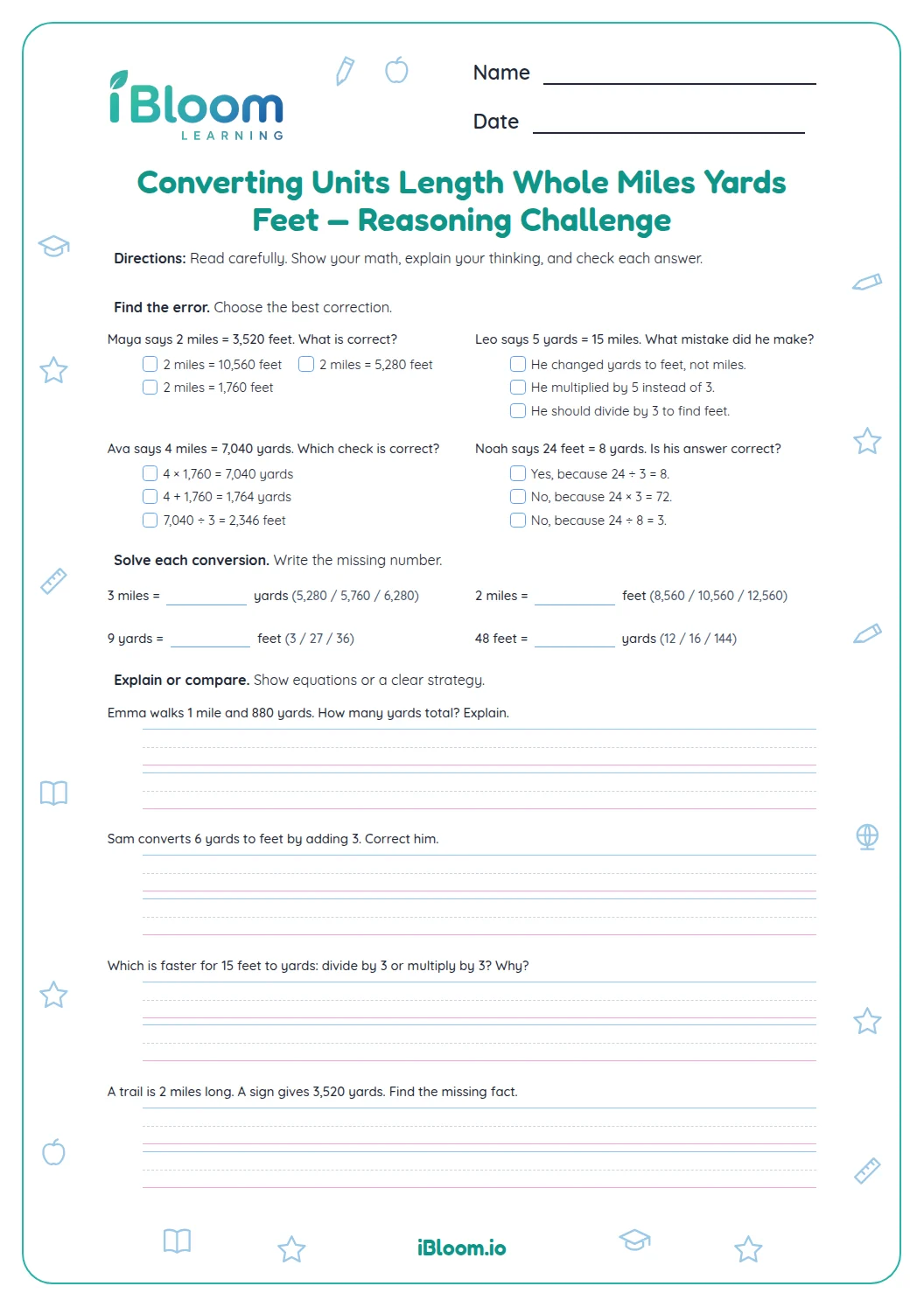
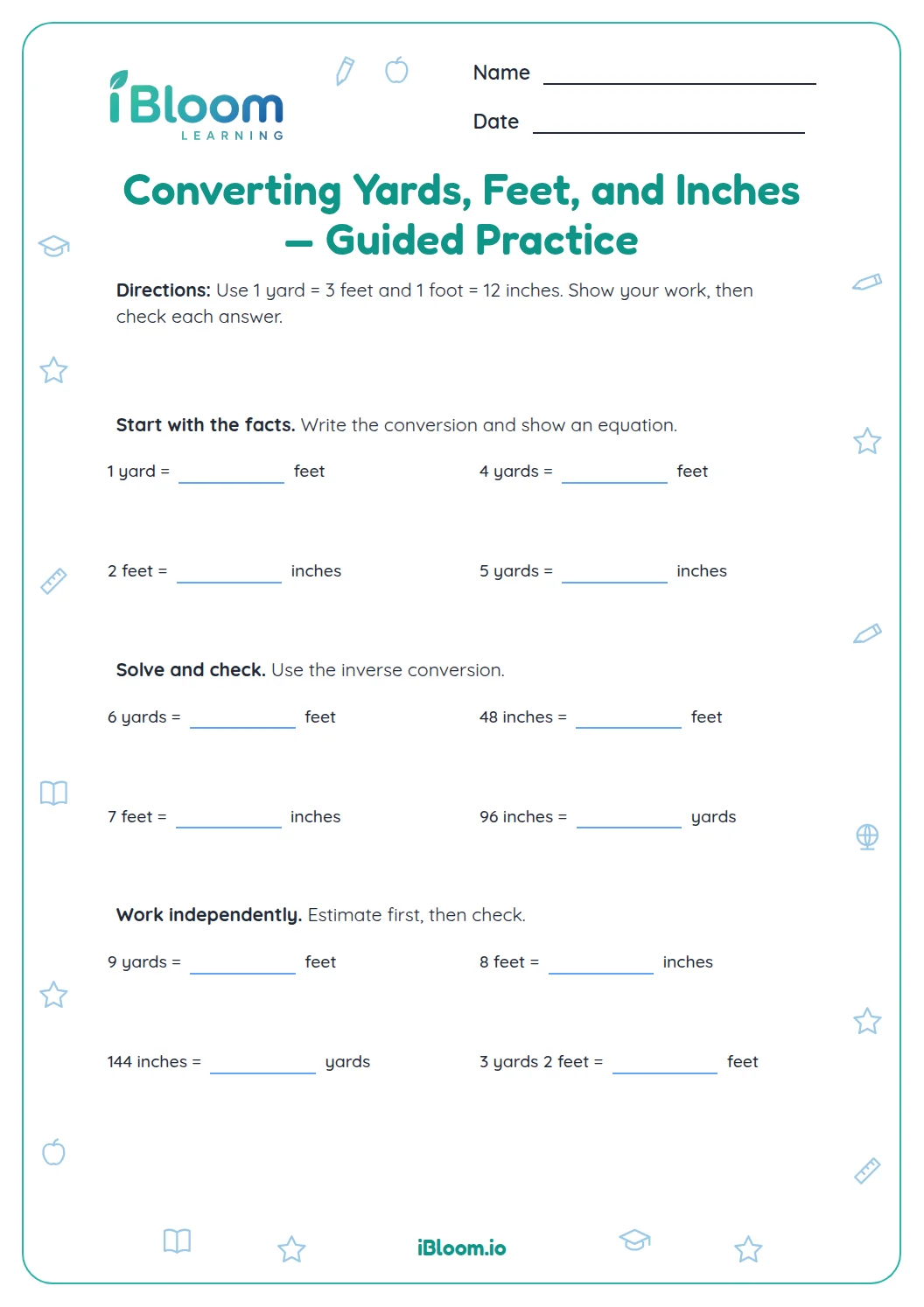
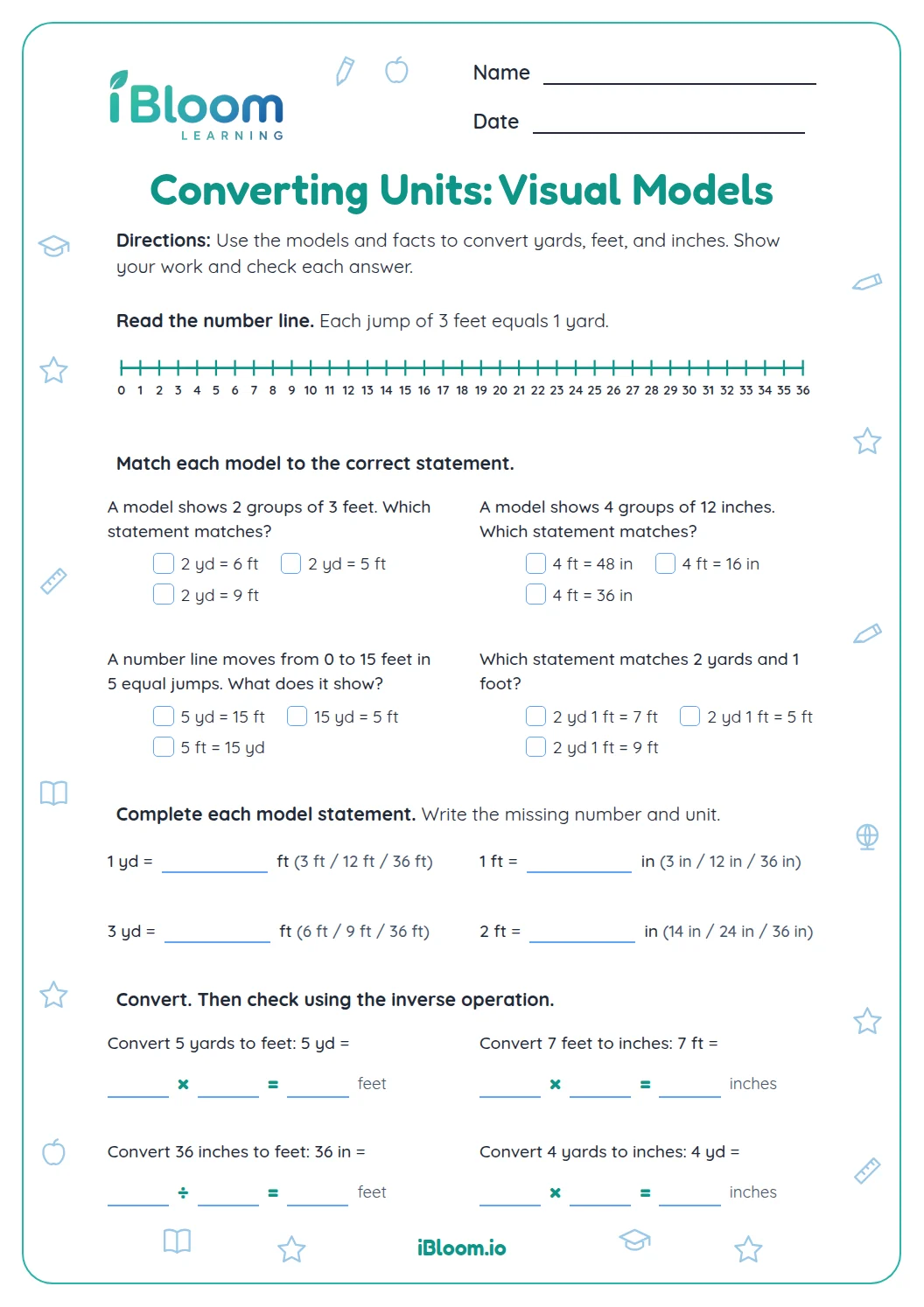
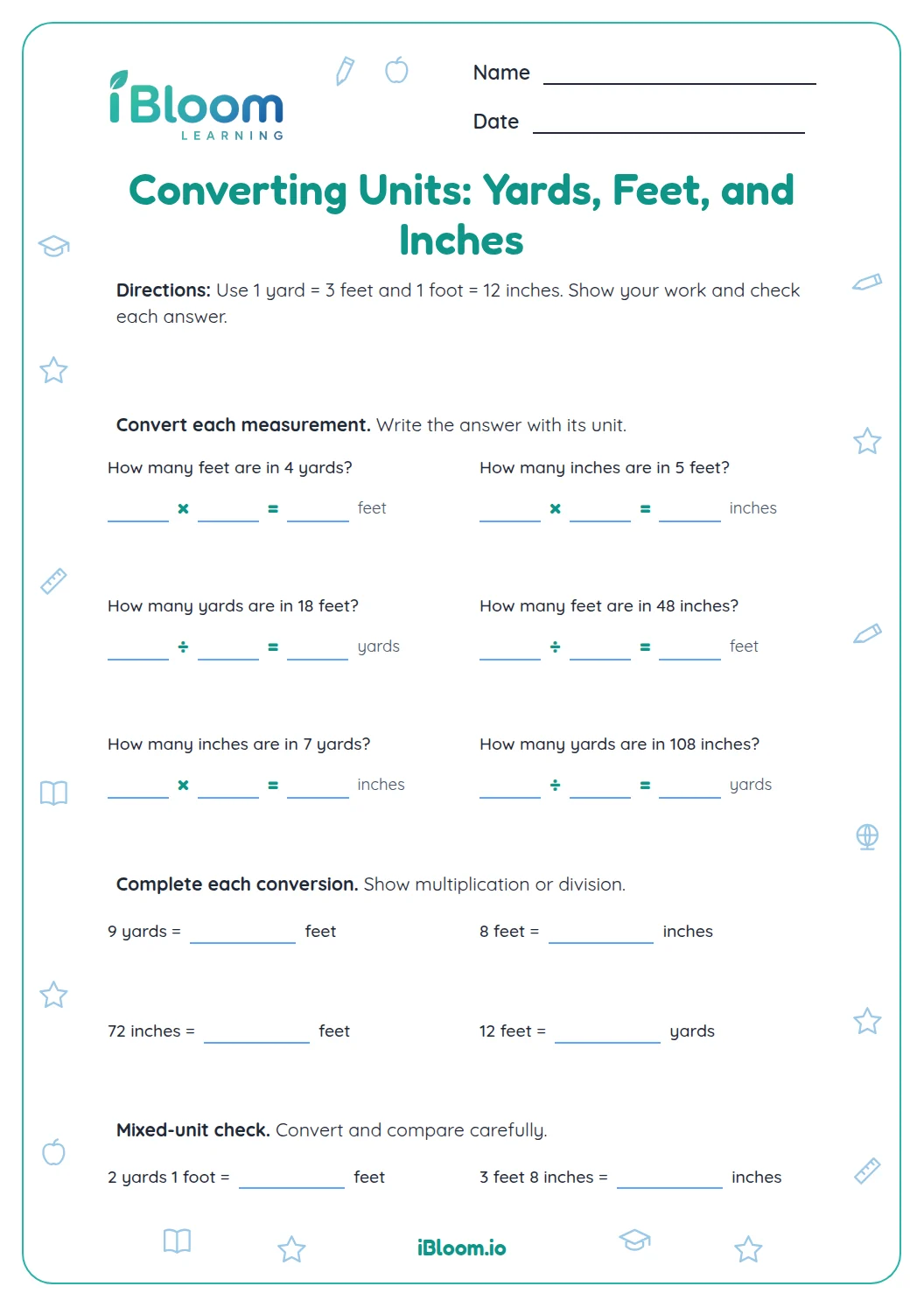
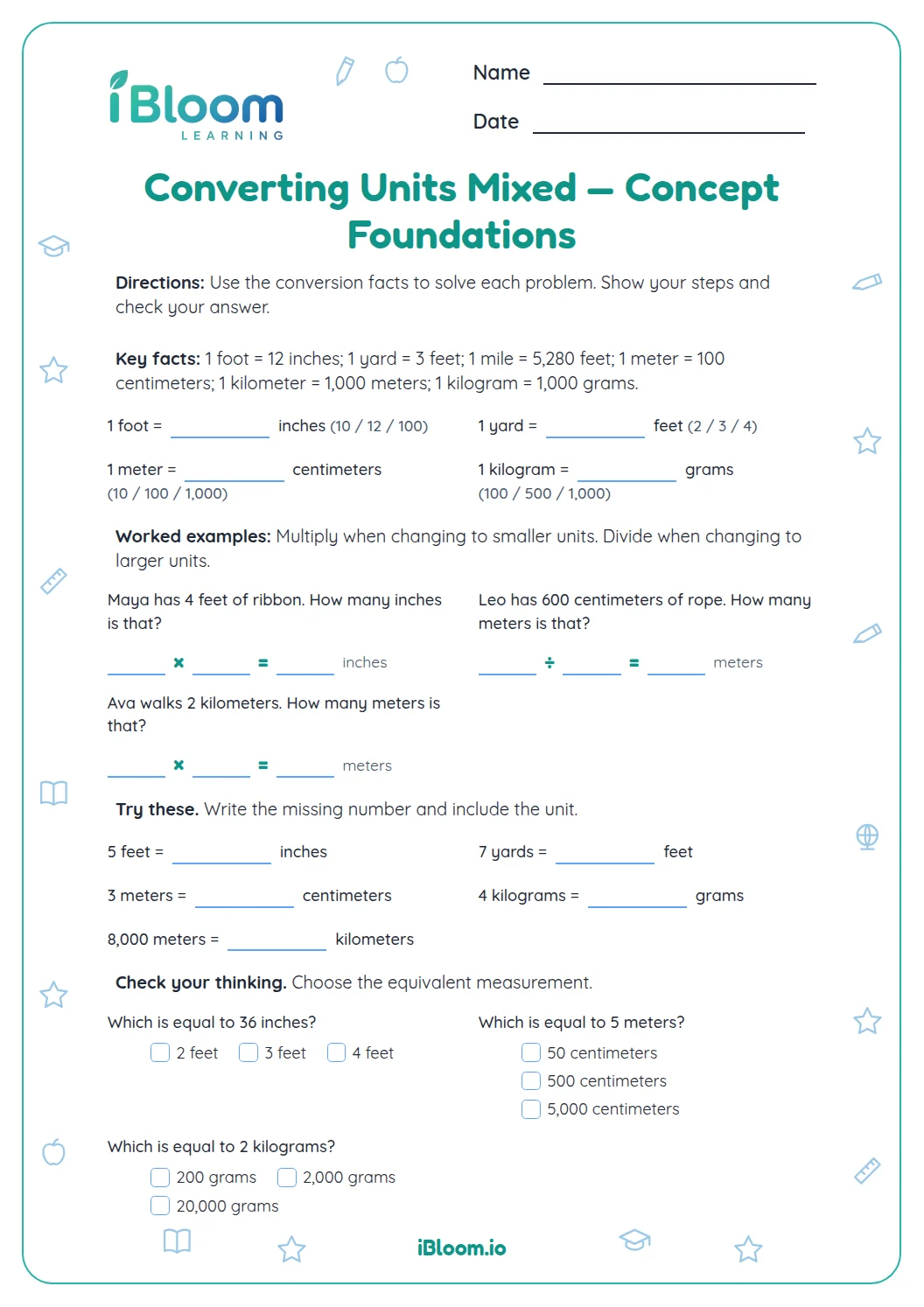
Use 1 mi = 1,760 yd, 1 mi = 5,280 ft, and 1 yd = 3 ft to solve the conversions and real-world problems.
Aligned to 5.MD.A.1
What does this worksheet practice?
Use 1 mi = 1,760 yd, 1 mi = 5,280 ft, and 1 yd = 3 ft to solve the conversions and real-world problems.
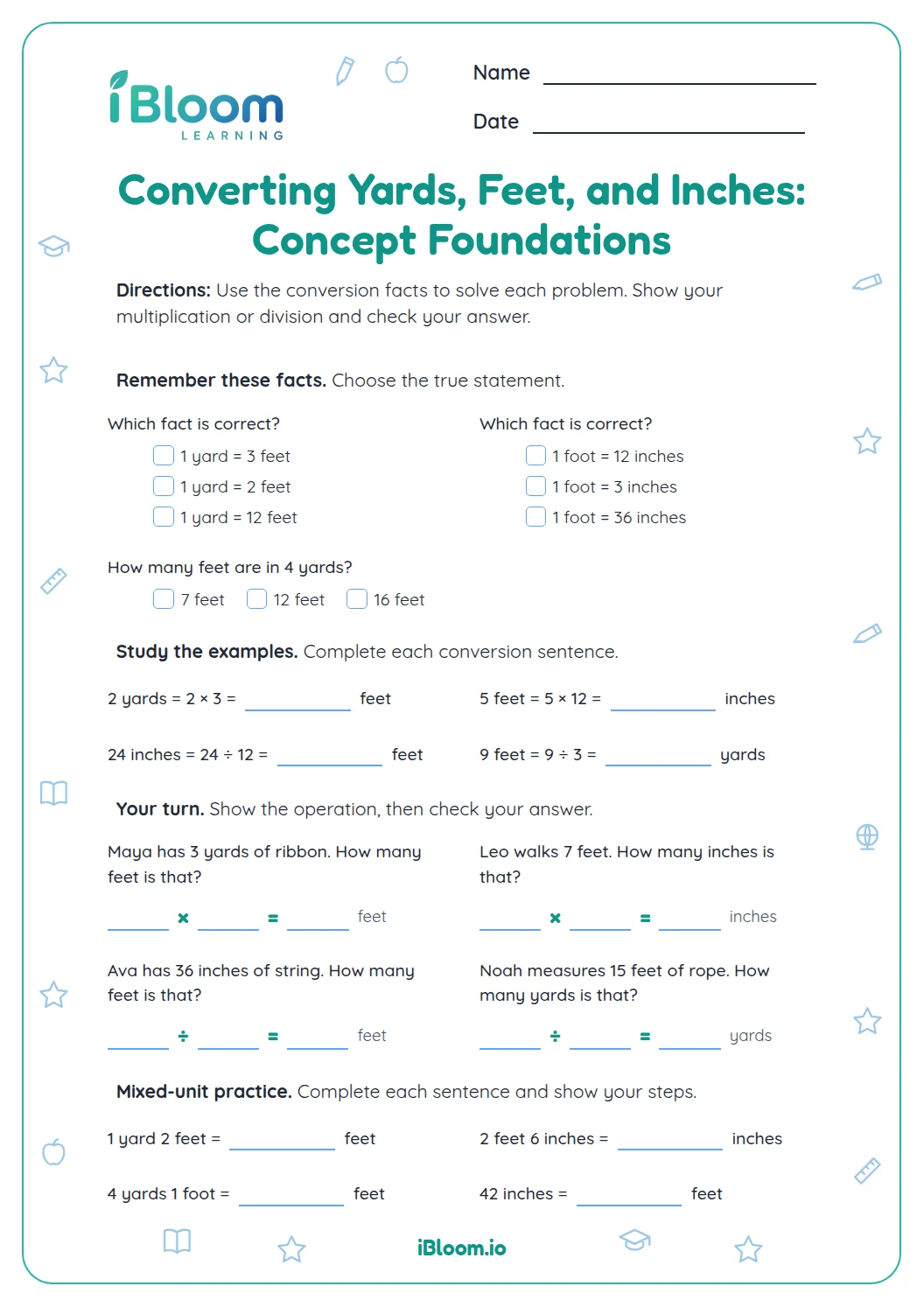
Convert customary length units and solve practical problems.
- 1 mile = 1,760 yards
- 1 mile = 5,280 feet
- 1 yard = 3 feet
- All conversions use whole numbers
How can students approach the questions?
Write the relationship containing the units in the question.
Multiply for a larger-to-smaller conversion; divide for a smaller-to-larger conversion.
How can students check their work?
Check that the size of the answer and its unit make sense.
How to use this worksheet at home or in class
- 1Write the relationship containing the units in the question.
- 2Multiply for a larger-to-smaller conversion; divide for a smaller-to-larger conversion.
- 3Check that the size of the answer and its unit make sense.
Common mistakes and quick fixes
The mistake
Using 1,760 for miles-to-feet.
The fix
Miles to feet uses 5,280 feet per mile.
The mistake
Changing the unit label without changing the amount.
The fix
Write the conversion equation with units.
The mistake
Dividing when converting miles to yards.
The fix
A yard is smaller than a mile, so the yard count should be larger.
Curriculum alignment
This page practices the named skill at the listed grade level.
Convert customary length units and solve practical problems.
On this sheet: Convert customary length units and solve practical problems.
Show the official wordingHide the official wording
Convert among different-sized standard measurement units within a given measurement system (e.g., convert 5 cm to 0.05 m), and use these conversions in solving multi-step, real-world problems.
What to practice next
Further reading
Questions parents and teachers ask
What are the key customary length conversions?
One mile equals 1,760 yards and also equals 5,280 feet. One yard equals 3 feet. Write the unit relationship before calculating so the conversion factor matches the units in the question. This sheet uses all three relationships in number sentences and everyday situations.
What grade is this worksheet for?
This worksheet is designed for Grade 5 measurement practice. It aligns with CCSS 5.MD.A.1, which asks students to convert between units within one measurement system and use those conversions in multi-step real-world problems. The examples focus on customary length units used in the United States.
When should I multiply or divide?
Multiply when converting from a larger unit to a smaller unit, such as miles to feet, because the smaller units occur in a greater number. Divide when converting from a smaller unit to a larger one, such as yards to miles. Check that the answer size makes sense.
Is an answer key included?
Yes. A separate answer key gives the converted lengths and the answers to all five real-world problems. Students should include the requested unit with each answer and show a conversion equation for the word problems, so the work can be checked as well as the final number.