


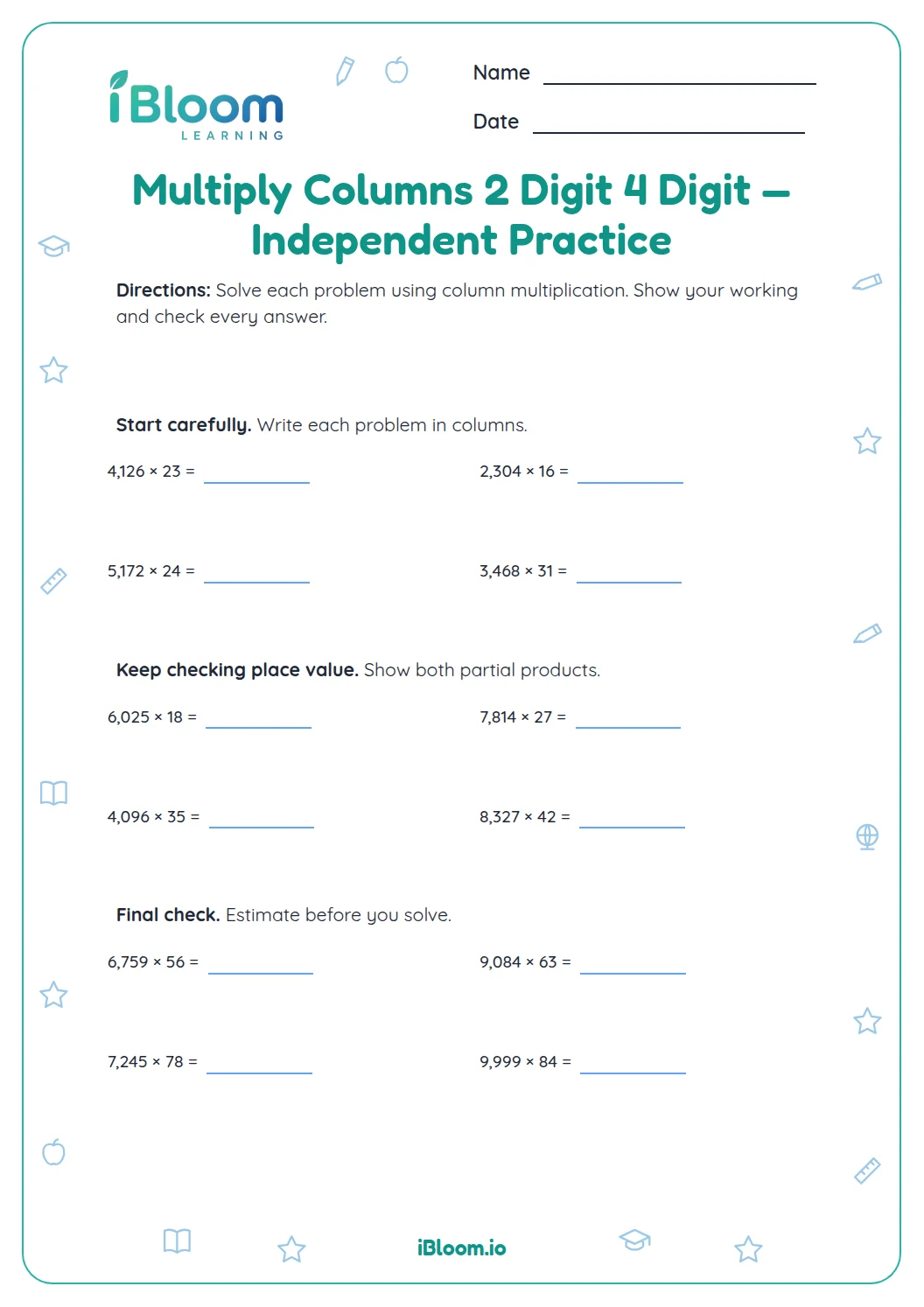
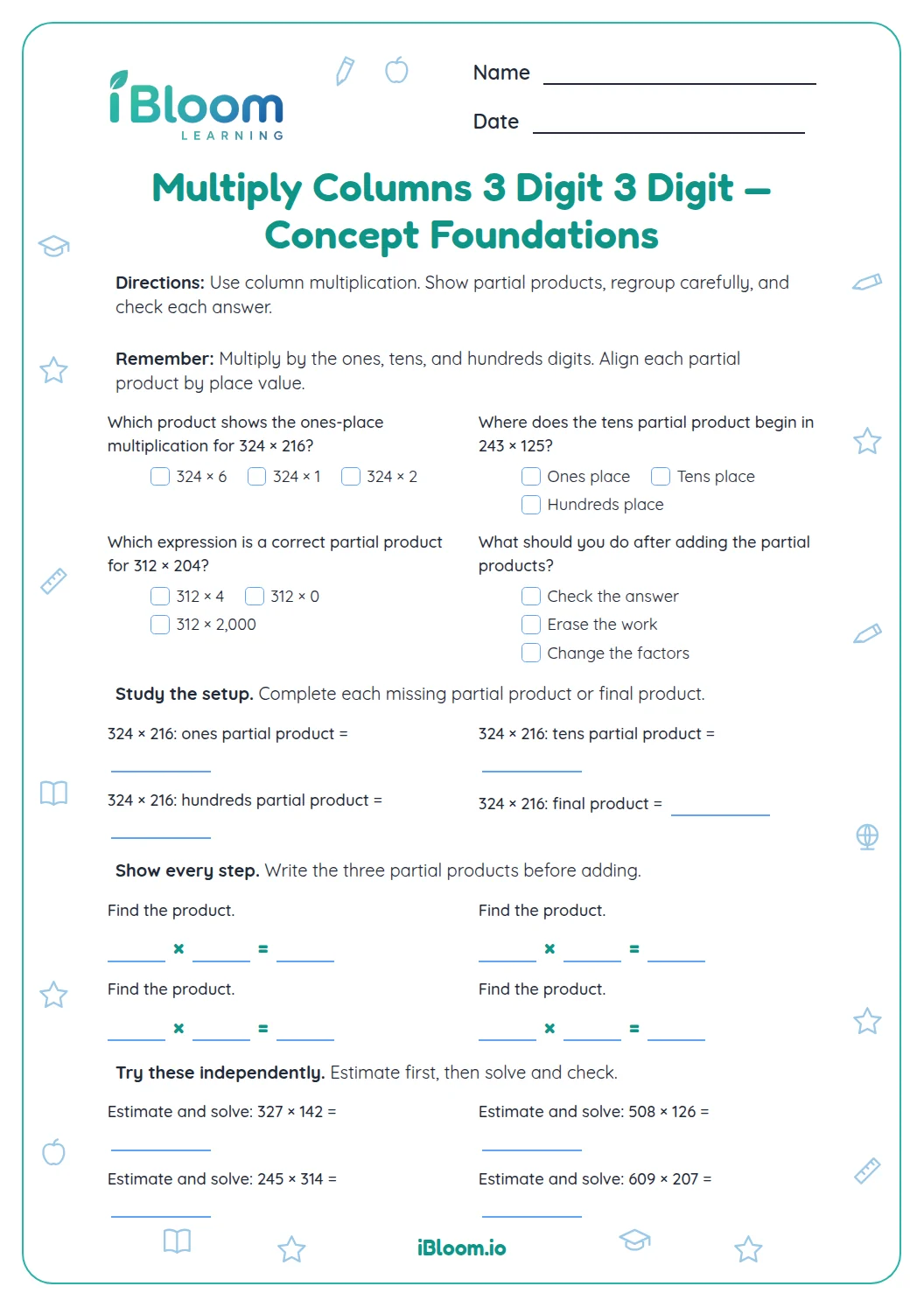


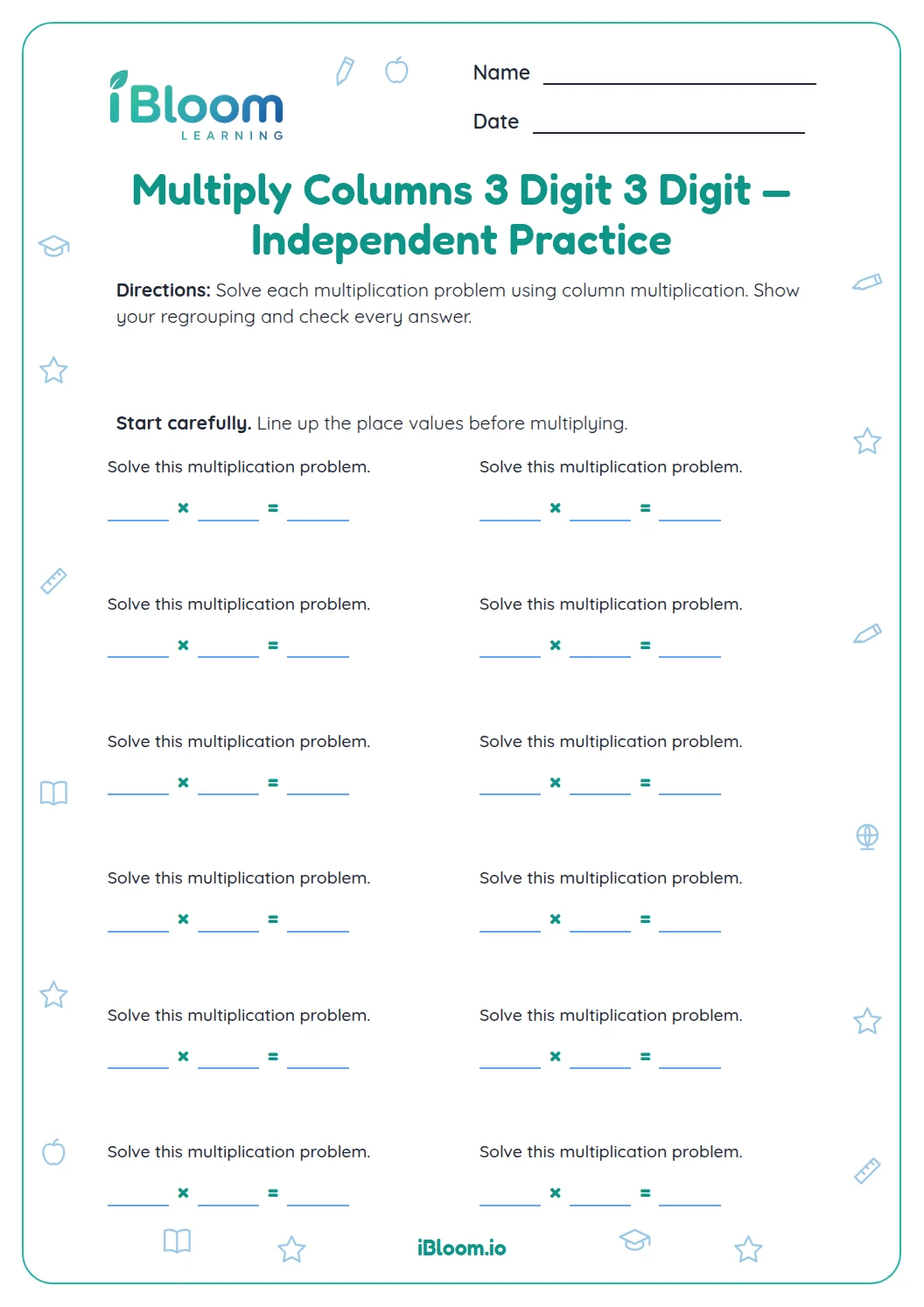
About this worksheet
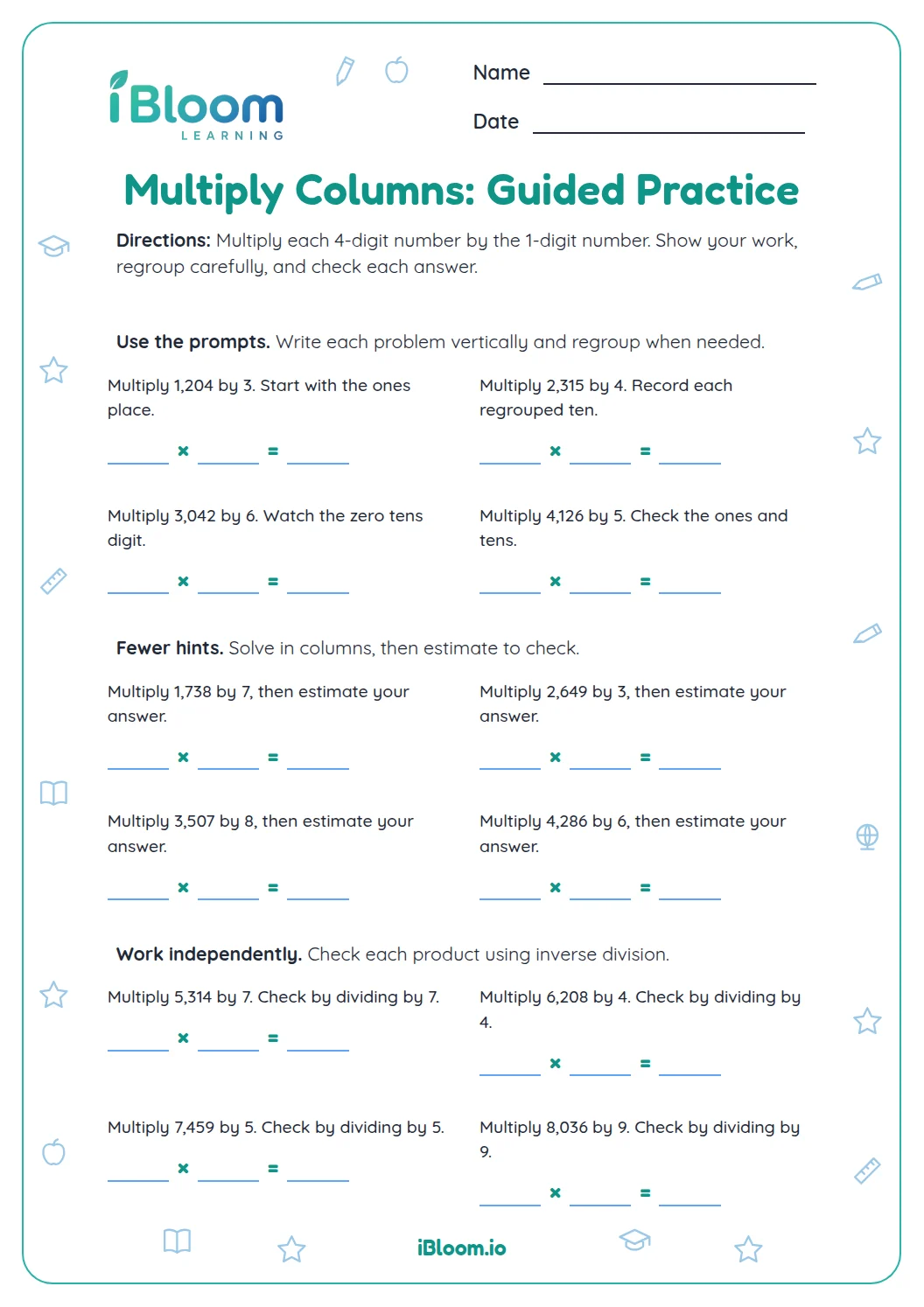
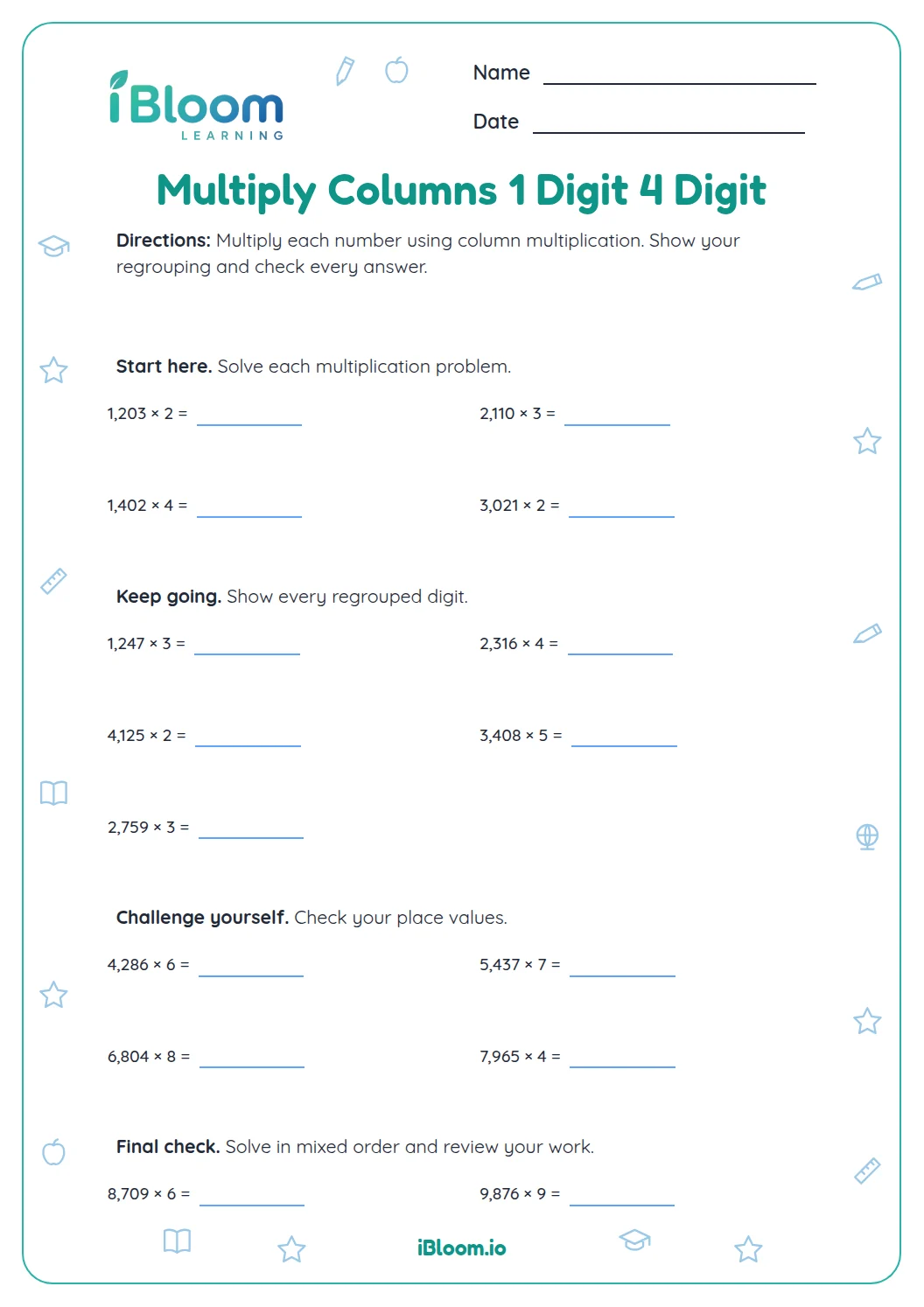
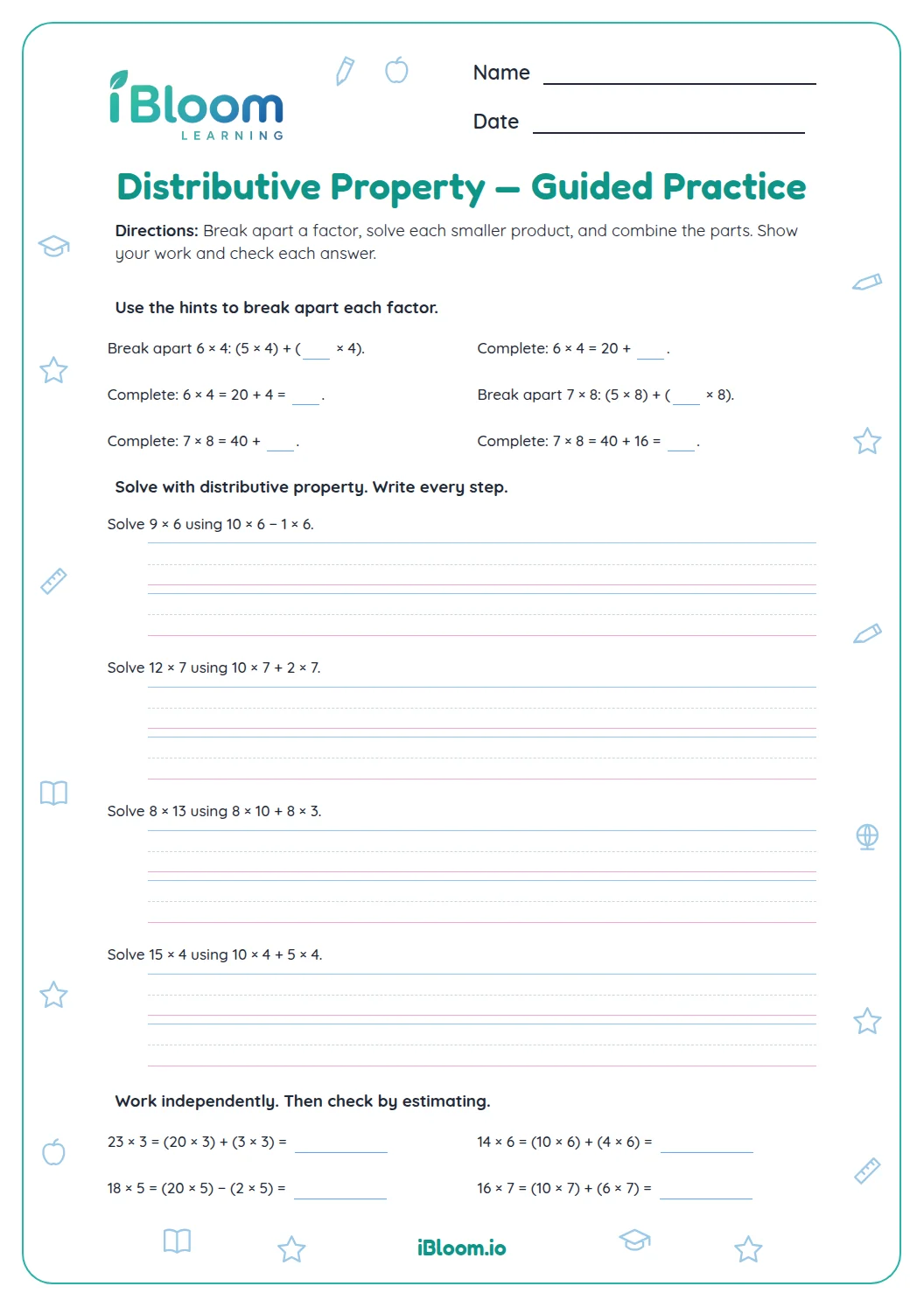
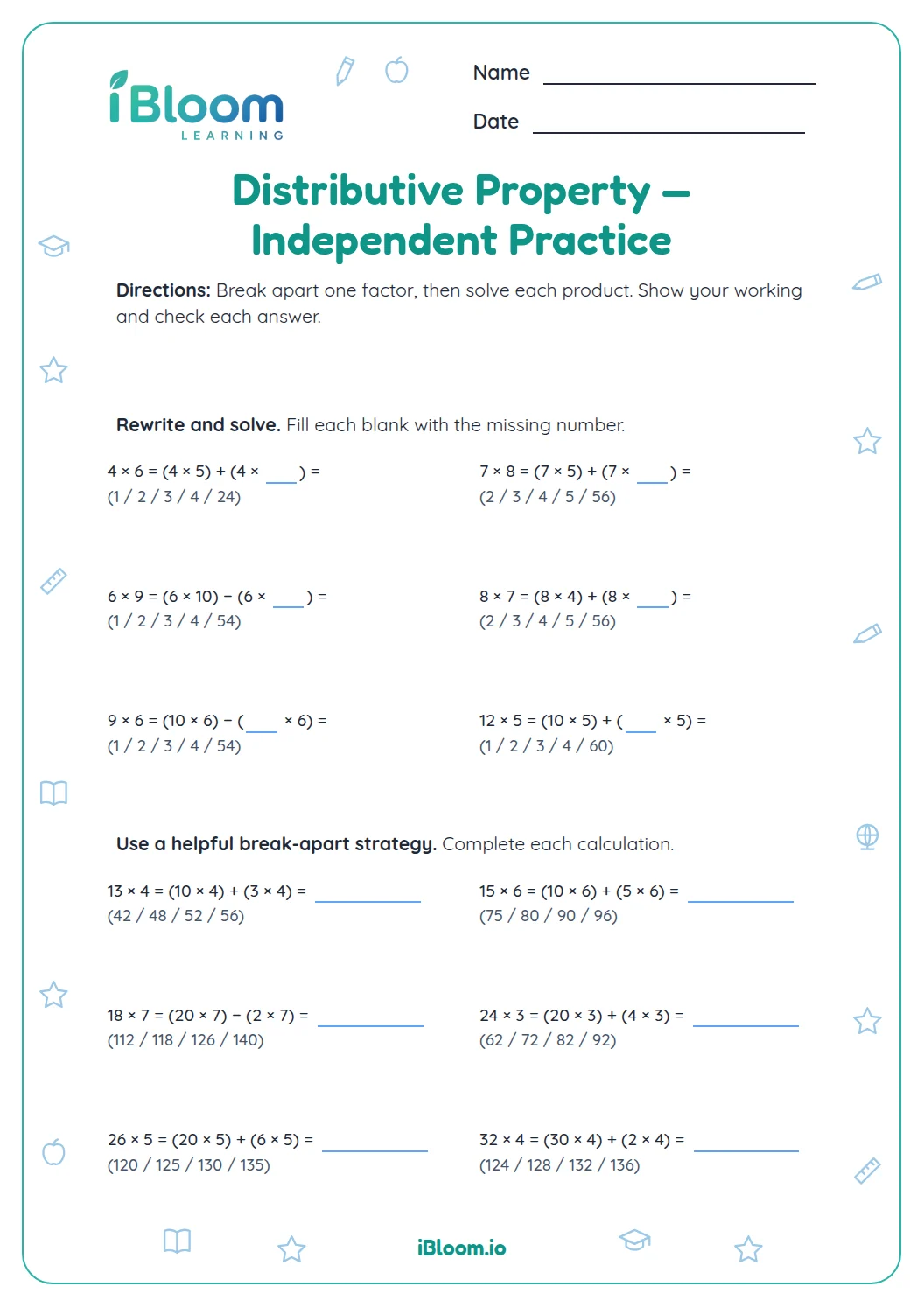
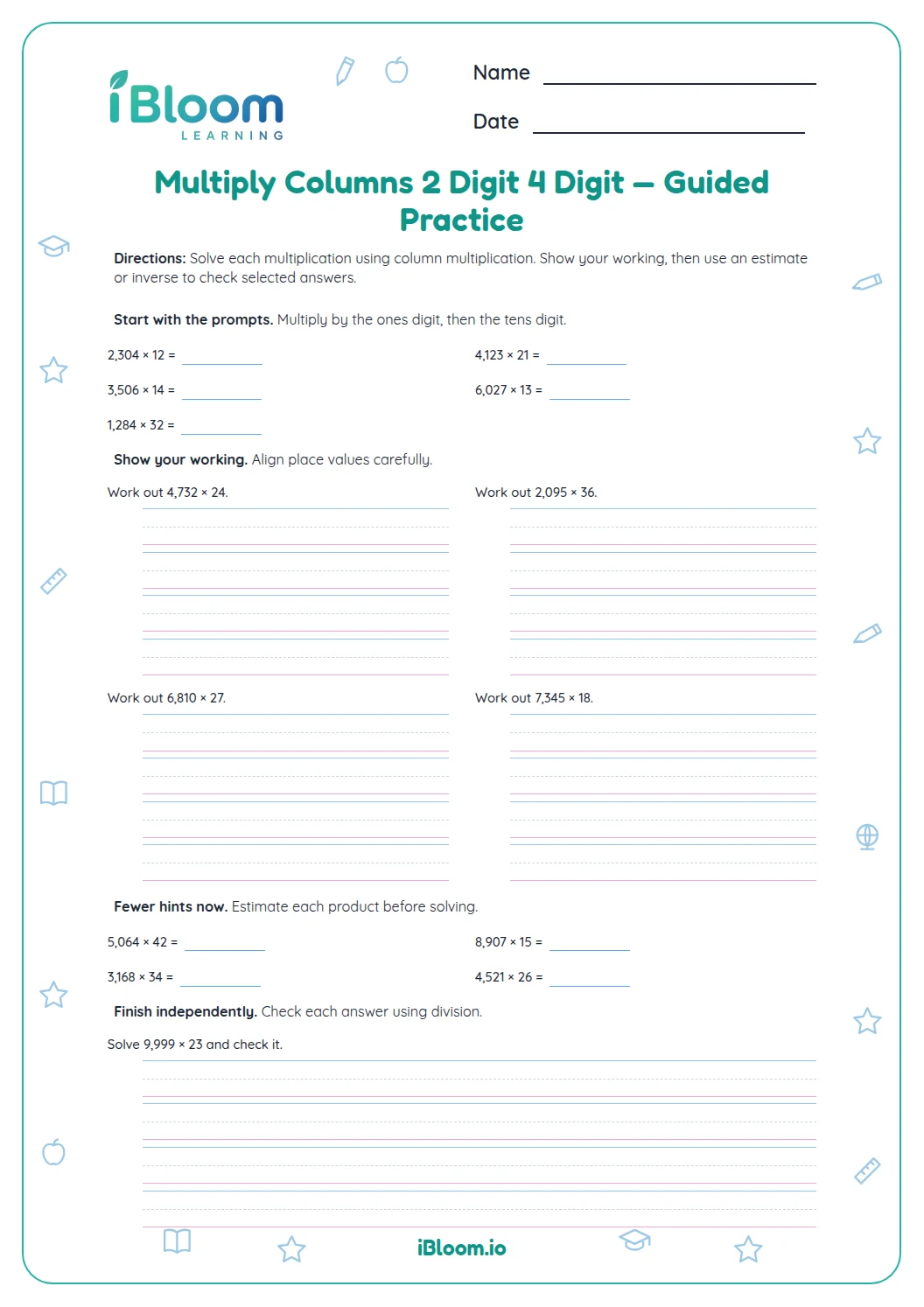
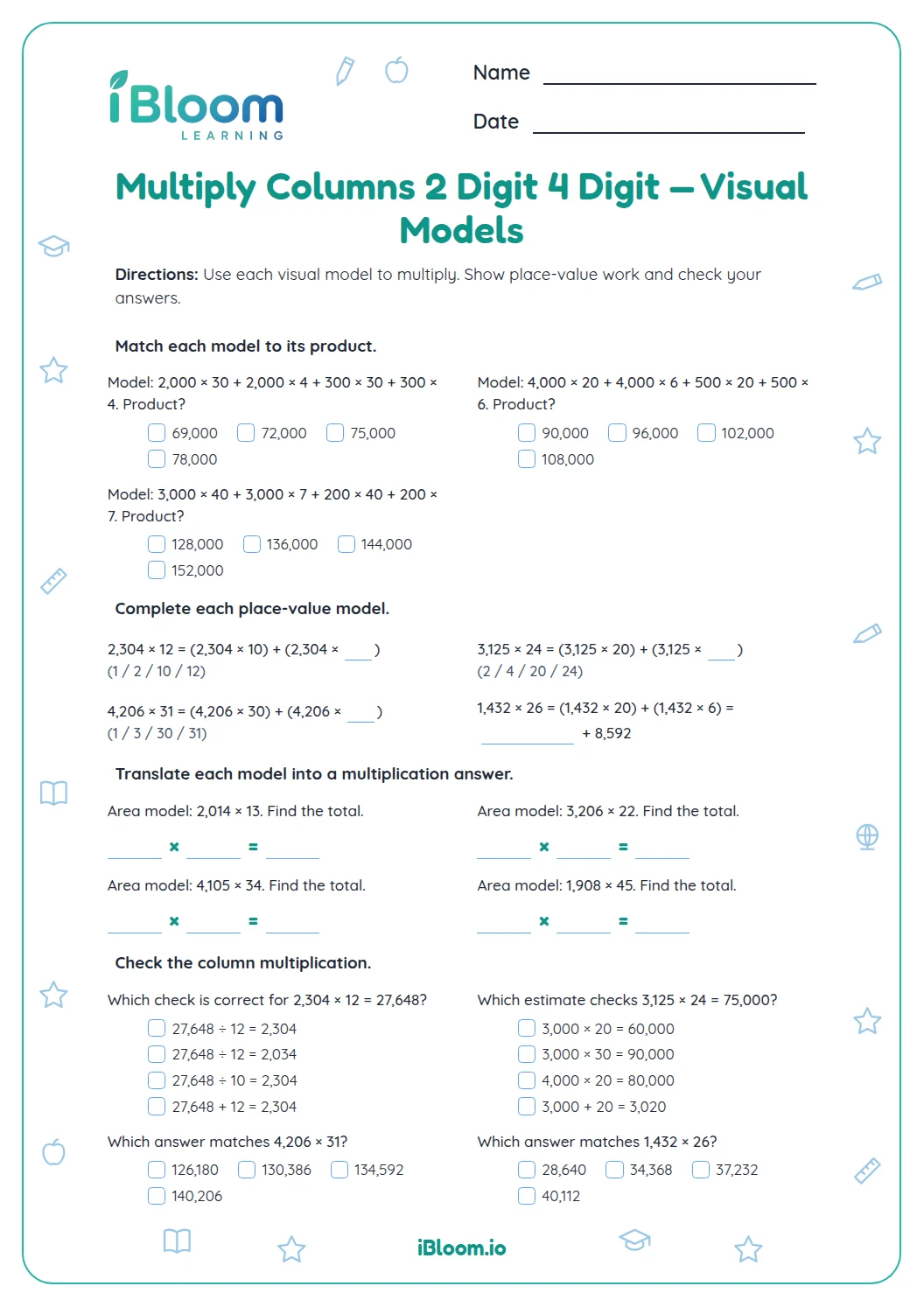
This Grade 5 multiplication worksheet gives students 14 four-digit by one-digit problems to solve in columns. Part A gives column-work space; Part B checks ten additional products, including factors with zeros and regrouping. The practice supports CCSS 5.NBT.B.5, fluently multiplying multi-digit whole numbers with the standard algorithm. A separate key lists each product.
Aligned to 5.NBT.B.5
When does multiplication need regrouping?
When a digit product is 10 or more, write the ones digit in that place and carry the tens to the next place. For 1,243 × 3, start with 3 × 3 = 9, then continue left.
- 11,243 × 3 = 3,729
- 2Carry each regrouped ten into the next place.
How should a zero in the factor be handled?
A zero holds its place in the number. In 2,306 × 4, multiply 4 by the ones, tens, hundreds, and thousands digits in their correct columns; the zero tens place still belongs in the layout.
- 12,306 × 4 = 9,224
How can students check a product?
Estimate with a nearby friendly number, then compare the estimate with the exact answer. For example, 1,243 × 3 is near 1,200 × 3, or 3,600, so 3,729 is a reasonable product.
How to use this worksheet
- 1Line up the ones digits before multiplying.
- 2Start with the ones place and move one column left at a time.
- 3Write the ones digit of each partial product and regroup the tens.
- 4Keep a zero in its original place when multiplying through the number.
- 5Estimate the product to see whether your answer is reasonable.
Common mistakes and quick fixes
The mistake
Forgetting to add a carried digit to the next product.
The fix
Mark the carry above the next column and include it in that multiplication.
The mistake
Shifting a product digit into the wrong column.
The fix
Keep every written digit directly under its place value.
The mistake
Dropping a zero from the four-digit number.
The fix
Keep the zero column in the written work, even when its digit product is zero.
Common Core alignment
This page practices the following Common Core skill.
Fluently multiply multi-digit whole numbers using the standard algorithm.
On this sheet: Students solve four-digit by one-digit multiplication using column work.
Show the official wordingHide the official wording
Fluently multiply multi-digit whole numbers using the standard algorithm.
What to practice next
Make more practice
Further reading
Questions parents and teachers ask
Are all of the factors four digits long?
Yes. Every problem uses a four-digit whole number multiplied by a one-digit whole number, as named in the worksheet title. Several factors include a zero, and many products require regrouping. This short page is easy to pause between parts and review together using the separate answer key.
Should students show column work?
Yes. Each problem provides working space, and students should align the ones, tens, hundreds, and thousands places. The answer key gives the product for checking. This short page is easy to pause between parts and review together using the separate answer key.
Why are there zeros in some factors?
A zero in a factor is a place-value holder. Keeping that place in the written work helps students maintain the correct alignment as they multiply across the number. This short page is easy to pause between parts and review together using the separate answer key.
How can I help with regrouping?
Have your child say the place value aloud while working. When a digit product reaches ten or more, record the ones digit in that column and carry the tens to the next column. This short page is easy to pause between parts and review together using the separate answer key.
What comes next after this practice?
Students can move to multiplying a four-digit number by a two-digit number. That extends the same place-value alignment and regrouping ideas to a longer written algorithm. This short page is easy to pause between parts and review together using the separate answer key.