




About this worksheet
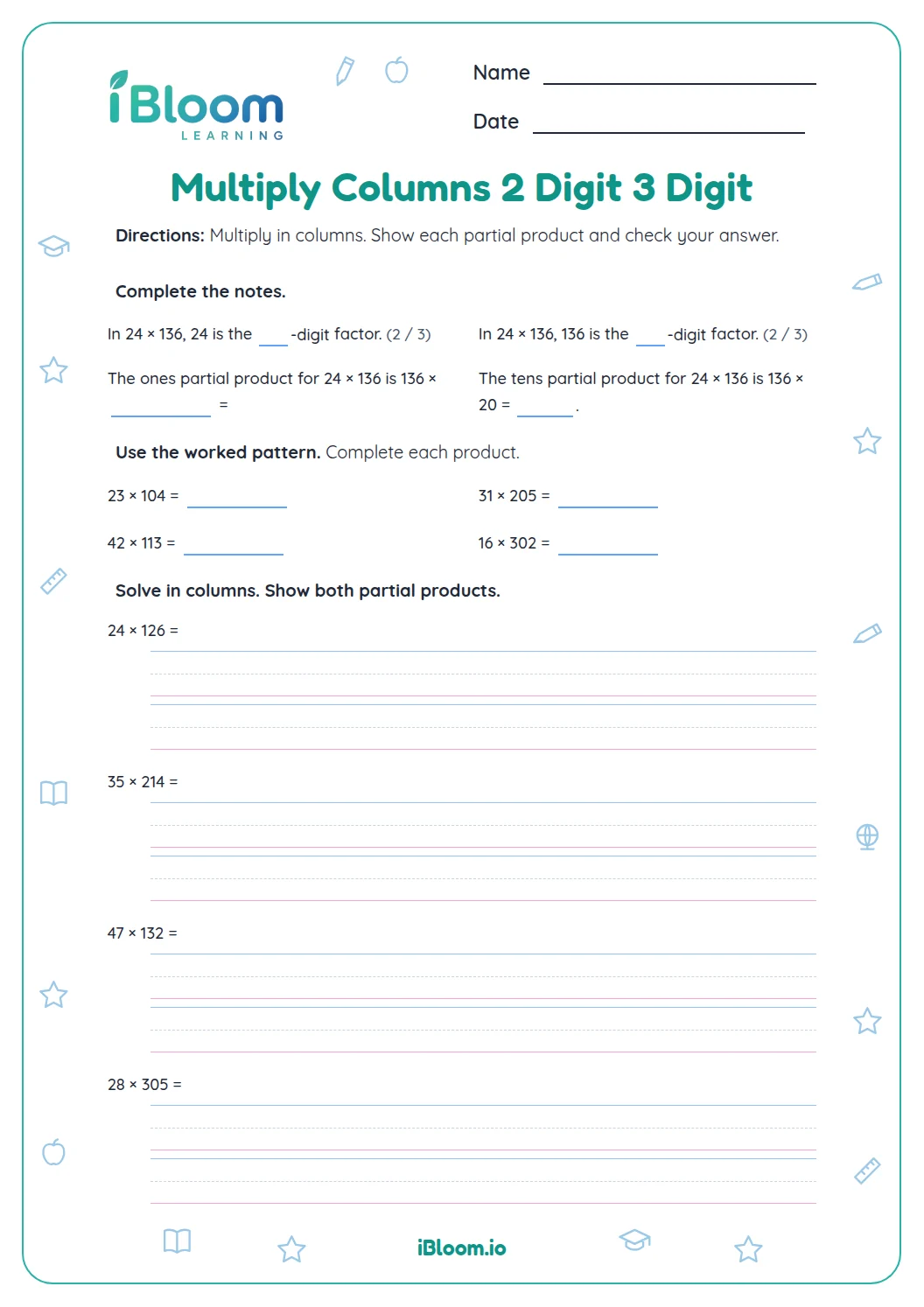
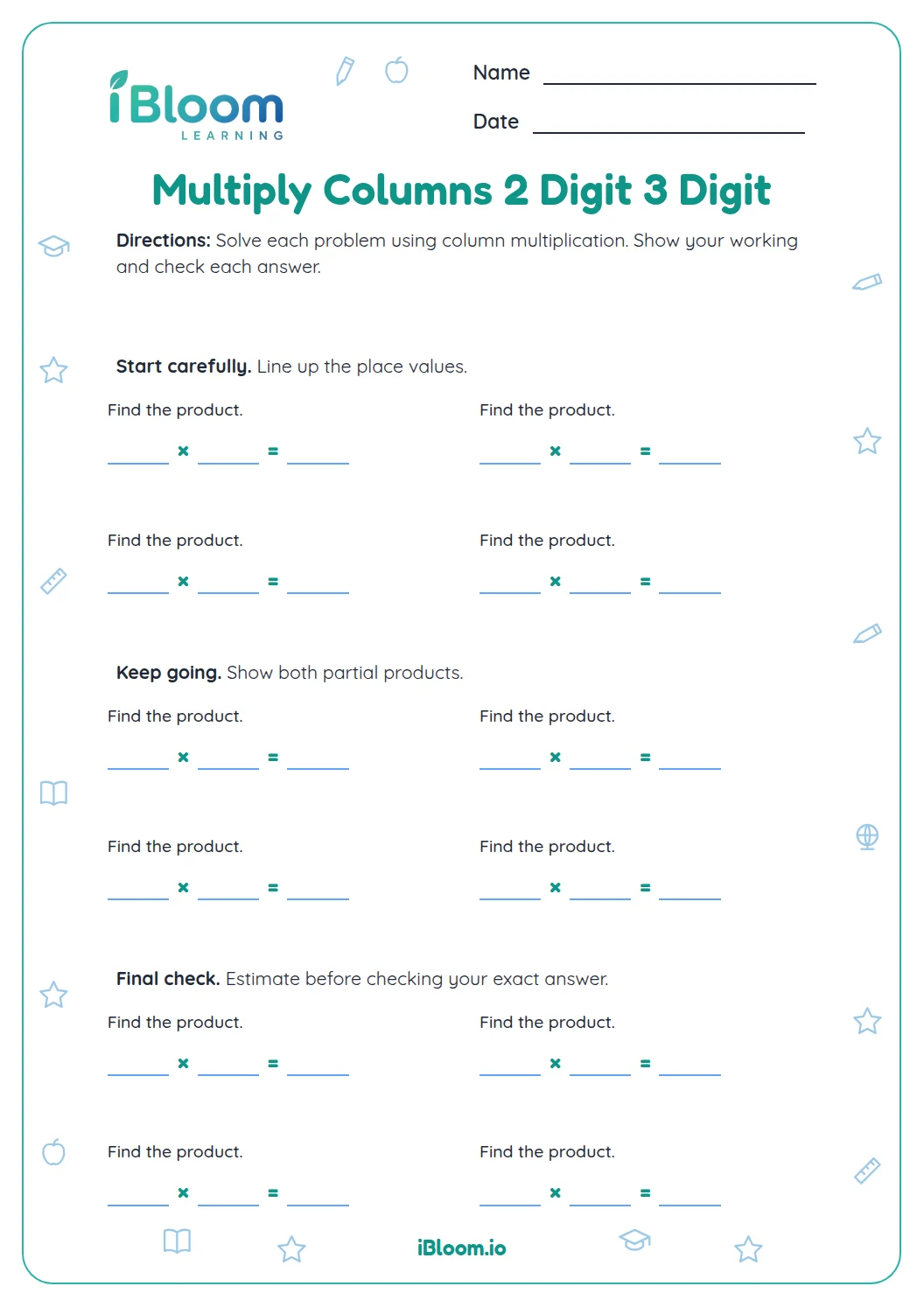
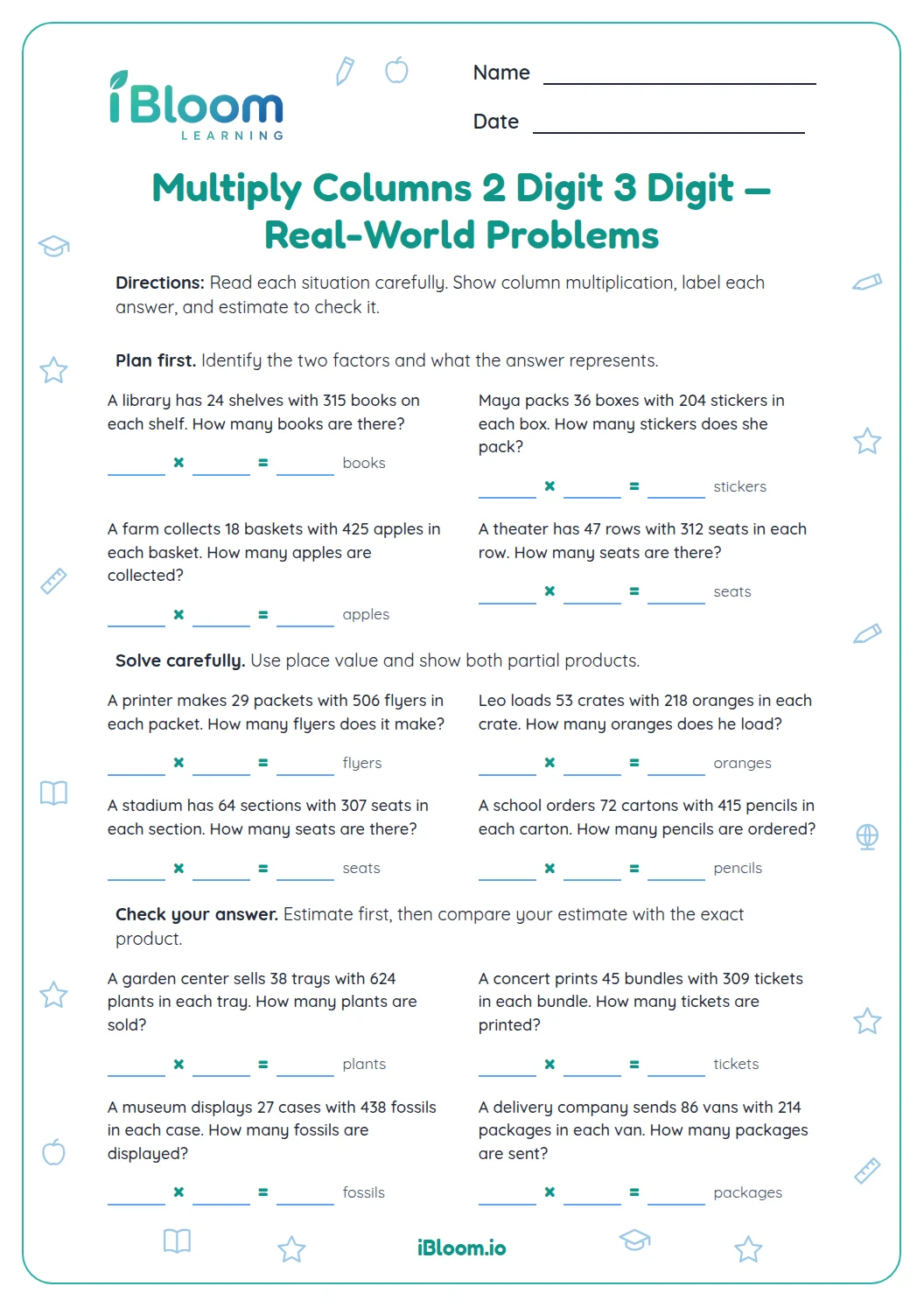
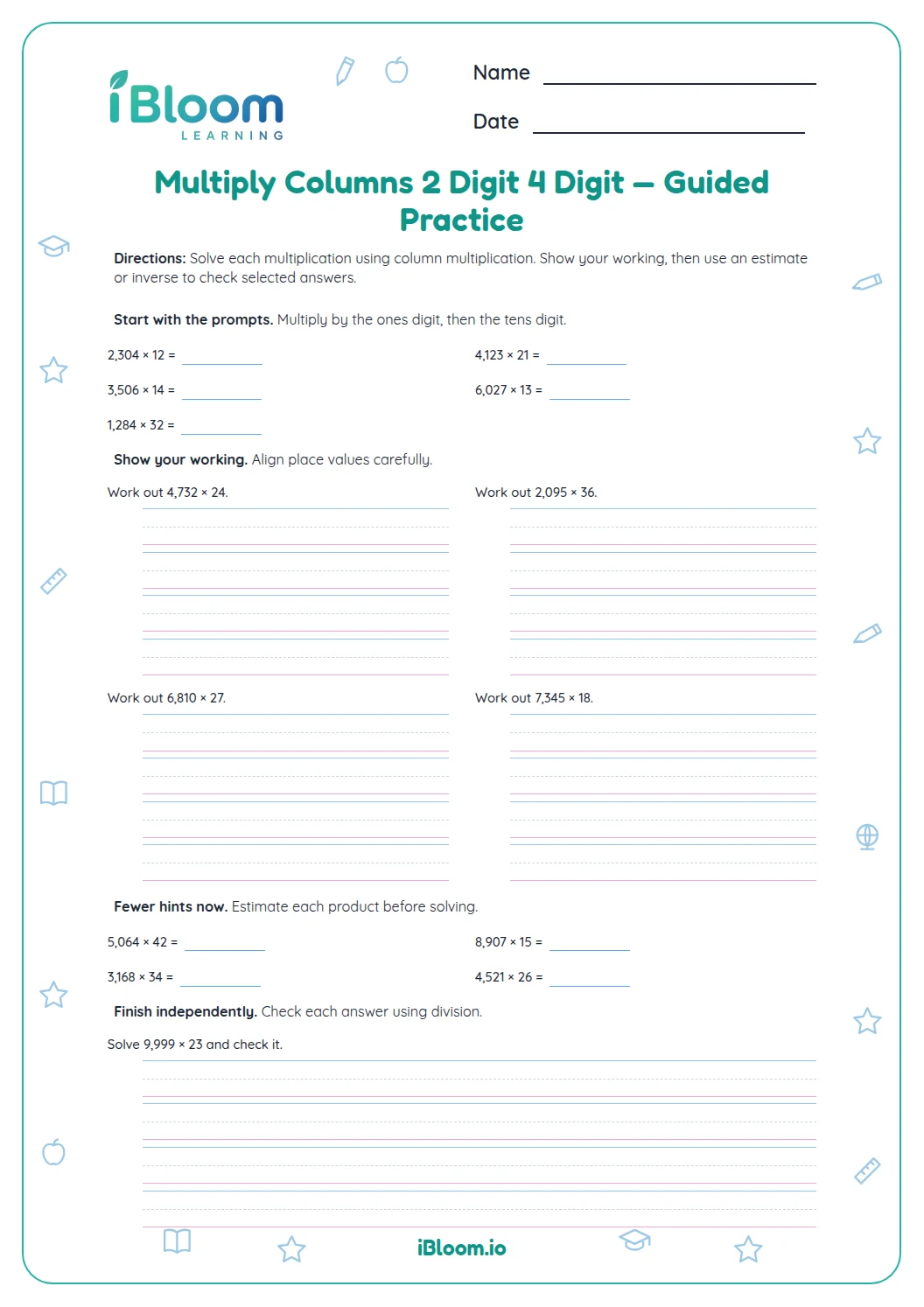
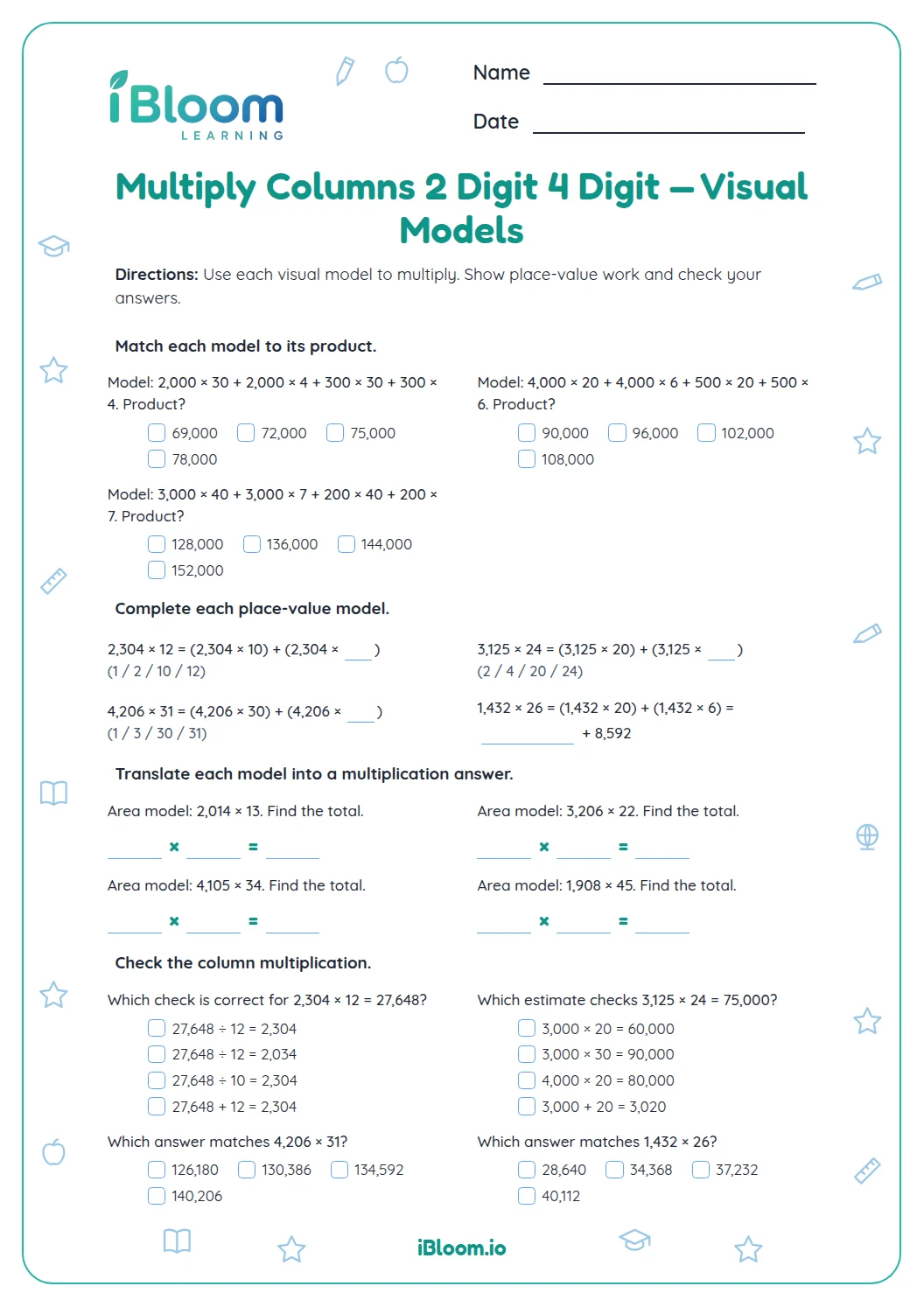
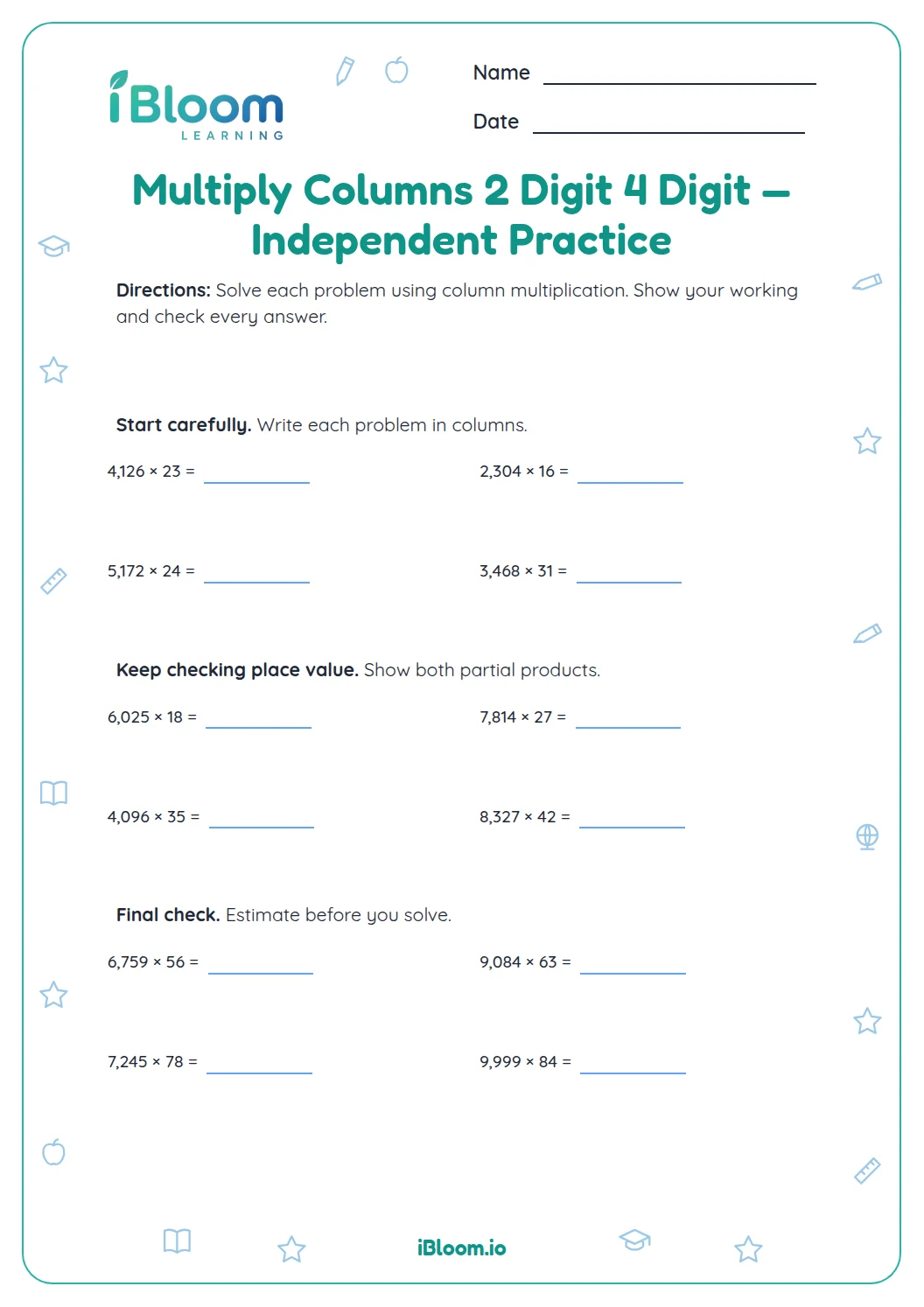
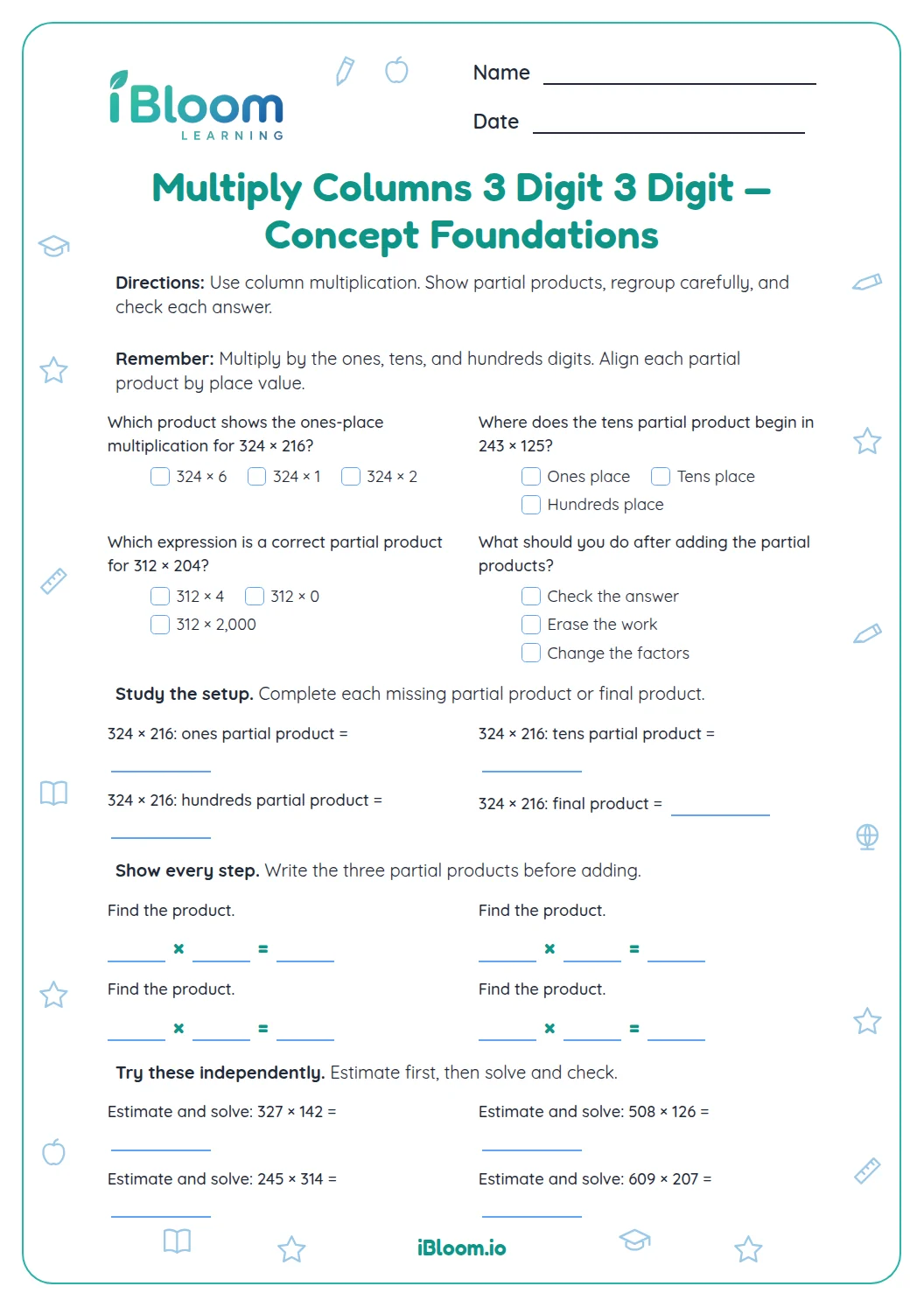
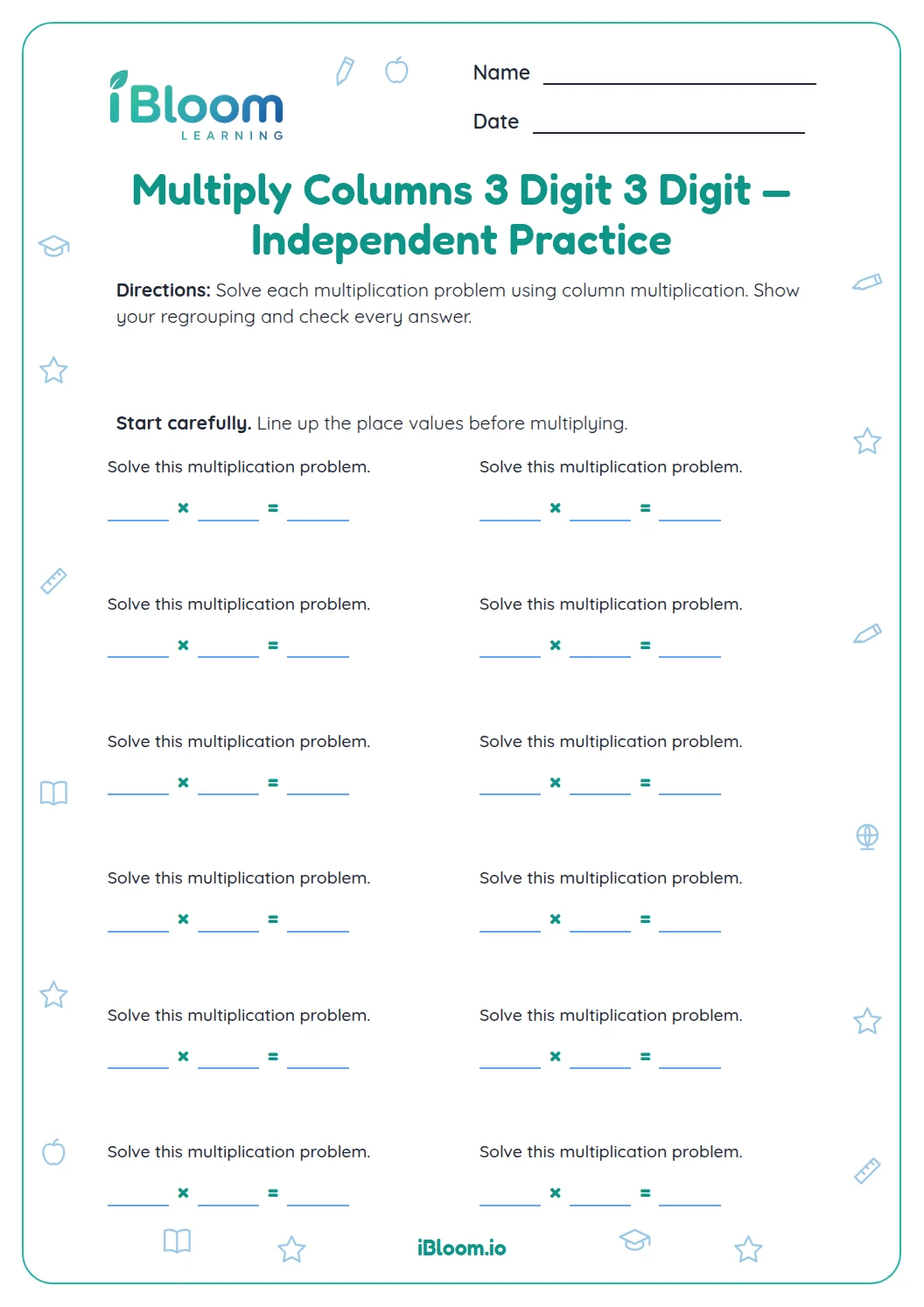
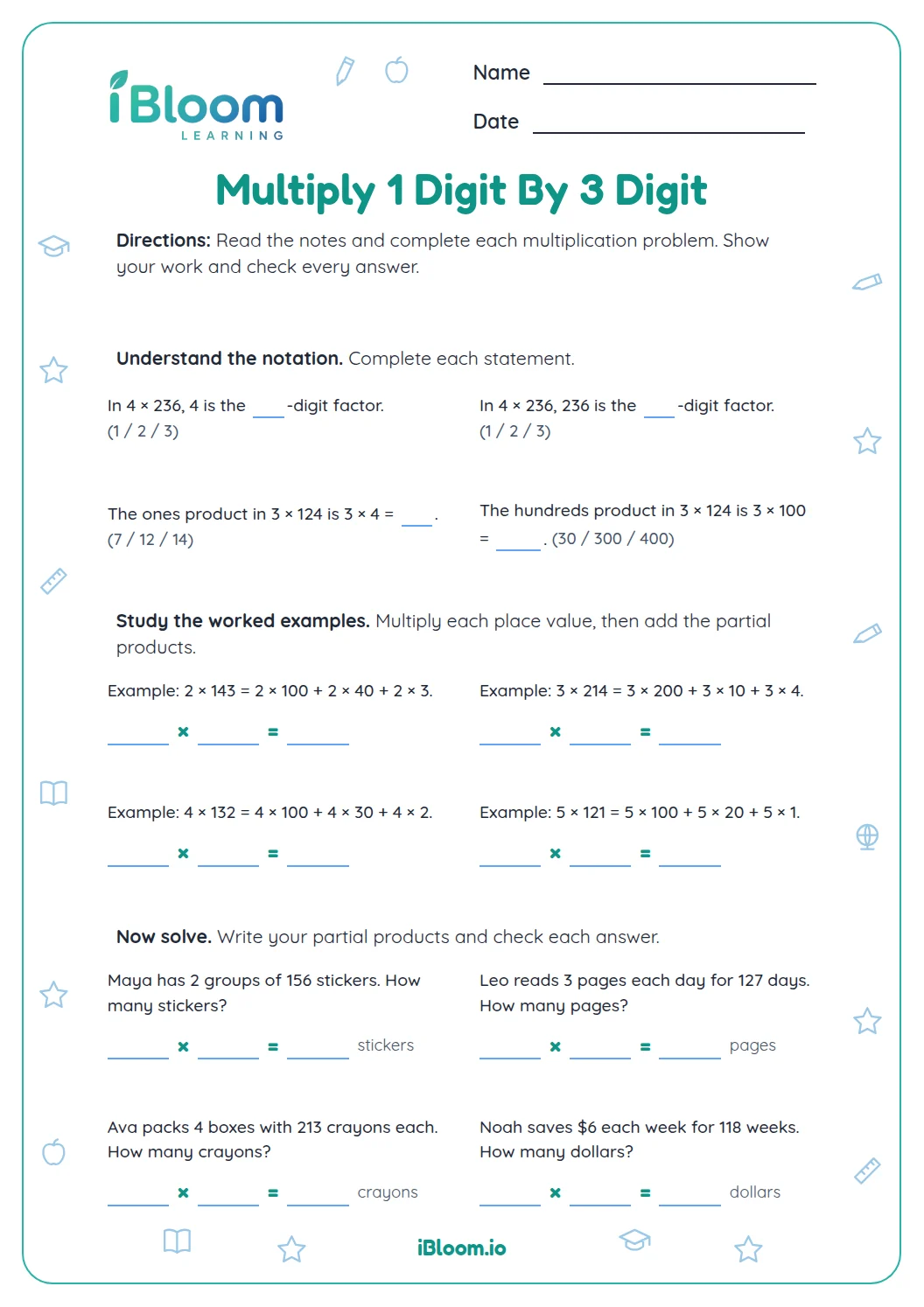
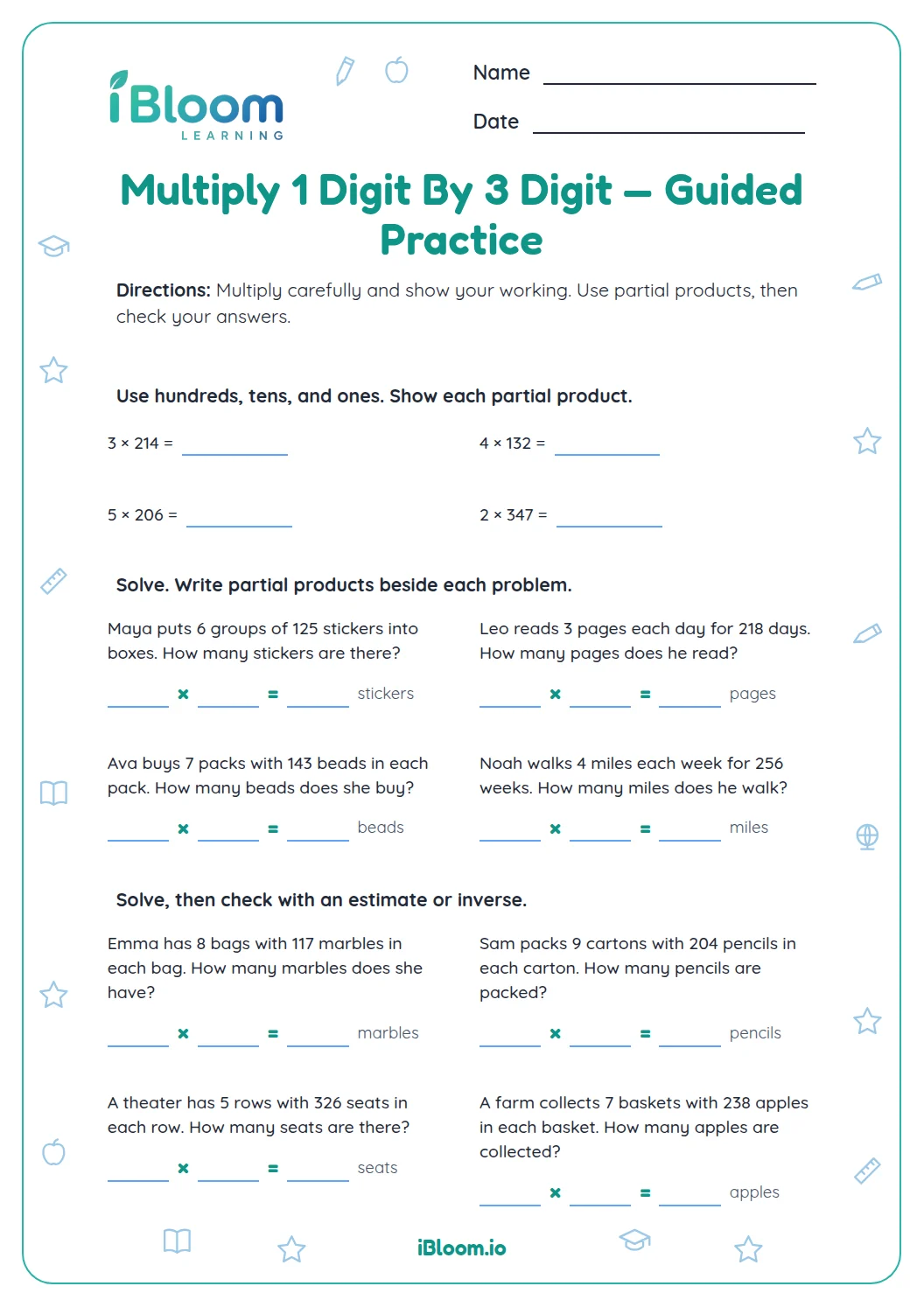
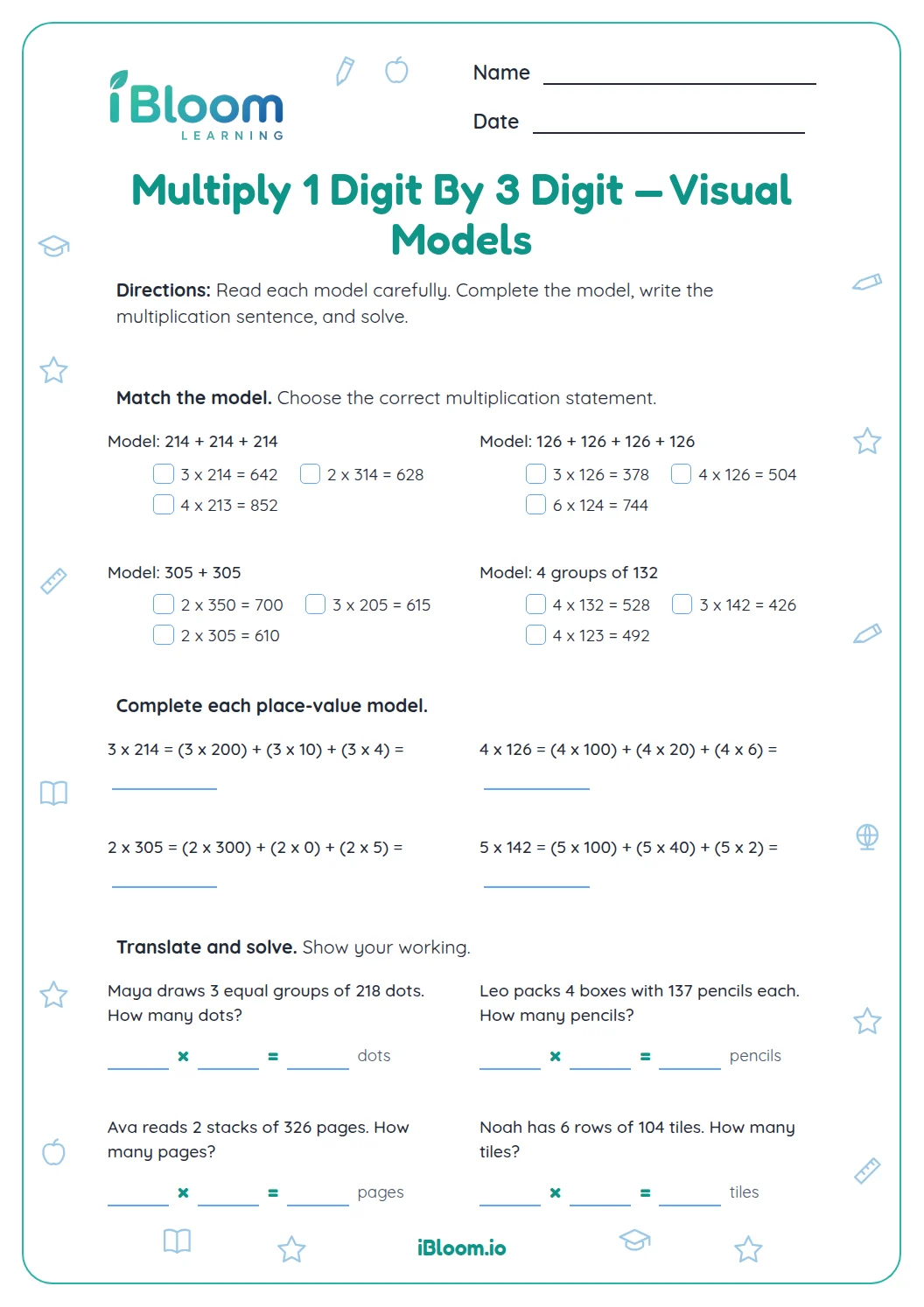
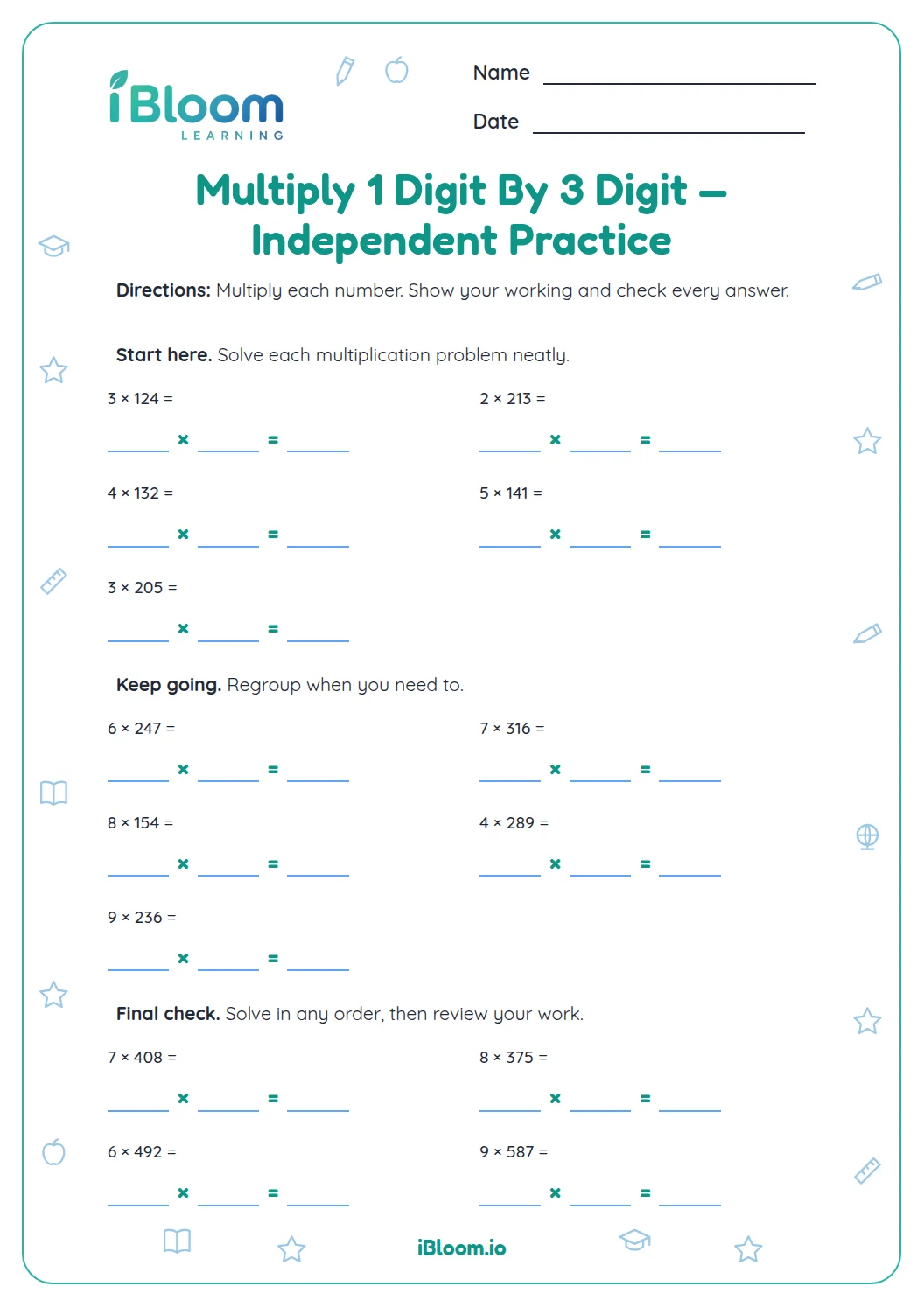
This Grade 5 printable gives twenty column multiplication problems. Students multiply two-digit factors and three-digit by two-digit factors, aligning place values and adding partial products. A separate answer key lists the products for checking.
Aligned to 5.NBT.B.5
How does column multiplication work?
Multiply one factor by each place value in the other factor. Record partial products in aligned columns, then add them.
- 124 × 13 = 312
- 224 × 3 = 72; 24 × 10 = 240; 72 + 240 = 312.
Why does place-value alignment matter?
The tens partial product represents groups of ten, so it must be shifted one place left. Keep each digit in its ones, tens or hundreds column.
How to use this worksheet
- 1Write the factors one above the other, aligned by place.
- 2Multiply by the ones digit and record the partial product.
- 3Multiply by the tens digit, shifting one place left.
- 4Add partial products carefully.
- 5Estimate to check that the product is reasonable.
Common mistakes and quick fixes
The mistake
Writing the tens partial product as if it were ones.
The fix
Shift it one place left or include its zero.
The mistake
Forgetting to add partial products.
The fix
Draw a line and add the rows after multiplying.
The mistake
Misaligning a carry digit.
The fix
Keep each carried digit above the next place column.
Curriculum alignment
Multiply multi-digit whole numbers using the standard algorithm.
On this sheet: Students solve two-digit-by-two-digit and three-digit-by-two-digit products in column format.
Show the official wordingHide the official wording
Fluently multiply multi-digit whole numbers using the standard algorithm.
What to practice next
Make more practice
Further reading
Questions parents and teachers ask
What does “in columns” mean?
Write the factors vertically so ones, tens and hundreds digits line up. Multiply each place value and record partial products underneath before adding them to find the total product. Ask the student to explain how the response meets the direction before checking the answer key together.
Why does the tens row shift left?
The tens digit represents groups of ten, not ones. Shifting its partial product one place left accounts for that factor of ten and keeps each digit in its correct place-value column. Ask the student to explain how the response meets the direction before checking the answer key together.
How can a student check a product?
Estimate by rounding each factor to a nearby ten or hundred, then compare the estimate with the exact product. Recheck the partial products if the answer is far from the estimate. Ask the student to explain how the response meets the direction before checking the answer key together.
What kinds of factors appear?
The worksheet includes two-digit times two-digit problems and three-digit times two-digit problems. Both sets use the same column method while extending the place values in the first factor. Ask the student to explain how the response meets the direction before checking the answer key together.
Should students show their work?
Yes. Writing partial products makes place-value steps visible and helps locate an error. The answer key gives each product so students can check after their column work is complete. Ask the student to explain how the response meets the direction before checking the answer key together.