


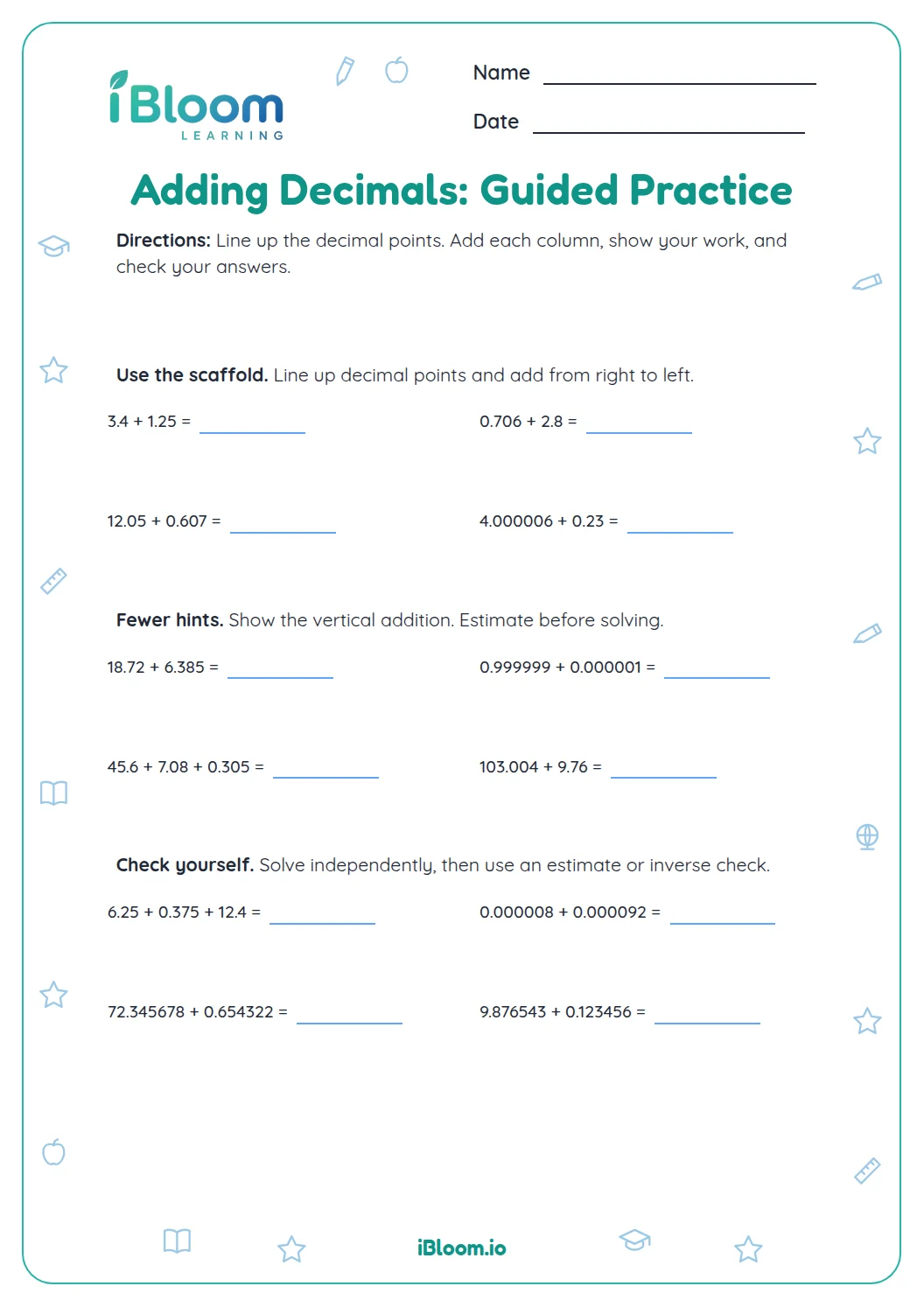

About this worksheet
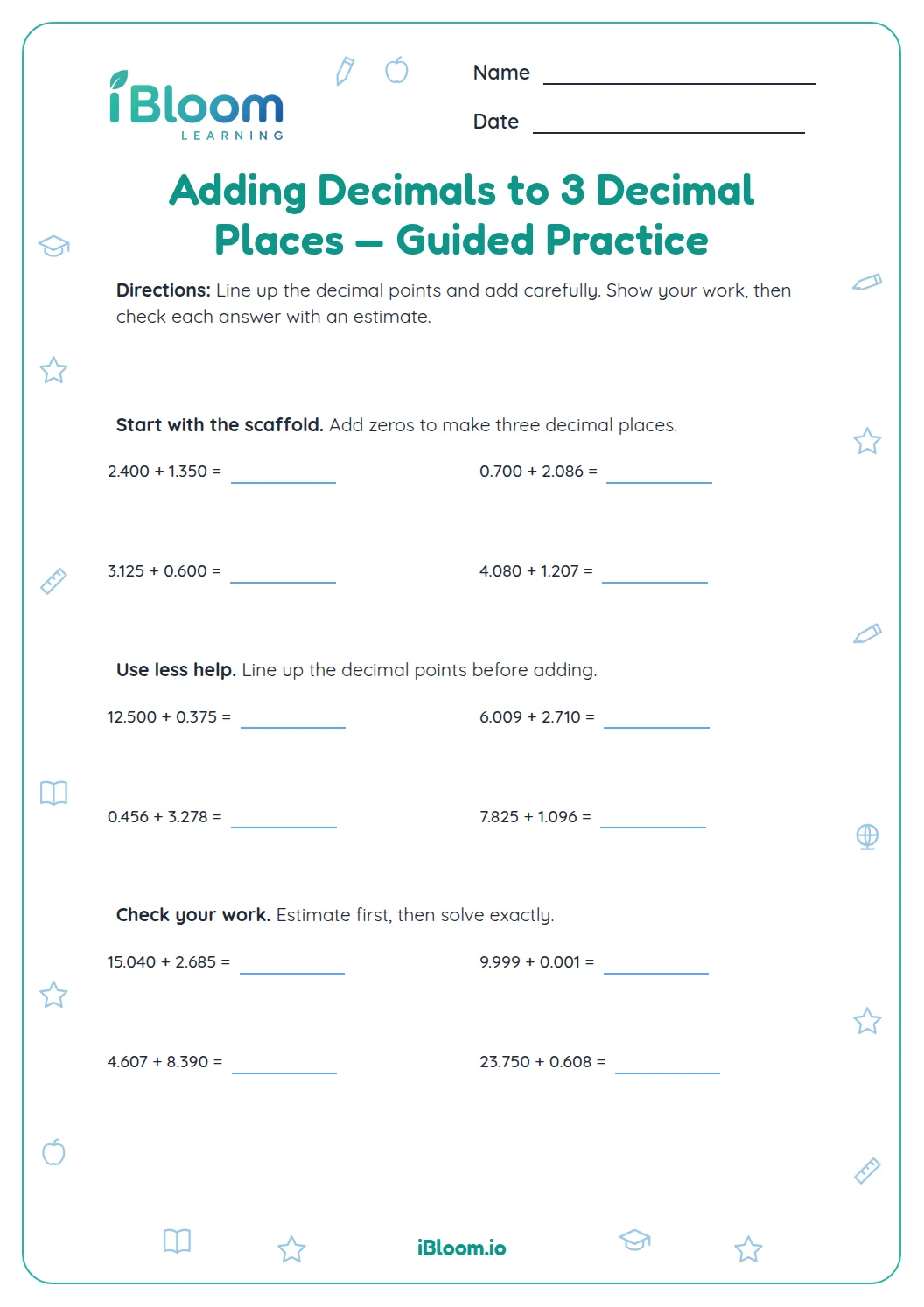
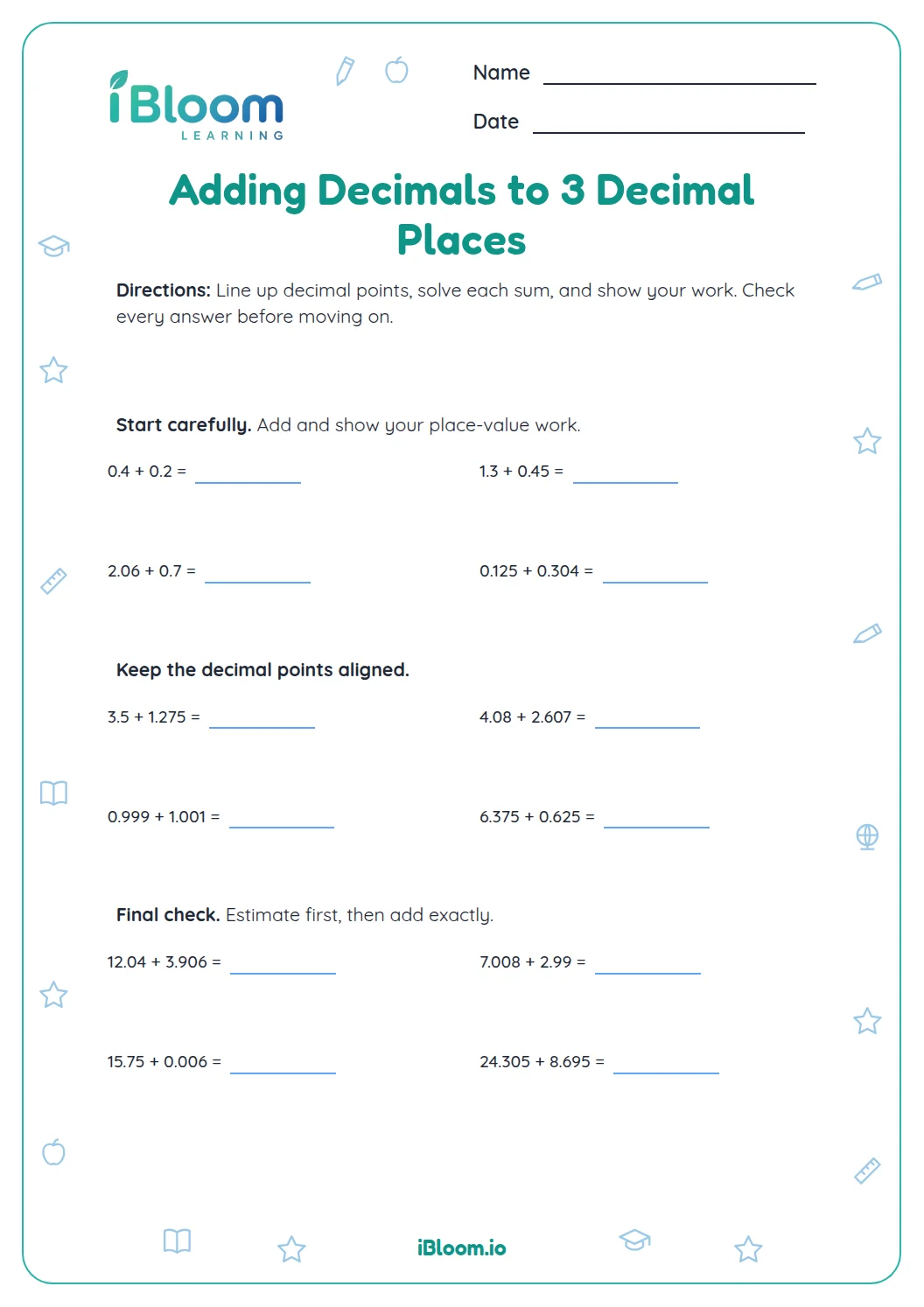
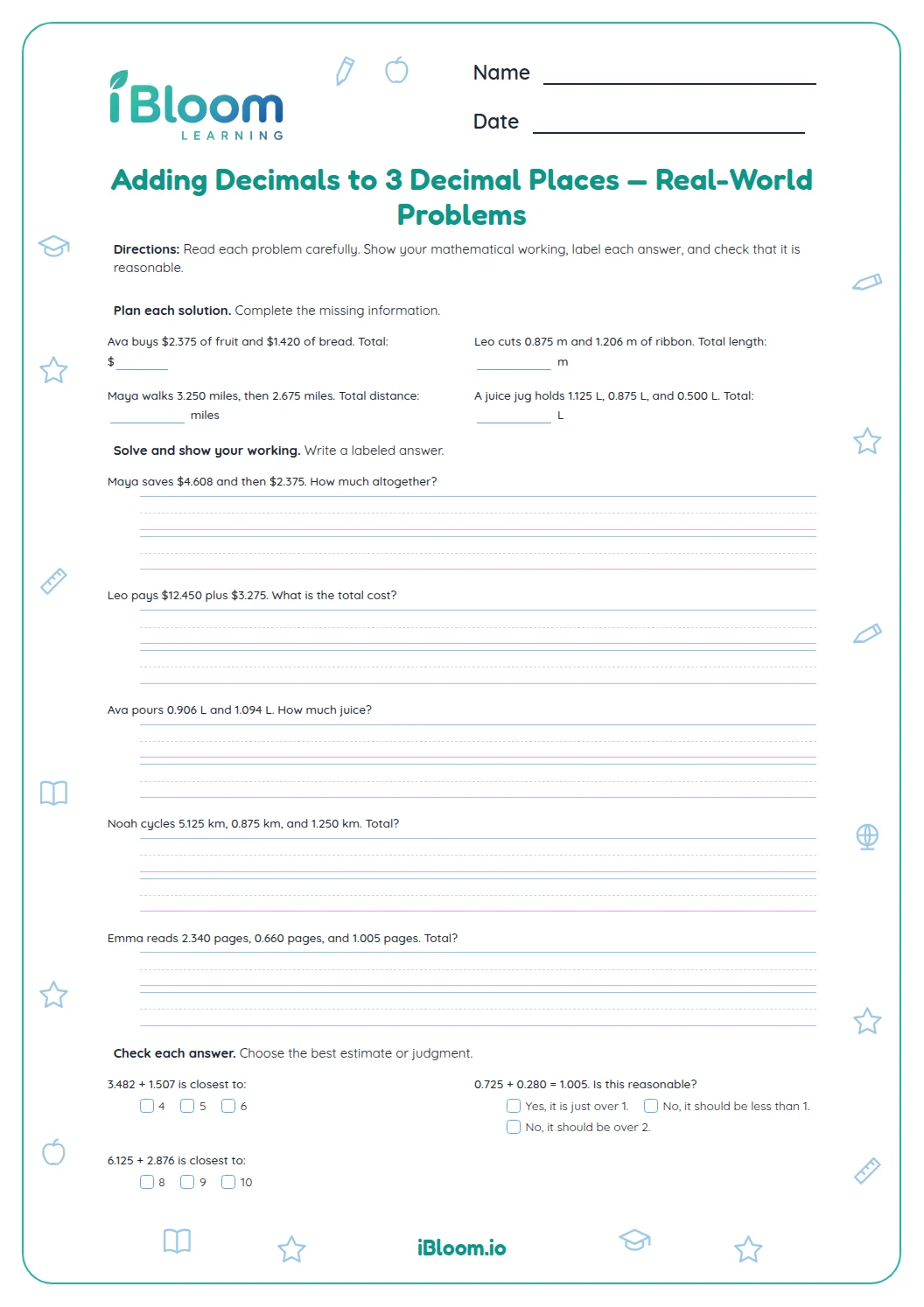
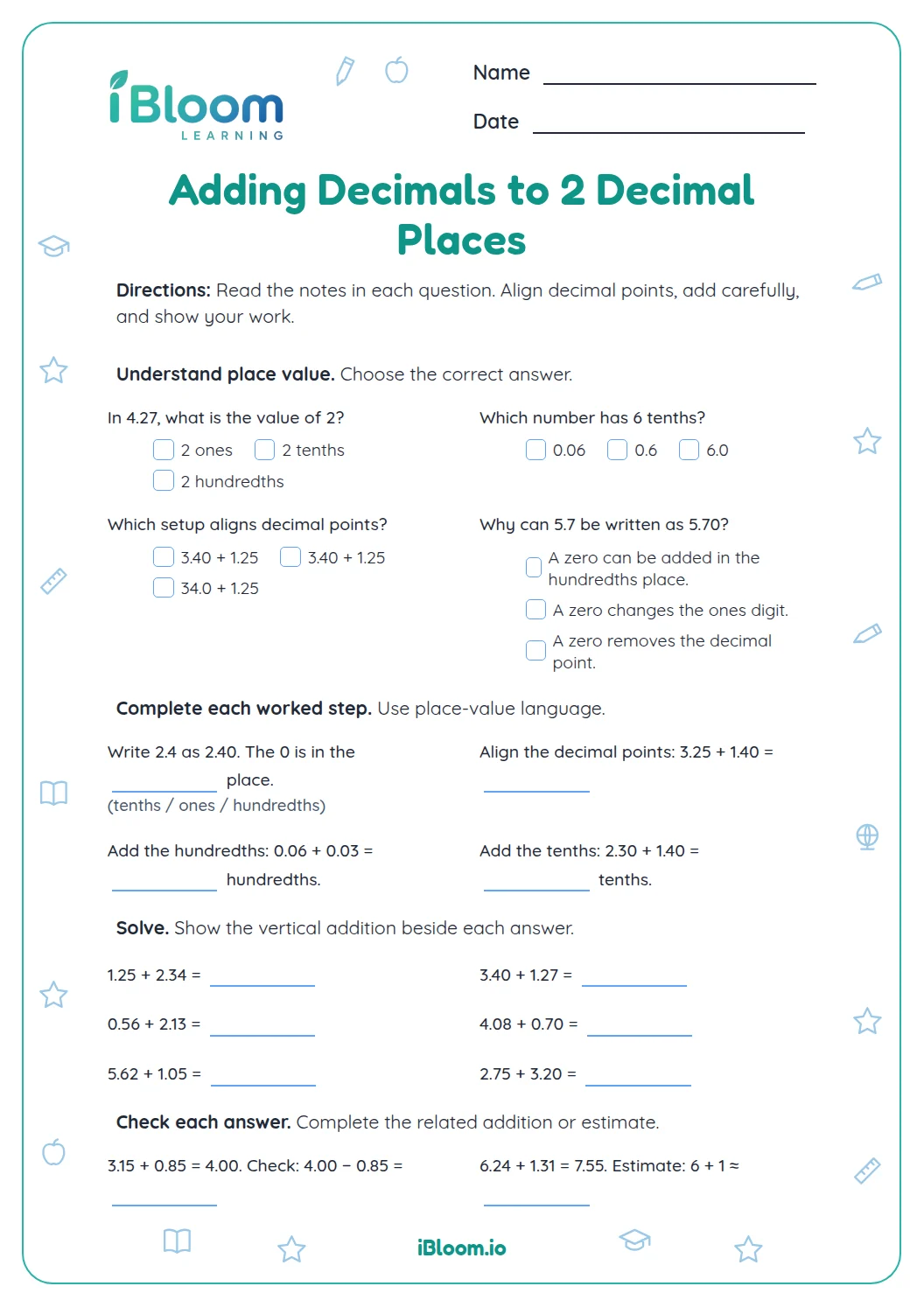
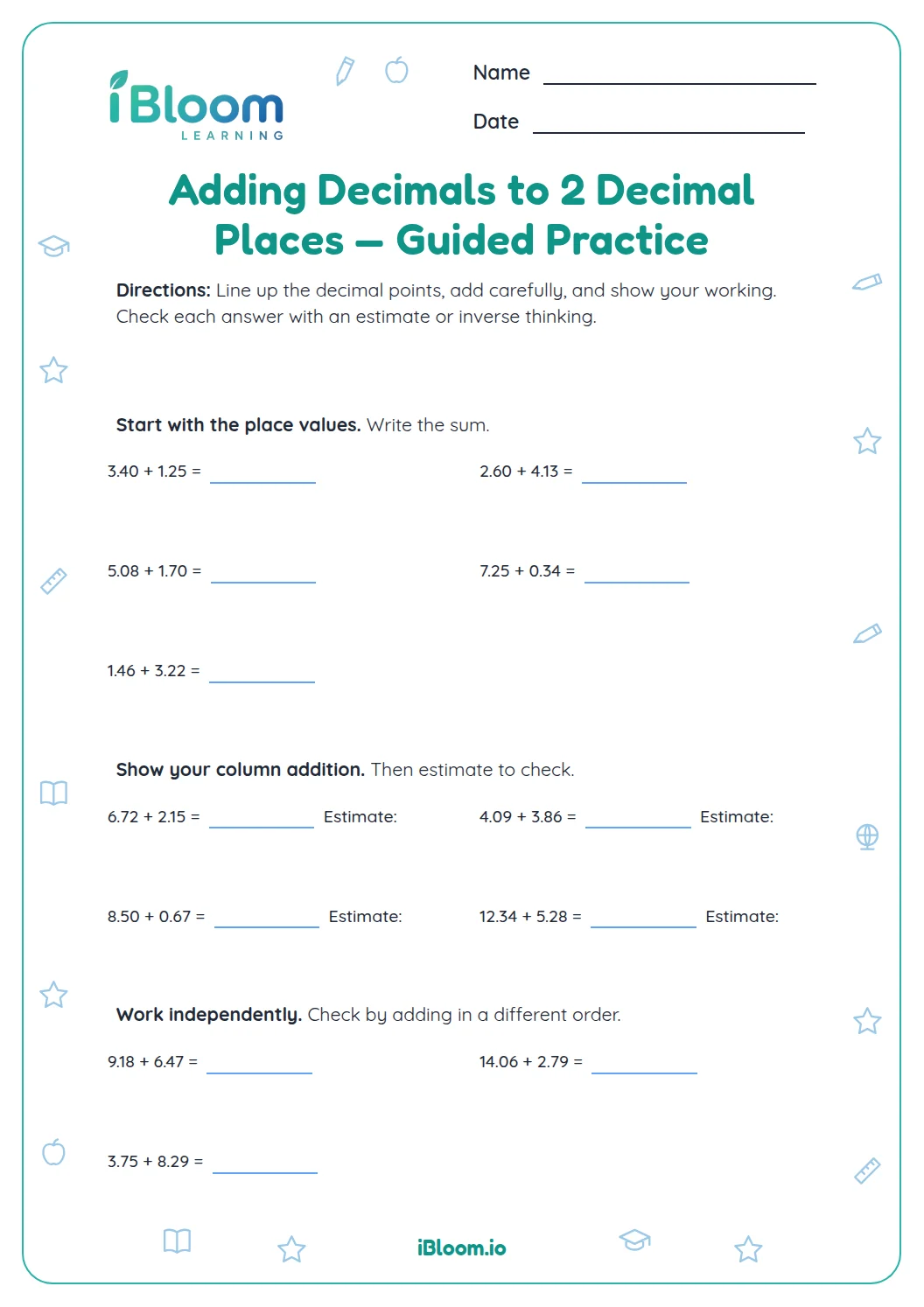
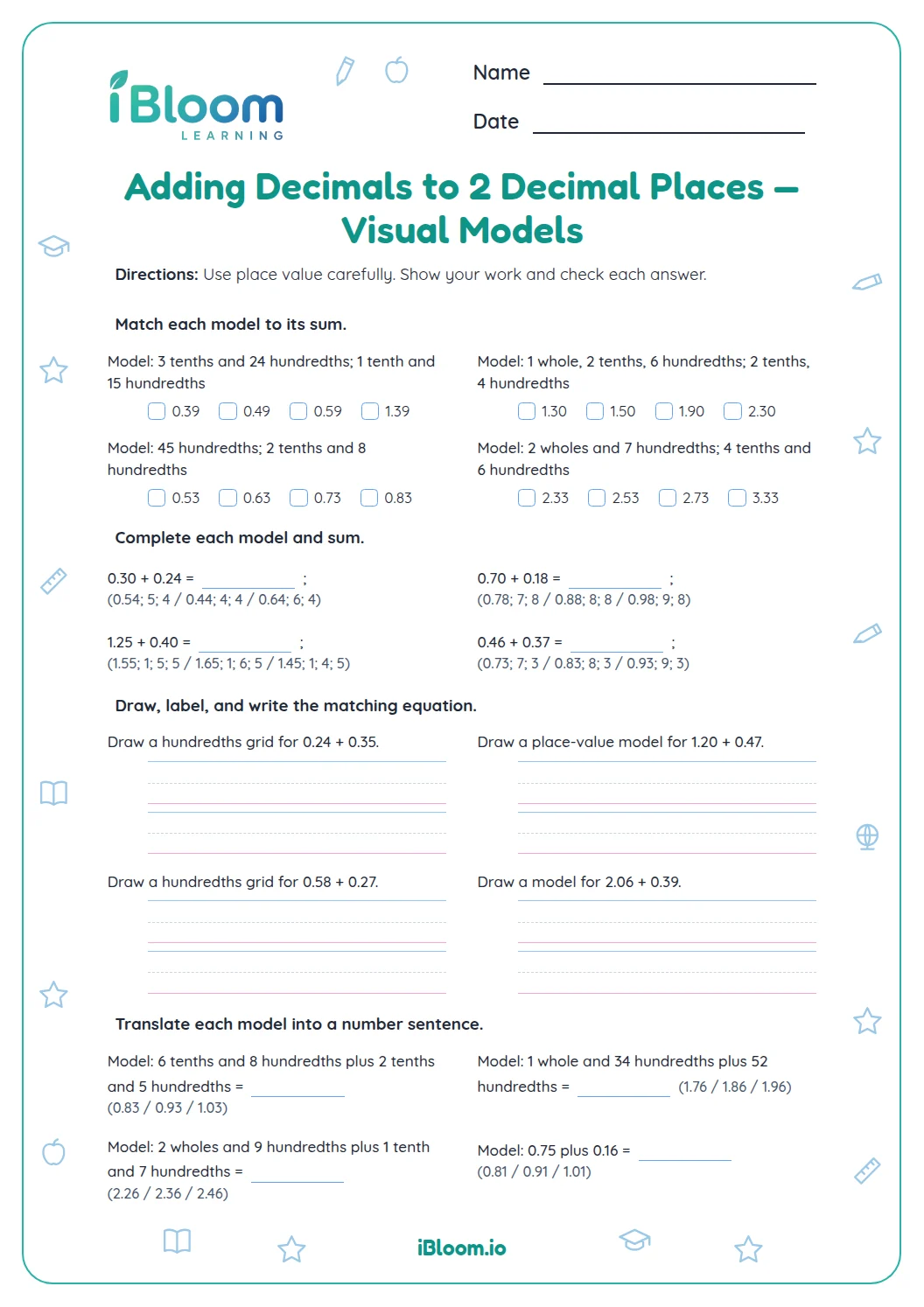
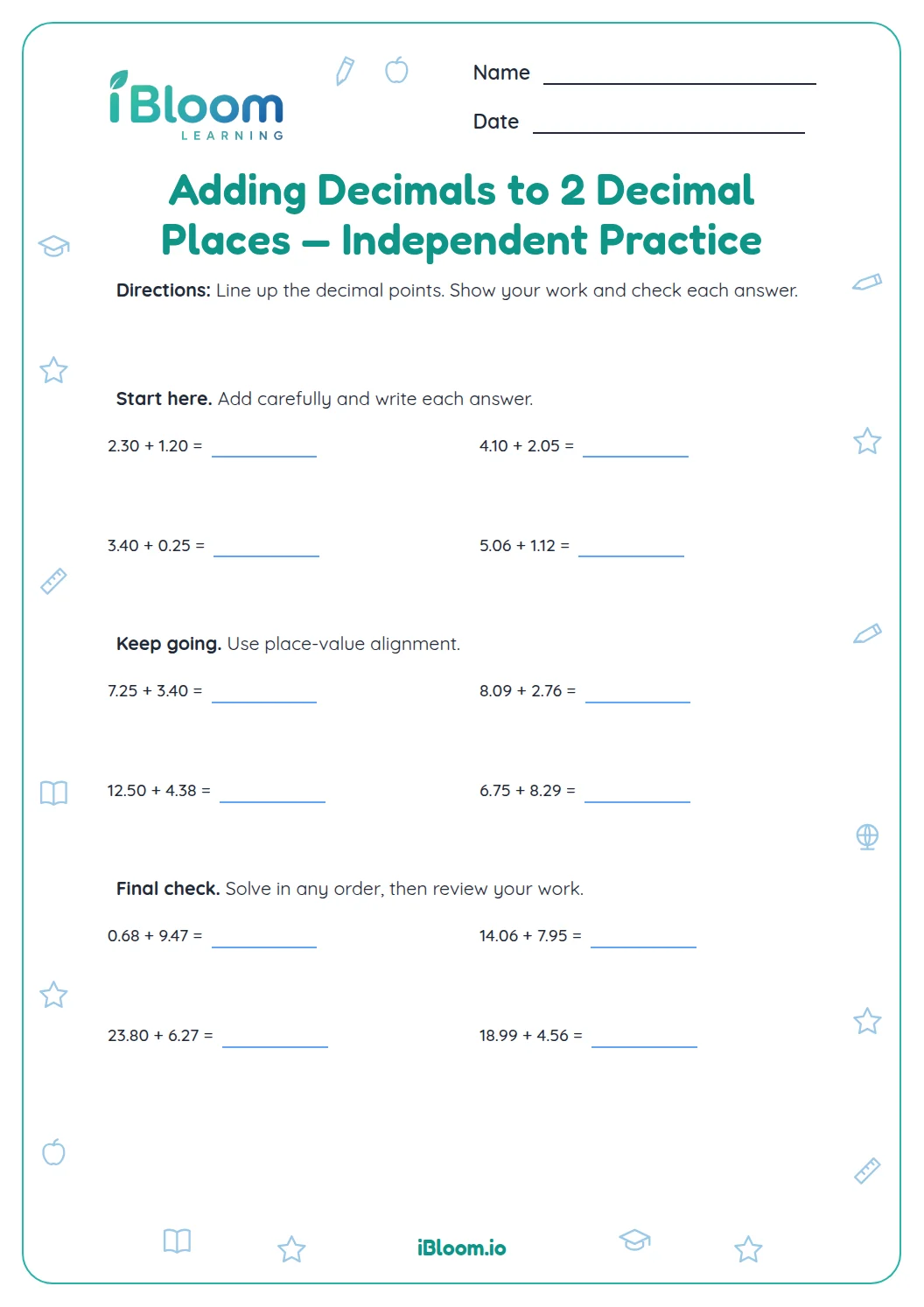
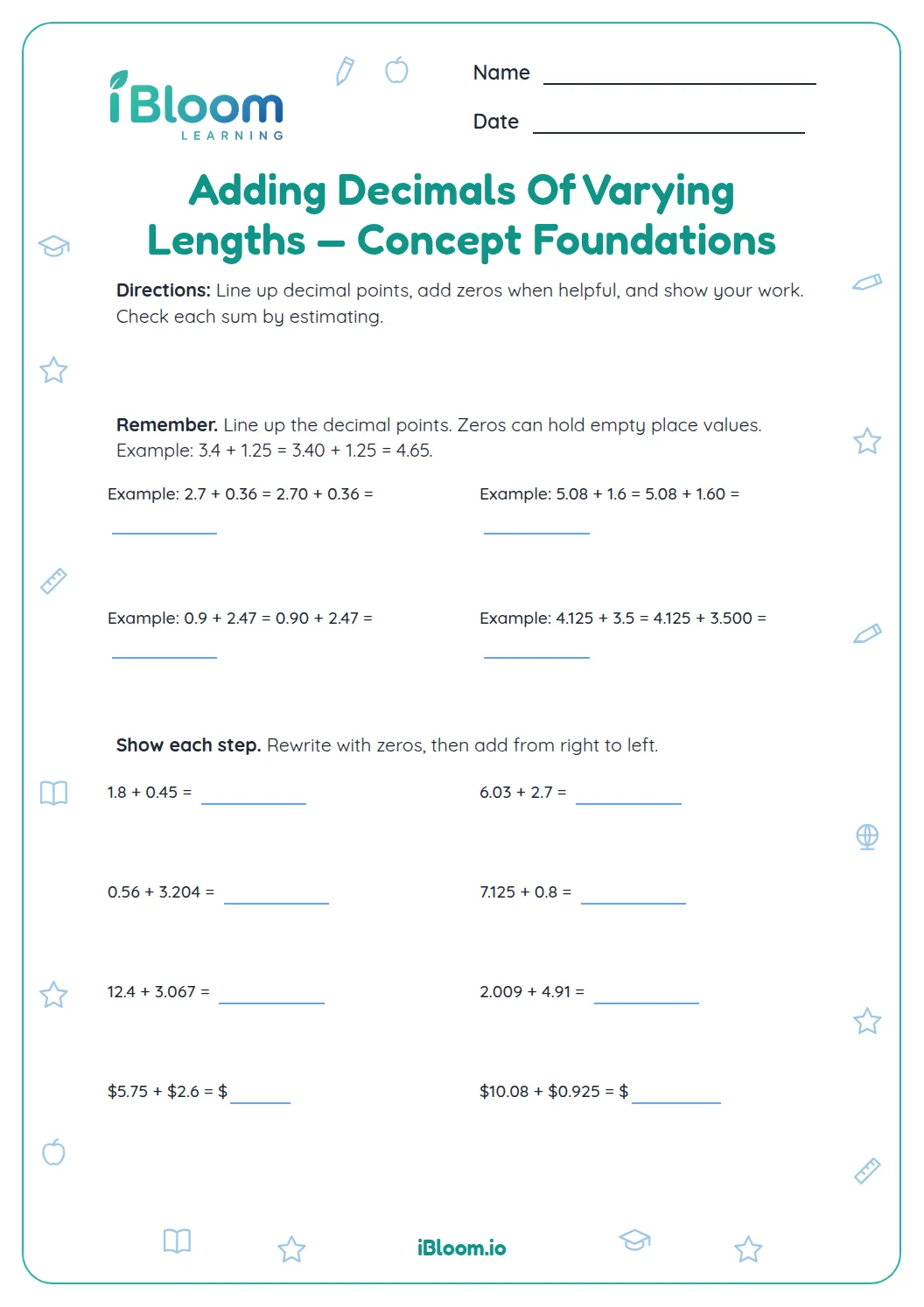
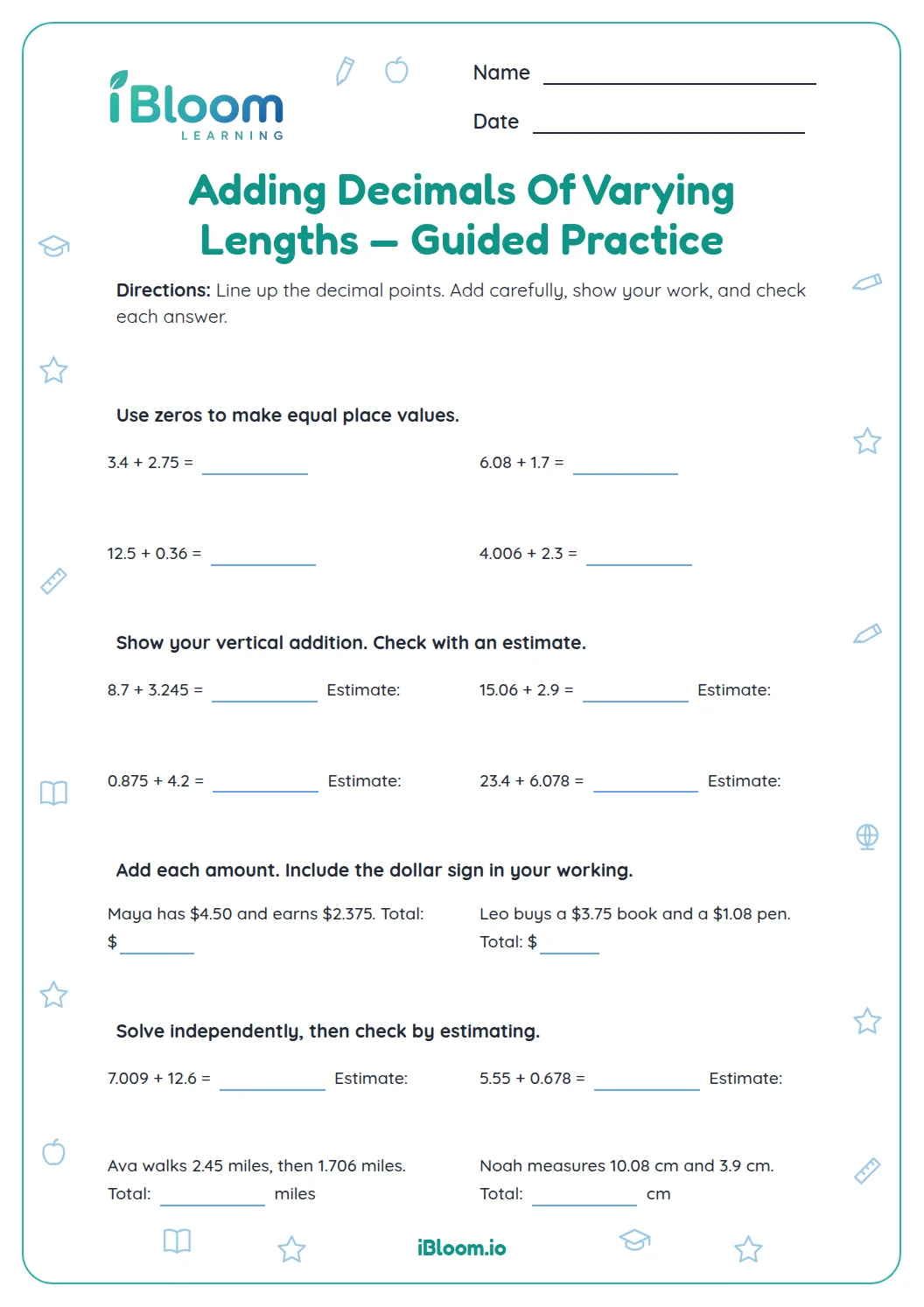
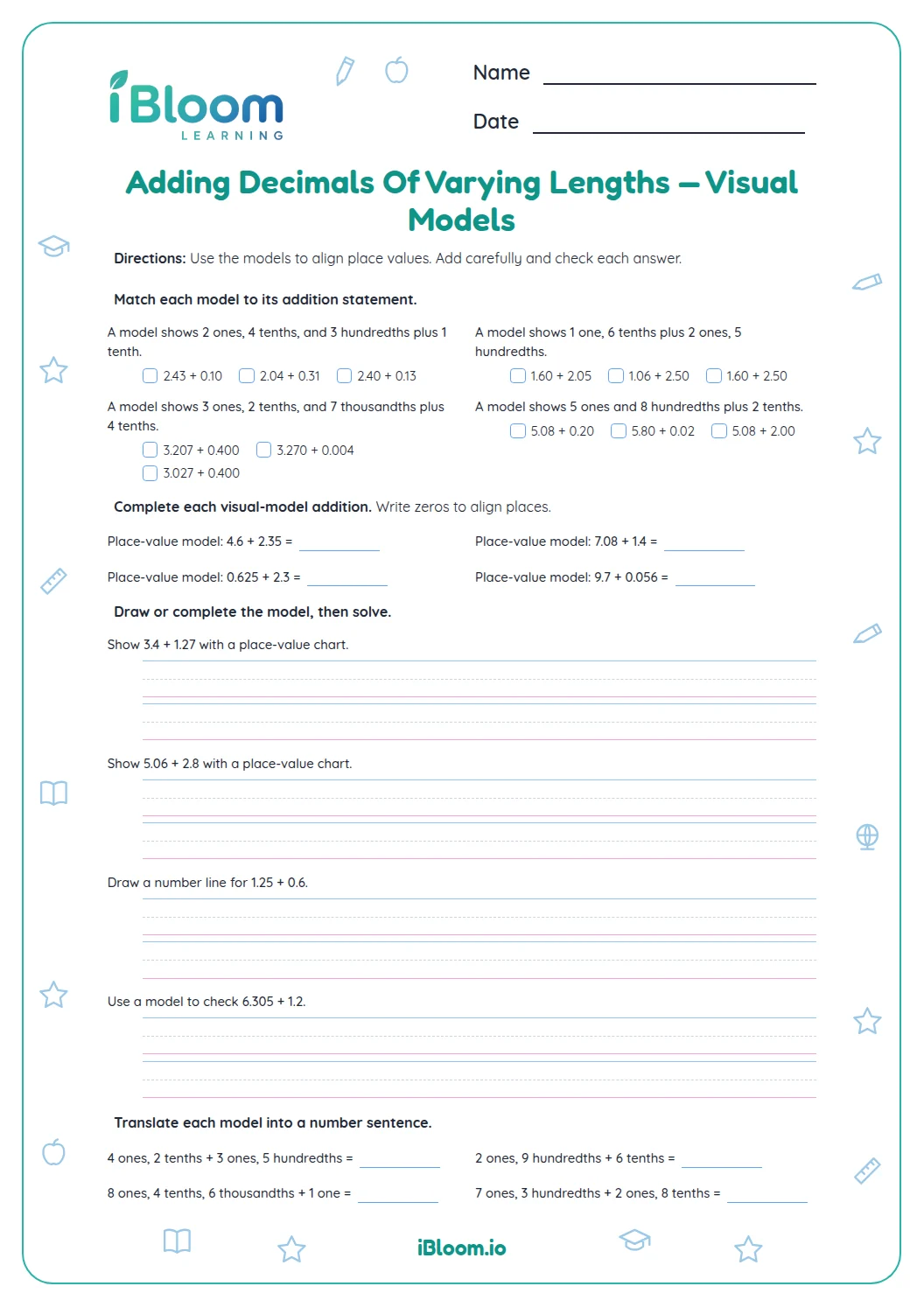
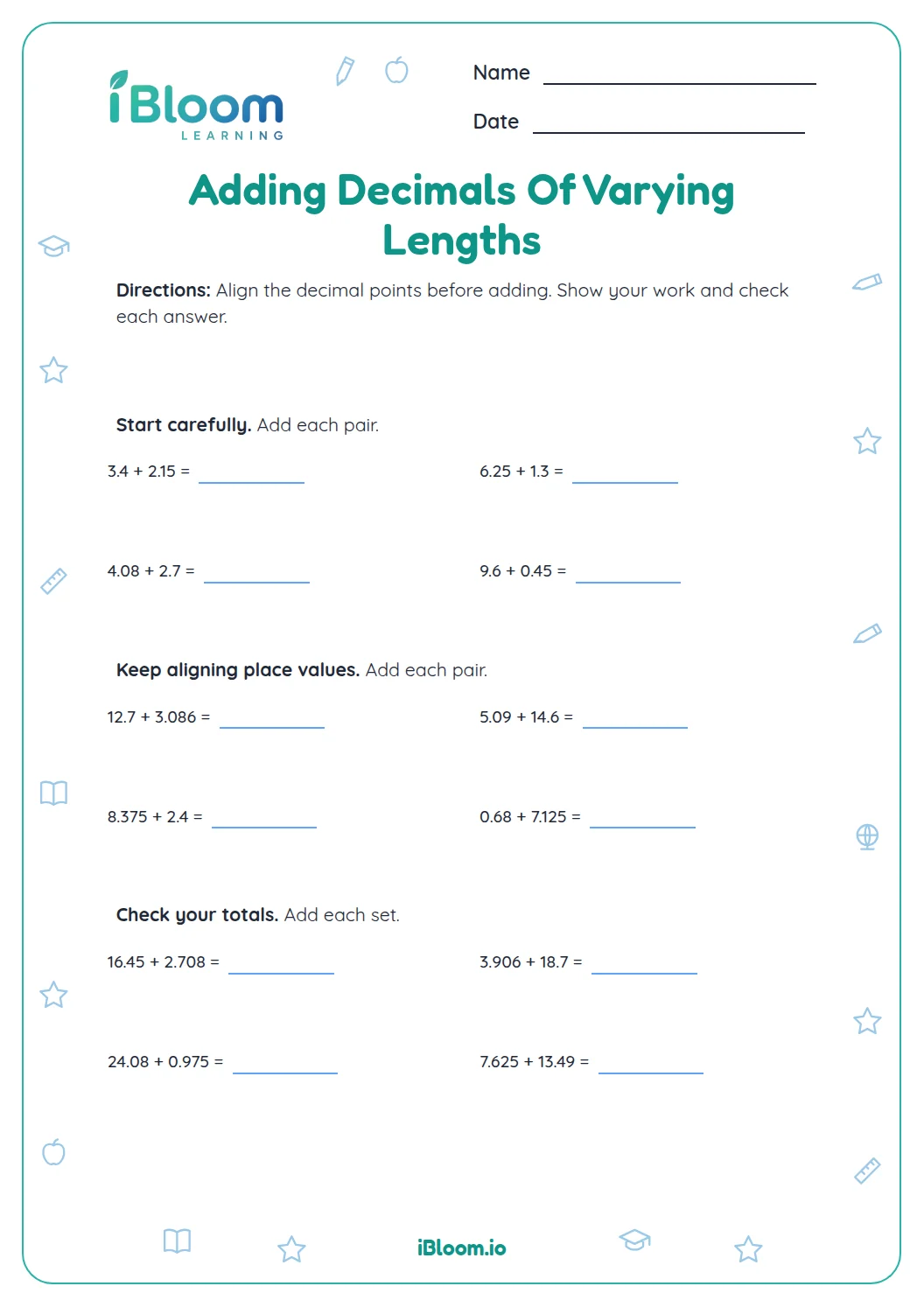
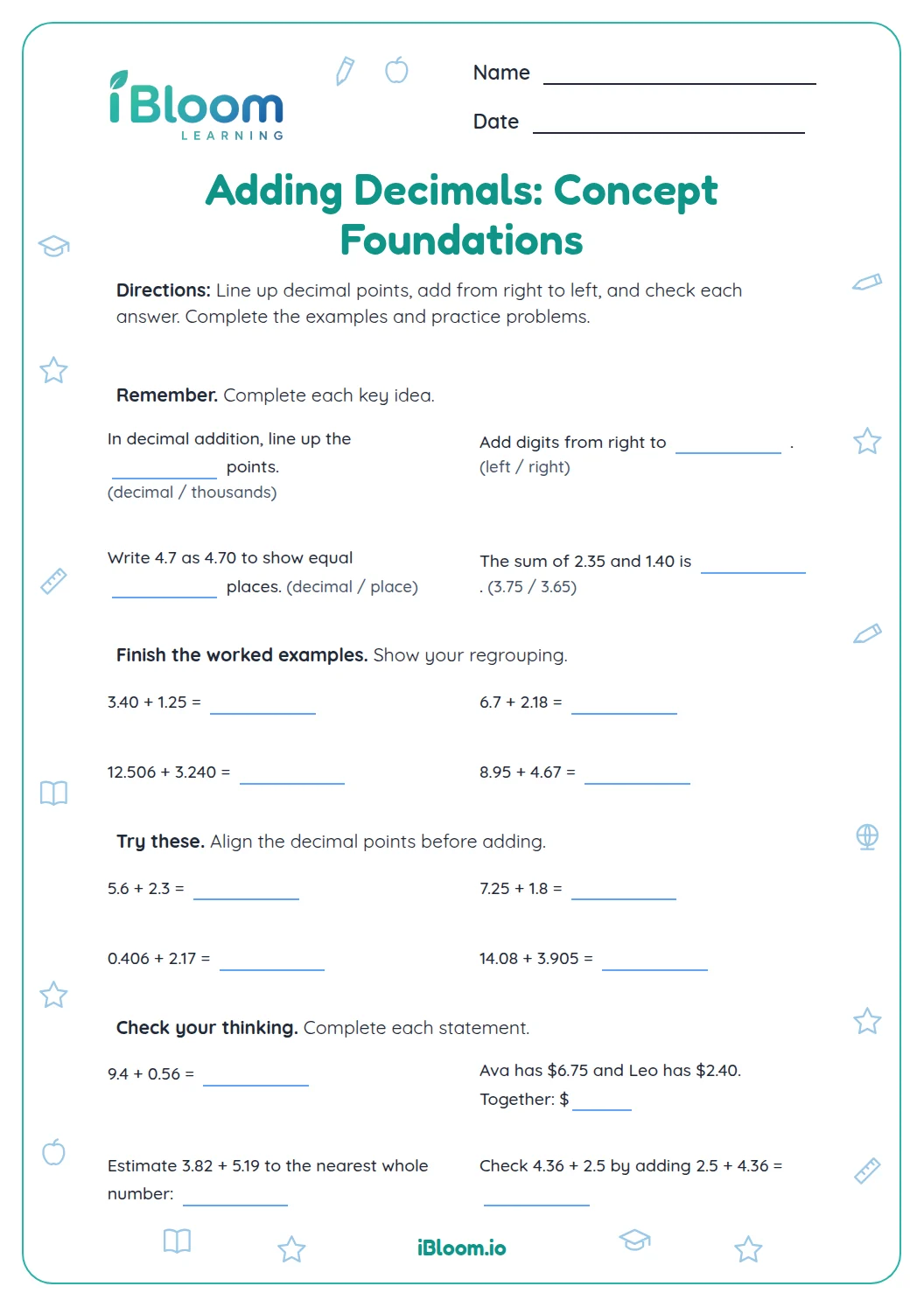
This Grade 6 worksheet practices adding decimals through thousandths. Six opening sums build fluency with place value, followed by four contexts and four reasoning items. Students align decimal points, regroup as needed, and check whether each sum is reasonable. The page practices CCSS 6.NS.B.3 and includes a separate answer key.
Aligned to 6.NS.B.3
How do place value grids help with decimal addition?
Align decimal points so tenths, hundredths and thousandths stay in their places. Add from right to left and regroup whenever a place totals ten or more.
- 11.25 + 0.6
- 2Write 0.6 as 0.60
- 31.25 + 0.60 = 1.85
What changes in the word problems?
Students decide which quantities to combine, write an addition equation, and include the unit in the answer. The contexts use lengths, distance and capacity.
How can students check a decimal sum?
Estimate first, then compare the estimate with the exact sum. For example, 2.138 + 0.421 is a little more than 2.5, so 2.559 is plausible.
How to use this worksheet
- 1Read the thousandths place before beginning each sum.
- 2Use the grid as a reminder that ten hundredths make one whole.
- 3For word problems, underline both quantities and their units.
- 4Estimate the answer, then calculate.
- 5Check each regrouped digit by place value.
Common mistakes and fixes
The mistake
Adding digits without aligning places
The fix
Line up decimal points and add zeros as placeholders.
The mistake
Forgetting a regrouped tenth or hundredth
The fix
Check whether any place totals ten or more.
The mistake
Dropping the unit in a story problem
The fix
Copy the same unit named in the question.
Common Core alignment
This worksheet practices the following Common Core skill.
Add decimal numbers through thousandths using place value and the standard algorithm.
On this sheet: The sums and contexts require adding decimals through thousandths.
Show the official wordingHide the official wording
Fluently add, subtract, multiply, and divide multi-digit decimals using the standard algorithm for each operation.
What to practice next
Make more practice
Further reading
Questions parents and teachers ask
What decimal places does this worksheet use?
The sums extend through thousandths, so students align tenths, hundredths and thousandths before adding. The first six items pair written addends with place-value work; the addends carry the full precision needed for each exact answer. Later questions add contexts, a missing addend and explanations of common regrouping errors.
How should a student line up decimals?
Place decimal points directly under one another so digits with equal place value line up. For example, write 0.6 as 0.60 when adding it to 1.25. Add from right to left, regroup when a place totals ten or more, and estimate the result to check that it is reasonable.
Do the word problems require units?
Yes. Four questions combine lengths, distance or capacity. Students add the quantities and include the matching unit in the answer, such as meters, kilometers or liters. The key includes units for these story problems so a learner can check both the sum and what it measures.
Is there an answer key?
Yes. The separate answer key gives answers for all 14 questions, including units for the four context problems and a sample explanation for the final reasoning item. The worksheet itself runs three pages, followed by the key, so students can work through the sections in order.
How long will this worksheet take?
The page contains 14 addition questions arranged from short sums to contexts and reasoning. A student can work at a steady pace, pausing to align decimal places and check regrouping. The listed estimate of about 25 minutes is a guide; class routines and support may change the time.