


About this worksheet
This free kindergarten worksheet uses dime pictures to give counting by tens a concrete meaning: each coin adds ten cents. In Part A, children count six groups and choose a cent total. In Part B, they count six more groups and write the missing number of cents. Groups contain one to six dimes, for totals from 10 to 60 cents. The sheet practices the counting-by-tens sequence in Common Core K.CC.A.1. An adult can read the directions aloud, and the separate answer key shows every total.
Aligned to K.CC.A.1
What does a dime add to the total?
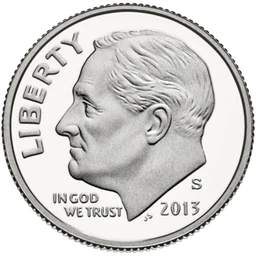
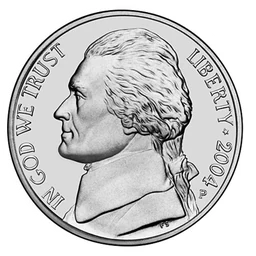
A dime is worth 10 cents. Counting its value means saying one more ten for each coin, so the amount grows from 10 to 20 to 30 cents. The number of coins and the number of cents answer different questions.
Use question 3 to connect the pictures with spoken counting. Touch each of its three dimes once, then say the total with the word cents.
- 1First dime: 10 cents
- 2Second dime: 20 cents
- 3Third dime: 30 cents
- 4Choose 30¢.
Why do children choose answers before writing them?
Part A gives three possible totals for each pictured group. Children can focus on touching one dime at a time and saying the tens sequence. The choices include coin counts such as 3¢, making the difference between coins and cents visible.
Part B removes the choices and mixes the group sizes. Children write a number in front of cents, using the coin pictures to work out each amount again.
How can an adult support the counting?
Say the first few tens together while pointing to the dimes. Then let the child take over the pointing and counting. Keep the pace slow enough that one spoken number matches one coin.
Read the cent symbol as cents in Part A. If writing a two-digit number is difficult, let the child say the amount first and then copy the digits with help.
How to use this worksheet
- 1Explain that every coin on the sheet is a dime worth 10 cents.
- 2Touch the first dime in question 1 and say ten cents.
- 3For each new group, begin at 10 and touch each coin once.
- 4Choose one total in Part A, then write totals in Part B.
- 5Use the key to check each amount, recounting any group that differs.
Mistakes to check and how to fix them
The mistake
Writing 3 cents for three dimes.
The fix
Separate the two ideas aloud: three coins, thirty cents.
The mistake
Beginning with zero on the first dime.
The fix
Touch the first dime while saying ten; zero is the amount before counting any coins.
The mistake
Skipping a dime or touching one twice.
The fix
Move left to right and pair one touch with each spoken ten.
Common Core alignment
Count by tens to find the value of groups of dimes.
On this sheet: Children say successive multiples of ten as they touch each pictured dime, then identify or write the total.
Show the official wordingHide the official wording
Count to 100 by ones and by tens.
What to practice next
Make more practice
Further reading
Questions parents and teachers ask
How many dimes are in each group?
Each group has between one and six dimes, worth 10 to 60 cents. Part A uses groups of one, two, or three dimes. Part B mixes them so children count each group again rather than continuing a pattern from the previous answer on the worksheet.
Should my child write the number of coins or their value?
Write the value in cents. Three dimes are three coins, but their total value is 30 cents. Ask your child to touch the coins while saying 10, 20, 30, then repeat the last number with the word cents before choosing or writing an answer.
What does the symbol ¢ mean?
The symbol ¢ means cents. In Part A, 20¢ is read as twenty cents. In Part B, the word cents is already printed after the blank, so children write only the number. Read both forms aloud together before starting to connect the symbol with the word.
Can I read the questions aloud to my kindergartner?
Yes, reading the short questions aloud lets your child concentrate on counting the dime values. Say that each dime is worth ten cents, then let the child point and count. You can also model the first group before asking the child to try the next one.
How should we use the answer key?
Check each chosen or written total against the key after counting. If an answer differs, return to that group and touch each dime once while saying the tens aloud. The key shows all twelve totals, including the six mixed-order groups where children write their own numbers.