


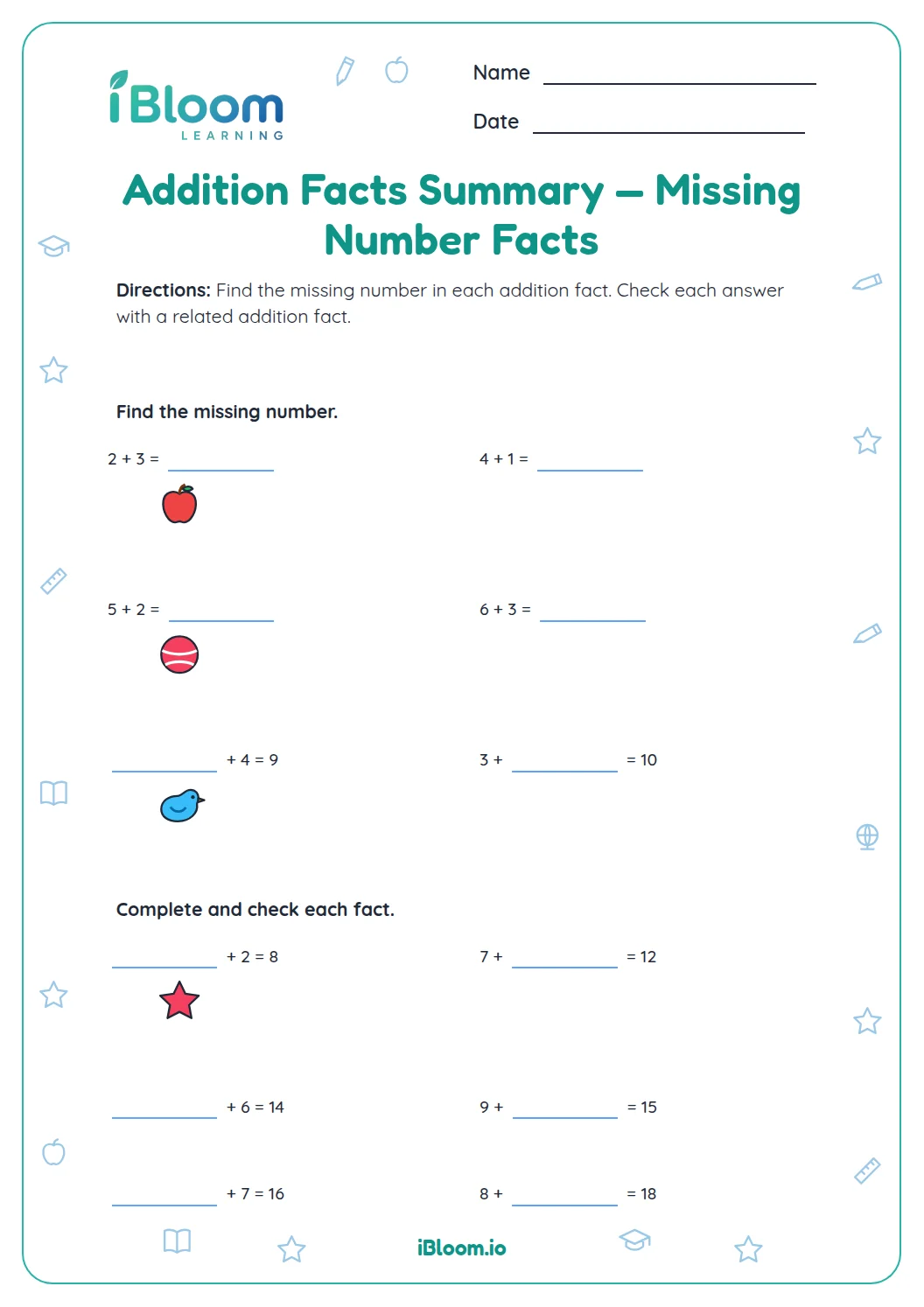

About this worksheet
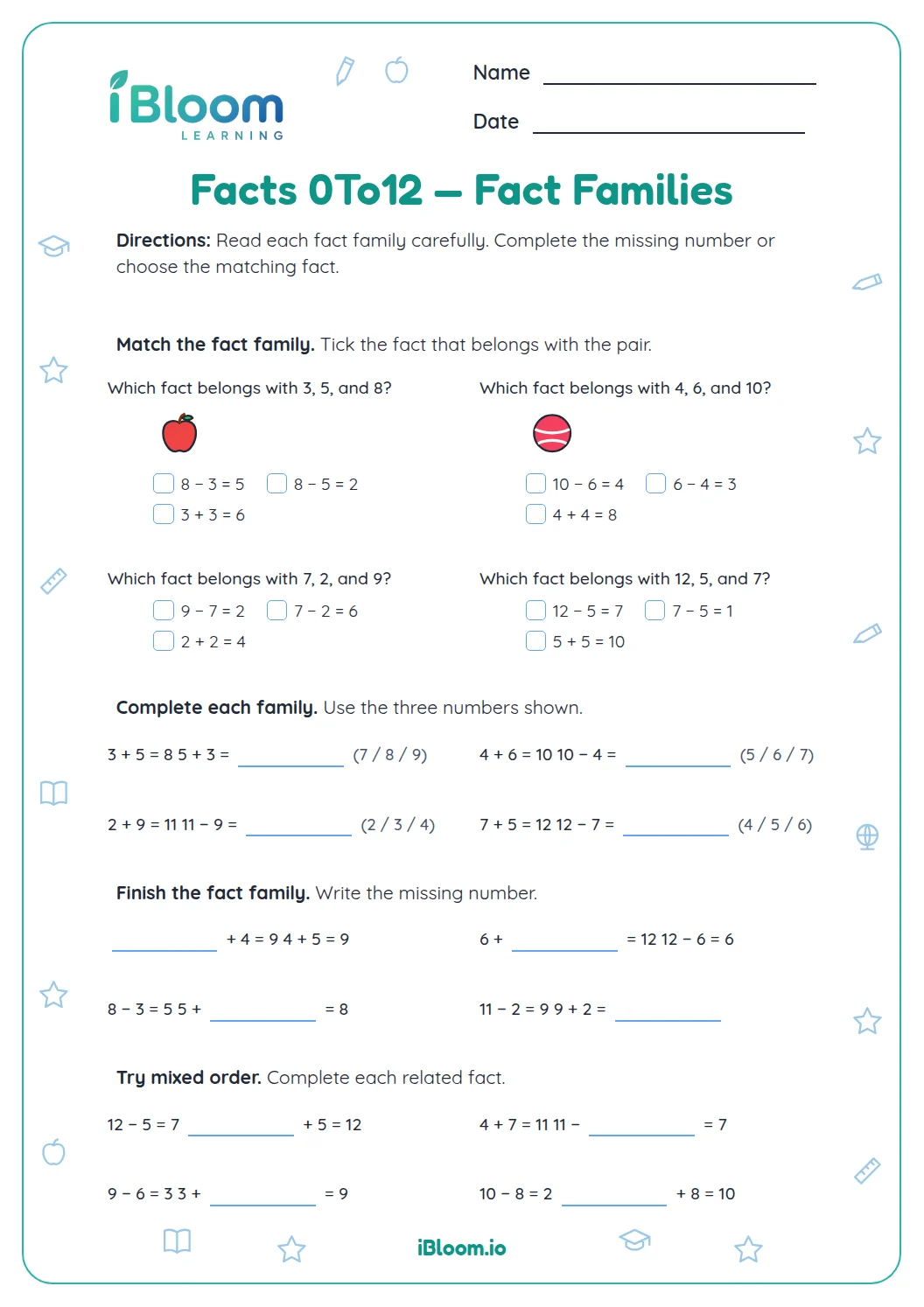
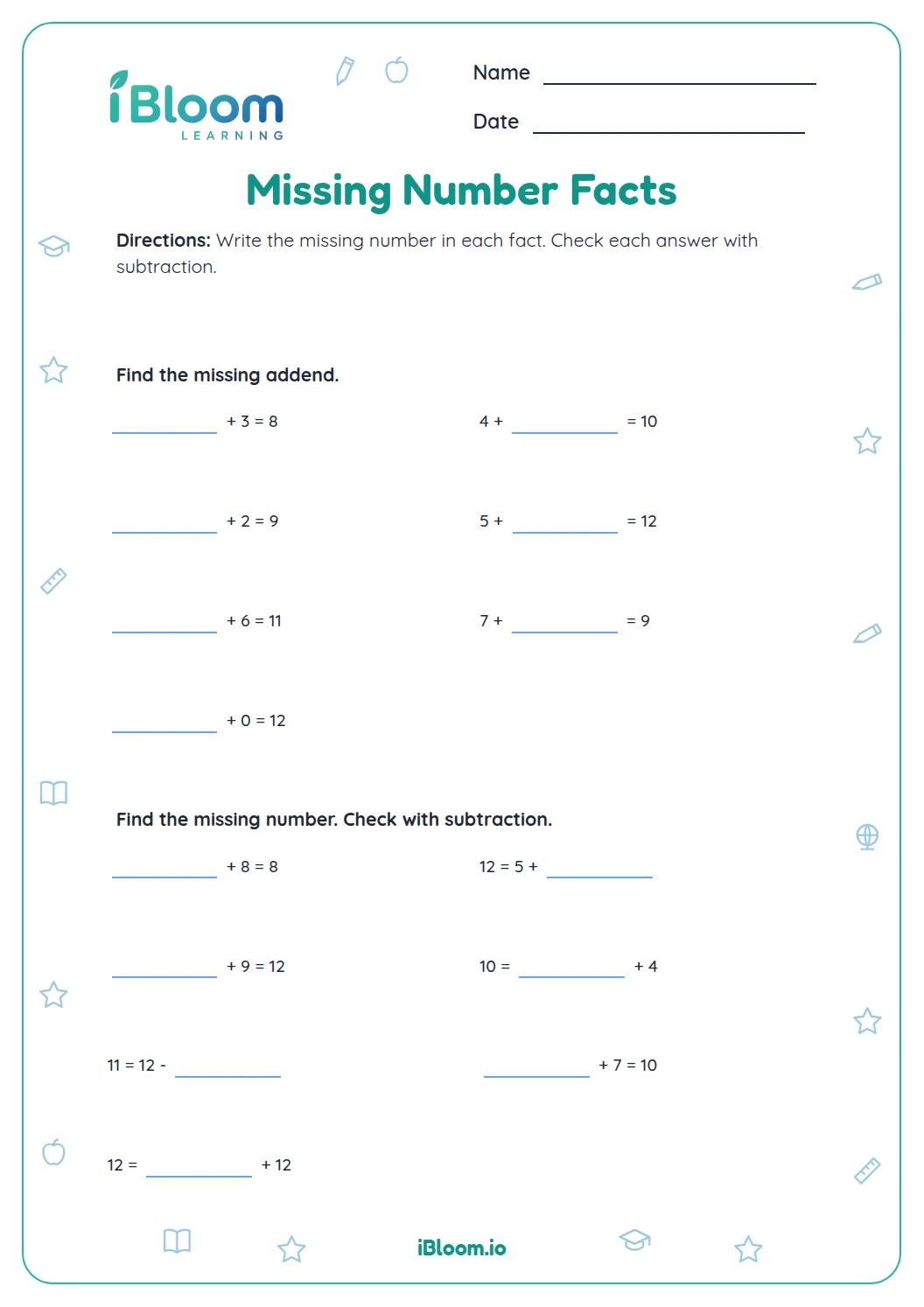
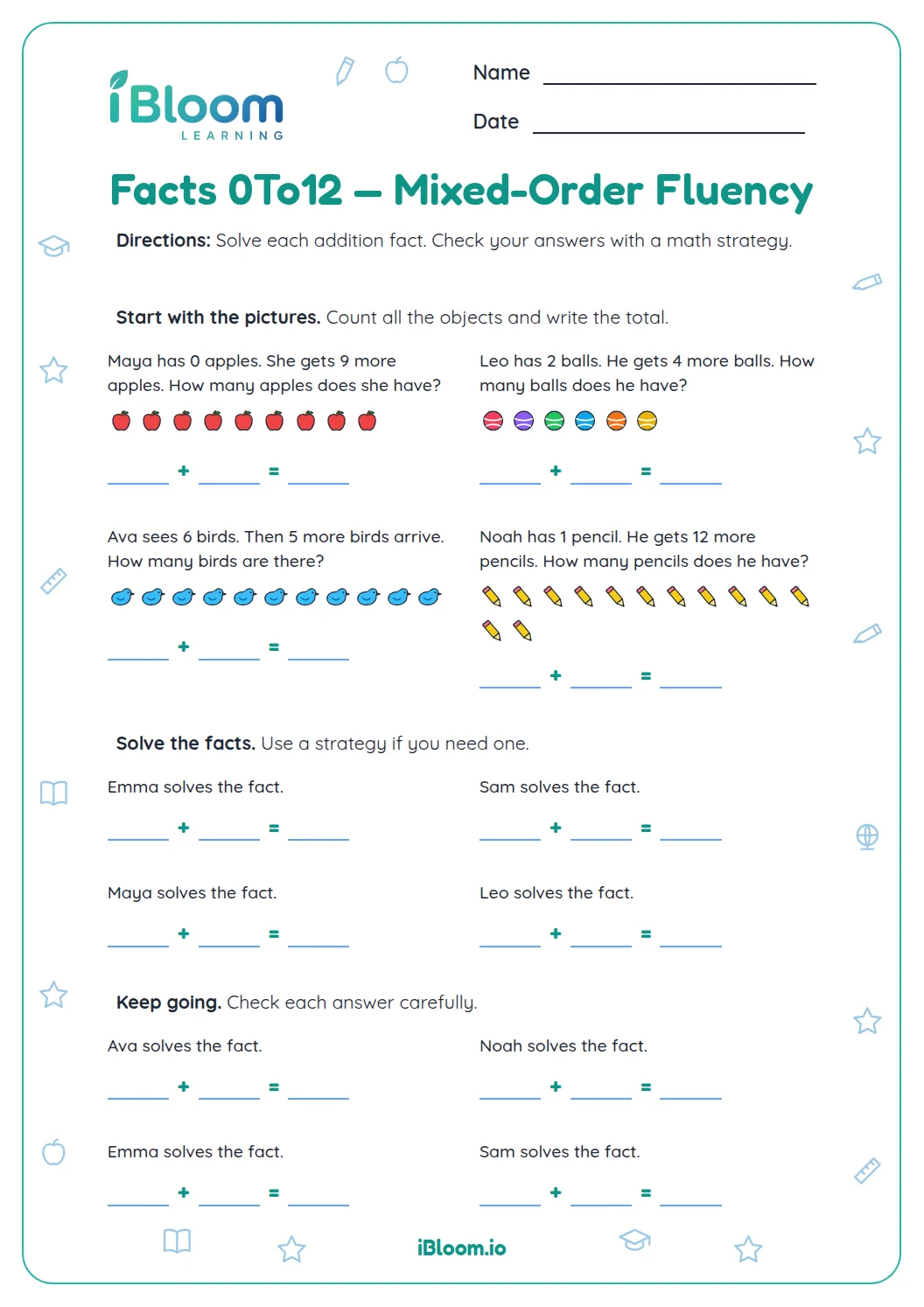
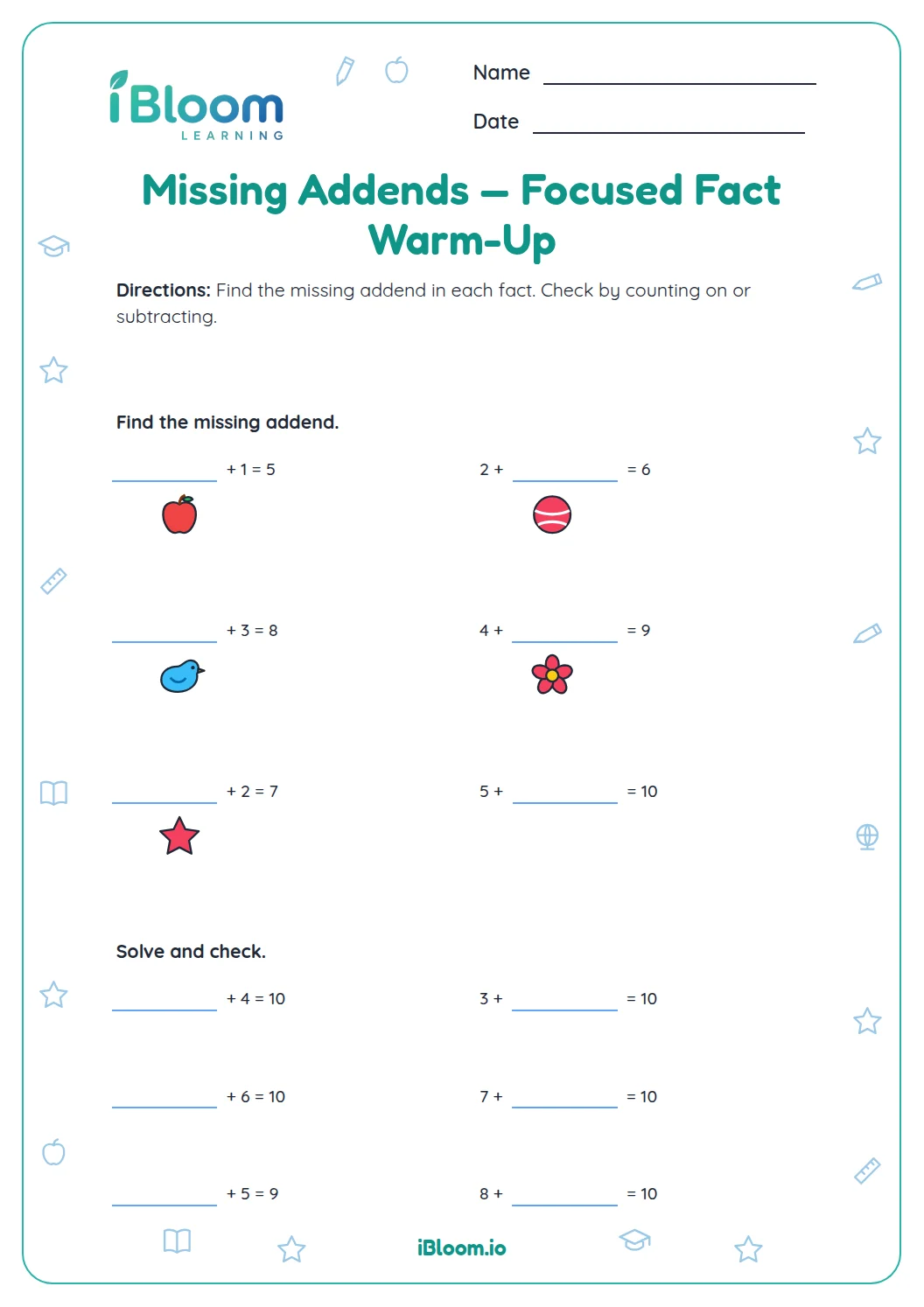
This free addition facts worksheet is a 16-question mastery check for Grades 1–2. Part A has twelve sums with first addends from 1 through 12; Part B has four equations with a missing addend in different positions. A ten-frame supports the 12 + 8 fact, and the page text shows how making ten and related facts can help. The practice supports CCSS 2.OA.B.2, which calls for fluent addition and subtraction within 20. A separate key lists all sixteen answers.
Aligned to 2.OA.B.2
How can a hint help with an addition fact?
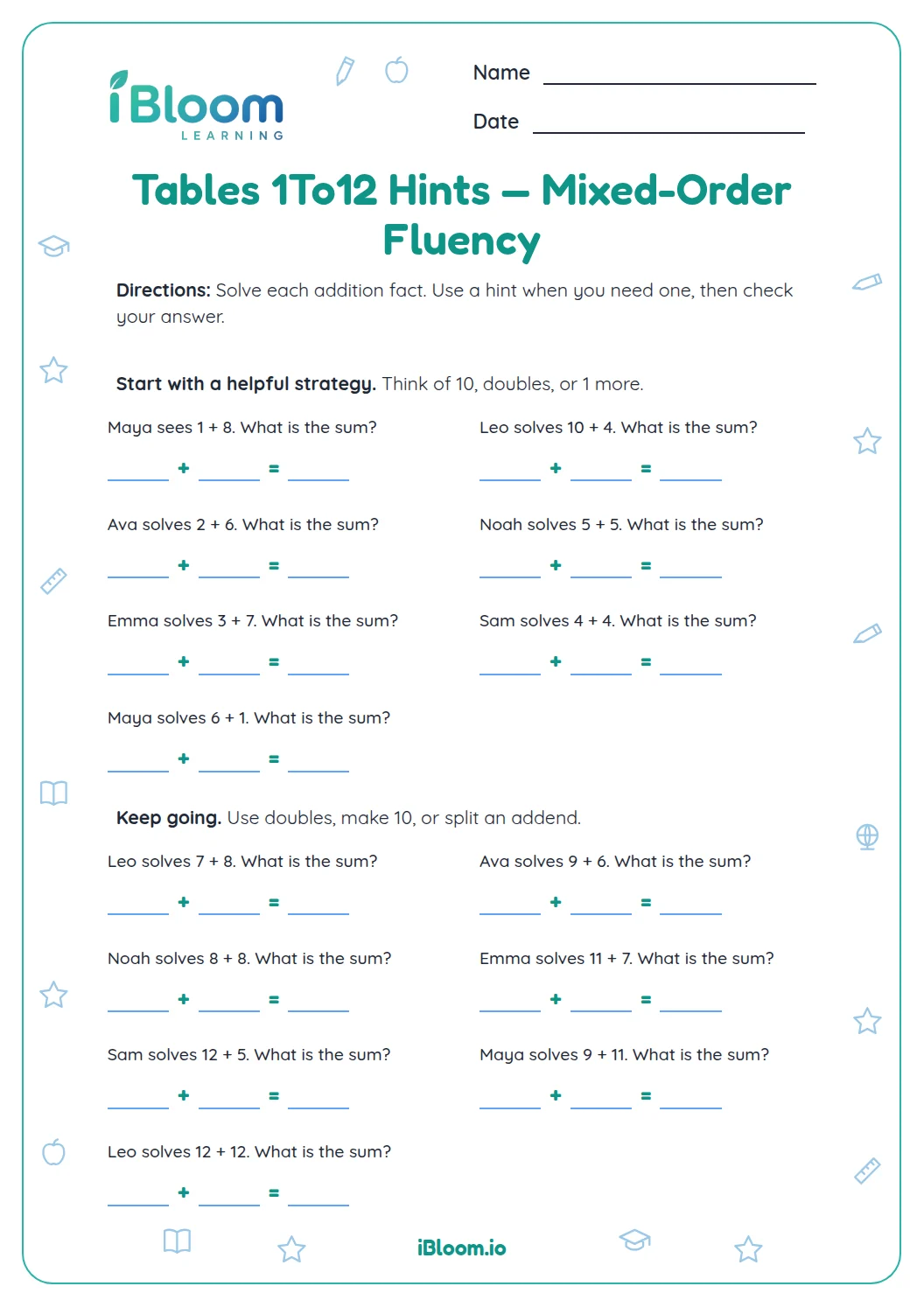
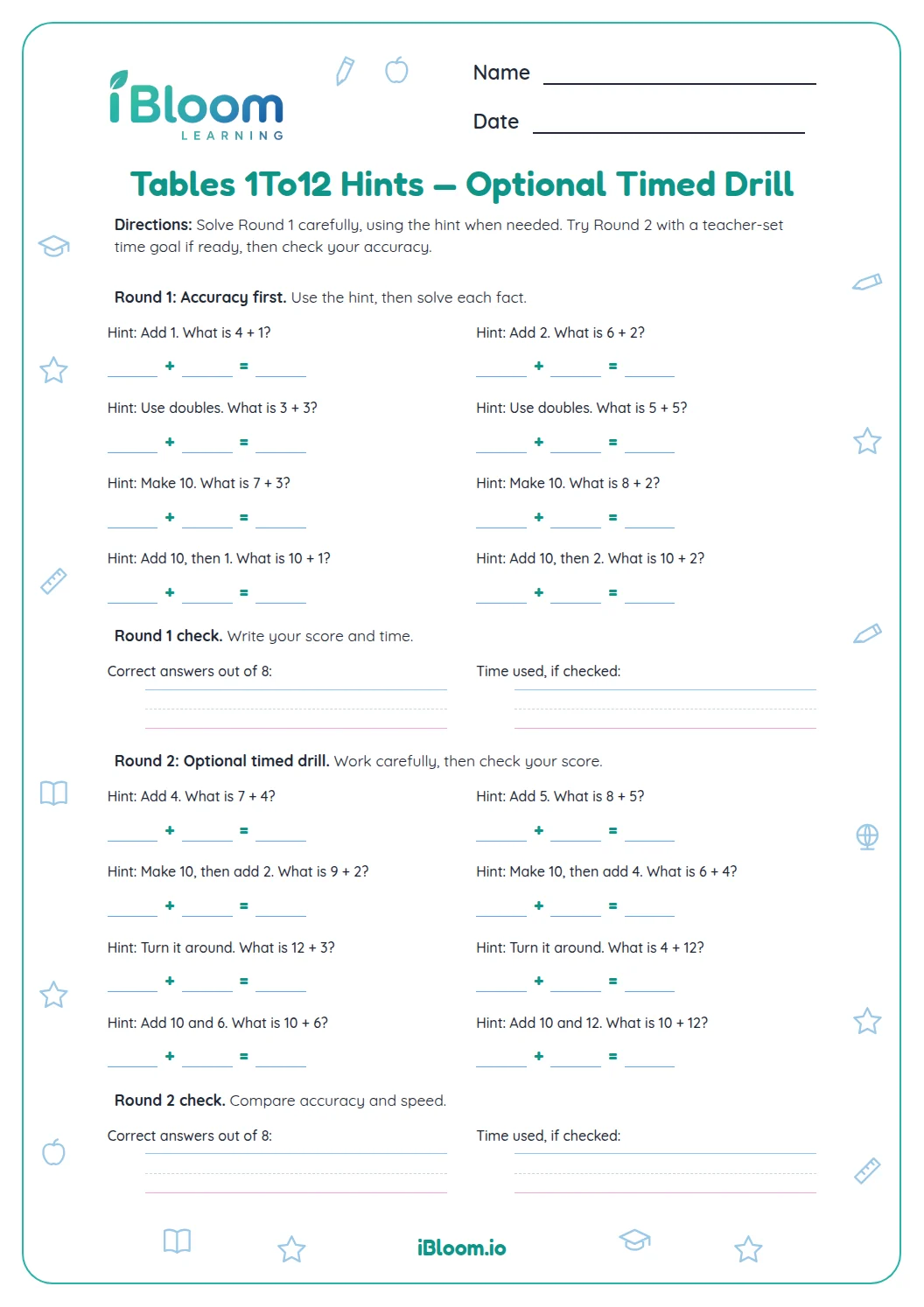
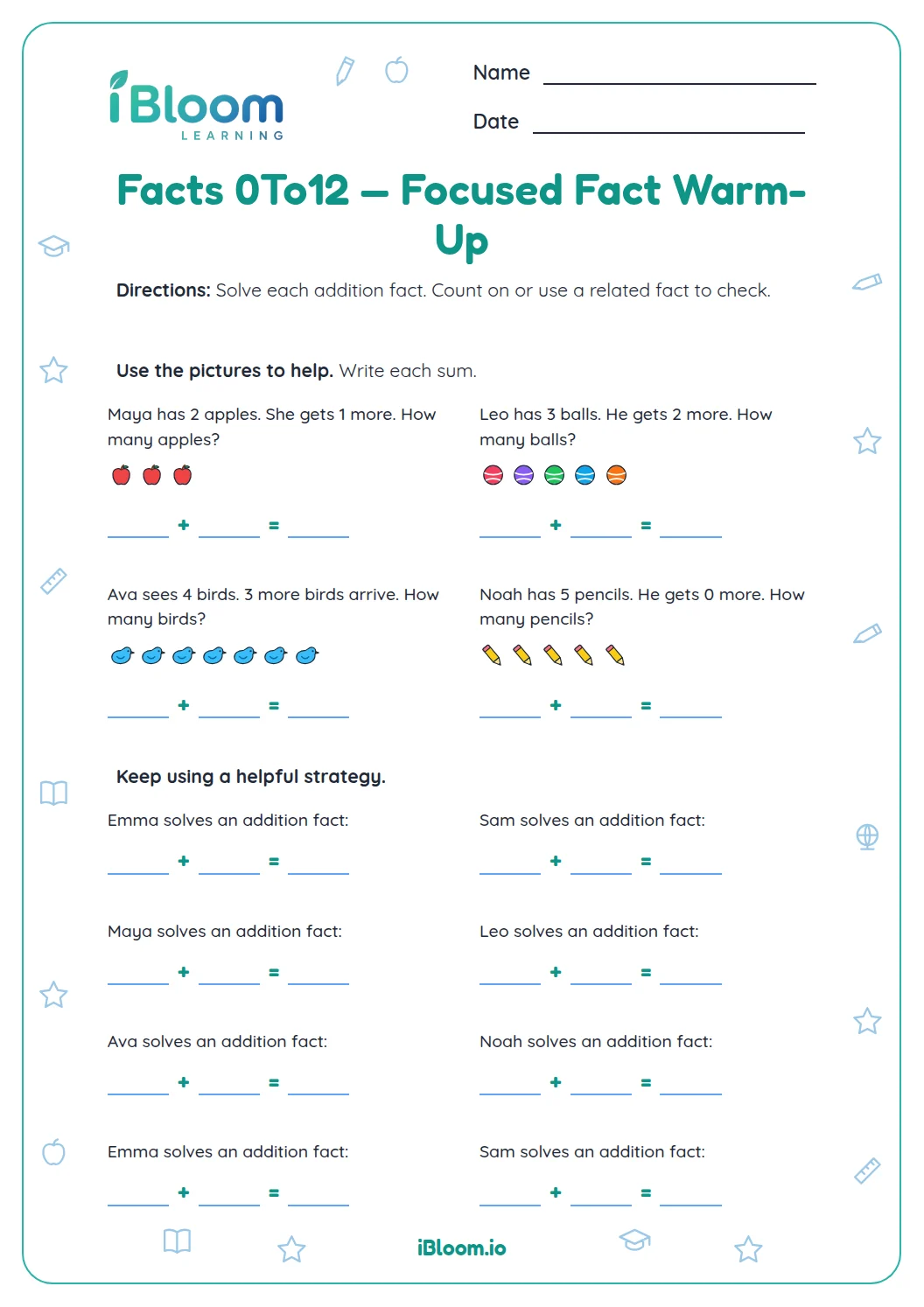
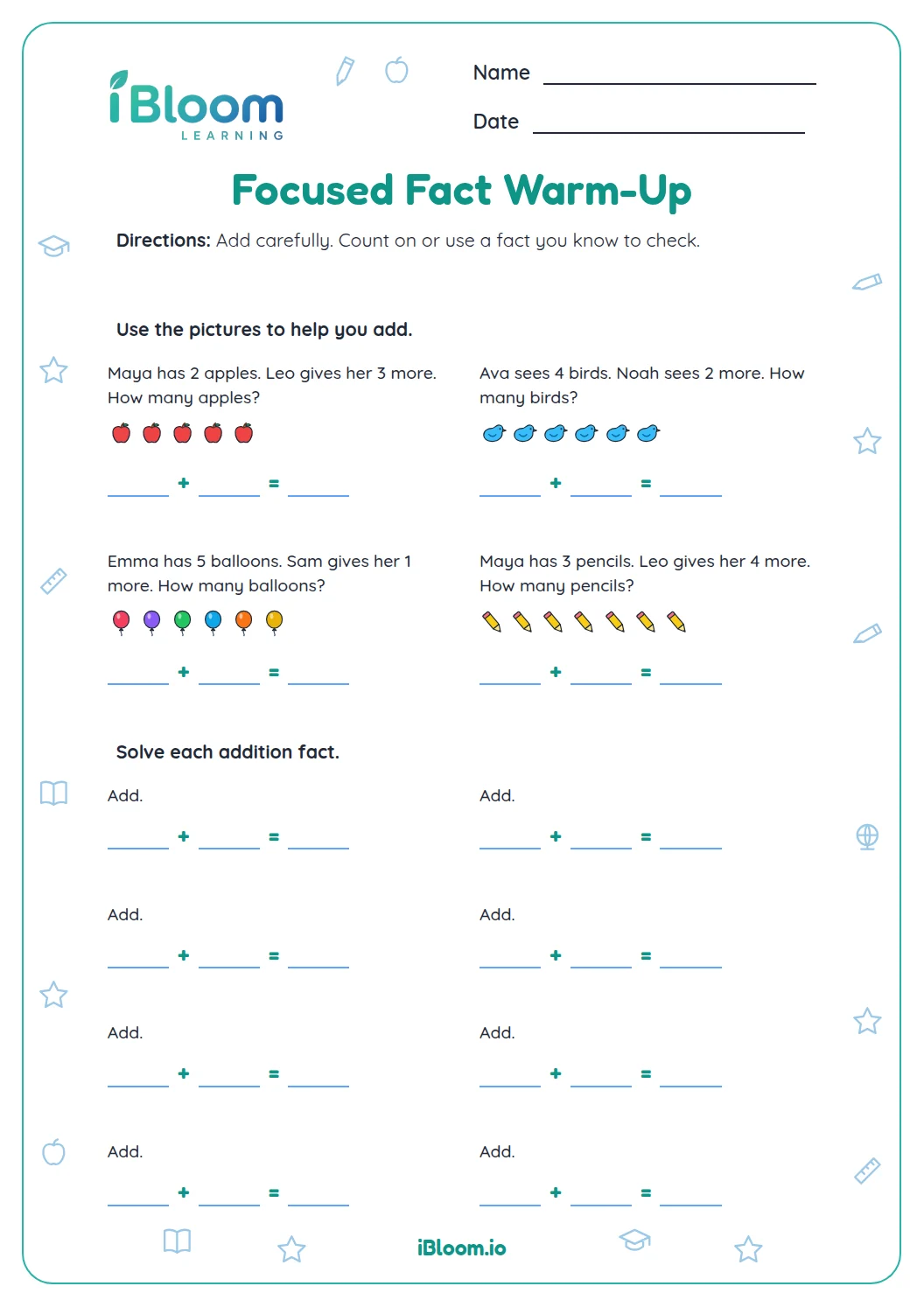
Part A has twelve addition facts with first addends from 1 through 12. Try making ten, using doubles, or building from a neighboring fact, then write the sum.
For question 1, 1 + 9 makes 10. For 6 + 8, make ten with 6 + 4, then add the remaining 4.
- 11 + 9 = 10
How do you find a missing addend?
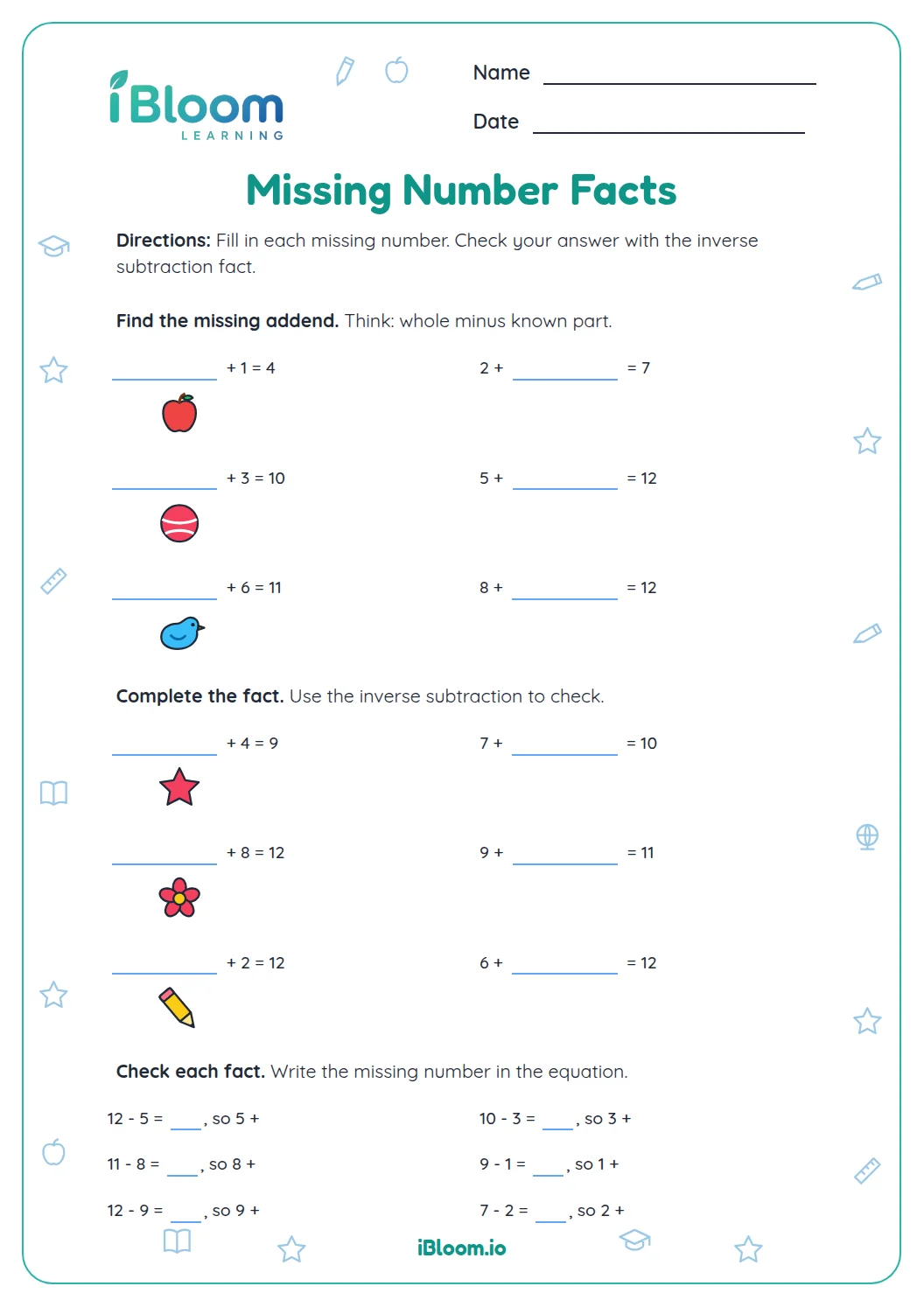
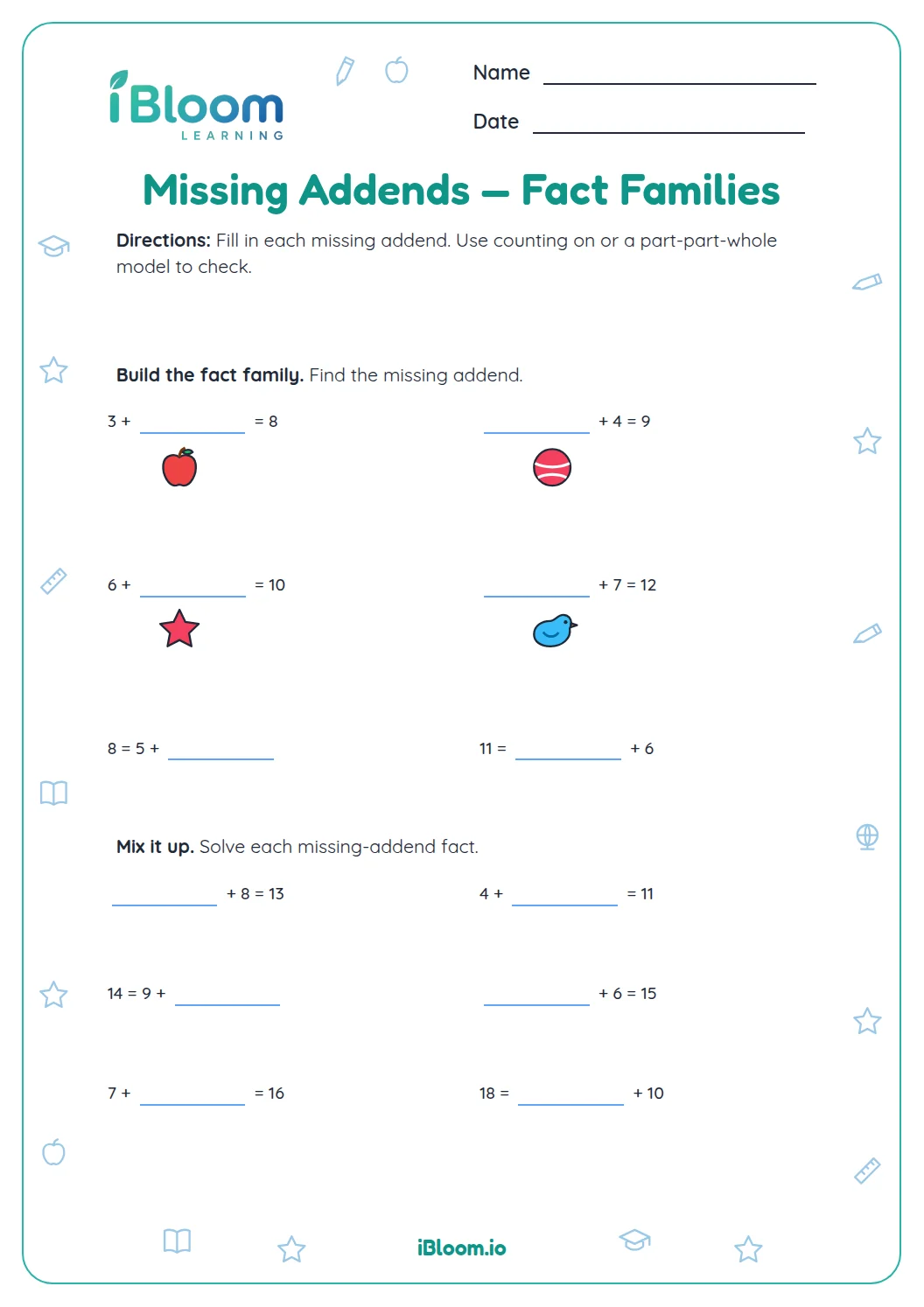
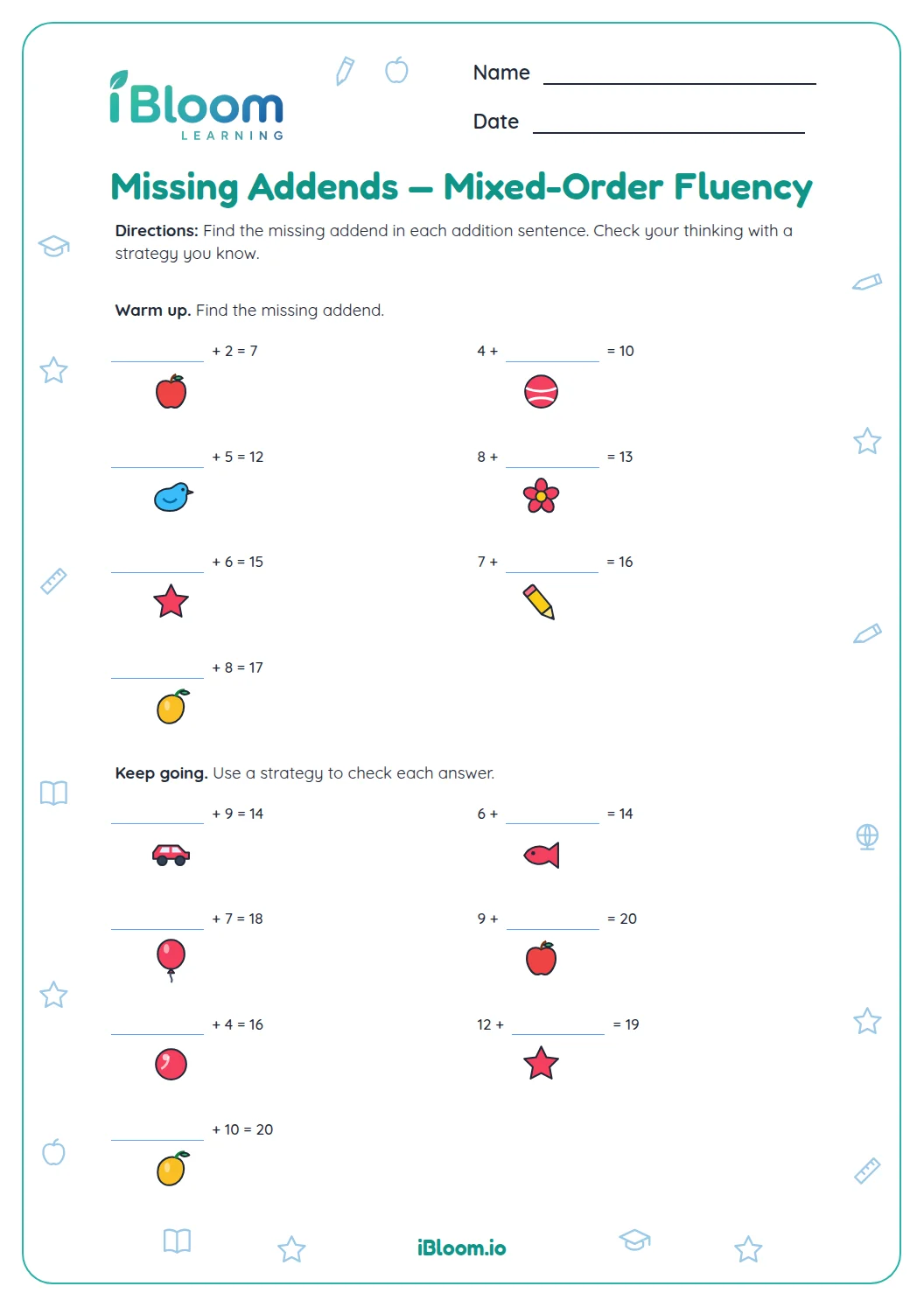
Part B places the unknown in different positions. Think about the total and the addend you know; find the amount still needed. A related subtraction fact can check your result.
For question 13, ask what number joins 6 to make 14. Since 6 + 8 = 14, the missing addend is 8.
- 16 + 8 = 14
How can a ten-frame show a helpful fact?
Question 12 pairs 12 counters with 8 more. The ten-frame shows 12 counters and the eight open spaces needed to fill the two frames, so 12 + 8 makes 20. The model makes a make-ten strategy visible.
- 112 + 8 = 20
How to use this worksheet at home or in class
- 1Start with the twelve Part A sums and choose a mental strategy for each one.
- 2Use the ten-frame in question 12 to see how 8 fills the open spaces after 12.
- 3For Part B, compare the known addend with the total to find the amount still needed.
- 4Check a missing addend with the related subtraction fact.
- 5Use the answer key to check each of the 16 responses.
Common mistakes and quick fixes
The mistake
Stopping after making ten.
The fix
Add the leftover amount after the ten is complete.
The mistake
Writing the total in the missing-addend blank.
The fix
Subtract the known addend from the total to find the missing amount.
The mistake
Changing the known addend while solving.
The fix
Keep the given number and total in view, then check the completed equation.
Common Core alignment
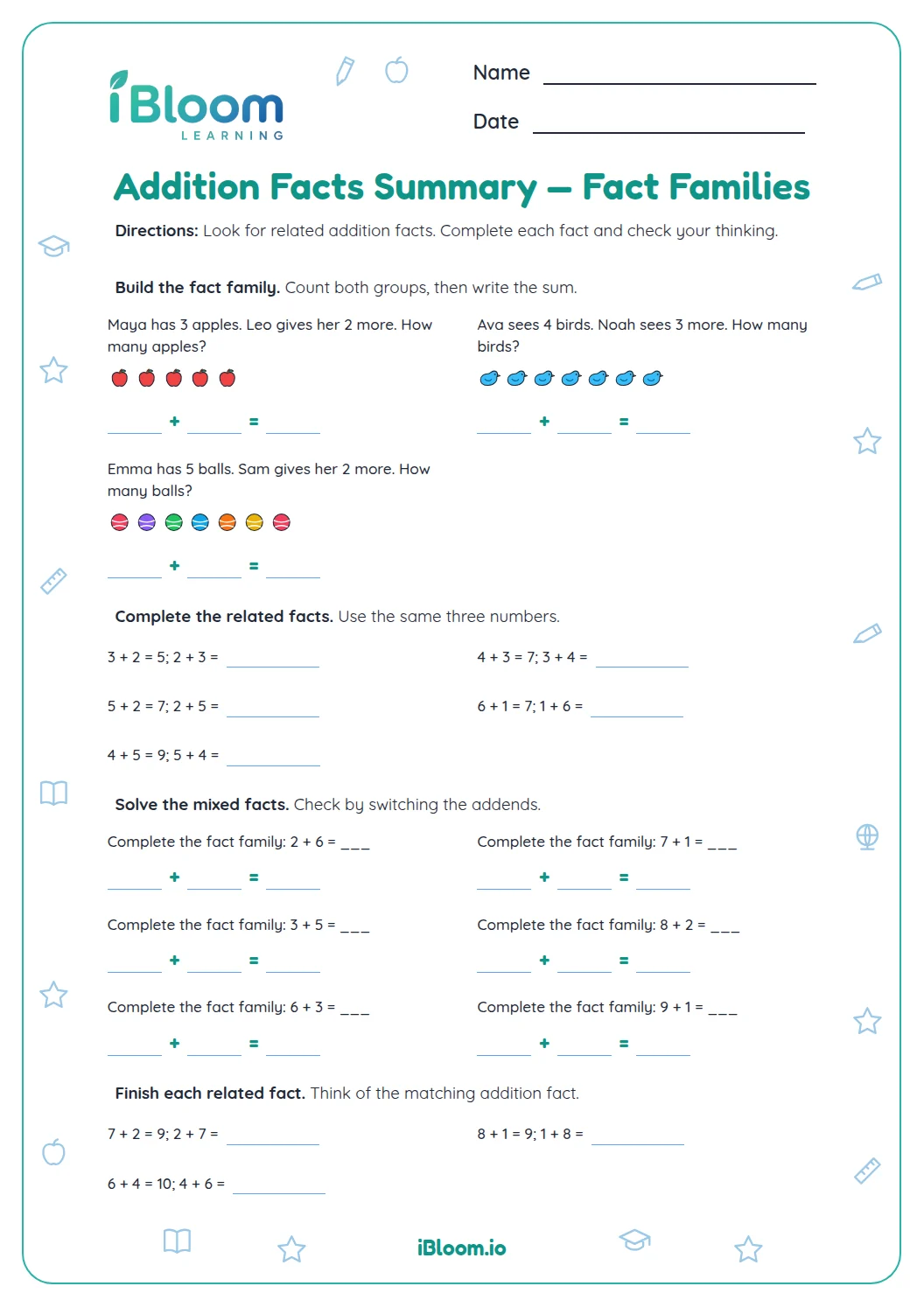
The facts and missing-addend equations give practice with fluent addition within 20.
Fluently add within 20 using mental strategies and known facts.
On this sheet:
Show the official wordingHide the official wording
Fluently add and subtract within 20 using mental strategies. By end of Grade 2, know from memory all sums of two one-digit numbers.
What to practice next
Make more practice
Further reading
Questions parents and teachers ask
How many questions are on the worksheet?
There are 16 questions: 12 addition facts in Part A and four missing-addend equations in Part B. The fact set uses first addends from 1 through 12, and each sum is within 20. The answer key lists all 16 answers for checking.
What addition facts does Part A include?
Part A has one addition fact for each first addend from 1 through 12. The sums stay within 20, from 1 + 9 through 12 + 8. Students can use a make-ten strategy, doubles, or a nearby fact to work out a sum.
How can students use the ten-frame hint?
Question 12 shows 12 counters in two ten-frames and asks for 12 + 8. Students can see eight open spaces remain, so adding eight fills both frames and makes 20. The drawing gives a visual way to connect the addends with the total.
How do students solve the missing-addend questions?
Part B shows an addition equation with one addend missing. Students can ask how much must be added to the known number to reach the total, or subtract the known addend from the total. The key provides the missing number for each equation.
Can students use different mental strategies?
Yes. The directions invite a mental strategy or a known fact when it helps. Students might make ten, use a double, or start with a related fact. The ten-frame supports one of the sums, and the written examples show how to break a sum into easier parts.
How can I check the completed page?
Use the separate answer key to check the twelve sums and four missing addends. For any missed fact, ask the student to explain a mental path or use the ten-frame in question 12. Check a missing addend by adding it to the known addend and confirming the total.