
About this worksheet
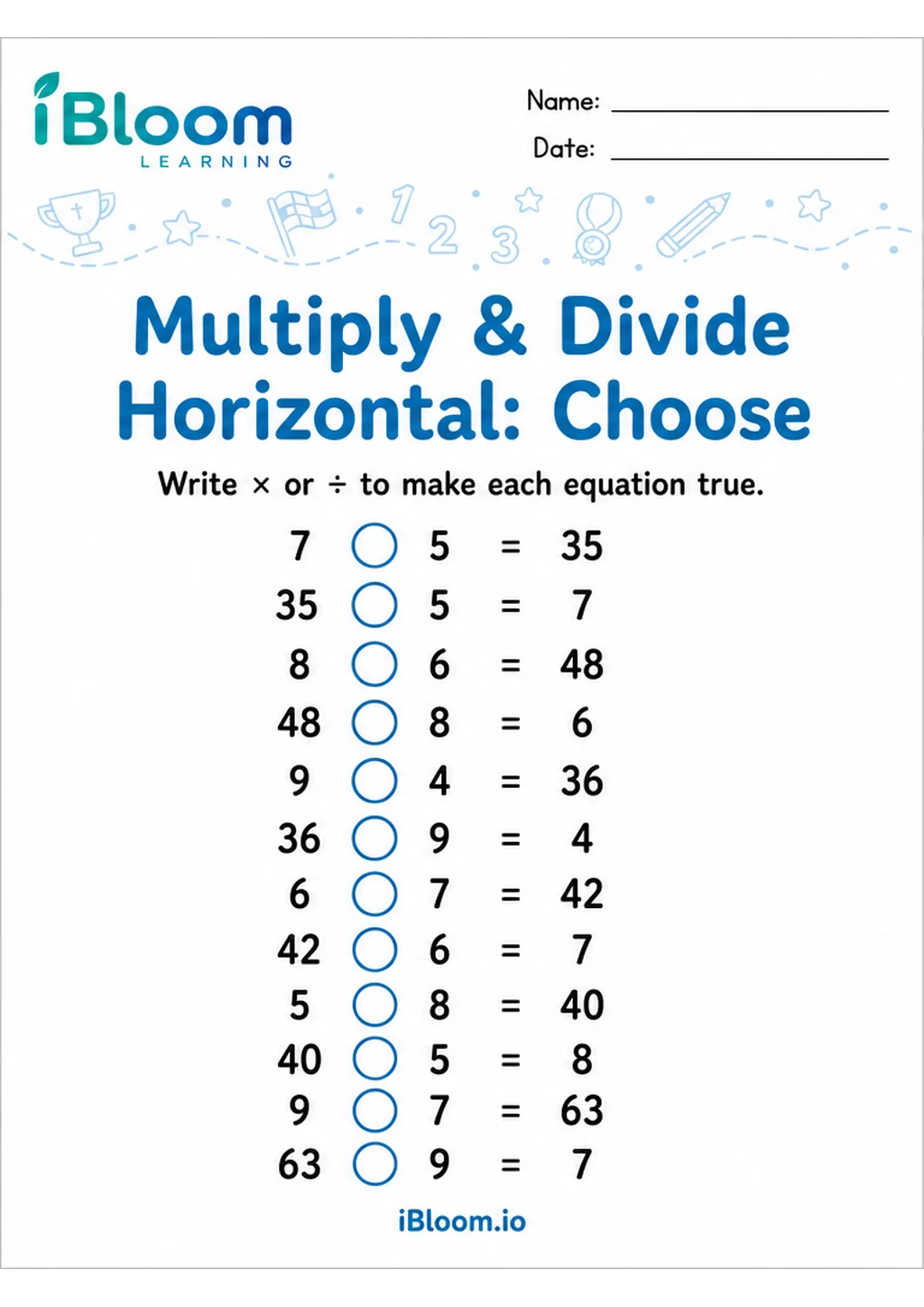
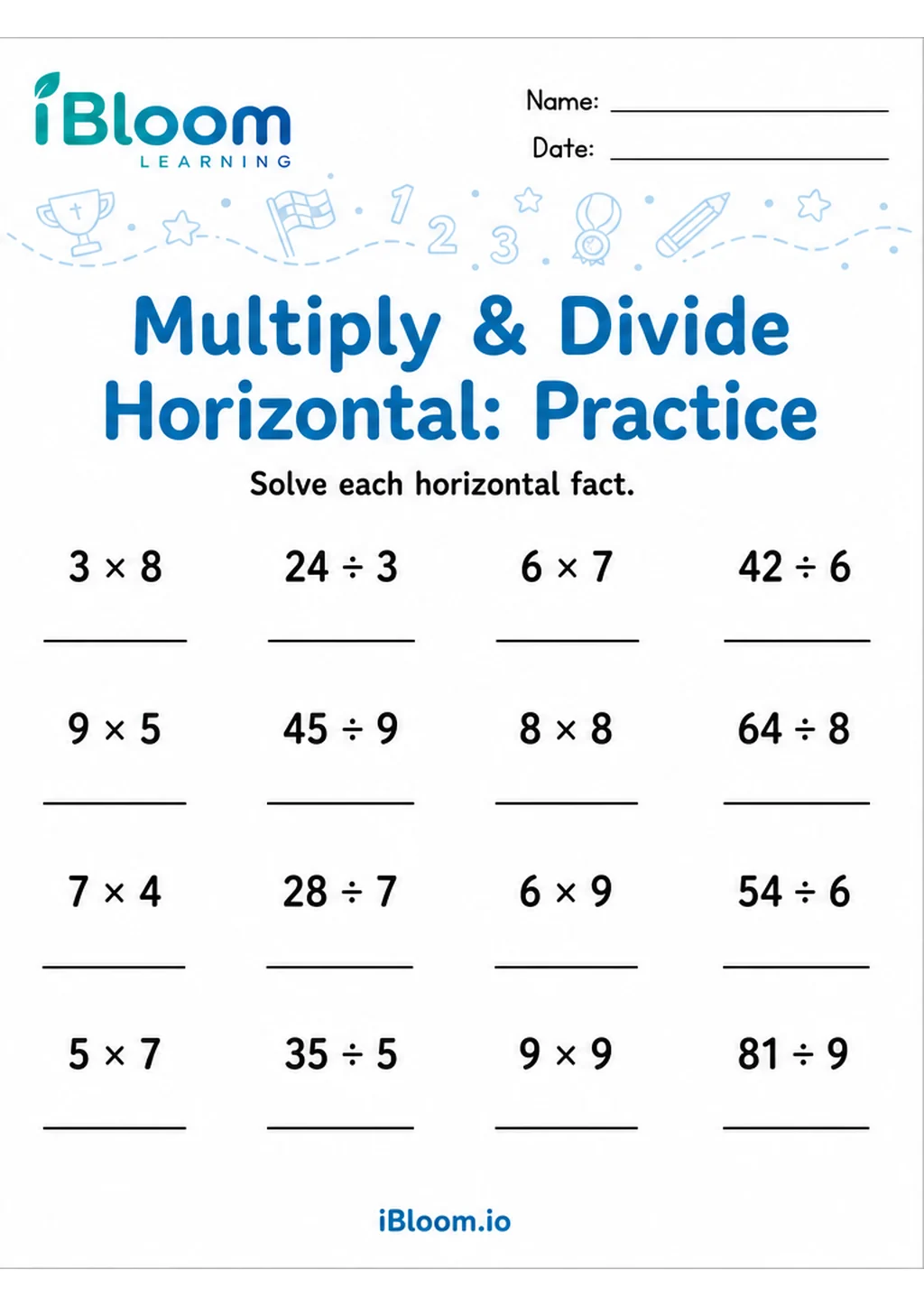
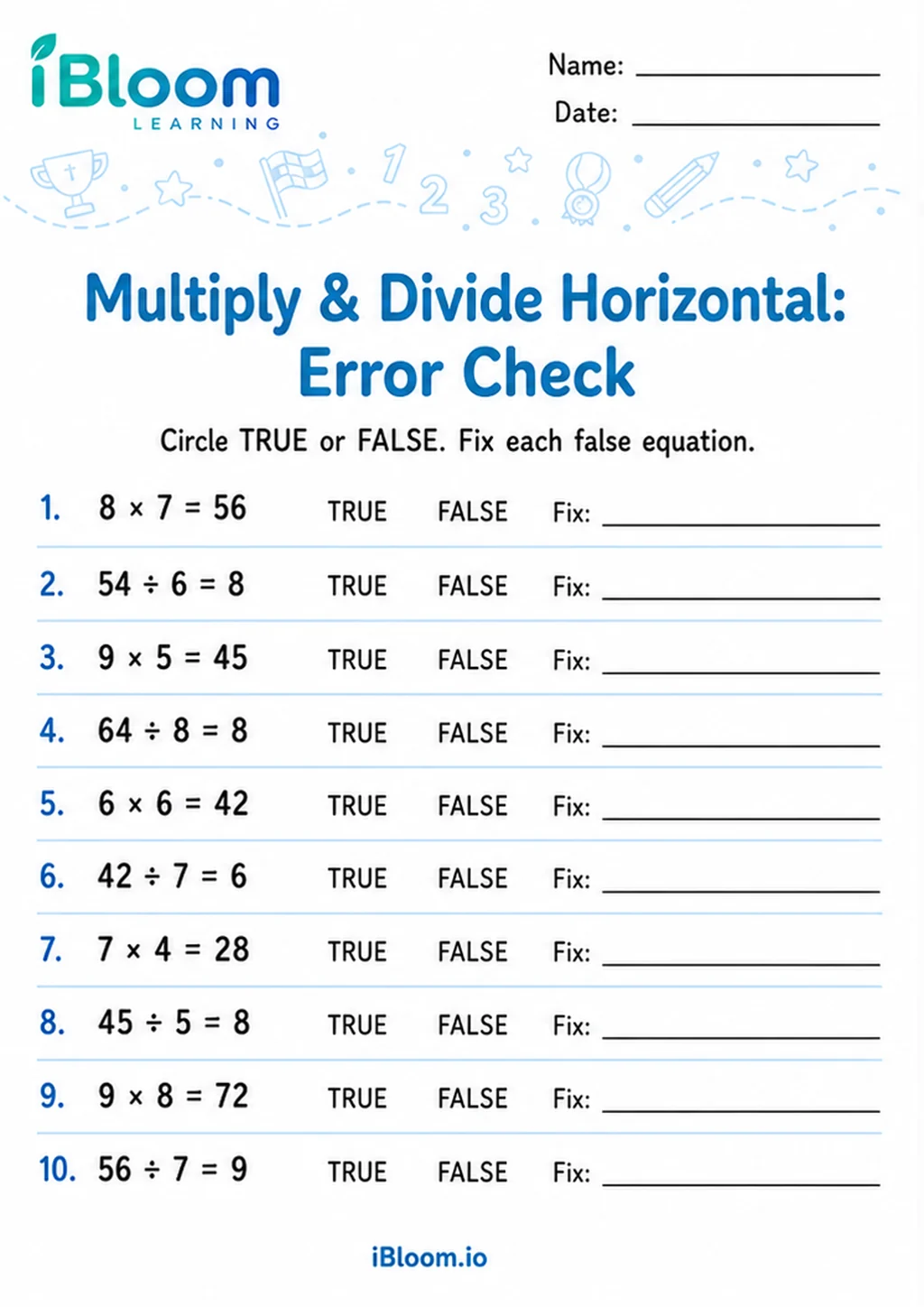
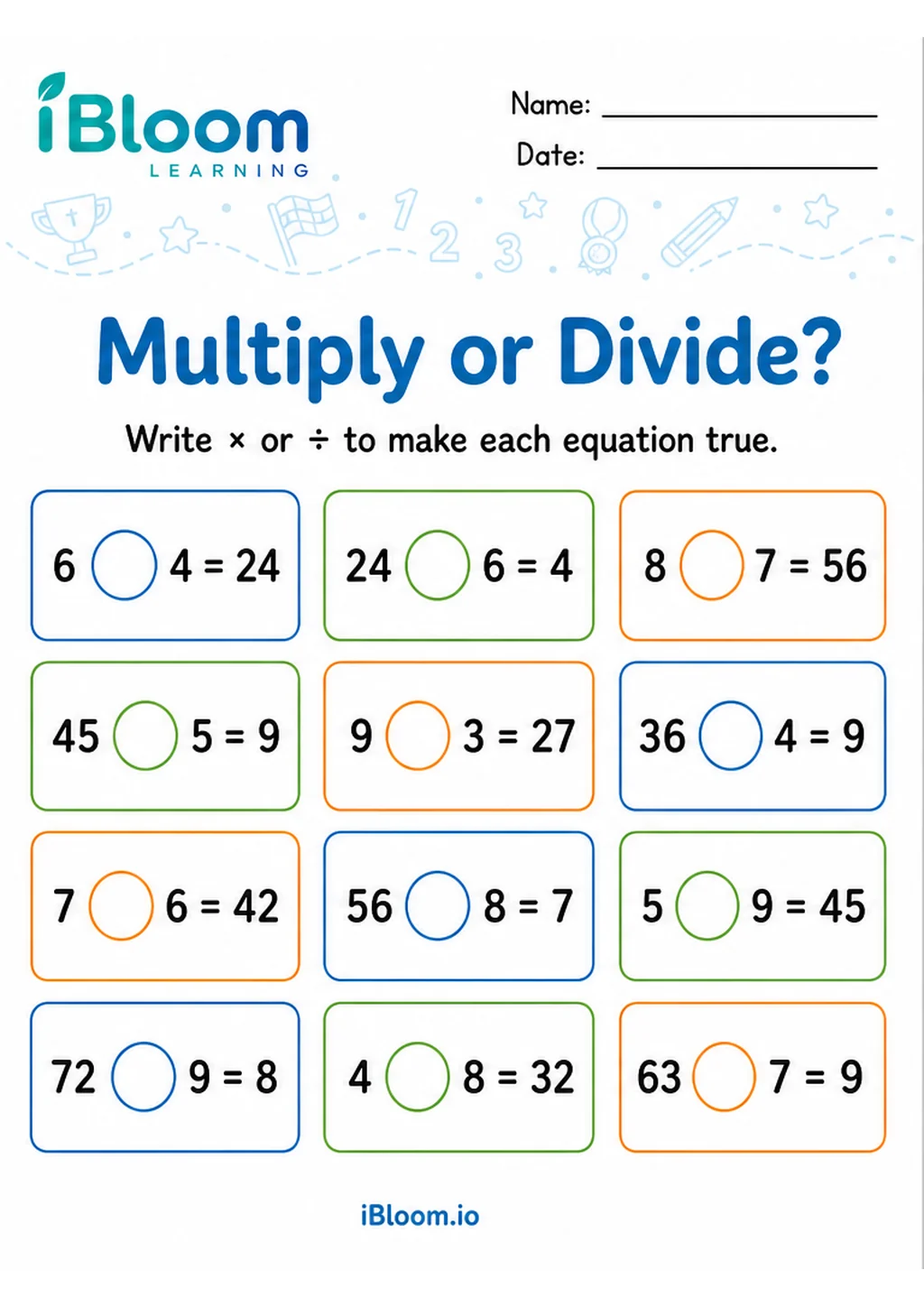
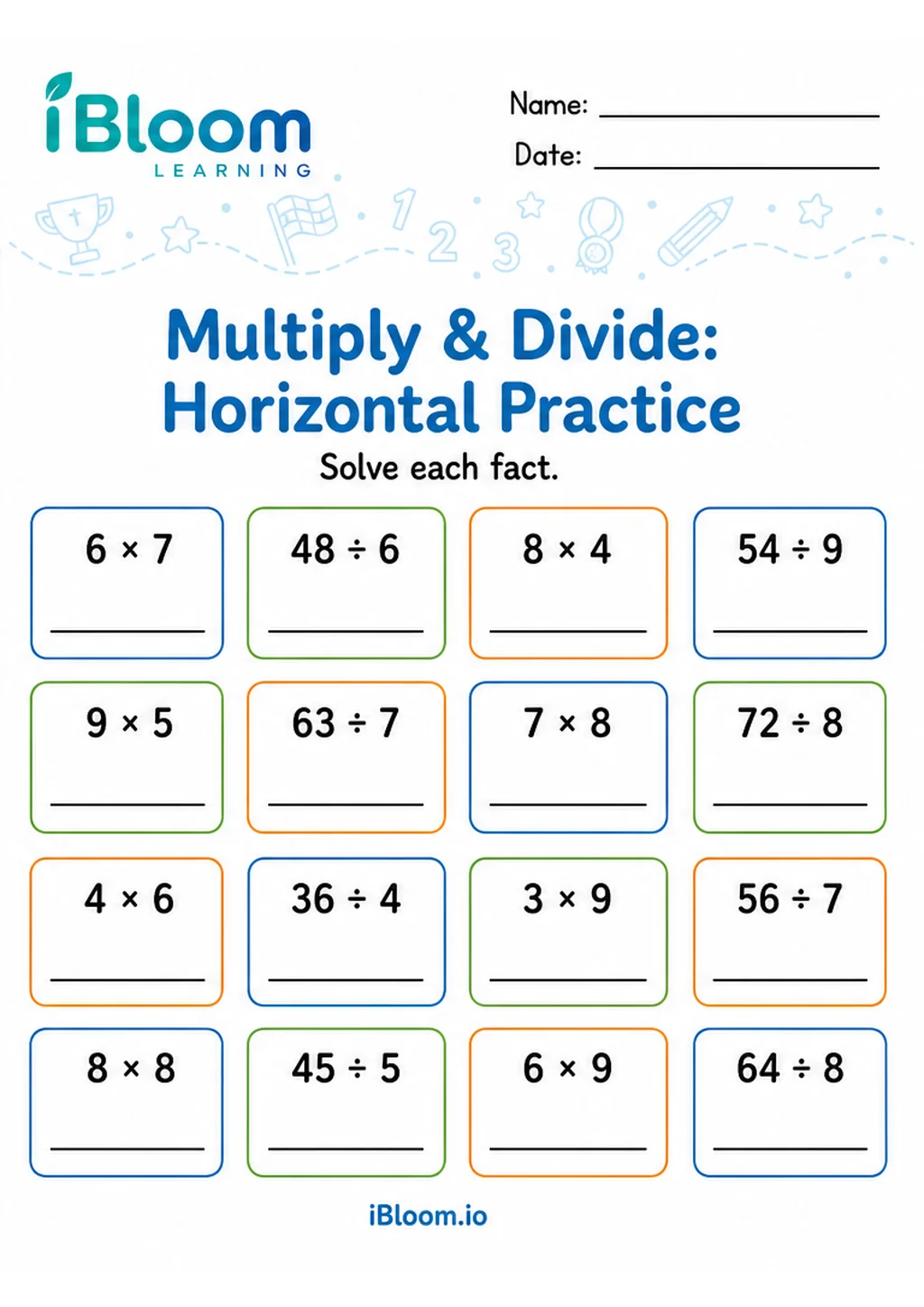
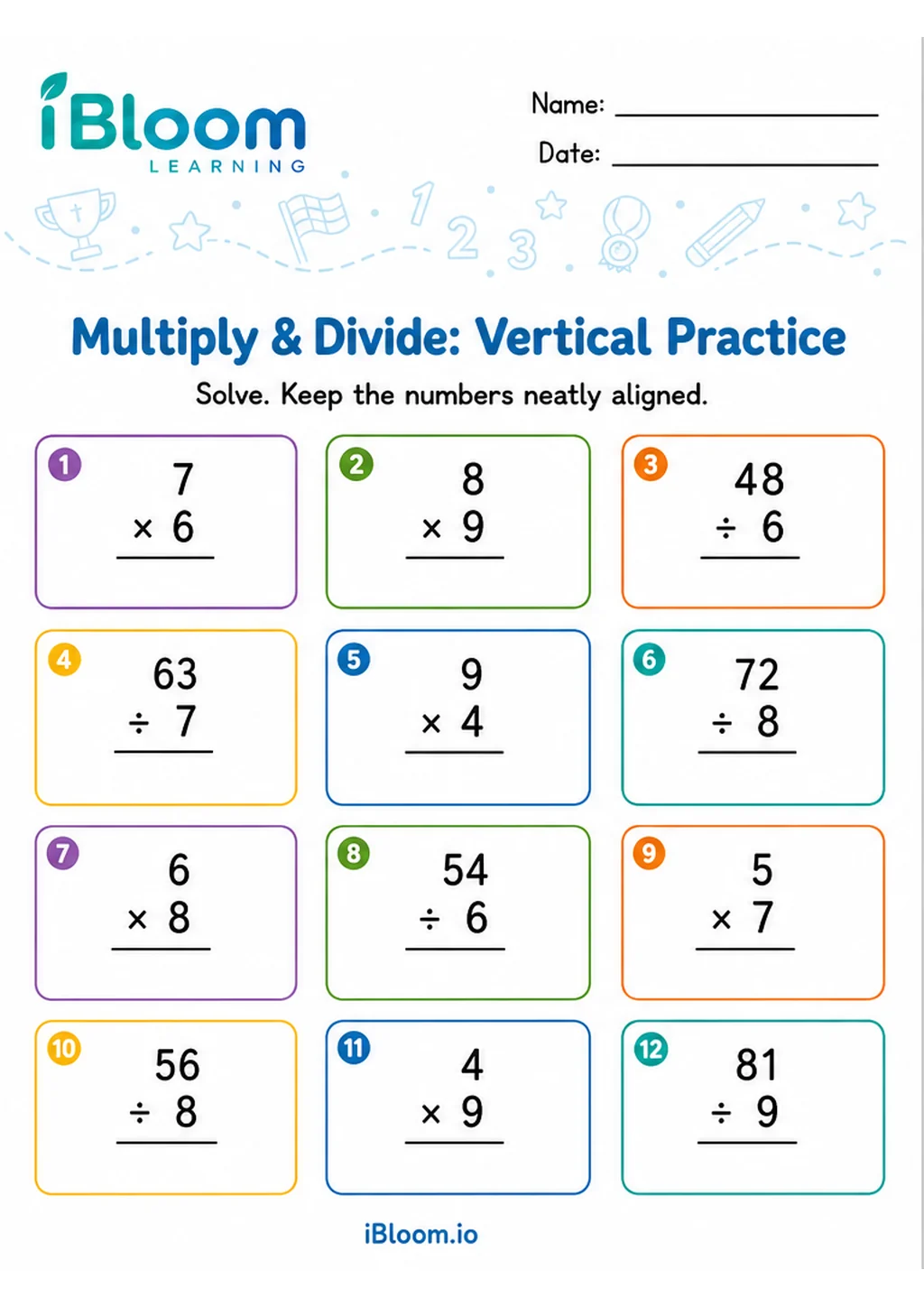
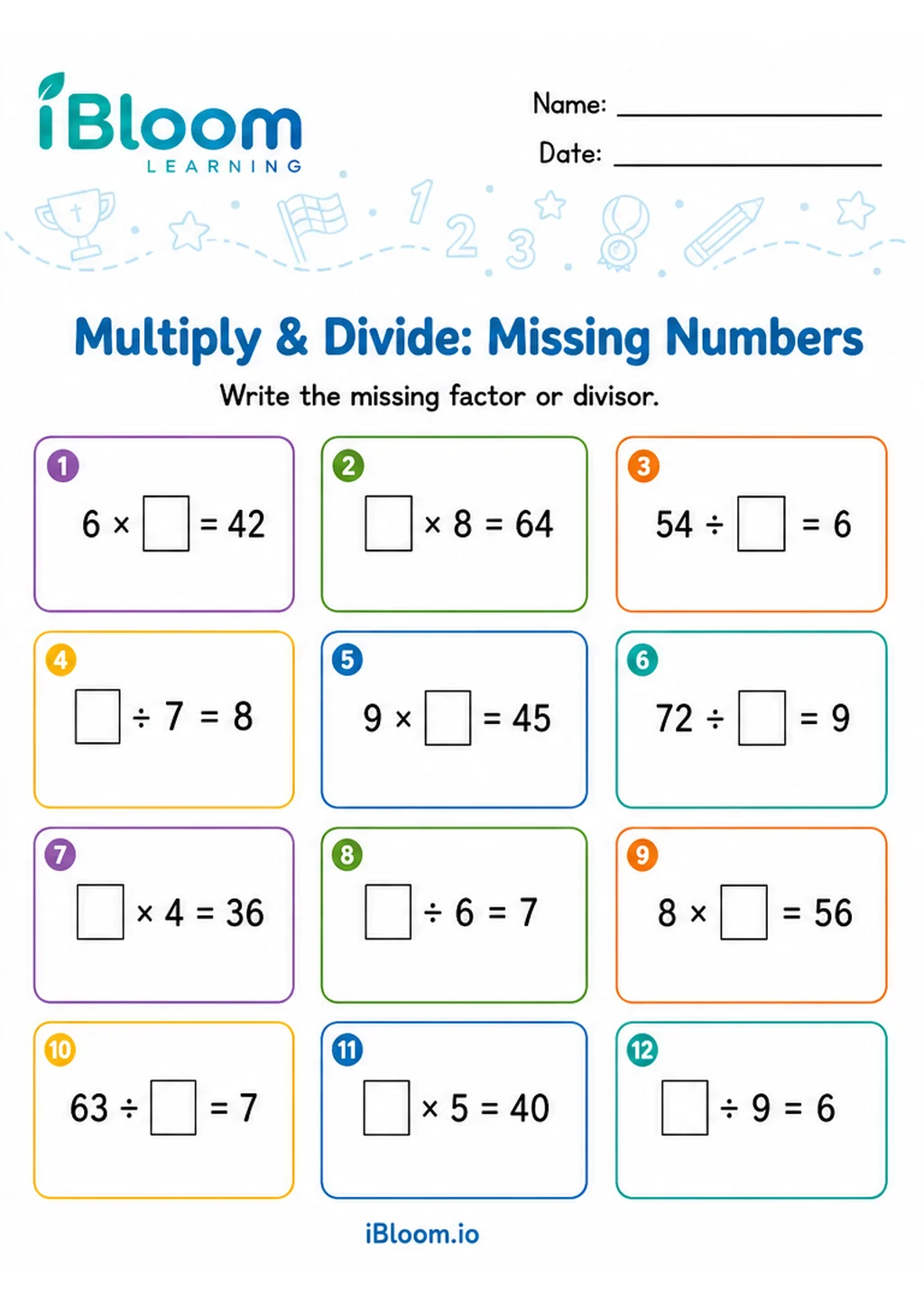
This Grade 3 drill replaces the old horizontal fact list and single challenge with 20 items: multiplication and division facts, missing-number equations, and two short applications. Products stay within 100. Learners can use multiplication and division as related operations, then check answers with the separate key.
Aligned to 3.OA.C.7
Fact fluency?
Use multiplication facts to solve each horizontal problem. For division, ask which factor pair makes the dividend.
Use the inverse?
A blank in a multiplication or division equation can be found with the related inverse fact.
Common Core alignment
This drill builds fluent recall of multiplication and related division facts.
Fluently multiply and divide within 100.
On this sheet: All facts use products within 100, and the missing-number items use inverse relationships.
Show the official wordingHide the official wording
Fluently multiply and divide within 100, using strategies such as the relationship between multiplication and division.
What to practice next
Make more practice
Questions parents and teachers ask
What facts does this drill cover?
The worksheet has 20 questions: 14 multiplication and division facts, 4 missing-number equations, and 2 short story applications. Every product and dividend is within 100, with related facts and inverse equations across both operations. Learners practice the standard fact range.
How can I check a division answer?
Multiply the quotient by the divisor. The product should equal the dividend. For example, 54 ÷ 9 = 6 can be checked with 6 × 9 = 54. This relationship also helps solve a missing factor or divisor.
What should a learner do with a blank in an equation?
Treat the blank as the unknown number, then use the related operation or fact family. In ___ × 7 = 56, divide 56 by 7 to find the missing factor. Substitute the result to see whether the equation is true.
How do the story questions fit the drill?
The final two items use familiar equal groups and sharing situations. Learners choose multiplication for equal groups or division for equal sharing, then solve with a fact from the page’s range. These short contexts connect the horizontal equations to everyday quantities.
How many pages are included?
The validated layout contains two worksheet pages and two answer-key pages. The keys list answers in question order so an adult can review the facts, missing numbers, and story solutions alongside each matching worksheet page. The answer lines are easy to scan.